 THE NATIONAL UNION OF
JOURNALISTS OF UKRAINE
THE NATIONAL UNION OF
JOURNALISTS OF UKRAINE
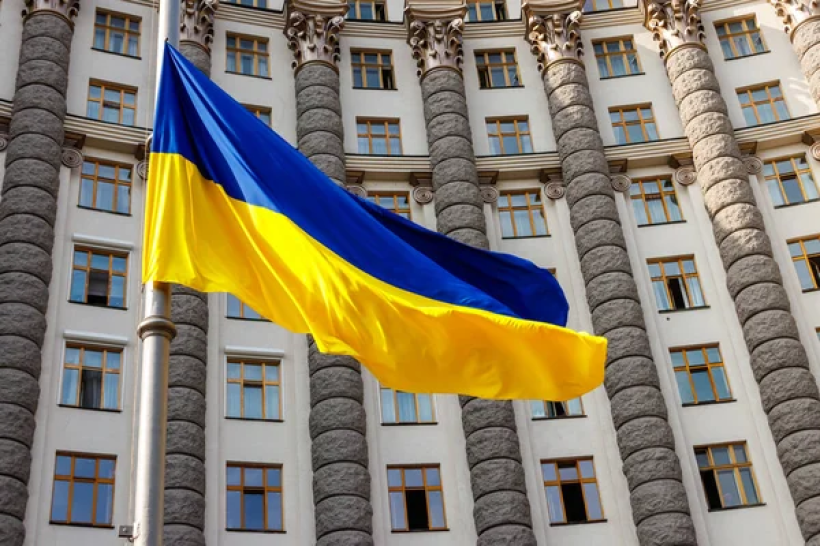
Applications for temporary residence permits to be issued to representatives of foreign media outlets from January 1, 2026, are submitted by the State Committee for Television and Radio-broadcasting to the State Migration Service. For over a year, this function was in the Ministry of Reintegration, where it was non-core. It caused complaints from the international media community.
Much more than bureaucracy
Temporary residence permits for foreign journalists are not just an administrative procedure. They are a strategic information policy tool that ensures the possibility of long-term work of foreign correspondents in Ukraine, a stable presence of leading world media outlets, and controlled, but not repressive, access to the country.
If foreign media outlets encounter chaos, delays, or non-transparent decisions, this leads to them reducing their presence in Ukraine, working “on-the-spot” instead of permanent work, or switching to secondary sources, including russian ones. For foreign newsrooms, it is critically important that the procedure is predictable and that decisions are made by a specialized body that understands the specifics of the media.
“This is a matter of Ukraine’s good image – ensuring high-quality work and relations with foreign media,” the head of the State Committee for Television and Radio-broadcasting, Oleh Nalyvaiko, emphasized in a comment to the National Union of Journalists of Ukraine (NUJU). “I think we will deal with this issue more professionally, because we understand and know the media environment and can better check the documents that are needed.”
In the first three weeks of work, the State Committee for Television and Radio-broadcasting has already issued three submissions for media representatives from Latvia, Italy, and Germany.
“The procedure for preparing and submitting a submission is currently being developed. There are already results – three submissions have been issued; there are documents in the works. We hope that we will unblock this issue and will implement it more qualitatively to establish cooperation with foreign media,” the head of the information policy department of the State Committee for Television and Radio-broadcasting / secretary of the NUJU, Hlib Holovchenko, noted in a comment to the NUJU.
The problem existed, although it was not shouted about
In 2022, the Kyiv International Institute of Sociology and the Center for Strategic Communications conducted a survey of foreign journalists working in Ukraine. The results showed that 37% of foreign journalists in Ukraine called the difficulty of accreditation for international media a significant problem. This is more than a third of those surveyed – an indicator that cannot be ignored. Some of the respondents had substantial delays in obtaining accreditation, and some were unable to obtain it at all. Freelance journalists were especially affected, since the official form was poorly adapted to their cases.
The NUJU in 2023–2024 repeatedly publicly drew attention to the problems of foreign journalists with documents for staying in Ukraine. International journalistic structures, in particular the International Federation of Journalists (IFJ) and the European Federation of Journalists (EFJ), in their communications regarding Ukraine during the war years generally supported Ukraine but separately pointed out bureaucratic difficulties for foreign journalists: long waiting for decisions and uncertainty of stay procedures.
Why did it happen that we came to this problem, when it is obvious to everyone how important attention to Ukraine is in the world media?
From the system to chaos – and back again
Traditionally, the State Committee for Television and Radio-broadcasting worked with foreign media, issued relevant certificates and submissions, and was a clear contact body for journalists and embassies. This was logical, since the Committee knows the media market, understands the difference between a journalist, a freelancer, a producer, a fixer, and has established contacts.
Against the backdrop of the war, an administrative “shuffling” of functions took place. Some of the powers related to foreigners, humanitarian issues, and occupied territories were transferred to various ministries: first to the Ministry of Culture (later to the Ministry of Culture and Information) without a stable procedure, and then to the Ministry of Reintegration, where this function immediately became non-core. The Ministry of Reintegration of Temporarily Occupied Territories of Ukraine works with internally displaced persons, temporarily occupied territories, and humanitarian crises. Media expertise is not its profile. There were no clear deadlines for considering applications, a transparent procedure, clear communication with newsrooms, or a feedback system. It was at this stage that public complaints, informal complaints through embassies, and tension in relations with foreign media appeared.
The very fact of the return of the State Committee for Television and Radio-broadcasting function is public recognition of a systemic failure. In other words, what has been happening since January 1, 2026, is an attempt to return logic to the system.
Foreign journalists recommend that Ukraine implement a state accreditation policy with an explanation of a clear mechanism of interaction, both for journalists and for the entire chain of command of the Defense Forces. It is necessary to have a detailed, transparent accreditation procedure, clear requirements for media professionals (including freelancers), a reduction to seven working days of application review periods, and a feedback system to ensure that journalists understand the status of their applications.
Why is this important today?
Ukraine needs international support more than ever: Western weapons help effectively destroy the enemy, and economic aid significantly mitigates the consequences of losing more than 30% of GDP. The level of this assistance depends significantly on public opinion in partner countries, which is directly influenced by the media. After all, foreign citizens mainly look at the war in Ukraine through the eyes of their journalists.
The success of this reform will be measured not so much by the number of applications issued, but by whether Ukraine can regain the trust of the international media community and provide them with comfortable conditions for long-term work. And this, in the end, determines how the world will see the war in Ukraine – and how long it will be ready to support our country. Media freedom is an important indicator of trust in a country. As a reminder, in the Reporters Without Borders World Press Freedom Index for 2025, Ukraine ranks 62nd out of 180 countries and territories.
According to the Law of Ukraine On the Legal Status of Foreigners and Stateless Persons, applications for issuing ID cards are submitted by the central executive body that implements the state policy in the field of ensuring information sovereignty of Ukraine.
Foreign media can send applications for submitting applications by mail to the following address: Kyiv, 2 Prorizna Street, by e-mail to [email protected], or in person at the same address. Telephone for inquiries: (044) 278-82-38. Applications are considered as soon as possible in accordance with the Law of Ukraine On Administrative Procedure. You can find more information about the procedure for issuing certificates on the official website of the State Committee for Television and Radio-broadcasting.
NUJU Information Service






Discussion about this post