 THE NATIONAL UNION OF
JOURNALISTS OF UKRAINE
THE NATIONAL UNION OF
JOURNALISTS OF UKRAINE
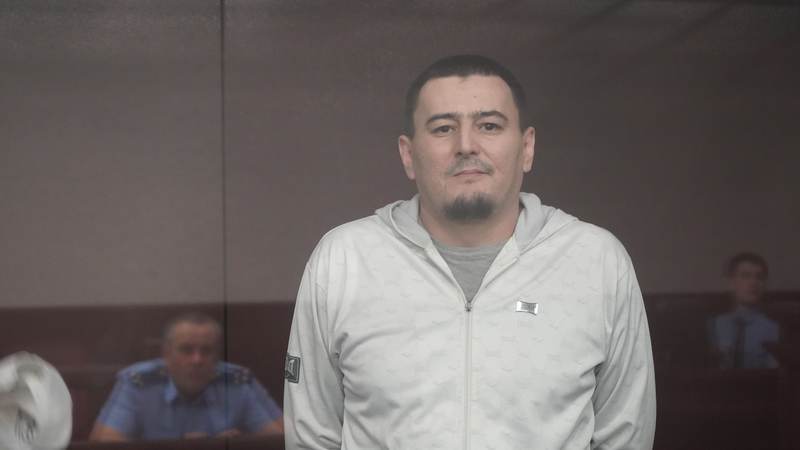
Sentenced to 14 years in prison, the correspondent of Crimean Solidarity Vilen Temeriyanov was returned to pre-trial detention center 1 in Rostov-on-Don after a month in a medical facility, the website of the Constitutional Court reports.
He was previously sent to the hospital to have a tumor removed from his shoulder. However, according to Temeriyanov‘s wife, who refers to her lawyer, the operation never took place. During his hospitalization, he underwent an examination and passed the necessary tests. In addition, doctors took material from the tumor for biochemical analysis, but its results were not ready at the time of discharge.
Temeriyanov also needs to undergo a computed tomography scan. For this, he will have to be hospitalized again.
The criminal case of the so-called “first Dzhankoi group” of “Hizb ut-Tahrir” (an Islamic party banned in russia) against Enver Krosh, citizen journalist Vilen Temeriyanov, Rinat Aliyev, Murat Mustafayev, Seyitiaga Abbozov, and Edem Bekirov was initiated after mass searches and detentions in Dzhankoi in August 2022.
All defendants were accused of involvement in the activities of the Islamic political party “Hizb ut-Tahrir”. Later, Murat Mustafayev’s case was separated into separate proceedings.
Enver Krosh was charged with organizing the activities of a terrorist organization (Section 1 of Article 205.5 of the Criminal Code of the russian federation), the remaining defendants with participation in its activities (Section 2 of Article 205.5 of the Criminal Code of the russian federation). In addition, all defendants were charged under Article 278 of the Criminal Code of the russian federation (“Forcible seizure of power”).
After the searches, Enver Krosh reported torture and beatings by security forces.
After the detention, all the defendants, except for Seyitiaga Abbozov, were sent to a pre-trial detention center. Due to Abbozov’s health, a preventive measure in the form of house arrest was chosen.
One of the pieces of evidence for the prosecution was an audio recording of a conversation made in 2015. In it, the participants in the conversation discuss the issues of prayer and fasting. According to lawyer Emil Kurbedinov, the recording was removed from the FSB archives eight years later.
“A number of issues regarding prayer were discussed: how to perform prayer, what Sharia norms exist on this issue, etc. Of course, there were no conversations about terrorism and extremism. This once again proves the nature of the criminal cases [against our clients]. “All these years, these people have not been prosecuted and have not posed any danger to society,” the defense attorney said.
During the court debates, the lawyers pointed to numerous violations committed during the investigation and trial, including possible falsification of evidence. In particular, independent experts established that the books recognized as material evidence contained about ten fingerprints of different individuals, but there were no fingerprints of the accused among them.
Despite this, the judge of the Southern District Military Court, Timur Mashukov, refused to send the material evidence for additional verification to the Military Investigative Committee and did not attach the expert study to the case files.
In November 2025, the court sentenced Enver Krosh to 19 years in prison, Edem Bekirov and Rinat Aliyev to 15 years, Vilen Temeriyanov to 14 years, and Seyitiaga Abbozov to 13 years.
The court ruled that Enver Krosh must serve the first four years in prison and the rest of the term in a maximum-security colony. The other convicts were sentenced to three years in prison with subsequent transfer to maximum-security colonies.
The Islamic political party Hizb ut-Tahrir was recognized as a terrorist organization in russia by a decision of the Supreme Court of the russian federation on February 14, 2003 — four years before the adoption of the law “On Counteracting Terrorism”. The session was held in closed session without the participation of representatives of the organization, which, according to human rights activists, violated the principles of publicity and adversarial nature.
In many countries, including Ukraine, the party’s activities are not banned. Its supporters hold public events, distribute printed materials, and openly express their views.
After russia’s annexation of Crimea in 2014, criminal cases have been regularly opened on the peninsula on charges of involvement in Hizb ut-Tahrir.
Human rights activists believe that the persecution of Crimean Tatars in such cases is not related to terrorism, but to their peaceful religious and civic activities, criticism of the authorities, and protests against political repression.











Discussion about this post