 THE NATIONAL UNION OF
JOURNALISTS OF UKRAINE
THE NATIONAL UNION OF
JOURNALISTS OF UKRAINE
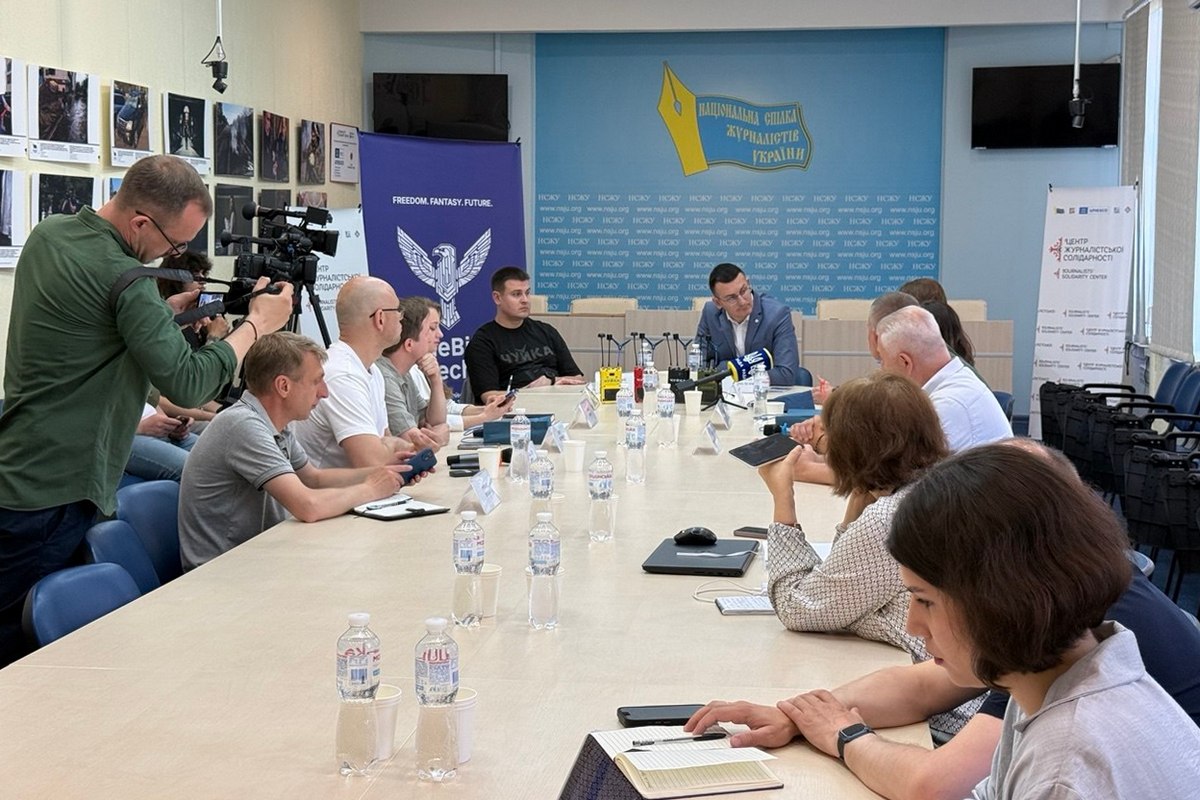
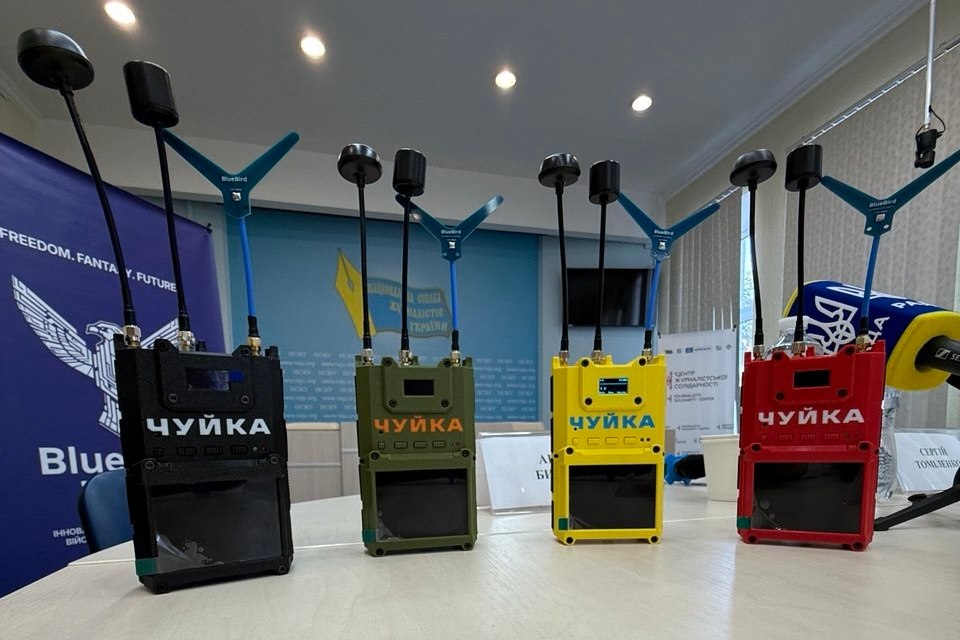
The National Union of Journalists of Ukraine (NUJU) and the Kyiv Journalists’ Solidarity Center (JSC) continue to expand security tools for media workers working in frontline regions and covering the consequences of russian aggression. A new batch of Chuika drone detectors from the Ukrainian manufacturer BlueBird Tech has joined the network of the NUJU’s JSCs.
The transfer of equipment that helps journalists detect danger in time took place at the NUJU’s central office during the expert discussion “Journalism in the conditions of drone attacks: safety, support and professional solidarity.” The discussion brought together a wide range of participants and turned out to be emotional, tense and dynamic.
The need for new, modern security tools is growing with each new day of the war. russian drones are increasingly posing a threat to journalists working near the front line or documenting the aftermath of shelling. So, during the discussion at the NUJU, the participants spoke not only about technical means of protection to save lives, but also about the need to update security protocols for working in the conditions of a drone war.
“All journalists in the frontline zone have become military intelligence officers,” Yevheniya Kravchuk.
“The issue of early detection of drones and adaptation of security protocols is one of the central topics of the discussion,” emphasized NUJU President Sergiy Tomilenko. “We are glad to receive a new batch of five Chuika drone detectors. At the end of last year, we were given the same number of devices. The Ukrainian-made devices, provided by BlueBird Tech, will be available for free use by media professionals through the JSCs in Kyiv and Sumy, and will also help journalists and local producers in the Odesa Region in their work.”
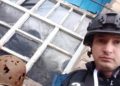
Recently, Channel 5 war correspondent Olha Kalinovska, who was also present at the event, was concussed as a result of an attack by a russian FPV drone while working near the front line. This incident became another reminder of how quickly the risks for journalists who document the course of the war and its consequences are changing.
“Our commission collects facts of crimes against journalism as a profession, when attacks are suffered not only by Ukrainian journalists, but also by representatives of foreign media. In the current conditions, media workers perform a special role – they record war crimes, and this is a direct link to the punishment of those who commit such acts,” said Yevheniya Kravchuk, Verkhovna Rada member / Head of the Interim Commission of the Verkhovna Rada of Ukraine to Investigate Violations of the Rights of Journalists and russia’s Crimes against Journalists. “The commission has been working for half a year, during which time they have analyzed almost a thousand war crimes of various categories. I believe that all journalists working in border and frontline areas have turned into war correspondents. And now we must do everything possible to protect them from threats. These devices provide such an opportunity. There can’t be too many of them.”
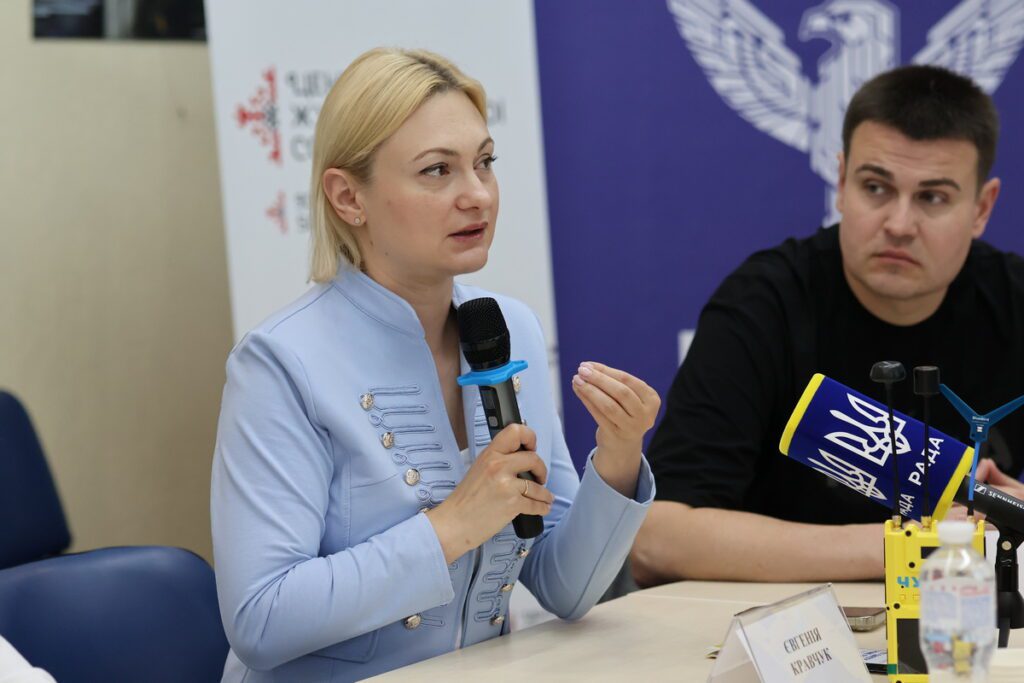
Without the “Press” label, but with a drone detector – today’s protocol
The discussion was joined by Sebra Ayres, an American journalist, media trainer, representative of Fondation Hirondelle in Ukraine, Andrii Kovalenko, international media producer, executive director of the Academy of Ukrainian Press, Yuliya Yanchuk, deputy director of the Department of Strategic Communications and Promotion of Ukrainian Culture of the Ministry of Culture of Ukraine, Iryna Sampan, military journalist, author and host of YT “On the Line of Fire”, Oleksandr Yaryha, director of the news agency Pivnich Media (Sumy), Roman Rybak, editor-in-chief of the news agency Pivnich Media (Sumy), local producers and fixers.
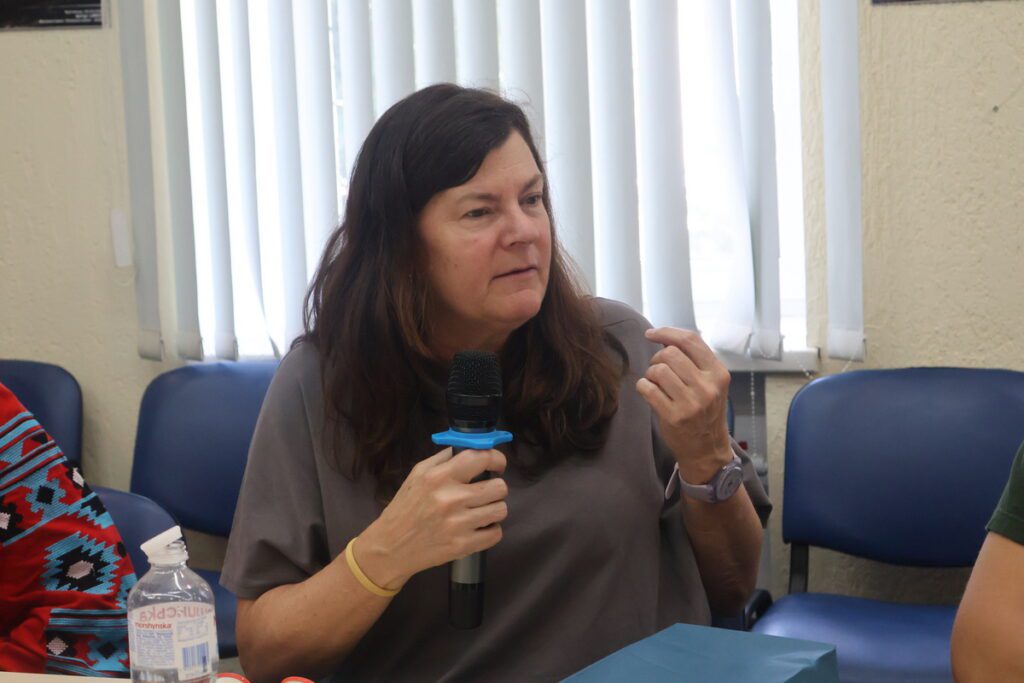
During the event, Sergiy Tomilenko presented a new practical miniguide on the safety of journalists in the face of drone threats. The publication was prepared by the NUJU experts with the support of the Swiss Fondation Hirondelle and contains practical recommendations for working in conditions of increased risks.
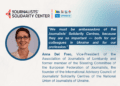
“It is important that war correspondents, in particular from Kharkiv, also took part in the preparation of the manual. The advice has been tested in practice,” stressed Sergiy Tomilenko. “russia deliberately ignores all international standards for the safety of journalists, so one of the key pieces of advice to colleagues today: do not use the “Press” marking. As for protection, the Ukrainian-made devices provided by BlueBird Tech will be available for free use by media workers through the JSCs in Kyiv and Sumy and will also help journalists and local producers in the Odesa Region in their work.”
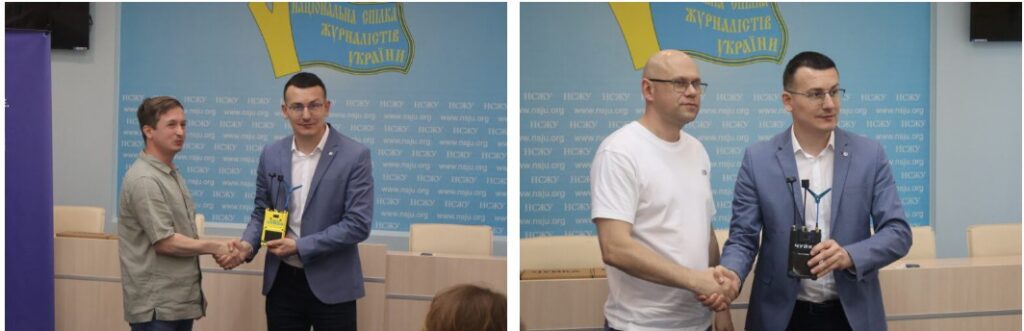
Sergiy Tomilenko handed over Chuikas to Artem Perfilov, a journalist, local producer of international media (Odesa), as well as Oleksandr Yaryza, director of the Pivnich Media news agency (Sumy).
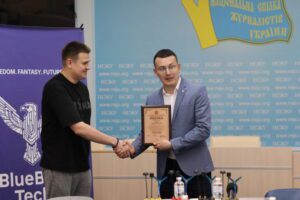
Sergiy Tomilenko also presented the Gratitude of the Commander of the Ground Forces of the Armed Forces of Ukraine to Andrii Bystrov, PR consultant of BlueBird Tech, expert on the safety of journalists of the NUJU JSC.
An important block of the discussion was devoted to Ukrainian fixers and local producers who provide work for representatives of international media in Ukraine so that the world knows the truth about russian aggression. The dialogue continued within the framework of the initiative launched by journalist and local producer of international media Artem Perfilov with the support of the international journalistic project Re Ukraine.
Participants spoke about growing security threats, professional development, legal protection and the prospects for creating a professional association that could represent the interests of the community and work on developing cooperation with international media organizations. The role of the NUJU JSCs as safe support points for media professionals was highlighted.
“Anti-drone protection of military drones is not only about detecting, but also destroying drones,” Yaroslav Yurchyshyn
Commenting on the event to the NUJU information service, Yaroslav Yurchyshyn, People’s Deputy of Ukraine, Chairperson of the Verkhovna Rada Committee on Freedom of Speech, noted that international humanitarian law needs improvement in the area of guaranteeing the safety of civilians.
“russia, ignoring it, systematically and purposefully hunts journalists on the front line and beyond,” said the People’s Deputy. “If earlier the PRESS sign on the bulletproof vest served as protection, today it is a target. Despite the fact that the target is far from the front line, because modern war is a war not only of people, but also of drones. Therefore, it is critically important for us to convince the international community that anti-drone protection, which not only identifies but also destroys drones, is a “must have” for a modern military officer or any journalist in a warring country. We have already convinced them that drone detectors are protection. Now it’s up to the “extinguishers” of drones, that is, anti-drone means.”
Yaroslav Yurchyshyn expressed his gratitude to the NUJU for constantly raising this issue on international platforms.
“I really hope that the NUJU will be able to involve the European and International Federations of Journalists in this work. Because this is not only a problem of Ukraine. Drone attacks on journalists are becoming a very dangerous global trend. We must stop this deadly trend,” the deputy emphasized.
The discussion showed that the russian war constantly creates new challenges for the media. Therefore, along with protecting freedom of speech, the issues of physical safety of journalists, support for local producers and fixers, and the development of network professional mutual assistance are of great importance. This is what the initiatives of the NUJU and the JSCs are aimed at.
* * *
Since the beginning of the full-scale russian invasion, the NUJU has made the safety of media workers one of the priority areas of its work. The backbone of this activity has been the network of JSCs operating in Kyiv, Kharkiv, Dnipro, Zaporizhzhia, Lviv, Ivano-Frankivsk, and Sumy. Here, journalists can receive protective equipment and technical assistance, security consultations and psychological support, as well as work in safe conditions.
The NUJU pays special attention to those who work in frontline and border regions. The NUJU regularly provides editorial offices and war correspondents with bulletproof vests, helmets, first-aid kits, communication equipment and portable power supplies – everything that is essential for working near the combat zone today.
With the widespread use of russian drones, a new threat has emerged for the media, and the NUJU consistently raises the issue of the safety of journalists in the context of drone warfare – both domestically and internationally. The NUJU emphasizes that traditional approaches to protecting media workers no longer meet real risks, as journalists are increasingly becoming targets even at a considerable distance from the front line.
The response to these challenges has been to provide journalists with drone detectors through a network of JSCs and to prepare practical recommendations for working in conditions of increasing drone threats. With the support of international partners, the NUJU is developing and distributing updated safety protocols adapted to the realities of modern warfare.
In parallel, the NUJU documents cases of injuries, deaths and persecution of journalists, seeks an international response to crimes against the media and advocates for strengthening their protection through the European (EFJ) and International (IFJ) Federations of Journalists, UNESCO and other international organizations. The NUJU consistently reminds: attacks on journalists are not only an infringement on freedom of speech, but also war crimes that must receive proper legal assessment.
NUJU Information Service









Discussion about this post