

 THE NATIONAL UNION OF
JOURNALISTS OF UKRAINE
THE NATIONAL UNION OF
JOURNALISTS OF UKRAINE
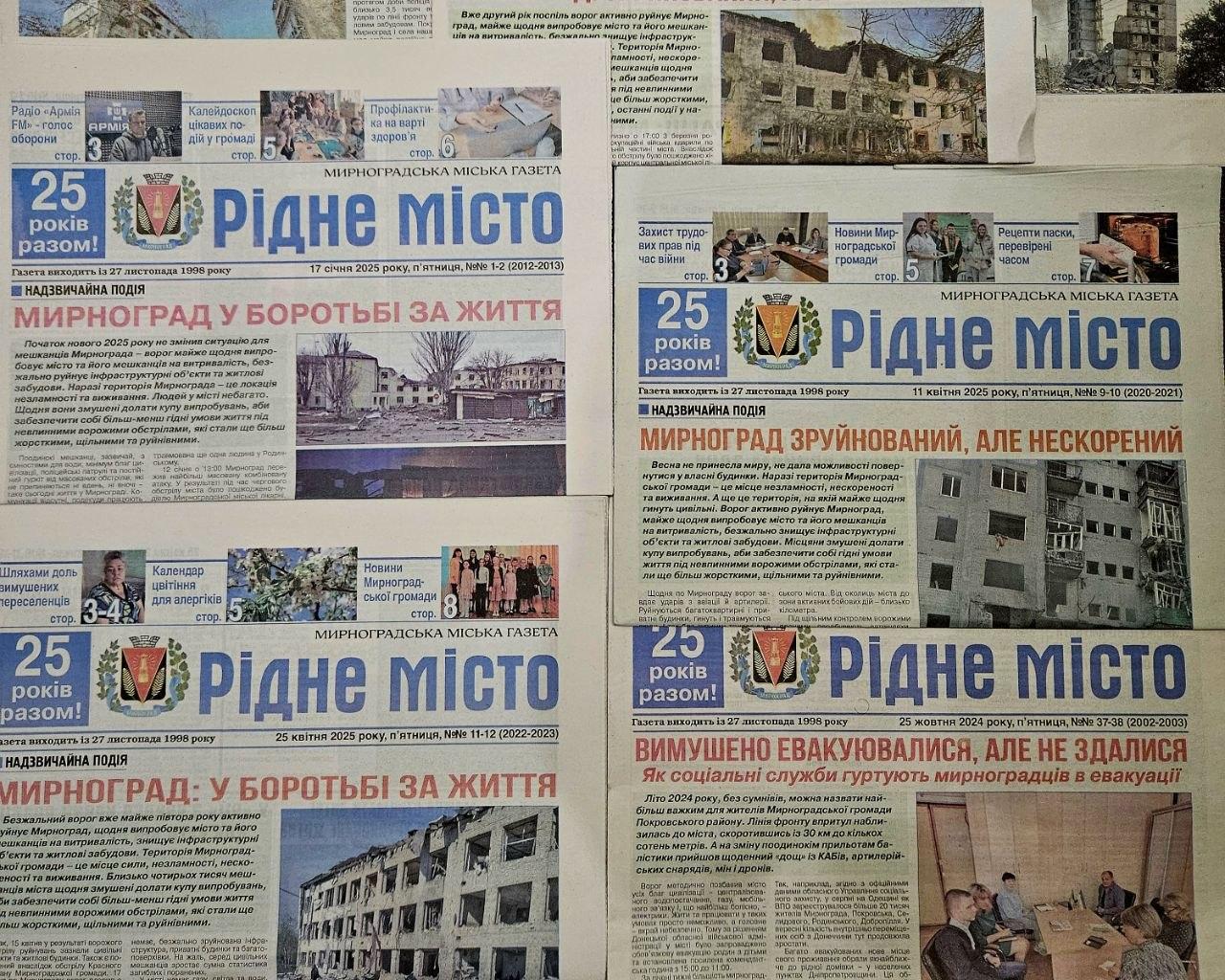
The newsroom of the Ridne Misto newspaper from Myrnohrad in the Donetsk Region has officially lost its home. Just the other day, the editor-in-chief of the publication, Maksym Zabelia, received documentary confirmation from the Commission that records the destruction at the city military administration: the two-story building, where the newsroom worked for many years, has been destroyed and cannot be restored.
As of today, Myrnohrad is not officially recognized as occupied — it is a territory where active hostilities are ongoing, there is a constant drone siege. That is why receiving confirmation of the destruction turned out to be a separate, long story.
“Back in late March and early April, the commission, based on the collected photo and video materials, decided that the building where the newsroom was located was destroyed as a result of repeated shelling and was beyond repair. We received several confirming photos from them. They are of poor quality, but they probably cannot be better – none of the commission representatives have been allowed to enter the community territory for the past year,” Maksym Zabelia tells the National Union of Journalists of Ukraine (NUJU) information service.
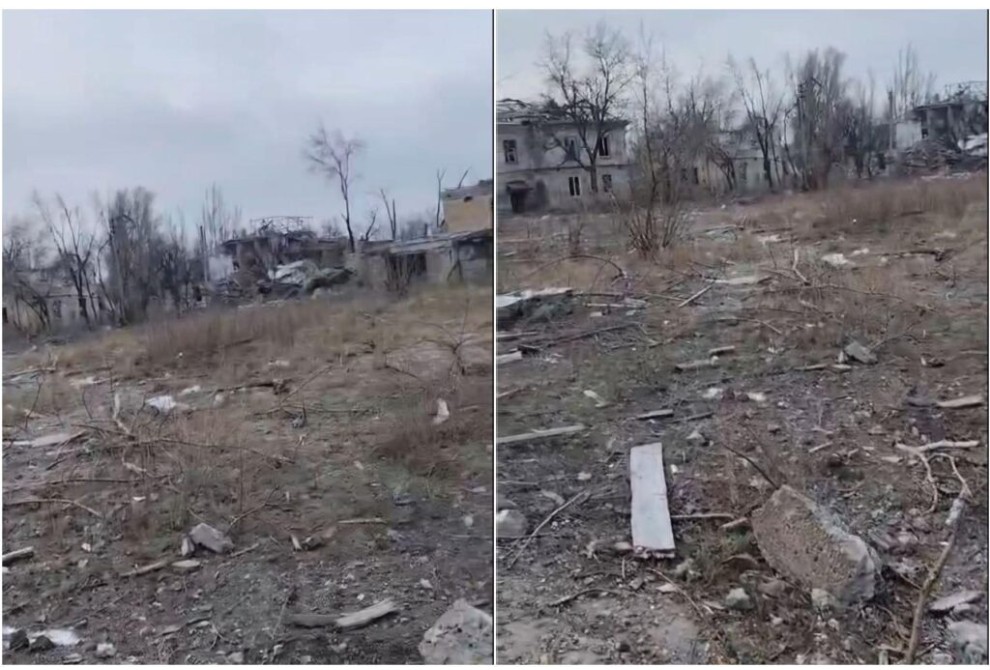
The residents of the building first reported the destruction of the newsroom. After all, only a third of the premises that Ridne Misto received on a preferential lease for 15 years after denationalization in 2018 were office space. The rest of the area was occupied by residential apartments.
“The windows flew out, but the walls were still standing”
“Ridne Misto is the only printed newspaper in the Donetsk Region that continued to be published continuously after the start of a full-scale war. In the fall of 2024, the editorial team was forced to leave Myrnohrad — the city was already preparing for a drone siege, and the first raids on the newsroom took place even then,” says Maksym Zabelia.
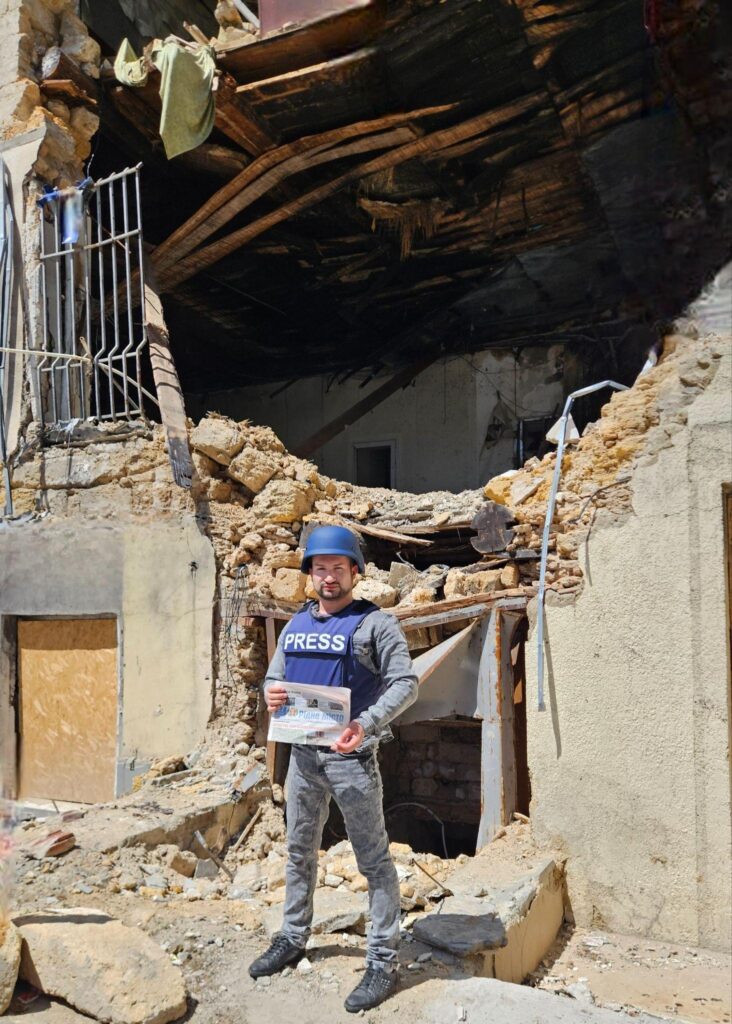
“The windows flew out, but the walls were still standing. It was no longer possible to take out furniture — we evacuated laptops, the minimum amount of equipment that allowed us to organize remote workplaces,” the editor recalls the first destruction.
Until the summer of 2025, the media team was still able to make its way to Myrnohrad — to bring circulation to readers who remained in the city, and gradually take out binders and archives. In total, during this time, the newsroom recorded three raids, each of which worsened the condition of the building.
Since November, the military officially banned anyone from entering the city. The opportunity to visit the newsroom was lost. Journalists first heard about the final destruction of the newsroom building in early 2026 from the military — and only now have they received documentary confirmation.
“We, as journalists, have all lost our personal housing, apartments during the time after the evacuation and are currently in the status of IDPs. But the newsroom united us all mentally. This loss is a heavy blow. It is not only about material losses. We had an emotional attachment to this room: it is a place where we worked together, met with readers, organized events, our editorial life was in full swing here. We hoped that, perhaps, someday it would unite us again. Unfortunately, today this hope has vanished,” says Maksym Zabelia.
“The archive with the century-old history of Myrnohrad was completely lost”
Since some property could not be taken out — first it was physically impossible, and then no one dared to go under the drones — it was also destroyed.
“The office had furniture, air conditioners, large A1 printers, and uninterruptible power supplies that were purchased in the pre-war period. They were not new, but they helped us work in 2022–2024, when there were massive power outages,” Maksym Zabelia says.
A painful loss is history. The editorial archive of the newspaper Ridne Misto from 1998 was taken out. But the newspaper had a predecessor, the multi-circulation newspaper Shakhtar, which was published for over a hundred years, and its archives, unfortunately, are lost.
“These were huge cabinets with filing cabinets: the century-old path that the settlements of Pokrovsky District went through before the formation of modern Myrnohrad. Unfortunately, this has been completely lost,” the editor states.
“Editorial life continues in conditions of relocation”
Before the full-scale invasion, Ridne Misto with a circulation of over 6,000 copies was the highest-circulation newspaper in the region, a profitable enterprise with a staff of up to ten people. The last two years, grant funds have helped the publication stay afloat.
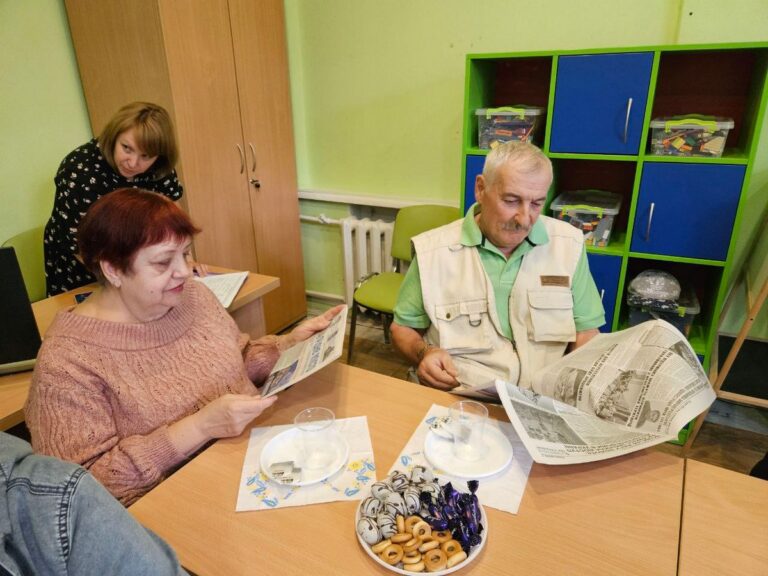
Despite the loss of premises and the move, Ridne Misto continues to work. Today, 4.5 full-time employees remain from the former staff. The team is scattered between Dnipropetrovsk, Poltava and Odesa Regions. The editor himself relocated to Odesa. According to Maksym Zabielia, the newsroom currently does not need a stationary office: the team works between the IDP hubs, where a significant part of the readers are concentrated. The current print run is 3,200 copies twice a month. At the end of January 2026, the newsroom launched its own website ridnemisto-myrnohrad.com.ua and social networks.
As earlier reported, in March it became known about the destruction of the newsroom building of the Mezhyvskyi Meridian in the Mezhove leaves in the Dnipropetrovsk Region. According to the newspaper’s editor-in-chief, Yevhen Khrypun, the building was destroyed by a russian guided-bomb hit.
In total, the NUJU monitoring records at least seven verified cases of damage/destruction of newsrooms and media infrastructure for the period January – April 2026 and 12 – during May 2026.
In addition, in May, as a result of russian shelling, the Center for Labor Rehabilitation of Disabled Persons “Printing House” was significantly damaged – the only full-cycle printing house in the unoccupied part of the Donetsk Region, where regional newspapers were also printed.
Viktoriya Maliovana
NUJU Information Service















Discussion about this post