

 THE NATIONAL UNION OF
JOURNALISTS OF UKRAINE
THE NATIONAL UNION OF
JOURNALISTS OF UKRAINE
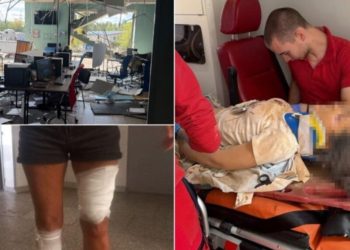
Russia’s drones have pushed the zone of continuous targeting up to 25 km from the front line, meaning a reporter may have as little as 30-60 seconds to react after an alert. In the first four months of 2026, the National Union of Journalists of Ukraine recorded 38 verified incidents against journalists or media infrastructure, most of them caused by drones.
NUJU argues that international safety protocols built around “PRESS” markings and heavy body armour are outdated. Through its expert platforms, it is bringing together war correspondents, parliament representatives, the Ministry of Culture, fixers, and manufacturers to help revise these standards.
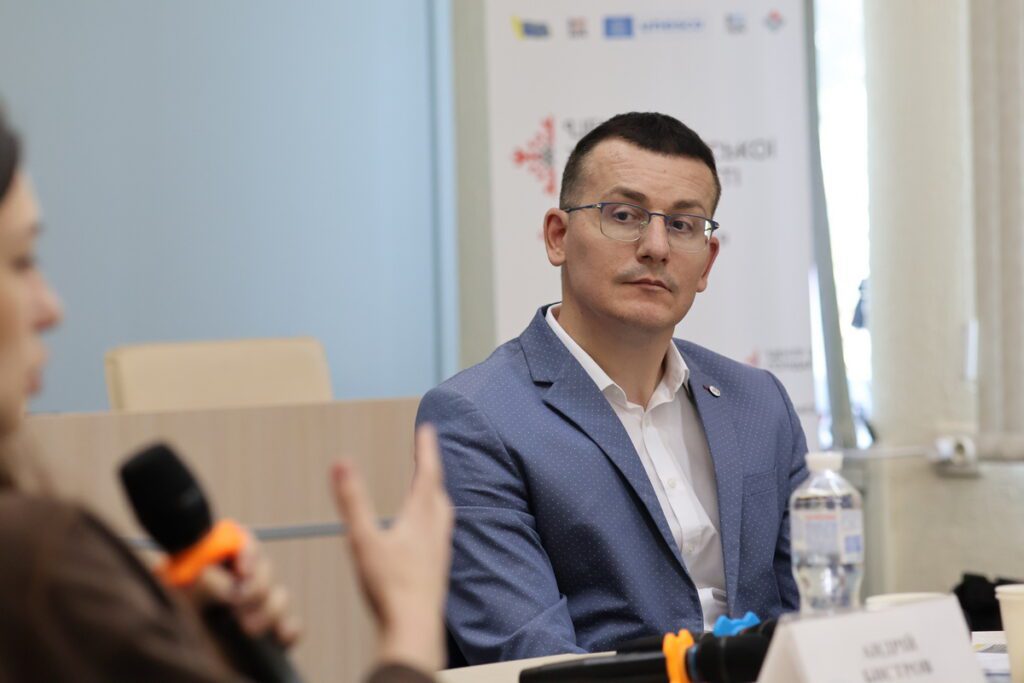
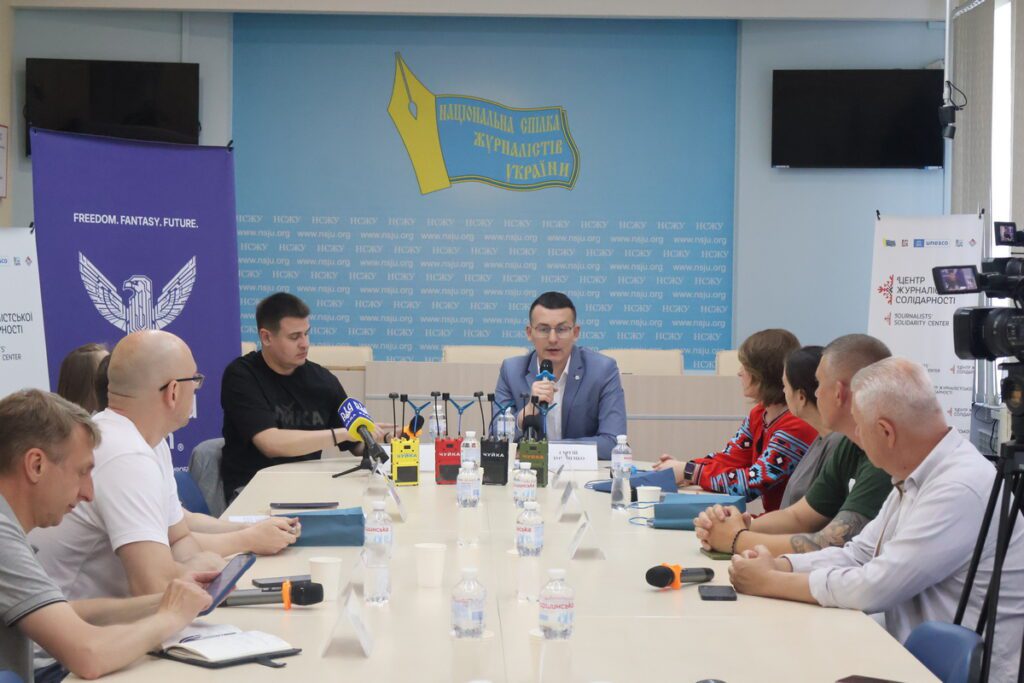
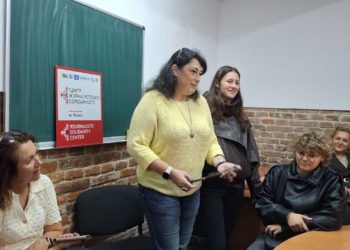
The clearest evidence comes from reporters themselves. At a recent NUJU expert discussion in Kyiv titled “Journalism under drone attacks: safety, support and professional solidarity,” war correspondents working in frontline regions described case by case how the rules they were trained to follow are now putting them at risk. Three key points repeatedly emerged in their testimonies: protective gear needs to be lighter, “PRESS” markings should be abandoned, and drone detectors only buy minutes rather than ensure real safety. Journalist Iryna Sampan, who has spent 11 years covering the war, outlined all three points based on her own field experience.
“Donʼt run from a drone, you’ll die tired”
The author of the YouTube project On the Line of Fire, Iryna Sampan, speaks about her most recent work in the Sumy region. Iryna’s main observation is that every trip now differs from the previous one, even within a month or two, because safety conditions change that quickly. Habit, she warns, has become dangerous.
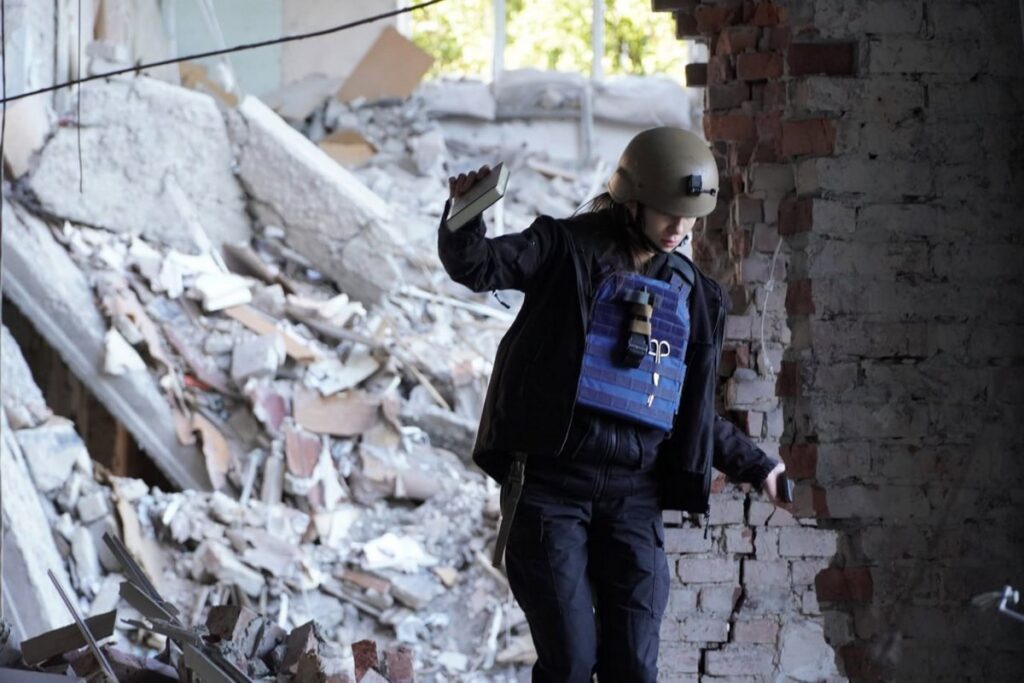
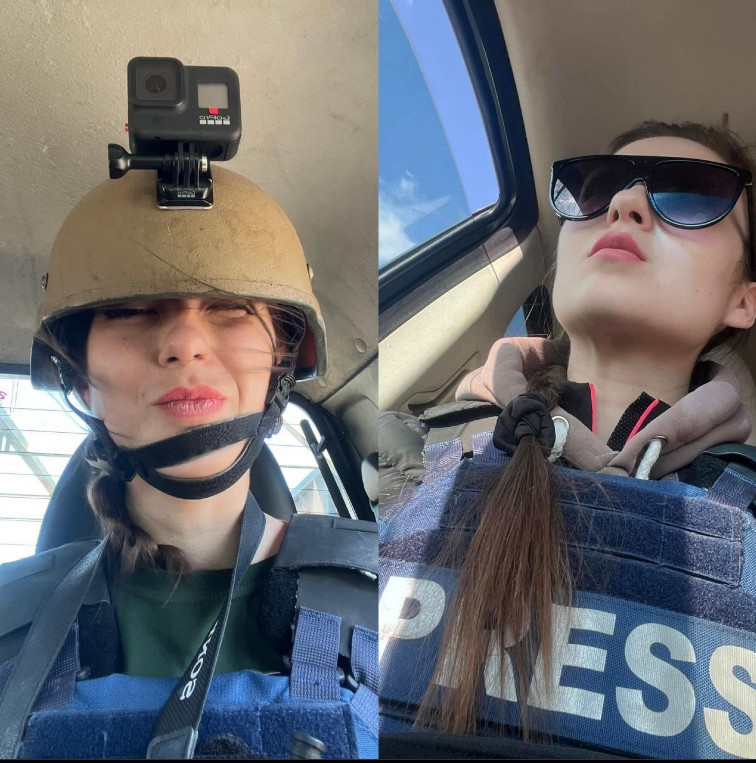
The first thing to change, she believes, is physical training. “A reporterʼs job has changed when it comes to physical fitness, because now you have to walk a great deal and run a great deal. Body armour has to be as light as possible. And helmets too”. She offers a concrete case: “I had a ten-kilometre route, and I was already taking my helmet off at the two-kilometre mark, because my neck was giving out. I couldnʼt think, couldnʼt walk, I no longer cared about the FPV…
The second is about visibility. “I always believed in doing things properly: BBC standards, clear PRESS markings, everything. But every time I go out on assignment, it becomes more obvious that those rules no longer make sense. All they do is put me and the people with me at greater risk.” Markings, she says, endanger the whole group: blue plate carriers are an outright minus, black ones too, lettering too. The soldiers who escort such reporters say it plainly: “You people aren’t normal. Do you want to survive, or do you want to follow standards that nobody follows anymore?”
“The question of how close you are to the front is now relative”
According to NUJU, these experiences highlight the need to review existing safety standards. Protocols developed for earlier conflicts do not fully reflect the risks posed by widespread drone warfare, frontline journalists argue.
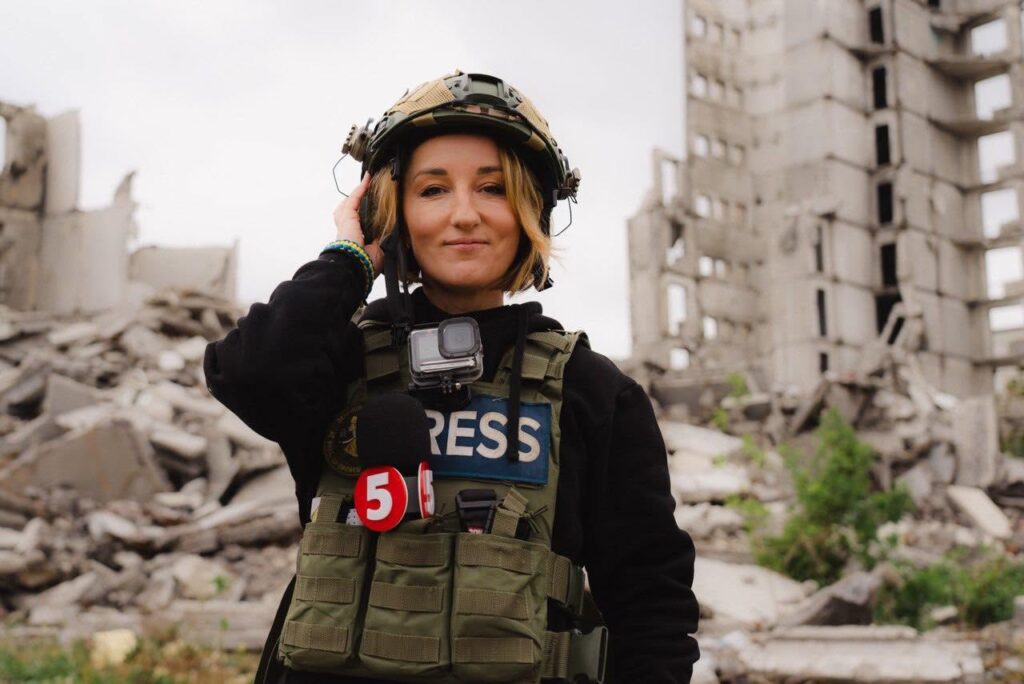
Olha Kalinovska, a war correspondent for 5 Channel, described her experience as a series of two separate incidents that illustrate how quickly safety conditions on the front lines are changing.
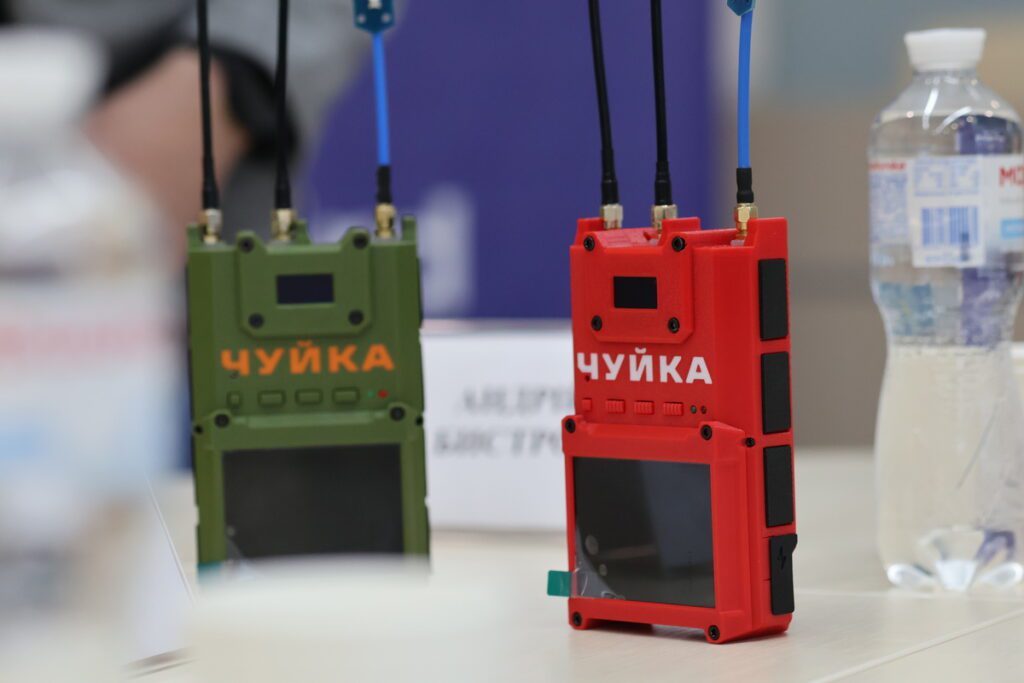
Her first concussion, she said, occurred after a mine explosion on the way to Pokrovsk (Donetsk region). She recalled that the driver was using a “Chuyka” drone detector and kept checking it as they moved through an area with heavy drone activity. According to Kalinovska, the driver warned her that the key issue was not noticing when their own vehicle appeared on the detector’s screen. In Pokrovsk, she said, he once managed to escape a dangerous situation after spotting his car on the device. She described that moment as a kind of warning system that ultimately helped them get out safely.
The second incident was different. Kalinovska said that although they also had a “Chuyka” detector during that mission, it did not register the drone that later struck them. She explained that the drone was operating via a fibre-optic connection and therefore did not appear on the system. Olha added that the area was relatively far from the front line and that there were no mobile fire teams nearby, which she considers a serious gap in protection. In her view, effective safety now requires both drone detection systems capable of identifying FPV threats and military units able to respond immediately.
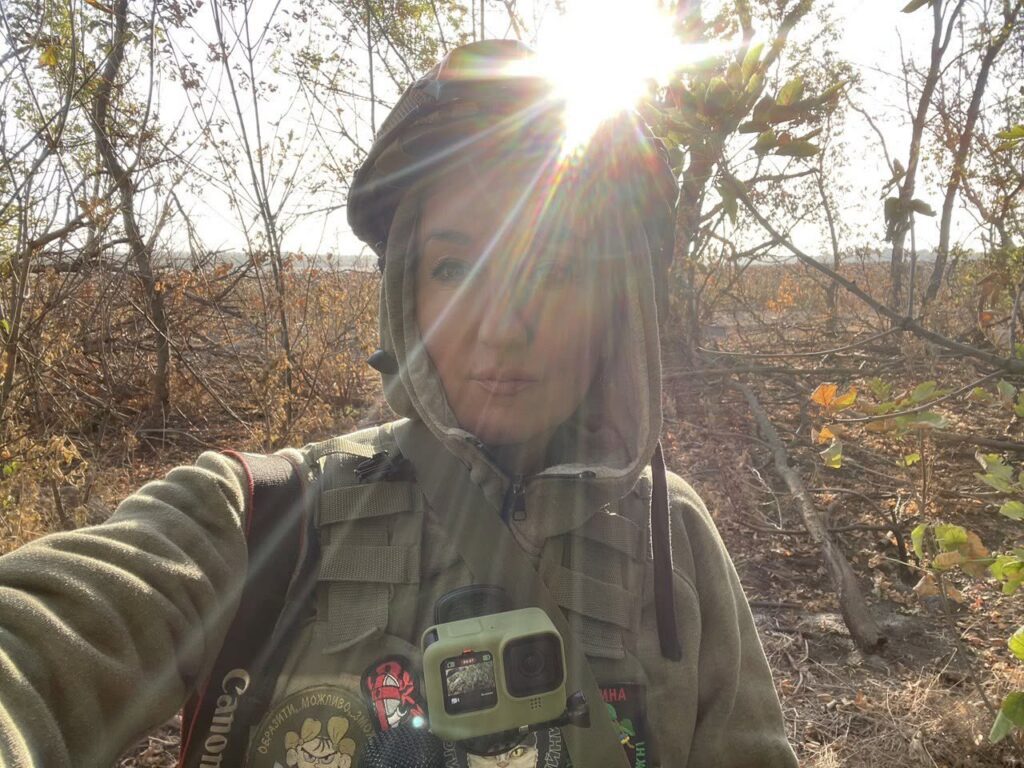
She said the team unexpectedly came around a corner and had no time to react. “I saw a Russian drone head-on for the first time,” she recalled, adding that she was sitting in the front seat and filming at the time. Kalinovska noted that the drone could clearly identify her as a journalist because she was carrying a camera. When the driver shouted “FPV,” she instinctively turned her camera towards it, but the device did not capture the moment properly. What she saw, she said, was the drone rising and then attacking them directly.
Olha admitted her understanding of safety has changed fundamentally. “Journalists are in ever greater danger, and you don’t need to go five kilometres to the front,” she said. She stressed that distance is no longer a reliable measure of risk. In her view, the question of how close you are to the front is, in fact, quite relative. The roads considered relatively safe can become dangerous within days as targeting patterns shift.
Speaking about different locations, Kalinovska said conditions vary but remain unpredictable. “In Druzhkivka, everything is serious — there are detectors and mobile fire teams,” she said, “but FPV drones, fibre-optic drones and ‘Molniya’ drones fly through every five to ten minutes.” She added that even in larger cities the situation is unstable: “In Zaporizhzhia, the air raid alert doesn’t switch off. Something is constantly flying over the city,” she added. “The same in Dnipro.”
“From a group of ten people, it’s more interesting to hit someone who doesn’t look like the others, or someone with a camera,” Kalinovska said. “That’s how the risk is often perceived from above, especially when a camera makes you stand out.”
“Golden minutes”: how drone warnings are reshaping field safety
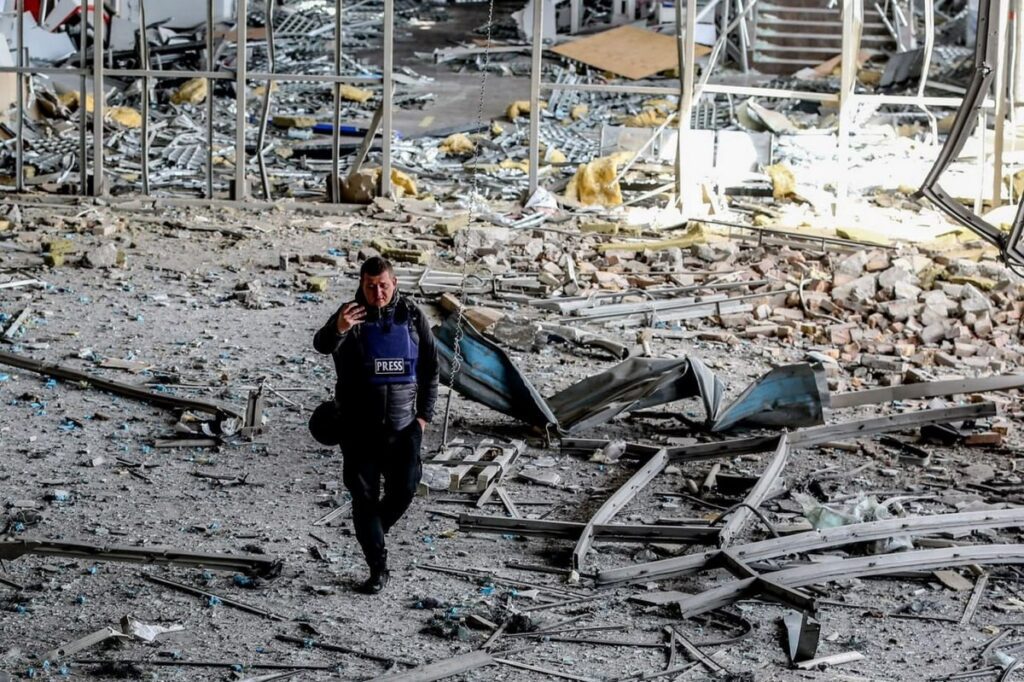
Andrii Kovalenko, war correspondent, a well-known producer for international media and executive director of the Academy of Ukrainian Press, describes the “Chuyka” drone detector as something that helps with decision-making under pressure. “Of course it doesn’t shoot down drones,” he said. “But it gives you those golden minutes that can save your life.” In his view, those minutes are often decisive when working inside what he called “kill zones,” which, as he stressed, are expanding rapidly.
Kovalenko pointed out that this shift is forcing changes in journalistic practice itself. “Everything is changing — safety protocols included,” he said. “Military technology evolves, and journalists have to adapt the way we work as well.”
He also highlighted the importance of working alongside the military in high-risk areas. According to him, press officers usually have better situational awareness of what is in the air and how threats are evolving. He noted that journalists increasingly rely on military escorts, as independent movement closer to the front line has become largely impossible.
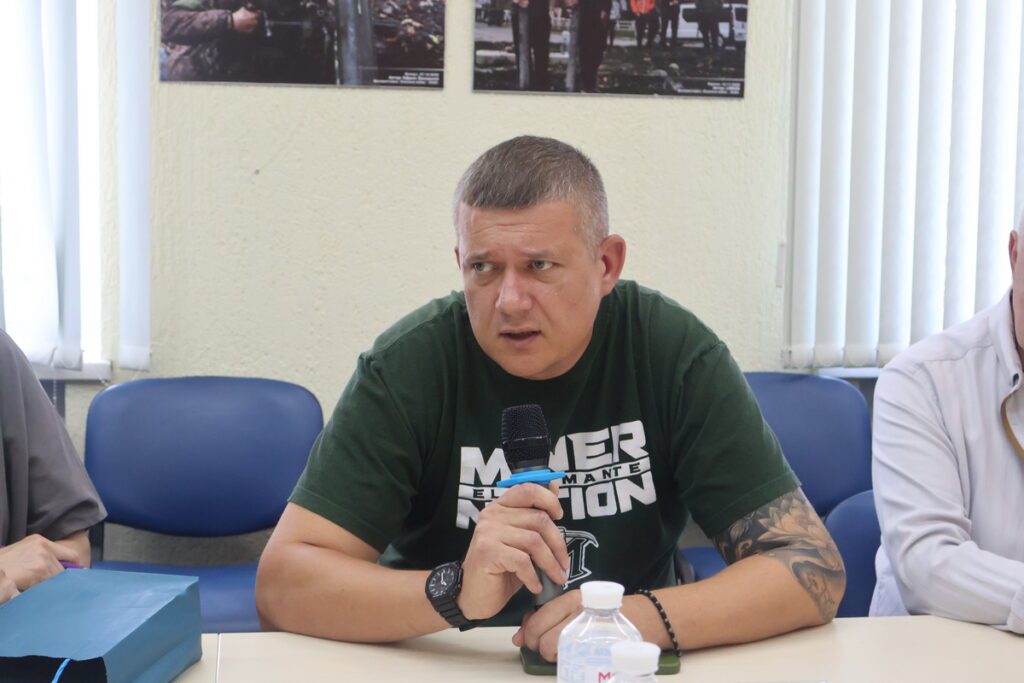
In his opinion, not all drones are detectable by current systems, pointing to an incident in January in the Donetsk region where a drone was not picked up by the detector. He said this illustrates the limits of existing safety tools and the need to treat them as support systems. Andrii further noted that military teams operate under different procedures in the field, including dividing sectors and coordinating air awareness during movement. “They look at the sky differently,” he said, adding that such coordination can involve several personnel working together in one vehicle.
Reflecting on the broader evolution of risk, Kovalenko said that earlier threats such as artillery and missile strikes have been replaced or complemented by constant drone activity. He recalled that even shelters do not always provide protection in modern conditions. The psychological impact of fieldwork is another challenge war reporters face: journalists often process trauma only after assignments are over. In his view, burnout and delayed psychological reactions are common and require more attention within the profession.
Discussing equipment, he said there is an ongoing debate among journalists about whether body armour should be visible or concealed. While some prefer to blend in more with civilians to build trust, Andrii said he personally supports wearing protective gear, as it remains a basic safeguard.
“Training programmes become outdated faster than they finish,” he said. “Effective work in war zones now requires constant adaptation and close attention to rapidly changing conditions”.
“For the first time, parliament is investigating crimes against a single profession”
MP Yevheniia Kravchuk, who chairs the Ukraine’s parliamentary commission on crimes against journalists, emphasised that, for the first time, parliament is investigating crimes committed against a single profession — journalists. Over six months, the commission compiled a report covering nearly a thousand war crimes since 2022, including killings, captivity, drone and missile strikes on hotels used by journalists, the theft of media trademarks in occupied territories, and pressure on reporters’ relatives aimed at forcing them to abandon their work.
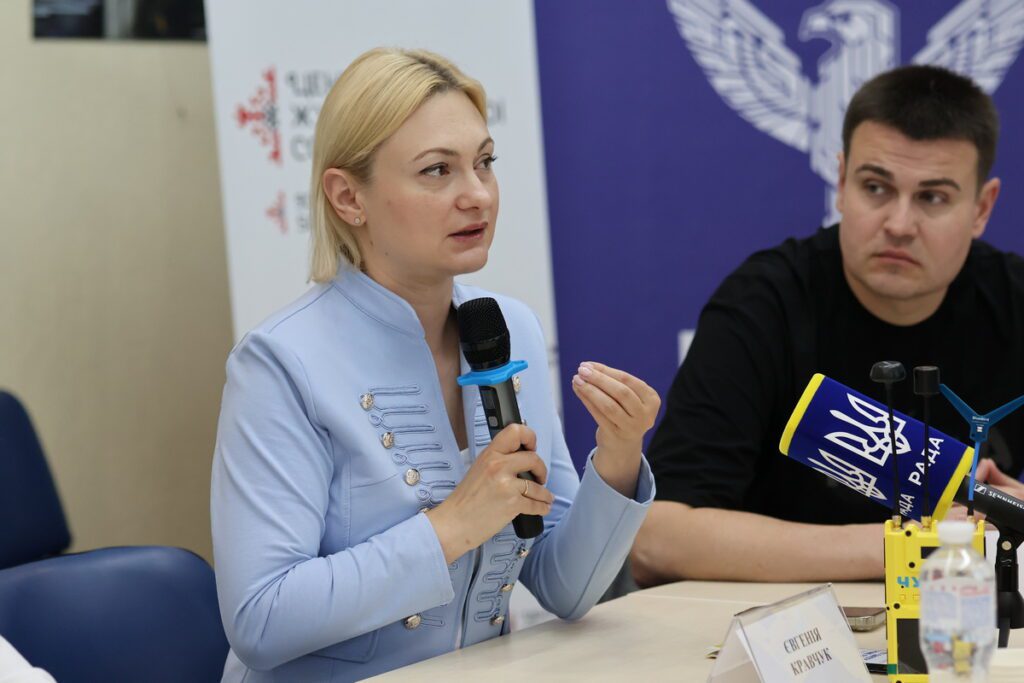
For Kravchuk, documenting these cases is directly linked to accountability, as journalists reporting on Russian attacks are also gathering evidence for future prosecutions. She drew a historical parallel with Nazi propagandists brought to trial at Nuremberg.
The commission is preparing a dedicated resolution for the upcoming summer session of the OSCE Parliamentary Assembly, in cooperation with the French delegation, whose four journalists have been killed in the war, including a recent drone strike victim she described as a photographer carrying no press markings but clearly working with a camera.
Protective equipment such as drone detectors, she argued, does not change journalists’ civilian status, adding that “there is no longer any doubt among international structures that this is what journalists use to protect themselves.”
Should journalists be allowed to bring a drone down?
One of the most contested questions that is currently discussed in the Ukrainian media community is whether journalists should be able to carry devices capable of downing a drone. Under current rules they cannot. “We, as journalists, have no right to carry any drone-interception devices — nets, net-guns or pump-action shotguns,” said Andrii Kovalenko, “though among our colleagues the question is already being raised.” For now, he added, reporters can only rely on their escorts: “Thank God if the soldiers accompanying you have them, because that very often saves lives.”
According to Olha Kalinovska, if there had been military in our pickup, the drone could simply have been put out. There is no common position among correspondents.
“Some colleagues are already obtaining weapons permits and have no doubt itʼs needed,” claimed Iryna Sampan. “Others say categorically no, no weapon, not even a net-gun that could be identified as one.” She counts herself among the first group: “It isnʼt always a press officer who can handle a weapon thatʼs with you.” The decision, she argued, has to be taken together.
This guide is NUJU’s attempt to put what journalists have learned
The National Union of Journalists of Ukraine has turned these lessons into a practical mini-guide, Journalist Safety Under Drone Threat: Working and Surviving in Frontline Areas of Ukraine, prepared with the Swiss foundation Fondation Hirondelle and shaped by war correspondents.
NUJU’s practical mini-guide “Journalist Safety Under Drone Threat: Working and Surviving in Frontline Areas of Ukraine”, prepared with Fondation Hirondelle
NUJU President Sergiy Tomilenko first presented it at the 32nd Congress of the International Federation of Journalists in Paris. Its central recommendation is not to use “PRESS” markings, which were recognized as decades-old symbols of protection, but now no longer guarantee safety. On 23 October 2025, FREEDOM TV journalists Alona Hramova and Yevhen Karmazin were killed by a Russian drone strike in Kramatorsk, 20 kilometres from the front. In some situations, markings can make a journalist a target. Any moving object can be engaged.
The guide is built around five levels of safety: physical protection (light, full-coverage body armour and helmet, neutral clothing, no markings); detection (detectors kept constantly active, with the caveat that fibre-optic drones remain invisible to standard equipment, so a detector is a support tool); behaviour, identified as the most critical level (minimal time in the open, unpredictable movement, frequent changes of position); organisation (small teams, alternative routes, a shelter plan before every assignment); and coordination (contact with military press officers and constant monitoring of channels).
Sabra Ayres, the American journalist who represents Fondation Hirondelle in Ukraine and whose foundation funded the creation of the guide, said the aim is to keep learning what reporters need: “We hear and understand that in the frontline regions the risks for journalists are changing very fast. We want to understand better how we can help — it was very interesting to hear what you said about which training is needed now.”
New “Chuyka” detectors for the frontline network
“In 2022, the main threat came from shelling. Now danger increasingly comes from something watching you from the sky,” stressed Sergiy Tomilenko.
The shift forced NUJU to rethink journalist safety from the ground up. The network of its Journalists’ Solidarity Centres began organising specialised training and distributing drone detectors free of charge. These tools have become as essential to frontline reporting as body armour once was.
The need for new, modern safety tools grew with every day of the war, and the discussion ended with NUJU and the Kyiv Journalistsʼ Solidarity Centre once again expanding the equipment available to reporters working in frontline regions and covering the aftermath of Russian strikes. A new batch of “Chuyka” drone detectors, made by the Ukrainian manufacturer BlueBird Tech, has replenished the Union’s network of Journalistsʼ Solidarity Centres, with units going for free use by journalists through the Centres in Kyiv, Sumy and Odesa region.
Valeriia Muskharina
NUJU Information Service
The Journalists’ Solidarity Centers network is an initiative of the National Union of Journalists of Ukraine, implemented in cooperation with the International Federation of Journalists and the European Federation of Journalists. Our main goal is to support media workers working in Ukraine during the war. The Centers operate in Kyiv, Kharkiv, Zaporizhzhia, Dnipro, Lviv and Ivano-Frankivsk. The project is part of UNESCO’s broader efforts to support journalists’ safety and freedom of expression in Ukraine. The Network’s activities in the summer of 2026 are supported by the Ukrainian Media Fund Nordic.











Discussion about this post