
 THE NATIONAL UNION OF
JOURNALISTS OF UKRAINE
THE NATIONAL UNION OF
JOURNALISTS OF UKRAINE
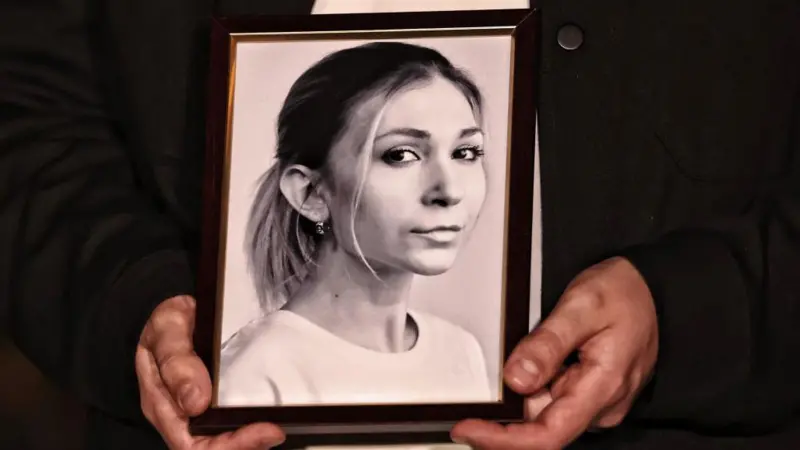
The russian special services could have been monitoring journalist Victoria Roshchina from the moment she crossed the border with the russian federation on July 26, 2023. The Ukrainian investigation believes that there were probably “bugs” in the apartment she rented in occupied Enerhodar on August 4.
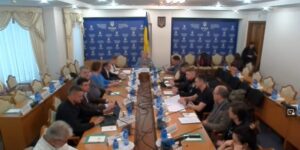
New facts in the case of the journalist tortured in russian captivity were announced during a meeting of the Interim Investigative Commission (IIC) of the Verkhovna Rada of Ukraine to investigate the crimes of the russian federation against journalists and the media on May 26, 2026. On that day, the meeting spoke exclusively about the case of Victoria Roshchina.
The head of the IIC, Verkhovna Rada member Yevheniya Kravchuk, gathered at one table representatives of the National Police, the Prosecutor General’s Office, the Coordination Headquarters for the Treatment of Prisoners, investigative journalists who worked to restore the circumstances of the death of a colleague, as well as representatives of international organizations protecting press freedom.
“The name of this journalist, tortured by the russians, reminds us of the terrible price of the truth,” Yevheniya Kravchuk emphasized, opening the meeting. She also announced that during the OSCE Parliamentary Assembly in The Hague, a vote is planned for a resolution that will call for sanctions to prosecute russian criminals involved in the torture and murder of Ukrainian journalists. As part of this work, an annual Victory for Victoria Day event is also planned – in memory of the journalist and her colleagues who risk their lives for the sake of the truth.
Victoria‘s route
The First Deputy Head of the Main Investigation Department of the National Police of Ukraine, Serhii Panteleiev, and the investigator conducting the case presented a detailed reconstruction of what happened to Roshchina after she crossed the state border of Ukraine towards Poland on July 25, 2023. The very next day, the journalist entered russia through the territory of Latvia, and on August 1, 2023, she arrived in the occupied Enerhodar, Zaporizhzhia Region.
The purpose of her trip was to document war crimes – in particular, places of illegal detention of civilians in the captured Enerhodar police department, as well as places near the Zaporizhzhia nuclear power plant (NPP).
Among the new details made public at the meeting is the investigative version regarding the apartment that Roshchina rented in Enerhodar. According to information that is currently being verified, the apartment could have been equipped with audio recording and surveillance devices. Moreover, the investigation adheres to the version that from the moment Victoria crossed the border into russian territory, she could already have been under surveillance. Contact with the journalist was lost on August 4, 2023, after which she was captured by representatives of armed formations controlled by the russian federation.
The investigation established the entire route of the journalist’s movements: first she was held in the premises of the captured police department in Enerhodar, then in Melitopol, probably in the premises of the Ruslan Komplekt LLC, which the occupiers used as a place of illegal detention of civilians. It was there, according to the information available to the investigation, that Victoria was subjected to cruel treatment – there were cut wounds on her body.
No later than December 30, 2023, she was taken to pre-trial detention center No. 2 in Taganrog, where the journalist was subjected to systematic beatings and psychological pressure. The reason for the particularly cruel treatment was her refusal to cooperate with the administration, learn the russian anthem, and comply with illegal demands. During this period, she suffered a serious bodily injury – a fracture of the occipital bone.
On August 5, 2025, the head of pre-trial detention center No. 2 in Taganrog, Alexandr Shtoda, was notified of suspicion under Section 1 of Article 438 of the Criminal Code of Ukraine (violation of the laws and customs of war). Thanks to the work of the parliament, this person was included in the sanctions list of the European Union.
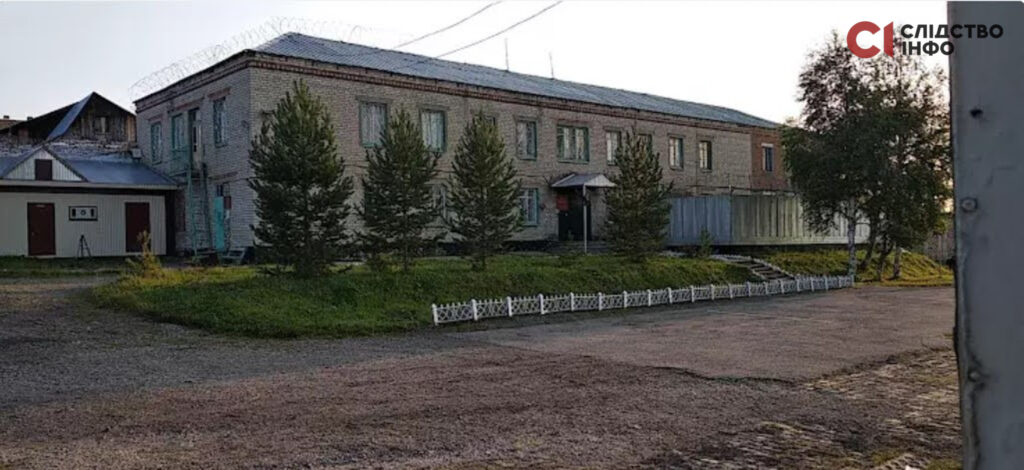
In September 2024, Victoria, together with other prisoners, was transferred to pre-trial detention center No. 3 in the city of Kizel, Perm Krai – according to the investigation, this institution was specially prepared for the detention of civilian Ukrainian hostages. At the time of arrival, the journalist was already physically exhausted. On September 19, 2024, Victoria Roshchina died in the Kizel pre-trial detention center. On December 26, 2025, the acting head of this pre-trial detention center, Vyacheslav Perevozkin, was informed of suspicion under Sections 1 and 2 of Article 438 of the Criminal Code of Ukraine – cruel treatment of the civilian population, combined with premeditated murder.
Why Victoria was not returned to her homeland
The representative of the Coordination Headquarters for the Treatment of Prisoners, Petro Yatsenko, reported that today 30 Ukrainian journalists and media activists were confirmed to be in russian captivity, and seven more were missing. Four colleagues were released.
Yatsenko knew Victoria personally.
“She was very fragile, very thin, very physically weak, but extremely internally strong, purposeful journalist, professional,” he emphasized.
The Coordination Headquarters worked on her release, and an agreement on her return was reached. The exchange was supposed to take place on September 8, 2024. However, it never happened.
The editor-in-chief of the Ukrayinska Pravda online publication, Sevgil Musayeva, published new information that Victoria Project journalists received from a former employee of the russian penitentiary system: according to this version, the exchange was stopped by FSB representatives from Moscow, who came to Victoria in Perm for interrogation. The investigation is working out this version along with others.
Petro Yatsenko suggested that the russians could delay the journalist’s return due to her extremely serious health condition and unwillingness to publicize it.
“Her health condition was so bad that it did not allow her to be immediately handed over, or the russians did not want all the world’s media to see in what condition she was returning,” said Petro Yatsenko.
“She went step by step, she was not afraid of anything”
First Deputy Mayor of Enerhodar Ivan Samoidiuk said that Victoria appeared at the city hall in the first days after the occupation.
“We didn’t just persuade her (to stop journalistic investigations, – Ed.), we forbade her, we would have held her hands,” said Ivan Samoidiuk.
The journalist insisted on visiting the russian battalion stationed near the Zaporizhzhia NPP.
“She went step by step, she was not afraid of anything. She was so dominated by a sense of journalistic duty,” recalls the official.
Samoidiuk gave an important explanation of the decision-making system in the occupation structures.
“Ordinary guards receive orders on who to feed, who to starve, who to keep in the cold. Only FSB representatives work with detainees,” he said.
According to his official, the fate of public figures – journalists, representatives of local self-government bodies – is decided not by local FSB agents, but at a much higher level: “The decision is made by the Moscow office.”
The official also expressed his belief that the murder of Victoria Roshchina and the mayor of Dniprorudnyi, Yevhen Matveiev, in Kizel was “not an accidental mistake by the guards,” but a purposeful campaign to intimidate Ukrainian prisoners.
Testimony of investigative journalists Yanina Korniienko (Slidstvo.Info) said that Victoria was hidden from inspections: when russian ombudsmen came to the Taganrog pre-trial detention center, she was transferred to a separate room. In the hospital, where she spent a month, she was guarded by armed men – this is atypical for ordinary prisoners. Victoria‘s body was not returned to Ukraine for six months, which may also indicate a cover-up of the crime.
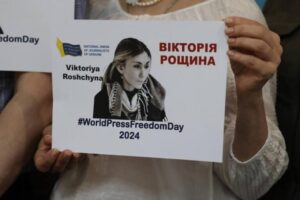
Former editor-in-chief of Hromadske Andzhelina Kariakina, who personally worked with Victoria, emphasized that another Ukrainian journalist, Anastasiya Hlukhovska from Melitopol, was in russian captivity with Roshchina at different stages, and she is now probably following the same route: Melitopol – Taganrog – Kizel. Anastasiya was also subjected to electric shock torture.
“Her relatives are waiting for her here. We still have a chance to save her together,” Kariakina emphasized, calling for measures to be taken to return the journalist.
She also read the testimony of Victoria‘s cellmate from Taganrog about her condition in the summer of 2024: “She was skin and bones. I have only seen one person in this condition – my godmother, who was dying of cancer.” The woman gave Victoria’s weight as about 30 kilograms.
Journalist Stanyslav Kozliuk stressed that in the system of russian places of detention everyone is tortured equally – military, civilians, and journalists. He cited the testimony of a former employee of the Federal Penitentiary Service who fled russia: at the beginning of the full-scale invasion at a meeting of the Federal Penitentiary Service special forces, General Igor Potapenko from St. Petersburg ordered the employees to be as cruel as possible.
Sevgil Musayeva listed the cities and subjects of the federation where places of detention are distinguished by their particular cruelty towards Ukrainians: Chelyabinsk (according to recent data – in first place), Mordovia, Taganrog, the colony in Pakino, Vladimir Oblast, where Dmytro Khyliuk was held.
Reporters Without Borders’ Pauline Maufrais shared the latest accounts of Victoria’s final days in Kisel.
“All the witnesses we spoke to described her as an emaciated woman with skin the color of wax, who reminded them of victims of the Holodomor. She refused to eat because she said she could not eat while Ukrainian soldiers and civilians were being tortured in the next cell,” said Pauline Maufrais.
The day before her death, on September 18, Victoria asked for tea, as it was already very cold in Kisel. The guards refused. On the day of her death, on September 19, her cellmates alerted the guards that the journalist could not get out of bed. Unknown people came to the cell, and the other prisoners were taken out. What happened next is unknown.
Antoine Bernard, the Director of Advocacy and Strategic Litigation at Reporters Without Borders, stressed the need to find international ways to hold the russian leadership accountable for systematic crimes against journalists. Karol Luczka, a representative of the International Press Institute, noted that The issue of the death of Victoria Roshchina should become one of the areas of work of the Special Tribunal for the Crime of russian Aggression against Ukraine of the Council of Europe.
Systemic nature of crimes against journalists
The Head of the Department for Combating Crimes Committed in Armed Conflict, the Prosecutor General’s Office, Yurii Rud, reported that 128 criminal proceedings are currently being investigated regarding crimes against journalists, in which 139 media workers and their relatives were recognized as victims. According to law enforcement officers, 68 journalists were killed, 49 were injured, and 19 were illegally imprisoned. Among foreign colleagues, 9 were killed and 23 were injured.
“Journalists who risk their lives for the sake of the truth defend the right of the world to know about this war,” emphasized Serhii Panteleiev and added that in the russian federation violence against journalists is systematically used as a tool of war. He emphasized: in the case of Victoria Roshchina, the murder itself has been proven, not just the fact of death.
Yurii Rud reported that the Prosecutor General’s Office considers crimes against Ukrainian journalists not only as isolated war crimes, but as a manifestation of the genocidal policy of the russian federation and crimes against humanity:
“Having destroyed the most active part of the Ukrainian community, they are trying to destroy the entire Ukrainian people in this way.”
IIC Decision
Following the results of the meeting, the IIC adopted a number of decisions:
- to send an appeal to the Prosecutor General with a proposal to resume regular meetings of the interdepartmental working group with representatives of the media community;
- to prepare a request through the Verkhovna Rada Commissioner for Human Rights to the International Committee of the Red Cross regarding attempts to visit Ukrainian hostages, in particular in Taganrog and Kizel;
- to hold a separate meeting dedicated to the possibility of sanctions pressure on the Federal Penitentiary Service of russia and the international campaign for the recognition of this structure as a criminal organization – by analogy with the decision of the Nuremberg Tribunal regarding the SS, as proposed by People’s Deputy Bohdan Yaremenko.
“Julius Fučík, a journalist who was destroyed in Nazi concentration camps, wrote the book “Reportage written under the gallows”. It seems to me that we should write the last report for Victoria,” Yaremenko concluded.
The head of the commission, Yevheniya Kravchuk, emphasized that the IIC will raise these issues at the OSCE Parliamentary Assembly in The Hague and during meetings at the International Criminal Court.
“We all have one goal – to punish all those responsible for the death and torture of Victoria, to prevent this from happening again to any of the Ukrainian civilian hostages, including journalists, and to achieve the release of all civilian hostages,” emphasized Yevheniya Kravchuk.
* * *
The National Union of Journalists of Ukraine (NUJU) has been consistently involved in the case of Victoria Roshchina since her disappearance in the occupied territory in 2023. The NUJU has systematically raised the issue of her release at the international level, maintained contacts with the journalist’s father, and drawn the attention of international partners to the problem of the illegal detention of Ukrainian journalists by russia. After the news of the death of Victoria Roshchina in russian captivity, the NUJU continued its advocacy work, seeking to establish all the circumstances of her death and bring the perpetrators to justice.
The NUJU has taken the initiative to award Victoria Roshchina the title of Hero of Ukraine posthumously – for her professional courage, work in the occupied territories and commitment to journalistic standards while covering russian aggression. The Union‘s corresponding appeal became part of a campaign to internationally and publicly honor the journalist’s memory.
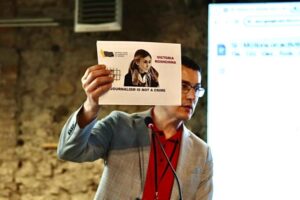
The NUJU systematically covers the course of the investigation and collects evidence of crimes against media workers. The NUJU pays particular attention to the international solidarity of the journalistic community in the Roshchina case and support for campaigns to release Ukrainian journalists from russian captivity.
After the news of the death of Victoria Roshchina in russian captivity, the NUJU has intensified international advocacy in the journalist’s case. In particular, the European Federation of Journalists (EFJ), of which the NUJU is a partner and collective member of, adopted a separate resolution dedicated to Victoria Roshchina at its General Assembly in Budapest on June 2–3, 2025. The document emphasizes the need for an international investigation into the circumstances of the death of the Ukrainian journalist, holding russia accountable, and strengthening international mechanisms for the protection of journalists working in conditions of war and occupation. The EFJ resolution considers the case of Victoria Roshchina as one of the most high-profile examples of russia’s systematic persecution of Ukrainian journalists and a symbol of impunity for crimes against media workers. The document also emphasizes the need for international solidarity with Ukrainian journalists and support for organizations that protect them.
NUJU President Sergiy Tomilenko and NUJU First Secretary Lina Kushch are members of the Expert Council of the Parliament of Ukraine of the Interim Investigative Commission to investigate the facts of violations of the rights of journalists and media representatives during the russian aggression against Ukraine. Hearings and expert discussions dedicated to crimes against journalists are held, in particular, on the NUJU platform.
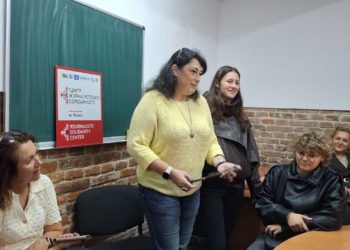
An important element of support for the journalistic community during the war was the network of NUJU Journalists’ Solidarity Center (JSC), created with the support of international partners. The centers provide journalists with legal, psychological, humanitarian and security assistance and are part of the Union‘s systematic human rights work in wartime.
The NUJU emphasizes that the case of Victoria Roshchina is not only the tragedy of an individual journalist, but also a symbol of russia’s systemic crimes against freedom of speech and independent journalism.
NUJU Information Service










Discussion about this post