 THE NATIONAL UNION OF
JOURNALISTS OF UKRAINE
THE NATIONAL UNION OF
JOURNALISTS OF UKRAINE
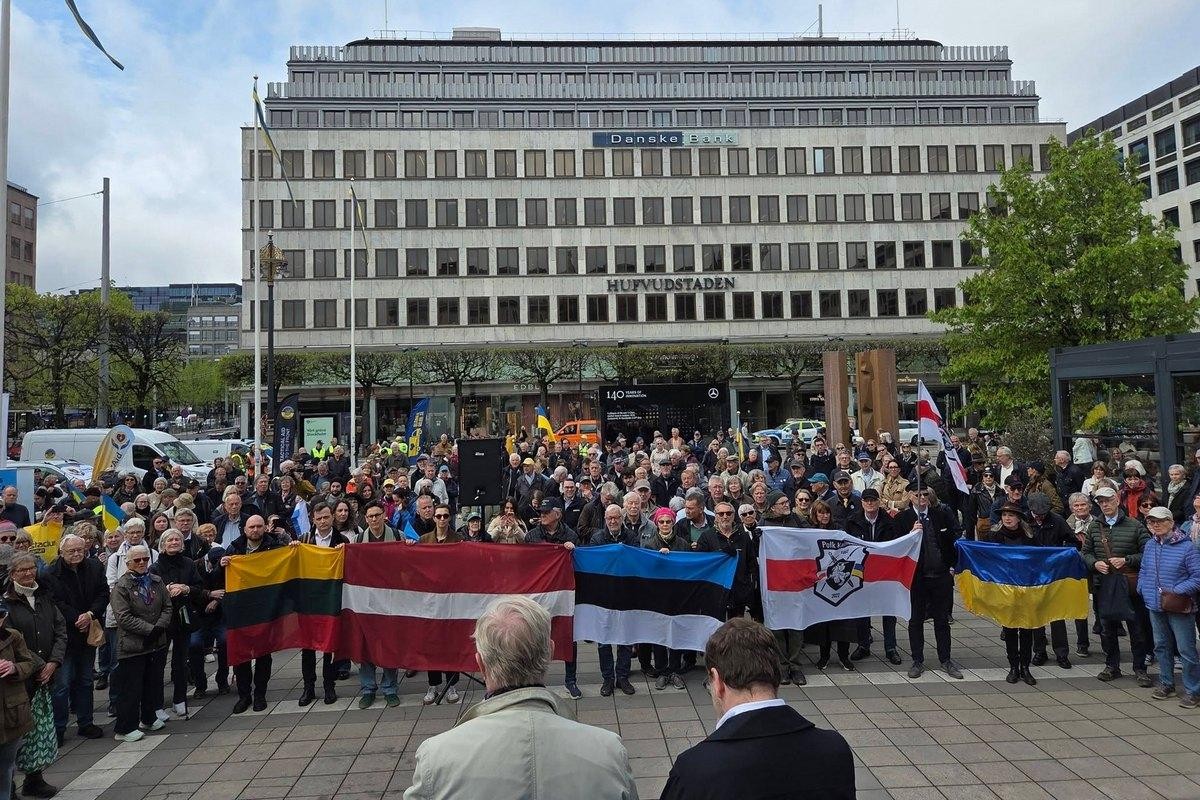
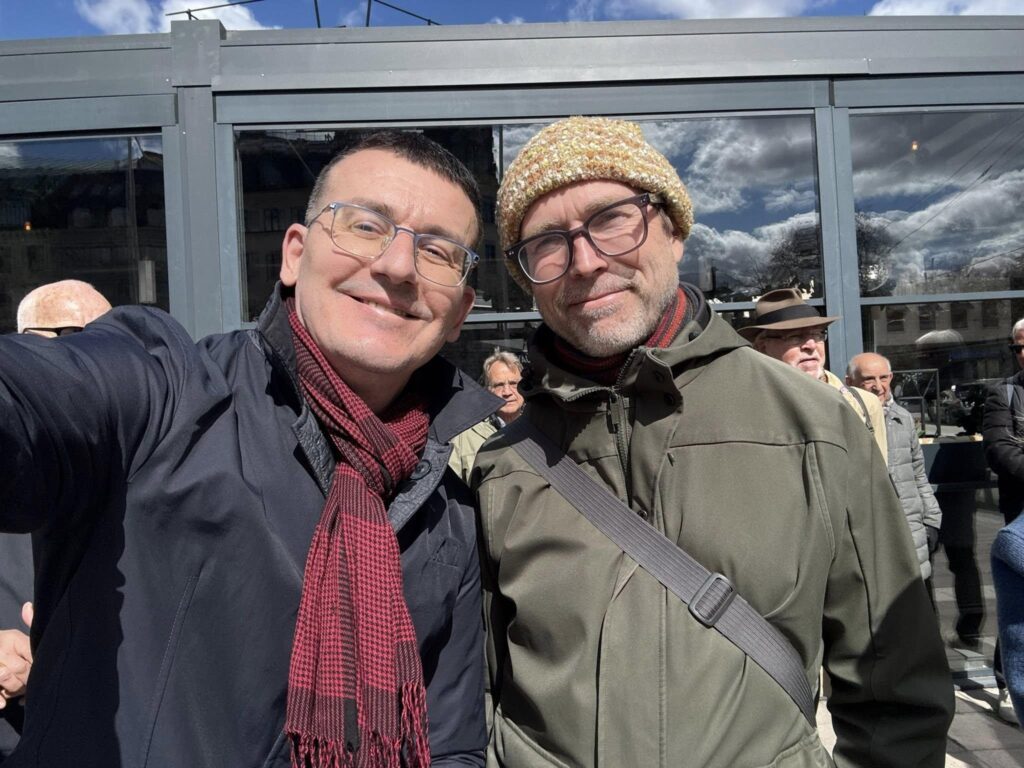
Every Monday at noon, for nearly four years now, people have gathered on Norrmalmstorg Square in central Stockholm. Rain or shine, through winter and summer – half an hour, every week, for Ukraine. Behind this tradition lies a uniquely Swedish story – one that didn’t begin in 2022, but more than thirty years ago. Recently, the square welcomed a new voice: Sergiy Tomilenko, President of the National Union of Journalists of Ukraine, who brought with him “the voice of Ukrainian journalism.”
How it began: the Baltics, 1990
Norrmalmstorg is one of Stockholmʼs most recognisable public spaces. Travel guides mention it in connection with the 1973 bank robbery that gave the world the term “Stockholm syndrome.” But for Swedes who value freedom, the square carries a different meaning.
Since 1994, it has been home to the Fountain of Freedom – a memorial sculpture by Björne Selder, erected in honour of the Baltic nationsʼ struggle for independence. The “Monday Movement” (Måndagsrörelsen) was born as a Swedish civic initiative in solidarity with Estonia, Latvia, and Lithuania in their fight to break free from the Soviet Union. The first gathering took place on 19 March 1990; the 79th and final one of that era on 16 September 1991. They met every Monday at noon. The initiative was launched by civic figures Gunnar Hökmark, Peeter Luksep, Håkan Holmberg, and Andres Küng.
From a makeshift platform, often nothing more than a beer crate or a loading pallet, leading Swedish and Baltic politicians addressed the crowds, as did members of the United States Congress. Not everyone was eager to take part. Some on the political left cautioned that Baltic aspirations for freedom would “disrupt order” in Europe.
Yet the movement grew to a remarkable scale. Beyond the weekly Norrmalmstorg gatherings, monthly meetings took place in fifty Swedish cities. One of its central figures was Gunnar Hökmark, then a young politician, later a Member of the European Parliament and head of the think tank Frivärld. Years later, he would recall the tension of those days: when Soviet troops attacked Vilnius and Riga, contingency plans existed to establish Baltic governments-in-exile on Swedish soil. Despite provocations that cost several lives, the process of liberation moved forward, and independence became a fact.
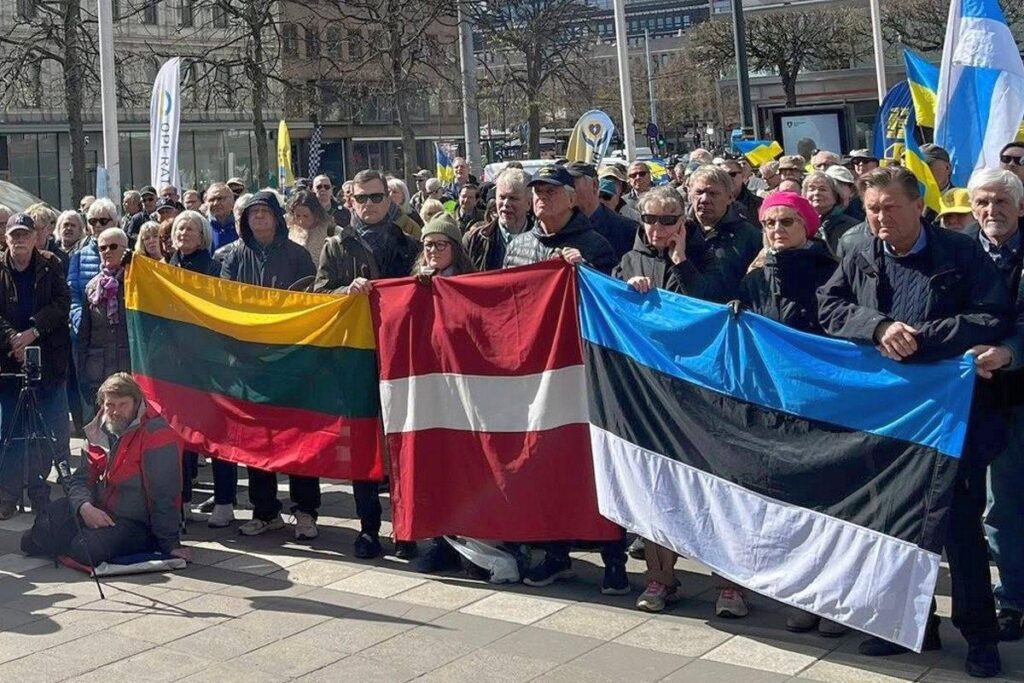
February 2022: the movement returns
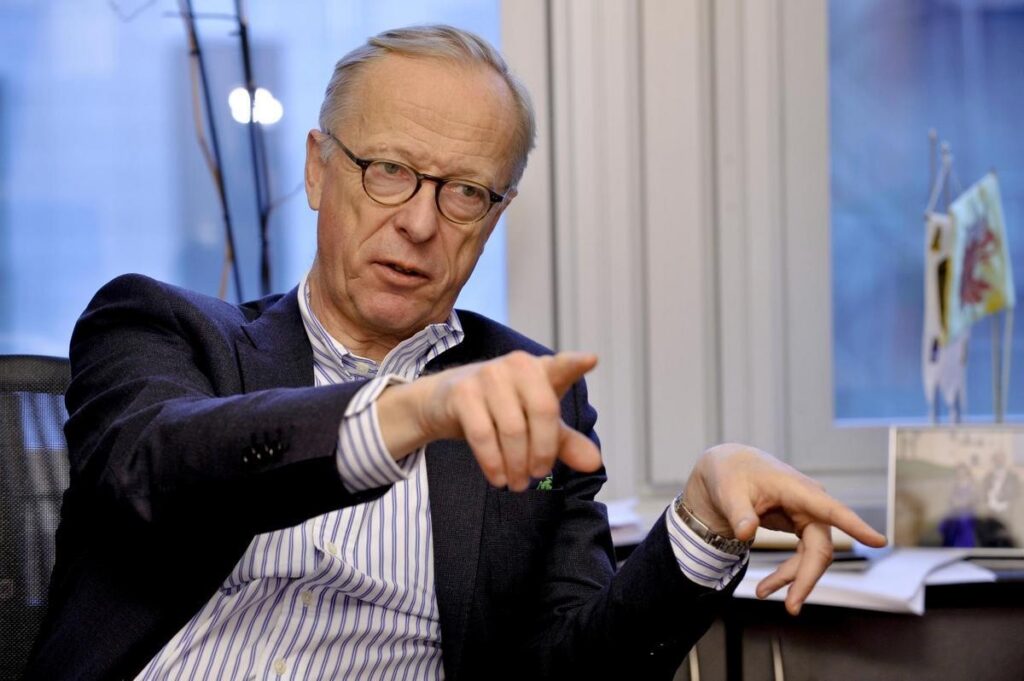
The Monday gatherings on Norrmalmstorg resumed on 28 February 2022. This time in solidarity with Ukraine as it faced Russia’s full-scale invasion. Gunnar Hökmark, the only surviving founder of the original movement, took the initiative again.
Standing alongside him is Fredrik Malm, a member of the Riksdag representing the Liberal Party and the party’s foreign policy spokesperson – a figure from the next generation of Swedish politics. Malm describes what takes place on the square in the simplest terms: “Every Monday, people come to Norrmalmstorg to show their solidarity. Young and old alike, people from diverse backgrounds and political views have come together in support of Ukraine, uniting Sweden as never before. Ukraineʼs struggle for freedom, democracy, and the right to determine its own future is our struggle too.”
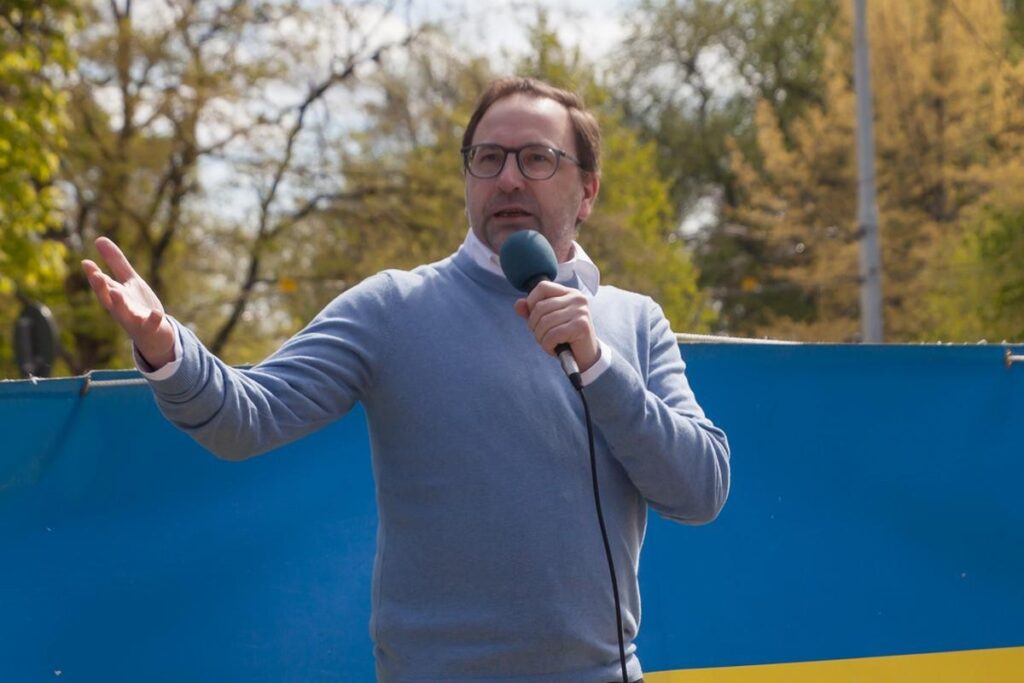
Malm regards the unifying force of the Ukraine issue as something unprecedented in modern Swedish public life. Together with Hökmark, he has led these gatherings week after week – with an energy that observers find remarkable.
Malm carries the cause of Ukraine to the Riksdag floor as well. In a recent parliamentary speech, he argued that Ukraine has long since ceased to be merely a recipient of aid:
“At the beginning of the war, the relationship was described as rather unequal: wealthier countries making donations so that Ukraine could survive. And indeed, that was true. But today the relationship is far more balanced. What Ukraine has accomplished with the worldʼs support – through innovation, through the development of its own drone production, air defence systems, and missile systems – will be absolutely decisive for the security of the entire European continent.”
In Malmʼs view, Swedenʼs stance on the war in Ukraine represents “the fourth major choice of the past century and a half”, following the introduction of universal suffrage, the countryʼs position in the Second World War, and accession to the European Union. For the first time, he notes, all eight parties in the Swedish parliament stand united on a single issue.
Over nearly four years, the Monday Movement has become a fixture of Stockholmʼs civic and political life. The Archbishop of Sweden, party leaders, and cabinet ministers have all spoken from the squareʼs modest platform. The fact that ministers consider it an honour to address this peopleʼs gathering is telling in itself.
The voice of Ukrainian journalists
On 27 April 2026, the Monday Movement’s platform was taken by Sergiy Tomilenko, president of Ukraine’s largest journalists’ organisation, the National Union of Journalists of Ukraine.
“Thank you for standing here, week after week, in solidarity with Ukraine,” he told the crowd. “Journalism in Ukraine today is not just a profession. It is a mission. It is a form of resistance. Every day, Ukrainian journalists work under shelling, under Russian drones, under constant risk. They document war crimes, they push back against disinformation and propaganda, they keep the truth alive.”
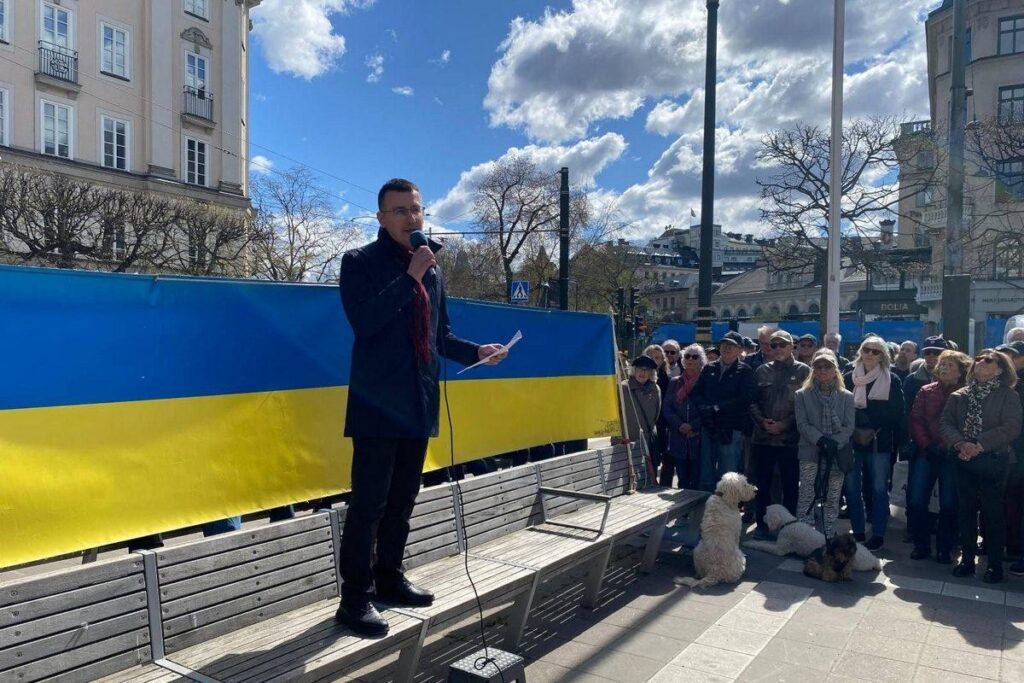
Tomilenko also drew the audienceʼs attention to Ukrainian journalists held in Russian captivity.
“At least 28 Ukrainian journalists are currently being held by Russia. Every one of them is a civilian. But Russia calls them extremists and terrorists. Their real crime is simple: they told the truth. Please do not forget them. Speak about our imprisoned colleagues. Demand their freedom,” he said. “Just as you once stood in solidarity with the Baltic nations in their struggle to restore independence from the Soviet Union, today you stand with Ukraine.”
The response to his address was deeply moving. Hökmark, speaking in reply, observed that a free journalistsʼ union like Ukraineʼs could not exist in Russia because Russia has grown impoverished not only economically but in every value that freedom rests upon. What followed became, in a sense, the movementʼs defining statement:
“I know that a journalist should never be told what to write,” the host said, turning to Tomilenko. “But please remember: when we stand here and say that we stand with you, we are well aware that it is actually you who are standing ahead of us. You are the defence of the rule of law, the defence of democracy. And today you are the defence of Europe. It is not you who should be thanking us. It is we who should be thanking you, and your fellow Ukrainians.”
Equally powerful was the address of Swedenʼs Ambassador to Ukraine, Martin Åberg, who arrived at the square directly from Kyiv. A diplomat who has lived through three wartime winters in Ukraine, he described the most recent as the hardest of all.
He explained the logic behind Russiaʼs systematic strikes on Ukraineʼs energy infrastructure. Before the war, Ukraine generated roughly 50 gigawatts of power; following the occupation of the Zaporizhzhia nuclear plant and sustained attacks on thermal power stations, transformers, and substations, that figure has collapsed. He recalled how the temperature inside his own residence fell to 13 degrees Celsius, but quickly noted that his discomfort paled in comparison to the hardship endured by tens of thousands of residents in north-eastern Kyiv, who were left without any heat or electricity at all, forced to seek warmth in temporary heated tents.
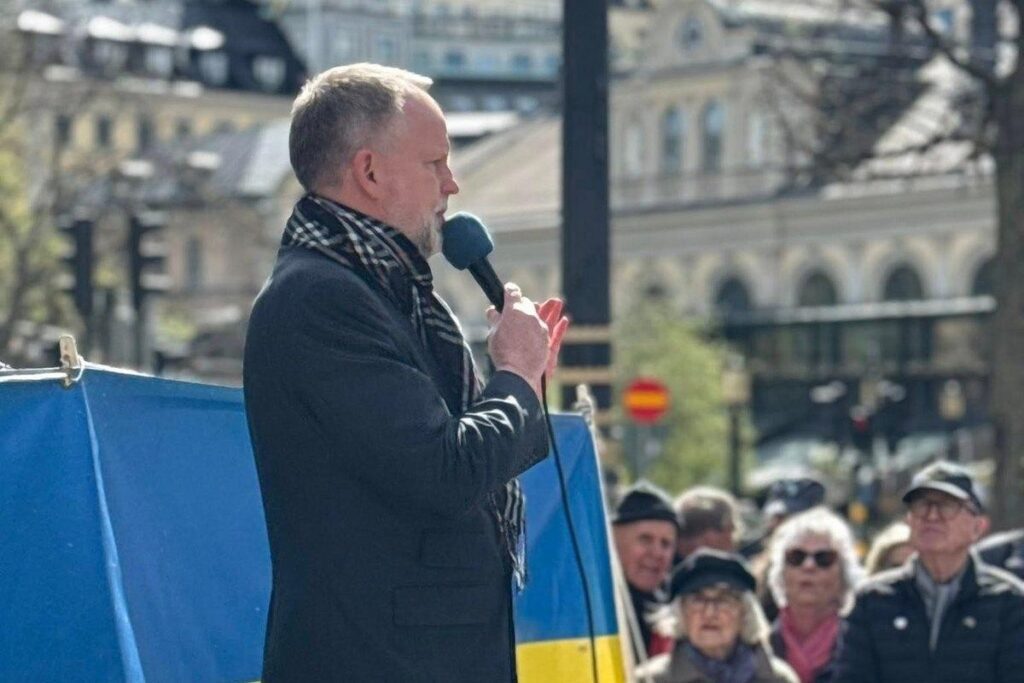
And yet Ambassador Åberg also brought encouraging news: this year, Ukraine began preparing for the coming winter approximately six months earlier than usual, a decision backed unanimously by both the government and parliament. Addressing his compatriots, he spoke of the importance of their very presence on the square: for Ukraine, it matters enormously not to feel abandoned, and Ukrainians’ reactions when they hear about Swedish support are, he said, profoundly moving.
“Keep supporting Ukraine. You play an important role,” the ambassador said in closing.
…The Monday Movement is a rare example of a civic tradition that survives across decades – one that reawakens precisely when freedom comes under threat. For Sweden, it is a chance to recall its own history of moral clarity: the moment when warnings not to “provoke Moscow” ultimately lost out to a simpler moral truth. For Ukraine, it is a reminder that somewhere in the heart of Stockholm, week after week, without fanfare or headlines, strangers spend half an hour on a square – for them.
As the organisers have made clear, they will continue to gather for as long as a single Russian soldier remains on Ukrainian soil.
And every Monday, when the applause fades, the same promise is made: that next Monday, the sun will shine again over Norrmalmstorg. And the same question is put to the square: “Will you come back next Monday?”
Maksym Stepanov, NUJU Information Service






Discussion about this post