
 THE NATIONAL UNION OF
JOURNALISTS OF UKRAINE
THE NATIONAL UNION OF
JOURNALISTS OF UKRAINE
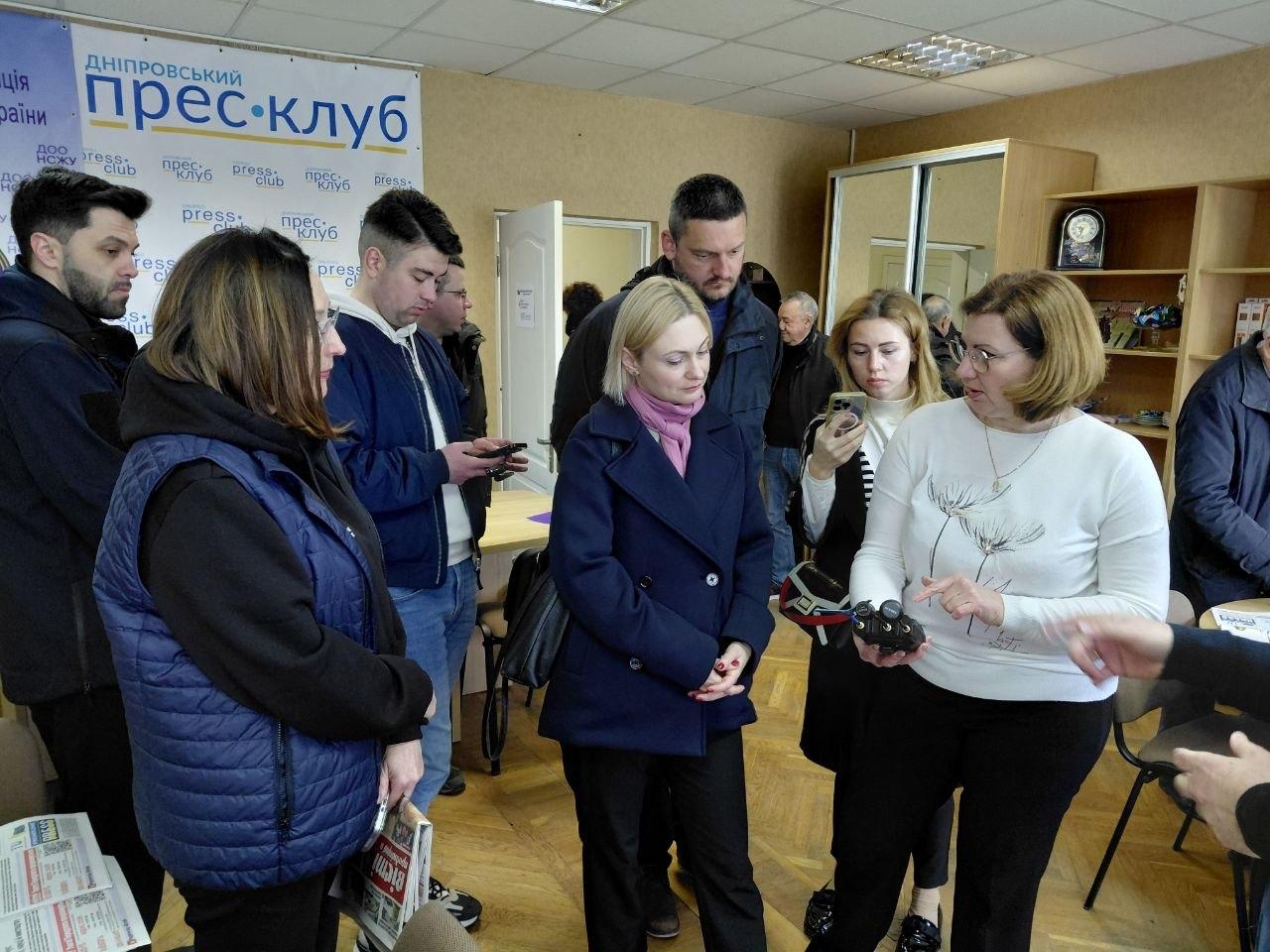
Journalists working in Ukraine’s frontline regions will receive an additional safety tool after members of a parliamentary delegation contributed funds to purchase a drone detector for the Dnipro Journalists’ Solidarity Center of the National Union of Journalists of Ukraine (NUJU).
The initiative followed a field session of the Parliamentary Temporary Investigative Commission on crimes committed by Russia against journalists and media, held in Dnipro earlier this May. During the hearings, MPs listened to testimonies from journalists targeted by Russian attacks and learned how drone detection equipment is being used by reporters working close to combat zones.
The initiative to provide the detector was launched by MP Yevheniia Kravchuk, head of the parliamentary commission, following discussions with journalists and a visit to the Dnipro Journalists’ Solidarity Center.
“In Dnipro, we heard deeply troubling testimonies from journalists working under constant threat. When you see the consequences of attacks on newsrooms and hear the stories of injured colleagues, you understand that even a few seconds of warning about an approaching drone can save lives. Supporting journalists in practical ways becomes an obvious decision,” said Yevheniia Kravchuk.
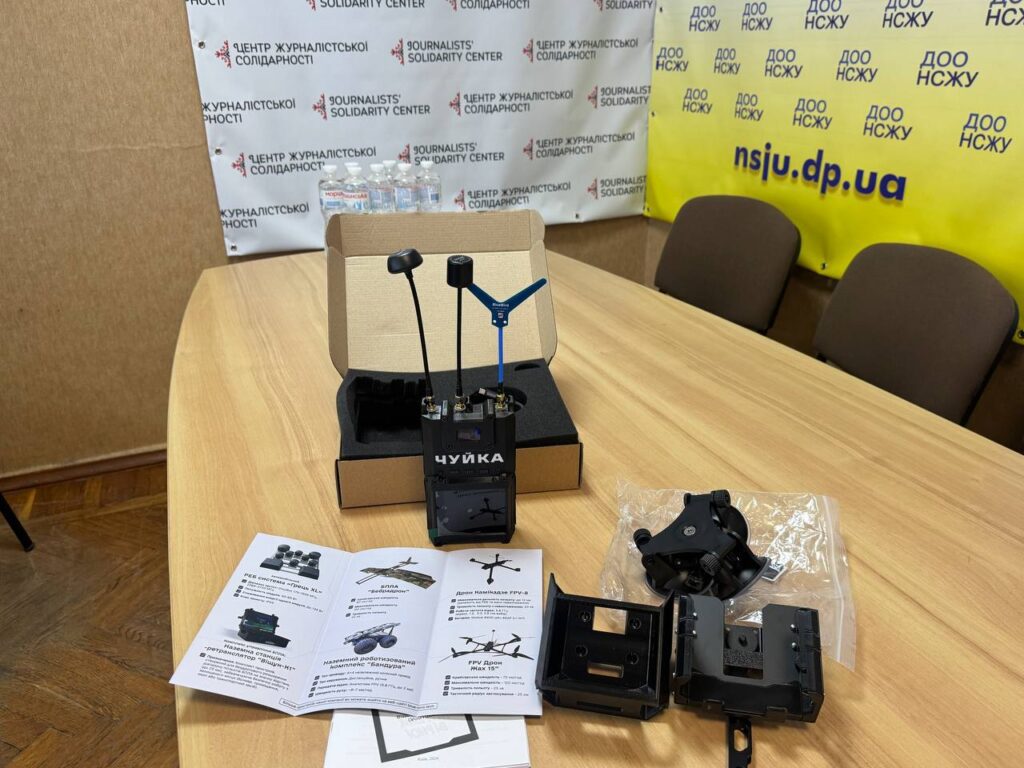
Earlier this year, the National Union of Journalists of Ukraine provided the Dnipro Journalists’ Solidarity Center with its first “Chuika” (“Intuition”) drone detector. Since then, the device has been integrated into the Center’s safety protocols and regularly made available to journalists travelling to frontline and high-risk areas in the Donetsk, Zaporizhzhia and southern Dnipropetrovsk regions.
Following the delivery of the first detector, the Center organised dedicated safety training for journalists on how to operate the device in areas exposed to drone threats. The detector is now routinely issued alongside protective vests, helmets and first aid kits.
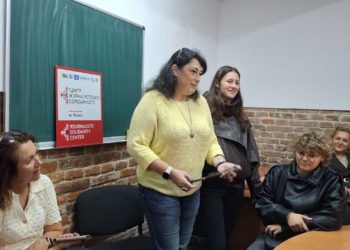
It was this equipment that Center coordinator Natalia Nazarova demonstrated to the parliamentary delegation during the Dnipro visit.
“When we received the first detector, we immediately incorporated it into our safety procedures and started training journalists to use it in real conditions,” said Natalia Nazarova. “If the device detects an enemy UAV signal, it provides an alert and allows journalists to see the video feed transmitted by the drone operator. For journalists working near strike locations, even a short warning time can be critical.”
Members of the parliamentary commission were particularly affected by testimony from FREEDOM TV special correspondent Oleksandr Kolychev, who recounted the deadly drone attack on his crew in Kramatorsk on 23 October 2025. Journalist Olena Hubanova (Alyona Hramova) and cameraman Yevhen Karmazin were killed, while Kolychev was seriously injured. According to the journalist, a drone detector had picked up a signal shortly before the strike.
The incident reinforced growing concerns that journalists documenting the consequences of war are increasingly becoming targets themselves.
Following the hearings and discussions with journalists, Yevheniia Kravchuk initiated the donation of an additional drone detector, purchased through contributions from members of the parliamentary commission.
“Under current conditions, such devices are becoming a basic safety necessity for journalists. Those documenting the consequences of war and working in high-risk areas should have access to practical protection tools,” Kravchuk stressed.
The Dnipro Journalists’ Solidarity Center notes growing demand for early-warning drone detection devices, as Russian UAV threats increasingly extend beyond frontline areas to cities and communities in the rear.
During their visit to Dnipro, members of the parliamentary commission also heard testimonies from journalists affected by Russian attacks, visited damaged media outlets and the NUJU Journalists’ Solidarity Center. The collected evidence is expected to be presented by the Ukrainian delegation at the OSCE Parliamentary Assembly session in The Hague and used for international documentation of crimes committed against journalists.
The Journalists’ Solidarity Centers network is an initiative of the National Union of Journalists of Ukraine, implemented in cooperation with the International and European Federations of Journalists, UNESCO and international partners. The Centers operate in Kyiv, Kharkiv, Zaporizhzhia, Dnipro, Lviv and Ivano-Frankivsk, providing journalists with safe working spaces, protective equipment, drone detectors, consultations, psychological support and safety training. Since the start of Russia’s full-scale invasion, the network has responded to more than 9,000 requests for assistance from Ukrainian and international journalists.













Discussion about this post