 THE NATIONAL UNION OF
JOURNALISTS OF UKRAINE
THE NATIONAL UNION OF
JOURNALISTS OF UKRAINE
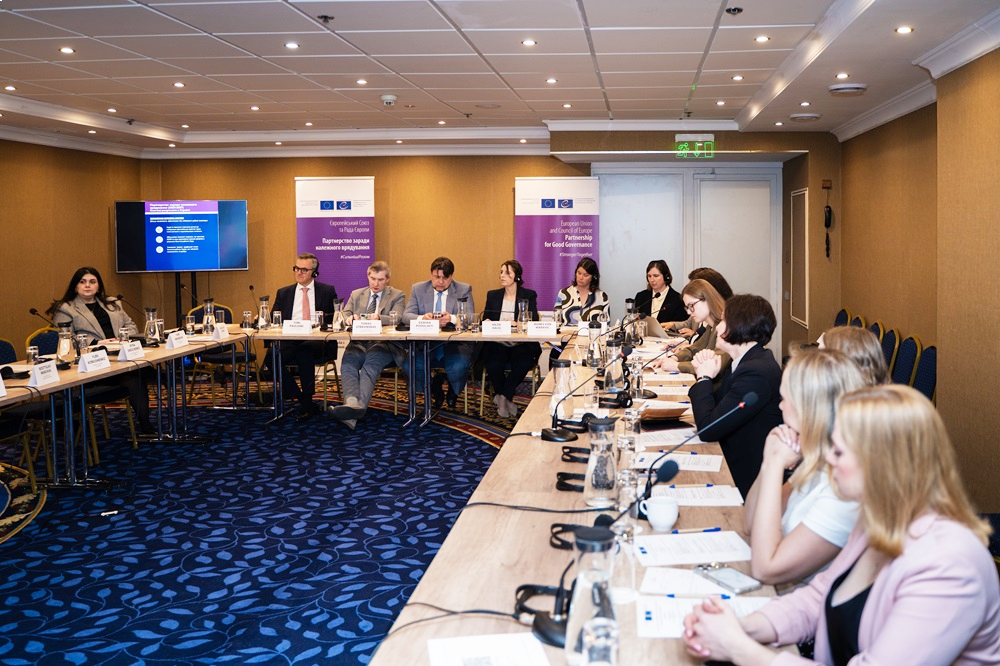
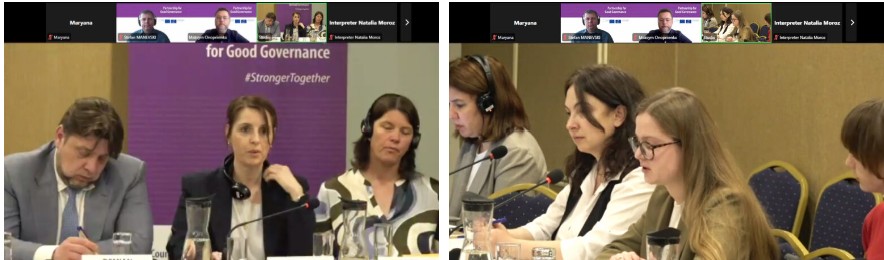
The fourth meeting of the Steering Committee for the Implementation of the Council of Europe Action Plan for Ukraine Resilience, Recovery and Reconstruction for 2023–2026 was held in Kyiv, the National Council of Ukraine for Television and Radio Broadcasting reported. Representatives of the Council of Europe Secretariat and Ukrainian authorities assessed the progress of project implementation and outlined priorities for further cooperation. The topics of discussion included combating hate speech, practical tools for the media, and regulatory solutions. The event was attended by National Council member Maksym Onopriienko.
The Council of Europe Action Plan for Ukraine is a strategic document designed to support our country in fulfilling its obligations as a member state and facilitating the implementation of the Association Agreement with the EU. Adopted in December 2022, it focuses on reconstruction, strengthening democratic governance, the rule of law, and protecting citizens’ rights.
One of the areas of cooperation is the area of freedom of speech and media, which is implemented through the project Protection of Freedom of Speech and Media Freedom in Ukraine – Phase II. The project helps Ukrainian media adapt to wartime and post-war conditions, improve legislation and develop the institutional capacity of the regulator.
A significant part of the discussion during the meeting was dedicated to the issues of access to justice, combating gender-based violence and combating hate speech. The participants spoke about the need to strengthen inter-institutional cooperation, develop training programs for judges and prosecutors, and improve legislation in accordance with the Istanbul Convention, as well as develop more effective mechanisms for collecting data and supporting victims.
New challenges were also discussed: violence in the digital environment and the spread of discriminatory practices in the information space.
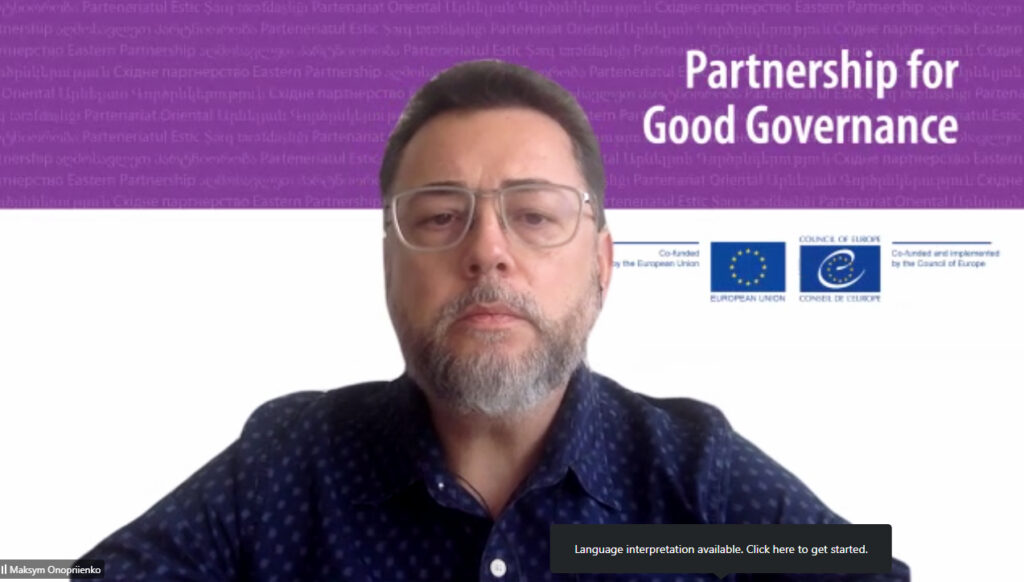
In the session dedicated to combating hate speech, Maksym Onopriienko presented the regulator’s approaches to working with this phenomenon. He emphasized that it is not only about individual statements, but about broader narratives that can shape a discriminatory environment.
- “Freedom of expression cannot be a basis for degrading human dignity. Our task is to form clear guidelines for the media that will help balance freedom of speech and responsibility.”
He also spoke about practical tools implemented by the National Council together with partners. In particular, in March 2026, the Recommendations for the Media on Preventing Hate Speech and Discrimination were presented – a document developed with the participation of Council of Europe experts and over 80 civil society organizations. In addition, thematic trainings are held for regional media professionals.
“We have developed a tool for newsrooms that gives them clear criteria: how to define hate speech, how to understand the context, intention, form and impact, how to evaluate materials before publication. And, of course, practical examples from the practice of the European Court of Human Rights,” said Maksym Onopriienko.
The National Council applies some approaches in practice. In particular, in 2025, the regulator issued a decision on a fine against one of the online resources for spreading hate speech – in a material where provocative visual content combined images of different social groups in a way that opposed them to each other and could provoke hostility. This case clearly showed that hate speech manifests itself not only in words, but also in context, visual sequence and impact on the audience.
At the same time, not all violations are intentional. Analysis of media content shows that discriminatory narratives often arise due to a lack of knowledge – for example, when criminal news unnecessarily ties the nationality of the heroes of the material. That is why the National Council combines regulatory measures with methodological support for the media so that newsrooms can independently identify and correct such errors before publication.
“We see that some violations occur not due to intent, but due to a lack of knowledge. That is why it is important to combine regulation with educational work and training,” Maksym Onopriienko emphasized.
The participants in the meeting agreed to work on a clearer legislative definition of hate speech and to establish cooperation between the regulator, law enforcement officers and human rights defenders.
The experience of the current Action Plan will form the basis of the new strategic document of the Council of Europe – Democratic Security for Ukraine for 2027–2030. Work on it has already begun. The war did not stop reforms. Ukraine continues to build legal mechanisms to protect freedom of speech – and does so together with European partners.
Reference Information:
The Council of Europe Action Plans for Ukraine have been implemented since 2005 and are an effective tool for supporting reforms in the areas of human rights, the rule of law and democracy. The implementation of the Action Plans is subject to periodic joint monitoring by the Steering Committee, which takes place in Kyiv, and is also reviewed by the Democracy Rapporteur Group of the Committee of Ministers of the Council of Europe in Strasbourg. The budget of the Action Plans is financed from the regular budget of the Council of Europe and voluntary contributions from international partners.










Discussion about this post