

 THE NATIONAL UNION OF
JOURNALISTS OF UKRAINE
THE NATIONAL UNION OF
JOURNALISTS OF UKRAINE
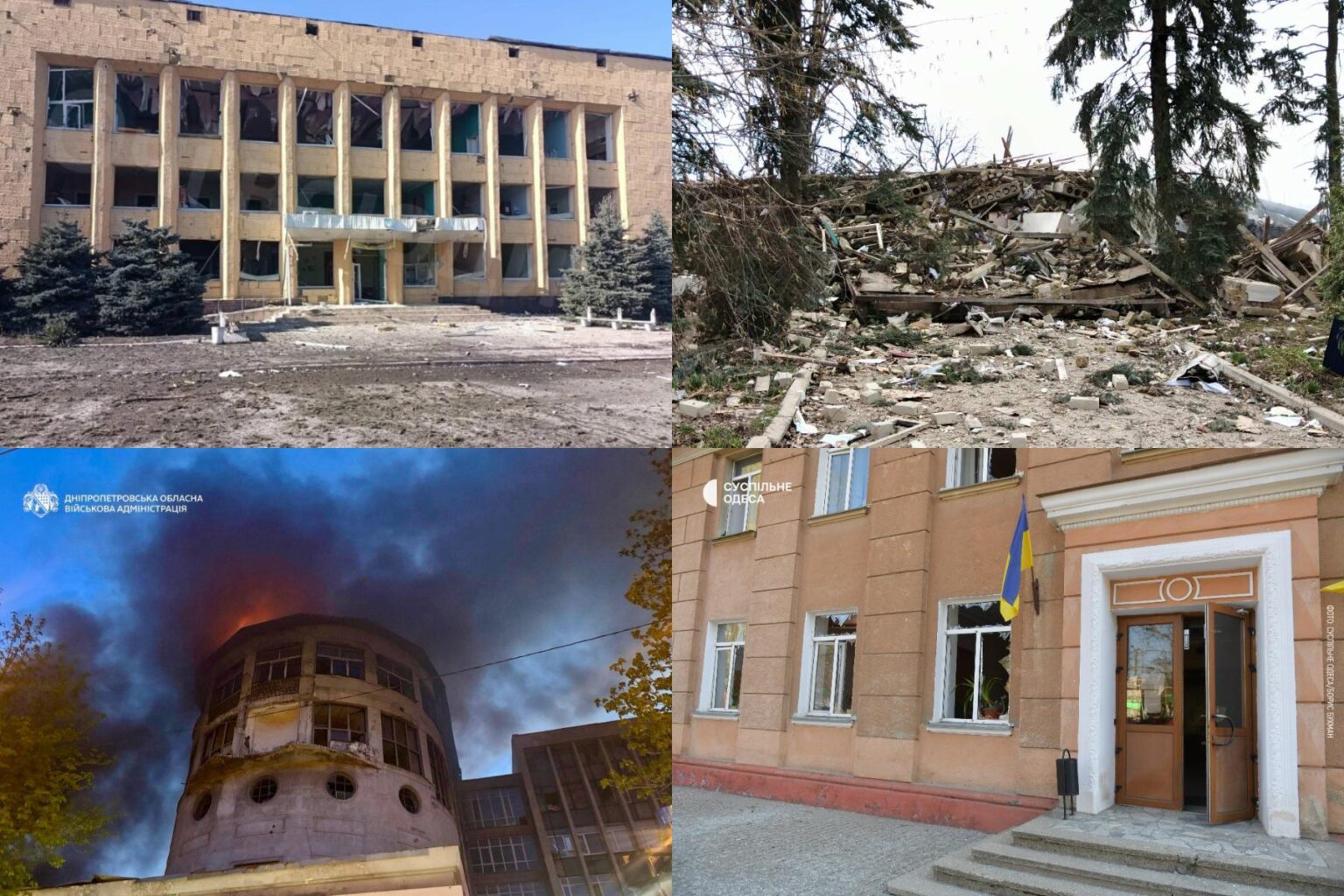
This monitoring by the National Union of Journalists of Ukraine (NUJU) covers the period January – April 2026 and is based on verified data on physical attacks and security incidents caused by russian aggression against Ukraine, which directly affected the activities of the media and journalists.
The report includes cases that are directly related to hostilities or their consequences: shelling, drone attacks, destruction of media infrastructure, injuries or deaths of media workers.
At the same time, the monitoring does not cover cases of online harassment, threats, information pressure or domestic conflicts not related to the war, which allows us to focus exclusively on the physical dimensions of the safety of journalists in the war risk zone. Thus, the report reflects precisely the physical dimension of the safety of journalists in the context of war.
During this period, a total of 38 incidents related to the civilian media sphere were recorded. In particular, those are attacks on journalists while performing their professional duties, injuries, destruction of newsrooms, media infrastructure and media workers’ housing.
Besides, the monitoring records losses among media workers who joined the Defense Forces of Ukraine: eight journalists died at the front while performing their military duty.
Such a distinction is fundamental: it allows for a more accurate assessment of both the direct impact of the russian war on press freedom and the broader price that the Ukrainian media community is paying in the fight for independence.
The report was prepared on the basis of multi-level verification of information – through open sources, direct contacts with victims, newsrooms and colleagues, as well as official reports from state bodies (Regional Military Administrations, State Emergency Situations Service (SESS), law enforcement agencies). The database includes only verified cases confirmed by at least several independent sources.
Its goal is not only to record the facts, but also to provide international partners, authorities and the media community with a holistic view of the scale and nature of attacks on Ukrainian journalism.
Overall figures
During the period January-April 2026, the monitoring recorded 38 verified incidents in the civilian media sphere:
- Damaged private housing of media workers: 21 cases.
- Damaged/destroyed newsrooms and media infrastructure: 7 objects.
- Journalists attacked while performing their duties: 9 cases.
- Injured journalists: 1 incident.
Breakdown by month
The monthly distribution of incidents demonstrates uneven dynamics with a peak in March:
| Category | January | February | March | April |
| Injured journalists | 0 | 1 | 0 | 0 |
| Damaged private housing | 2 | 4 | 11 | 4 |
| Newsrooms / infrastructure | 0 | 2 | 4 | 1 |
| Attacks while performing duties | 0 | 3 | 3 | 3 |
| Number of cases | 2 | 10 | 18 | 8 |
March 2026 was the most destructive month of the reporting period, with 18 incidents recorded. A total of 11 of them involved damage to journalists’ homes. A significant portion of these incidents were attributed to a single massive drone attack on March 24, which simultaneously targeted media workers in Dnipro, Lviv, Vinnytsia, and Zaporizhzhia.
Regional Distribution
The geography of incidents covers 11 regions:
| Region | Housing damaged | Newsrooms damaged |
| Dnipropetrovsk | 9 | 4 |
| Donetsk | 2 | 0 |
| Sumy | 2 | 0 |
| Zaporizhzhia | 2 | 1 |
| Vinnytsia | 2 | 0 |
| Kyiv | 1 | 0 |
| Kherson | 1 | 0 |
| Lviv | 1 | 0 |
| Volyn | 1 | 0 |
| Chernihiv | 0 | 1 |
| Odesa | 0 | 1 |
As can be seen from these data, the Dnipropetrovsk Region leads by a large margin: 9 cases of damage to housing and 4 media infrastructure facilities.
The city of Dnipro is subject to systematic drone and missile strikes, making it the most dangerous place for media workers in Ukraine outside the zone of active hostilities. The frontline regions, Donetsk, Sumy, and Zaporizhzhia, also maintain a high level of threats.
Journalists injured
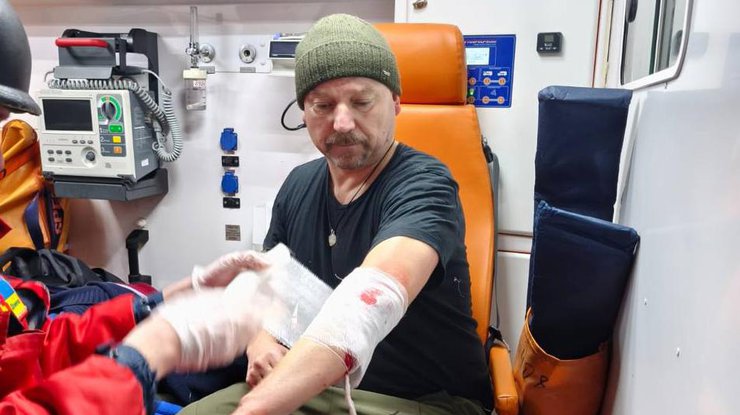
During January-April, one incident of media workers’ injuries was recorded. On February 8, Ihor Levenok, a war correspondent for the Inter TV channel, suffered shrapnel wounds to his left hand during the shelling of Kramatorsk by russians in the Donetsk Region. Despite the fact that this case is the only one in our report, it emphasizes the dangers of journalistic work in the frontline zone.
Attacks on newsrooms and media infrastructure
During the reporting period, 7 cases of damage or total destruction of editorial premises and media infrastructure facilities were recorded in four regions. In all cases, strikes were carried out by drones or guided aerial bombs.
February
Newsroom of the Promin newspaper, Snovsk, Chernihiv Region (February 8). During the large-scale attack on the city, the newsroom premises were also destroyed – a powerful blast wave knocked out the door with all its contents, glass in the windows fell, and the building cracked. Strong walls and ceilings saved the interior of the newsroom, but severe frosts and constant power outages added significant problems to the media workers’ workflow.
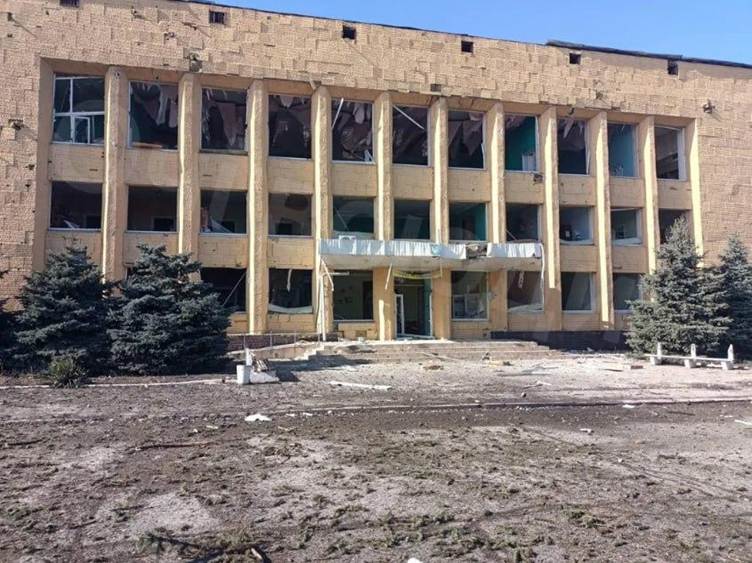
The newsroom of the media outlet Nashe Zhyttia, Novomykolayivka, Zaporizhzhia Region (February 22). An airstrike on the center of the village damaged the building of the village council, and with it the premises rented by the newspaper. As a result, the workspace where the newspaper was created was lost. Fortunately, there were no casualties, and the equipment also survived.
March
Television tower, Kryvyi Rih, Dnipropetrovsk Region (March 6). As a result of a massive attack by suicide drones on the television tower, all digital multiplex channels, the local broadcaster, the Rudana TV and radio company, and three radio stations, Lux, Classic and Power FM, ceased their broadcasting. Television and radio broadcasting was fully restored a few days after the equipment and transmitters damaged by the strike were repaired. The Kryvyi Rih TV tower serves almost 1 million television and radio users from the city and surrounding areas.
The newsroom of the Pivdenna Zoria newspaper, Nikopol, Dnipropetrovsk Region (March 17). The newsroom suffered for the third time when the administrative building where the office of Pivdenna Zoria is located was attacked by russian drones.
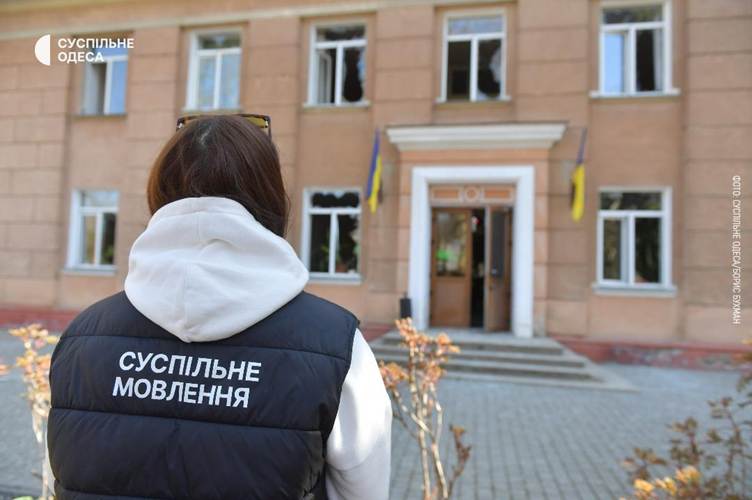
The buildings of Suspilne Odesa, Odesa (March 28). As a result of a massive attack by strike drones-shaheeds, the branch buildings suffered significant damage, one of which is beyond repair. This is a blow to one of the largest regional branches of the Suspilne broadcaster. In addition to television, radio broadcasting was also affected: the damaged buildings house Ukrainian Radio Odesa, which broadcasts to the entire region.
In a comment to the NUJU, the editor-in-chief of the Suspilne Odesa branch and the southern hub of the Suspilne broadcaster, Olena Holda, emphasized that the damaged facilities have not only functional but also historical value for local media — here, in the Primorsky District, Odesa TV was born several decades ago: “Buildings with a huge history suffered, not just offices.”
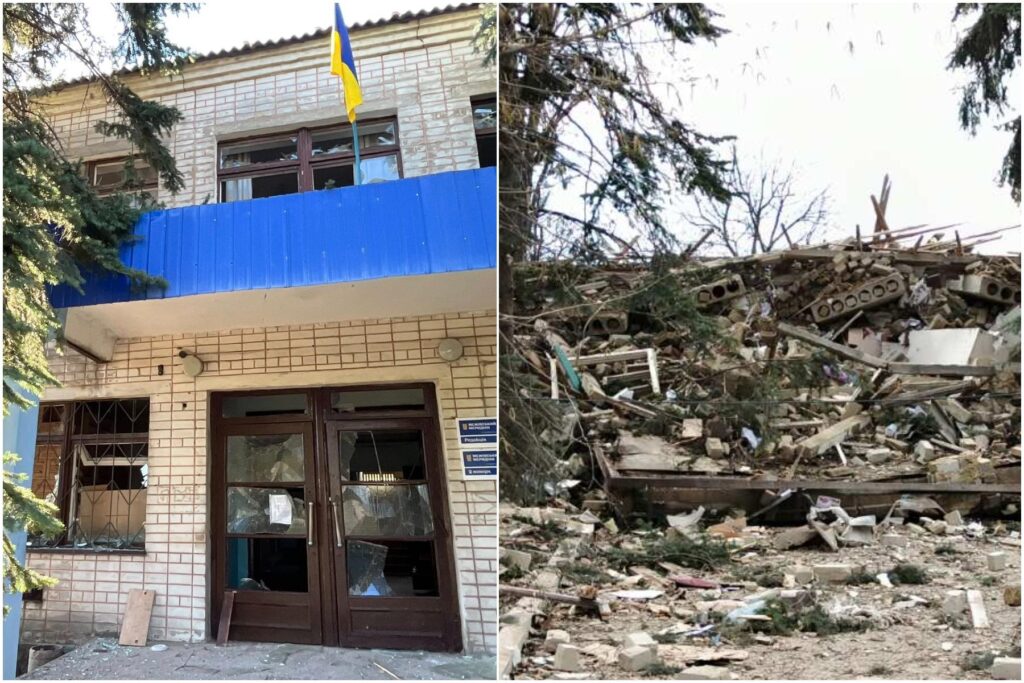
The newsroom of the Mezhyvskyi Meridian newspaper, Mezhova, Dnipropetrovsk Region (March 29). The hit by a guided bomb completely destroyed the two-story newsroom of the district Mezhyvskyi Meridian newspaper. Last year, the NUJU, together with international partners, helped the media team relocate to the Dnipro. However, the village, which lives under constant shelling a few kilometers from the front line, lost another important center of life.
“I worked in this newsroom for 23 years. I lived there: I was an editor, I denationalized, I decommunized,” the editor-in-chief of the newspaper Yevhen Khrypun did not hide his emotions, telling the NUJU about the destruction. “Anyone who has not locked their own house with a key will hardly understand my feelings now.”
April
Radio station Europe Plus Dnipro (April 15). As a result of a nighttime drone attack on the central part of the city, the station was forced to suspend broadcasting. The building of the Construction Academy, where the newsroom rents premises, was hit. The radio station returned to the air half a day later.
Damage to journalists’ private homes
The most massive category in the monitoring: during the first four months of 2026, a total of 21 incidents of damage or even destruction to media workers’ private homes were recorded in nine regions. Nine out of the 21 cases occurred in Dnipro and the Dnipropetrovsk Region.
March – 11 cases (peak)
March 2026 is a month of unprecedented concentration of attacks on media workers’ homes. The key date was March 24, when a massive drone attack simultaneously hit journalists’ homes in four cities in different regions of the country: Dnipro, Zaporizhzhia, Lviv, and Vinnytsia.
The geography of damage to journalists’ homes once again reminds us that there are no safe places in Ukraine: people find themselves under attack both in frontline regions, such as Kramatorsk or Kherson, and hundreds of kilometers from the combat zone – Lutsk, and Lviv.
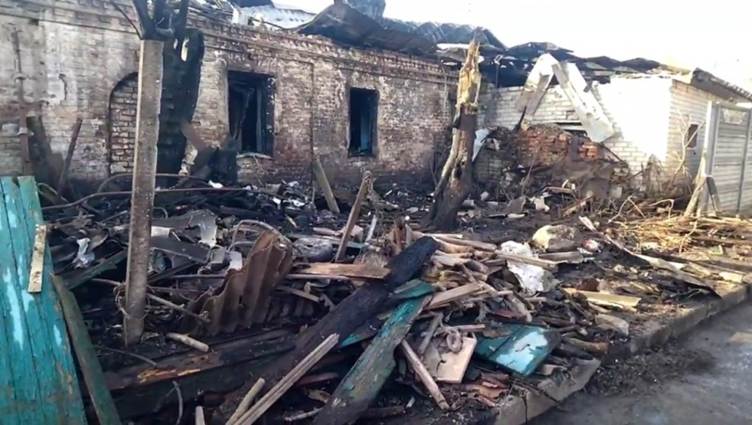
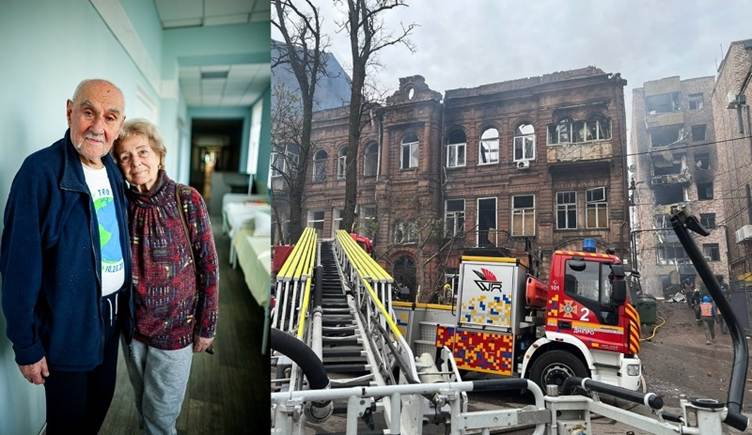
Monitoring attacks on media workers’ homes is marked by painful stories of loss. On the night of March 26, a drone strike completely destroyed the home of journalist couple Ivan and Liliya Danyliuk from Vasylkivka in the Dnipropetrovsk Region; the apartment of 80-year-old citizen Mykola Koshelev from Dnipro burned down on April 16 after the second attack on the house in six months, and he and his wife have nowhere to return, and the apartment of Andrii Hryn from Kramatorsk was damaged three times in a month due to devastating shelling of the city by russian troops, twice in just one day on April 25-26. Iryna Dimitrova, a displaced journalist from Donetsk, who settled in Lutsk, suffered three attacks on her home – on April 1, a suicide attack damaged her rented apartment in the city center.
“We are targets, but we are intact,” she succinctly summarized the realities of life in the NUJU testimony about the consequences of that strike.
Attacks on journalists in the performance of their duties
A total of 9 incidents were recorded when journalists came under attack while performing professional tasks or on a work trip. Drones, in particular FPV, have become the main means of threat to film crews in the frontline zone. There is a growing trend when correspondents become targets despite the PRESS markings on their bulletproof vests and helmets – in these cases, it is obvious that we are talking about targeted attacks by the russian military on journalists.
“Today we are observing a paradox that should alarm the entire civilized world,” emphasizes the President of the NUJU, Sergiy Tomilenko. “The russian federation, which at one time signed and ratified key international conventions, Geneva, The Hague, those that protect journalists in armed conflicts, is today becoming the world leader in the number of attacks on journalists. Due to the fact that media workers in Ukraine have become a desirable target for russian drones, we can no longer recommend that our colleagues mark their equipment with the inscription ‘Press’. The marking, which for decades was a shield, has turned into a label for the FPV operator. This is a gross, cynical violation of international humanitarian law, and it cannot remain unpunished. We call on our international partners, governments, parliaments, international organizations, and journalist federations, to increase pressure on russia and make every effort to ensure that every crime against a Ukrainian journalist is documented, and the perpetrators are brought to justice.”
February
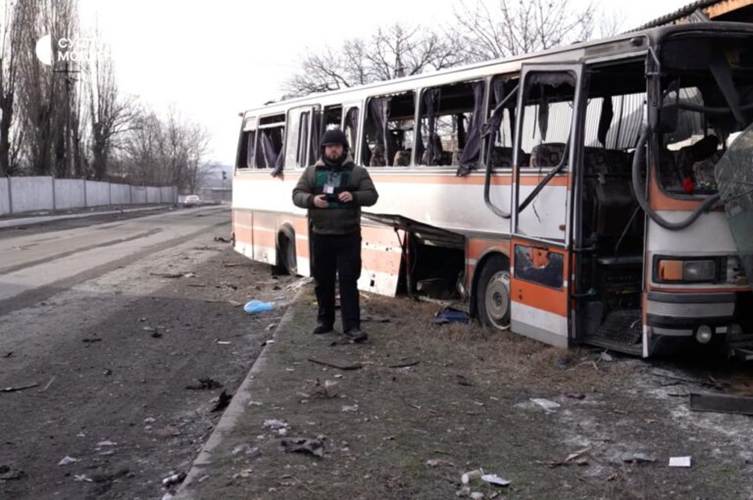
In Ternivka, Dnipropetrovsk Region, on February 2, a Suspilne Dnipro film crew was attacked by a suicide drone while the journalists were documenting the aftermath of a strike on civilians. The day before, russian UAVs had attacked a bus carrying miners, killing 12 people.
On February 10, foreign journalists Odita Krenberga and Aigars Kovaļevskis from the Latvian public broadcaster LSM were attacked by a russian FPV drone while working near the front line in the Donetsk Region. The drone exploded near the car carrying the film crew, damaging the rear of the car with debris and breaking the window. Thanks to the quick reaction of the driver, Latvian volunteer Oleksandr (callsign ‘NATO’), no one from the LSM team or the military was injured.
“Oleksandr was driving, about whom we were filming a story,” Odita Krenberga told in an exclusive interview with the NUJU. “Suddenly he shouted – drone! At that moment, my colleague Aigars managed to turn on the camera, and immediately there was an explosion. The car window shattered. Oleksandr realized that he had to continue driving as quickly as possible. He thought there would be another drone. It lasted one second. I even thought it was less.”
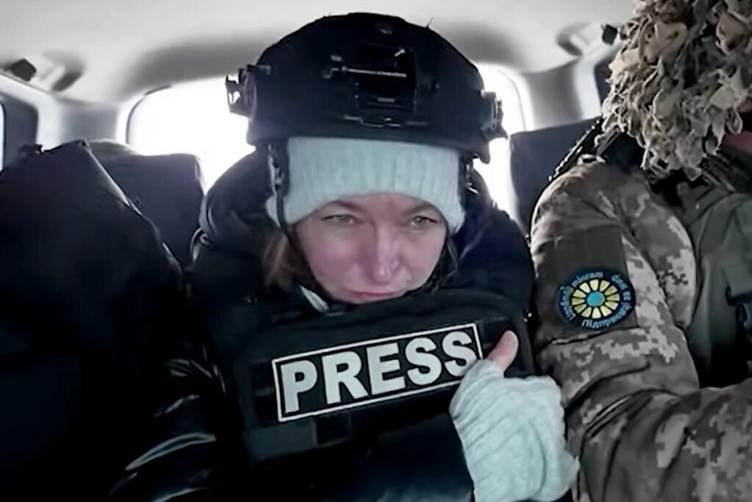
On February 18, the film crew of the media Obrii Iziumshchyny got into the epicenter of the enemy guided bomb strike on the territory of the village of Oskil in the Kharkiv Region. The journalists were filming material about the mandatory evacuation of families with children. They were not injured, but they experienced stress.
March
On March 17, the film crew of the Suspilne Dnipro was pursued by a russian FPV drone while the media workers were working in the village of Demuryne in the Dnipropetrovsk Region. Thanks to the Chuika detector, they managed to find shelter in time and wait out the danger. All members of the film crew were wearing protective equipment marked with the words PRESS.
“The FPV operator saw it all for sure and clearly pointed the drone at us. In my opinion, it was a direct attack on us as media workers,” correspondent Roman Mykhalchuk commented on the incident.
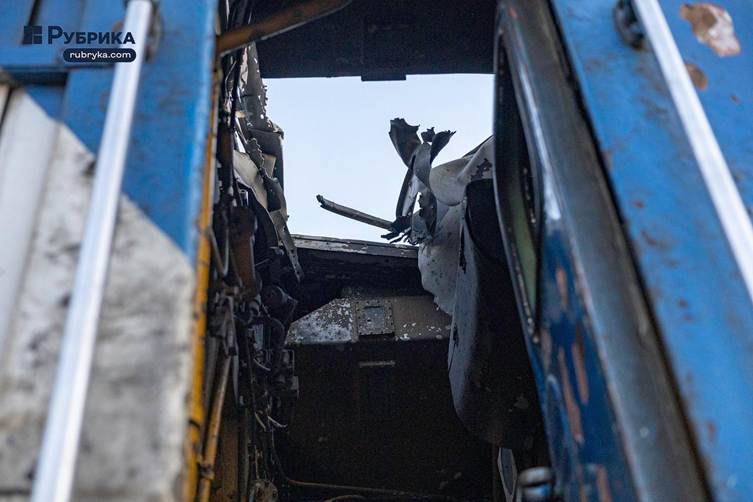
Twice during the month, the media workers came under UAV attacks while traveling by rail to the place of the editorial assignment. Thus, on March 8, the Kyiv-Sumy train was attacked by a Lancet drone which hit the locomotive. Among the 200 passengers was Mykola Tymchenko, a photo correspondent for the capital’s Rubryka newspaper, who captured the consequences of the attack in photographs. And on March 24, investigative journalist Oleh Baturyn was twice evacuated on the railway while traveling by train from Ivano-Frankivsk to Kryvyi Rih on a work assignment to the Kherson Region. These cases demonstrate the vulnerability of journalists on the road.
April
On April 2, the film crew of the Suspilne Dnipro came under mortar fire in the village of Kapulivka, Pokrovska Community, Dnipropetrovsk Region. The media workers were preparing a report about the lives of civilians and at that moment mortars began to hit them from the temporarily occupied territory of the Zaporizhzhia Region. All members of the film crew were wearing protective equipment with the inscriptions PRESS. It is noteworthy that the aforementioned case of attack was the second for this team after March 17.
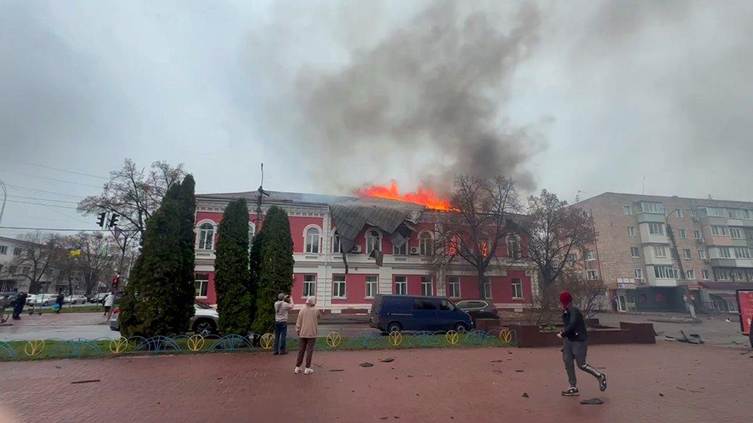
On April 7, two film crews of the Pryluky TV channel in the Chernihiv Region were at the epicenter of a drone strike on the city council building. The journalists were not injured, but the channel suffered a loss of equipment necessary for the work process – two complete filming sets burned down in a fire from the impact: two video cameras, two tripods, two radio systems with handheld microphones.
On April 9, a drone hunted the editor-in-chief of the Zoria newspaper from the Kharkiv Region, Vasyl Myroshnyk. The journalist was returning from filming in the frontline villages of the Zolochiv Community when the Chuika detector showed the drone right above the roof of his car. The journalist managed to escape the explosion. Fortunately, there were no injuries.
“I saw my car clearly – the roof. There was another car ahead – five meters in front of me. I still wanted to overtake it. But the road was bad, so I slowed down a little. And I just realized that my roof was on the detector screen,” Vasyl Myroshnyk described those events in a commentary to the NUJU. “I turned around on the spot and turned left. There is more or less a road through the yards, in short, I lost it. I was driving quite fast and it disappeared from the screen. But then I heard an explosion. The car in front was intact, I got to know it.”
Journalists in russian captivity
There are still 28 journalists in russian captivity. Unfortunately, we do not record the released colleagues during this period.
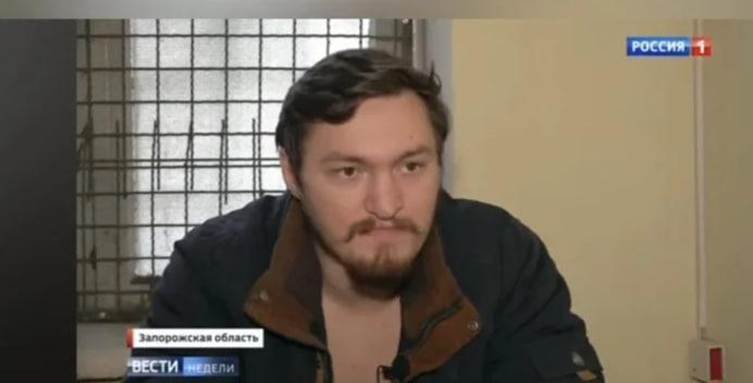
At the end of April, it became known about the cruel court sentence for Oleksandr Malyshev, one of the seven Melitopol media workers abducted by the occupiers in 2023. The Southern District Military Court in Rostov-on-Don sentenced him to a record 26 years in prison in a maximum-security colony, accusing the 26-year-old administrator of the Melitopol is Ukraine chat room of ‘espionage,’ participation in a ‘terrorist group,’ and committing a terrorist act. In fact, he administered a pro-Ukrainian chat room, helping people find medicine, food, and other necessary things.
Drones as a dominant threat
Strike drones, Shaheds, FPVs, Lancets and Molnyas, have become the main tool for attacking journalists and media infrastructure. They catch up with correspondents in any circumstances: both during filming in the city council (Pryluky TV channel, Chernihiv Region) and while working near the front (LSM, Donetsk Region).
The majority of direct attacks on film crews and the majority of damage to newsrooms and journalists’ homes are also the result of drone strikes.
Dnipropetrovsk region – the region with the highest risk
Out of 21 cases of damage to housing, nine fall on the Dnipropetrovsk Region (43%), and out of 7 damaged newsrooms and media infrastructure facilities, 4 (57%) are also in this region. This is due to both the geographical proximity to the front line and russia’s systematic massive attacks on the civilian infrastructure of the region.
Monitoring data confirms that russian attacks are systematically undermining the work of the media and society’s access to information. Recording, verifying, and publishing these facts remain a necessary condition for the future holding of perpetrators to account. Each of these incidents is not only a destruction or risk to the life of a journalist, but also a loss of access to verified information for thousands of people.














Discussion about this post