

 THE NATIONAL UNION OF
JOURNALISTS OF UKRAINE
THE NATIONAL UNION OF
JOURNALISTS OF UKRAINE

For half a year – from December 2025 to May 2026 – 25 local and frontline newspapers from Kharkiv, Donetsk, Sumy, Zaporizhzhia, Kherson, Dnipropetrovsk, Mykolayiv, and Chernihiv Regions, in conditions of constant shelling, power outages and daily psychological exhaustion, received assistance as part of the Frontline Press support program.
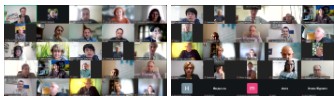
The program is implemented by the National Union of Journalists of Ukraine (NUJU) together with the Swedish Media Business Association (Tidningsutgivarna, TU). At the final conversation, which brought together 50 participants online on May 28, the editors talked not so much about the reports, but about the main thing: how their texts, their newsrooms and themselves have changed.
“This is not a business, it is a mission”
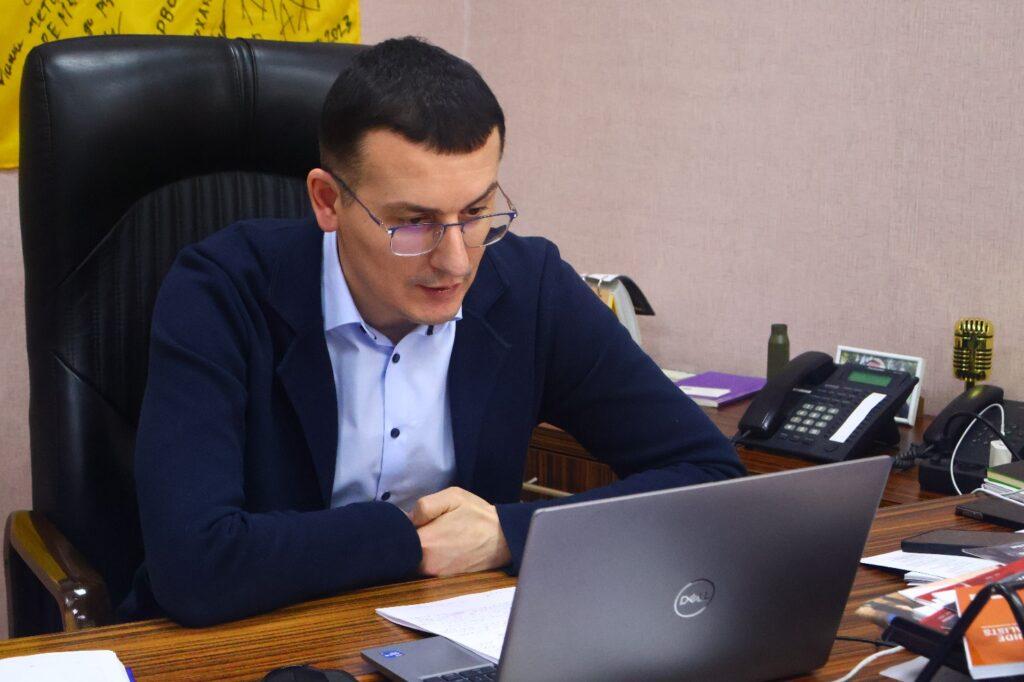
NUJU President Sergiy Tomilenko emphasized what the frontline press is for Ukraine and the world today.
“You are doing an extremely important job, you are repelling russian propaganda, and most importantly – you are giving hope to your readers and your communities. For you, this is a mission, not a profit. These are tears, not a business, but this is the important life thing that each of you has chosen,” he noted.
The President of the Swedish Media Business Association, Johan Taubert, joined the meeting in person to thank the Ukrainian colleagues.
“We believe that the work you are doing is very important. Therefore, we are trying to do everything so that the people of Sweden know what challenges you are working with and that, despite all the circumstances, you are bringing the truth to the world,” he addressed the journalists.
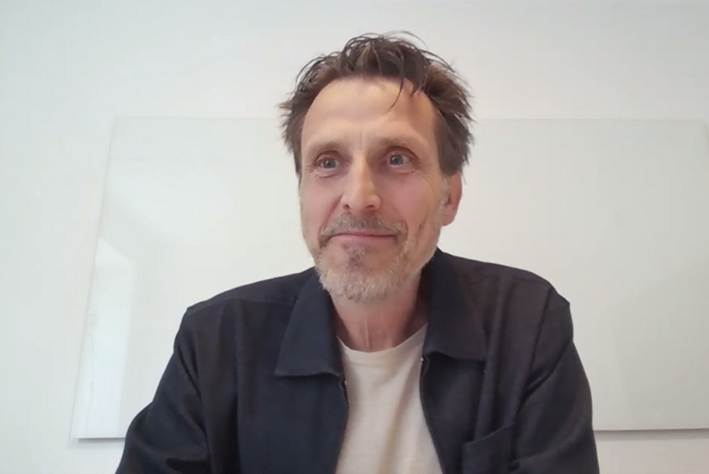
Johan Taubert said that he received 25 copies of Ukrainian newspapers – one from each newsroom – and they all have the TU logo on the front page.
“We are proud that our logo is on your pages,” he added.
The president of the association emphasized that Swedish colleagues closely follow the work of Ukrainian frontline newsrooms and see in it not only a journalistic, but also a social mission. He thanked the editors and journalists who work in unusual conditions, maintaining their frontline newspapers and supporting communities, and assured of the solidarity of Swedish partners with Ukrainian media.

One of the most emotional was the speech of the editor from Zolochiv in the Kharkiv Region, Vasyl Myroshnyk – the hero of the NUJU documentary project about journalists from the frontline the Kharkiv Region. He described the daily reality of the community, which lives under continuous attacks.
“There are 7,000 people living in Zolochiv now. Almost every week, 10, 20, 30 drones fly to us to bomb our community. I want Europe to know all this,” said Vasyl Myroshnyk.
He emphasized that for many newsrooms, international support has become a matter of survival.
“There are twenty-five of us here, and in reality, probably more. Without your help, I don’t know how we would work further,” said Vasyl Savych.
Mentors: “We show where the cat jumped, and then the reader follows the cat themselves”
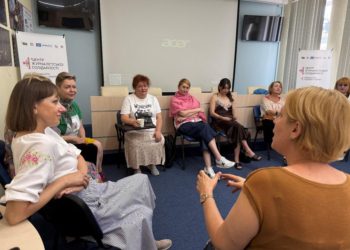
The central part of the meeting was the results of the program’s mentors – NUJU board member Oleksandr Kharchenko and journalist Vadym Petrasiuk. It was their daily work with the newsrooms that the participants spoke about with the greatest gratitude.
Oleksandr Kharchenko said that within the project, the editorial staff created about 250 materials in six months – different in topics, heroes and style.
“Not only powerful publications with serious staff worked great, but also small local newsrooms, where one, two or three people work. They found incredible heroes and unexpected topics. Vadym and I sometimes said to each other: “Have you read this material? Don’t put it off, it’s worth it,” the mentor recalled.
The key thesis of his speech was the idea of how to keep the attention of a tired Western reader. Oleksandr described a phenomenon that he called an apt term – “compassionate burnout”.
“In the fifth year of a full-scale war, Europe sympathizes, but it burns out to sympathize. Therefore, we are convinced that we are doing the right thing when we write about the war not as a chronicle of hostilities, but show it through emotions, through universal human contexts that are understandable to every European,” he emphasized. “Instead of statistics on losses and the number of shelling cases – specific stories: a hospital, a house, a theater; a farmer who sows under the bushes; children from a village in a deep forest, where the occupier did not reach. Instead of pathos and epithets like “heroic” or “bloody” – the technique of “don’t tell but show”.
“Remove these adjectives. Leave the details – and don’t chew on every heroic deed. The reader will draw his own conclusion. We, journalists, show the public where the cat jumped, and then the public follows the cat itself,” explained Oleksandr Kharchenko.
As an example of the “focus on resilience,” he cited a story in which the editorial team collected five stories about how love and female support help wounded soldiers survive, and another about a 72-year-old woman who makes incredible efforts to free her grandson from captivity.
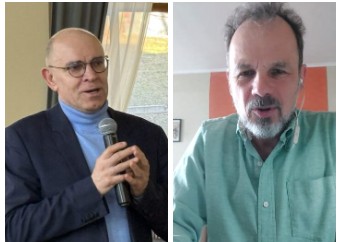
Vadym Parasiuk made his speech almost a master class. He recalled two main types of journalistic products are “bread” (news, analytics) and “spectacle” (stories for the soul) – and warned colleagues against the habit of transferring reporter skills to an essay.
“An essay is actually semi-fiction, newspaper journalism. The most difficult thing – and the most valuable – is to get an ordinary person who is unknown to anyone to talk. And we do it, especially local media,” he said.
The mentor shared his own technique for interviewing a “little person” who came to “say the right things”.
“I let her speak, nod, say: “Very interesting”. And then I start to tease her with simple questions: Are you a good shooter? Are there enough socks in the trench? What do you say to your daughter on the phone? It’s like asking a fisherman to tell a story: he won’t say “we were fishing”, he will say “I caught such and such a bream” – and he starts telling. This is how a person becomes voluminous, and the reader sees him too,” says the journalist.
Separately, Vadym Parasiuk analyzed two typical mistakes. The first is an excessive number of internal subtitles: in one text of 15,000 characters, he counted 14 subtitles, some of which duplicated each other.
“In a complete story about a person, subtitles often slow down the reader. He tuned in to listen to the story, and we gave him the league table,” noted the mentor.
The second is excessive trust in artificial intelligence.
“I certainly love and use AI. But I do not delegate the material to it. It is like a genie from Aladdin’s lamp: you ask him for a ready-made essay – and you grab your head. The text must be passed through yourself, through your fingers, cleaned out “linguistic fluff” and empty phrases like “They hold a weapon not for themself, but for the sake of a peaceful sky.” If you remove such a phrase, the story will not go anywhere,” concluded Vadym Parasiuk.
The impact of the program: survival, growth and living stories
The most convincing part of the meeting was the testimony of the editors themselves – about what the project changed for them in the work of the newsrooms and how it changed them.
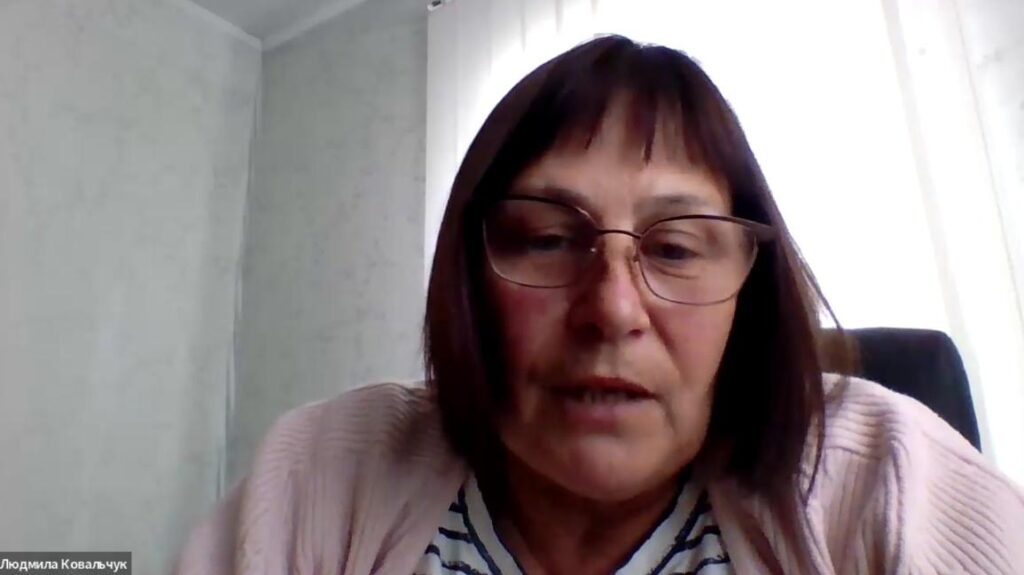
Liudmyla Kovalchuk (Koropsk-based newspaper Silski Horyzonty) said that last year the newsroom was teetering on the brink of closure after a drop in circulation, but now it feels confident. Thanks to the program, it was possible to reach the 2022 salary level and engage in digital platforms: in six months, the audience of the Facebook page grew from 2,400 to over 9,000, monthly views reach 3 million, and the page was monetized.
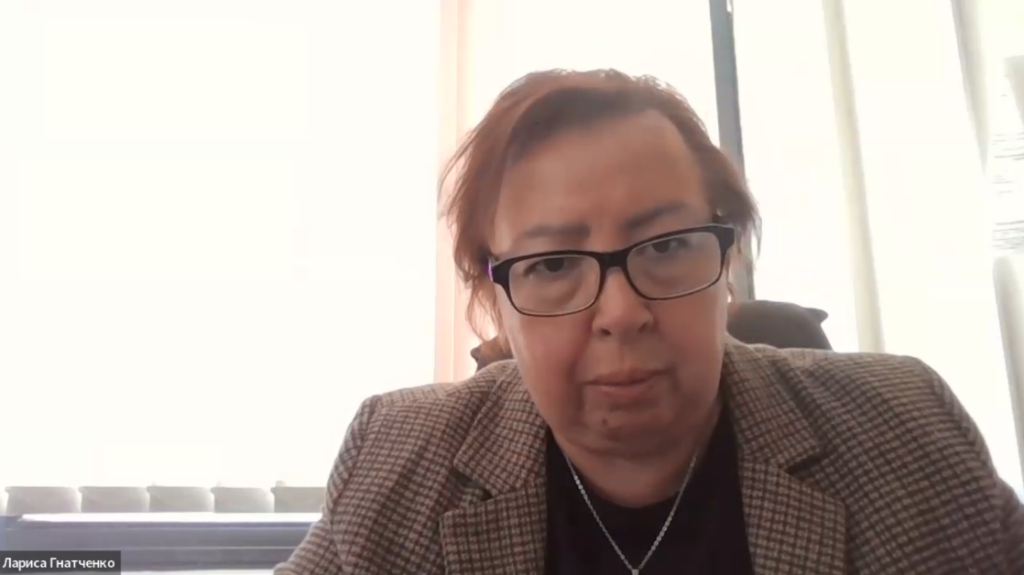
Larysa Hnatchenko (Kharkiv’s Slobidskyi Krai) emphasized the value of feedback from mentors: when professionals highly appreciate the work of your journalists, it is extremely important for the entire team.
Iryna Voronkina (Nove Zhyttia publication from Blyzniuky in the Kharkiv Region) cited specific results of journalistic materials. After the publication of the story about the veteran without two legs, another veteran turned to the village council and got a job. Through the newsroom, we managed to find the contacts of the prisoner of war for the award presentation. And after the story of the girl from the village of Vesele, a woman came to the newsroom and, having read the material, decided to change her own life.
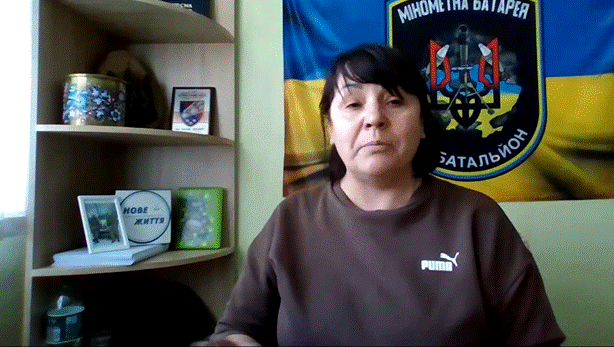
“Each publication that we created within the project helps people and reveals us in a different way. We have many such stories,” she said.
Olha Makukha emphasized that the main value of the project for her is not only money, but the feeling that journalists are important: during the program, the circulation has not fallen, subscriptions continue, people come and buy the newspaper.

Tetiana Kaushan, the editor of the Putyvlski Vedomosti newspaper (Sumy Region), emphasized that along with the newsroom on the border, there are those who do everything to ensure that silence reigns in the community – and it is thanks to this that life goes on, and the media lives. According to her, the newsroom does not stop publishing, it hears its residents – and people hear it in response. Thanks to projects such as the NUJU program, it is possible to maintain both social networks and a working website, and the reach has already exceeded a million; a young colleague has also joined.
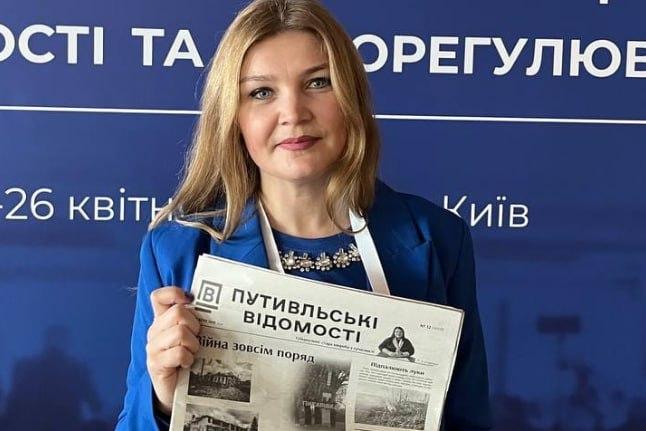
The materials, Tetiana Kaushan noted, have become more interesting and useful to people thanks to the mentors and the project: “Behind each of them is a human life, a human destiny, which they should know about not only at the local level, but also at the all-Ukrainian and global level.”
The editor-in-chief of the Visti newspaper (Sloviyansk) and a journalist for the website Karachun Oleksandr Kulbaka singled out two main achievements of the project. For the newsroom, this is an opportunity to preserve the team, and for readers, access to verified information, which is especially important today: people understand that what is written in the newspaper is significantly different from what is published on social networks, which he compared to “a fence on which you can write anything you want.”
At the same time, the editor also acknowledged what has not yet been achieved: writing material that could be recommended for republication in European media. The editorial team does not reject this ambitious goal and will continue to work on it, because he emphasized, it is important that people know about the life of the Ukrainian Donetsk Region not only in Ukraine, but also abroad. Finally, Oleksandr Kulbaka suggested publishing links to the best materials of colleagues in the project’s Telegram channel every month – as a small masterclass: “We will read the best and we will learn the same way.”
The speech of Svitlana Tomash (Novyny Horodnianshchyny newspaper), who works in the border region herself – both as a journalist and an editor, was especially eloquent.
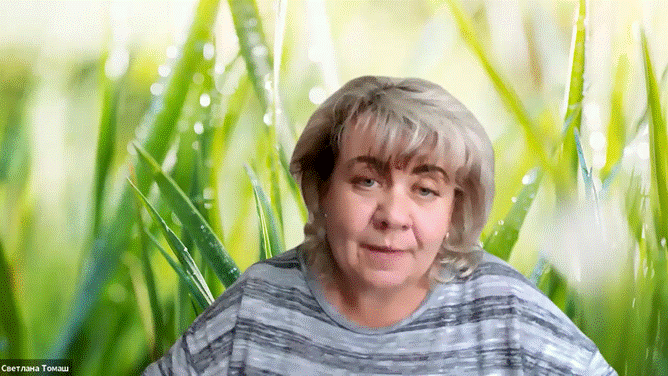
Svitlana Tomash
“I was giving up, I felt a strong moral burnout. And when the project began, thanks to the support of mentors, I got a second wind. This project is not only finances, but also huge moral support: when you are seen, heard, supported, it gives you strength to hold on and work,” she said.
Pavlo Zlenko, the editor-in-chief of the Novyny Trostianechchyny Tyzhden newspaper from Trostianets, Sumy Region, said that, being close to important events, the editorial staff had forgotten such genres as an essay, sketch, report, and it was the project that helped them return to them. One of these materials – about a grandmother who is searching for and seeking the release of her grandson from russian captivity – was named by the mentors among the best examples, which particularly pleased the editorial staff.
Pavlo Zlenko supported the proposal to regularly reprint such distinguished materials for all 25 newsrooms so that colleagues could learn from each other. He also noted the technical re-equipment: the project funds were used to purchase a laptop and a smartphone and create a mobile department capable of working independently of the main office under any conditions – shelling or alarms. “This project supports the editorial staff and gives confidence in the future – to work for its audience despite any force majeure,” he concluded.
Deputy editor of Sumy-based newspaper Tvii Shans Iryna Chyrchenko told the story of the publication, which before the war had a circulation of 70,000 and covered the entire region, but due to the fighting it was reduced to the level of a local media outlet. The program made it possible to maintain the bar, attract freelance correspondents and set up a hub for communicating with readers, including 35,000 displaced people in Sumy.
Tetiana Velyka, the editor-in-chief of the Holos Huliaipilshchyny newspaper – a publication that has turned 96 years old, shared statistics for 90 days: 1.7 million views, over 356,000 new viewers, readers from the U.S., Poland and Germany. During the full-scale war, the newsroom wrote about 342 defenders, and based on these materials, three books about the defenders of the Huliaipillia region were published.

“You give us a chance to breathe. There is still reconstruction ahead – and we will write more than one article about it,” she said.
Dmytro Yehorov (Chervonyi Promin, Zaporizhzhia Region) said that the editorial staff entered the program simultaneously with internal restructuring – and came out of it stronger than they had entered, with a website launched virtually from scratch and an understanding that it would continue to work after the project was completed.
Several editors suggested a practice that the NUJU promised to introduce: monthly sharing of links to the best materials of colleagues – as mini-master classes for all 25 newsrooms.
Ahead of the program participants is a new international campaign to republish frontline reports in world media, a separate section on the NUJU website with the best materials, and, presumably, a series of conversations about the methods of the russian propaganda against Ukrainian media and the basics of media security.
* * *
The final monitoring of the Frontline Press program records its systemic success in several dimensions at once.
- None of the 25 newsrooms stopped the publication. This is the main conclusion: in frontline zones, where any enterprise has a legitimate reason to stop, newsrooms continued to publish every week.
- The program became the only source of survival. For 14 out of 25 newsrooms, participation in Frontline Press allowed them to avoid closure. This is not a metaphor — it is direct confirmation from the questionnaires.
- Quality has increased along with stability. 20 out of 25 newsrooms noted an improvement in the quality of materials. A journalist who does not think about paying a salary thinks about the material.
- The impact on communities is real and documented. 17 newsrooms cite specific examples: a housing certificate for a grandfather, assistance to a family after a fire caused by a drone, medicine for an activist, stopping river pollution, the tradition of monthly actions in support of prisoners.
- Mentoring is effective. 23 out of 25 rated the work of mentors with the highest score. Newsrooms describe them not as mentors, but as partners.
- The program needs to be continued. This is a consolidated request from all 25 participants. The advertising market in the frontline zones has been destroyed; external support remains the only buffer between the newsroom and closure.
Frontline Press is not a media assistance program. It is a program to preserve the information infrastructure for communities that would otherwise be left without a single reliable source of verified information in the most difficult moments of their existence.
Frontline Press is a joint initiative of the NUJU and the Swedish Media Business Association (Tidningsutgivarna, TU), launched in late 2025 to support independent local and frontline newspapers operating in regions under constant russian shelling and information pressure. The six-month program included 25 newsrooms from the Kharkiv, Donetsk, Sumy, Zaporizhzhia, Kherson, Dnipropetrovsk and other regions. In addition to financial support, the newsrooms received professional mentoring support, consultations on the development of the newsrooms, assistance in preparing materials for an international audience, as well as the opportunity to directly communicate with Swedish media partners. The initiative was a response to the critical situation in which local media found themselves near the front: newsrooms work under constant drone and missile attacks, power outages, destruction of infrastructure, psychological exhaustion and a sharp decline in the advertising market. The interim results of the program were summarized in April 2026 during the Ukrainian-Swedish online forum “Journalism on the Edge”, which brought together editors of frontline media, journalists, international partners and representatives of the diplomatic corps. It was then that Frontline Press participants spoke publicly about how local newspapers remain a key element of community resilience in frontline regions, providing people with reliable information and maintaining a sense of normality even during wartime.
During the implementation of the program, editors of frontline newspapers have repeatedly become the voices of their communities and internationally. In particular, editors – participants of Frontline Press – received awards and thanks from the Ambassador of Ukraine to the United Kingdom Valerii Zaluzhnyi in recognition of their work in wartime and informational resistance to russian aggression. A separate symbol of international solidarity was the transfer in Stockholm by NUJU President Sergiy Tomilenko to Swedish colleagues of a copy of the Zoria newspaper from the frontline Lyman – as evidence that the Ukrainian local press continues to work even under fire.
The topic of supporting Ukrainian frontline media was also raised in Sweden during Sergiy Tomilenko‘s speech at the traditional Mandagsrörelsen (Monday Meetings) in Stockholm, a well-known public initiative of solidarity with Ukraine. The head of NUJU emphasized that Ukrainian journalists today fulfill not only a professional, but also a social and humanitarian mission, remaining a source of trust and connection for people in communities near the front line.
NUJU Information Service










Discussion about this post