
 THE NATIONAL UNION OF
JOURNALISTS OF UKRAINE
THE NATIONAL UNION OF
JOURNALISTS OF UKRAINE
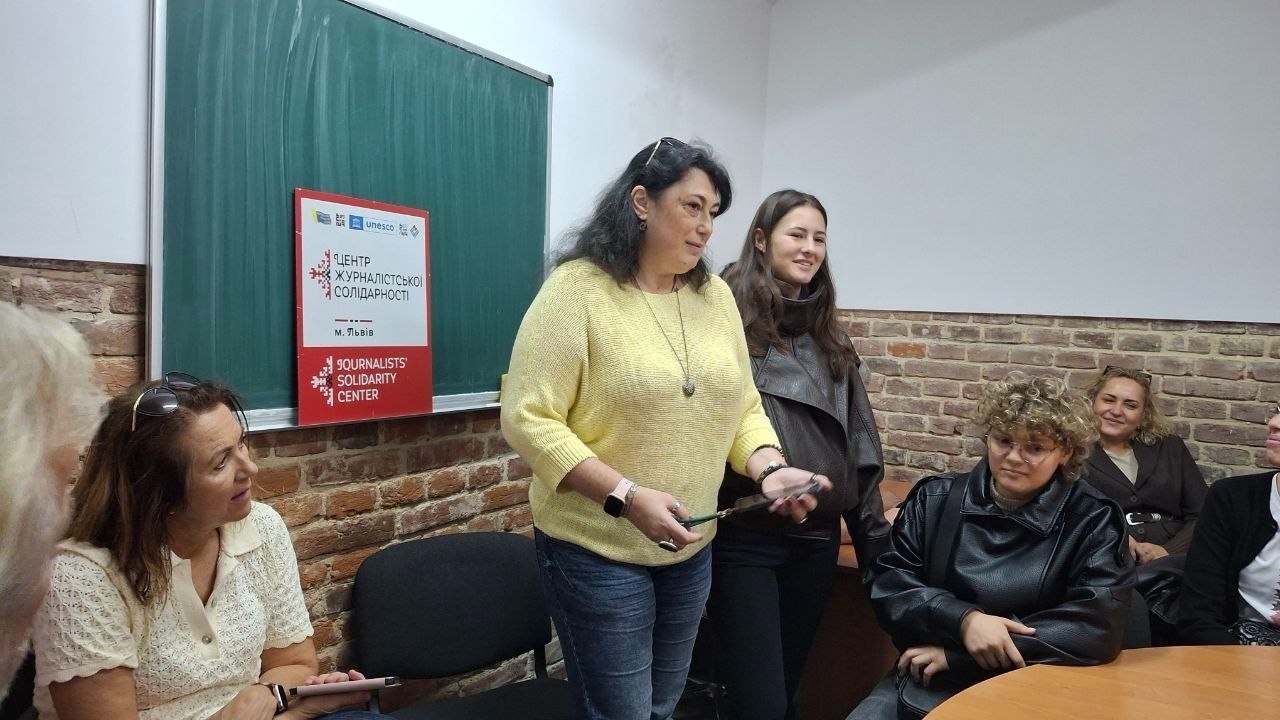
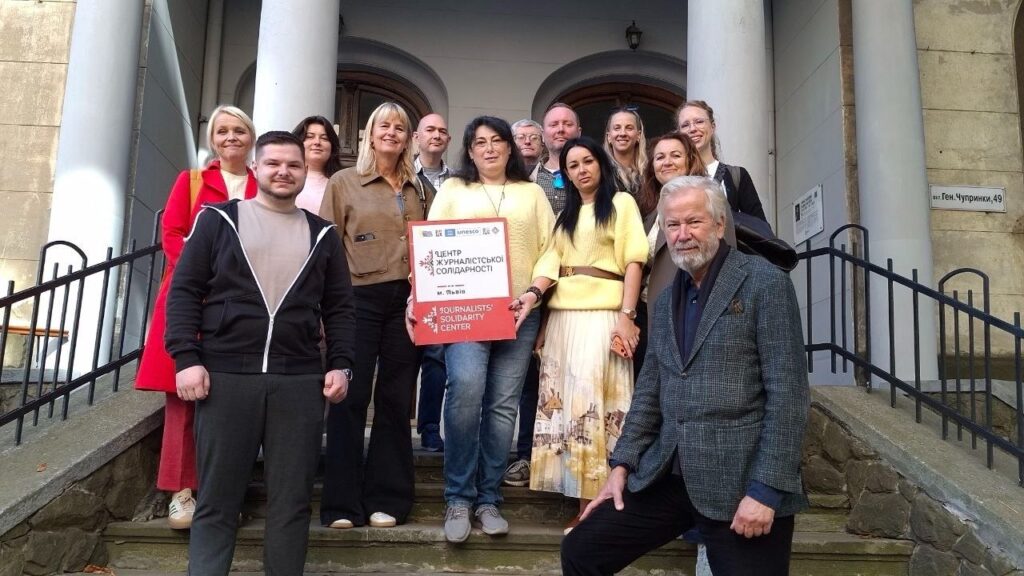
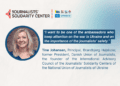
A delegation of Norwegian media executives headed by Randi Øgrey, CEO of the Norwegian Media Businesses’ Association and a member of the International Advisory Council of Ukraine’s Journalists’ Solidarity Centers, visited the Lviv center to learn how international support is helping Ukrainian journalists continue their work during the war.
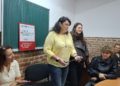
The meeting took place at the Faculty of Journalism of Ivan Franko National University of Lviv, where the local Journalists’ Solidarity Center has recently moved.
Norwegian and Ukrainian media professionals discussed the challenges facing journalists during Russia’s full-scale invasion, the importance of print media for frontline communities, the destruction of Ukraine’s information space in the occupied territories, and efforts to counter Russian disinformation.
The delegation also learned how the nationwide network of Journalists’ Solidarity Centers provides practical assistance to media workers: emergency aid, protective equipment, safe workspaces, professional training and support for displaced newsrooms seeking to resume their operations.
Randi Øgrey also serves as president of the Ukrainian Media Fund Nordic, established by media business associations from Norway, Sweden, Denmark and Finland. Through cooperation between the Fund and the National Union of Journalists of Ukraine, Ukrainian media outlets, including Radio Halychyna, have received vital support.
From emergency assistance to restoring newsrooms
Natalia Voytovych, coordinator of the Lviv Journalists’ Solidarity Center, explained that the network currently operates in seven locations across Ukraine.
After the start of the full-scale invasion, centers in western Ukraine welcomed journalists fleeing combat zones and Russian-occupied territories. Their teams helped media workers find temporary accommodation and safe workplaces and assisted in evacuating women journalists with children.
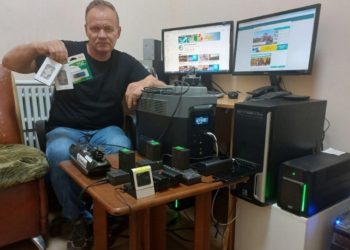
However, it soon became clear that displaced journalists needed more than immediate humanitarian assistance: they also needed opportunities to remain in the profession. The centers therefore created coworking spaces where individual journalists and entire newsrooms could resume their work.
One such newsroom is Novyi Den, a newspaper from Kherson.
“For people, this newspaper is a continuation of life”
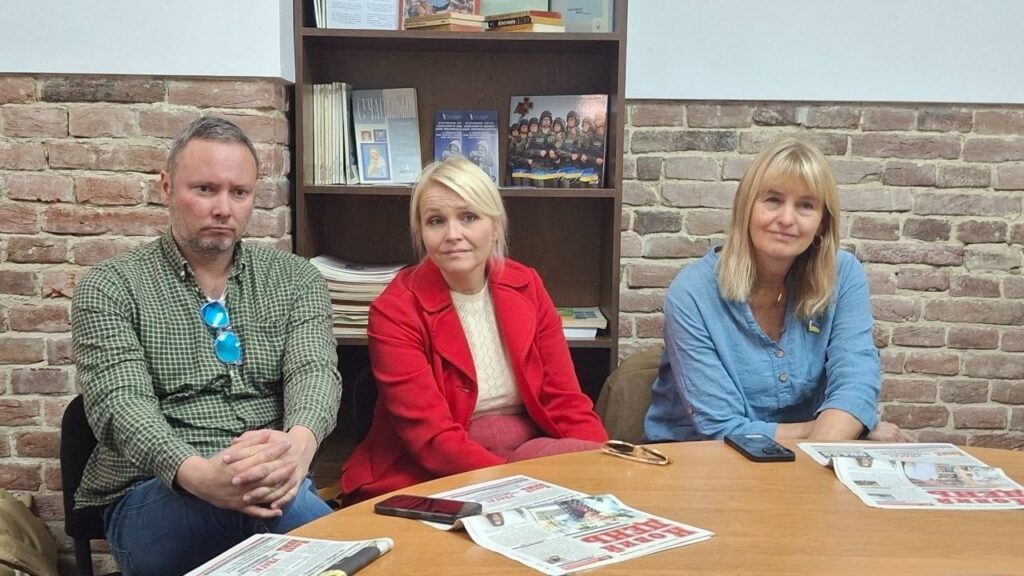
Olena Protopopova, a correspondent for Suspilne Kherson and Novyi Den, told the Norwegian delegation that the newspaper resumed publication while Kherson was still under Russian occupation.
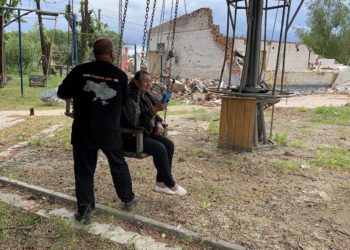
Today, its journalists work remotely from different cities after the war forced the team to disperse. The newspaper continues to provide verified information to people living in frontline, liberated and temporarily occupied communities.
“This newspaper is extremely important because it carries news from the occupied part of the region — real, verified information rather than Russian propaganda,” Protopopova said.
She explained that many liberated villages still lack reliable electricity and communications.
“When newspapers are delivered there, people see news — including information about their own region — and it makes them feel less isolated. For them, the newspaper is like a continuation of life. They are genuinely waiting for every issue,” she said.
Protopopova also described how Russia systematically dismantled the Ukrainian information space in occupied Kherson. Russian forces seized the local television center, destroyed five decades of archival material and later used Ukrainian broadcasting equipment to establish a propaganda channel.
In occupied territories, Russian structures have also appropriated the names and infrastructure of established Ukrainian media outlets, filling them with propaganda content.
Media literacy, fact-checking and support for international reporters
Norwegian media executive Hildegunn Amanda Soldal asked how Ukraine promotes media literacy and helps people recognize propaganda.
Voytovych explained that the Journalists’ Solidarity Centers organize physical, digital and information security training for media professionals, as well as media literacy activities for the public. Media literacy is also offered as an elective course to students across different faculties at Ivan Franko National University of Lviv.
Ole Jacob Sunde discussed Ukraine’s fact-checking experience with journalist Yurii Skolozdra, including cooperation with Ukrainian and international media organizations, investigations based on open sources and methods for exposing Russian falsehoods.
Participants also discussed assistance for international journalists reporting from Ukraine.
“When international reporters plan to work near the frontline, we help them organize their assignments, obtain accreditation and access protective equipment,” Voytovych said. “We also cooperate with fixers and brief foreign colleagues on the security situation and the realities of reporting during the war.”
“You are in our hearts”
For the Norwegian delegation, the visit was an opportunity to hear directly from Ukrainian journalists about the professional and personal challenges they face.
“We wanted to visit the Journalists’ Solidarity Center to better understand how you work and support journalists,” Randi Øgrey said. “Your work is extremely important, and we thank you for it. Please remember that we are always with you. You are in our hearts.”
The visitors also learned about the work of the university’s Faculty of Journalism and discussed the education of future journalists, professional safety and the challenges the war poses for journalism schools.
The Norwegian delegation was in Ukraine to participate in a media congress organized in Lviv by the Association of Independent Regional Publishers of Ukraine.
About the Journalists’ Solidarity Centers
The Journalists’ Solidarity Centers are a network established by the National Union of Journalists of Ukraine after the beginning of Russia’s full-scale invasion, with the support of the International and European Federations of Journalists. UNESCO Headquarters is also a partner of the network.
The centers provide journalists with emergency assistance, protective equipment, safe workplaces and coworking facilities. They also help displaced newsrooms resume operations, organize physical, digital and information security training, and promote media literacy.
The network currently works in Kyiv, Kharkiv, Dnipro, Zaporizhzhia, Sumy, Lviv and Ivano-Frankivsk. Four of these locations — Kharkiv, Dnipro, Zaporizhzhia and Sumy — are situated in frontline or border regions.
In August 2026, the network established an International Advisory Council bringing together leading international media experts.
Earlier this year, the Journalists’ Solidarity Centers received the Grand Prix at the Voices Festival in Florence.








Discussion about this post