

 THE NATIONAL UNION OF
JOURNALISTS OF UKRAINE

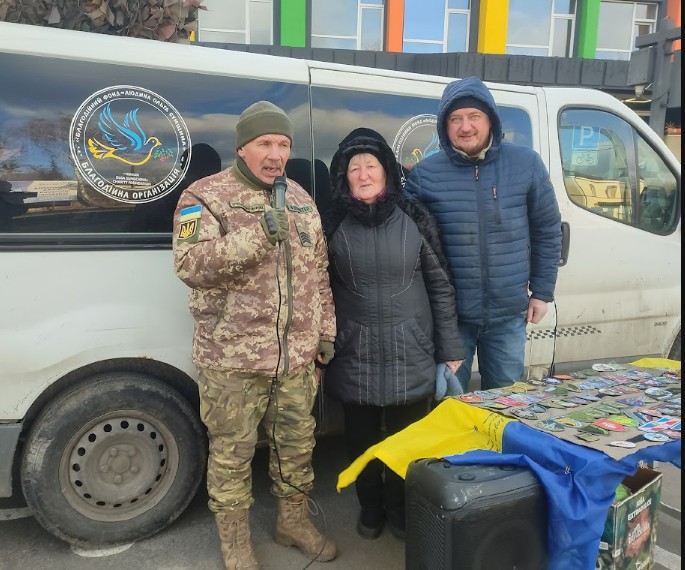
“If I had stopped, I don’t know how I would have gone on living,” says Tetiana Zamula from the small city of Trostianets in Ukraine’s Sumy region, located not far from the Russian border. Russia’s war against Ukraine took from her the people she loved most—her husband and her son—but it did not break her. Every day, Tetiana comes to a volunteer center where she sews, weaves camouflage netting, and prepares supplies for Ukrainian soldiers.
“If I had stopped, I don’t know how I would have gone on living,” she says quietly. “This work keeps me alive.” This story was reported by the local outlet Novyny Trostianechyny (meaning “Trostianets District News”).
“We Learned to Live Underground”
Russia’s full-scale invasion of Ukraine began on February 24, 2022. That morning, Tetiana was still in bed when her husband Valentyn walked into the room.
“War,” he said. “Russian troops are already here.”
Within hours, Russian military units had entered Trostianets—a city close enough to the Russian border to be among the very first targets of the invasion. Tanks rolled down residential streets. Shops were looted, public buildings destroyed. Civilians hid in basements, and shelling became an everyday reality.
Tetiana and Valentyn lived in the city center. Their only son, Yevhen, was already serving in the Armed Forces of Ukraine. Day after day, the couple watched the occupiers loot and destroy their city.
“We learned to live underground,” Tetiana recalls. “Morning, afternoon, or in the middle of the night—when the shelling started, we would run to the cellar.”
Soon, an elderly couple from next door joined them.
“They were too frightened to stay alone,” she says. “We became one family in that basement.”
Bread was nearly impossible to find. One local business owner, risking his life, continued baking and distributing bread to people for free. Armed Russian soldiers would regularly walk into the bakery and take as much as they wanted. People waited in silence.
“My Home Became a Grave”
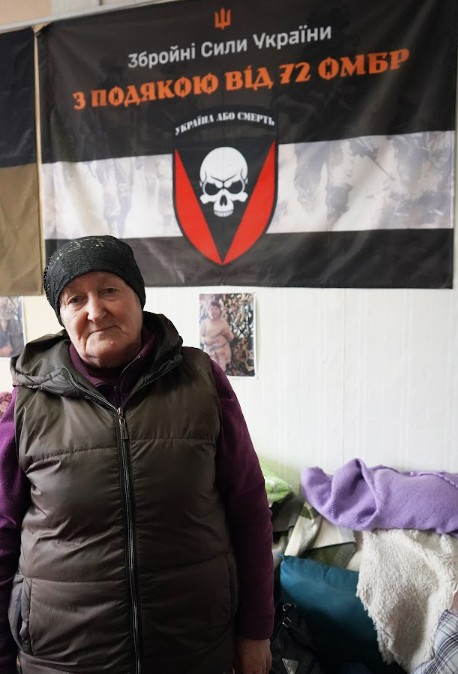
On March 20, 2022, a mortar shell exploded in Tetiana’s yard. Shelling had begun. Her husband Valentyn shouted for everyone to get to the cellar, then turned back to help the elderly neighbors climb down.
“I was running—and then something exploded behind me. Blood came from my ears. I fell near the shed and crawled toward the cellar. I climbed down the ladder and waited. Then I heard someone breathing heavily. I called out: ‘Hurry, hurry!’ But there was only silence. The explosions stopped. And no one ever came down to me. I was afraid to go outside. Not because I was scared—but because I understood what I would see, what was waiting for me up there…”
Her husband was killed instantly. So was the elderly couple who had been sheltering with them. Russian soldiers would not allow the dead to be buried in the local cemetery—so the bodies were temporarily buried right there in the yard, beneath an apple tree.
“My home became a grave,” Tetiana says. “That was when I understood that life would never be the same.”
Two years later, Tetiana Zamula endured yet another loss. In May 2024, her son Yevhen was killed in Chasiv Yar—a fiercely contested town in the Donetsk region of eastern Ukraine, and one of the hottest points on the entire front line. He had been serving in a special reconnaissance unit within Ukraine’s military intelligence. His comrades called him “Ivanhoe”—for his composure, endurance, and willingness to take responsibility.
“He never spoke about fear,” his mother says. “He believed that duty was more important.”
When his mother would call and ask where he was, Yevhen would joke. “Tell her I’m guarding the corn,” he would ask his friends. “She worries too much.”
The entire city came out for Yevhen’s funeral. People knelt along the road as the procession passed—a traditional Ukrainian gesture of respect for a fallen soldier.
“The city wept,” Tetiana says. “And everything inside me went still.”
“My Hands Needed Work. My Heart Needed Something to Hold On To”
And yet, despite so much grief, Tetiana Zamula did not break. On March 26, 2022, Ukrainian troops from the 93rd Mechanized Brigade “Kholodnyi Yar”—named after a historic region in central Ukraine known for its tradition of resistance—liberated Trostianets from Russian occupation. Within a few months, local residents reopened a volunteer center. Tetiana was among the first to come.
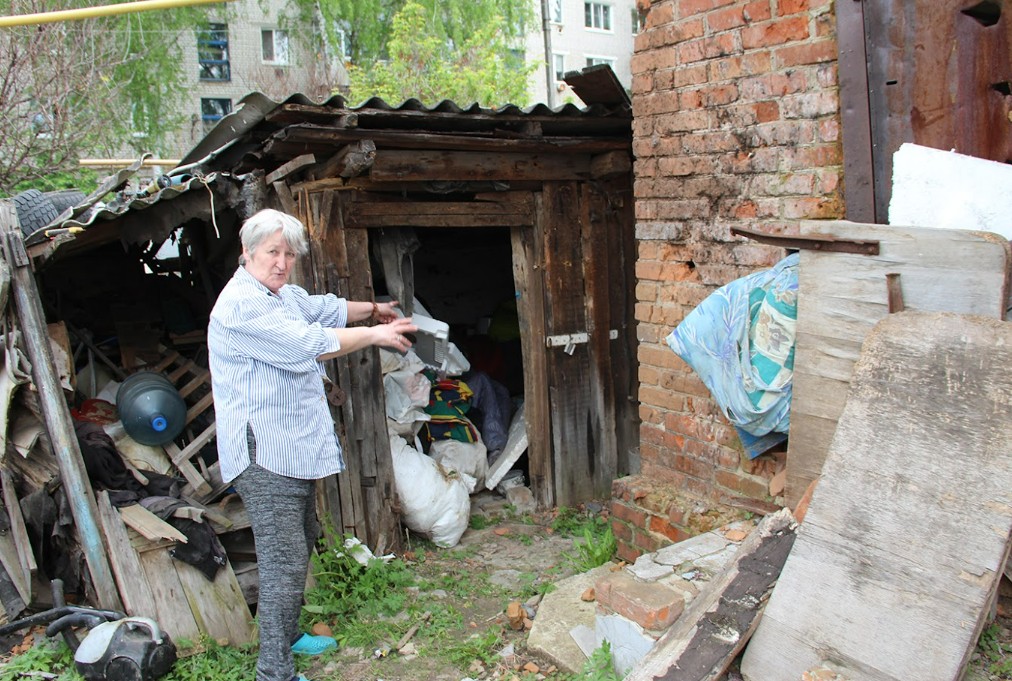
“I couldn’t sleep,” she says. “My hands needed work. My heart needed something to hold on to.”
Today, the center operates almost like a small workshop. The volunteers—mostly women whose loved ones are fighting or have been killed—make camouflage netting, clothing, mattresses, and trench candles, a basic survival item used by soldiers in dugouts and trenches for warmth and light. Everything is sent directly to the front lines.
“Some of the volunteers come every day. Some come now and then. But everyone is motivated. They all lived through the Russian occupation—sat in freezing houses without water or electricity,” says Volodymyr Halkin, the head of the community organization that oversees the volunteer center.
The walls of the building are covered with flags given to the center by soldiers as tokens of gratitude. Written on the fabric are messages: “With faith in victory,” “Glory to Ukraine”—the country’s national salute. One of the flags is from Yevhen’s unit.
“If we hung up every flag we’ve received, there wouldn’t be a bare spot left on these walls,” smiles Nadiia Rybalko, another volunteer, whose own son has been fighting for five years.
For Tetiana, this work is deeply personal.
“I know what it means to wait,” she says. “And I know what it means when they don’t come back. If I can make even one soldier a little warmer or a little more protected—that matters.”
In September 2025, the city of Trostianets was awarded the honorary title of “Hero City of Ukraine”—a state distinction recognizing the courage, resilience, and heroism of communities that resisted Russian aggression.
And on December 5, on International Volunteer Day, Tetiana Zamula was awarded the distinction of “Volunteer of Ukraine.” She says that no matter how difficult things get, she tries to keep living—because she knows that those she lost would never have given up.
________________________________________________________________
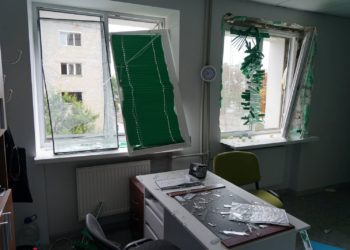
Novyny Trostianechyny (meaning “Trostianets District News”) is the key news source for the Trostianets community and has become a symbol of the resilience of local journalism in Ukraine’s Sumy region. The publication has endured the harshest trials of the full-scale invasion: during the Russian occupation of Trostianets in early 2022, the editorial offices were looted and effectively destroyed by Russian soldiers—yet the journalists never stopped working, continuing to inform residents through digital channels.
Today, the outlet is an example of successful recovery. With the support of international donors and the National Union of Journalists of Ukraine, the newspaper has not only returned to print but has also strengthened its online presence. The editorial team works under conditions of constant shelling along the border zone, focusing on stories of the city’s recovery, documenting war crimes, and providing practical information about humanitarian aid and social services. As a participant in the Frontline Press program, the outlet is actively implementing new safety standards and preparing for a technological upgrade in 2026, exploring artificial intelligence as a means of addressing staff shortages and speeding up content production. Novyny Trostianechyny remains the main “voice” of its community, combining the traditions of classic print journalism with the speed of modern social media.
Official website: ntgazeta.com.ua.
Novyny Trostianechyny is one of 25 local and regional media outlets participating in the Frontline Press support program, funded by the Swedish media business association Tidningsutgivarna. The program supports professional journalism about life in Ukraine’s frontline communities. The National Union of Journalists of Ukraine (NUJU) is happy to share these stories with international media for republication. To request permission to republish this or other materials produced through the Frontline Press program, please contact [email protected].









Discussion about this post