

 THE NATIONAL UNION OF
JOURNALISTS OF UKRAINE

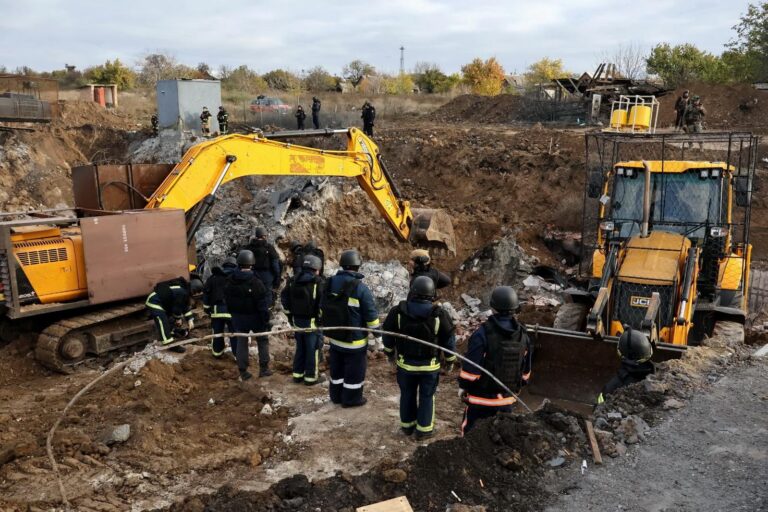
Three days after a Russian three-tonne bomb struck a school shelter in Komyshuvakha, killing at least 55 people, El Mundo correspondent Javier Espinosa and photographer Albert Lores reached the town with press officers of Ukraine’s 65th Mechanised Brigade. Their trip shows what it takes for foreign media to report from Ukraine’s front-line communities today.
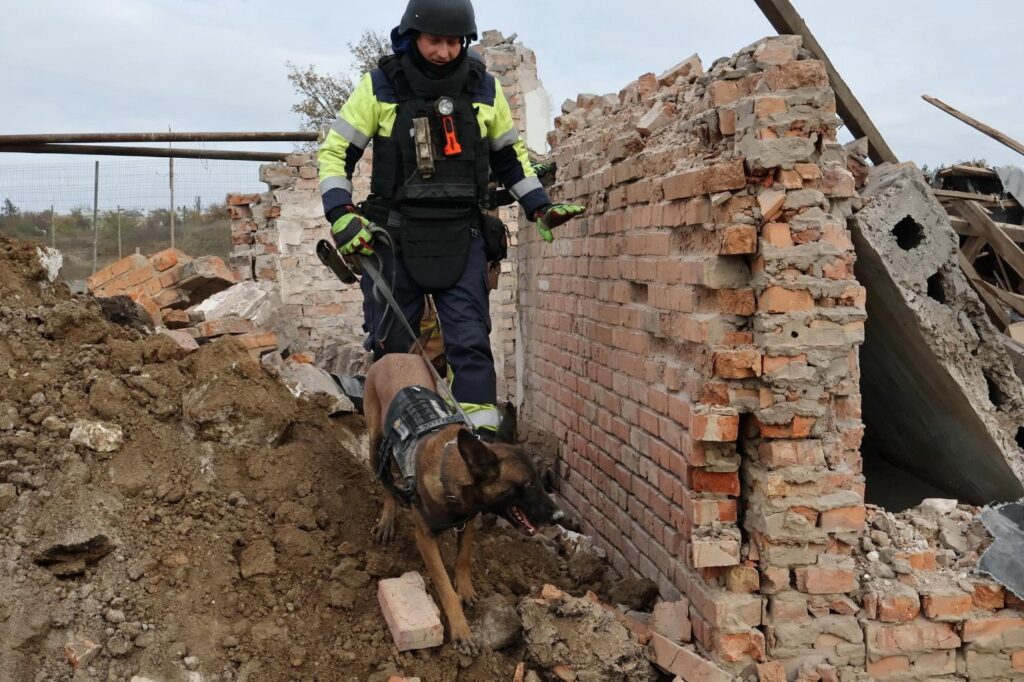
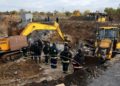
An excavator lifts a bucket of earth mixed with concrete, and a search dog carefully sniffs every clump. This is how rescuers in Komyshuvakha, a town in Ukraine’s Zaporizhzhia region, are searching for the remains of people who took shelter beneath the local school on 2 November. The Russian FAB-3000, a three-tonne aerial bomb, left them no chance. Fifty-five people are known to have been killed so far, and dozens more are listed as missing.
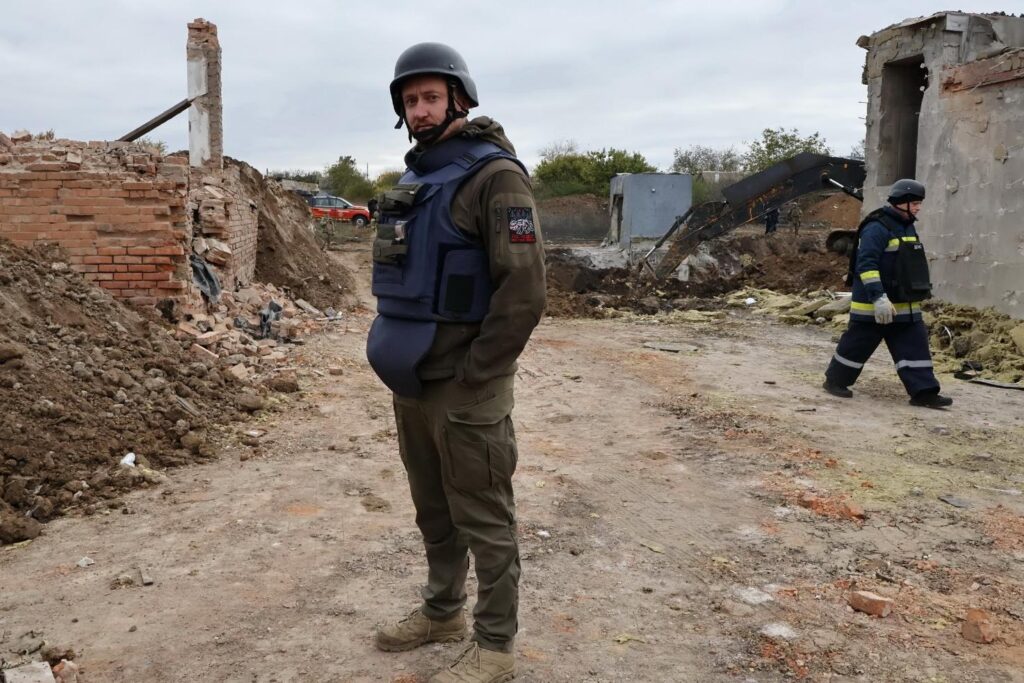
It was the deadliest attack on civilians in this war since Russia bombed the Mariupol Drama Theatre in March 2022. Three days later, Javier Espinosa, a correspondent for the Spanish daily El Mundo, and photographer Albert Lores were working at the site.
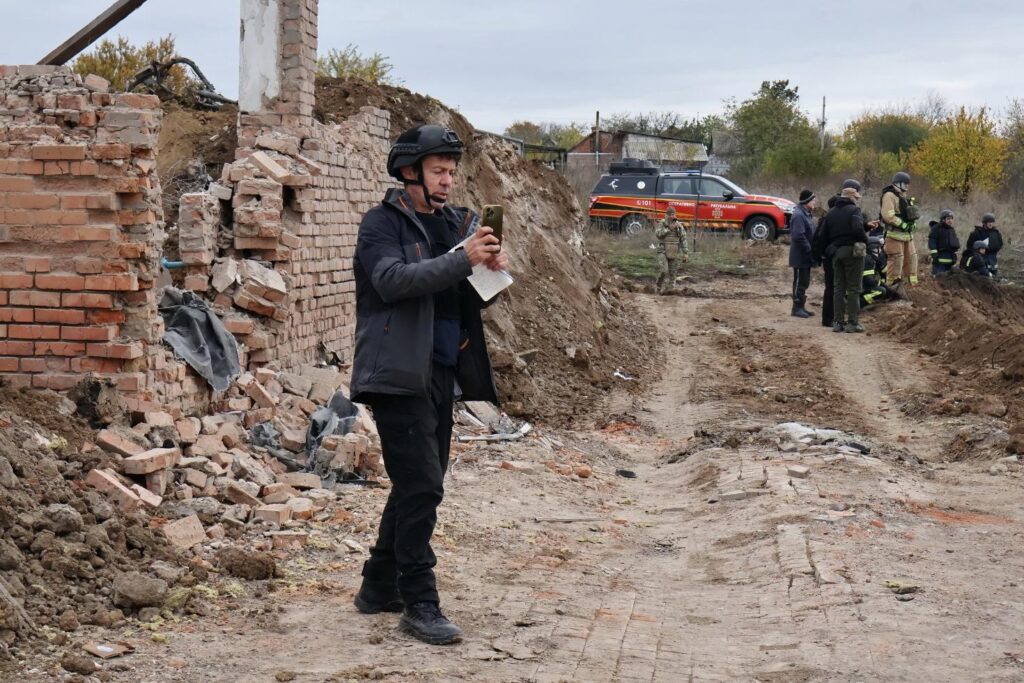
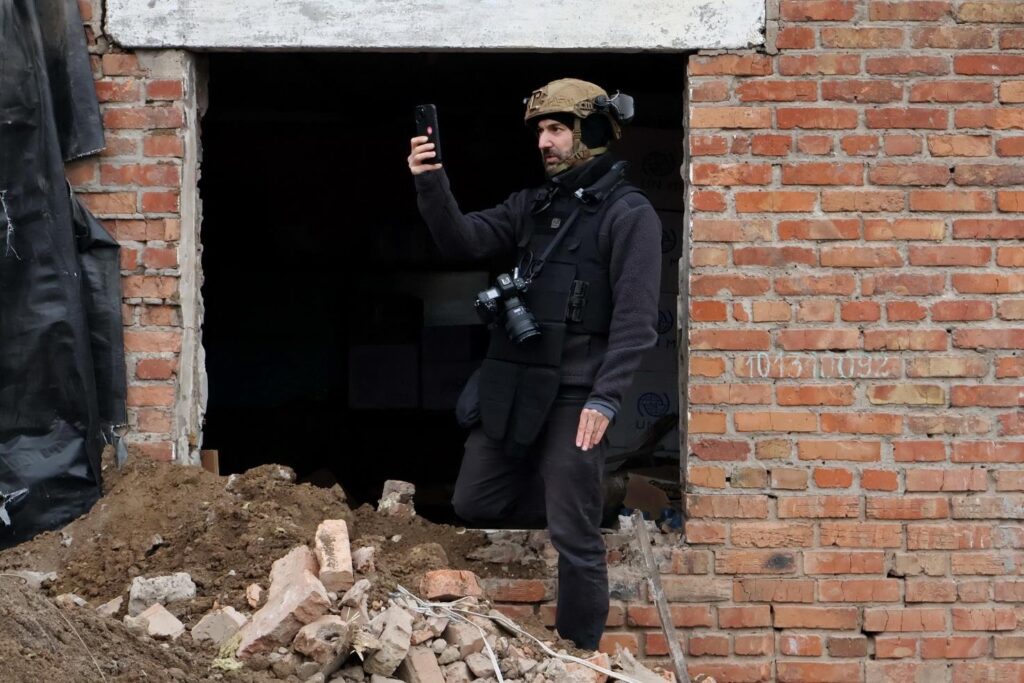
Few foreign journalists made it to the scene; most media relied on updates from the State Emergency Service and the police. The Spanish reporters were accompanied by military journalists from the press service of the 65th Separate Mechanised Brigade “Velykyi Luh” and by the Ukrainian local producer Yevhen Semekhin.
A road hunted by drones
The Spaniards were due to spend two weeks in Ukraine. Semekhin had spent a month preparing the trip, as Espinosa had submitted requests for more than 30 different stories. The assignment began in Odesa on 3 November. That evening Semekhin told his colleagues about the tragedy in Komyshuvakha, and the plan had to be rewritten.
On the morning of 2 November, Russian forces struck the Komyshuvakha school with two guided aerial bombs, destroying the sports hall and several rooms. Next door, in the underground part of the school, there was a humanitarian aid distribution point. More than a hundred people had gathered there that morning to collect food, bread and other aid.
Rescue work began immediately after the first strike. But with the threat of a follow-up strike, local residents, police officers and rescuers were forced to go down into the underground school. That is where Russia dropped the FAB-3000. The bomb pierced the roof and exploded inside.
Everyone on the lowest level was killed.
“Our Spanish friends were meant to work in our sector on other stories. But when they heard what had happened in Komyshuvakha and saw the horrifying footage, they decided to change their plans. We arranged the permits very quickly and cleared the trip with the command,” says Serhii Skibchyk, head of communications at the 65th Brigade.
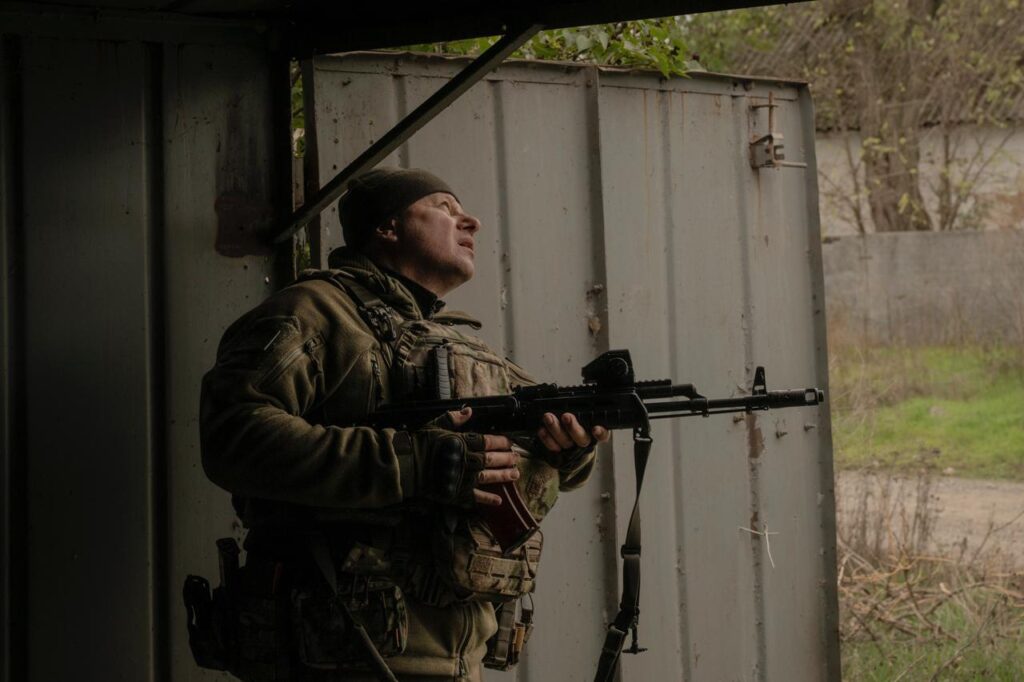
On 5 November five people got into his car: two members of the press service, Skibchyk himself and his colleague, photographer Andrii Andriienko; the two Spaniards; and the local producer. Skibchyk drove and gave each passenger a task: keep the windows open and watch their own section of the sky. The road to Komyshuvakha is part of the highway from Zaporizhzhia to Orikhiv, where heavy fighting is under way, and Russian drones are trying to take control of it.
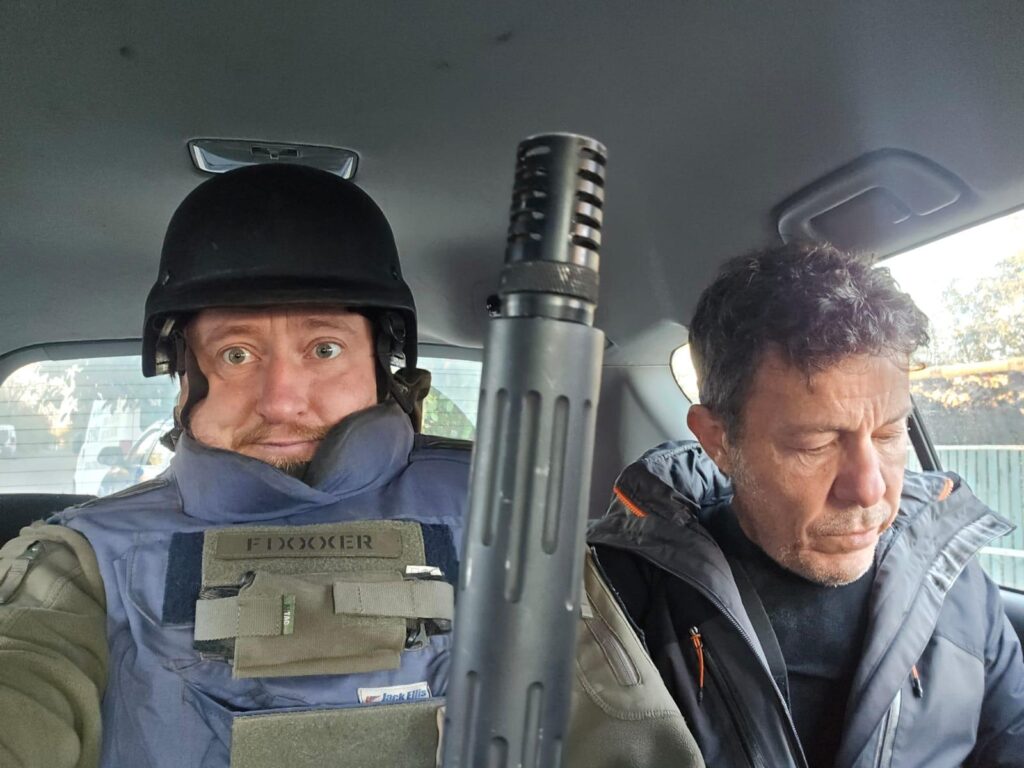
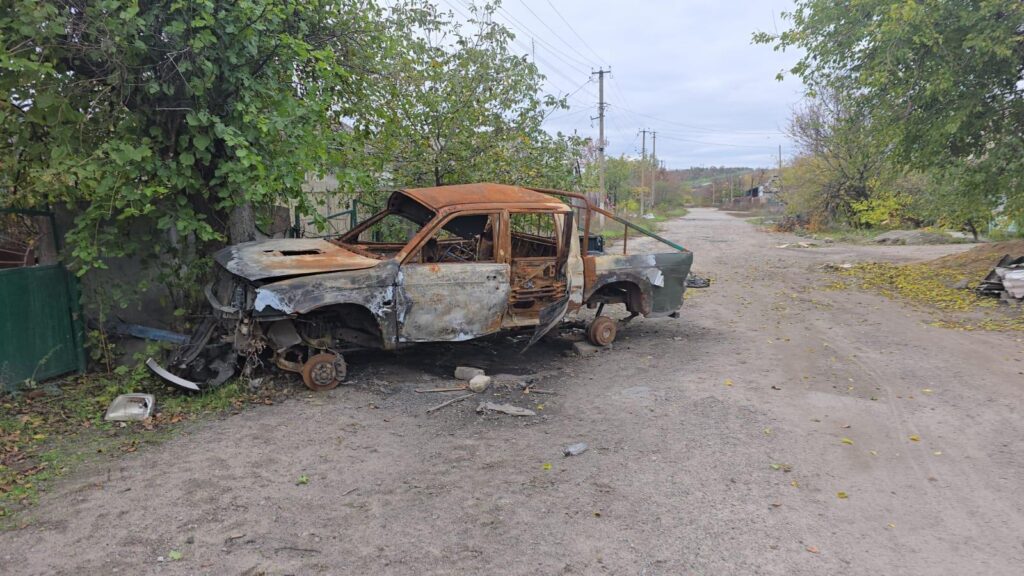
“Even the road to Komyshuvakha is dangerous, although it is in a so-called relatively safe zone. The Spaniards counted about ten downed drones caught in the netting over the highway. Twice we saw mobile fire teams shooting at active drones. We got through by driving fast,” Skibchyk told NUJU.
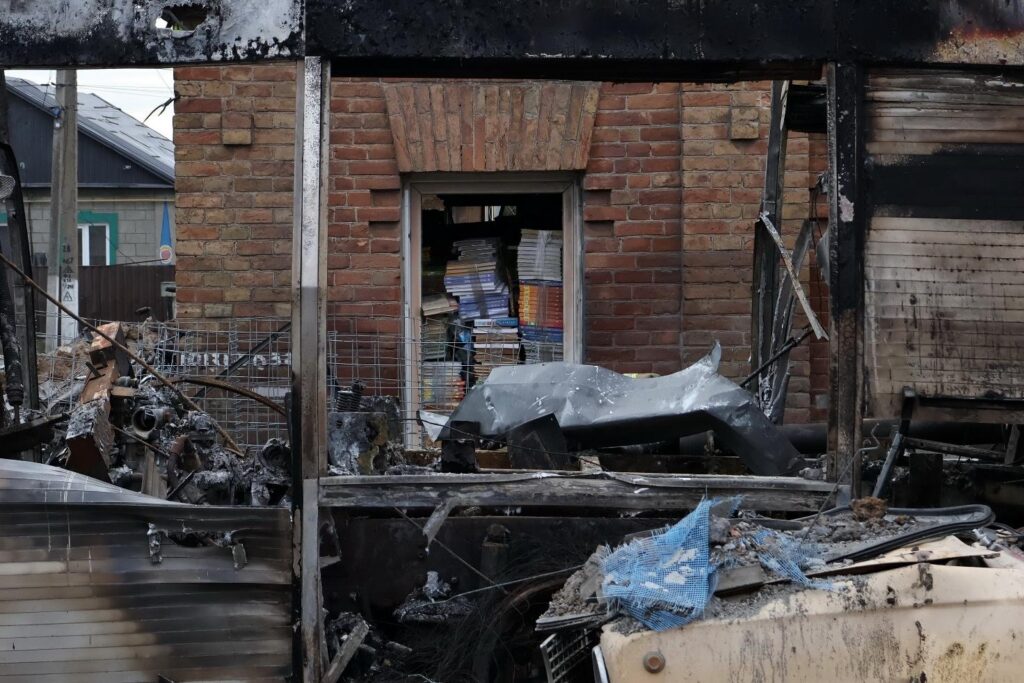
Burned-out vehicles, most of them civilian, lined the road.
Semekhin, who had been in Komyshuvakha in March with a German journalist, recalls that shops, a market and cafés were still open in the town then, and they were able to sit down for a coffee.
“In six months the situation has turned around completely,” he told NUJU.
At the rubble and in an empty convent
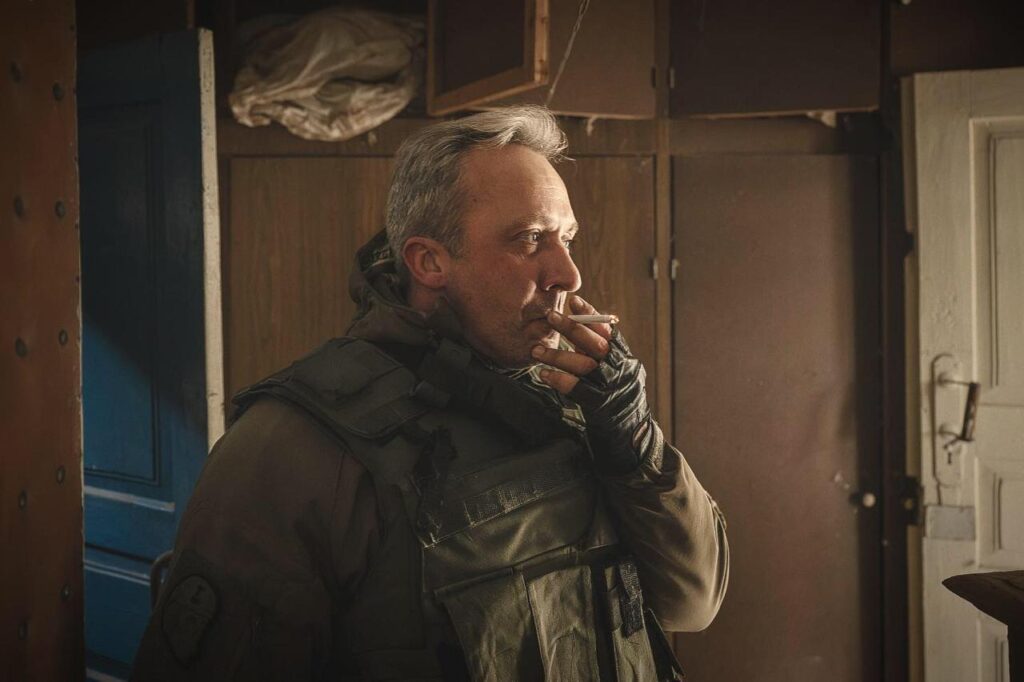
After finding somewhere to hide the car, the group continued on foot. Time and again the Spaniards had to take cover in what remained of the greenery or in half-ruined houses. Espinosa was surprised that Andriienko, of the brigade press service, heard drones before anyone else.
“Javier said it was amazing, because he couldn’t hear anything at the moment I was already warning that we had to run for cover. A second, two, three would pass, and then Javier would hear the drone too. I explained to him: ‘You’re a journalist, your job is to film and talk to people. Our job is not only to bring you here but to get you out. Better to take cover for nothing once too often than to wait until we’re sure something is buzzing,’” Andriienko says.
At the start of the full-scale invasion he was himself a civilian war photographer, and others looked after his safety.
At the site of the strike on the school, heavy machinery was at work and lorries were carrying away debris. The journalists went down with the rescuers into the underground part of the school as far as the rubble allowed.
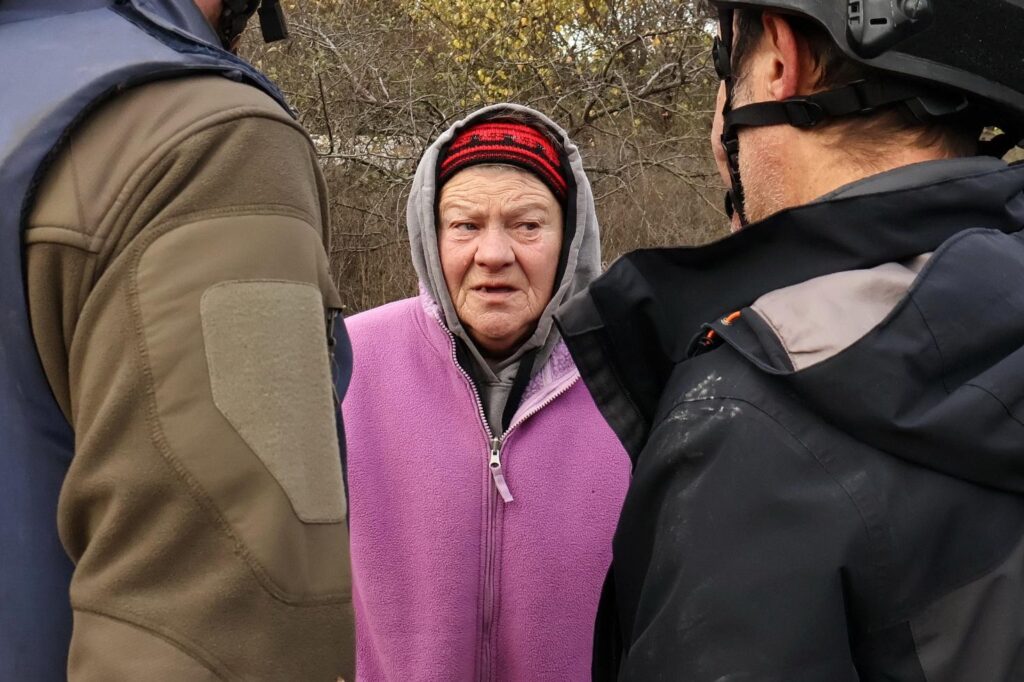
Local residents came to the site from time to time. The group spoke with an elderly woman who had been waiting for several days for her son-in-law to be recovered from the rubble. He had worked on a repair crew, covering neighbours’ blown-out windows with plastic sheeting. That morning he had gone to the underground school because aid was being handed out there.
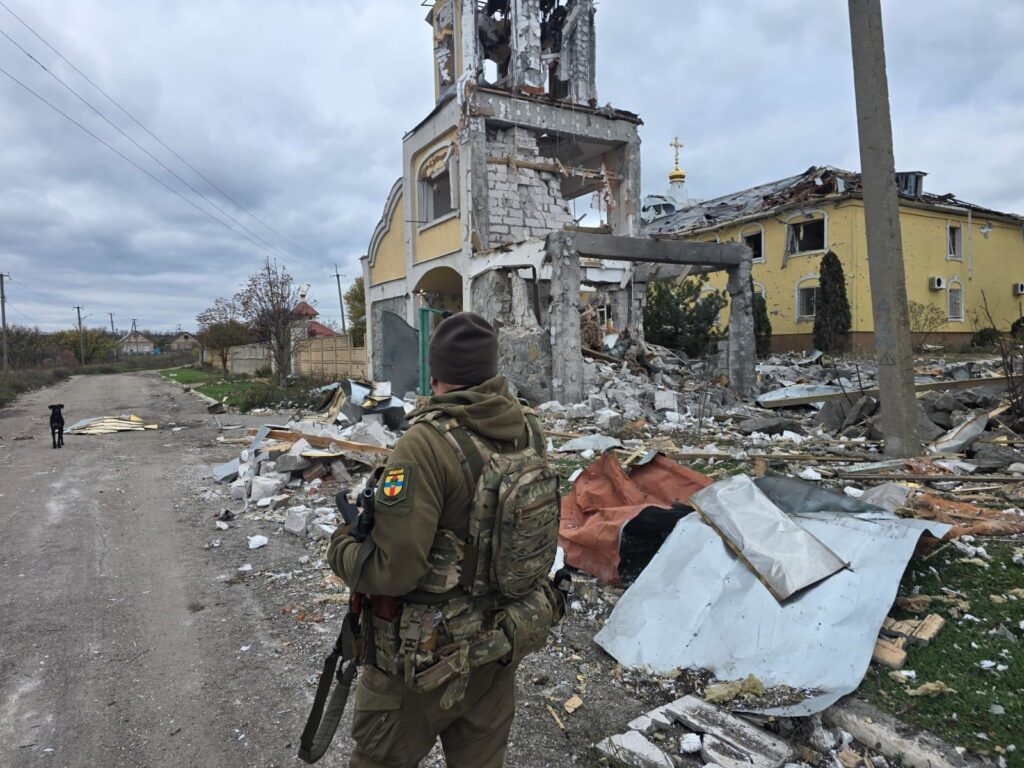
The group then crossed to the other end of the town, to the Holy Elizabeth Convent, which a Russian bomb had hit on the morning of the same day, 2 November. According to Semekhin, the distance is about a kilometre. But because of the drones they had to take cover every two or three minutes, and the walk there took more than an hour.
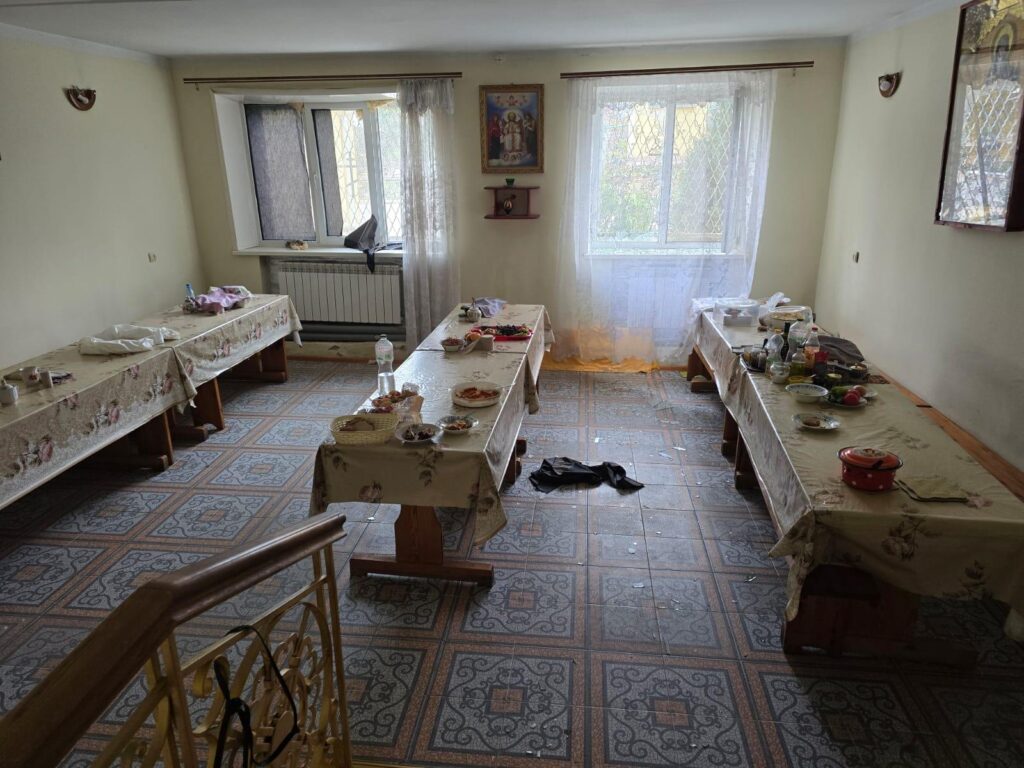
The nuns had been evacuated.
“It’s an eerie feeling. You walk into an empty building, and only the wind howls through the corridors and stirs the curtains. It’s as if people were here half an hour ago. In the refectory there were plates on the tables, and it seemed the food in them was still cooling. The strike on the convent is one more piece of evidence that Russia doesn’t care where it hits,” Skibchyk says.
A funeral under guided bombs
The very next day, Espinosa’s report with Lores’s photographs ran across the first three pages of El Mundo.
The journalists later spoke with the head of the local community, Yurii Karapetian. His wife, Nataliia, was killed in the strike on the school. She had been helping people and, after the first strikes, was urging them to get into the shelter quickly.
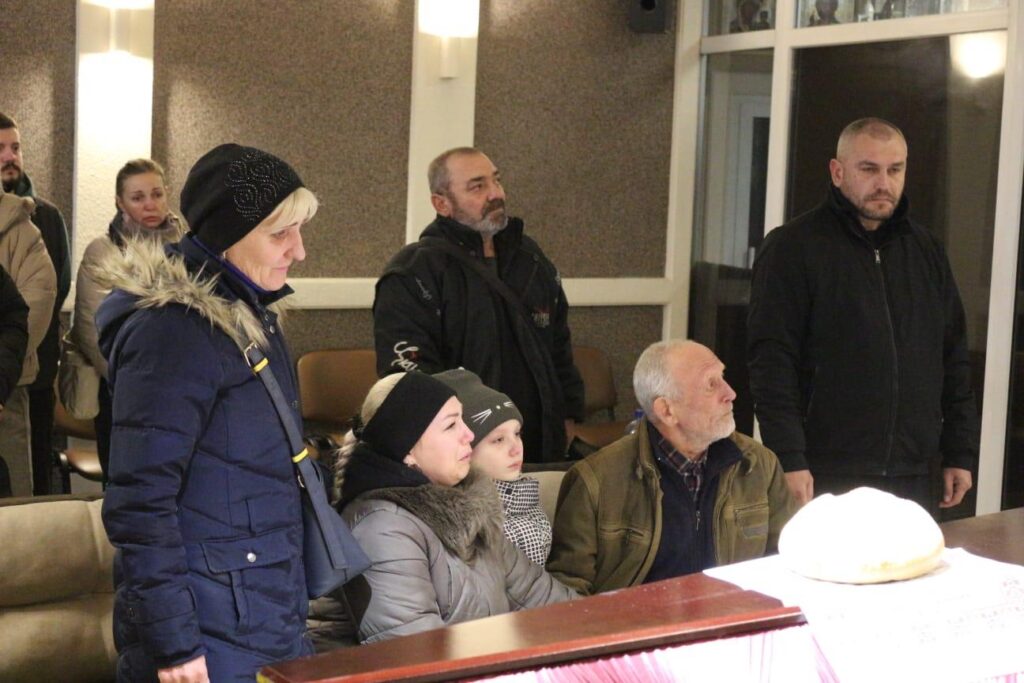
A few days later the Spaniards returned for the funeral of the victims. The farewell took place under fire: within half an hour, guided-bomb alerts went off three times on the phones of people in the hall, and seconds later explosions could be heard nearby.
“During the funeral service the priest said that it wasn’t ‘the war’ that killed these people. They were killed by a specific pilot who dropped the bomb, and by a specific person who gave the order,” Semekhin recalls.
According to Ukraine’s Defence Intelligence (HUR), the strike on Komyshuvakha was planned by Colonel Fyodor Vladimirovich Zubakov, head of the fire-strike group at the headquarters of the Russian army’s Dnepr Group of Forces. Four Su-34 aircraft were used to carry out the war crime. Ukrainian military intelligence has identified the Russian pilots who dropped the bombs: Captain Sergei Aleksandrovich Yeliseyev, Captain Dmitry Andreyevich Zverev, Senior Lieutenant Rodion Sergeyevich Plotnikov, Senior Lieutenant Nikita Viktorovich Ignatyev, Senior Lieutenant Maksim Viktorovich Sokolenko and Lieutenant Vadim Olegovich Perekhrest. The crew of one more Russian aircraft is still being identified.
For the local producer, the trip also raised a question of professional ethics. Semekhin says he finds it hard to watch a journalist question people in deep grief. At the school and at the cemetery he several times asked Espinosa to stop and wait. Espinosa explained that otherwise he could not convey to Spanish readers what these people had been through.
“He told me that during the massacres in Rwanda he cried looking at the murdered children, but he still wrote the story. I can understand Javier. For us this is almost a personal tragedy, while for a foreign journalist it is one of many tragedies he has witnessed over his career,” Semekhin says.
Even so, he is grateful to his Spanish colleague, whose stories run on front pages and can influence voters and politicians in Spain.
Espinosa himself is convinced that the world has not turned away from Ukraine.
“Yes, there is still interest in what is happening in Ukraine, and that is why major media are still sending journalists here,” he told NUJU.
Espinosa described the work of Skibchyk and Andriienko as “the highest level of professionalism”, saying they understand how important it is to tell the world about this tragedy. Semekhin plans to send a letter of thanks to Ukraine’s General Staff for the press officers’ work.
The 65th Brigade’s press service is staying with the Komyshuvakha story. A crew from Latvian public television is due to visit the town next.
“Until the search and rescue operation is over, we will keep following this story. The whole civilised world must know about Russia’s crimes against civilians, so that they are judged and Russia, as a terrorist state, is held to account,” Skibchyk says.
* * *
The National Union of Journalists of Ukraine (NUJU) works systematically with military press officers and the press services of Ukraine’s Defence Forces. It supports cooperation between military and civilian journalists, the organisation of media work in combat zones, better accreditation procedures and greater safety for journalists. The union holds joint professional meetings and training as well as gives military press services technical and material support, including photo and video equipment, vehicles and other essential gear. It works particularly closely with the press services of the 24th Separate Mechanised Brigade named after King Danylo, the 5th Separate Kyiv Assault Brigade, and the 44th and 65th Separate Mechanised Brigades. In 2024 NUJU established a special award, “Press Officers Matter”, which recognises military communicators for their professionalism, their coverage of the front line and their support for civilian journalists. Cooperation also takes place at the level of the leadership of the communications units of the Armed Forces of Ukraine and the Ministry of Defence.
Maksym Stepanov, NUJU Information Service










Discussion about this post