

 THE NATIONAL UNION OF
JOURNALISTS OF UKRAINE

Repeat strikes, fires, collapsing structures and unexploded munitions have made the scene of a Russian attack one of the most dangerous places to report from. A training by the National Union of Journalists of Ukraine and Free Press Unlimited set out what reporters can do to stay safe there.
The aftermath of a Russian strike brings its own set of dangers for the journalists who rush to cover it: a second attack on the same spot, fire, unstable buildings, secondary detonations, unexploded fragments of munitions and heavy rescue machinery at work.
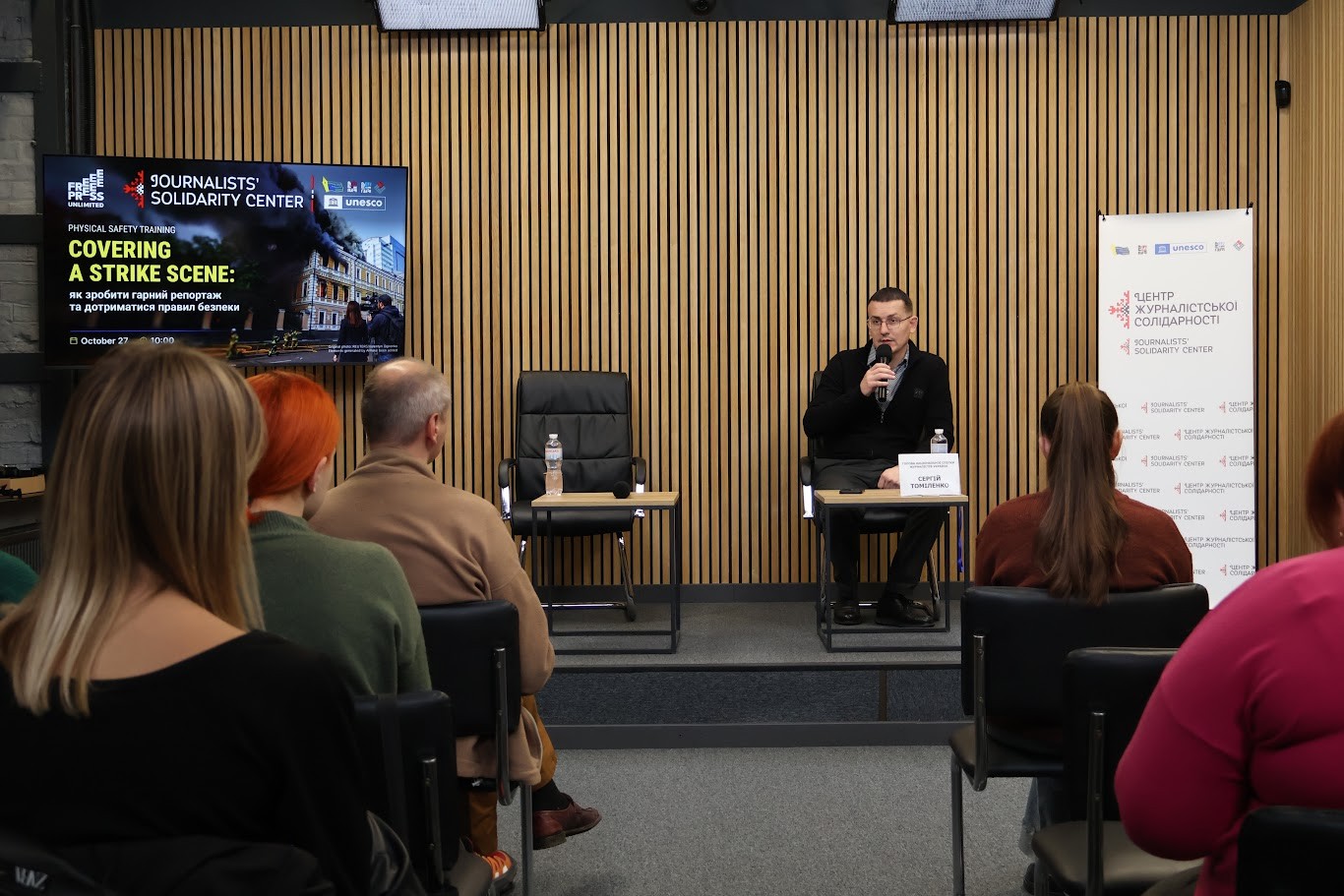
The National Union of Journalists of Ukraine (NUJU), together with the Dutch press freedom organization Free Press Unlimited, held a training in Kyiv on how to work at such sites, titled “Journalist at the Site of a Strike: How to Make a Good Report and Follow Safety Rules.”
“With the intensification of Russian shelling, Kyiv is turning into a front-line city in terms of its dangers and challenges,” Sergiy Tomilenko, the union’s president, said as he opened the session.
One of the union’s main safety tools, he said, is its network of Journalists’ Solidarity Centers, regional hubs open to reporters from national and local outlets, freelancers and foreign correspondents. “Through the centers we respond to journalists’ safety requests, organize training, and lend helmets, body armor and now drone detectors free of charge,” Mr. Tomilenko said.
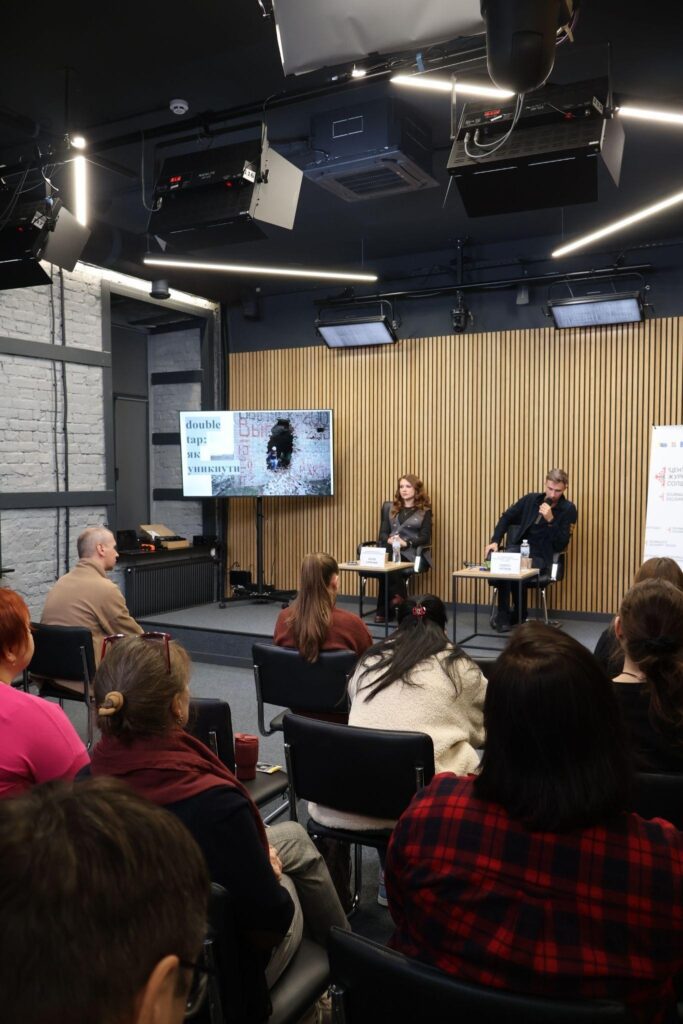
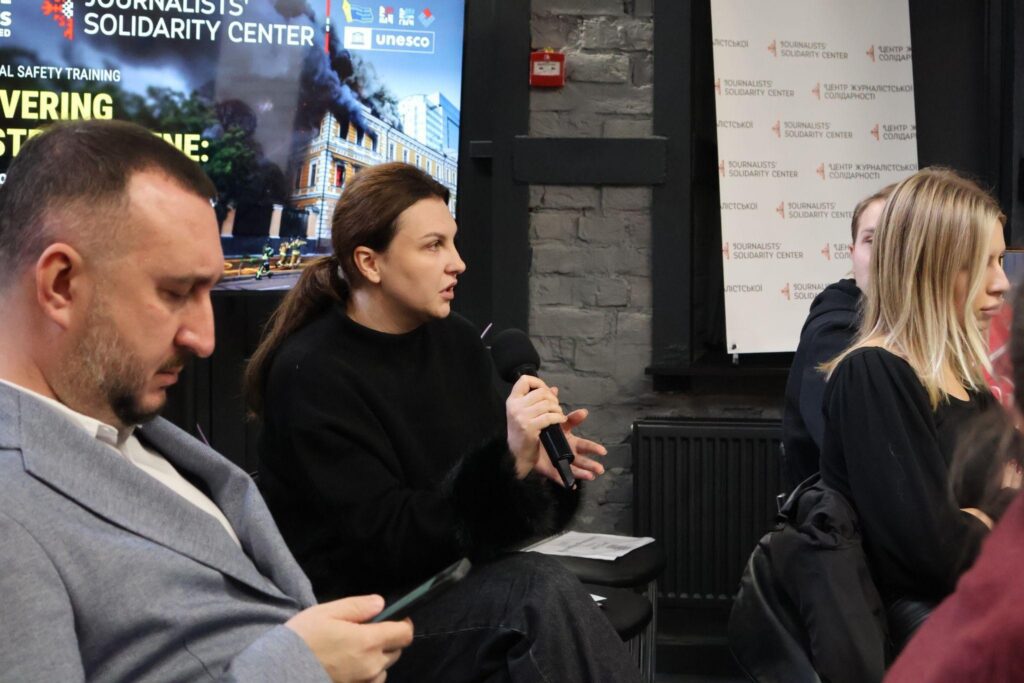
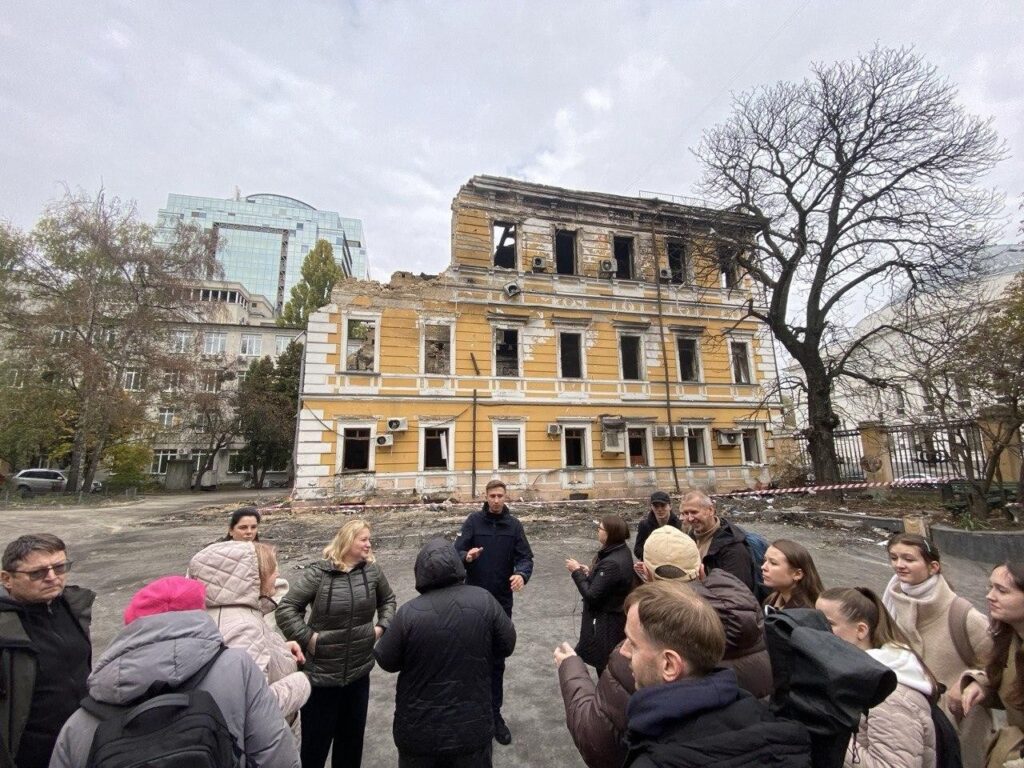
The session was led by Yulia Surkova, a war correspondent, and Pavlo Petrov, head of communications for the State Emergency Service in Kyiv. Participants worked through practical cases next to a building of the National Academy of Sciences of Ukraine that had been damaged in a Russian strike.

Pack in advance and keep a tourniquet ready
Ms. Surkova keeps two sets of clothes: one in the wash and one packed and ready to go. “It cuts the time I need to get ready,” she said.
The clothing should cover the body, with long sleeves, and shoes should have thick soles. Once, while working in Kyiv’s Lukianivka district in thin-soled shoes, she stepped on glass that went through the sole almost to her foot.
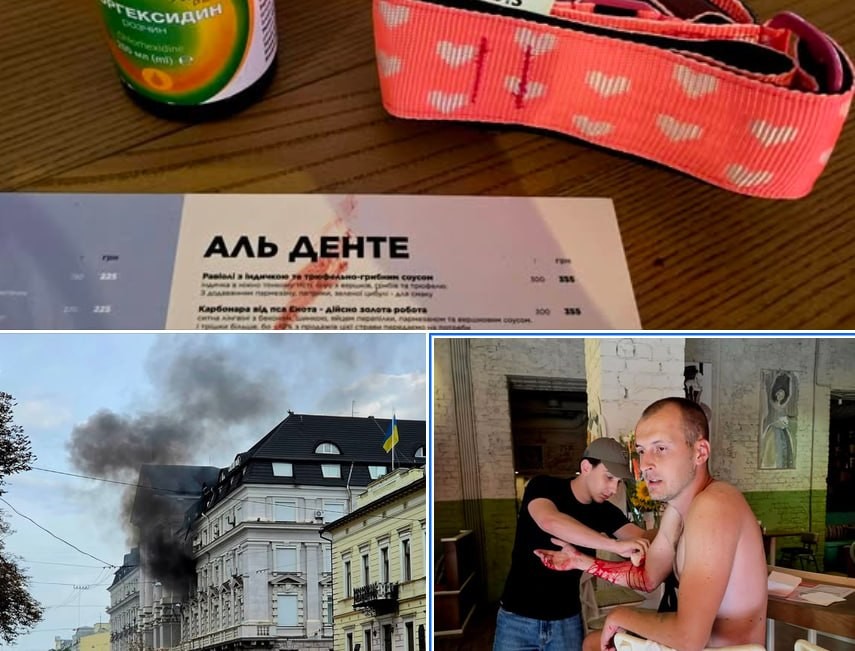
Strike sites are full of debris and broken glass, Mr. Petrov said. He advises journalists to carry at least two tourniquets, an Israeli bandage and a wound-packing dressing, and to keep them on their body rather than only in a bag. When he was wounded himself, the blast tore away his bag with one of his three tourniquets. The other two, in his pocket and on his vest, stayed with him.
Ms. Surkova added that a tourniquet should be kept in a pouch and ready for immediate use. She once lost precious seconds tearing the factory plastic off one with her teeth.
A respirator or mask protects against dust and particles from destroyed structures. Water to rinse the eyes is essential, along with moisturizing eye drops recommended by a doctor: after one strike, Ms. Surkova got glass wool in her eye and relied on them. For long shifts, a large power bank or portable power station helps, especially when the strike has left the area without electricity.
What foreign reporters working in Ukraine should know
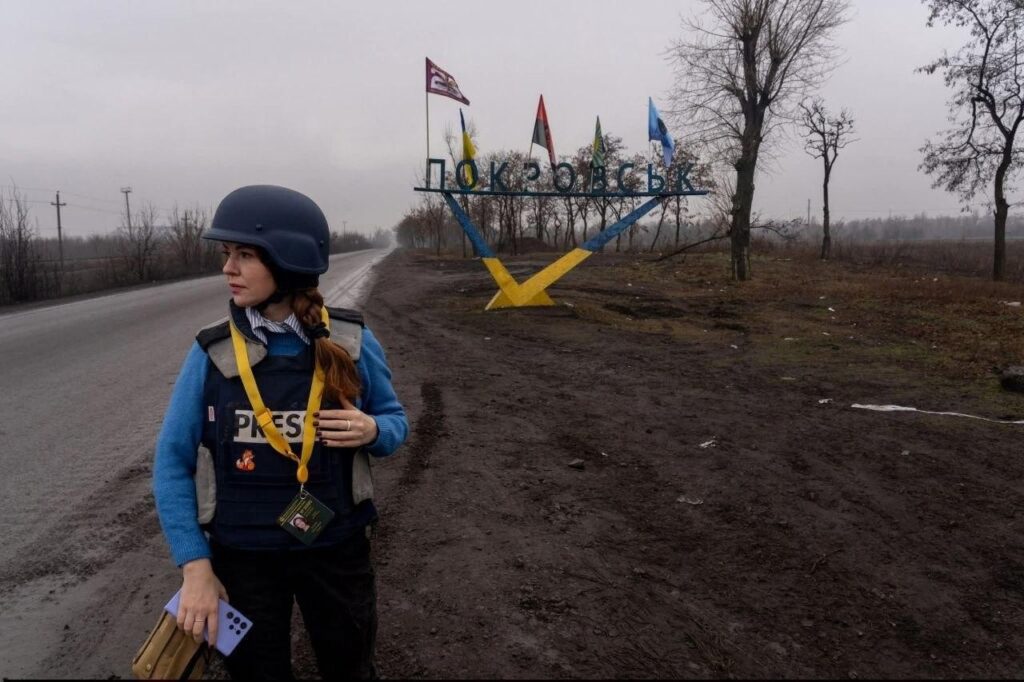
For international journalists, the main lesson of the training is that a Ukrainian city far from the front line is no longer a safe rear. A strike site in Kyiv carries many of the same risks as a front-line town, and some habits formed in other conflicts do not apply here.
Kyiv is not the rear
- Treat any strike site in a Ukrainian city as an active danger zone. Russian missiles and drones can hit the same place twice, and a second strike can come within seconds of a warning.
- Plan your shelter before your shot. Identify the nearest shelter and the route to it on the way, and park where you will not block emergency vehicles and can leave quickly.
- There is no universal safe distance from the point of impact. No report is worth your life.
Equipment: what you need, and where to get it
- Carry at least two tourniquets, an Israeli bandage and a wound-packing dressing on your body, not only in a bag. A blast can tear a bag away.
- At a strike site you are likely to need a respirator, water to rinse your eyes, thick-soled shoes and clothing that covers your arms and legs. Glass and debris are everywhere.
- Choose body armor by how much of the body it covers, not only by its protection class.
- Foreign correspondents can borrow helmets, body armor and drone detectors free of charge at NUJU’s Journalists’ Solidarity Centers in Ukrainian cities.
Press markings work differently at the front and in the city
- Near the front line, PRESS signs can make a journalist a target for Russian drones, and Ukrainian reporters sometimes cover them.
- At civilian sites in cities, keep markings visible. They will not protect you from a missile, but they help residents, rescuers and police see who you are.
- Ballistic glasses make sense at the front. In a city, where you are likely to interview survivors and families, they can create distance.
Know the local system
- Emergency numbers in Ukraine are 101 for fire and rescue, 102 for police and 103 for an ambulance.
- Rescue work is carried out by the State Emergency Service, but access to a site is decided by the National Police. Access can change quickly: a site open while a fire is being fought may be closed once crews start clearing rubble. This is about safety, not about hiding information.
- If rescuers are ordered to take cover, take cover with them. But do not simply copy them: if people may be trapped, rescuers may be obliged to keep working even under the threat of another strike.
- Air-alert apps are widely used in Ukraine and are a useful extra source of information, but they do not guarantee safety.
- Ukraine’s information space runs largely on Telegram. Check facts with official spokespeople rather than with unverified channels, and do not rush to publish the exact address or details of a facility that was hit when it is unclear whether security restrictions apply.

If you are first on the scene
- Assess your own safety. If the air-raid alert is still on, go to a shelter.
- Call the emergency services.
- Give first aid only if you are trained and it is safe. A journalist with a tourniquet may be the only person nearby able to stop bleeding.
- Only then start reporting.
Hazards you may not expect
- Parts of a drone can keep detonating at random after it has hit its target. Do not approach or touch fragments of missiles, drones or unknown objects for a shot.
- In the Kharkiv and Donetsk regions, watch for mines, including small antipersonnel “butterfly” mines hidden in grass and yards.
- Do not judge a damaged building by eye. Walls that look intact may be unstable, and the absence of warning tape does not mean an area is safe.
Working with people affected
- Avoid questions such as “What did you feel?” or “Why didn’t you evacuate?” The first takes people straight back into the trauma, the second can deepen a sense of guilt. Ask instead what helped them, who was with them and what help they need now.
- Do not publish images of the bodies of the dead: relatives should not learn of a death from the media. Show children’s faces only with the written consent of parents or guardians.
- For an in-depth story, consider returning after the active rescue phase, when there is less chaos and people may be more ready to talk.
Why Ukrainian colleagues put down their cameras
Foreign reporters may see Ukrainian journalists stop filming to help carry the wounded or give first aid. Professional standards hold that journalists should not become participants in events, but for Ukrainian reporters, who live and work inside this war, complete detachment is often impossible. That closeness is also part of what allows them to convey the war in depth.
About the partnership
Free Press Unlimited was the first international organization to launch an emergency assistance program for Ukrainian journalists after the full-scale invasion began. In March 2022, it opened its Reporters Respond fund to them, and on NUJU’s recommendation more than 150 journalists from Mariupol, the Kharkiv, Kherson, Chernihiv and Kyiv regions, Zaporizhzhia and elsewhere received financial support.
The partnership later grew to include support for front-line newsrooms, digital security, professional programs and bringing the stories of Ukrainian journalists to international audiences. Now that ballistic missiles, jet-powered drones and FPV drones have joined the traditional risks, the cooperation continues through safety training, including this one.












Discussion about this post