
 THE NATIONAL UNION OF
JOURNALISTS OF UKRAINE

Ukrainian journalists are in their fifth autumn of full-scale war, and they have not stopped working since it began. They document war crimes, report from the front lines, cover the suffering of civilians and carry home, day after day, the stories of people living through the worst moments of their lives. Since the summer of 2026, working in Kyiv has felt much like working near the front: the capital now comes under ballistic missile and drone attack every day.
The strain is greatest on the coordinators of the Journalists’ Solidarity Centers (JSCs) that the National Union of Journalists of Ukraine (NUJU) runs in frontline regions such as Kharkiv, Zaporizhzhia, Dnipro and Sumy. Journalists themselves, they spend their days helping colleagues in crisis: arranging relocation, handing out protective gear and drone detectors, sorting out legal problems and applying for financial aid on colleagues’ behalf. And they burn out too. Constant stress and overwork lead to deep emotional exhaustion, to the fatigue that comes from absorbing other people’s trauma and, in the end, to professional burnout.
NUJU has made journalistsʼ mental health one of its top priorities and has brought in Ukrainian and international partners to help. The support system it has built over the past few years has two strands: monthly support groups at five of its Journalistsʼ Solidarity Centers, and retreats lasting several days in safer parts of the country, where people can switch off and recover properly.
A system, not an event
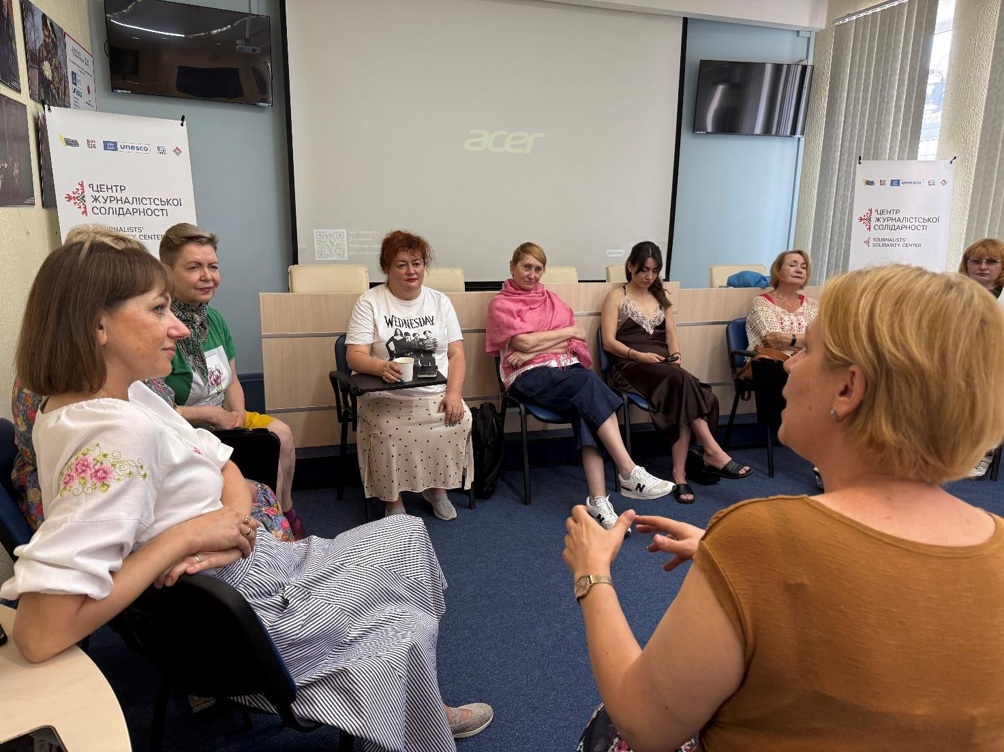
The support groups meet regularly at the JSCs in Kyiv, Dnipro, Sumy and Lviv and at the Journalists’ Unity Center in Odesa. Once a month, professional psychologists, among them Nataliia Ulko, Oleksandr Makukha, Oksana Ivantsova and Nataliia Voitovych, sit down in person or online with a group of at least 15 media workers. Together they practice basic self-help techniques, work through traumatic experiences and learn how to head off burnout. The groups are run with partners including the NGO Office of Actions and Araminta gUG, as part of the project “Expanding Strategies, Networks and Tools for Mental Health and Burnout Prevention for Civil Society in Ukraine”.
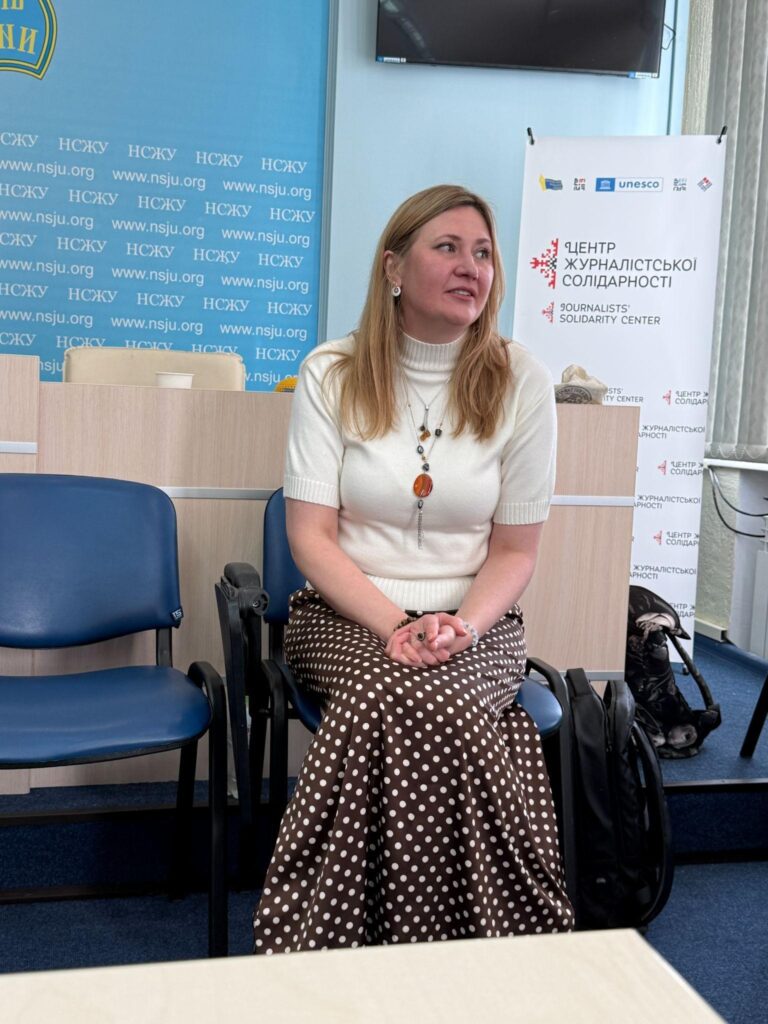
Psychologist Tetiana Kucher has worked with media professionals for years. She has been part of the support group from the start and has led more than ten sessions in Kyiv. Psychological support, she says, has to be a system, not an event:
“One-off training only goes so far, in my experience. They can be interesting. They can give people new information, new tools or some short-term relief. But you don’t learn to regulate your emotions, be kind to yourself, look after yourself and support other people in one session, or two, or even three. What actually works is support that lasts: something regular and stable, built on trust, that gives people time to turn what they know into what they do. A psychologist canʼt just walk in, explain how to take care of yourself and expect everyone to start doing it. What happens is slower than that. A professional community gradually learns to look after itself, and its members learn to be there for one another. People need to get into the habit of checking in with themselves and of asking a psychologist or a colleague for help. And the help has to be there when they ask, consistently: one-to-one sessions, group support and psychoeducation training.”
“Nature as a space for inner balance”
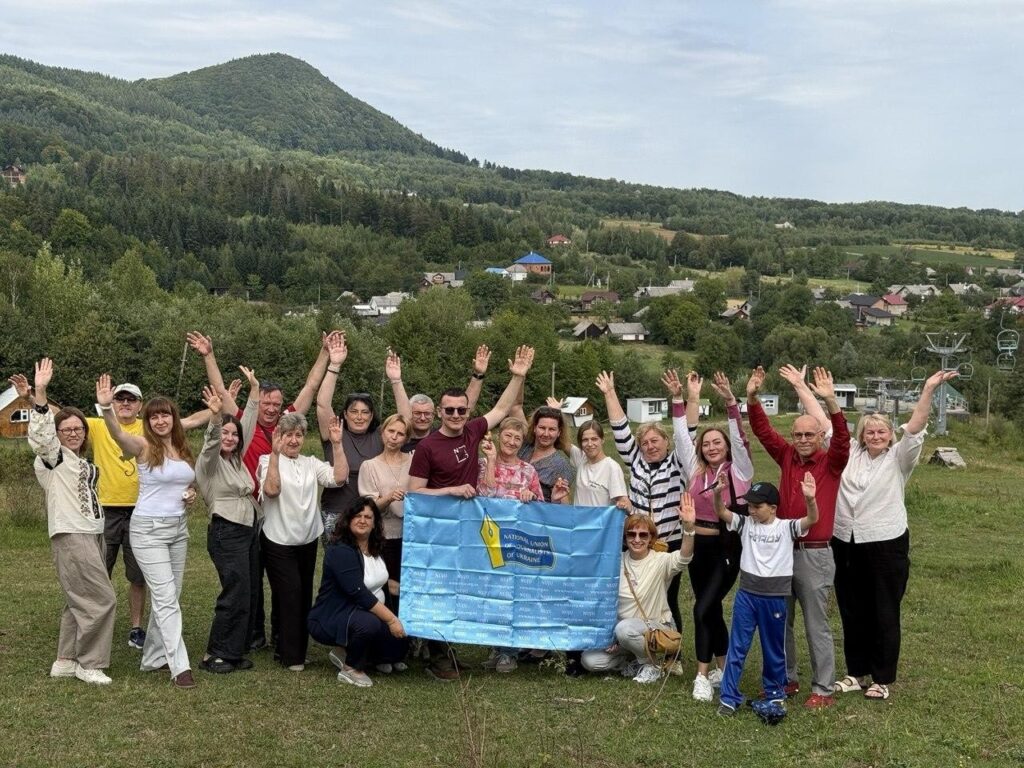
In the summer of 2026, NUJU launched a recovery retreat called “Nature as a Space for Inner Balance”. Coordinators and co-coordinators of the JSCs, along with staff from the Union’s head office, spent three intensive days in a relatively safer part of Ukraine: the village of Myhove in Bukovyna, in a scenic corner of the Carpathian Mountains. It was the first retreat of its kind since the full-scale invasion began, and it was made possible by financial support from the Czech Journalists’ Union. For a few days the journalists could leave behind the air raid alerts, the drone attacks, the deadlines and the relentless flow of bad news, and let their nervous systems recover.
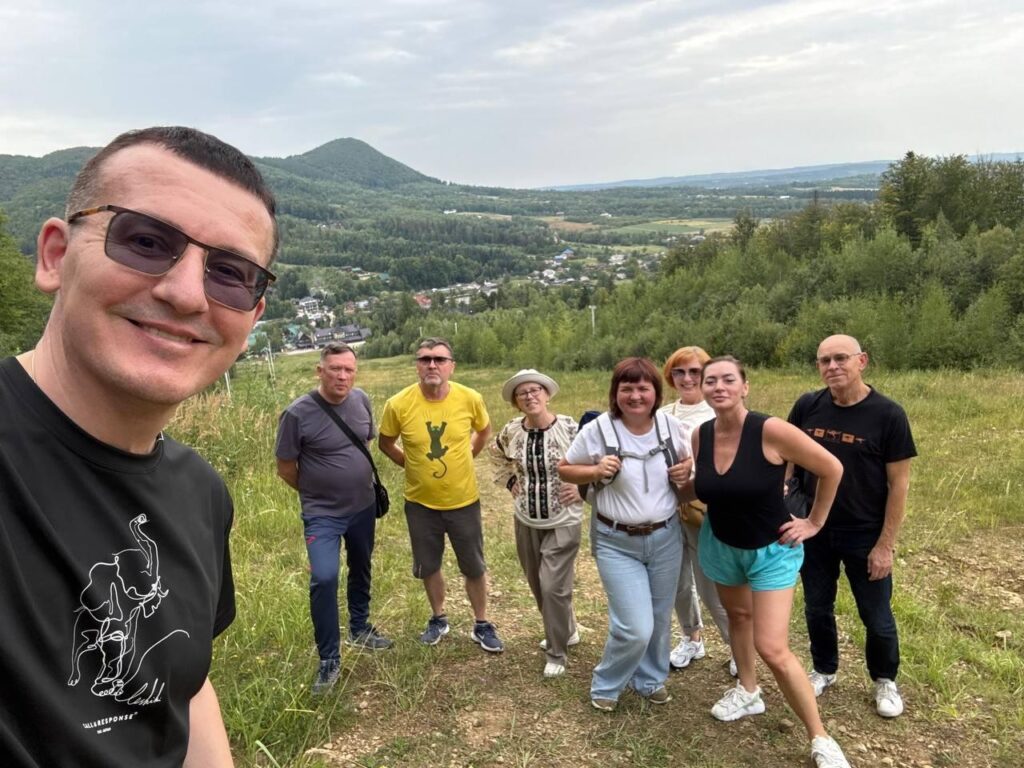
“This program was long overdue,” said NUJU President Sergiy Tomilenko. “It helps people unwind and it brings the team closer, but it is also about preventing burnout. Our colleagues have been running the Solidarity Centers every day since the full-scale invasion began. They help journalists and stand by them in very hard circumstances, and they need to get their own strength back too. We want everyone who helps others to have enough in reserve to carry on with work that brings this much responsibility. For me, a retreat like this is a chance to be together, to get to know one another better, to recharge, and to go back to work with new energy so we can keep doing good and important things for our colleagues.”
During the two-day program in Myhove, psychologists Inna Ivzhenko and Nataliia Petrenko showed how art therapy, one of the tools used in recovery, works in practice. The sessions combined work with the body, with emotions and with group dynamics. Some of the activities are described below.
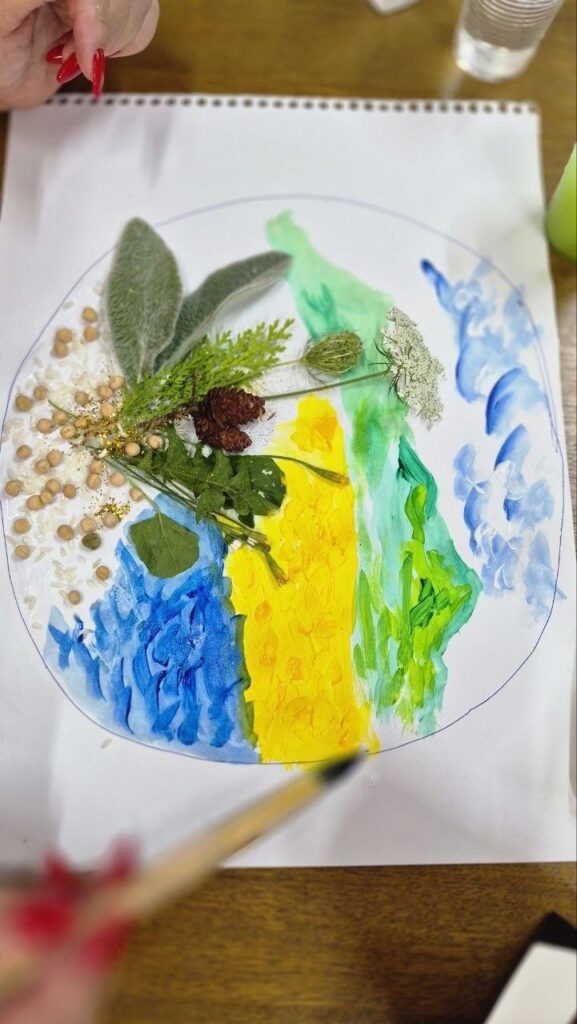
Art therapy with natural materials. Each journalist made a mandala out of natural materials, wool and paint. The exercise was a way of taking stock of their own reserves of strength and reminding themselves what keeps them steady. When the group talked it through afterwards, journalists from the Donetsk region spoke about the pain of losing their homes. For others, it was a way of working out where their inspiration comes from.
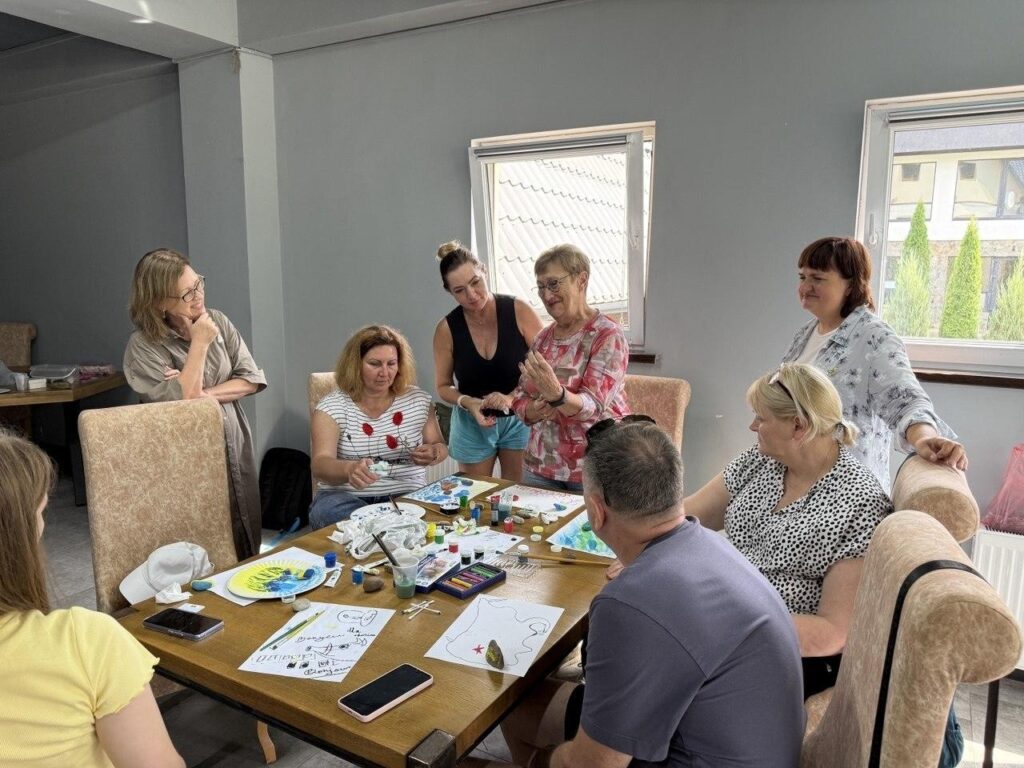
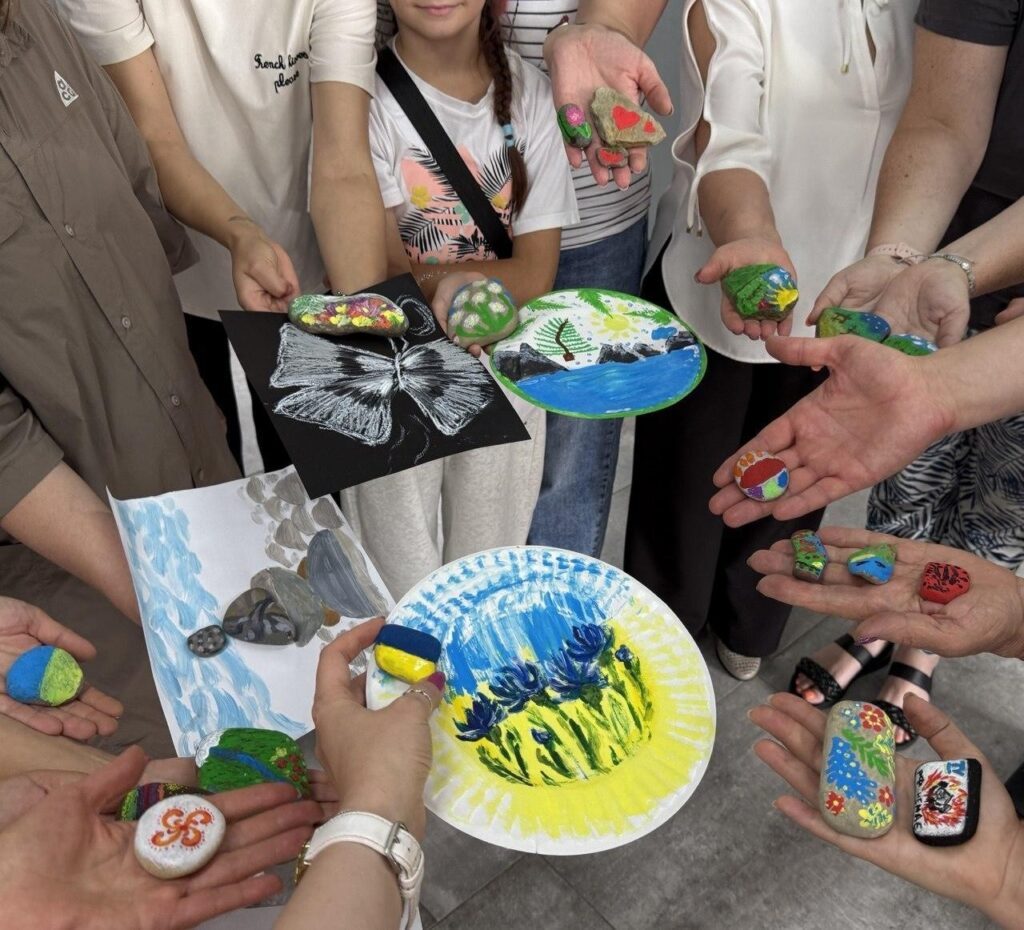
Painted stones. The group headed into the Bukovyna Carpathians on a creative hike. They picked up stones that caught their eye and painted them with acrylics, turning each one into a personal symbol of inner strength. Back in the circle, they talked about what keeps them going through the war: family, work, nature.
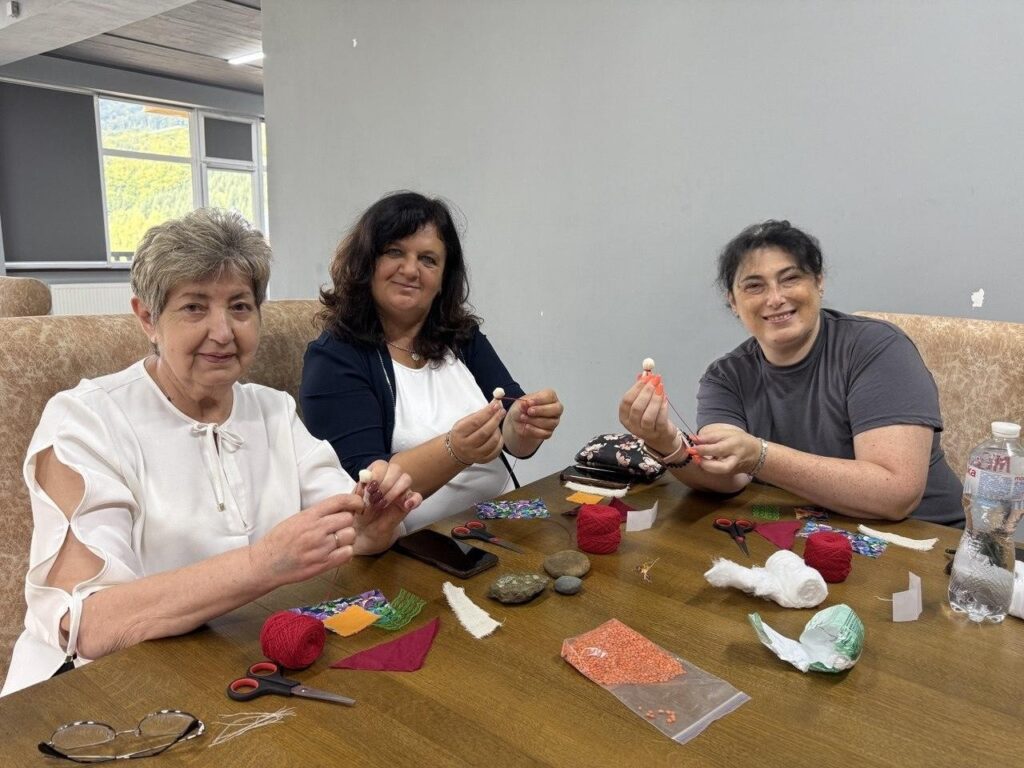
“Traveler dolls”. Making a protective charm out of cloth and grain is an ancient Ukrainian tradition, and the journalists took to it at once. Making a small motanka doll with their own hands brought back something of a child’s lightness, along with hope for safe roads ahead.
Nature and quiet. Unbroken sleep with no sirens in the night, hikes to mountain summits (including Mount Stizhok, at 783 meters), silence and a break from the news all helped bring the journalists’ anxiety levels down.
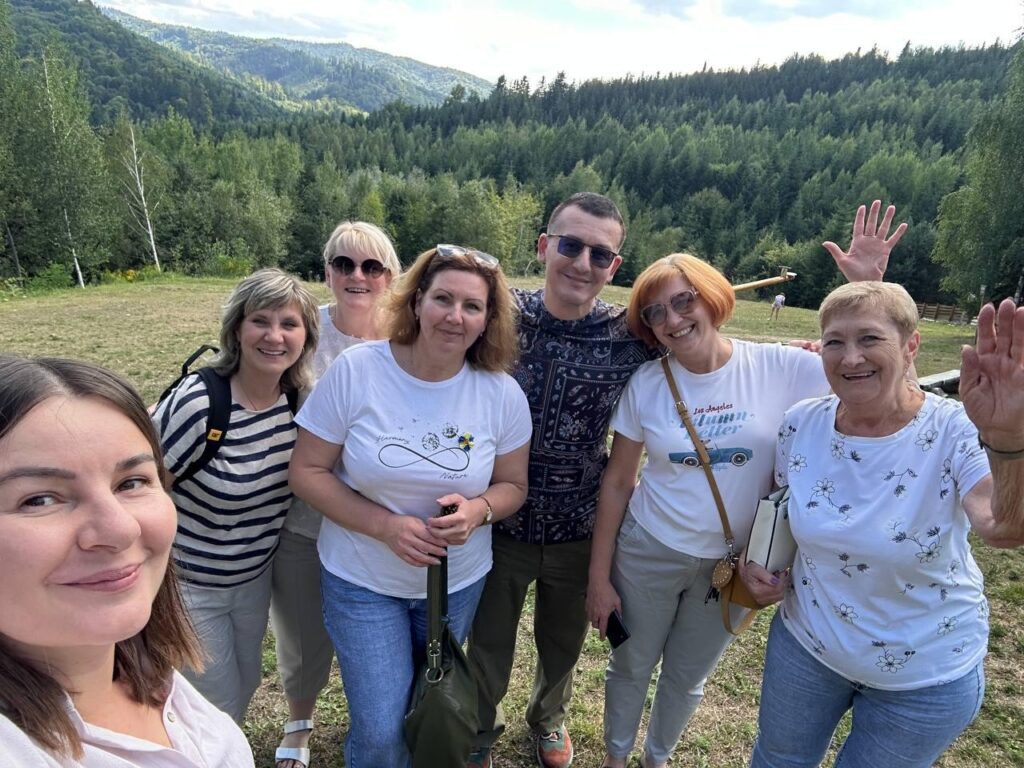
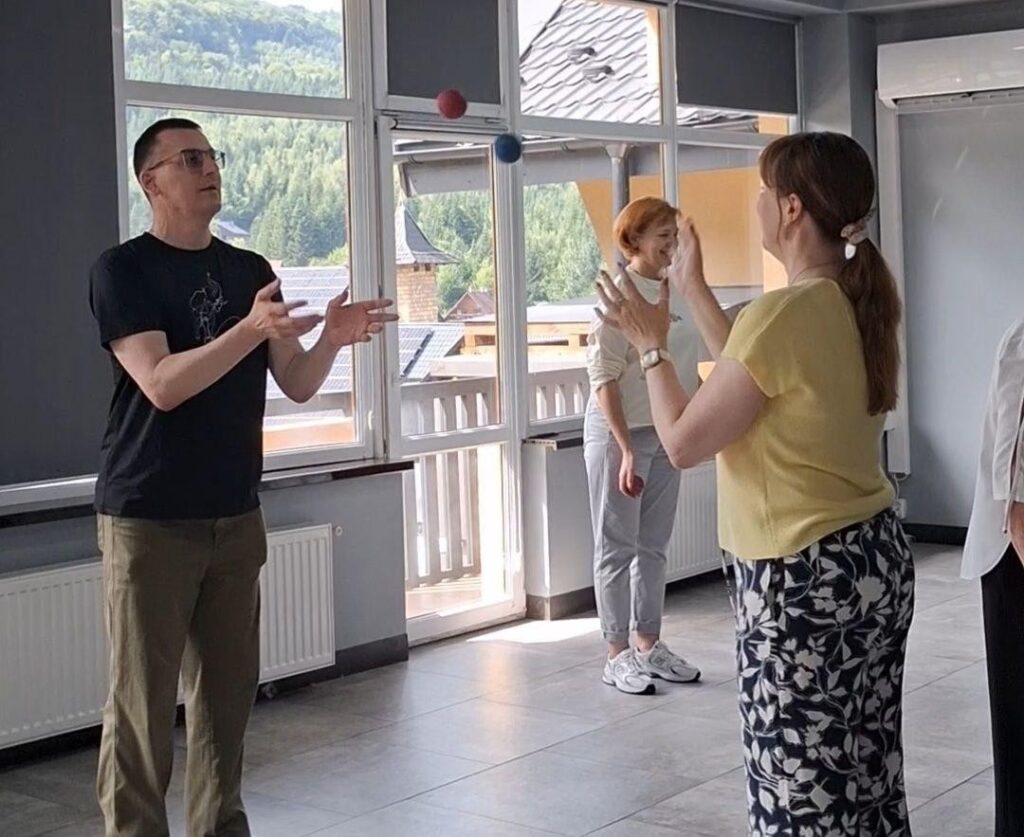
Getting in sync and feeling part of a group (the “Energy Balls” exercise). Standing in a circle, the journalists passed balls to one another and learned to fall into a common rhythm, work in pairs, match the pace of the person next to them and agree on how fast to go. The exercise also rebuilt trust and the feeling that someone has your back.
“There are people beside me that I can rely on”
Feedback from members of the JSC network suggests the retreat in the Chernivtsi region was highly effective.
Hanna Chernenko, special correspondent for Channel 24 and co-coordinator of the Kharkiv JSC:
“Just getting to the retreat was hard. My train from Kharkiv was held up for four hours because of drone threats. My favorite part was painting the stone. Mine looked like a TV with ‘Russia is gone’ on the screen. I used a lot of black, because everything’s burned down (laughs — author’s note). So work is what keeps me going. But the women in my group said I should make something in bright colors too, so I painted a second stone. I kept that one simple. Life’s like that for me: it’s the ordinary things that hold me up, like seeing friends and talking to people. The whole experience made me feel joy again.”
Valentyna Manzhura, co-coordinator of the Zaporizhzhia JSC:
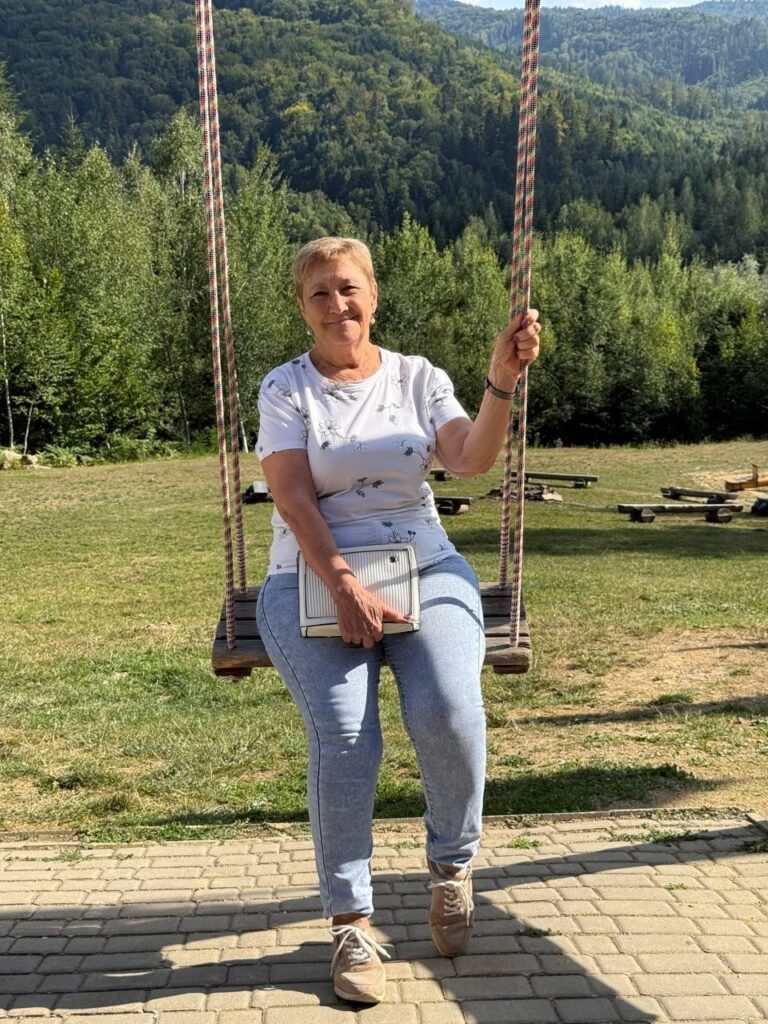
“Thank you again to our Union, its leadership and every colleague who had a hand in organizing this wonderful retreat. It was a small miracle. You showed us all that even a short break can leave you properly rested and full of new strength, ready to go on living and working whatever happens, and to do it creatively and with inspiration. Thank you to our wonderful trainers. We did their exercises with real joy, because they woke up the child in each of us, the one who knows how to bring light into her own life. We felt our spirits come back to life. And the walk in the mountains, the swing up into the clouds, the group photos, the jumping! In a word, bliss. I came away feeling renewed, joyful and hopeful, and knowing there are people beside me that I can rely on. A team! Thank you all for that, and for a real rest for the soul.”
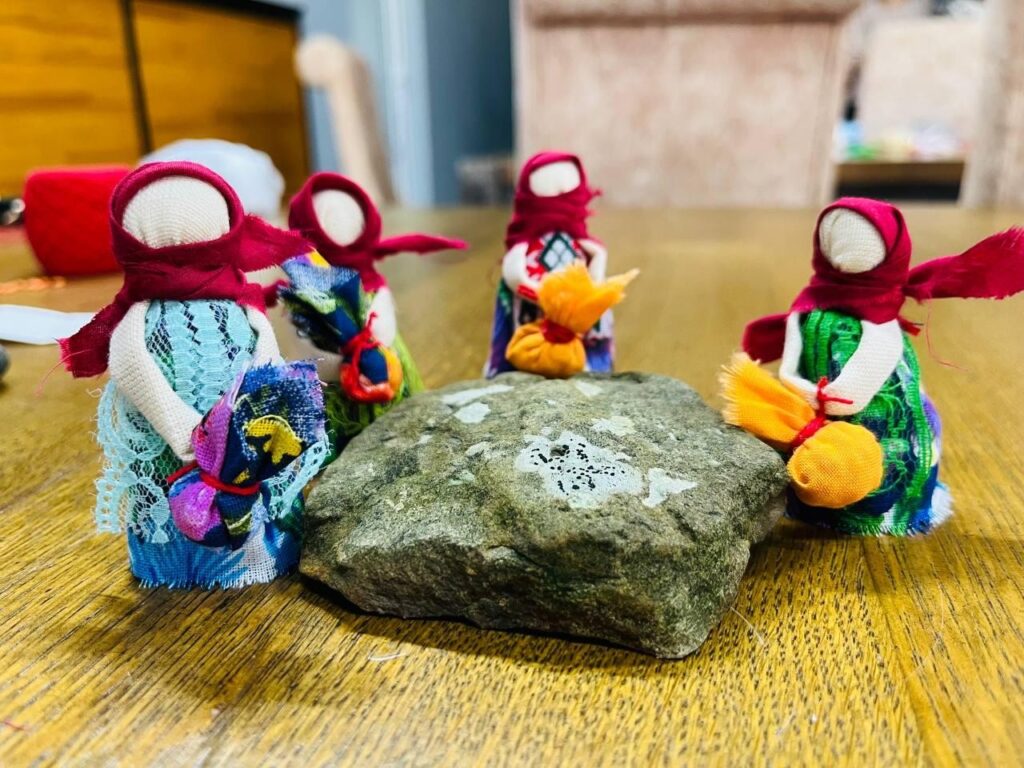
Bohdana Zasidko, assistant at the Ivano-Frankivsk JSC:
“Making something with our hands helped us slow down, turn our attention to ourselves and our own creativity, see what we have to draw on and think about what actually gives us strength. At our Center we often bring journalists and psychologists together, because we know what prevents burnout: noticing you’re tired early on, doing something about it before you’re completely worn out, and knowing what helps you recover. My doll reminded me that I’m a Hutsul. I grew up here, and the Carpathians are where I get my strength.”
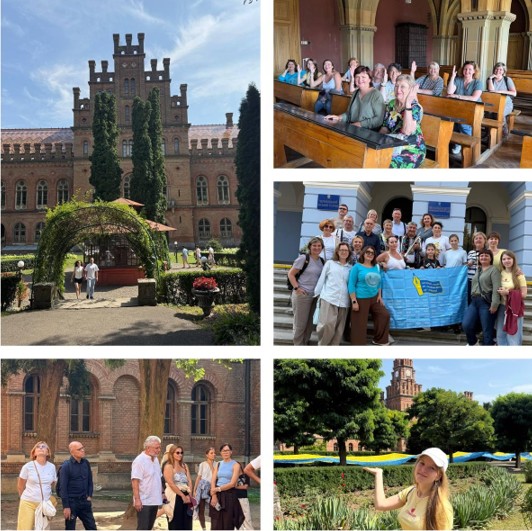
The retreat ended with a cultural visit to Chernivtsi. On the stroke of noon the journalists stood in Central Square to hear the cityʼs famous tune “Marichka”, played from the town hall tower by a trumpeter in folk costume. Anatolii Isak, deputy head of NUJUʼs Chernivtsi regional organization, showed them around the cityʼs historic buildings, including its best-known landmark, Yuriy Fedkovych Chernivtsi National University, which looks so much like something from a fairy tale that it is often compared to Hogwarts. There they dropped in on the journalism department and sat down in a lecture hall for a friendly conversation about the profession.
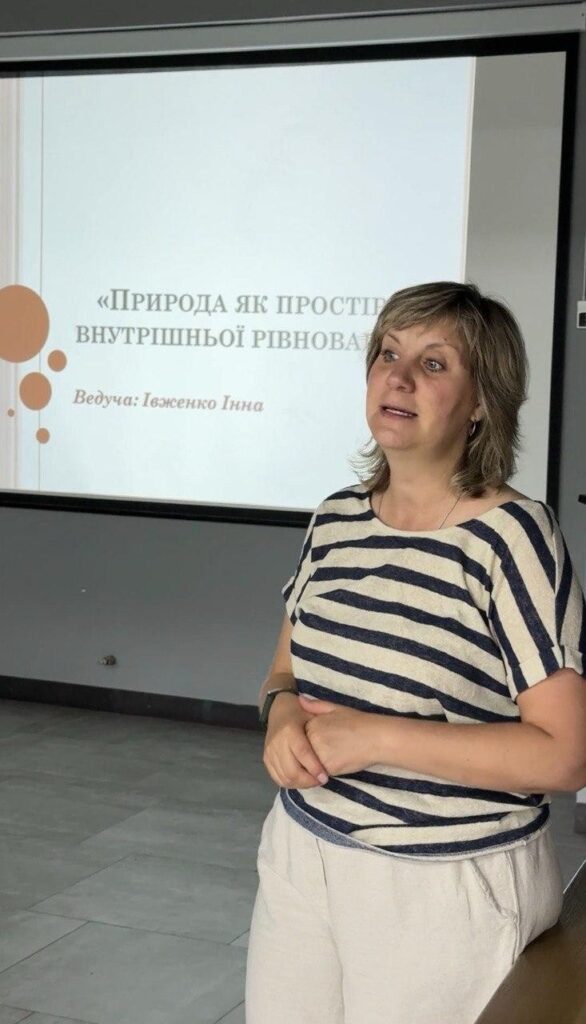
Clean mountain air, relative quiet, the grandeur of the peaks, good food, a full nightʼs sleep with nothing to jolt you awake, and art therapy: that, says Inna Ivzhenko, is the kind of rest journalists need. She offers this advice:
“Take what you experienced together into your everyday lives. Spend some time outdoors every day and let nature restore you. Go for a walk whatever the weather, and get some sunlight every day. In summer, head for a lake or a river; the rest of the year, go swimming at a pool. And on weekends, always set aside a little time to make something.”
An investment in truthful reporting
The war goes on, and the psychological toll on media workers builds up over time. Without sustained mental health support, Ukrainian newsrooms risk losing experienced staff to severe trauma and burnout.
Support of this kind costs money, and a good deal of it. NUJU regularly makes the case at international forums for donations to fund recovery programs like these.
In return, NUJU guarantees that every hryvnia or euro donated reaches the journalists who need help most right now. Since the full-scale invasion began, it has built a wide network of Journalistsʼ Solidarity Centers across Ukraine and established working relationships with professional psychologists.
Its track record shows the money is well used. NUJU has worked successfully with the Czech Journalistsʼ Union, Araminta gUG and the NGO Office of Actions, and with business partners such as Nova Poshta on medical rehabilitation programs for media workers.
Donors who support the mental health of Ukrainian journalists are investing directly in truthful reporting on the war for audiences around the world. NUJU is asking international unions and philanthropic donors to help fund the next phases of its psychological rehabilitation programs and support groups for Ukrainian journalists.
By Larysa Portianko
***
NUJU works with many international organizations, including UNESCO, Free Press Unlimited (Netherlands), Fondation Hirondelle (Switzerland), Civil Rights Defenders (Sweden) and Ukrainian Media Fund Nordic (UMFN).
On 24 August 2026, NUJU also set up the International Advisory Council of the Journalists’ Solidarity Centers. The Council brings together leaders of media associations and trade unions from countries including Norway, Germany, Denmark and Italy, along with experts on press freedom and journalists’ safety. Its members serve as volunteers and in a personal capacity. The Council assesses the risks facing reporters and independent media in wartime, advises NUJU on how the Journalists’ Solidarity Centers should develop, and takes on international advocacy. Psychological support and burnout prevention are among its main priorities.
The Council’s statement says that psychological support, rest and recovery must be treated as integral parts of journalists’ safety. Burnout affects judgment, reaction time and the ability to continue working in high-risk environments.
“Setting up the International Advisory Council is an important step toward closer cooperation with the partners abroad who are helping Ukrainian media get through this war,” said NUJU President Sergiy Tomilenko. “Since the first days of the full-scale invasion, our Journalists’ Solidarity Centers have been the place colleagues turn to when they are in trouble, have lost their jobs or are working on the front line. With international experts and partners on board, we can make our help more effective, more consistent and more tangible for every journalist and every newsroom that needs it.”







Discussion about this post