 THE NATIONAL UNION OF
JOURNALISTS OF UKRAINE
THE NATIONAL UNION OF
JOURNALISTS OF UKRAINE
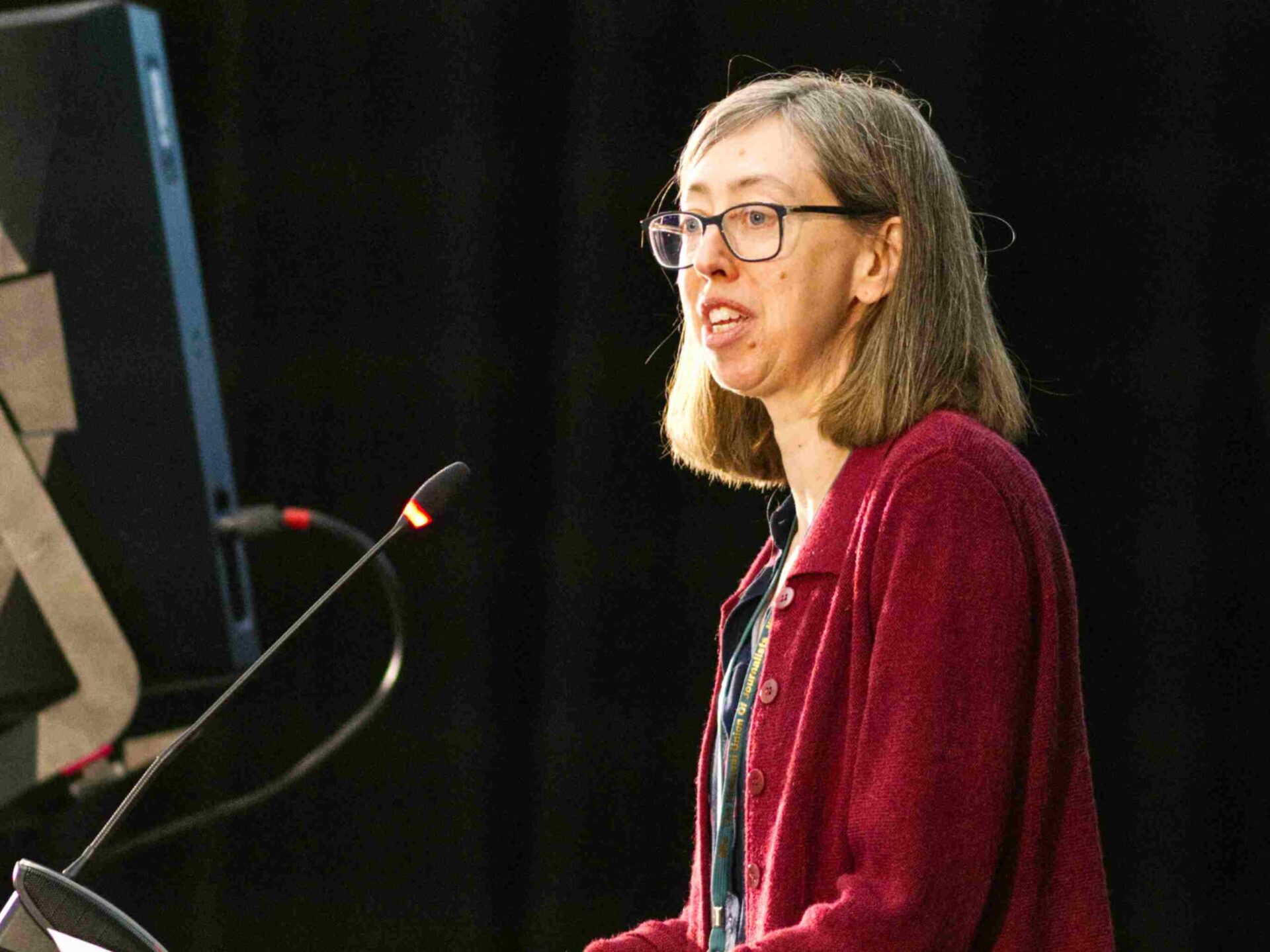
What does IFJ support for Ukrainian journalists look like in practice – and will it continue? It was the question NUJUʼs information service put to Laura Davison, General Secretary of the National Union of Journalists of the United Kingdom and Ireland, shortly after her election to the IFJ Executive Council at the Centenary Congress in Paris on 6 May 2026. She explained why it matters.
“The whole purpose of the IFJ is to come together”
Davisonʼs election to the Executive Council came on the second day of a Congress she attended for the first time as NUJ General Secretary. It placed her among the federationʼs leading decision-making body at a moment when the IFJʼs agenda is shaped by war, surveillance, the collapse of local media funding, and the accelerating disruption brought by artificial intelligence.
Responding to questions from NUJU about the future of the partnership between Ukrainian and international journalism unions, Davison said the foundation is straightforward: what journalists face, they face together. The whole purpose of the IFJ, she argued, is solidarity between unions – sharing what is happening, the work that is being done, and the challenges that journalists encounter around the world. The issues for journalists in Ukraine, she noted, sit alongside those in many other countries.
She named several areas she sees as uniting journalists across different contexts: press freedom, journalist safety, the specific pressures facing women in the profession, and the technological changes brought by artificial intelligence. All of these, Davison said, are challenges that the federation must tackle collectively.

Disinformation as a weapon and a professional challenge
Asked directly about the specific problem Ukrainian journalists face, including propaganda, occupied territories, the erosion of access to truthful information in regions under Russian control, Laura Davison acknowledged that disinformation and misinformation are now universal concerns, present in every country and context. The role of journalism organisations, she said, is to help audiences understand what professional journalism is and why it matters – to build the kind of public trust without which accurate information cannot reach those who need it most.
“I think it’s really important, in terms of trust in journalism, that we do that as well,” she said. Strengthening journalists’ capacity to do their work, protecting them so that they can do it, and defending their right to give the public accurate information about the world – these, in her framing, are inseparable from one another.
The point connects directly to what NUJU President Sergiy Tomilenko described during his visit to London in March 2026, when he briefed Davison on the situation in Ukraine: that in territories where drone warfare has extended the danger zone twenty kilometres beyond the front line, and where printed newspapers have become a trusted lifeline, professional journalism is not just a civic good but a form of resistance. Davison’s response reflected concerns she had already been raising in a different context. In the United Kingdom, the NUJ has been among the unions calling for a windfall tax on technology companies to help fund local and public service journalism, as well as legislation recognising the collective bargaining rights of freelancers.
A hundred years of the NUJ’s presence in the IFJ
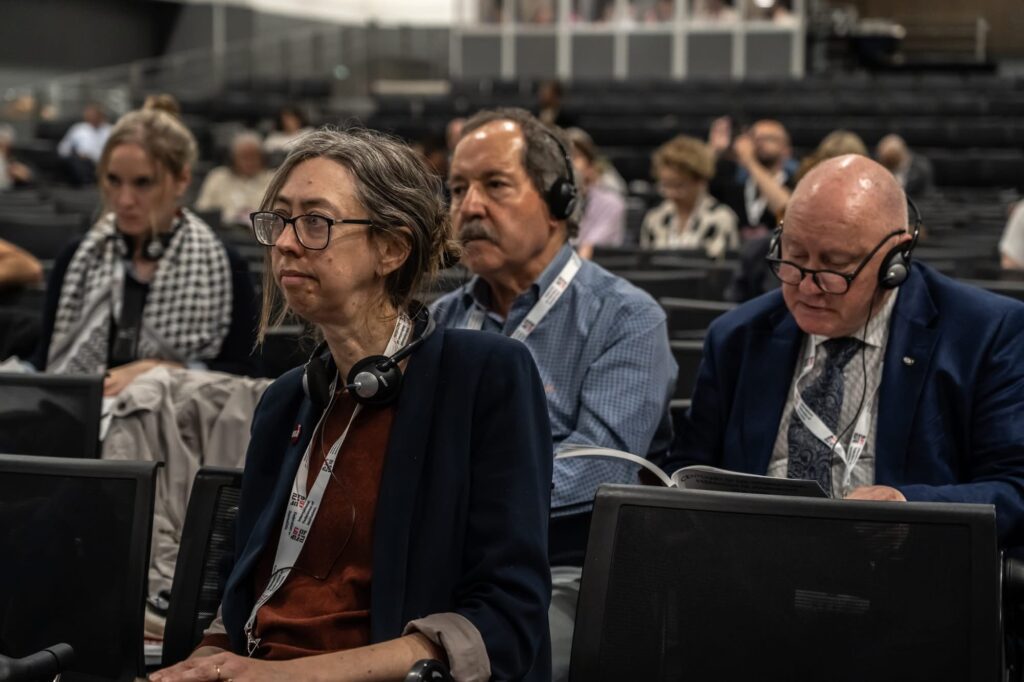
The NUJ’s relationship with the international federation is one of the deepest among any affiliate. Over the IFJ’s hundred-year history, the union has contributed to sixteen of its presidents and hosted six of its Congresses. It was also the first affiliate to commit financial support for the Centenary Congress in Paris. The Congress, for financial and political reasons related to the participation of Taiwanese delegates, had to be moved from UNESCO premises to an alternative venue, requiring affiliates to step in.
The NUJ’s engagement with Ukraine within the IFJ framework has been consistent and material. NUJ members, chapels, and branches have donated to the IFJ Safety Fund specifically marked for Ukraine – funds that have reached NUJU and supported the work of the Journalists’ Solidarity Centres. The union’s former freelance organiser and former IFJ Deputy General Secretary Tim Dawson has written extensively about the Solidarity Centre network and the drone detector programme, helping bring awareness of NUJU’s work to a British trade union audience.
At the Paris Congress, the NUJ submitted motions on the defence of public service broadcasting, a windfall tax on technology companies to support independent media, the lifting of the ban on the Iranian journalist’ union, and the global erosion of press freedom. Several of these align directly with what Ukrainian journalists have been living for four years: the use of state power to destroy independent media, the targeting of journalists as instruments of information warfare, and the structural precarity that war and displacement intensify.
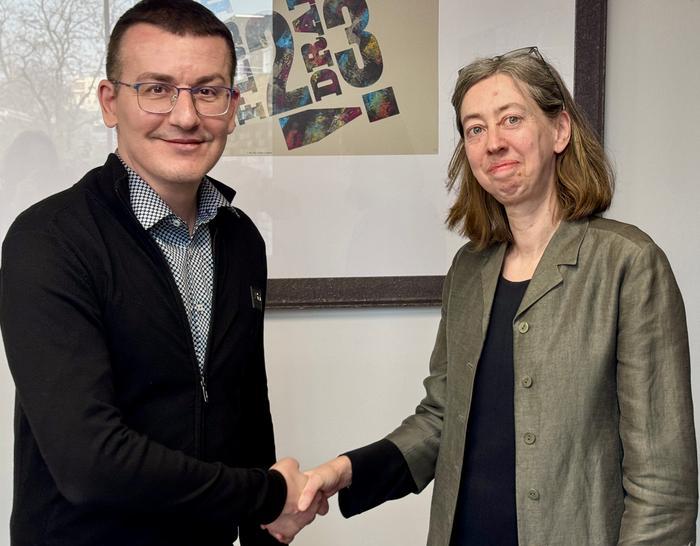
After Paris
Davison’s election to the IFJ Executive Council means the NUJ now has a direct formal presence in the body that steers the federation’s programme for the next three years. For the National Union of Journalists of Ukraine, it is a signal that the partnership with one of the federation’s most historically engaged affiliates will continue at the institutional level – through solidarity statements and Safety Fund contributions, shared work on the questions of press freedom, journalist safety, and the survival of independent journalism that Paris put back at the centre of the IFJ’s agenda.
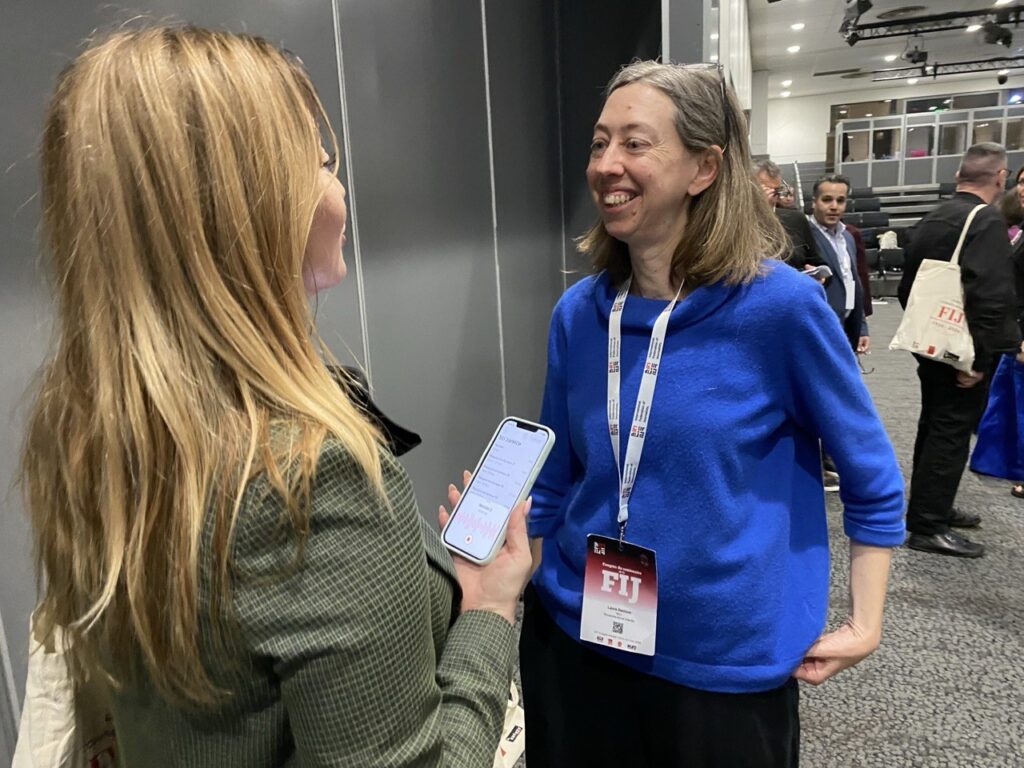
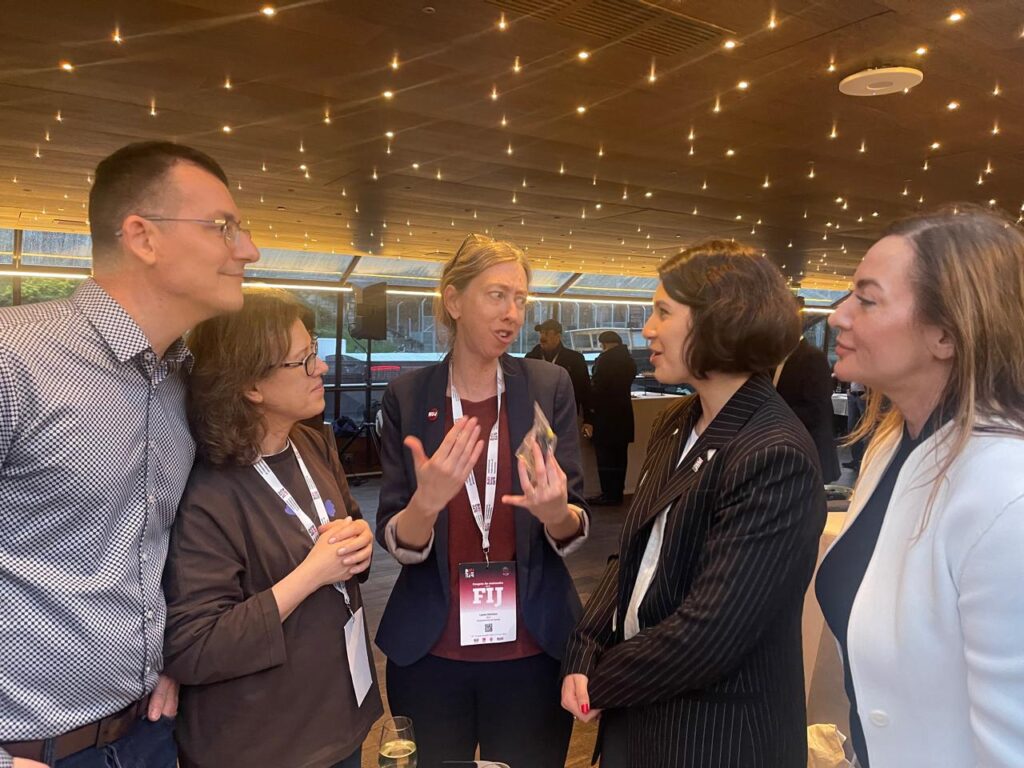
The NUJU delegation at the 32nd IFJ World Congress brought together journalists and union representatives from across Ukraine. Representing the union were NUJU President Sergiy Tomilenko; First Secretary Lina Kushch; Head of the Donetsk Regional Organisation Olena Kalaytan (Mariupol); NUJU Board member and Communications Director Oleksandr Kharchenko (Kyiv); NUJU Secretary Viktor Vesilyk (Odesa); and journalist Valeriia Muskharina (Sloviansk).
Valeriia Muskharina
NUJU Information Service








Discussion about this post