

 THE NATIONAL UNION OF
JOURNALISTS OF UKRAINE
THE NATIONAL UNION OF
JOURNALISTS OF UKRAINE
A total of 38 Verified Incidents in Four Months: Journalists Under Attack, Newsrooms and Homes Damaged — NUJU Monitoring Data
On the Eve of World Freedom of Speech Day, the National Union of Journalists of Ukraine (NUJU) publishes the results of security monitoring of physical attacks on the media sphere for the period January–April 2026.
These are verified cases of russian physical attacks that directly affected the work of journalists and media — shelling, drone strikes, destruction of infrastructure and housing. Online threats or other non-physical forms of pressure are not included in this monitoring.
- During this period, 38 incidents were recorded in the civilian media sphere, including:
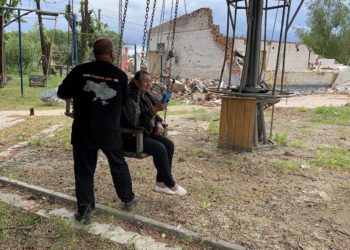
- 21 cases of damage or destruction of journalists’ homes
- 7 cases of destruction or damage to newsrooms and media infrastructure
- 9 cases of journalists being attacked while performing their work
- 1 case of injury to a civilian journalist
Separately, the NUJU records losses among media workers serving in the Defense Forces of Ukraine:
- during the same period, 8 journalists died at the front.
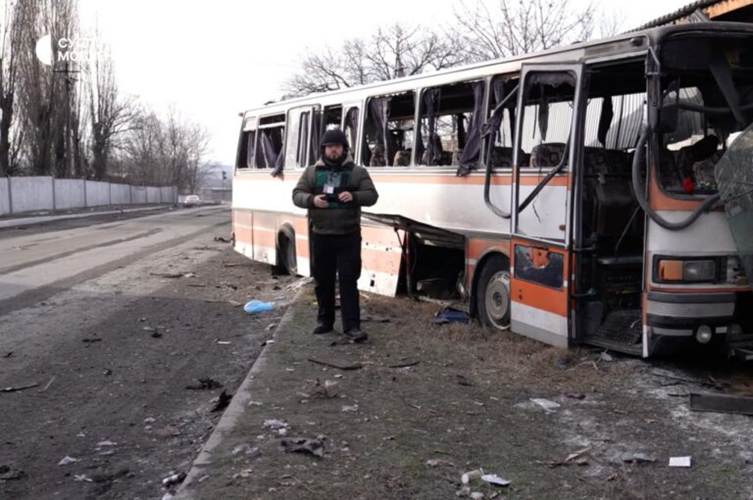
The picture is clear: strike drones have become the main threat to journalists. FPV drones, Shahed drones and other unmanned aerial vehicles allow attacks not only near the front line – relatively rear regions also become dangerous.
The largest number of incidents occurred in March, 18 cases, that is, almost half of all recorded in four months. A significant part is the result of massive drone attacks that simultaneously affected different regions.
The geography of strikes covered at least 11 regions. The highest level of risk is in the Dnipropetrovsk Region: nine out of 21 cases of damage to housing and four out of seven attacks on Newsrooms and media infrastructure.
Individual stories clearly show what this danger looks like in reality.
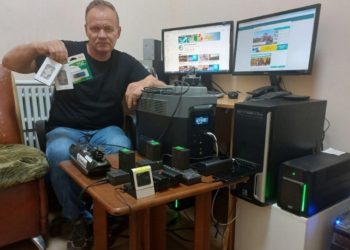
On March 17, the film crew of the Suspilne Dnipro was pursued by a russian FPV drone while working, despite their bulletproof vests with the inscription PRESS. Thanks to the drone detector, the journalists managed to hide.
“The FPV operator clearly saw that there were journalists in front of him and purposefully directed the drone,” said correspondent Roman Mykhalchuk.
Vasyl Myroshnyk, the editor-in-chief of the Kharkiv newspaper Zoria, experienced a similar situation when he returned from filming in a frontline community:
“I saw my own car on the detector screen — right under the drone.”
He managed to escape only thanks to his quick reaction.
Besides, there is the situation with the prisoners. At least 28 Ukrainian journalists remain in russian captivity, and no one has been released since then.
NUJU President Sergiy Tomilenko notes:
“We see that the security rules that have worked for years no longer guarantee protection. Drones allow journalists to be harassed and make them vulnerable even far from the frontline. This is a direct violation of international humanitarian law — and it must receive a clear international response.”
On the eve of World Freedom of Expression Day, the NUJU calls on governments, international organizations, and professional associations to:
- increase pressure on russia
- support the documentation of crimes against journalists
- expand security programs for media workers
- intensify efforts to release journalists from captivity
NUJU’s monitoring is based on verification of open-source data, direct contacts with victims, and information from state authorities.











Discussion about this post