 THE NATIONAL UNION OF
JOURNALISTS OF UKRAINE
THE NATIONAL UNION OF
JOURNALISTS OF UKRAINE
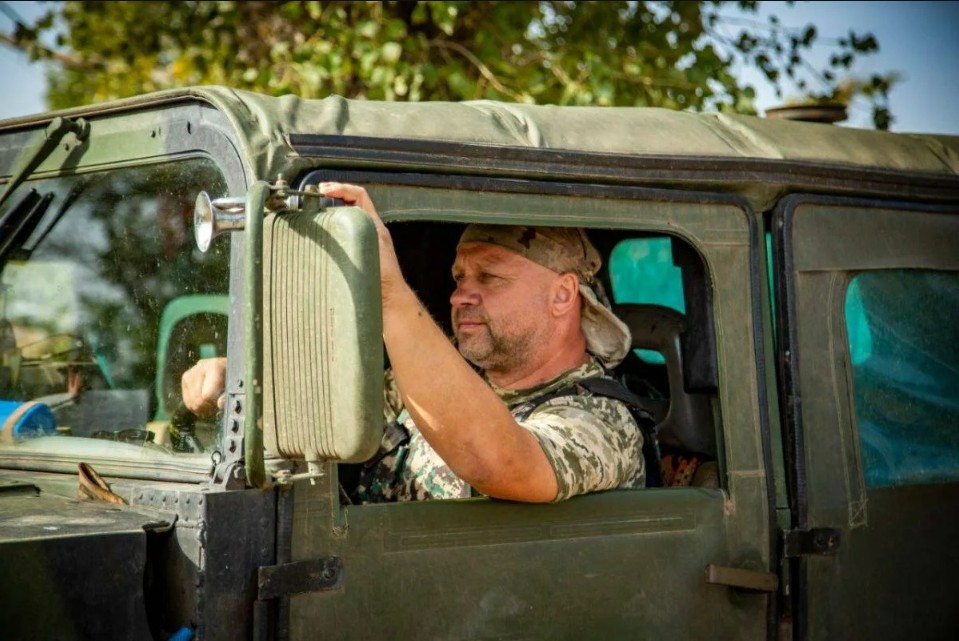
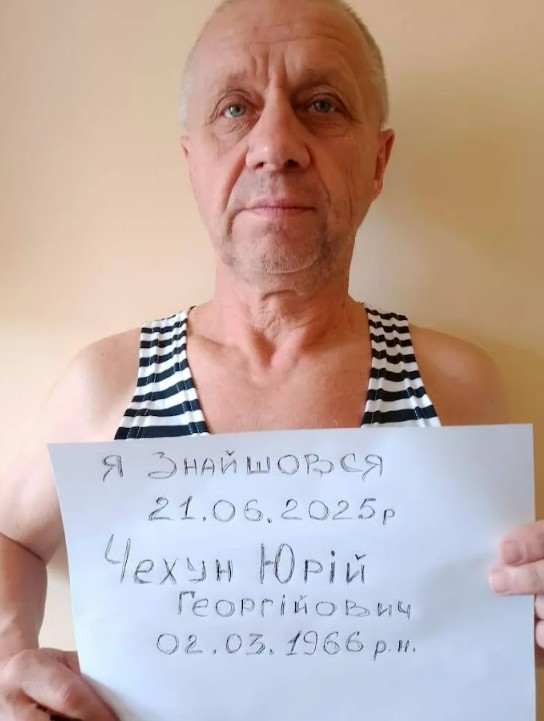
They knocked out his teeth, broke his fingers, tortured him with electric shocks, and beat him for speaking Ukrainian: Yurii Chekhun, from the southern Ukrainian city of Kherson, has spoken about his 37 months in Russian captivity. Imprisoned Ukrainian soldiers were forced not only into hard labor, but also made to learn Russian songs by heart.
“We learned over 45 of their songs. For example, a guard would come in the morning and say: ‘Tonight, when you go to the canteen, you all have to sing only this song.’ But not everyone could memorize the words—so they were beaten,” Yurii Chekhun shared in an interview with the local Kherson media outlet Novyi Den (meaning “New Day”).
For decades, Novyi Den was the most widely read and influential newspaper in the Kherson region. When Russia launched its full-scale invasion, the editorial team was forced to relocate, and it has worked remotely ever since, which allowed the newspaper to keep its staff and continue reporting without interruption. Its focus has remained on the home region, where the city of Kherson and the rest of the right bank of the Dnipro River are shelled every day with artillery, mortars, and guided aerial bombs, and where FPV drones hunt civilian cars and people in the streets. Novyi Den still publishes a print edition that reaches residents of frontline communities, and it continues to tell the stories of people from the region, including those who, like Chekhun, have come home from Russian captivity.
He Was a Volunteer—Then Became a Defender of Mariupol
Before Russia’s full-scale invasion of Ukraine in February 2022, Yurii Chekhun was a civilian volunteer: together with fellow residents of Kherson, he would drive supplies—equipment, clothing, and food—to Ukrainian troops stationed in the east of the country, where fighting had been ongoing since Russia first invaded in 2014.
In 2018, he enlisted of his own accord in the 36th Separate Marine Infantry Brigade—one of Ukraine’s naval infantry units—where he served as an armored personnel carrier driver.
In December 2021, Yurii and his fellow servicemen deployed on a rotation near Mariupol, a strategic port city on the Sea of Azov in southeastern Ukraine. According to Yurii, intense shelling began as early as February 18, 2022—six days before the official start of the full-scale invasion—with Russian forces firing everything they could reach.
“We could already see columns of Russian military vehicles near Mariupol and understood: the assault could come any day. True hell began on February 24—enemy rockets, shells, and bombs were coming from every direction. The sky was red. We fought back as best we could, holding our defense to the very last. But you understand that the forces were unequal? We were forced to fall back into Mariupol, and that decision was agonizing. By April 12, the city was already occupied—Russian checkpoints were everywhere,” Yurii Chekhun recalls.
We Fried Dog Food—That’s How We Survived
Within a matter of months, Russian forces turned a peaceful, thriving city into ruins. Bodies of the dead lay in the streets everywhere, and in some places—body parts.
Two hundred soldiers from the 36th Marine Infantry Brigade decided to attempt a breakout to reach the Azovstal steel plant—a massive Soviet-era metallurgical complex in Mariupol that became the last stronghold of Ukrainian defenders during the siege. There was nothing to change into, so armed with their rifles, in military vehicles and full uniform, they drove straight through Russian checkpoints—at their own risk.
At Azovstal, Yurii Chekhun spent over a month alongside other soldiers and civilians. Conditions were dire: Russian forces shelled the plant almost around the clock, and enemy aircraft flew as low as a hundred meters from their position. There were no weapons, no ammunition, no water, and no food at the plant.
“All we had to eat was porridge—one cup per day—and a few sacks of dog food that had to last who knows how long. We cooked the porridge and fried the dog food. That’s how we survived,” the soldier recounts.
“War Will Write It All Off”
On May 15, on orders from the President of Ukraine, everyone present was told to prepare to surrender into captivity. They were promised that within two to three months, they would be exchanged and returned home to Ukraine.
“On May 18, I left the territory of Azovstal. Our first stop was Olenivka, a settlement in the Donetsk region that Russian forces used as a detention site. There they didn’t beat us, but the food was revolting and irregular—some kind of watery broth and a few potatoes at best. They forced us to drink tea so scalding hot that men’s mouths bled from the burns. Breakfast might be at 5 a.m. and dinner at 1 a.m. They didn’t force us to work here yet, and there were interrogations but without torture. Only once did someone try to shoot me, but it didn’t come to that,” the Kherson native says.
Yurii also described how Russian forces planted an explosive charge in one of the barracks where prisoners of war were being held. This happened on the night of July 29, 2022—an event that became internationally known as the Olenivka prison massacre.
“Our men had seen a pyrotechnic vehicle drive in there earlier. The occupiers had been torturing fighters from the Azov Regiment”—a Ukrainian National Guard unit that played a central role in the defense of Mariupol and has been a particular target of Russian propaganda—“and not all of them came back alive. This was how the Russians hid the bodies of those they had tortured to death. As they put it: ‘War will write it all off.’ Hundreds of soldiers were killed or wounded in the explosion,” Yurii adds.
After several months—instead of the promised exchange—Yurii and his comrades were transferred to Horlivka, a Russian-occupied city in the Donetsk region, where he spent nearly two years. Over the course of his captivity, Yurii Chekhun was held in five different locations—both in temporarily occupied territories of Ukraine and inside Russia itself. The captors told the soldiers that the Ukrainian side had allegedly violated the terms of the agreement during the first exchange of Mariupol’s defenders, and therefore all further exchanges were being suspended.
“Our ‘welcome’ in Horlivka was very ‘warm’: the occupiers immediately started beating us with rubber batons. The men would lie bruised for weeks—some were blue, others nearly black from the torture, with the letter ‘Z’ carved or beaten into their backs.” The “Z” is a symbol widely used by Russian forces and their supporters as a mark of pro-war allegiance.
“They did this to show that they were the masters and we were nothing. Interrogations were constant. Didn’t want to talk? They would bring out electric shock devices, rubber clubs, or mallets and beat out of you whatever they wanted. They mostly hit the head, fingers, knees, and back. When special forces from Moscow or Rostov arrived, they would break arms, legs, smash collarbones, and split heads open. They knocked out my teeth and broke the fingers on my right hand—I can only properly move and control two of them now. And keep in mind, there was absolutely no medical care,” the soldier recalls. “They would take us out to work in an industrial zone: landscaping, cleaning, and there was also a garden where we planted watermelons and tomatoes.”
Beaten Unconscious for Not Knowing Russian
One of the mandatory rules in captivity was to speak only Russian, to memorize the Russian national anthem, and to learn songs by heart. Those who could not were beaten until they lost consciousness.
“We learned over 45 of their songs. For example, a guard would come in the morning and say: ‘Tonight, when you go to the canteen, you all have to sing only this song.’ But not everyone could memorize the words—so they were beaten,” the defender adds.
According to Yurii Chekhun, the 37 months of Russian captivity were unbearable, and what helped him hold on was his faith and thoughts of his family. His 77-year-old mother remained in Kherson while his wife and children had evacuated to another city. His greatest worry was that his loved ones might suffer because of his pro-Ukrainian activities.
“You understand, I consciously chose the path of a Ukrainian soldier. Back at Azovstal, I told myself: you are surrendering into captivity, but it will end, and everything will be all right. I’ve already lived a life, raised my children, held my grandchildren in my arms. My only worry was that my family would be safe. But my mother refused to leave. The occupiers came to her, asked about me, even beat her,” the soldier emphasizes. “Comrades who were exchanged and returned earlier told my family: ‘The old man is a great optimist—he’s holding strong and even supporting the others.’ And that’s exactly what I did—I kept the men’s spirits up, told them not to fall into despair, that this ordeal would end sooner or later. If I had cried, it wouldn’t have helped me.”
“I Will Fight Alongside My Sons”
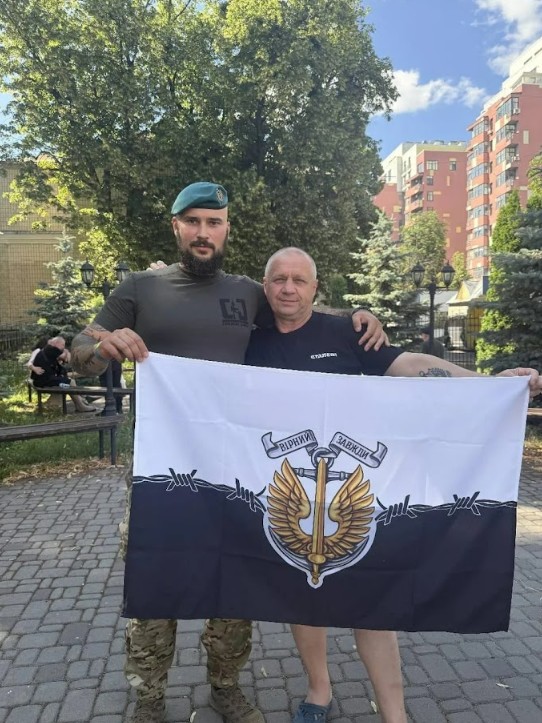
On the eve of his exchange, Yurii Chekhun could already feel that he would soon be going home. The soldier recalls being asked a simple question—”Exchange, or cooperation—will you stay with us?” He answered without hesitation: “I’m going home.” And on June 19, 2025, Yurii was standing on Ukrainian soil once again.
“My eyes were taped shut with adhesive tape, my hands tied. From the detention site to Moscow, they transported us in a prisoner transport vehicle, and from there by plane to Belarus. When I arrived in Ukraine, it was like a dream. I cried so much—I was finally home. My daughter was the first to learn of my return. She was notified by officers of the SBU”—Ukraine’s Security Service, which handles prisoner exchange negotiations—“because she was the one who had attended every meeting and fought for my return,” the defender says. “Later I called everyone and we talked, but I asked them not to come to the hospital. Because my wife had been caught in a shelling attack the day before and had a fracture. We agreed I would come to Kherson myself. But my daughter and son couldn’t wait and came anyway.”
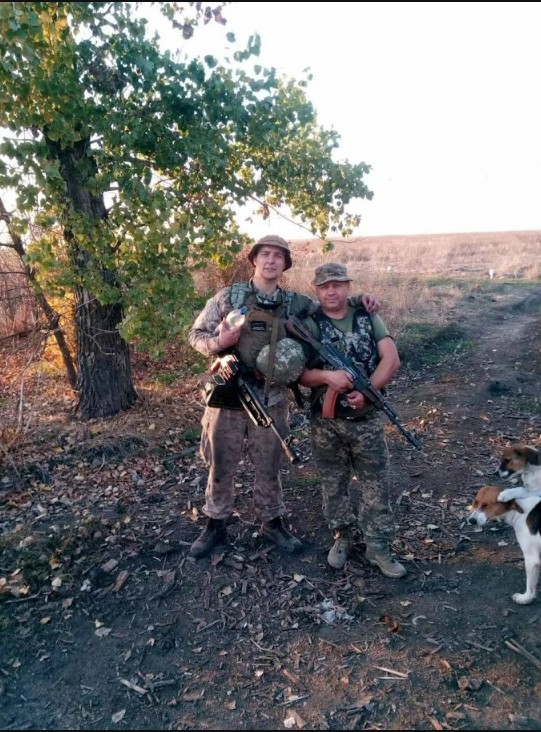
Within a month, Yurii made it home to his native city of Kherson. He is now collecting documents and plans to transfer from the Marine Infantry Brigade to a Coastal Defense Brigade. He says sitting at home is not for him. He wants to be alongside his sons, who are also defending the Kherson region from the enemy.
“My sons are fighting. And how can I leave them without a father’s care? We will fight together—never mind that those fingers don’t work. I believe everything will be all right,” says Yurii Chekhun.
Original article by Polina Daineha, Novyi Den newspaper, Kherson region, Ukraine. Translated and adapted for international audiences.
________________________________________________________________
Novyi Den (meaning “New Day”) is an iconic media outlet of the Kherson region that for decades remained the region’s leading newspaper in terms of circulation and influence. The publicationʼs story during the full-scale war has become an example of extraordinary dedication to the profession: from the very start of Russia’s invasion, the editorial team was forced to relocate and now operates remotely—a decision that allowed it to preserve its staff and maintain uninterrupted coverage.
The security situation for the outlet remains critical. Although the team works remotely, its focus is on its home region, where the right bank of the Dnipro River—including the city of Kherson—is subjected to daily mass bombardment from artillery, mortars, and guided aerial bombs (known by their Russian acronym KABs, a type of precision munition dropped from aircraft). An additional threat comes from enemy FPV drones (first-person-view attack drones), which actively hunt civilian vehicles and people on the streets. Despite the fact that the editorial offices in Kherson are physically inaccessible or under fire, Novyi Den continues to publish a print edition that is delivered to residents of frontline communities.
As a participant in the Frontline Press program (implemented with the support of the National Union of Journalists of Ukraine and its international partners), the outlet has transformed into a powerful multimedia resource. Novyi Den today is the voice of the Kherson region—heard across borders, through shelling, and despite the distance.
Official website: newdayua.net.
Novyi Den is one of 25 local and regional media outlets participating in the Frontline Press support program, funded by the Swedish media business association Tidningsutgivarna. The program supports professional journalism about life in Ukraine’s frontline communities. The National Union of Journalists of Ukraine (NUJU) is happy to share these stories with international media for republication. To request permission to republish this or other materials produced through the Frontline Press program, please contact [email protected].





Discussion about this post