

 THE NATIONAL UNION OF
JOURNALISTS OF UKRAINE
THE NATIONAL UNION OF
JOURNALISTS OF UKRAINE
Every week, a journalist couple delivers their newspaper to places where there is no phone signal, no postal service and where each issue may be the only news that reaches people.
Okhtyrka – Spirne, Sumy region
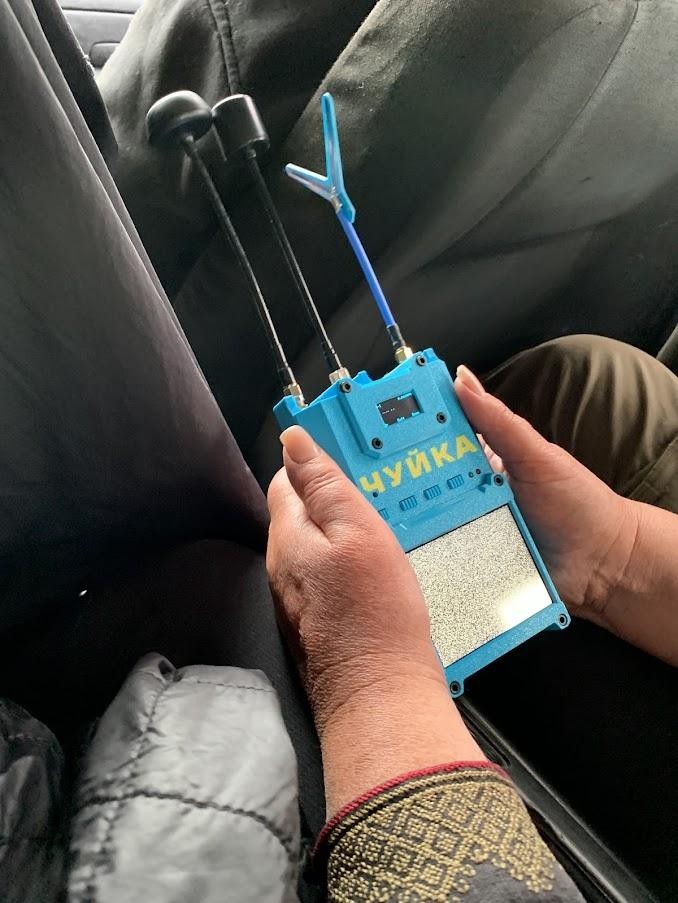
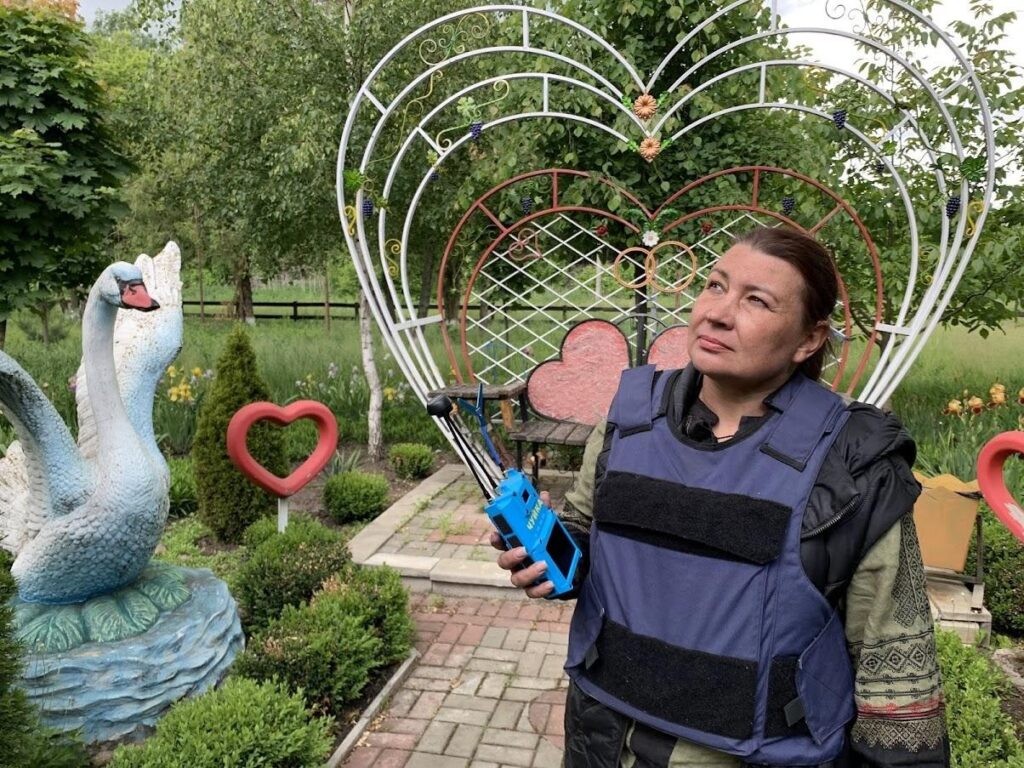
A small black-and-blue box, about the size of two palms, has stayed in Nataliia Pasiuha’s hands since we left Okhtyrka. We turned it on as we were leaving the city, and it has been silent ever since. Nataliia rolled down the window on her side of the old Daewoo and keeps her head slightly turned towards it – the way people do when they have learned to listen not to the road, but to the air above it.
The roles in the car are simple and well rehearsed. The person behind the wheel watches the road ahead. The passenger listens to the sky.
“She usually listens on the way to see if there is a drone coming,” says Oleksii Pasiuha, editor-in-chief of the Vorskla newspaper in the Velykopysarivska community. “But today, on the way here, we listened to a nightingale.”
In the trunk are bundles of the latest issue, tied with twine and labelled by hand: Riabyna, Polohy, Kyrykivka. Ahead of us are just over a hundred kilometres of road that becomes quieter and emptier with every passing kilometre. In early 2025, Canadian correspondent Mark MacKinnon travelled part of this route for The Globe and Mail and described it as perhaps the most dangerous newspaper delivery route in the world.
I travelled this route with the Pasiuhas in late May 2026, together with a film crew working on the Union’s third documentary about the frontline press. I have known Oleksii and Nataliia since 2022. Every year, I visit colleagues working in frontline newsrooms. In previous years, I travelled to Orikhiv in Zaporizhzhia region, Izium in Kharkiv region and Kramatorsk. This time, it was Sumy region, along the border with Russia.
People here expect Vorskla on Thursdays. We set off on Saturday, and everyone we reached noticed the delay.
Starting point: ruins no one is left to clear
Okhtyrka has quickly erased the traces of Russian shelling. A café in the city centre reopened without a single intact window – the openings were covered with plywood, flowers were put out, and the doors opened again. Almost everyone did the same.
“Everyone wants to turn the page on these tragic chapters,” Pasiuha says as the car turns towards the only remaining ruin in this part of the city. “No one wants to preserve them as a museum of tragedy.”
The building has stood there since 2022 only because it has a private owner who cannot be found. Once, its walls were covered with children’s drawings. Now it is a shell torn open by the blast, with exposed rebar and it becomes the first shot of the future film.
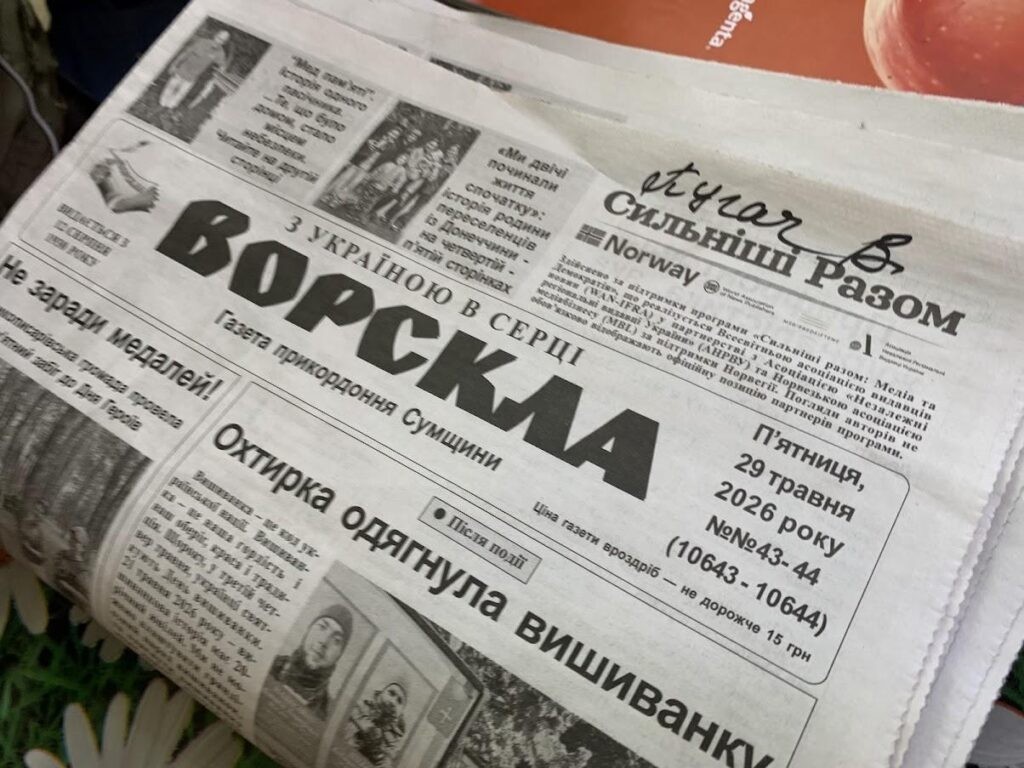
Vorskla moved to Okhtyrka in spring 2024, after a guided aerial bomb (KAB) hit a post office next to the newsroom in Velyka Pysarivka. The blast shattered the windows, tore doors off their hinges and left broken glass all over the floor. The newspaper is now printed in Vinnytsia, far from the front line. The layout is finished on Tuesdays, and by Thursday the latest issue is back from the printer. Then the journey begins.
The newspaper is 95 years old. It takes its name from the Vorskla River, and several generations of the same family have worked there. Oleksii’s father, Borys Pasiuha, joined the newsroom in 1967. He had previously worked in Barvinkove and returned when Velyka Pysarivka district was re-established. He retired around 1996, but local councillors soon elected him editor, and he stayed on for another two years before retiring for good.
Oleksii has been running the newspaper since 2016. Nataliia handles the layout, writes stories, works on the design, manages subscriptions and delivers the newspaper. By her own count, she has made more delivery trips than her husband.
“I’ve been with the newspaper for more than 35 years,” she says. “It started with Krasnoe Znamya and continues with Vorskla.”
That is more a figure of speech than a formal work record. Nataliia has been connected to the newspaper since the day she first arrived in Velyka Pysarivka. She has worked in the newsroom since 2022. Before that, while the local customs office was still operating, she spent her career as a customs broker.
In Okhtyrka, we meet Mykola Bantov, head of the Mriia farming enterprise in Yamne and one of the biggest agricultural producers in the former Velyka Pysarivka district. He also runs a bakery – the only one in the area, though it has since been destroyed. He used to run two shops as well: one next to the bakery, which was destroyed earlier, and another in nearby Yamne, which was destroyed later. People at the newsroom still remember that they always bought their bread from him.
Pasiuha calls him one of his biggest supporters. Then, once we are back in the car, he puts it more precisely:
“He is probably our last line of defence.”
Farmers in this border area literally helped keep the newspaper going. Before the full-scale war, agricultural producers bought subscriptions for their employees, and that was an important part of Vorskla’s business model.
“A newspaper is only as strong as its subscribers,” the editor says. “And to thank them, we used to invite them to Journalists’ Day. So, in a way, it was very much in our interest to have them at our celebration.”
He laughs at his own choice of words, then admits that the joke is only half a joke. These days, on Journalists’ Day, people mostly call him or send messages on Facebook. There is nowhere to gather the veteran journalists and old friends as they did in the past.
In the car, Oleksii carefully suggests a route: drive to Riabyna, film the ruins of the shelled village community centre, and call it a day. He is worried not about himself, but about us. In the end, we will travel two villages farther than he and Nataliia are willing to go on their own.
Three hundred hryvnias and a woman who had just come from church
There are not many individual delivery addresses along the route – going from house to house would take too much time. Still, a few people along the way receive their copies directly from the couple.
The first is an elderly woman in Okhtyrka who moved there from Velyka Pysarivka after her home was destroyed. At one point, she called the newsroom and said: “I’m here. I’m waiting for my newspaper.”
So they started bringing it to her.
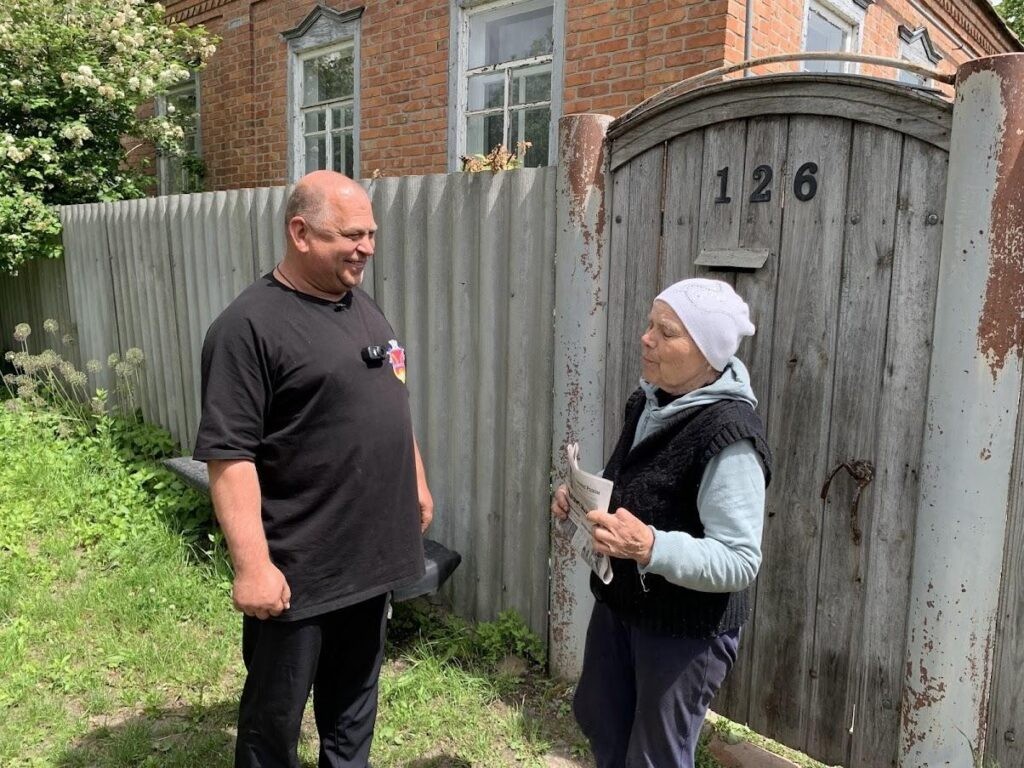
The first time I visited frontline Sumy region, in autumn 2024, one small detail caught my attention. In Velyka Pysarivka, Nataliia would stop the car in the middle of the village street rather than pull over. She would get out with a newspaper, walk over to a letterbox and never even glance around. There was no need to: there might not be another vehicle on that street for hours.
In Okhtyrka, one of the readers who collects her bundle every week peers out from her garden, spots strangers with a camera and disappears back into the house. Nataliia guesses that her second granddaughter may have been born that week. Perhaps there is a family celebration, she thinks, and the woman has simply gone inside to put on something smarter.
Further on, we turn off the main road into a garden lined with grapevines and flower beds. The owner comes hurrying out in her Sunday best – she has just returned from church. Her husband had already gone out earlier, at the usual time, to collect the newspaper, but found no one. We are two days late.
“Take the newspaper first,” Nataliia says, handing it over. “We’ll sort out the money afterwards.”
A subscription for the second half of the year costs 300 hryvnias; a full year costs twice that, 600. The woman pays and immediately begins telling us about her son, who was wounded at the very beginning of the full-scale war and has been receiving treatment abroad for the past year and a half. She does not know exactly what treatment he is receiving or what the doctors are doing for him.
“We’ve got so used to having this newspaper that I can’t do without it,” she says. “I just wait for it every week.”
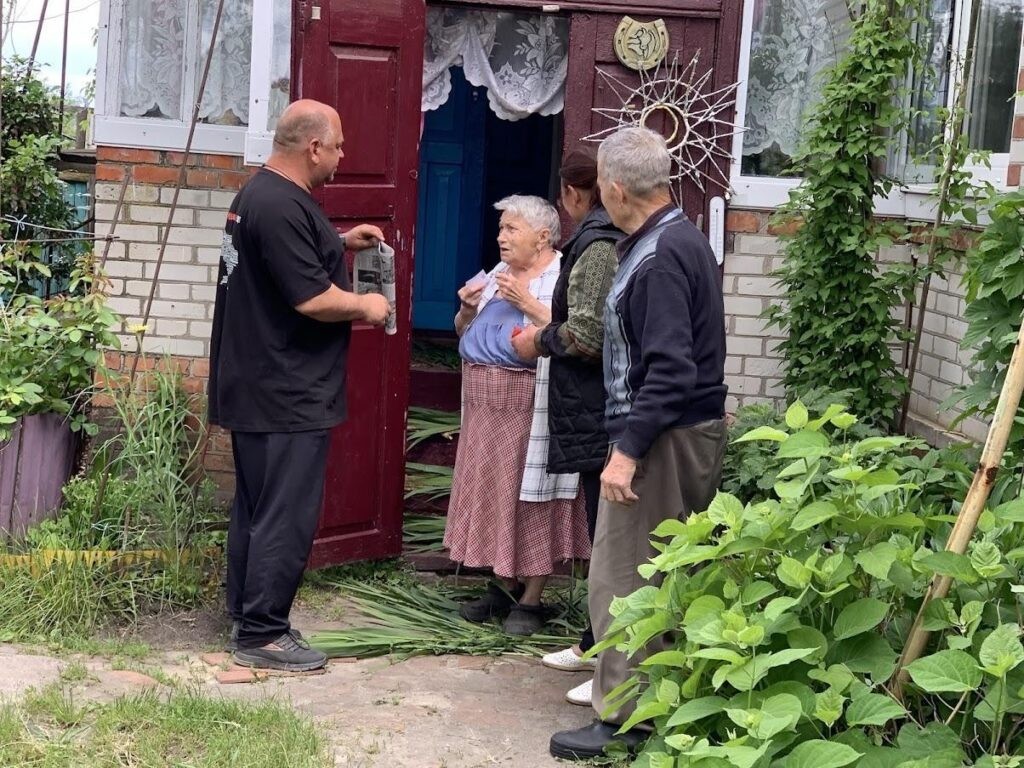
When the editor suggests writing about her, she flatly refuses: they have already had their share of attention; everyone has been in the newspaper. Let them write about someone else.
Before we leave, the whole group takes a photo by the grapevines. The woman of the house asks for both the people and the newspaper to be in the picture.
“I think we’ve done the main thing we came here to do today,” Pasiuha says as the car pulls back onto the main road. “We’ve sorted out a subscription for this person. For her, it’s a celebration.”
Forty Kilometres Once Considered the Rear
Beyond Okhtyrka, the road heads towards Kyrykivska community, and the mood inside the car changes.
Kyrykivka is the biggest distribution point on the route after the market in Okhtyrka, where Vorskla sells 500–600 copies at a time. People come here from across the former Velyka Pysarivka district to collect their newspapers – from Poznia, Tarasivka, Rozsoshy, Dobrianske and Spirne, and, until recently, from Velyka Pysarivka itself. Some ask a neighbour to collect a whole bundle for their village. The system emerged after the post stopped delivering newspapers to dangerous areas, and it saves the newsroom hours of driving.
From Kyrykivka to the Russian border is 40 kilometres. Until recently, this was considered deep enough into the rear to be out of reach of drones.
That figure turned out to be more than just a geographical marker – it also became a source of danger for the editor himself. After Pasiuha wrote in the newspaper that an FPV drone had reached Kyrykivka for the first time from that distance, one local woman reported him to the police for “passing the enemy coordinates”.
“Last time we were delivering the newspapers, we got a puncture,” Pasiuha says. “And there were drones right above us. Luckily, they weren’t interested in us. They were FPVs.”
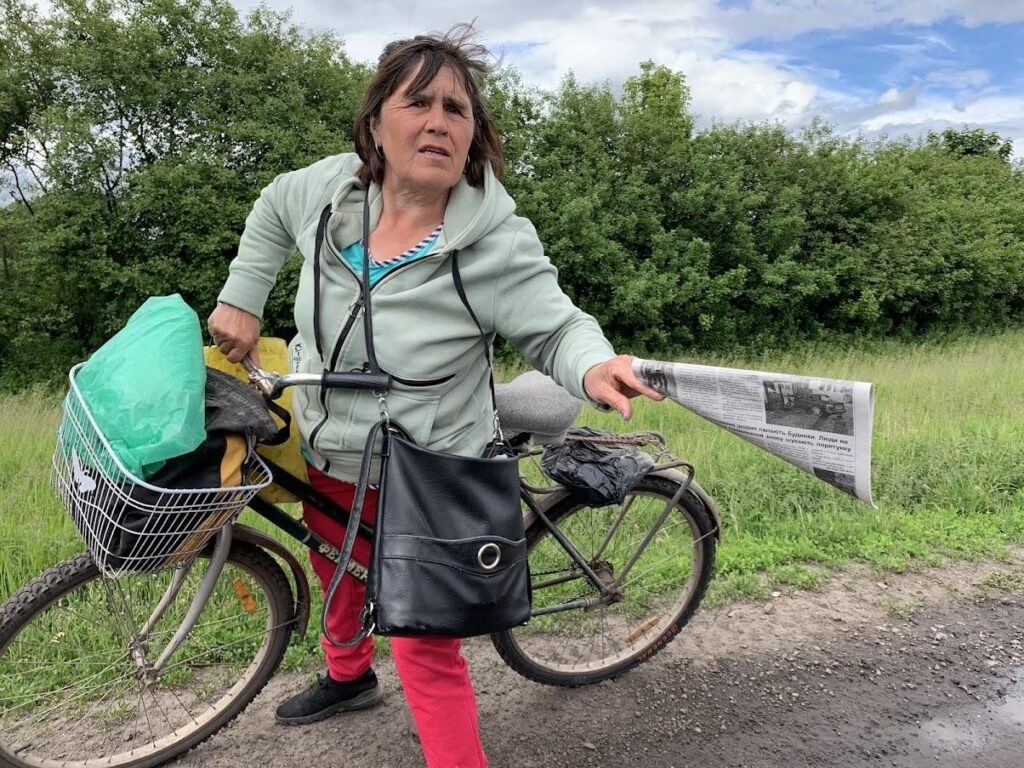
Two weeks before our trip, the area came under heavy shelling. The mobile phone masts were destroyed. A week later, they still had not been repaired, and judging by the situation, they are unlikely to be restored any time soon. There is still no mobile coverage here. Most of the strikes hit residential areas. The editor knows at least four of his former neighbours who left Velyka Pysarivka for Kyrykivka, thinking it would be a safer place, only to come under attack again.
The railway is out of service too. The station was destroyed, and the trains that many people once relied on barely run anymore.
Meanwhile, the road passes through a tunnel of old trees, their crowns meeting above the tarmac. This used to be an international route to Russia, leading to the customs post in Velyka Pysarivka, and lorries kept the branches from closing overhead. Now the canopy has grown back into a dome.
The mobile signal finally disappears altogether. It will not return until we reach Okhtyrka again, at the end of the route. The last call to the press officer advising us on the journey has to be made a few hundred metres before we enter the area without coverage.
An orchestra that has been playing for sixty years – perhaps longer
In Riabyna, we stop beside a building with no roof.
It is the village community centre, once one of the best in the district. Oleksii was always struck by the proper orchestra pit inside – something he had never seen in another village club. He considers the brass band that played here one of the best in Ukraine.
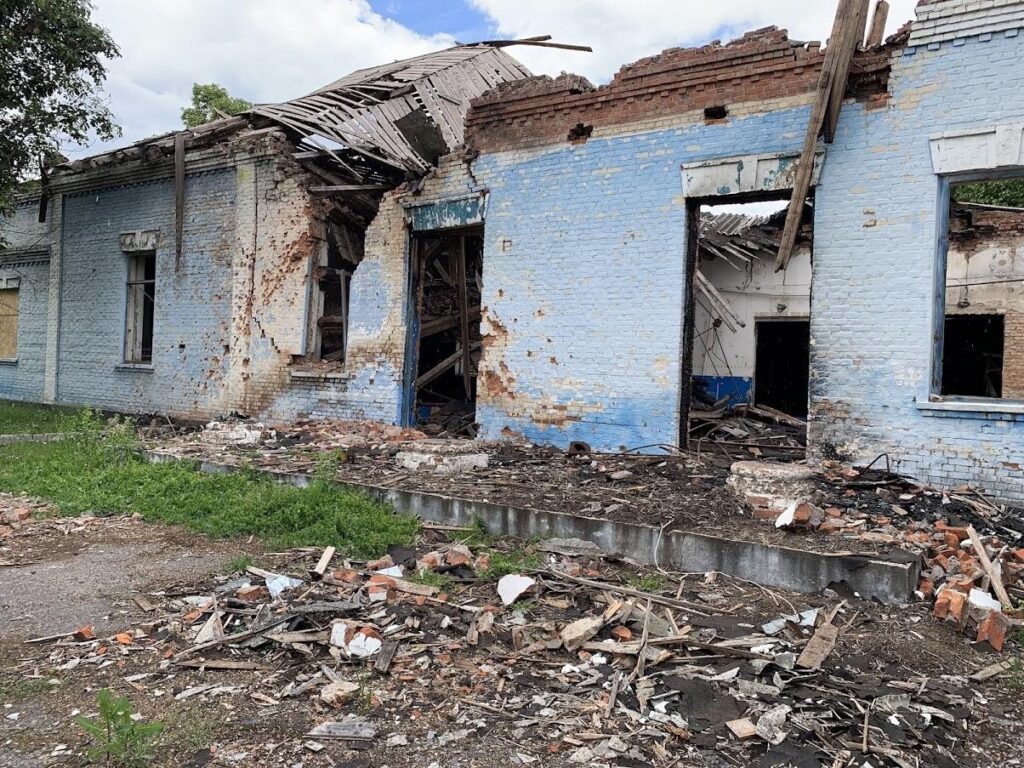
At the end of January, the building was hit by two Shahed drones. A few months later, former members of the orchestra still came together to mark the ensemble’s 60th anniversary — or, as Pasiuha cautiously puts it, perhaps its 60th anniversary and a little more. They celebrated against the backdrop of the damaged walls. They held several community clean-ups and cleared some of the rubble. No one knows whether the building itself will ever be rebuilt.
Vorskla wrote about it at the time, and there were not enough copies for everyone who wanted one. The printing house agreed to produce an extra 50 copies, which we brought as a gift.
The village head, himself a former member of the orchestra, takes a bundle of newspapers from beside the shattered entrance to the community centre.
“If we’ve had three or four days without electricity, the internet goes down too – it depends on the power – and our mobile mast has been destroyed, so there’s almost nowhere left to get information from,” Oleksandr Klets explains. “And there are hardly any young people here. Most of the residents are older, and they don’t use anything except printed information.”
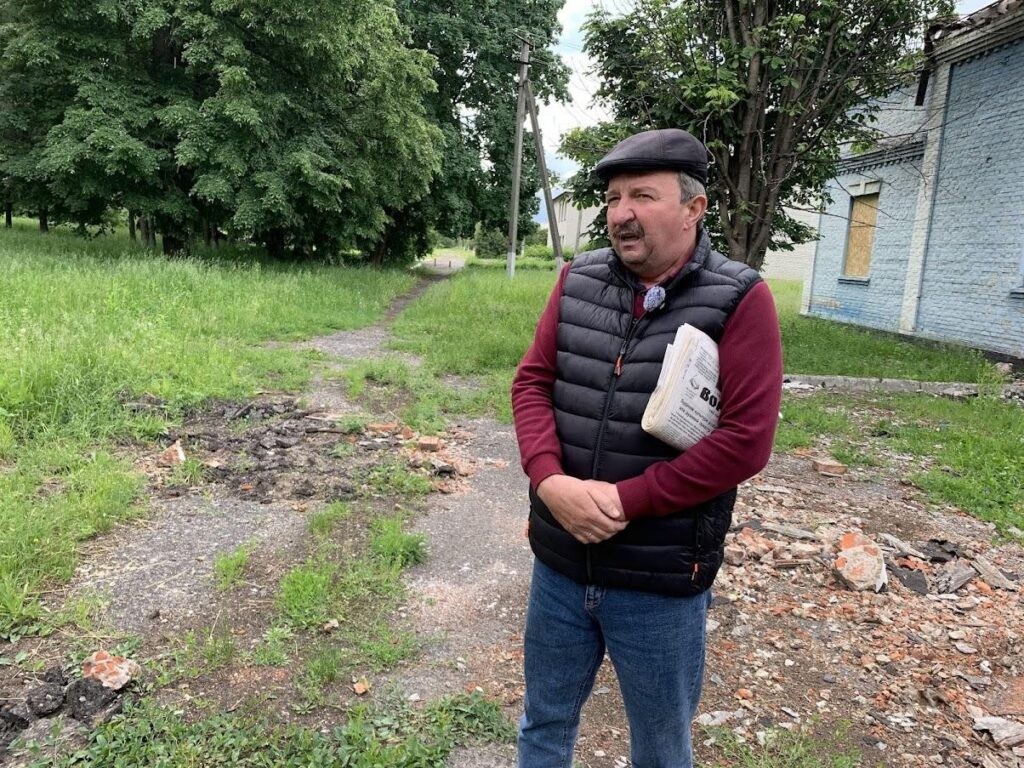
The newspaper delivery used to be a happy occasion for the village. Now, the village head says, people react in different ways. There have been shellings for two Sundays in a row, with strikes hitting farms and the village council. But most people understand that there is nowhere else to get information from, and that the newspaper matters.
The word the editor hates
After Riabyna, Pasiuha uses a phrase that makes him wince.
“This is where the kill zone effectively begins. I really hate that term. But that’s what it is.”
The military uses “kill zone” to describe an area where enemy drones have near-continuous coverage and anything moving through it can become a target.
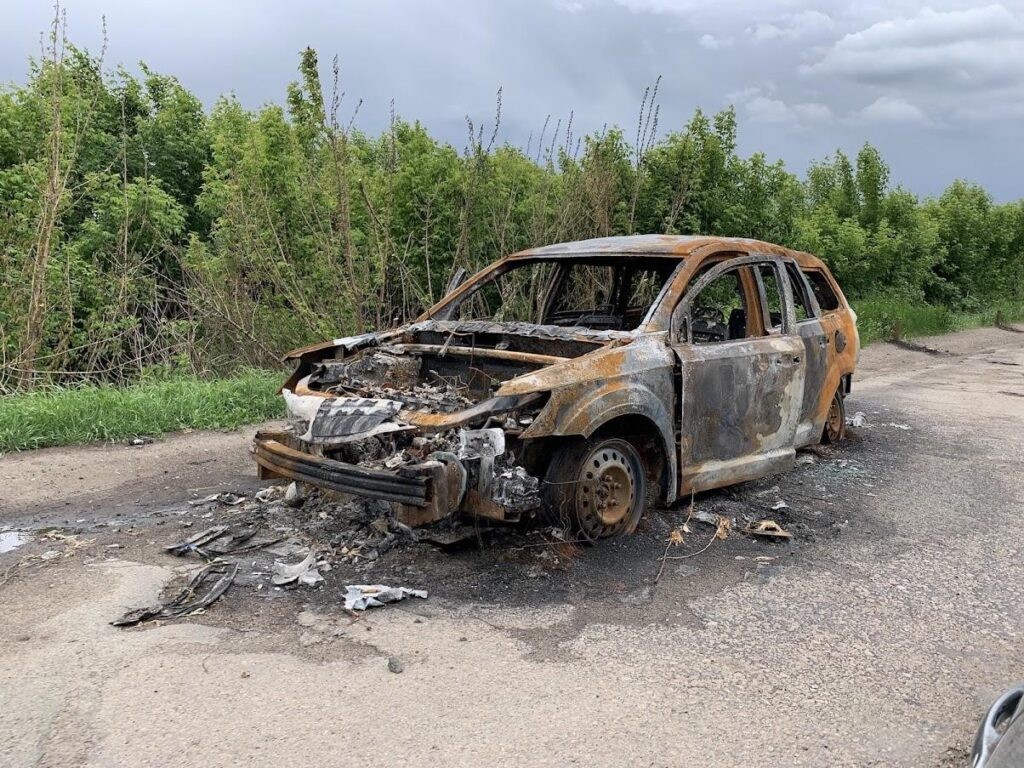
After the turn-off to Dobrianske, wrecked cars line the road. Then come mopeds. Further on, bicycles: people abandoned them and ran for the tree line, only for the drones to strike the bicycles.
Two days ago, a drone killed two civilians on this road as they were riding a moped. An elderly couple.
“You can tell from a moped that it’s civilians travelling,” the editor says. “An old man, an old woman. And they still struck them.”
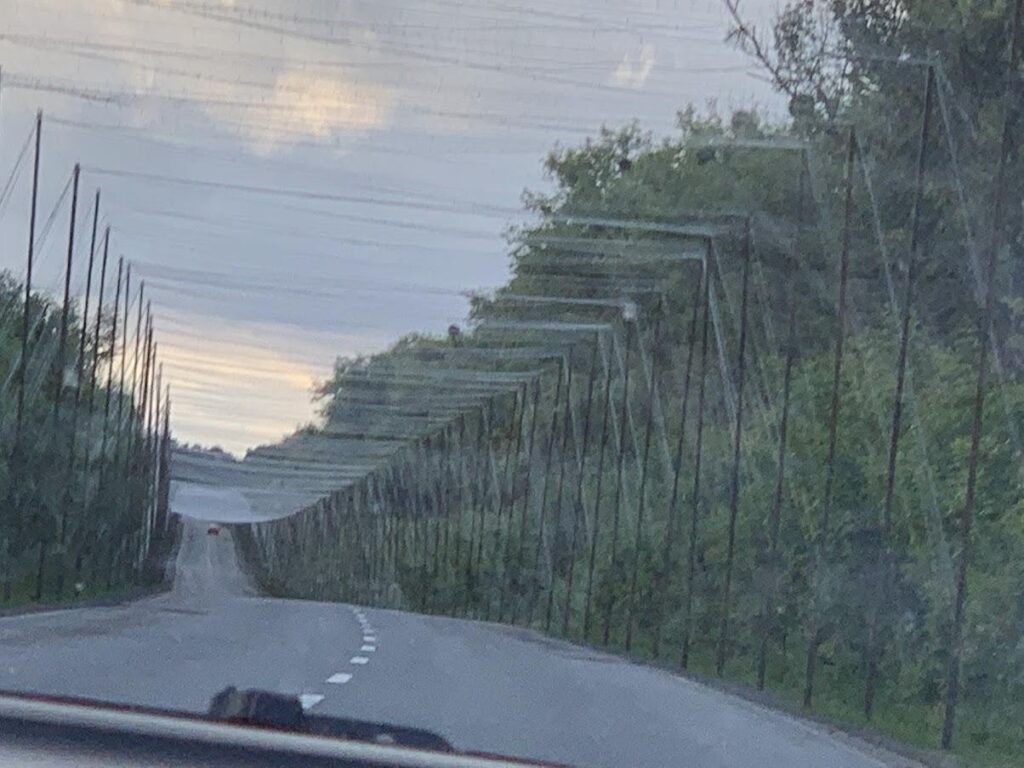
In places, anti-drone nets have appeared along the road – still a rarity here.
“They’re trying to put them up,” Pasiuha says. “I really hope they can do it safely, because they weren’t put up before precisely because it was too dangerous.”
For kilometres earlier, the same job had been done by the tree canopy, which closed over the tarmac after the lorries disappeared from the road.
It starts to rain, and everyone in the car takes it as a gift.
“I really love the rain now,” Pasiuha says. “Not because of the garden. It means you can safely go somewhere. Drones still fly in bad weather, but when there’s heavy rain, there are fewer of them, and they don’t fly as far.”
I ask whether there are days when they decide not to go. He takes longer to answer this than any other question.
“There have been a few such moments over the years,” he says eventually. “But we always went. It probably would have been better if we hadn’t: punctured tyres, other problems. Someone always came to our rescue. But I understand that sometimes you have to listen to your instincts.”
The road ends for us here, and it is at this point that I think about what I saw beyond this turn two years ago. In autumn 2024, we could still drive into Velyka Pysarivka itself. The flower beds were tended, flowers had been planted, flags were flying in the wind, and the roads had been swept. And yet there was not a single person on the streets, apart from a few people near the village shop. It felt like something out of a Stephen King novel: everything was in place, everything was tidy, and no one was there.
The little box in Nataliia’s hands remains silent.
Spirne: a carousel, a shop, a saleswoman
Spirne lies seven kilometres from Velyka Pysarivka and 10–12 kilometres from the border. We will go no further. Beyond this point, volunteers occasionally deliver the newspaper, mostly by bicycle.
Just over a year ago, they still travelled this stretch all the way to the end. The route described by MacKinnon in early 2025 reached Velyka Pysarivka itself. On that autumn 2024 trip, we also drove into the settlement, and in the damaged newsroom I presented Nataliia with her membership card for the National Union of Journalists of Ukraine. Since then, the route has become seven kilometres shorter – and here, a year can be measured in that arithmetic.
Here in Spirne is a small amusement park, which the editor calls the most beautiful place in the area: fairy-tale sculptures, a carousel, people coming from far away. There used to be a shop next to it – one of Vorskla’s distribution points.
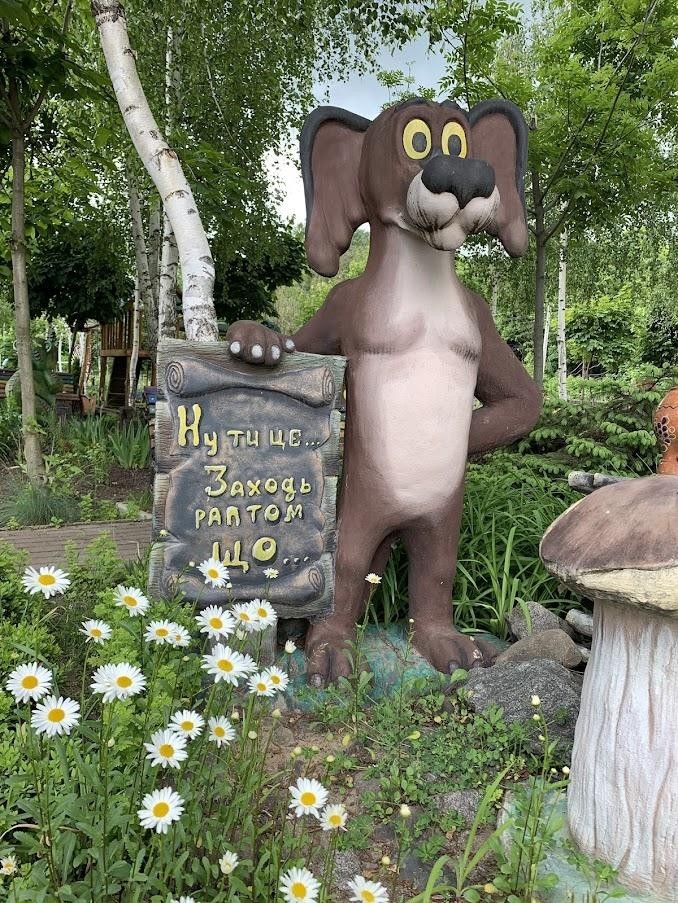
The shop-cafe was destroyed by two guided aerial bombs on Thursday. Pasiuha remembers the day exactly because Thursday is the day he delivers the newspaper.
“We were an hour late,” he says. “When we arrived, the emergency services were already here. An ambulance, firefighters. A woman had been killed. The saleswoman.”
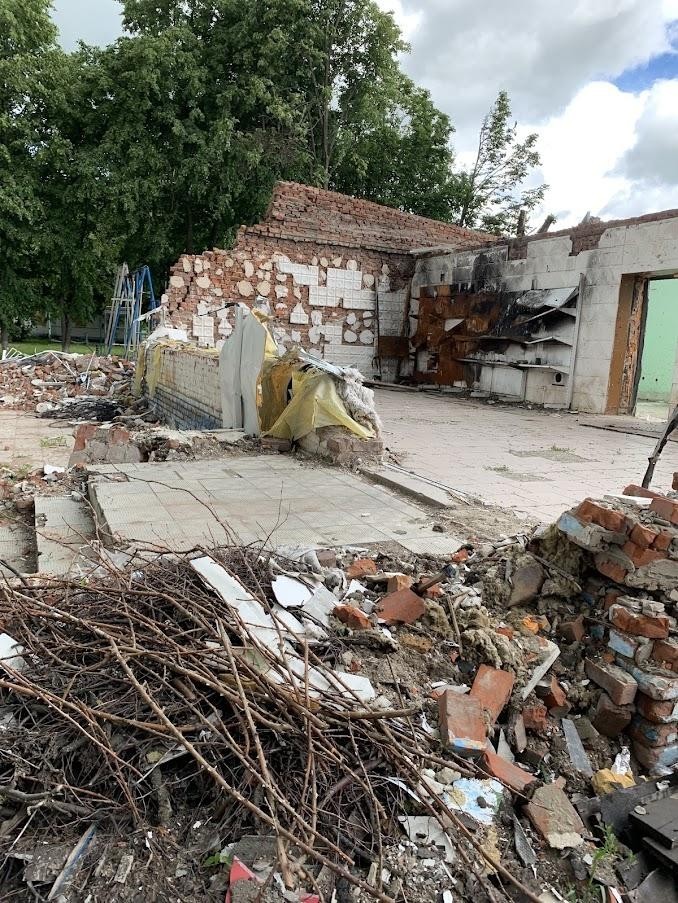
The site has now been cleared. All that remains is the foundation, twisted metal from the carousel and the dolls from the fairy-tale figures, staring out from the grass. The grass is tall, the bird cherry is in bloom, and the contrast between the blossom and what lies beneath it is the main reason we take out the camera here.
Before filming, everyone puts on body armour.
“This was one of the most beautiful places in our area,” he says to the camera, standing with his back to the foundations. “I really want it to survive. I want everything to survive.”
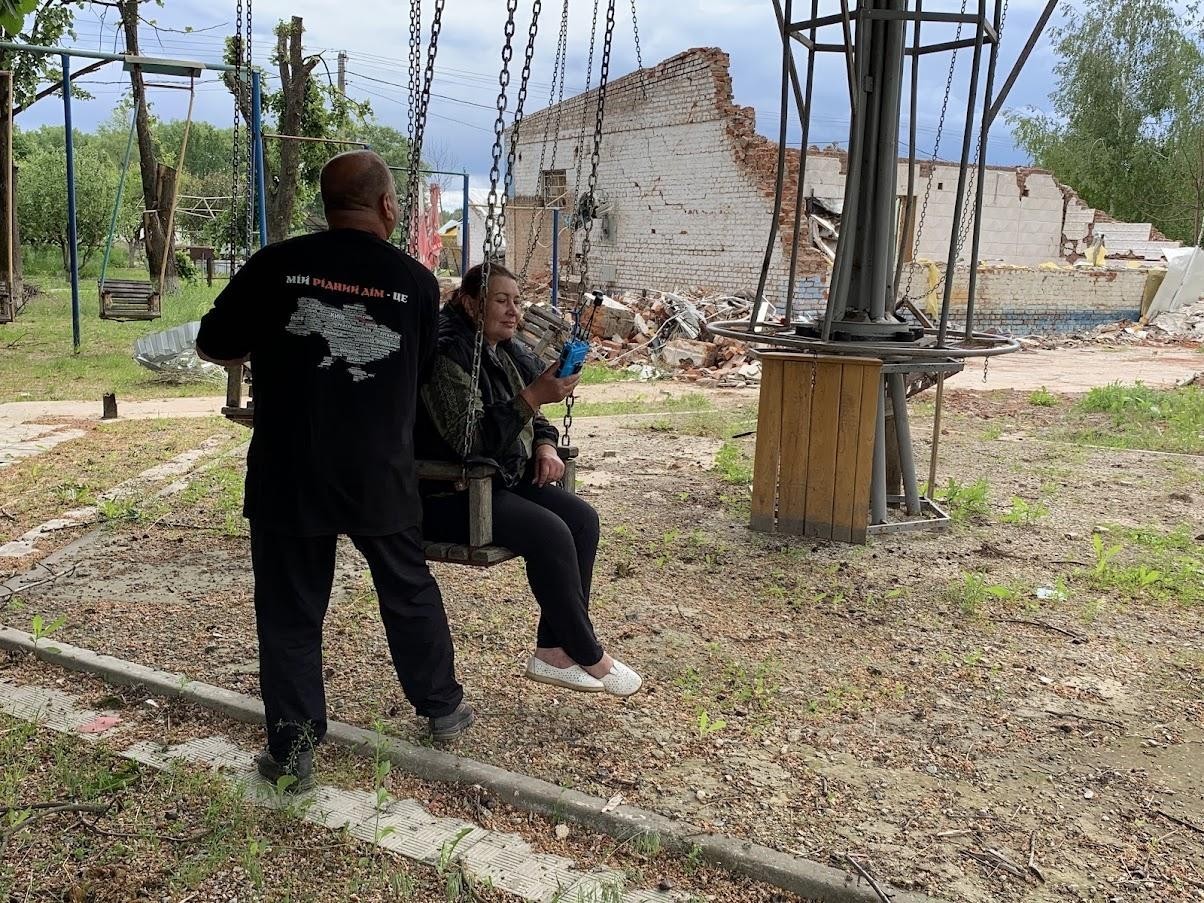
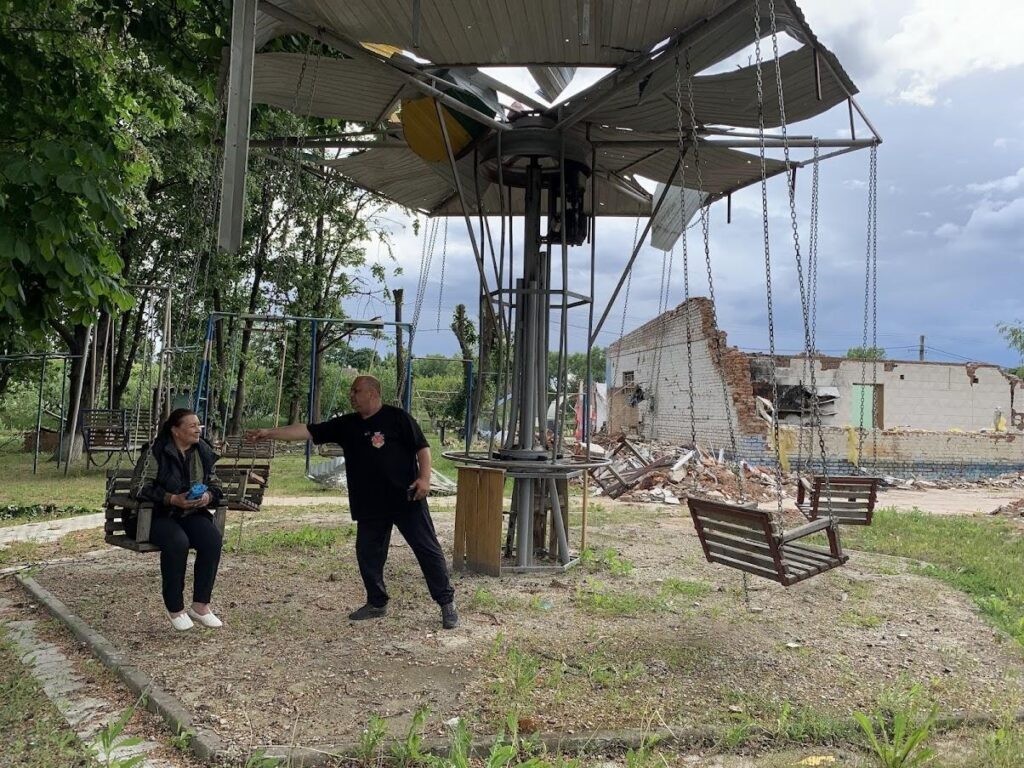
While we rearrange the equipment, Nataliia sits on the swing. It survived and stands directly opposite what is left of the café: fragments of brick, a collapsed wall and, beside it, the dismantled carousel. The little park with its plaster rabbits and bears begins a few steps away. So far, it has escaped the damage.
In Nataliia’s hands is the black-and-blue detector. She has not let go of it throughout the journey. Oleksii comes up behind her and starts pushing the swing.
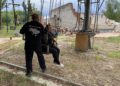
Two people, 12 kilometres from the border, beside the blackened brick remains. He pushes his wife on the swing; she watches the detector.
A medal that came back, and a little box that can warn you
Then comes the moment we brought another package for – not one filled with newspapers.
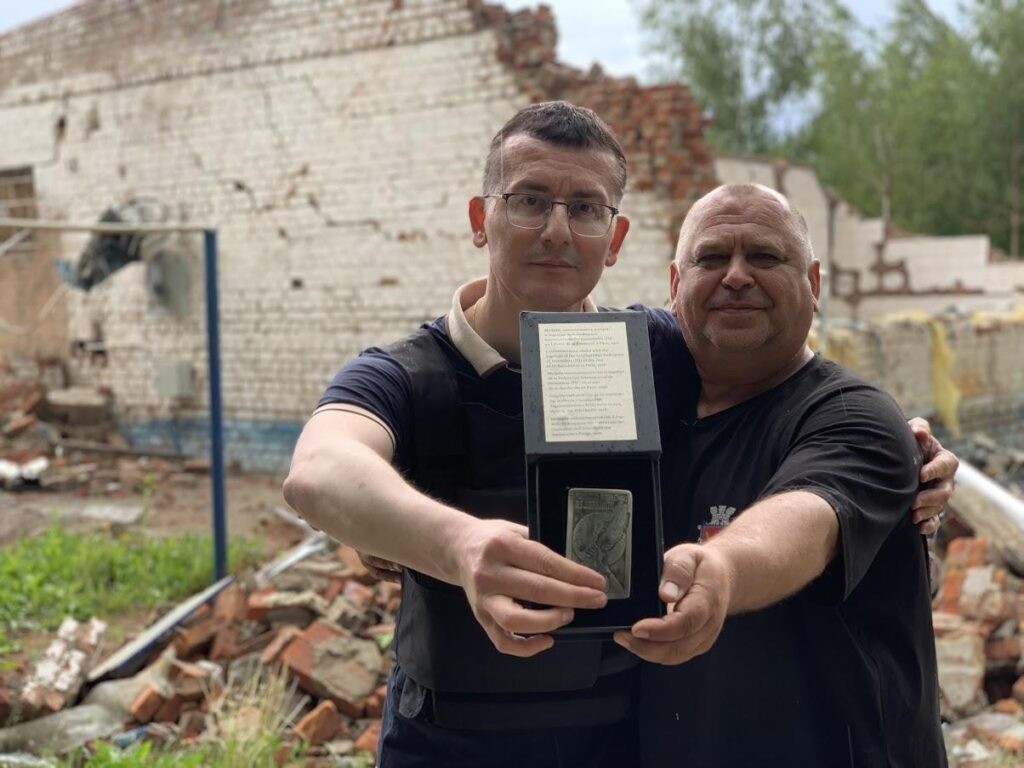
Shortly before this trip, I was in Paris for a congress marking the centenary of the International Federation of Journalists. I brought the commemorative medal here, to Spirne, and take it out of the bag among the foundations and twisted metal.
The gesture has a history, and it travelled in the opposite direction. A year earlier, in Brussels, I personally handed a copy of the frontline Vorskla to the federation’s Secretary General, Anthony Bellanger, for its archive. A newspaper from the border region had made its way to the European headquarters of the profession. Now the medal has travelled the other way – to the foundations of a destroyed shop.
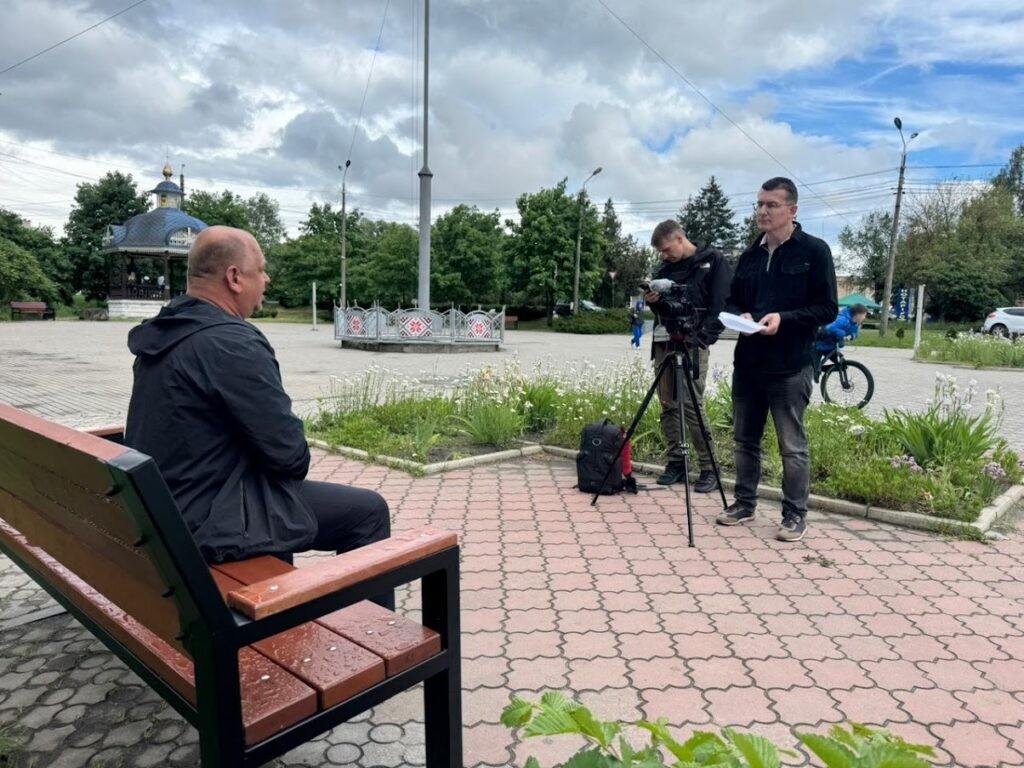
The film crew works with two cameras at once: cinematographer Vitalii Virchenko is filming on a large camera, while director and cameraman Yevhen Cherevko uses a compact mobile one. There will be no second take. Everything has to happen in one go. Cherevko keeps looking up at the sky.
Pasiuha holds the little box and stays silent for a long time.
“To say that I’m moved would be an understatement,” he finally says. “Because I’m close to tears. Thank you. Thank you to the journalistic community. Journalists matter. Slava Ukraini.”
The rain gets heavier at that moment, and someone says it must be a good omen.
Alongside the medal, the newsroom receives something far more practical: a Chuyka drone detector, which the Union is providing to journalists together with its manufacturer. Vorskla had previously spent several months trying, unsuccessfully, to raise the money for one itself.
They had never had a detector of their own. Every week, they drove as close to the border as they could, relying on the hope that a normal civilian car would not attract a drone operator’s attention. We brought the detector with us on this trip and showed Nataliia how to use it. The device picks up signals from certain types of drones and can give a warning. It does not stop anything, and it cannot detect everything, but it can give you a few extra minutes to decide what to do. Nataliia learned as she went and did not let go of it again. We decided to leave it with the newsroom before we even made it back.
“I felt safer travelling with the detector,” Pasiuha admits. “Although I worry a lot about our safety.”
“The worst thing would be for the newspaper not to come out”
Nataliia Pasiuha is giving a video interview for the first time in her life. In front of the camera, she looks the way someone does in an exam – and says so herself. Until now, she had always sent her husband to speak on camera instead.
In the family, she is the one who talks to readers when they need someone to listen, and the one who stays patient when a conversation turns sharp.
She is asked when she was most frightened during the full-scale war.
“You simply don’t have time to be afraid,” she says. “I don’t even know what was the scariest. It was frightening when we used to travel to see our daughter in Kharkiv, and Oleksii pulled me away just as shrapnel was flying. And when we were filming a story in Velyka Pysarivka and a Molniya drone hit our administration building while we were standing nearby, on the doorstep.”
She only briefly mentions the incident in Kharkiv, and Oleksii fills in the details. They had been waiting at the bus station in Velyka Pysarivka for a bus to visit their daughter in Kharkiv, back when the route was still running. A mortar attack suddenly began at the bus station. Nataliia froze for a few seconds, standing in the open, and Oleksii pulled her behind the corner of a building. The bus never arrived that day – it turned around and went back. On the same route, on one of the following services, a shell struck the bus. The passengers survived by a miracle.
She returns to the question once more, this time putting it differently.
“What frightens me is when the newspaper might not make it into print for people. That’s the worst thing. Everyone has to work as a team – the printing house and everyone else involved.”
Readers notice even the smallest change to the schedule. When the car arrives not on Thursday but a day or two later, as it did this time, they start calling and not to ask about the newspaper.
“They ask: ‘Are you all right?’” Nataliia says. “People worry.”
One elderly reader put his feelings about the newspaper in a way the newsroom has quoted for years: “I fall asleep with it and wake up with it.”
Nataliia also tells us about something the newsroom does not like to discuss. In 2022, a man who was not a stranger to Oleksii came to the newsroom – a local man he had known since childhood, acting on behalf of the occupying authorities. Perhaps that was why the conversation was less frightening than it might otherwise have been: they had known each other since they were children. He passed on an offer: “You’ll have your newspaper, you’ll prosper, everything will be fine,” and added that next time someone else would come.
The same man soon tried to organise a “self-defence” unit in the settlement, supposedly to protect against looters. It later became clear that the real aim was to seize the police station, which was empty at the time. Local hunters whom he approached first saw what was really going on and refused to join.
“Perhaps they have a lot of money for all sorts of propaganda, for the press,” Nataliia adds. “But no. We love Ukraine. We love our settlement.”
Nataliia has a paternal half-sister who lives in Belgorod, from her father’s first marriage. They used to speak on the phone, until one day the sister started asking her to move to Russia. Nataliia replied with a single message: “I want to live in Ukraine.” Her sister never contacted her again.
When she is asked about her dream, her answer is precise.
“For our victory to come,” Nataliia says. “Not for the war simply to end, but for us to win. That is what I’m waiting for.”
What you take out when it is already too late
The hardest parts of the conversation come on the way back, once the body armour has been taken off.
The editor dates the most frightening episode of his life to 2024. The newsroom was evacuating its archive from under fire – decades of bound newspaper issues.
“We had driven about 50 metres from the building when a guided aerial bomb landed,” he says. “The car was thrown around like a feather.”
When asked why they were willing to take such a risk for old newspaper files, he dismisses the question immediately.
“Many generations of journalists created this newspaper. I simply had no moral right to lose what had been created before us. It contains our fellow villagers, their achievements, people’s lives.”
There was one thing they deliberately left behind in the newsroom: a detailed map of the district on the wall. They used to mark it with little flags showing where their side was and where it was not.
In spring 2026, two Molniya drones set fire to his own home in Velyka Pysarivka. The family had been evacuated two years earlier, so no one was hurt. Oleksii had built the house with his father over almost two decades.
“It was the place where I drew my strength,” he says. “My children grew up there. I brought my wife there. My mother was there.”
Friends were able to approach the ruins and photograph them only a week later, during a brief lull. The family had managed to take the photographs out of the house. Everything else was gone – just the walls remained.
When he talks about what keeps the two of them going, he is brief and matter-of-fact.
“Family is the place where you feel at ease, where you don’t have to pretend to be anyone for anyone else. And when we come back from the border, we can be ourselves again. We usually thank each other when we get back.”
The arithmetic you cannot see from the road
Every week, around 600 copies of Vorskla reach the border communities – roughly 40 per cent of the print run. The rest are read by people the war has scattered across Ukraine. Drones have completely destroyed one newsroom car and seriously damaged another. Both were the couple’s personal cars, simply used for work. Pasiuha jokes that he does not want anyone to think the newsroom ever had enough money to buy a car of its own.
Some of the material they collect will never appear in the newspaper. People ask them not to write about them, afraid that doing so could bring another strike. Once, readers even criticised the newsroom for mentioning the distance to the Russian border.
“We collect information and document war crimes so that, even after our victory, we can still talk about them,” Pasiuha says.
According to the journalists’ own figures, 60 service members from the Velyka Pysarivka and Kyrykivka communities have been killed at the front, along with dozens of civilians killed in Russian attacks. The newspaper has published a memorial piece about every one of the fallen soldiers…
This trip became the filming for the third documentary in the NUJU series about editors of frontline newspapers. The first, On the Edge, told the story of Vasyl Myroshnyk from Zoria in Zolochiv, Kharkiv region, who travels 400 kilometres of frontline roads every week. The second, Pages of Hope, focused on Svitlana Karpenko and Trudova Slava, a newspaper from Orikhiv in Zaporizhzhia region. The third film will tell the story of the Pasiuha couple.
Three weeks after our trip, in Ankara, the European Federation of Journalists adopted a resolution on the strategic role of local and frontline journalism during wartime. Its wording is almost technical: in wartime, this kind of journalism is a form of critical democratic and information infrastructure, on a par with electricity grids and communication networks. After travelling the Pasiuhas’ route, it is easier to understand that paragraph than it was before.
The document’s strongest warning is addressed not to Ukraine, but to its partners: if frontline media continue to weaken, information vacuums will open up in places where the ground is most fertile for foreign propaganda. Along this stretch of the border, that vacuum is still being held back by two people in an old saloon car.
The journey back
In Okhtyrka, the signal returns, and I can finally get through to the press officer who has been advising us throughout the day.
“We’re on our way back. We’re already in Okhtyrka. The furthest point was Spirne. We had the Chuyka with us, so we made it out.”
“The weather helped a little,” he replies. “Maybe not for filming, but for your safety, it helped.”
We ask Pasiuha what he feels now that the route is behind him.
“Relief,” he says. “We haven’t gone this far from the safe zone or this close to Velyka Pysarivka for a long time. Today, we travelled this route to show the whole world what a war looks like when it is this close.”
He speaks carefully about the meaning of all this, without grand statements or any certainty.
“Some people ask why we keep going. I don’t even know who needs it more. Is it us, the newspaper people, who feel responsible for those we serve? Or the people who need to feel connected to the wider world? Probably everyone.”
There is one answer, though, that he can date precisely. In 2022, when part of the newsroom had already been destroyed and the community was facing the threat of occupation, I called him and asked whether the newspaper would continue to come out.
“I simply couldn’t say that we wouldn’t,” he says. “So we carried on.”
There is a phrase they repeat in the newsroom almost like a formula.
“In the hardest times, people subscribe to the newspaper, sometimes going without a loaf of bread to afford it. We, the newsroom staff, can work without a salary. But, unfortunately, the newspaper cannot be printed without money. Good weather or bad, whether the drones are flying or not – we keep going for as long as we can.”
The next print run will return from the printing house in Vinnytsia on Thursday. That same day, the black-and-blue box will once again be silent or not. Nataliia will lower the window again, and the car will set off east, towards the point beyond which, these days, only the occasional traveller dares to go…
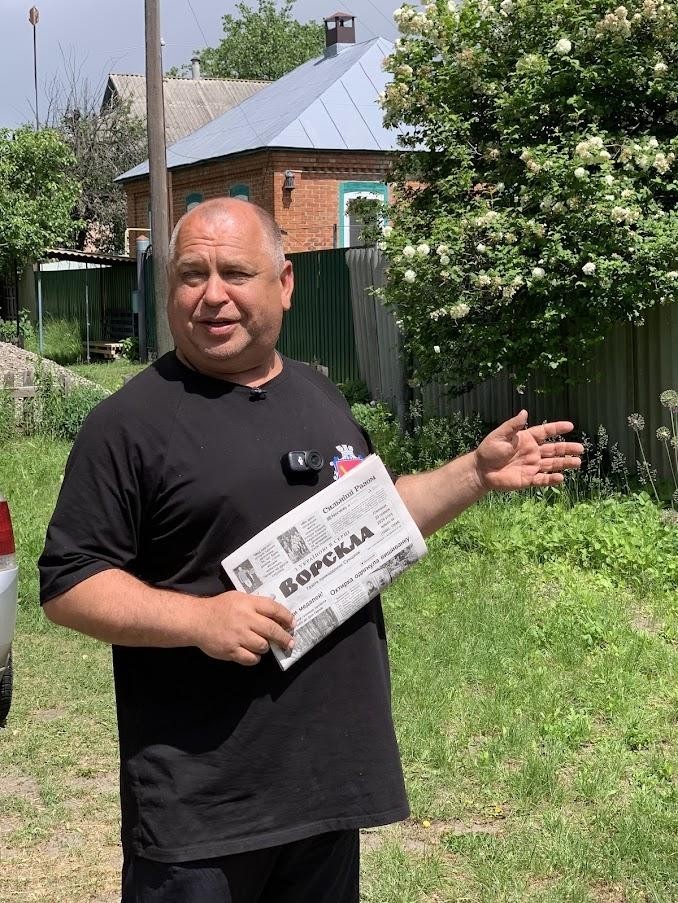
Sergiy Tomilenko, President of the National Union of Journalists of Ukraine












Discussion about this post