

 THE NATIONAL UNION OF
JOURNALISTS OF UKRAINE
THE NATIONAL UNION OF
JOURNALISTS OF UKRAINE
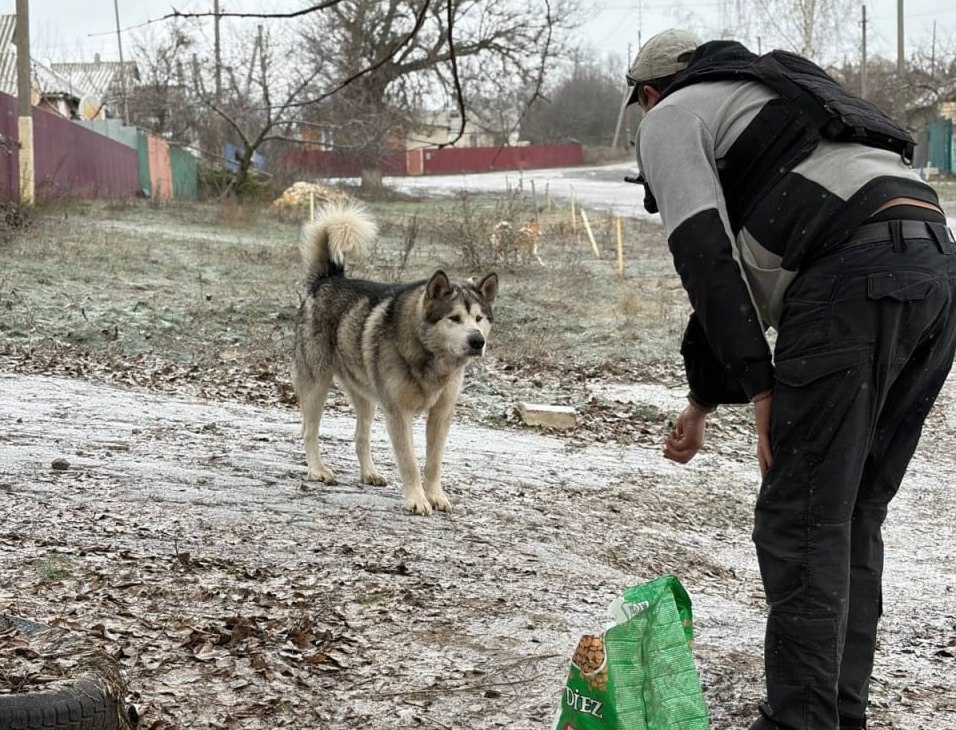
“When I leave home, I look at my house and I don’t know if I’ll ever see it again. Whether I’ll hold my wife that evening, or kiss my daughter. But I go, because I feel responsible.”
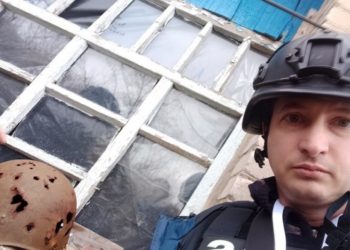
These are the words of Oleg Chopenko, a Ukrainian volunteer who has spent nearly three years evacuating people and rescuing abandoned animals from some of the country’s most dangerous frontline communities. In villages devastated by Russian shelling, he finds frightened dogs and cats wandering through empty streets, often hungry, wounded, or left to fend for themselves. For Oleg, saving a life means protecting anyone who cannot protect themselves—whether a person or a frightened animal.
His story was reported by Slobidskyi Krai, one of the oldest media outlets in Ukraine’s Kharkiv region, as part of its coverage of life in communities living under constant Russian bombardment. The newspaper continues to report from the frontline and recently de-occupied areas of the region, documenting not only the human cost of the war but also its impact on animals and the volunteers who risk their lives to help them.
I first learned about Oleg Chopenko from social media. I saw a video of a man walking down the street of a completely destroyed village, handing out pet food to the few residents still living there. Hearing a human voice and smelling food, hungry dogs and cats surrounded the volunteer. And nearby, on the side of the road, lay a dog—killed either by a fragment of a Shahed drone or dead from starvation.
“God, God. What did these innocent souls do to deserve this?” the man said, his voice heavy with sorrow. That was Oleg Chopenko.
He Wanted to Be Useful
Before February 24, 2022—the day Russia launched its full-scale invasion of Ukraine—Oleg worked at a social services center in the city of Liubotyn, near Kharkiv. He looked after elderly people aged 60 and older who needed care and support.
When the full-scale invasion began, he and a group of like-minded people started volunteering: collecting food, searching for warm clothing, and distributing essentials to those in need. Over time, his efforts grew in scale—Oleg began making trips directly to soldiers on the front lines. The trunk of his car, once filled with social service packages, was now loaded with specialized military footwear, homemade treats, and other items to bring a bit of warmth to troops at the front.
But the real turning point in his volunteer work came almost by accident. One morning, Oleg was scrolling through Telegram—a messaging app widely used in Ukraine for news, community coordination, and emergency communications. His eye caught an announcement: “People with their own vehicles needed, who are not afraid to drive into a combat zone for evacuation.” His car was small, with barely any room—but he desperately wanted to be useful, so he dialed the number in the post.
That was nearly three years ago. Now Oleg Chopenko brings people not just food, but a chance at a safe life. And so it goes—day after day, without days off, because people are waiting for help.
The “Two Small Dogs” That Turned Out to Be Dobermans
The volunteer’s very first evacuation run turned out to be nothing like he had imagined. It was a trip to the Kupiansk district—an area in the Kharkiv region directly adjacent to the front line, and one of the most dangerous zones in the country. Oleg admits he had no idea how the evacuation process actually worked at that point.
The request seemed simple enough: pick up a woman, a few belongings, four cats, and “two small dogs.” But instead of lap dogs, two enormous adult Dobermans were sitting in the kennel.
“Why did you come in such a small car?” the owner asked from the doorstep. Oleg could only shrug, looking at his compact vehicle. The woman was unwavering: she would not leave without her four-legged companions. He had to improvise on the spot.
On the first trip, Oleg loaded five cats (more than the request had mentioned) and some of the belongings into the car. “In fact, my very first evacuation wasn’t people at all. It was cats,” the man smiles. The next day, he returned to finally pick up the owner along with her Dobermans.
“Saving lives means valuing everyone who cannot protect themselves — whether it’s a person or a frightened cat in a carrier,” Oleg says.
“Leave the Bag of Clothes Behind, But Take Your Friend”
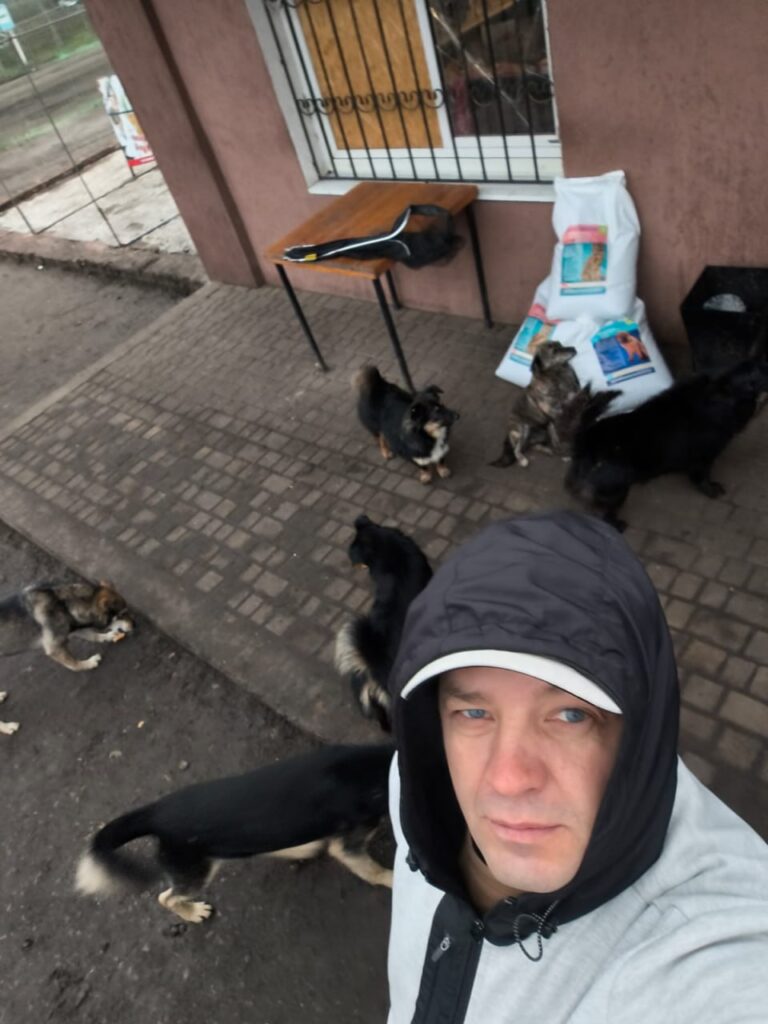
Over time, Oleg’s evacuation routes increasingly became rescue missions for animals. After seeing with his own eyes the abandoned pets in half-destroyed villages, he realized he could not simply walk past. People who remain under shelling often approach the volunteers not asking for bread, but for pet food.
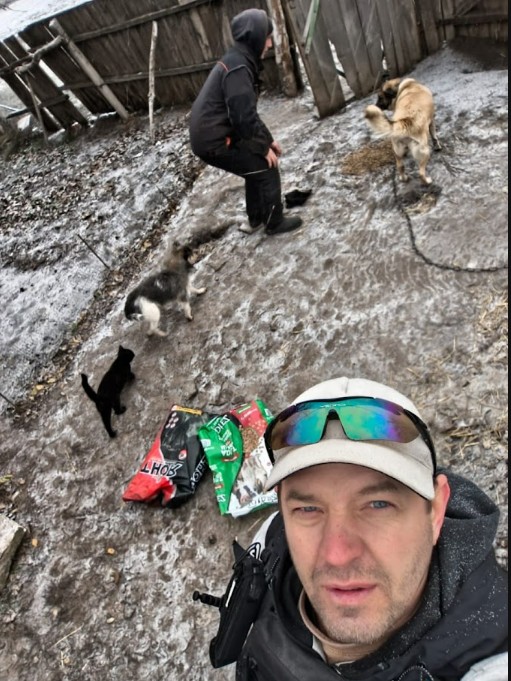
He began searching for resources. Pet food is expensive, but charitable organizations, seeing his video reports from the hottest zones, began to trust him. Now, whenever he heads out on an evacuation, the trunk always contains food for stray dogs and cats. And sometimes, his team dedicates an entire day solely to the animals: they load 20 to 30 sacks of pet food and stop for every hungry dog they see.
“It breaks my heart when I see people leaving and taking a sack of potatoes with them, but leaving the dog or cat behind. You took them into your family! The dog guarded your home, the cat caught your mice… How can you just abandon them like that?” the man says.
The volunteers also always bring pet carriers on their trips. If an owner hesitates because there is not enough room in the car, Oleg tells them: “Leave a bag of clothes behind, but take your friend. Things can be bought with money. The loyalty of a pet is a treasure that has no price.”
And if a dog is too large to fit in one trip, they come back the next day. Without exception. At home, Oleg has four female cats, one male cat, a dachshund, and two shepherds. All of them are rescues, each with their own story of survival.
Once-Beloved Pets Become Wild Animals
In many of the videos from Oleg Chopenko’s trips, viewers can see disturbing footage: the bodies of dead animals lying in empty streets. “There’s a dog lying next to a toppled fence… A strike must have hit the garden and caught it with shrapnel or the blast wave. And sometimes there’s no visible damage at all, and then you understand—the heart gave out. Animals, just like people, can die of heart failure, unable to withstand the horror of the shelling,” the man recounts.
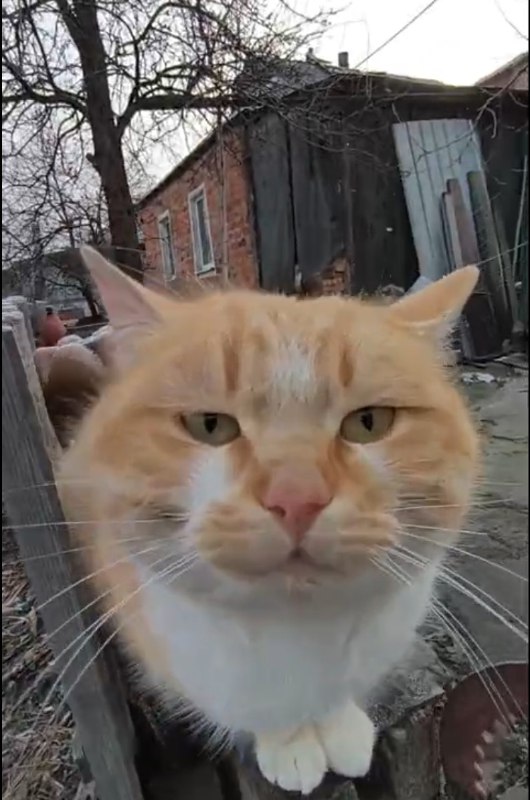
Driving into yet another “empty” village, the volunteers enter a world where once-beloved household pets have been forced to become wild animals. There are now countless strays. They form packs, become aggressive, trying to survive amid hunger and constant bombardment.
The volunteer notes that the problem is enormous. There are catastrophically few animal shelters, and the number of now-ownerless animals grows every day. “Many questions remain unanswered today,” Oleg says. “But I know one thing: we have to bring food. So that they don’t become so feral. So that they feel someone hasn’t forgotten about them.”
You Never Know If You’ll Come Home That Evening
Despite constant calls for evacuation, people still remain on the left bank of the Oskil River near Kupiansk—a city in the Kharkiv region just a few kilometers from the front line—and in surrounding settlements. Getting them out today is a genuine special operation. River crossings have been destroyed, roads are under fire. Oleg tells people: “Walk on foot to Hrushivka”—a village about 15 kilometers from Kupiansk—“and I’ll pick you up there.” And they walk. Through fields, bushes, and tree lines, under cover of darkness, so as not to become a target for an enemy drone.
Every trip like this is a risk he is fully aware of.
“When I leave home, I look at my house and I don’t know if I’ll ever see it again. Whether I’ll hold my wife that evening, or kiss my daughter. But I go, because I feel responsible. If someone has called me, I am already responsible for them,” the volunteer says.
His routes run through the hottest zones: the Donetsk region, the Sumy region, and the borderlands of the Kharkiv region.
Every evacuation story is its own drama. Recently, Oleg picked up a family from Kindrashivka—a village in the Kharkiv region—who had spent two days making their way through the forest to the meeting point. In the car, the man stared at the volunteer: “Oleg, don’t you remember me?” It turned out that back in March, Oleg had evacuated the man’s relatives and urged him to leave as well. At the time, the man had refused: “I’ll stay until the very end.”
“The very end” came when three drones hit his house, one after another. When a fourth was incoming, the man simply dropped to his knees and raised his hands to the sky. Only then, grabbing pre-packed emergency backpacks—known in Ukraine as “alarm bags,” kept ready by civilians in frontline areas—the couple fled.
Sadly, not all stories end this way. In that same Kindrashivka, a mother buried her son in her own garden with her own hands, after he could not hide from an enemy drone. He bled to death, because no ambulance could reach the area any longer.
“A Buzzing Sound Is the Sound of Death”
The volunteer says that the most dangerous thing during evacuations right now is drones—small, unmanned aerial vehicles that have become one of the defining and most feared weapons of this war. In the past, artillery shelling at least gave a slim chance to drop to the ground or find cover. Now, the sky belongs to drones.
“That thing—if it locks onto your car, it’s a 90% chance of death. I never thought I would be afraid of a simple buzzing sound. Now, for me, it’s the sound of death,” he confesses.
The tension is so high, he says, that even an ordinary bird suddenly taking flight from the roadside makes his heart clench and his hands grip the steering wheel tighter.
When asked whether he plans to stop after everything he has been through, the man responds: “How could I? If we all give up, this place will be overrun by occupiers.”
His motivation is now reinforced by a personal “recognition” from the enemy: friends found information in Russian Telegram channels indicating that the occupiers have sentenced the volunteer in absentia to life imprisonment.
________________________________________________________________
Slobidskyi Krai (meaning “Sloboda Region,” a historical name for the northeastern part of Ukraine centered around Kharkiv) is one of the oldest and most respected media outlets in the Kharkiv region, with a history spanning over a century. Today, it has evolved into a multimedia hub. Having successfully undergone denationalization—a reform process in which Ukrainian state-owned media were converted into independent outlets—the publication operates as an independent news resource, combining a traditional print newspaper with a modern, fast-paced online portal.
Under the conditions of full-scale war, the editorial team focuses on covering the lives of communities across the Kharkiv region—reporting that is vitally important for residents of frontline and recently de-occupied territories. The outlet actively participates in resilience-building programs, including the Frontline Press project, implemented with the support of the NUJU (National Union of Journalists of Ukraine) and international partners.
Despite significant challenges—from staff shortages to logistical difficulties—Slobidskyi Krai continues to publish in print and is actively adopting digital innovations. The editorial team plans to integrate artificial intelligence tools in 2026 to automate routine tasks such as interview transcription and content adaptation, freeing up time for quality fact-checking and journalist safety. The outletʼs core mission remains providing accurate, verified information that helps residents of the Slobozhanshchyna region navigate current events and make informed decisions.
Official website: slk.kh.ua.
Original article by Nadiia Yaninovych, Slobidskyi Krai newspaper, Kharkiv region, Ukraine. Translated and adapted for international audiences.
Slobidskyi Krai is one of 25 local and regional media outlets participating in the Frontline Press support program, funded by the Swedish media business association Tidningsutgivarna. The program supports professional journalism about life in Ukraine’s frontline communities. The National Union of Journalists of Ukraine (NUJU) is happy to share these stories with international media for republication. To request permission to republish this or other materials produced through the Frontline Press program, please contact [email protected].
photo by the Slobidskyi Krai newspaper















Discussion about this post