
 THE NATIONAL UNION OF
JOURNALISTS OF UKRAINE
THE NATIONAL UNION OF
JOURNALISTS OF UKRAINE
Amid the ongoing war in Ukraine, the growth of content generated by artificial intelligence and the influence of big tech platforms are changing the way information is disseminated.
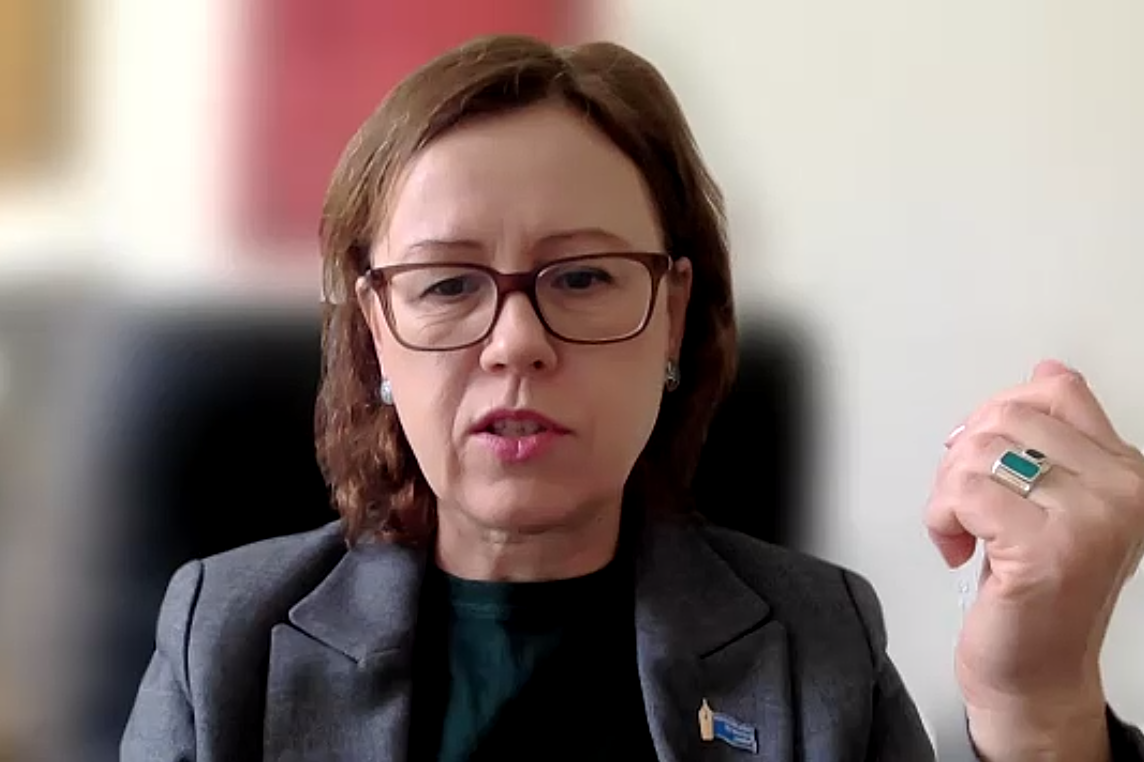
This was emphasized by Lina Kushch, the First Secretary of the National Union of Journalists of Ukraine (NUJU), speaking at the panel AI, Disinformation and the Post-Truth/Post-Shame World at the international conference titled Defending Democracy: Horizons of Freedom.
Civil.Today publishes the text of her speech:
It was difficult for me to join you, as I am currently in Kyiv, Ukraine, and we are experiencing serious power outages. For example, today I have only three hours of electricity during the day and several hours at night. Therefore, connecting to this conference and maintaining a stable connection was not easy.
On AI, disinformation, and the influence of big tech platforms: We have seen that while social media has been the primary channel for disinformation over the past few years, generative AI models such as GPT have now joined the fray. Social media, augmented by AI-generated content, leaves ordinary people in virtual spaces with little or no way to escape its harmful influence.
How does this manifest itself? One example is the spread of russian narratives in the Ukrainian segment of social media. This includes exaggerating the successes of the russian army and denying russian war crimes. AI can use democratic tools and approaches to spread information, even creating multiple versions of events, including outright lies about russian war crimes. This was evident in cases such as MH17 and continues today. The goal is often to make these extreme narratives the subject of public debate.
For example, earlier this year, the so-called peace agreement became a topic of discussion. Instead of focusing on the real issue, russian aggression, the debate has shifted to the terms of the deal: which Ukrainian territories should be “ceded” or recognized as russian. Fundamental issues, such as justice for the victims and the responsibility of the aggressor, are often ignored. For Ukrainians, justice is important; no deal should be made without accountability to survivors and victims.
At the same time, large technology platforms are becoming a kind of ruling class in the information society. Journalists may believe that we are free to choose what to write and publish, but the experience of Ukrainian media shows the opposite. Many publications have faced blocking and restrictions on content, demonstrating digital censorship.
For example, a journalist from the Dnipropetrovsk Region in Ukraine had a YouTube channel with 700,000 subscribers dedicated to football. After 2022, he switched his focus to war and politics. YouTube placed the channel on a “shadow ban,” reducing the number of viewers from hundreds of thousands to just hundreds per video. Many Ukrainian media outlets face similar problems. Platforms determine not only what we communicate about, but also what words and illustrations we can use. Even high-ranking figures, such as the head of the Union of Journalists of Ukraine, were blocked from publishing content about injured journalists, without any possibility of appeal, for weeks.
Ukrainian scholars and experts see this phenomenon as a systematic tool for creating a parallel reality. In the occupied territories, russia has sought to indoctrinate students and children, spreading propaganda through numerous platforms to create loyal citizens. Research shows that Telegram has become the main starting point for russian disinformation, although other platforms are also used.
What can journalists and Ukrainian citizens do? First, we need domestic fact-checking organizations and the development of fact-checking skills among journalists. In Ukraine, national fact-checking tests are held annually, organized by the Ministry of Culture, with over 200,000 participants. Secondly, we need international cooperation between journalists and civil society activists to expose russian fake news and propaganda networks, including content generated by AI models.
These networks spread disinformation in different countries, undermining trust in the authorities, European institutions, and European values. Protecting these values should be our daily mission through joint efforts.
Thank you for being so understanding of the situation, for your solidarity, and I look forward to future cooperation.
Watch the full video from the conference:













Discussion about this post