

 THE NATIONAL UNION OF
JOURNALISTS OF UKRAINE
THE NATIONAL UNION OF
JOURNALISTS OF UKRAINE
Every story about a civilian unlawfully deprived of liberty can draw attention to Russiaʼs crimes. Yet a carelessly published detail can put the very person held captive and their family at risk. The challenge of covering civilian detainees goes beyond ethical questions alone. Vague terminology, different legal statuses and inconsistent procedures create additional obstacles for journalists and increase the risk of errors.
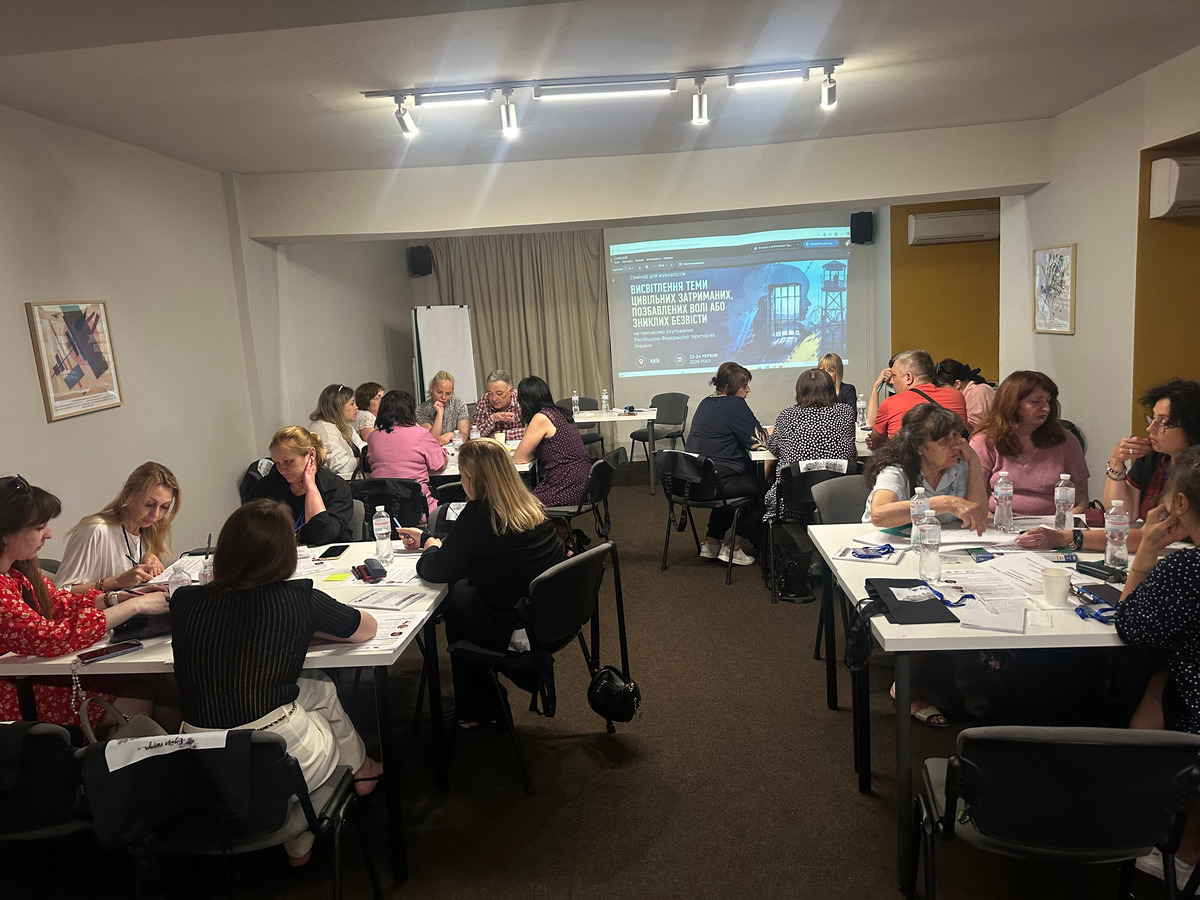
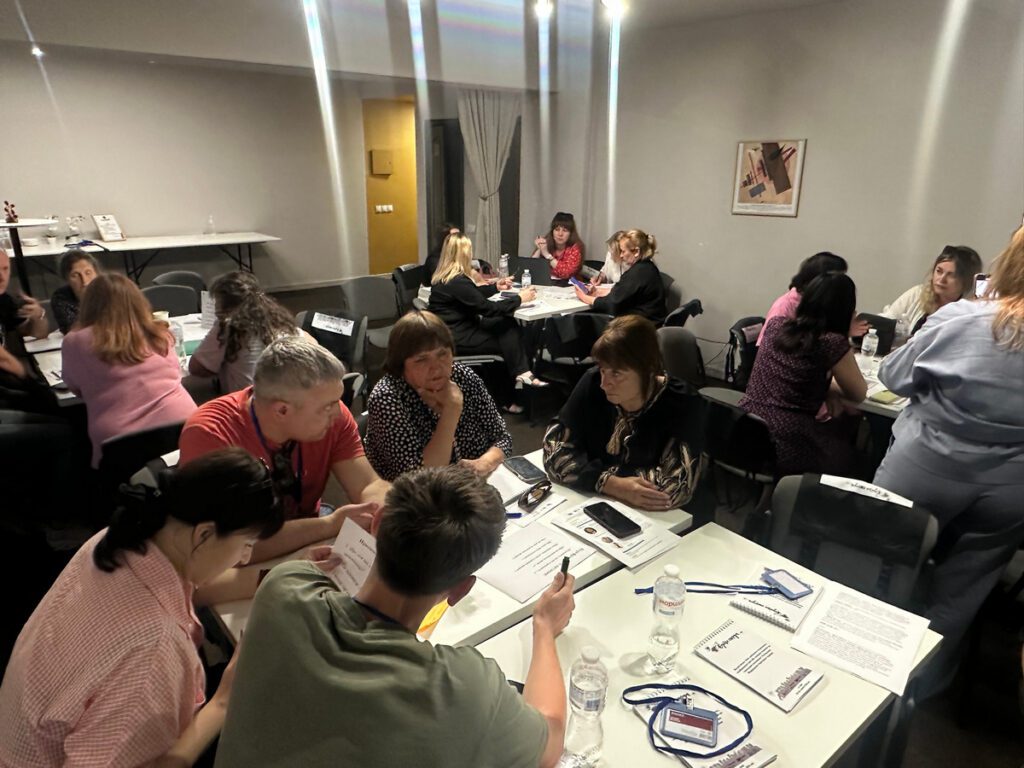
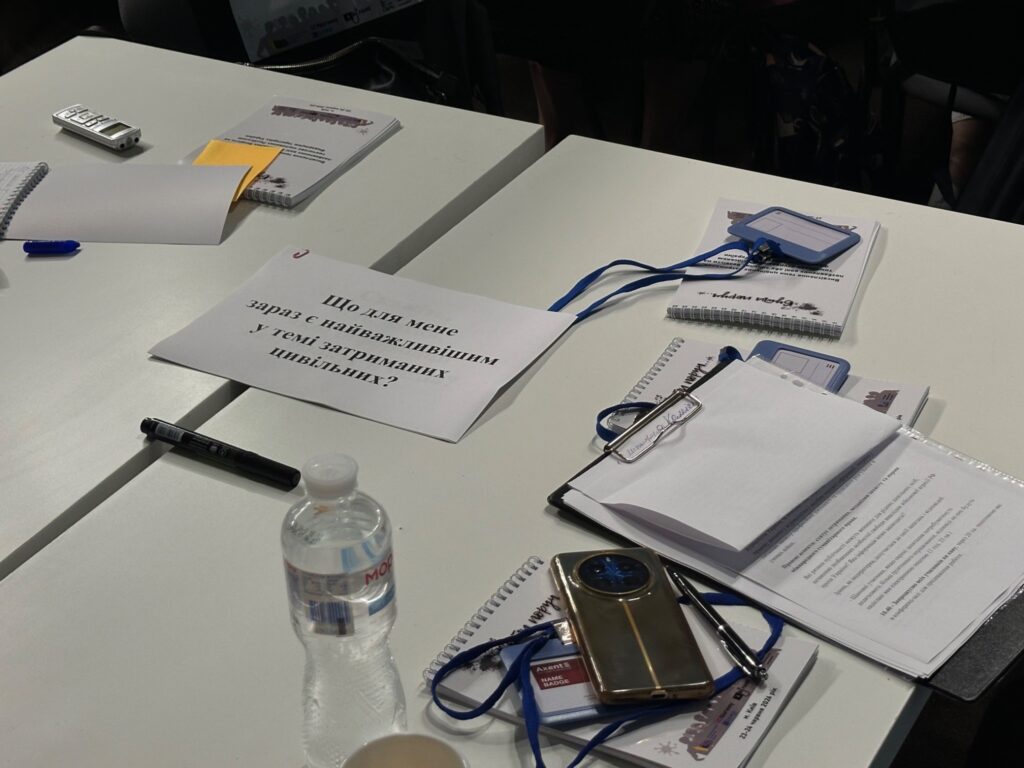
How to cover these stories responsibly was the focus of a two-day seminar, “Covering Civilian Detainees, Those Deprived of Liberty or Missing in the Temporarily Occupied Territories of Ukraine”. The event was organised by the National Union of Journalists of Ukraine and the NGO Civilians Free, with the support of the International Commission on Missing Persons.
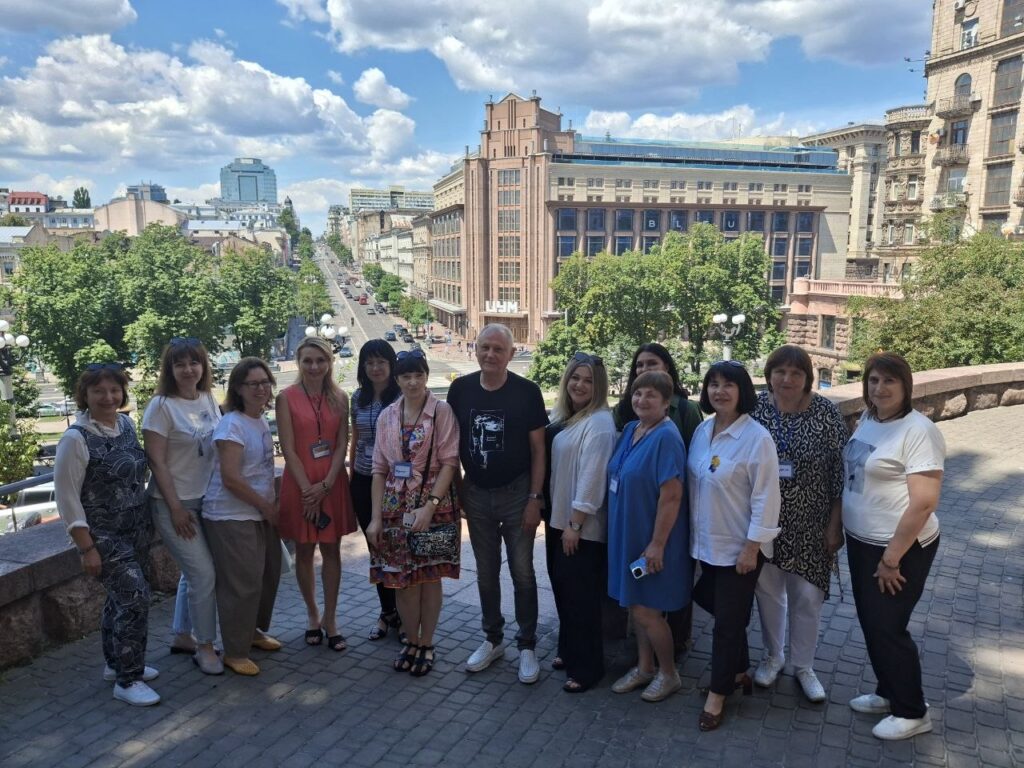
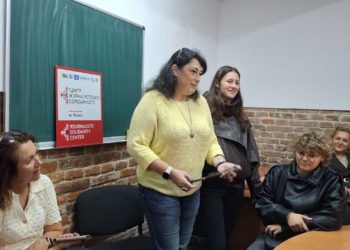
More than 20 journalists from 15 regions of Ukraine worked alongside lawyers, media experts, psychologists and families of unlawfully held civilians to discuss how to tell these stories in ways that help bring people home.
Participants travelled to Kyiv from district newspapers, local online outlets, regional public broadcaster newsrooms, as well as war crimes documentarians and freelance journalists from Kherson, Kharkiv, Zaporizhzhia, Sumy, Mykolaiv, Poltava, Chernivtsi, Kirovohrad regions, Kyiv region and beyond. For many of them, the topic of unlawfully held civilians is part of their daily work as local newsrooms are most often the first to document the stories of people who disappeared during occupation or remain in Russian captivity.
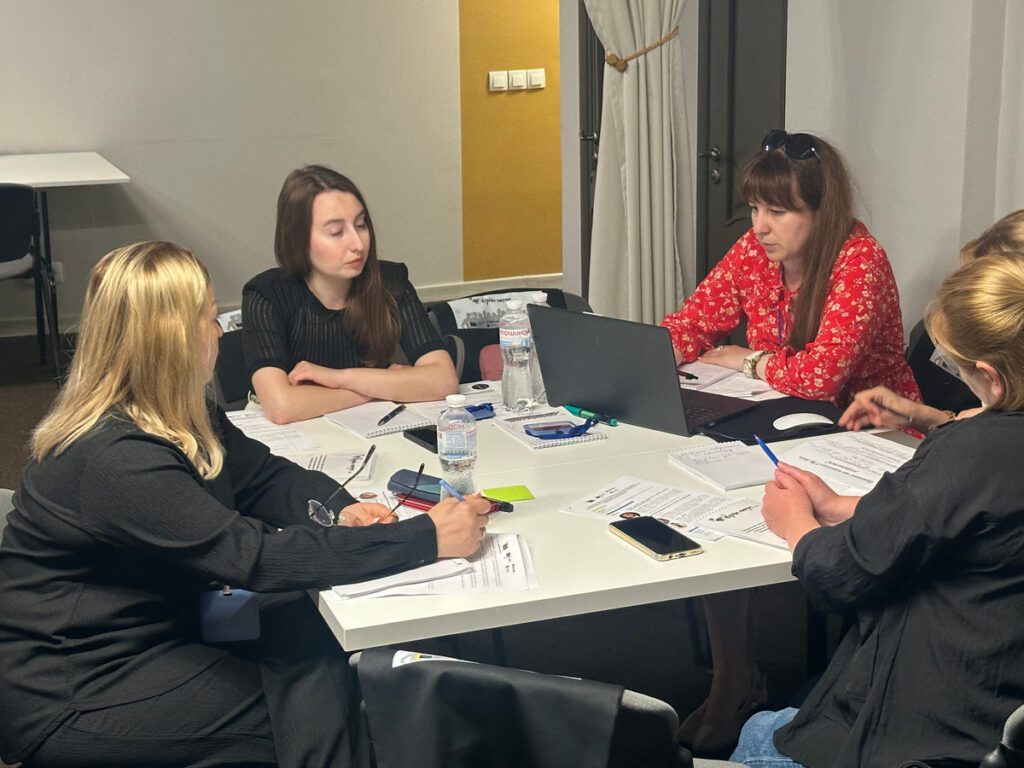
A defining feature of the seminar was that journalists worked side by side with mothers, wives and other family members of unlawfully held civilians. This format allowed journalists to hear families’ experiences directly, understand their concerns about publicity and discuss how to cover the topic without endangering those who remain in captivity. Participants described this direct exchange as one of the most valuable aspects of the seminar.
“When you work alongside families, you understand their experience so much better. And when you sit down to write, you weigh every word and think about how not to cause additional pain,” one participant shared.
Two days of joint work made one thing clear: there are no small details when covering this topic. Every fact, photograph or piece of information either helps draw attention to the crime or creates risks for the person who remains in captivity. The National Union of Journalists of Ukraine publishes the key lessons of the seminar as guidance for journalists working on the topic of civilian detainees, those deprived of liberty or missing in the temporarily occupied territories of Ukraine.
Lesson 1. A story can harm the person in captivity
Many participants described this as the most important realization of the seminar. Before attending, many journalists had not considered that information published in Ukrainian media could affect the fate of someone held in Russian captivity.
“It was a huge revelation for me that stories about people in civilian captivity can harm them. I never thought that what I write here could be read there and put someone at risk. I will be much more careful now,” one participant said.
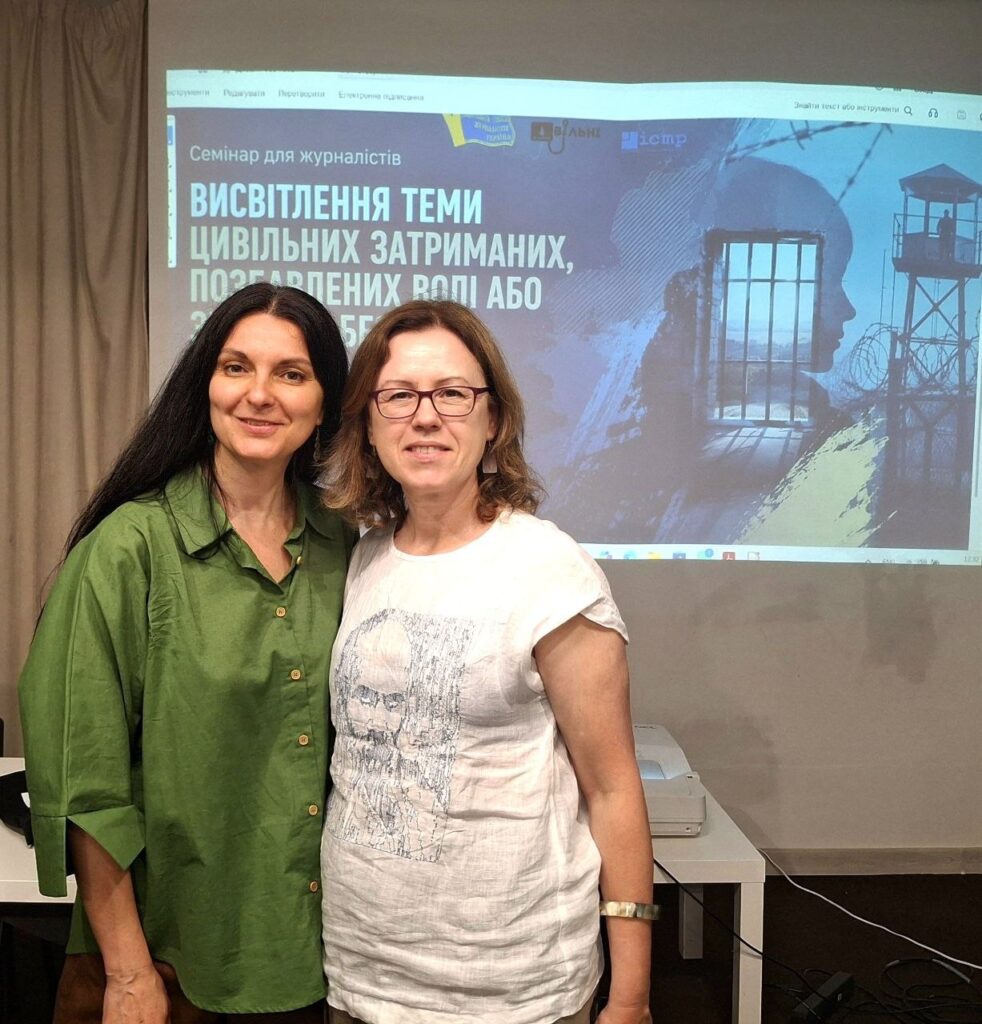
Media expert Tetiana Ignatchenko explained that every journalist preparing a story should ask themselves a simple question: what will an enemy see in this text? Russian security services systematically monitor the Ukrainian media space, she said, meaning even a minor detail can be used against someone in unlawful detention.
Some of the most dangerous information concerns conditions of detention: details about cells, daily routines, communication channels or how captives are treated. Disclosing the circumstances of detention, which could indicate a person’s role or significance to the captors, carries similar risks. Any references to locations, routes or people who helped a civilian should also be avoided, as such information may endanger others.
“If even one detail could in any way harm a person, it should not be in the story,” Ignatchenko stressed.
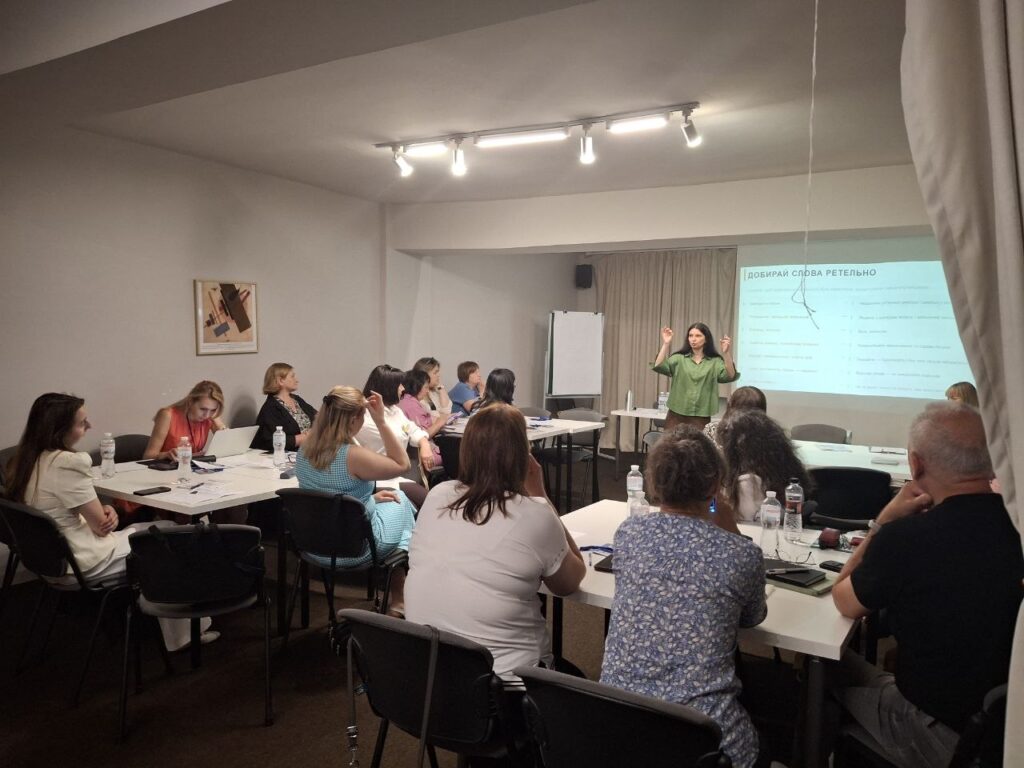
Lawyer Danil Serbin raised another important dimension. Journalistic materials can carry evidentiary value for national criminal proceedings and international investigations, including at the International Criminal Court. Journalists should therefore preserve source materials, audio recordings, correspondence and other documentation of how information was obtained, as these may later serve as crucial evidence.
Lesson 2. Terminology is part of responsible journalism
During the seminar, Danil Serbin emphasised that the words journalists use shape public understanding of the topic and can influence the international legal assessment of Russia’s crimes. Accurate terminology is therefore one of the principles of responsible coverage.
Experts recommend speaking about the return of civilians rather than their exchange, since international humanitarian law does not provide a mechanism for exchanging civilians – their detention is itself unlawful. Using the word “exchange” may create a false impression that such actions have a legal basis.
Similarly, the word “verdict” should be avoided when referring to decisions of occupation courts, as these have no legal force under Ukrainian law.
Particular attention should be paid to how people unlawfully held by Russia are described. The most accurate terms are “unlawfully held civilian” or “civilian captive”, while “civilian prisoner of war” does not correspond to legal terminology. Journalists are also advised to clearly distinguish between “missing person”, “prisoner of war” and “unlawfully held civilian”, as each status carries different legal implications and protection mechanisms.
Lesson 3. How to speak with families: a step-by-step guide
Psychotherapist Olena Zapolska provided important context: behind every missing or unlawfully held person stand three to five family members living with ambiguous loss – people who move between hope and despair, sometimes several times within a single conversation. In Ukraine, there may be between 300,000 and 500,000 such people.
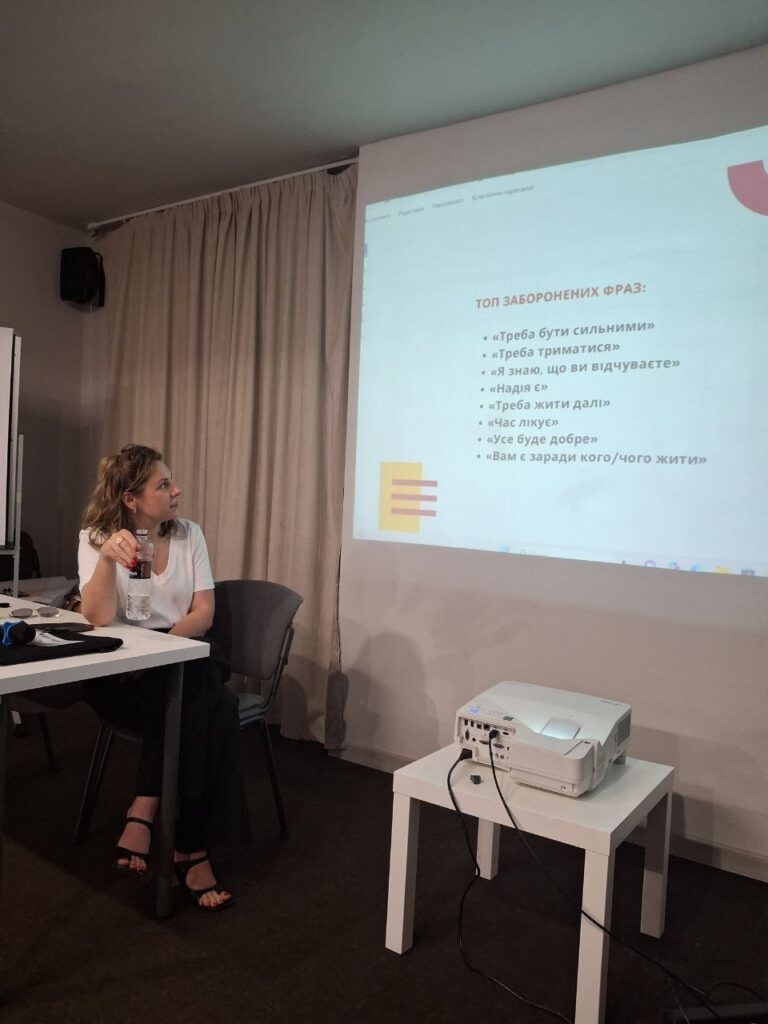
Before the interview:
- Explain the purpose of the story and where it will be published.
- Obtain informed consent.
- Say at the outset: “If any question is too painful, you do not have to answer it.”
“This helps establish trust enormously,” the specialist noted.
During the interview:
- Do not rush to fill silences. If a person goes quiet or begins to cry, give them time.
- Avoid phrases such as “Stay strong”, “Everything will be fine” or “I know how you feel” – these diminish the person’s experience.
- Instead, try: “I can see how difficult this is for you. We can pause if you need to” or “Thank you for trusting me with your story.”
- Do not ask the person to reconstruct a chronology of events – this can re-traumatise them.
- Ask about feelings, hopes and daily life, not only about the facts of the detention.
After the interview:
- Thank the person for their trust.
- Explain how the material will be used.
- Where possible, share the text before publication.
- If the person needs support, offer contacts for psychological assistance.
Lesson 4. A journalist can be the only link between a family and a person in captivity
Several families at the seminar described learning about the fate of their loved ones not from state bodies, but from journalists – through publications, Telegram channels and personal messages. In one case, a family went a month without any news about a detained relative before a journalistic publication confirmed the person was alive. In another, information about a location reached the family through a media channel before any official source provided it.
“Thanks to journalists, I found out he was alive. That was all that mattered — that he was alive,” one participant said.
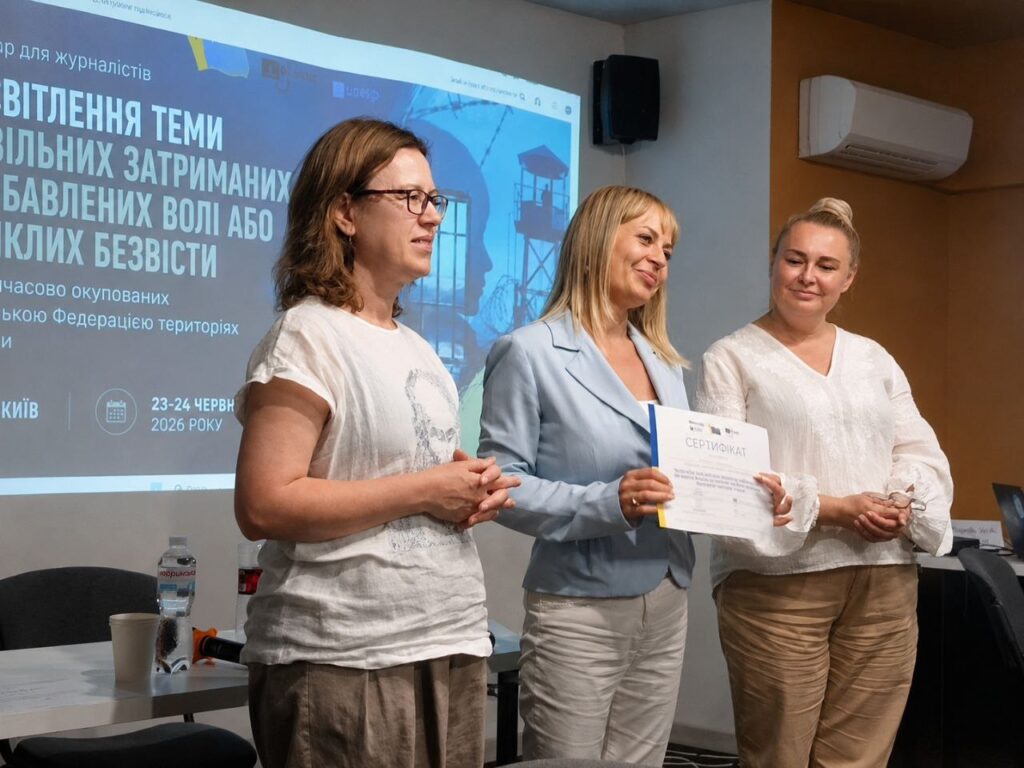
State bodies often either lack information or cannot share it. The Coordination Headquarters, the Security Service, the police – all these structures register applications but are not always able to track where a person is held. In this vacuum, journalists sometimes become the only ones who can find a lead.
“For the first three months I went to every institution – the commandantʼs office, the police. Nobody knew anything. Then the first piece of news came through a media channel,” another participant shared.
This places an additional responsibility on journalists: what is published must be verified and safe. If a story is the only source of information for a family, it may also be the only source of information for the enemy.
Lesson 5. Coverage must translate into legislative pressure
During one of the discussions, participants talked about the purpose of covering the topic of unlawfully held civilians. In their view, journalistic work is above all capable of sustaining public demand for effective mechanisms to return civilians and for improvements in state policy in this area.
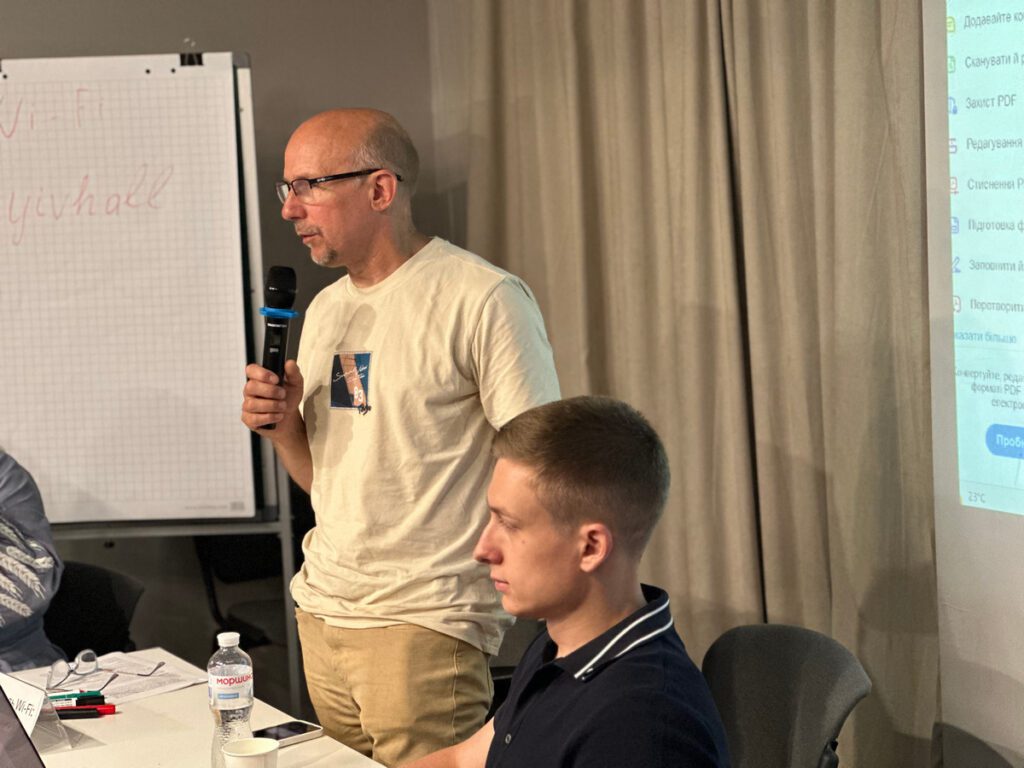
Former civilian captive and journalist Dmytro Khyliuk noted that Ukraine still has no comprehensive state strategy for returning civilians unlawfully held by Russia. Today, such returns happen only in isolated cases, he said, making it critically important that the topic does not disappear from the public space and continues to push the state towards necessary decisions.
A concrete proposal that emerged from the seminar was the creation of a practical guide for journalists working on the topic of civilian captives. Participants supported the idea of systematically distributing such recommendations to newsrooms across Ukraine, so that journalists in different regions have shared professional standards for responsible coverage.
Lesson 6. Families do not always know what they can say
Throughout the seminar, participants repeatedly noted that people whose loved ones have spent years in Russian captivity often want to tell journalists everything they know. They share details about conditions of detention, communication channels, interrogation circumstances, established locations and other information, hoping that publicity will help bring their relatives home.
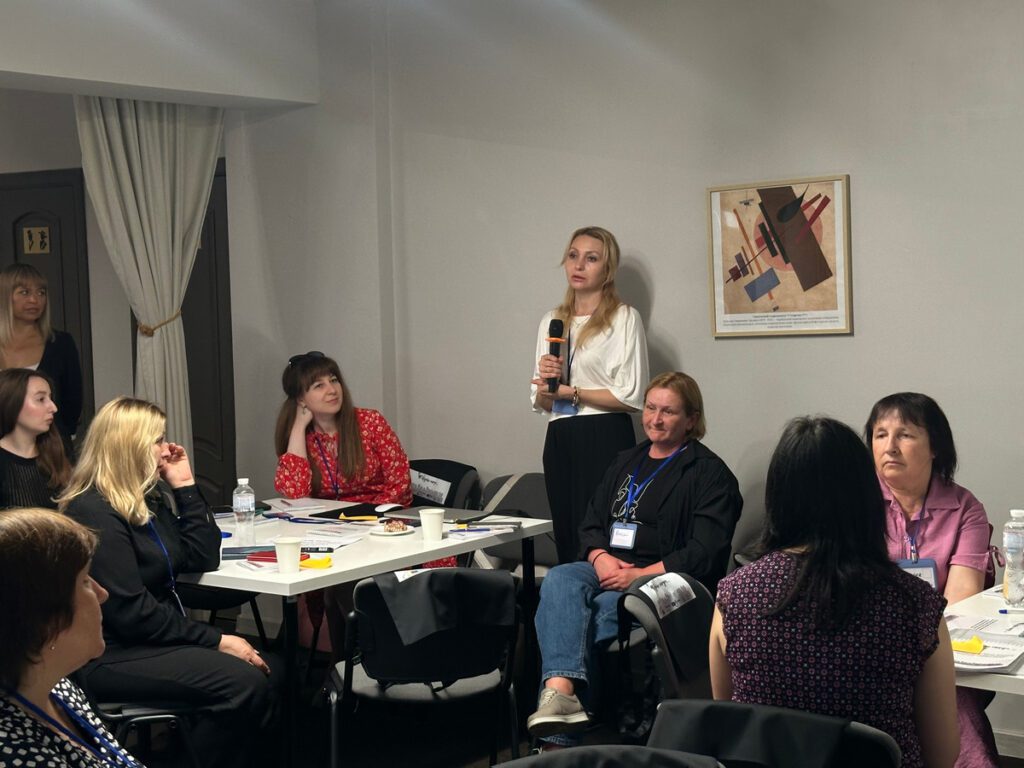
“When you speak with a family, they tell you things you could write about. Of course they know better than anyone what might harm their loved ones. But what could actually cause harm is often something they cannot recognise themselves in the emotion of the moment,” one journalist reflected.
This is why, after speaking with families, journalists need to carefully analyse the information gathered and ask: could certain facts, names, descriptions or other details be used against the person who remains in captivity? If such a risk exists, it is worth either withholding those details or discussing them with the family beforehand and explaining the potential consequences.
“Journalists need to have their own internal filter, because people can share everything without realising how much it could endanger their loved one,” said one participant with many years of experience covering temporarily occupied territories.
The discussion also raised the point that protecting people in captivity is a shared responsibility of journalists and families. It is therefore important that both journalists and the relatives of unlawfully held civilians understand the potential information risks involved.
Lesson 7. If a family is against publicity, the journalist should respect that decision
What should a journalist do if they believe coverage could help, but the family is firmly opposed to publication?
One participant shared a personal experience: “I have a friend who is in captivity. I cannot convince his mother to cover this story. She believes it could harm him. And I respect her decision.”
Participants agreed that the familyʼs decision regarding the publicity of a specific story should be decisive. Even if a journalist is convinced that coverage could draw attention to the case or help find pathways to the person’s return, publishing against the family’s wishes can undermine trust and create additional risks.
This does not mean the problem should be left unaddressed. On the contrary, journalists can and should systematically cover the topic of unlawful civilian detention, report on the scale of the problem, the legal challenges and the need for effective return mechanisms. However, moving from general information to a specific story without the family’s consent is unacceptable.
Covering the topic of civilians unlawfully deprived of liberty is above all a matter of responsibility. Journalistic work determines whether this problem remains in the public eye, whether families feel heard and whether coverage creates additional danger for those who remain in captivity. Professional standards, ethics and legal literacy must therefore be the foundation of every such story.
This project was implemented with the financial support of the International Commission on Missing Persons (ICMP) through funding from the Norwegian Agency for Development Cooperation (Norad). The views expressed in this material are those of the authors and do not reflect the position of ICMP, its donors or member states.
About the organisers
The National Union of Journalists of Ukraine (NUJU) is the largest professional organisation of media workers in Ukraine. It actively supports journalists in conflict zones, providing protective equipment, safety training, and psychological assistance, and advocates for press freedom at both national and international levels.
Civilians Free is a civil society organisation founded by families of civilian captives, headed by Mariia Sizonova. It officially began operations on 3 March 2026 and brings together more than 50 people from across Ukraine. The organisation uses human rights and advocacy tools to influence decisions on the return of civilian captives, engages the international community on the issue and works with Ukrainian embassies abroad.
The International Commission on Missing Persons (ICMP) is an intergovernmental organisation that assists governments and other authorities in determining the fate of missing persons and upholds the right of families to know what happened to their loved ones.
*This project was made possible by financial support from the International Commission on Missing Persons (ICMP) through the Norwegian Agency for Development and Cooperation – NORAD. The views expressed in this publication are those of the authors and do not necessarily reflect the position of the International Commission on Missing Persons (ICMP), its donors or participating States.
Valeriia Muskharina NUJU Information Service









Discussion about this post