

 THE NATIONAL UNION OF
JOURNALISTS OF UKRAINE
THE NATIONAL UNION OF
JOURNALISTS OF UKRAINE

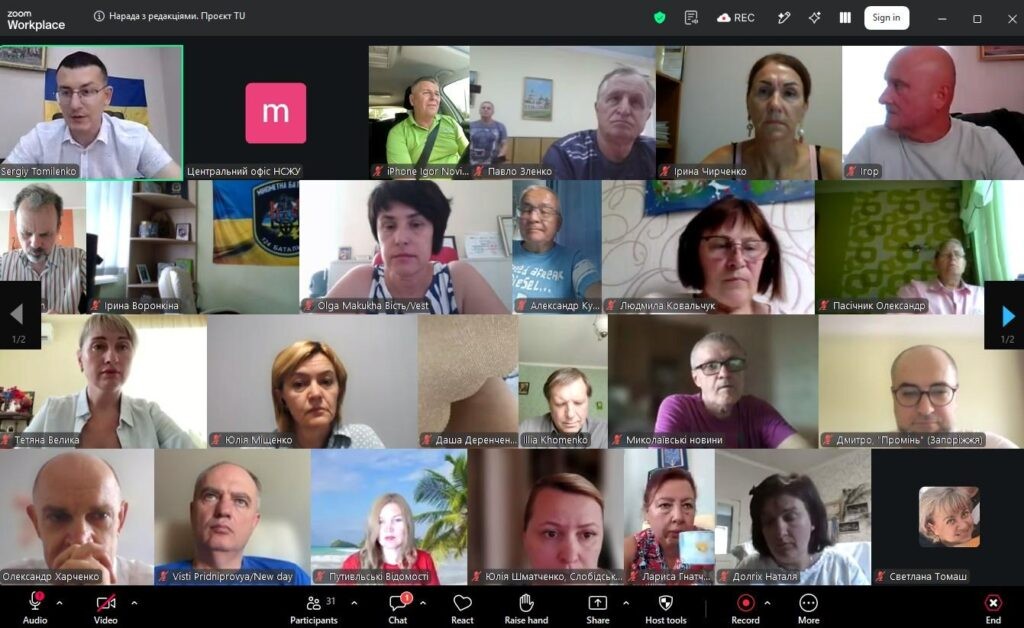
How can a local story become relevant to global media? How can local newsrooms generate revenue when the advertising market has collapsed? And how can journalists avoid becoming unwitting tools of Russian information and psychological operations?
These three questions shaped the latest online meeting of participants in Frontline Press, a support programme for frontline media. Originally launched as a six-month initiative, the programme has now been extended through the end of 2026.
Frontline Press is implemented by the National Union of Journalists of Ukraine (NUJU) in partnership with the Swedish Media Publishers’ Association (Tidningsutgivarna, TU). The programme continues to support 25 frontline newsrooms, although its membership has changed slightly. The newspaper Visti Zmiivshchyny (Kharkiv region) left the programme to focus on other initiatives, while Holos Posullia (Sumy region) joined following a unanimous decision by the selection committee.
It’s not a lottery ticket: why support is an enabler, not a help
Opening the meeting, NUJU President Sergiy Tomilenko recalled how the programme began. It started with screenings of the documentary On the Edge, telling the story of frontline newspaper editor Vasyl Myroshnyk from Zolochiv, first for the board of TU and later for executives of Scandinavia’s largest media company, Bonnier News. Last autumn, TU President Johan Taubert announced a six-month donation to provide direct financial support for frontline newspapers. The initiative has since been expanded into a year-long programme.
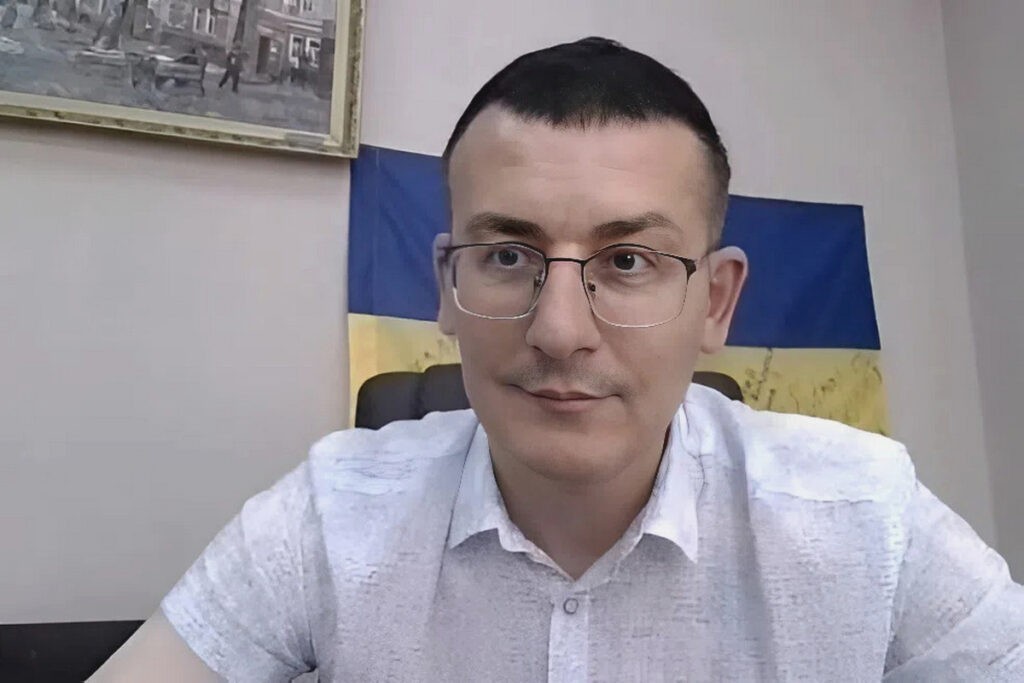
Tomilenko urged participants not to view Frontline Press merely as financial assistance.
– There is no guarantee this opportunity will continue in the future. Its greatest strength is that it gives each newsroom a chance to catch its breath, become stronger, learn new skills, and exchange experience with colleagues.
He also pointed to an apparent paradox: today, it is frontline newsrooms – not those operating in relatively safer western Ukraine – that are driving innovation in Ukrainian journalism.
– You experiment more. You take more risks. You keep searching for new approaches. And it works.
Tomilenko encouraged editors to be less modest about their work: document their daily reality, show emergency situations, and share the emotional moments behind frontline reporting. According to him, this is one of the few ways to break through global information fatigue as international audiences gradually become desensitised to news from Ukraine.
At the international level, NUJU continues to advocate for stronger support for frontline journalism. Most recently, the European Federation of Journalists (EFJ) adopted a resolution recognising the importance of frontline local media. The issue was also discussed in Kyiv during a meeting with the OSCE Representative on Freedom of the Media, Jan Braathu.
Meanwhile, NUJU is producing a new documentary about Vorskla newspaper and its editor Oleksii Pasiuha from the Okhtyrka district. In villages close to the Russian border—where communication towers have been destroyed and radio signals are unreliable—the printed newspaper remains one of the few trusted sources of information, with hundreds of copies distributed despite constant shelling.
Vadym Petrasiuk’s masterclass: making local stories matter to the world

One of the highlights of the meeting was a practical masterclass by programme mentor Vadym Petrasiuk, who shared strategies for transforming local human-interest stories into narratives that resonate with international audiences unfamiliar with Ukraine’s communities or their people.
He illustrated his approach through two examples.
The first came from the newspaper Nashe Zhyttia and featured a volunteer from Zaporizhzhia who is well known in her local community. The challenge was simple: how do you make readers outside the region care about her story?
While editing the article, Petrasiuk noticed a brief detail – that the volunteer had baked tons of pies for charity events supporting both soldiers and volunteers. Together with the author, they reframed the story around a striking image: during the full-scale war, she has baked enough pies to stretch for 40 kilometres.
A simple local anecdote became a memorable statistic that any reader could immediately grasp.
The second example came from the Sumy-based newspaper Your Chance, which covered local volunteers weaving camouflage nets – a familiar story in many Ukrainian communities. To make it stand out, the journalists focused on what made this group unique: the women had effectively industrialised the process, working with an engineer to establish their own small-scale production line for camouflage nets and ghillie suits.
Again, Petrasiuk encouraged them to quantify the achievement in a way that would speak to international audiences: Over the course of a year, they produced 106,000 square metres of camouflage netting – an area equivalent to 16 UEFA-standard football pitches.
For Petrasiuk, the key principle is straightforward:
– Don’t simply tell someone’s story. Show why this person deserves to be remembered. It’s not about retelling events beautifully – it’s about revealing character through meaningful details.
He also encouraged journalists to broaden the range of voices in their stories. Rather than relying on a single interview – for example, with the mother of a fallen soldier – reporters should also speak with teachers, coaches, friends, neighbours, or military commanders whenever possible.
At the local level, these sources are often accessible and help create richer, more multidimensional portraits that allow readers to connect with the people behind the headlines.
Larisa Hnatchenko: advertising is still possible – even in Kharkiv
Larisa Hnatchenko, Editor-in-Chief of Slobidskyi Krai, shared her newsroom’s experience of generating revenue during wartime, speaking candidly in the hope of encouraging colleagues who believe sustainable income is no longer possible.
Today, her newsroom relies on three non-grant revenue streams: contracts with local communities to cover their activities; the production of sponsored special editions; commercial advertising.
She highlighted cooperation with communities that have either relocated or continue to operate under constant shelling. Many still have public communication budgets, making long-term partnerships with local media possible.
Equally important has been the newsroom’s digital strategy. Having invested in its website and social media since 2011, Slobidskyi Krai now earns a significant share of its income online, particularly through video content, where advertiser demand already exceeds available capacity.
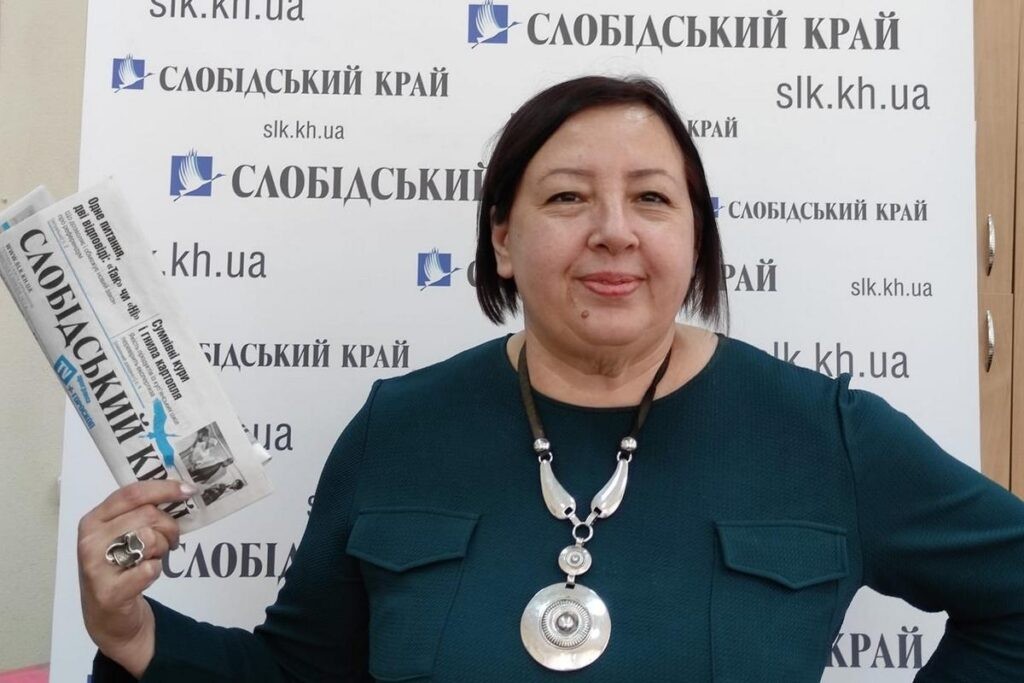
The newsroom has also introduced a transparent performance-based incentive system. Staff salaries are linked to measurable contributions – whether through audience traffic, grant-funded projects, or advertising revenue. Advertising managers work on commission and actively approach relocated businesses instead of waiting for clients to contact them.
Today, roughly half of the newsroom’s budget comes from its own commercial income, with a goal of increasing that figure to 75 percent by 2028.
Hnatchenko’s message to fellow editors was clear:
– People often say it’s impossible to develop advertising during the war. In reality, you simply have to keep looking for opportunities and they do exist.
Illia Khomenko: How Russian Information Operations Target Journalists
Perhaps the most thought-provoking part of the meeting was a session by Illia Khomenko, Doctor of Social Communications and expert in information warfare, who spoke about Russian information and psychological operations (IPSOs) aimed at journalists and newsrooms.
At the centre of his presentation was the concept of reflexive control – a strategy developed in Russian military thinking that seeks to manipulate an opponent into making decisions that ultimately serve the aggressor’s interests.
Khomenko first suggested that journalists could apply the same principle ethically in their own communication with international partners. When speaking to foreign audiences, he argued, journalists should focus not only on what matters to Ukraine, but also on what matters to the people they are trying to reach.
– If you’re speaking to Swedish partners, ask yourself: What concerns them today? What haven’t they grown tired of hearing? What do they fear? Those answers will help you build stronger arguments.
He then turned to the darker side of the concept.
Unlike simple propaganda or bribery, reflexive control works by exploiting a person’s existing beliefs, habits, or emotional responses. Instead of forcing someone to act, it nudges them into making what appears to be an independent decision – one that ultimately benefits the attacker.
– A “logical bomb” planted today may not explode until years later, he warned.

To illustrate the idea, Khomenko referred to both historical and contemporary examples. One involved a British black propaganda radio station during the final days of World War II, which broadcast a fake evacuation order supposedly issued by a Nazi official. The resulting panic clogged roads and bridges, disrupting Germany’s defence of Cologne.
He illustrated his thesis with a historical example: in April 1945, the British radio station “Free Radio West”, operating under a foreign flag, falsified an order to evacuate Cologne on behalf of Hitler’s Gauleiter – and the bridges and roads clogged with people disrupted the city’s defenses. The bridge to the present is an audio file intercepted by the SBU on the eve of a full-scale invasion with a demand to “immediately evacuate Chernihiv”. And an example of how vulnerable even rich Western media are – influential American scientific journals, which are funded by Russia through intermediaries: they easily let through, for example, geological articles about the “Russian” Arctic.
Ilya Khomenko also named typical vulnerabilities through which the enemy enters: financial hardship, thirst for sensation, etc. And the final stage of using a journalist in the dark, he warned, can often be his cleaning up, when the same author is declared almost an enemy of Ukraine, and after the public reaction they shout that there is no freedom of speech in Ukraine.
The practical result was a task that the guest suggested working out before the next meeting: imagine yourself on the side of the enemy and plan how to get material to the editorial office that looks pro-Ukrainian, but contains the logic bombs. The goal of the game is to find your own vulnerabilities and develop a defense.
One of the sharpest questions came from Dmytro Yehorov of Chervonyi Promin newspaper (Zaporizhzhia). He asked how journalists can distinguish between legitimate investigative reporting that may unintentionally benefit the enemy, for example, exposing genuine procurement fraud that later turns out to have been amplified as part of an information and psychological operation (IPSO) and reporting that effectively becomes propaganda.
According to Illia Khomenko, the first step is for every journalist to pause and ask themselves two simple questions: Why am I publishing this? What consequences could it have? At the same time, he emphasized that there is no universal formula. Contextual analysis based on indirect indicators is inherently difficult, while sophisticated two-step reflexive control operations cannot be reliably detected even through intelligence methods.
The programme’s mentors – Oleksandr Kharchenko, Member of the NUJU Board, and Vadym Petrasiuk – announced several changes to the mentoring format. Instead of reviewing large numbers of articles, future sessions will focus on one or two stories in greater depth. Participants themselves will increasingly act as peer mentors, while the programme will also place greater emphasis on multimedia storytelling, building on the video format already used by the project’s YouTube channel.
* * *
Frontline Press is a joint initiative of the National Union of Journalists of Ukraine (NUJU) and the Swedish Media Publishers’ Association (Tidningsutgivarna, TU). Launched in late 2025, the programme supports independent local and frontline newspapers operating in regions exposed to constant Russian shelling and sustained information pressure. The original six-month programme brought together 25 editorial teams from the Kharkiv, Donetsk, Sumy, Zaporizhzhia, Kherson, Dnipropetrovsk and other regions of Ukraine. In addition to direct financial assistance, participating newsrooms received professional mentoring, editorial development consultations, support in adapting stories for international audiences, and opportunities for direct cooperation with Swedish media partners. The initiative was designed as a response to the severe challenges facing local media near the frontline. These newsrooms continue to operate despite constant drone and missile attacks, power outages, damaged infrastructure, psychological exhaustion, and the near-collapse of local advertising markets.
Interim results of the programme were presented in April 2026 during the Ukrainian-Swedish Forum “Journalism on the Edge”, which brought together editors of frontline media outlets, journalists, international partners, and members of the diplomatic community in Kyiv. It was at this forum that Frontline Press participants spoke publicly about how local newspapers continue to serve as one of the key pillars of community resilience in frontline regions, providing residents with verified information and helping preserve a sense of normalcy even amid war.
Throughout the programme, editors of frontline newspapers have repeatedly become the voice of their communities on the international stage. In recognition of their work under wartime conditions and their contribution to resisting Russian information aggression, Frontline Press participants received certificates of appreciation from Valerii Zaluzhnyi, Ukraine’s Ambassador to the United Kingdom. Another powerful symbol of international solidarity came in Stockholm, where NUJU President Sergiy Tomilenko presented Swedish colleagues with a copy of Zoria, a newspaper published in the frontline city of Lyman. The newspaper served as tangible evidence that Ukraine’s local press continues to publish and serve its communities despite constant shelling.
Support for Ukrainian frontline media was also highlighted in Sweden during Sergiy Tomilenko’s address at Mandagsrörelsen (Monday Movement) in Stockholm – a well-known civic solidarity initiative in support of Ukraine. He stressed that Ukrainian journalists today fulfil not only a professional role but also an essential social and humanitarian mission, remaining a trusted source of information and a vital link for people living in communities near the frontline.
During the programme’s most recent online meeting, participants were informed that Frontline Press had been extended from a six-month initiative to a one-year programme, which will now continue through the end of 2026.
NUJU Information Service










Discussion about this post