 THE NATIONAL UNION OF
JOURNALISTS OF UKRAINE
THE NATIONAL UNION OF
JOURNALISTS OF UKRAINE

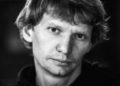
For our media environment, 2026 should be a very eventful year. No less than 2025 was, believes Yaroslav Yurchyshyn, the head of the parliamentary committee on freedom of speech. His post is published by Ukrainska Pravda.
In December of this year, the President signed the Law on the Openness of Committees, which significantly facilitates the work of journalists and public figures: online broadcasts, open meetings, and providing the agenda in advance. This also applies to local government.
In 2026, we will most likely remain in a mode where we need to cover the war as much as possible. At the same time, there will be important changes in the field of media law necessary for joining the EU.
Return of Journalists: Statistics of Pain and Struggle
The highest priority task for 2026 remains the release of journalists in captivity. The status of a journalist in captivity is a special category of complexity, because russia often tries to incriminate them with “espionage or “terrorism” in order to take them beyond the limits of exchange processes and hold them accountable. In reality, it is simply the use of force mechanisms to show everyone that freedom of speech is impossible against the Kremlin.
Currently, according to the Institute of Mass Information (IMI), 26 civilian media workers are in illegal russian captivity. These are those who found themselves under occupation after 2022 and, for example, Crimean Tatars who lived on their land after the annexation of Crimea, but posed a threat to the regime because they simply told the world the truth.
The most painful blow for us was the death of Viktoria Roshchina in captivity in 2024, with whom we were able to say goodbye only in 2025, because russia is delaying the transfer of bodies. And Viktoria’s body was so mutilated that it was signed as a man’s.
To understand what a russian prison, I advise you to read the Viktoriia Project from the Ukrainian Press and a number of world media. The return of our people from captivity was and is a top priority for me, but after this material, it became even more so. It is scary, disgusting, and hateful at the same time.
I headed the parliamentary committee on freedom of speech at the end of 2023. Since then, through joint efforts, we have managed to return:
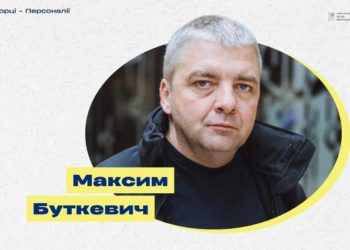
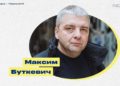
In 2024, four media people were released: Nariman Celal (Dzhelal), Maksym Butkevych, Roman Borshch, and Oleksandr Hudilin.
In 2025, four more of our journalists returned home: Vladyslav Yesypenko, Dmytro Khilyuk, Mark Kaliush, and Volodymyr Chertushkin.
It is difficult to make predictions for next year, because in matters of exchange, not everything depends on Ukraine. Russia equates journalists with the military, and this only complicates the processes. But both in 2024 and 2025, and next year, returning our media people from captivity is the number one task in the issue of freedom of speech.
We are enlisting the support of all possible partners (Reporters Without Borders, governments and parliaments of democratic states, OSCE and NATO parliamentary assemblies) and working to ensure that everyone returns home.
Anti-SLAPP: so that the truth does not cost millions
Ukraine is moving towards the implementation of anti-SLAPP legislation (Strategic Lawsuits Against Public Participation). SLAPPs are empty lawsuits that are used to intimidate investigative journalists with legal costs.
Legal costs can cost crazy money, which is a problem for the media today. And instead of quality work, our media professionals are forced to think about such financial threats.
Ukraine has already started working on the implementation of EU Directive 2024/1069 and will continue to do so next year.
We have also created a working group involving civil society organizations, government representatives, and international partners. One of the conclusions after speeches and consultations at European venues: anti-SLAPP legislation is very difficult to implement, not only for us, but also for European countries, because those in power are mostly behind the lawsuits. But we continue to move according to the recommendations of the European Union and the Council of Europe.
But for us, this story should continue in 2026, because this is Ukraine’s commitment on the path to European integration. Accordingly, we must define in our legislation what SLAPP is in our realities, while ensuring that it fully complies with international standards.
We must adapt our legislation to European standards, including the European Freedom of Expression Act. Today, there is no legislative framework yet, but in the Law on Media, we have laid down certain foundations for us to move forward.
European Commission Report: A Test of Media Pluralism
The latest European Commission report on Ukraine’s progress noted a high level of legislative adaptation, in particular the Law on Media. However, in 2026, Brussels will demand answers to other comments:
Unified News Marathon: The European Commission recommends a gradual exit from this broadcasting format. We would like to see the transformation of the telethon into a stable format of Public Broadcasting with the restoration of competition between private media groups. And this is extremely important in terms of democracy and free expression of opinions, regardless of affiliation to a particular political force.
Financial independence: In 2026, it is critically important to ensure full funding of the Public Broadcaster in order to avoid its political dependence. I fully support this idea and have submitted budget amendments more than once to strengthen our national broadcaster. Unfortunately, not everyone in the state likes this idea.
Transparency of ownership: Further digitalization of media owner registers so that society can clearly see who is behind each online publication or TG channel.
Counteraction to russian soft power
The fight against russian influence is entering a new phase of work. Direct propaganda channels are blocked, but hidden threats and “useful idiots” remain.
A separate case is an animated product as a tool of ideological influence. The cartoon Masha and the Bear has long been recognized by Western security experts (in particular in the Baltic countries) as an element of the “soft power” of the russian federation. The Animacord studio, which owns the rights to the cartoon, is registered in the russian Federation, and its owners are russian businessmen who pay taxes that go to finance aggression. Sanctions should be imposed on the studio owners, and this russian product (even in Ukrainian) should be completely blocked on all possible platforms.
Also, in our media space, there are very dubious media people whose theses play into russian propaganda or whose guests on their programs promote enemy interests. We will work on each and every one of them separately, and, I hope, we will please you with good news about blocking certain pages of those who help the enemy. Ideally, we will fully bring them to justice for crimes in the information war. Those who have been disinforming hundreds of thousands of Ukrainians for years with russian money still feel free here.
In 2026, we will continue to work to release journalists from russian captivity, protect the rights of our media workers, and support free media. After all, this is the foundation of Ukrainian democracy on the path to the EU.
Yaroslav Yurchyshyn







Discussion about this post