
 THE NATIONAL UNION OF
JOURNALISTS OF UKRAINE
THE NATIONAL UNION OF
JOURNALISTS OF UKRAINE
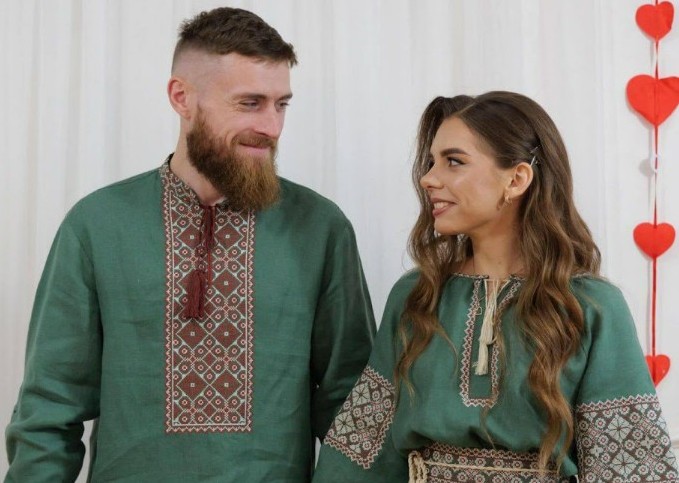
“The most terrifying thing about war is not the explosions. The most terrifying thing is the waiting. When the phone is silent for hours. When every message could be the last. When the single word ‘alive’ becomes more important than all the prayers in the world…”
These are the words of Yelyzaveta, the wife of Ukrainian soldier Mykola Kobynets. Mykola loves to read Shakespeare, Byron, and Dante Alighieri. That is why he chose “Dante” as his call sign—a combat name used by Ukrainian soldiers instead of their real names for security purposes—like the poet who descended into hell for the sake of his beloved. And he calls Yelyzaveta his Beatrice.
Their story was reported by Holos Huliaipillia, a frontline newspaper from Ukraine’s Zaporizhzhia region, as part of its coverage of life in a community living under constant Russian attacks. The newspaper’s home city of Huliaipole lies just 0–5 kilometers from Russian positions. Its editorial team has relocated to Zaporizhzhia for safety but continues to report on the community it left behind.
Father and Son
When Russia launched its full-scale invasion of Ukraine in February 2022, Mykola Kobynets returned from the Czech Republic without hesitation. It was Easter—one of the most important Christian holidays, deeply celebrated in Ukraine. That was his last night at the brigadeʼs recruitment center. The next day, he joined his father, Roman Kobynets, who was already fighting on the Zaporizhzhia front—one of the most active sectors of the war, in southern Ukraine.
At first, Mykola served as an infantryman, a rifleman. He went on combat missions alongside his father. Sometimes it was just the two of them. On one such mission, they destroyed an enemy tank together—throwing grenades into the hatch and detonating the ammunition inside.
“My father taught me everything. He was turning me into a universal soldier—one who could survive, fight, and rescue others,” Mykola says.
In October 2022, he suffered a severe leg wound—a through-and-through injury with a bone fracture. Two months at home—and back to war. The leg had not fully healed, rehabilitation was not complete. But he could not leave his men behind.
After returning, he became an assault trooper—once again, under his fatherʼs mentorship. Later, he was transferred to reconnaissance: a rifleman-sniper-scout. And throughout, he continued carrying out missions with his father.
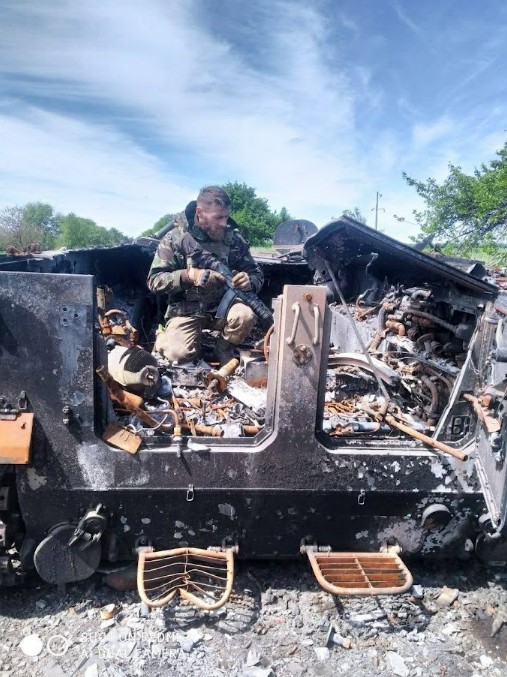
“Even though the younger Kobynets was no longer in the infantry, he often went on combat missions with his father. There were times when three or four of them would go up against ten to thirteen Russians—to recapture our positions, recover the bodies of fallen comrades, or take enemy prisoners. And they came back,” recalls Captain Myron Dmytryk, deputy chief of staff of the 102nd Brigade.
In the spring of 2024, Mykola was sent for training on the Vampir drone—a type of Ukrainian-made first-person-view (FPV) attack drone used to strike enemy positions. After that, he began building explosive devices himself, preparing crews, and working to deliver results.
Roman Kobynets, call sign “Koba,” defended Ukraine for over three years as part of the brigade named after Colonel Dmytro Vitovskyi—a Ukrainian military formation named after a historic independence-era commander. Last October, he went on a mission from which he never returned—into a tree line near a village in the Zaporizhzhia region. They were supposed to retrieve five soldiers who had been hit by explosives during an assault on enemy positions. Instead of a rescue, they walked into an ambush. Eight warriors remained there forever.
“’Koba’ was one of the best men I met in this cursed war…” Captain Myron Dmytryk wrote.
Beatrice
Mykola met Yelyzaveta on Easter—that very last day before he left for the front.
She was a volunteer. He was a soldier. At first, it was just simple messages—words of support, attempts to hold on to light in the middle of hell. Then came packages: warm clothing, food, camouflage netting. He would write: “Youʼre sending supplies by the ton—thatʼs enough for an entire company.” She would reply: “And what if tomorrow youʼre gone?” He knew that behind those words was love and care. And he accepted everything.
He first came to visit Yelyzaveta from the front in October 2022, after being wounded. A through-and-through leg wound, a fracture. On crutches.
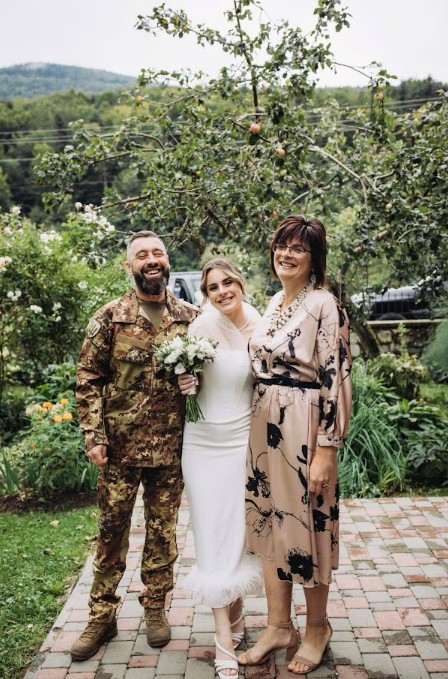
It was then, while on leave, that he proposed. They got married.
Every time the author of this article spoke with Yelyzaveta about her husband, about the story of their love, she could see how difficult these conversations were for her. And yet in every memory, there was a love that could not be performed. So the author was not surprised when, after their meetings, she received a letter from Yelyzaveta, who wrote: “It hurts to open up in front of people. When youʼre alone, it іs easier to speak. So I wrote about us.” What follows is the testimony of a woman who waits for the person she loves most—knowing that at any moment, the waiting could end forever.
“This Is Very Close to Death”—Yelyzavetaʼs Testimony
“My husband is fighting. His father was killed. And between these two facts lies the entire truth about the war in Ukraine—a truth that is easy to ignore when itʼs far from your home.
When people in Europe fall asleep to the sound of rain, my husband falls asleep to artillery fire. When they plan vacations, here they plan who might not be carried off the battlefield today. Iʼm not exaggerating. I’m simply calling things by their names.
I think I remember every moment since we met. Easter. A holiday of life, resurrection, light. And…at the same time, the war was already devouring the country. It was his last night before leaving for the front. We exchanged messages for hours. Neither of us spoke about the future—we both knew there might not be one.
He fought alongside his father. It sounds almost biblical, but in reality it was dirty, terrifying, and very close to death.
His father did not teach his son to be a hero. He taught him to survive. How to move when your body is screaming with fear. How to look at a person through a rifle scope and not lose your mind. How to come back and not count those who didn’t.
Now I know that the most terrifying thing about war is not the explosions. The most terrifying thing is the waiting. When the phone is silent for hours. When every message could be the last. When the single word “alive” becomes more important than all the prayers in the world—and turns the sun back on above your head.
After his severe wound, he came to me on crutches. A young man who just yesterday had been running under fire could not walk to the kitchen on his own. We talked a great deal then. He was reading Dante. He said that Dante descended into hell for the sake of love. And that I was his Beatrice. It sounded beautiful. But the hell was real, and it did not end on the pages of a book.
He went back to the front without finishing his rehabilitation. Because his people were there. After serving as an assault trooper, he also became a combat medic. He learned to save others, even when he could not save himself.
We got married between his trips to war. Without illusions. Without promises of “happily ever after.” Only with the truth: tomorrow, he might not come back again.
He wrote me poems from the trenches. I wrote back. Even in hell, he remained full of light. Then came reconnaissance. Sniper missions. He and his father would go out to recover the bodies of fallen comrades. Because leaving the dead behind is a second death.
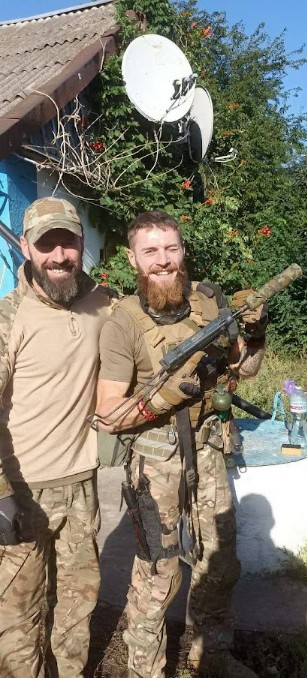
When my husband was wounded again in 2024 and over a hundred fragments remained in his body, I pulled shrapnel out with tweezers at home. This is not a metaphor. This is the everyday reality of war that doesn’t make the news. Some of the fragments are still inside him. They will stay there forever.
And then his father was killed.
I saw the moment my husband learned of his fatherʼs death. There was no sobbing. It was something worse. It was as if the person shrank inward. As if the foundation on which his world rested had been torn away. At that moment, he stopped being just a soldier. He became a son who suddenly understood: now this war is entirely on him…
This war is about whether evil has the right to come into someoneʼs home and go unpunished. My husband is still fighting. I donʼt know whether we will live to see peace. But I know one thing for certain: if this story doesnʼt make you feel afraid—it simply means that fear hasnʼt reached your door yet.”
________________________________________________________________
Holos Huliaipillia (meaning “The Voice of Huliaipole”) is a symbol of the resilience of local journalism in Ukraineʼs Zaporizhzhia region. The publication has deep roots in the life of its community, but since the start of Russiaʼs full-scale invasion, it has faced the most severe challenges of its existence. Due to a direct threat to the lives of its staff and continuous shelling of the city, the outlet was forced to cease publication at the beginning of the war. However, thanks to systematic support from the NUJU (National Union of Journalists of Ukraine), the editorial team was able to resume operations, preserving its information link with residents.
Today, the journalists work as a relocated media outlet: the editorial team is based in the city of Zaporizhzhia, since Huliaipole is located directly on the front line—just zero to five kilometers from enemy positions—and is destroyed daily by artillery fire and guided aerial bombs (known by their Russian acronym KABs). Despite the evacuation, Holos Huliaipillia remains a key news source for a community now scattered—both for those who remain in the so-called “gray zone” (areas near the front line that are under constant threat and largely cut off from normal services) and for internally displaced residents.
As a participant in the Frontline Press program, the outlet is preparing for a technological upgrade in 2026. Holos Huliaipillia today is an example of how, with community support, a media outlet can come back to life—to chronicle the story of its own victory.
By Tamara Bort, Holos Huliaipillia newspaper, Zaporizhzhia region, Ukraine. Translated and adapted for international audiences.
Official website: https://gylyajpole.city/
Holos Huliaipillia is one of 25 local and regional media outlets participating in the Frontline Press support program, funded by the Swedish media business association Tidningsutgivarna. The program supports professional journalism about life in Ukraine’s frontline communities. The National Union of Journalists of Ukraine (NUJU) is happy to share these stories with international media for republication. To request permission to republish this or other materials produced through the Frontline Press program, please contact [email protected].








Discussion about this post