
- 
French
 - 
fr
German
 - 
de
Italian
 - 
it
Spanish
 - 
es
English
 - 
en
UKR
National Union of Journalist of Ukraine

THE NATIONAL UNION OF
JOURNALISTS OF UKRAINE
No Result
View All Result
DONATE
  • Home
  • News
  • Stories
  • Affected Media
  • Our Partners
  • About NUJU
  • Contacts
No Result
View All Result
  • Home
  • News
  • Stories
  • Affected Media
  • Our Partners
  • About NUJU
  • Contacts
DONATE
THE NATIONAL UNION OF JOURNALISTS OF UKRAINE
No Result
View All Result
  • Home
  • News
  • Stories
  • Our Partners
  • DONATE
Home TOP news

NUJU conducts Journalists’ Work in Conditions of Chemical and Radiation Hazards training

NUJU By NUJU
17.08.2023
in TOP news, News
2
0
img 4096 1024x683 1
Share on FacebookShare on TwitterSent by emailScan QR

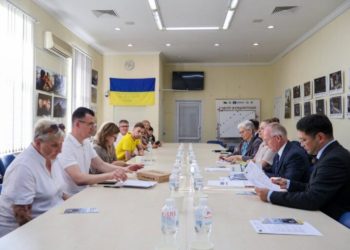
Journalism is changing, especially since the beginning of the full-scale war. We are no longer on the sidelines but inside the event, so safety rules are paramount. Therefore, the National Union of Journalists of Ukraine (NUJU) has held the respective training for Ukrainian media workers.

The danger of the Zaporizhzhia nuclear power plant being blown up by the Russian army still remains. The enemy’s intimidation campaign doesn’t stop, so we must be ready. But the work of a journalist during a disaster is quite essential. The first duty is to inform society and record the crime to further provide the material to law enforcement agencies.

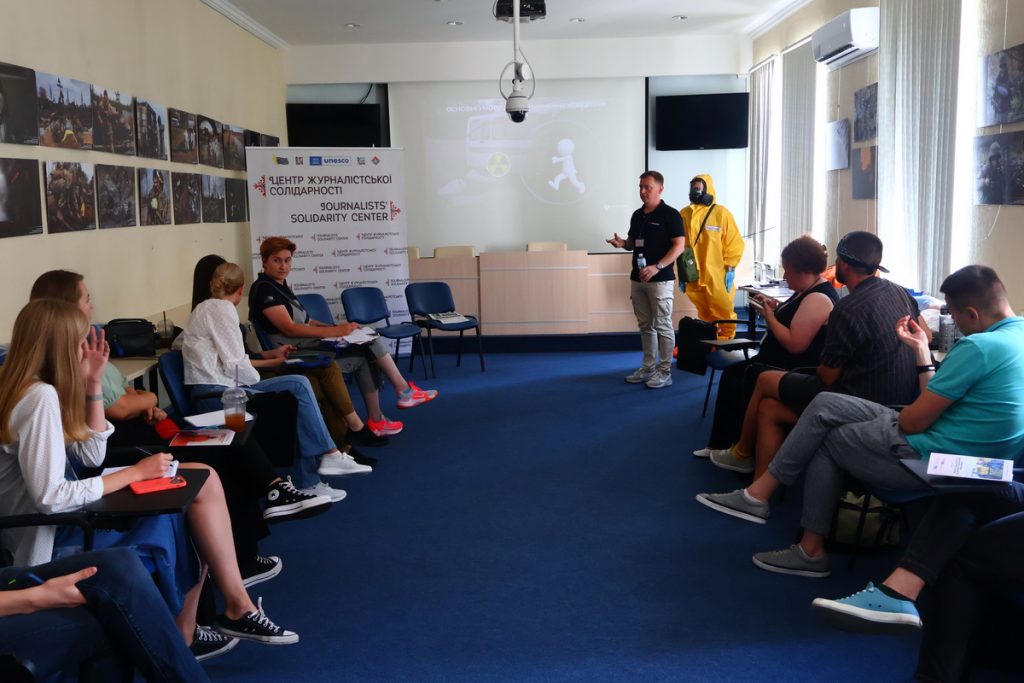
With the support of Reporters Without Borders, the NUJU’s Kyiv Journalists’ Solidarity Center (JSC) organized training on radiation hazards. The meeting with Maksym Dovhanovskyi, the author of the modular training program on responding to chemical threats, corrected the journalists on the right actions in case of danger. And Yuliya Surkova, a war correspondent with considerable experience working in the zones of man-made disasters, shared her experience using the example of the Kakhovka hydroelectric power plant explosion.

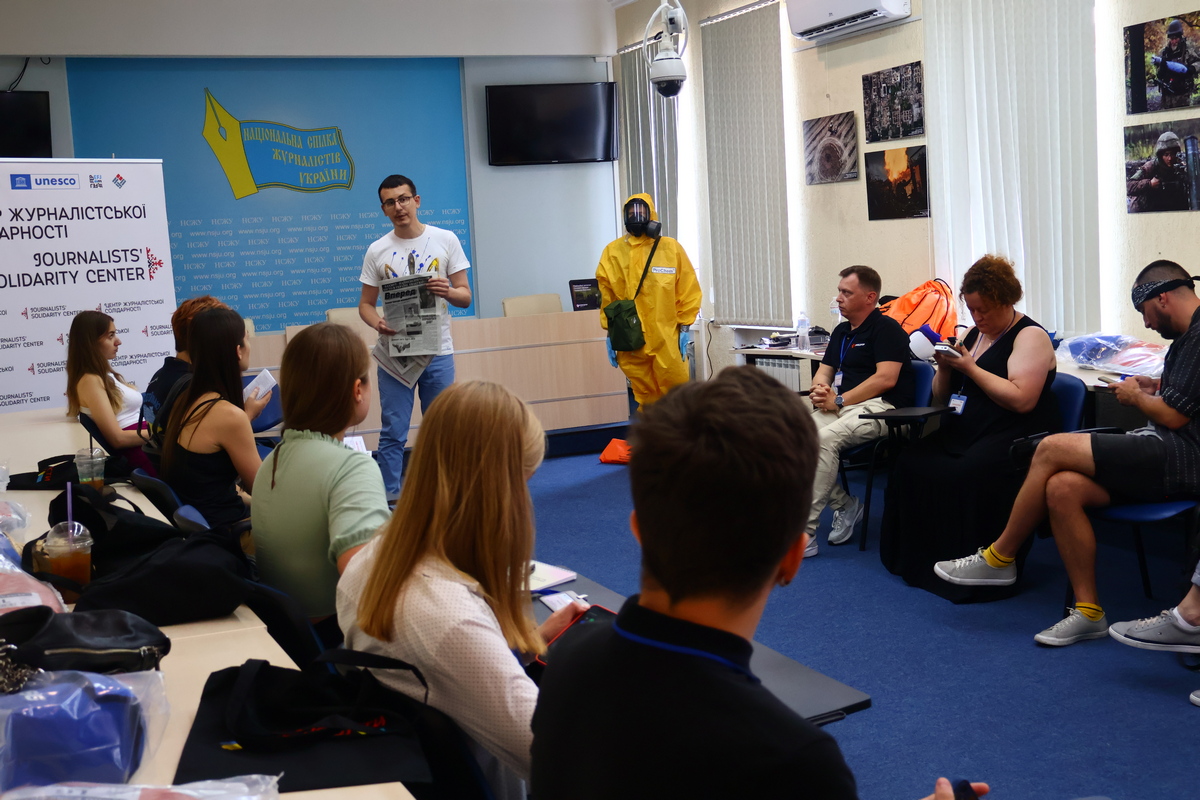
Coach Maksym Dovhanovskyi shared tips on how to act in the event of a nuclear power plant explosion.


The most important were:


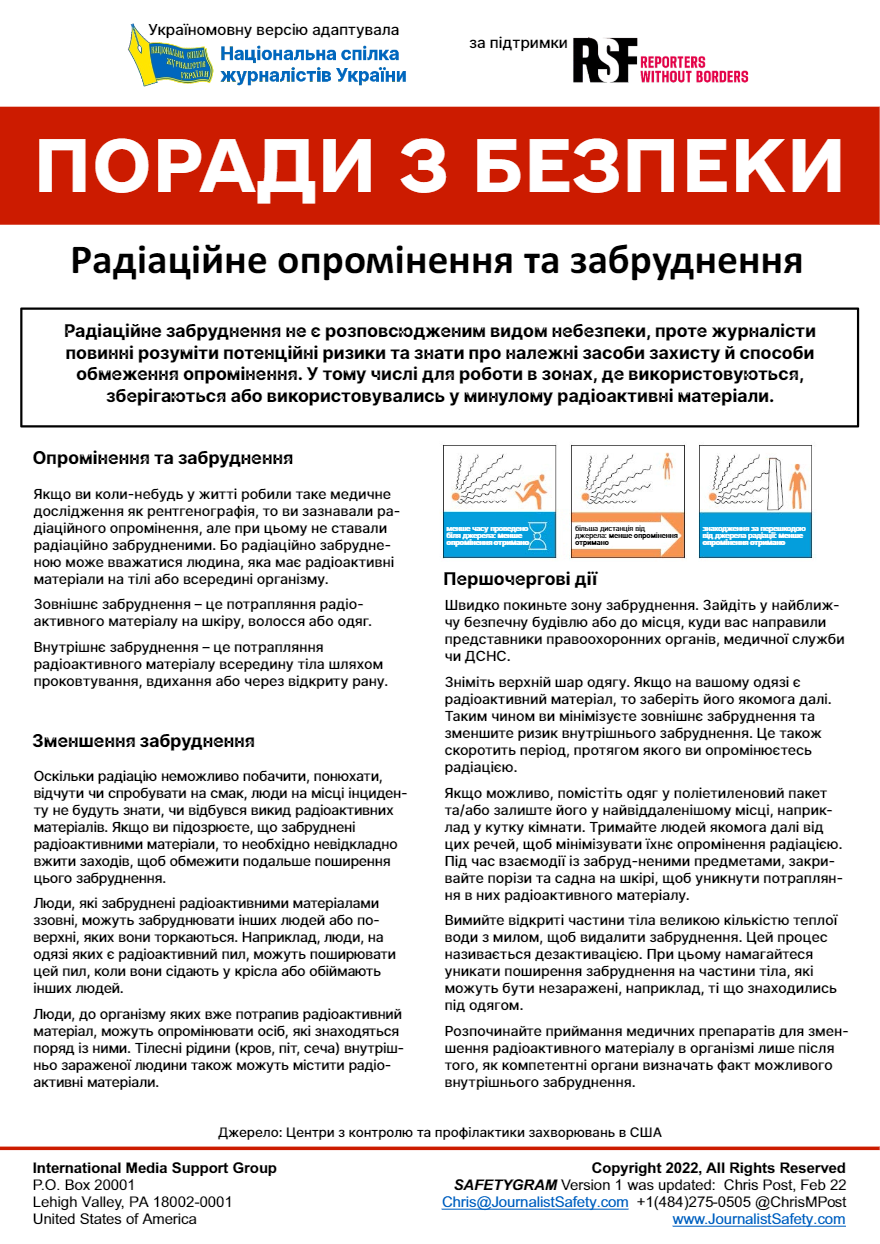
  • if you feel that this has happened, find the nearest shelter, wash off the radiation dust, and change into clean clothes; if the water-powered pumping stations have already been turned off, at least wipe the exposed areas on the body with wet wipes;
  • if it so happens that you were at home during the disaster, do not run away, but on the contrary, close the windows and doors as tightly as possible and turn off the lights. But in both cases, wait for the evacuation notification because, at this time, the evacuation corridor is already being organized.
img 4125

Journalist Yuliya Surkova shared with her colleagues the information about her trip to Kakhovka, where a HEPP was blown up and the nearby settlements were flooded. Using her example, she told what must be done in case of catastrophic situations, especially during war. This knowledge of the safety of journalistic activity in “hot spots” concerns both medical care and ethical and psychological norms.


Most important pieces of advice by the war correspondent:


  • do not settle near military units, humanitarian aid distribution points, or regional administrations;
  • have with you a complete first-aid kit, clothes with long sleeves, and pants that completely cover the legs;
  • water, food with a long shelf life, and a power bank are also necessary. Documents can be hidden in a specially protected, water-proof bag.
img 4095

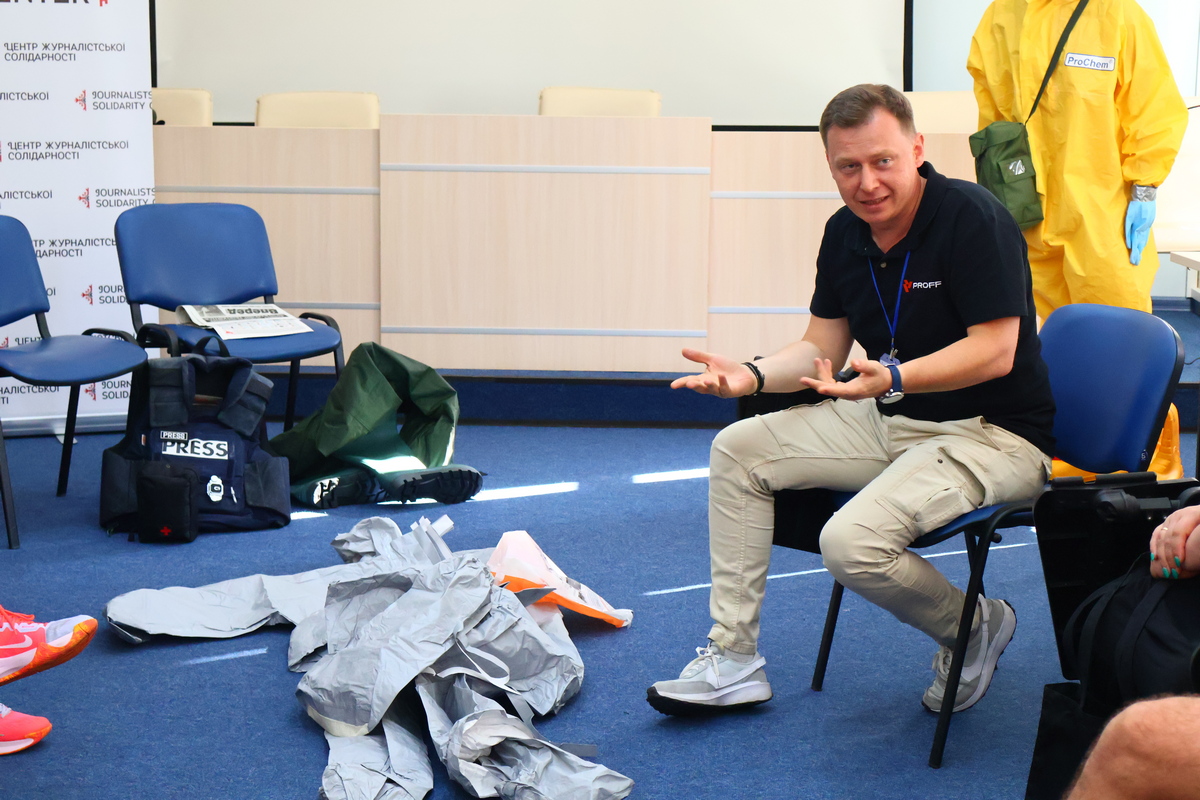
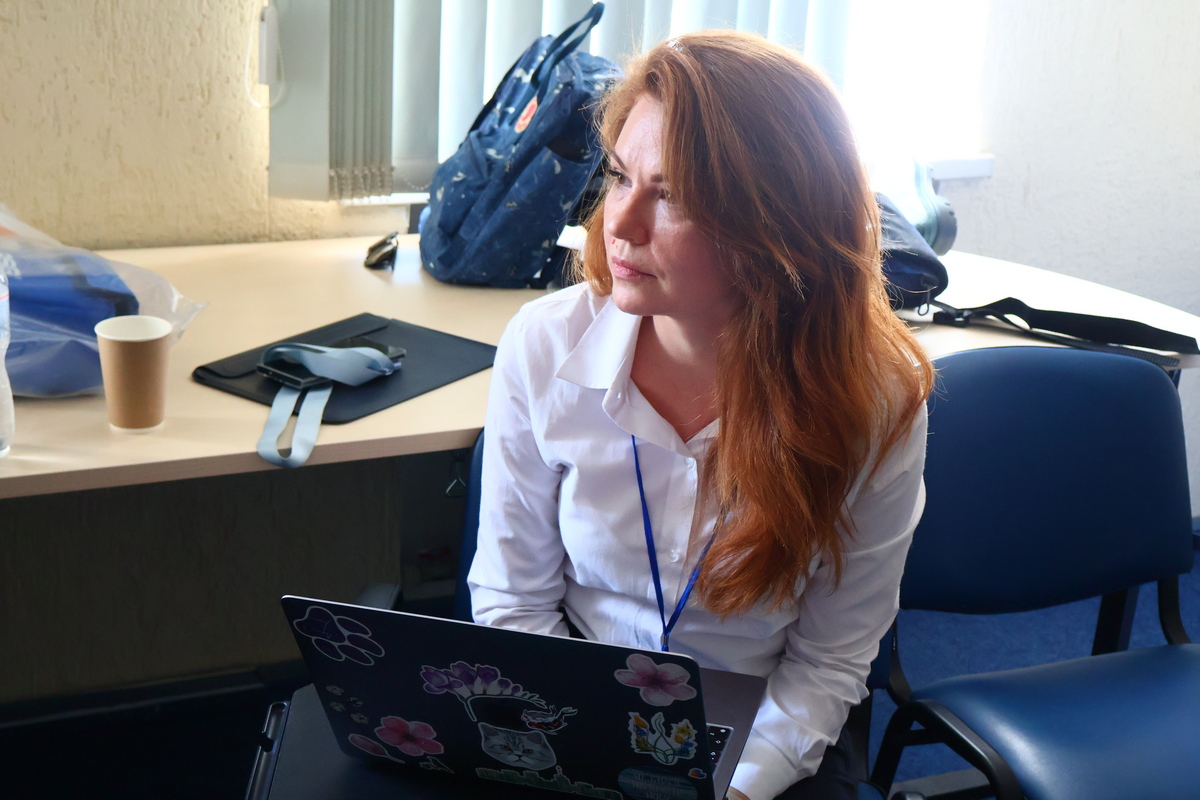
Thanks to Reporters Without Borders, the journalists not only had the opportunity to practice after the lecture but also received protective equipment each.

Also, coach Maksym Dovhanovskyi emphasized that a gas mask should be used not to have an opportunity to work in a dangerous zone but to leave such a zone. The same concerns conducting journalist reports from the scene of a missile or rocket hit as, for some time, a projectile emits a chemical substance able to burn people’s lungs. Therefore, you wear a gas mask and increase the distance from dangerous places.

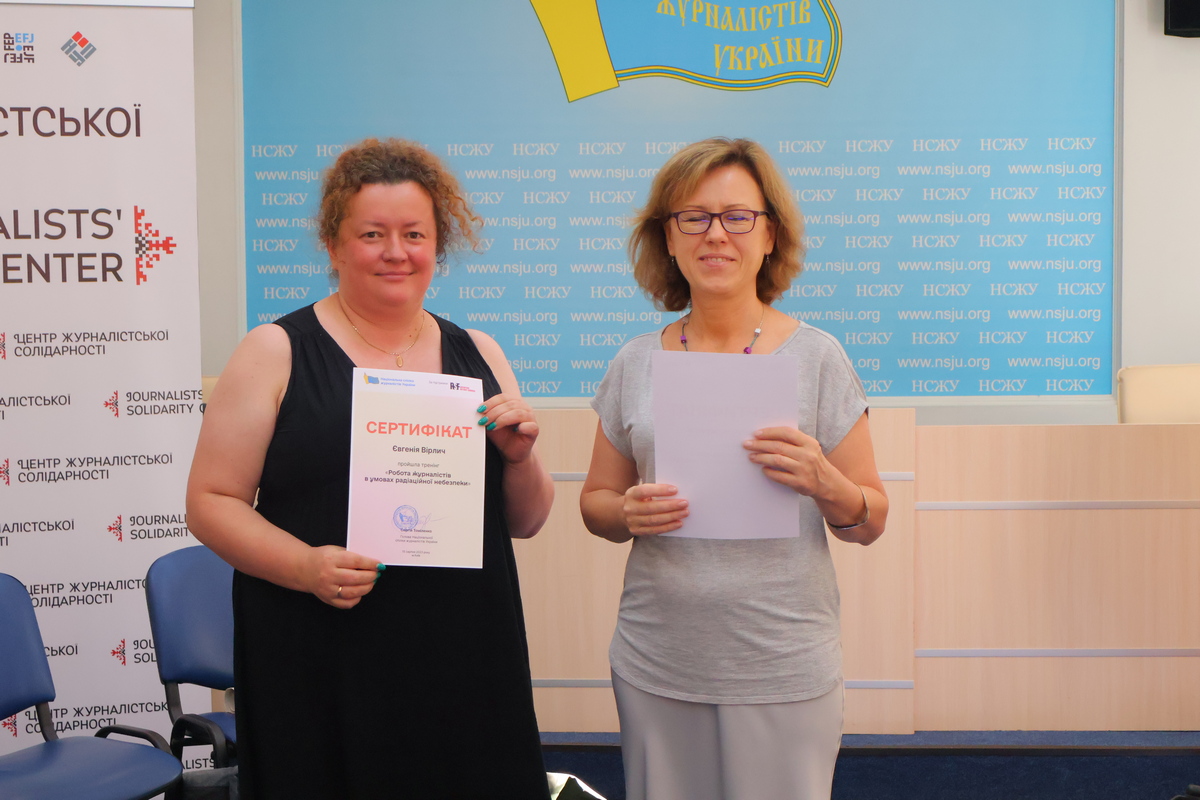
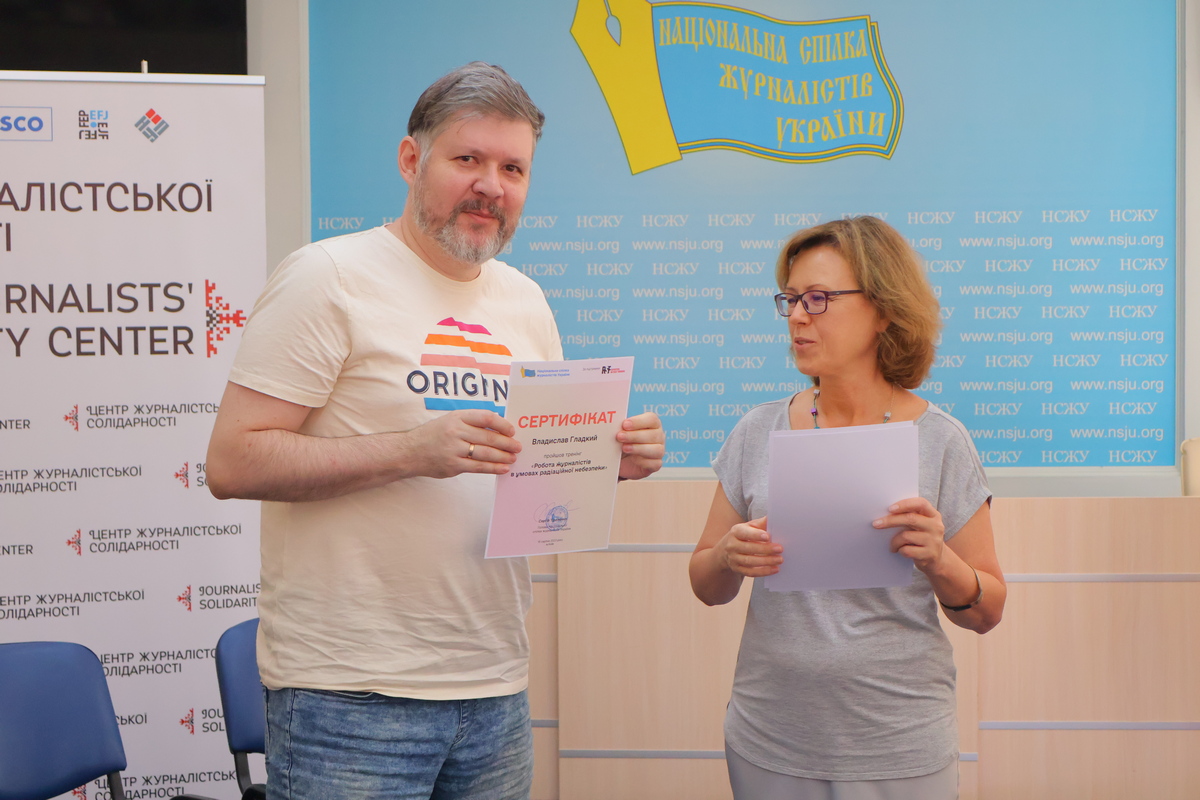
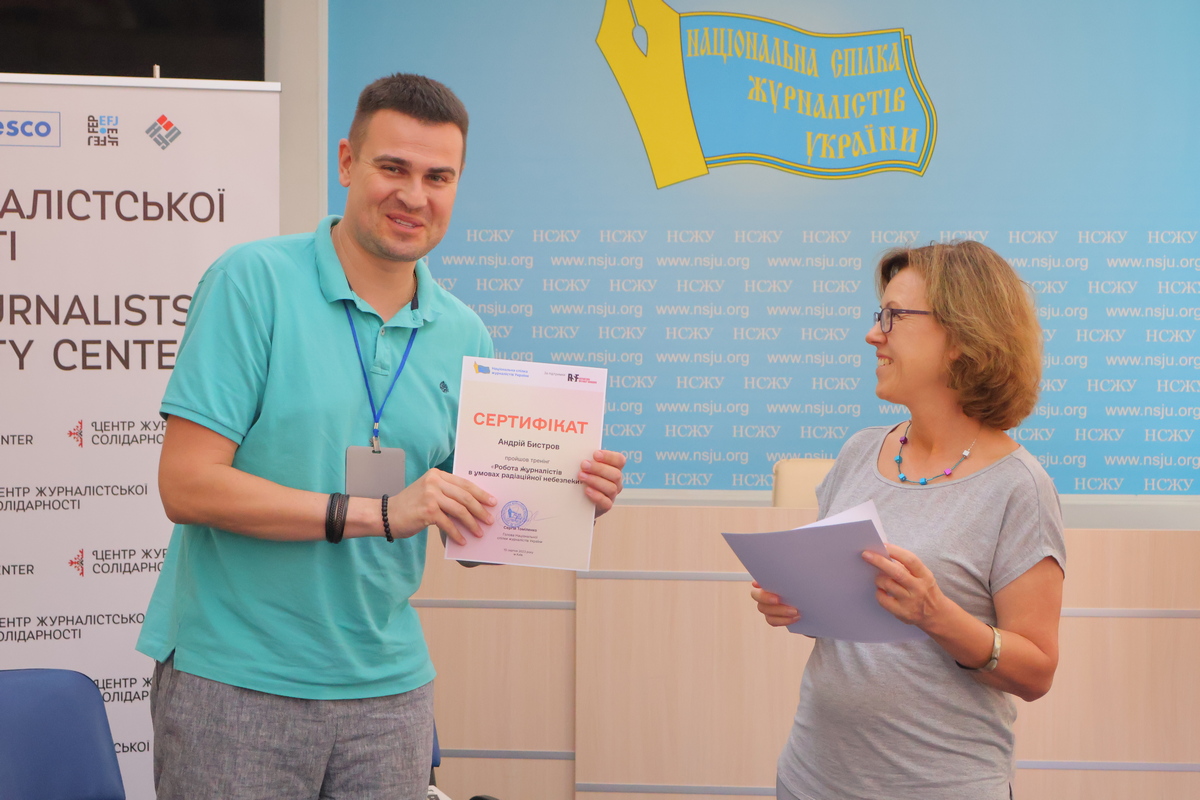
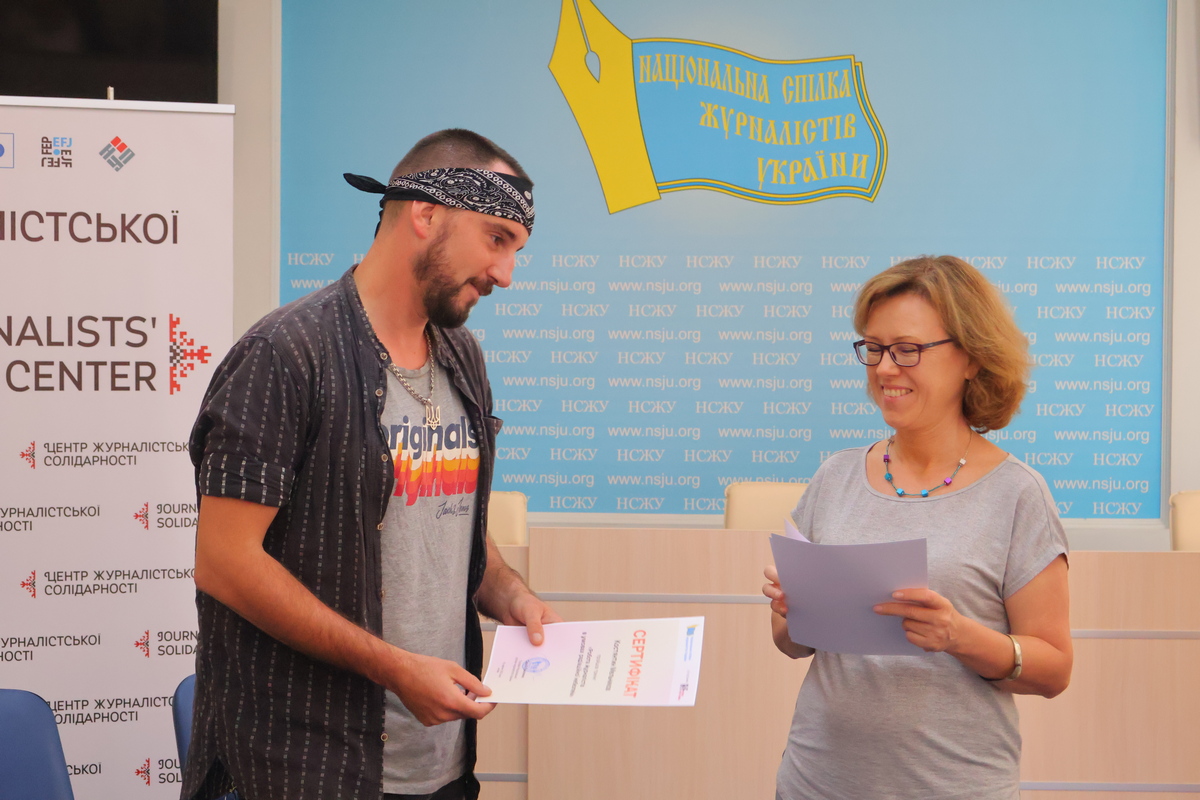
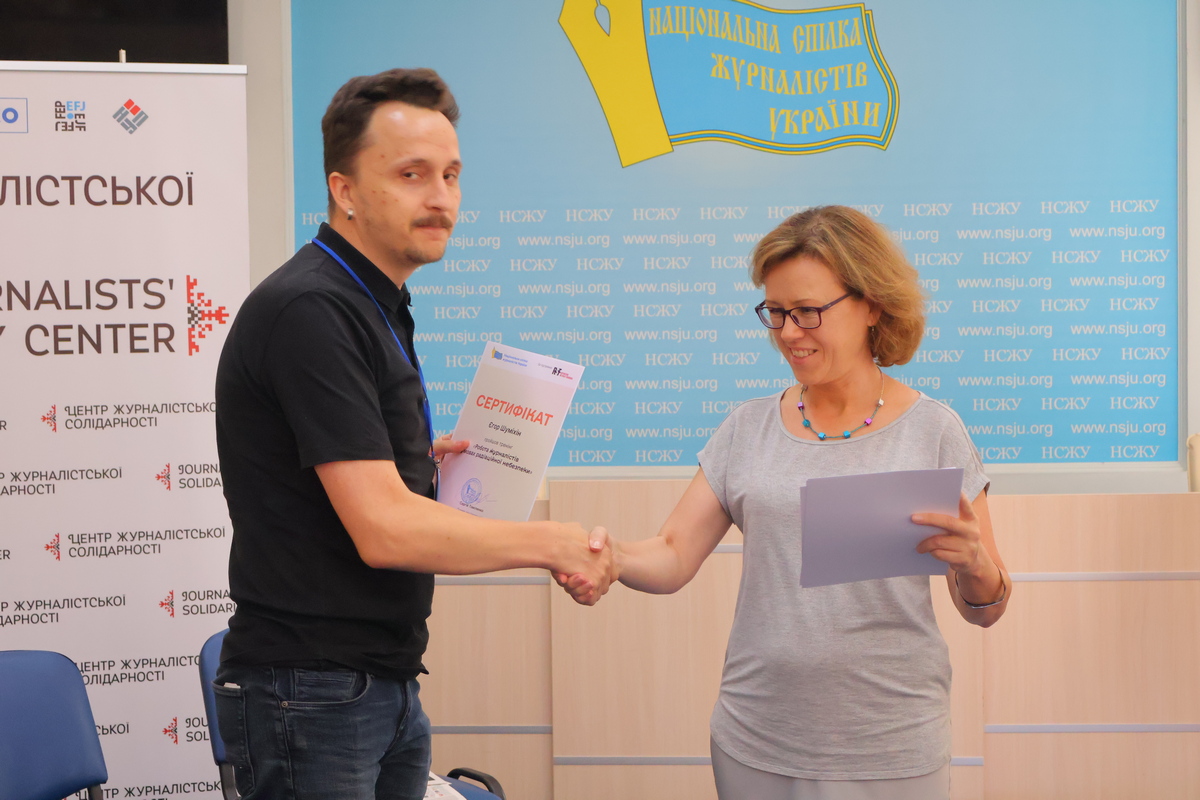
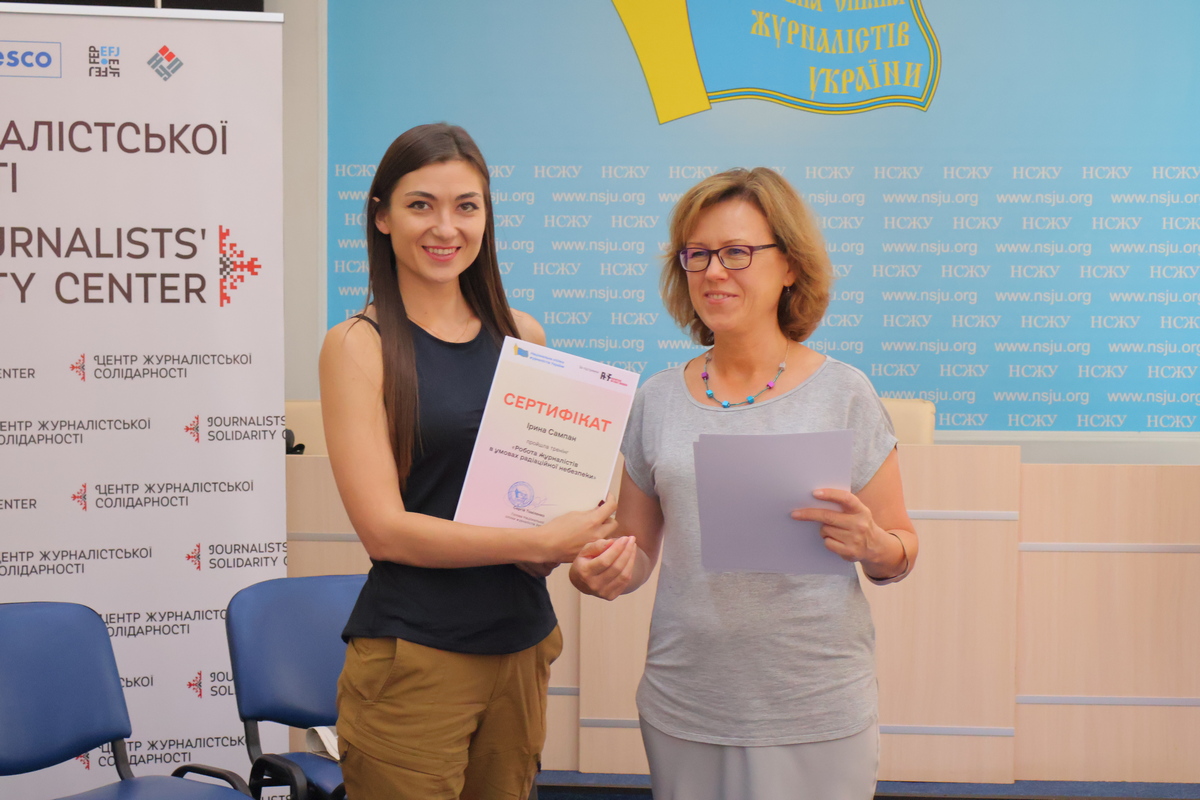
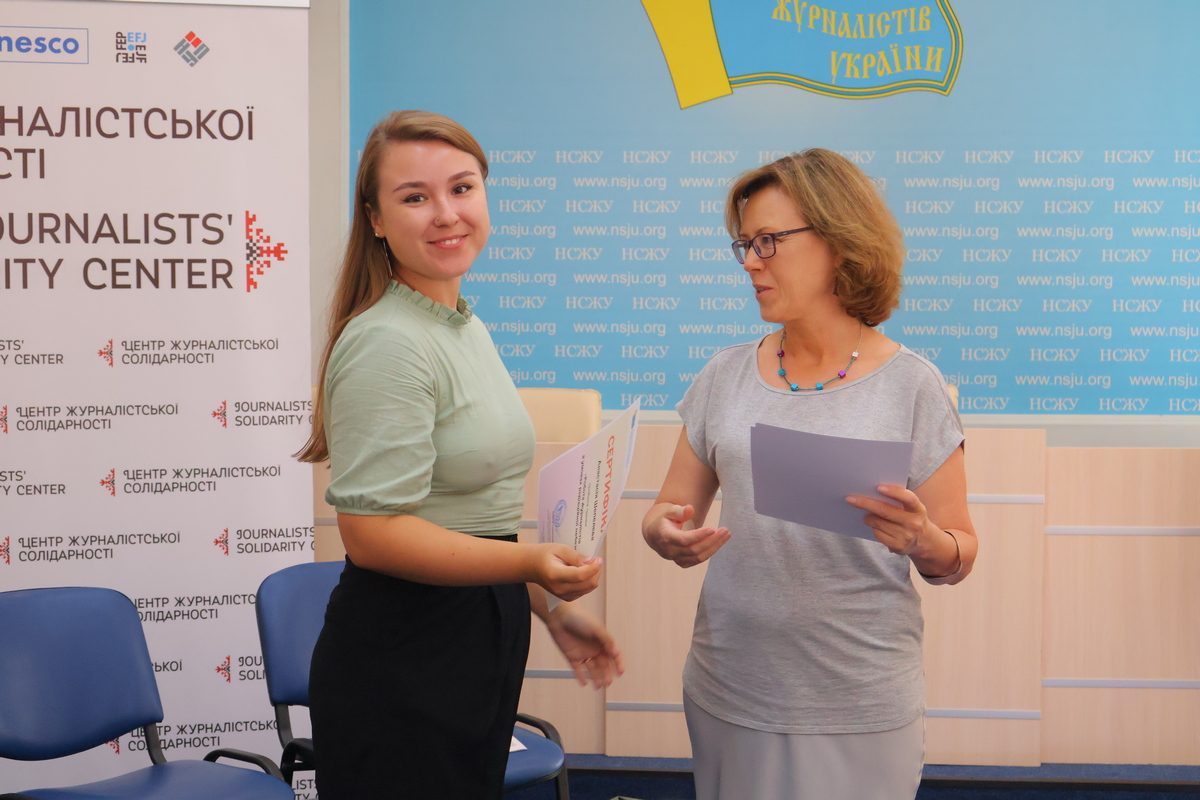
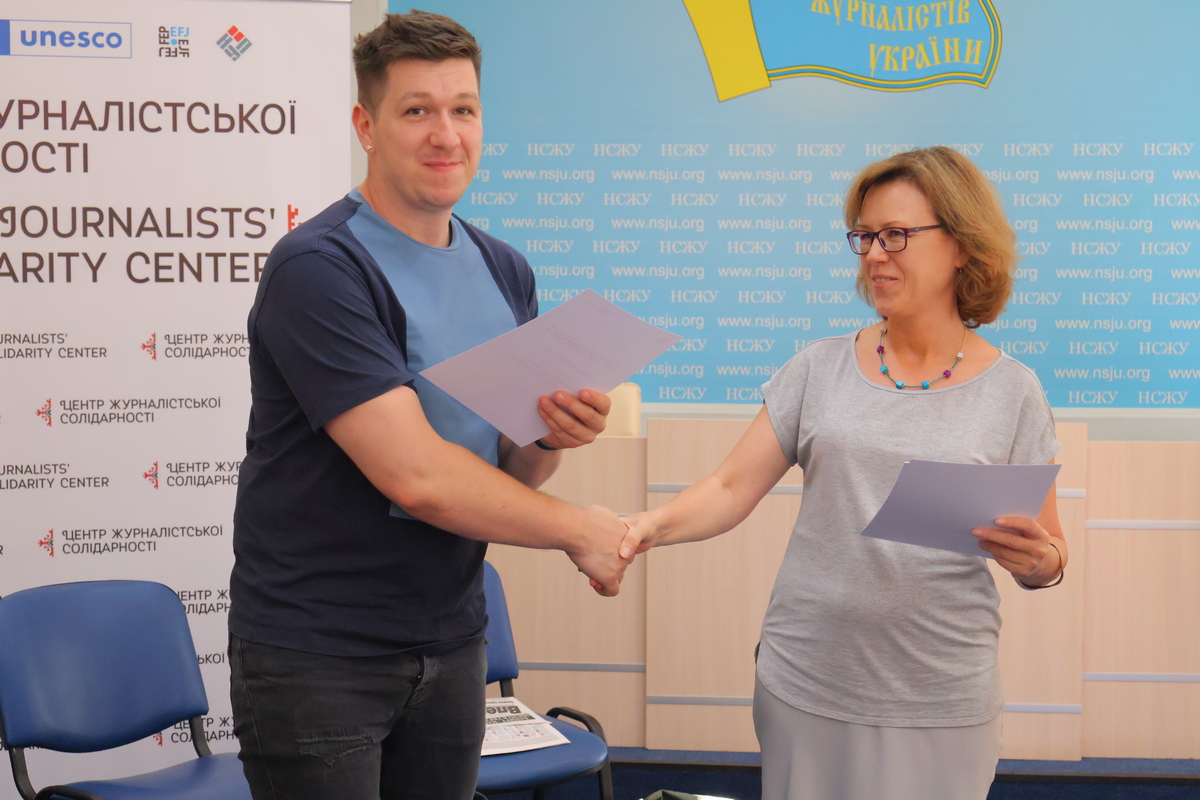
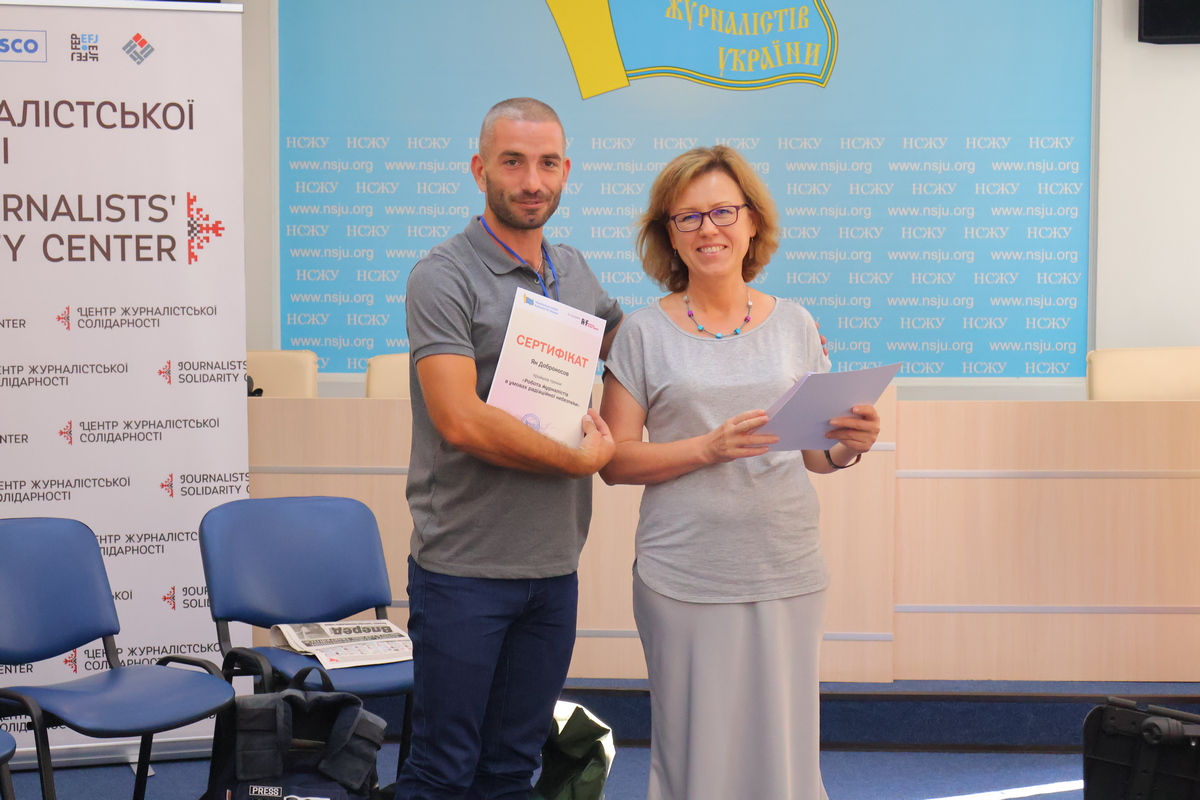
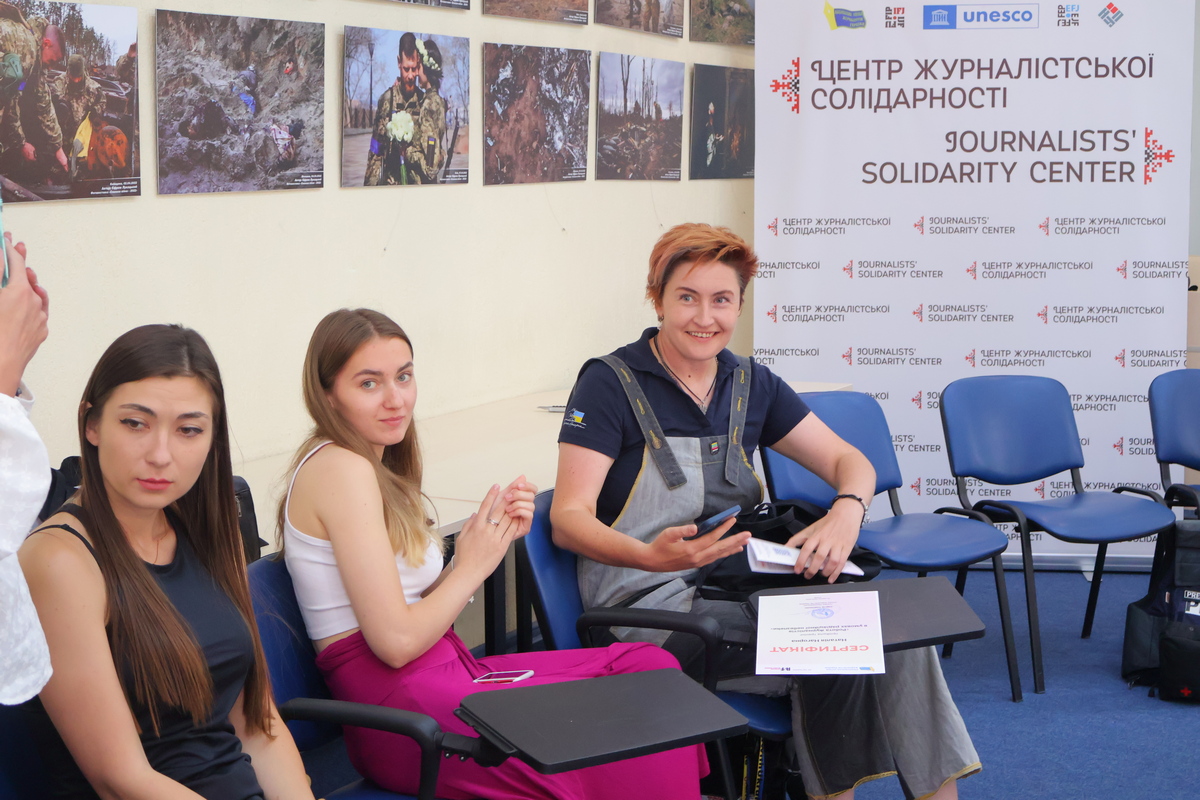
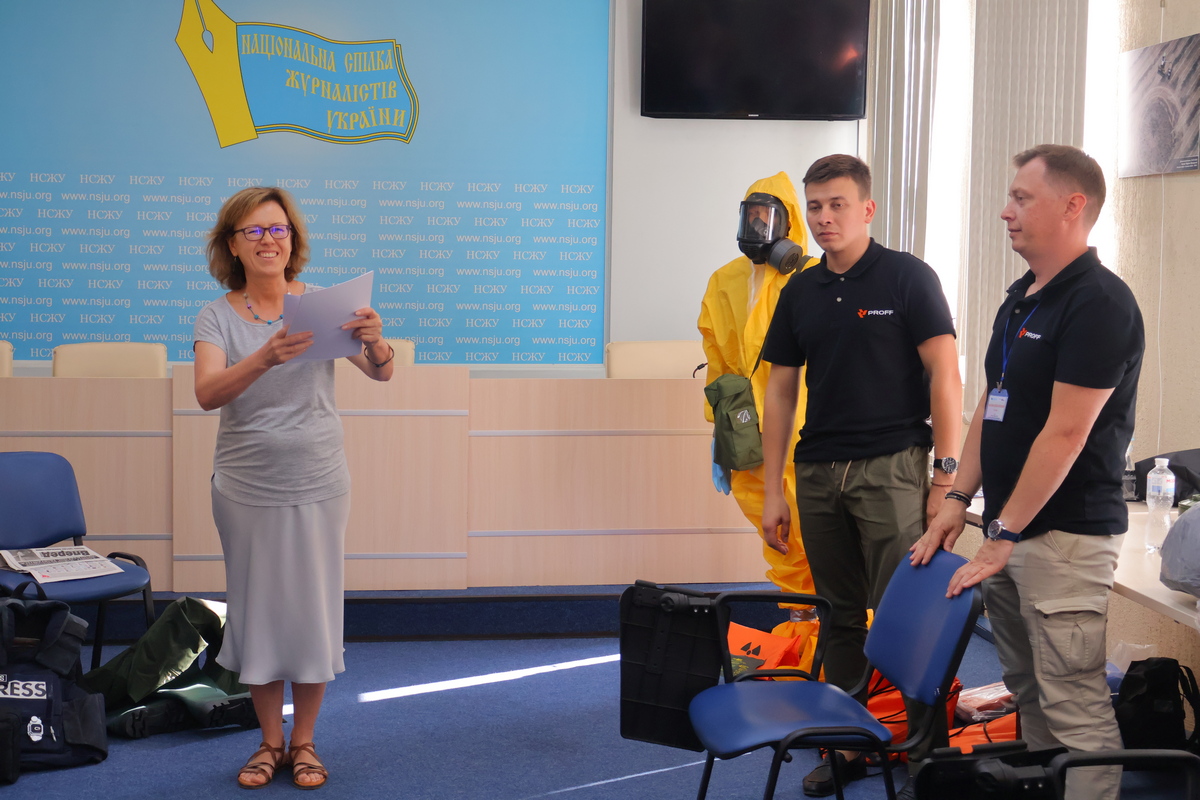
At the end of the training, all participants, according to the already established tradition, received a certificate confirming the acquisition of basic safety knowledge for media representatives working in Ukraine.
img 4015 img 4137 img 4160 img 4158 img 4156 img 4153 img 4151 img 4150 img 4147 img 4145 img 4143 img 4139 download

NUJU Information Service

 

Previous Post

Journalist Ivan Leonov: “After the evacuation, my daughter would wake up and cry: ‘Let’s escape! I’m scared!'”

Next Post

“We support every journalist whose fate is ruined by the occupier,” Sergiy Tomilenko in Ivano-Frankivsk

Related Articles

One of the key exhibition panels marking the 100th anniversary of the International Federation of Journalists (IFJ) in central Paris, dedicated to solidarity with Ukrainian journalists.
Photo: Sergiy Tomilenko
News

“Sometimes Leadership Meant Simply Answering the Phone”: How Ukrainian Journalists Built Resilience in Wartime

2026/05
Photo by Obrii Iziumshchyny
TOP news

Chuika 3.0 saves film crew in Izium Community

2026/05
Iryna Danylovych
News

Iryna Danylovych’s case first communicated by ECHR regarding repressions in Crimea after 2022 – lawyer Serhii Zayets

2026/05

Discussion about this post

TOP News

  • The delegation of the National Union of Journalists of Ukraine, consisting of journalists from Kyiv, Mariupol, Sloviansk and Odesa, wore T-shirts with the slogan “Stop Russia. Save journalists”. Photo: Facebook / Sergiy Tomilenko

    Russian Union of Journalists Expelled from International Federation of Journalists – IFJ Congress

    23 shares
    Share 9 Tweet 6
  • List of journalists killed since start of russia’s full-scale aggression (UPDATE)

    523 shares
    Share 209 Tweet 131
  • Free The Voices: Documentary Film on the Unlawful Detention of Ukrainian Journalists

    4 shares
    Share 2 Tweet 1
One of the key exhibition panels marking the 100th anniversary of the International Federation of Journalists (IFJ) in central Paris, dedicated to solidarity with Ukrainian journalists.
Photo: Sergiy Tomilenko

“Sometimes Leadership Meant Simply Answering the Phone”: How Ukrainian Journalists Built Resilience in Wartime

18.05.2026
Photo by Obrii Iziumshchyny

Chuika 3.0 saves film crew in Izium Community

17.05.2026
Iryna Danylovych

Iryna Danylovych’s case first communicated by ECHR regarding repressions in Crimea after 2022 – lawyer Serhii Zayets

15.05.2026
kongres mizhnarodnoyi federacziyi zhurnalistiv foto nszhu 768x576 1

Russia Expelled, New Leadership, and a Focus on Ukrainian Experience in Journalist Safety: Takeaways from the IFJ Congress in Paris

14.05.2026
1200kh630 Free the Voices 1

Free The Voices: Documentary Film on the Unlawful Detention of Ukrainian Journalists

14.05.2026
Photo: Facebook / Sergiy Tomilenko

Sergiy Tomilenko meets with Reporters Without Borders’s leadership in Paris

13.05.2026

National Union of Journalist of Ukraine

National Union of Journalists of Ukraine (NUJU), according to its Statute, it is a national all-Ukrainian organization a creative union uniting journalists and other media workers.

Contacts

E-mail: [email protected]

© 2023 NUJU - National Union of Journalist of Ukraine

  • Home
  • News
  • Stories
  • Affected Media
  • Our Partners
  • About NUJU
  • Contacts
No Result
View All Result

© 2023 - 2025 NUJU - National Union of Journalist of Ukraine

Welcome Back!

Login to your account below

Forgotten Password?

Retrieve your password

Please enter your username or email address to reset your password.

Log In