

 THE NATIONAL UNION OF
JOURNALISTS OF UKRAINE
THE NATIONAL UNION OF
JOURNALISTS OF UKRAINE
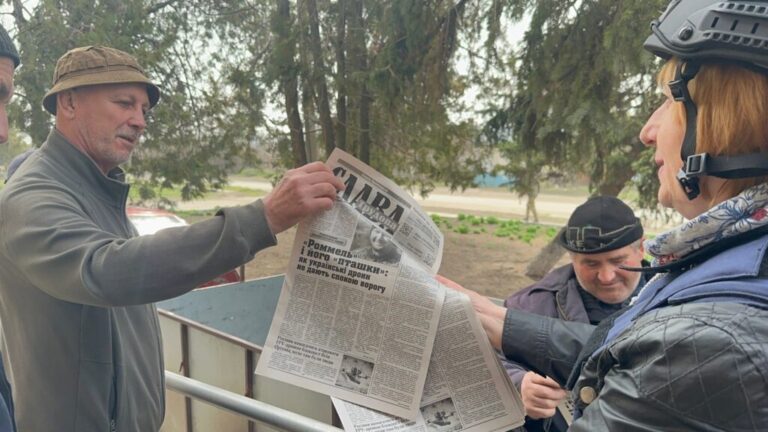
Frontline journalism in Ukraine is critical democratic infrastructure on a par with energy or communications. This recognition was formalised in the resolution “On the strategic role of local and frontline journalism in times of war,” adopted by the European Federation of Journalists (EFJ) Annual Meeting on 18-19 June 2026 in Ankara. The document was tabled by the National Union of Journalists of Ukraine together with the Swedish Union of Journalists, the Norwegian Union of Journalists, the Danish Union of Journalists, the Union of Journalists in Finland, the Union of Icelandic Journalists, and the Estonian Association of Journalists.
The resolution instructs the EFJ Steering Committee to develop a framework for direct partnerships between European media organisations and Ukrainian frontline media, to advocate for the inclusion of frontline journalism support in EU programmes on democratic resilience, and to promote the findings of the Ukraine-Sweden Frontline Press Forum “Journalism as a Lifeline in Wartime” (April 2026).
Full text of the resolution
On the strategic role of local and frontline journalism in times of war
Tabled by the National Union of Journalists of Ukraine (Ukraine), the Swedish Union of Journalists (Sweden), the Norwegian Union of Journalists (Norway), the Danish Union of Journalists (Denmark), the Union of Journalists in Finland (Finland), the Union of Icelandic Journalists (Iceland), and the Estonian Association of Journalists (Estonia)
The European Federation of Journalists (EFJ) Annual Meeting on 18th–19th June 2026 in Ankara
Recalling the Resolution “On the Strategic Role of Local Media During War and the Consequences of Sudden Termination of International Support”, adopted by the EFJ General Meeting in Budapest in 2025, which highlighted the essential role of independent local journalism during wartime and warned about the risks posed by sudden interruptions in international support;
Recognising that local and frontline journalism plays a vital role in safeguarding democratic resilience, access to reliable information, community cohesion, and journalists’ ability to document the realities of war;
Acknowledging that, in wartime conditions, local and frontline journalism constitutes a form of critical democratic and information infrastructure, particularly in regions affected by military attacks, displacement, humanitarian crises, economic collapse, and severe disruption of public life;
Noting that local and frontline media in Ukraine continue to operate under extraordinary wartime conditions, including shelling, drone attacks, destruction of infrastructure, prolonged blackouts, forced displacement, economic hardship, and direct threats to journalists’ safety;
Observing that in frontline and heavily affected regions of Ukraine, local journalists are often the only trusted and permanent source of verified information for communities, providing life-saving reporting, documenting war crimes, countering disinformation, facilitating communication with local authorities, and supporting community resilience;
Recalling the conclusions of the Ukraine–Sweden Frontline Press Forum “Journalism as a Lifeline in Wartime”, held in April 2026, which highlighted the strategic role of local and frontline journalism and stressed the urgent need for sustained international support mechanisms for independent media operating in wartime conditions;
Concerned that the continuing weakening of local and frontline media ecosystems — caused by economic collapse, destruction of infrastructure, declining advertising revenues, donor fatigue, and growing operational risks — may lead to dangerous information vacuums in regions most vulnerable to propaganda, manipulation, and disinformation;
Affirming that preserving strong and independent local journalism during war contributes not only to national resilience but also to media freedom, democratic stability, and the public’s right to reliable information across Europe;
The EFJ Annual Meeting therefore instructs the EFJ Steering Committee to:
- Recognise local and frontline journalism in wartime conditions as a form of critical democratic and information infrastructure essential to protecting communities’ access to reliable information during armed conflict;
- Develop, together with NUJU and interested EFJ affiliates, a framework for direct partnerships between European media organisations and local or frontline Ukrainian media aimed at strengthening professional resilience, editorial cooperation, and practical solidarity;
- Advocate for the inclusion of support to local and frontline journalism within European Union programmes on democratic resilience, civil protection, media freedom, and Ukraine recovery;
- Promote the findings of the Ukraine–Sweden Frontline Press Forum “Journalism as a Lifeline in Wartime” as a reference framework for European discussions on protecting journalism in conflict conditions;
- Encourage the development of targeted solidarity instruments supporting frontline media resilience, including emergency newsroom assistance, journalist safety measures, trauma support, and energy-independent reporting capacity;
- Facilitate exchanges of expertise among EFJ affiliates on protecting local journalism in conflict, crisis, and emergency situations, drawing on Ukrainian experience;
- Report back to the next EFJ Annual Meeting on progress made in supporting local and frontline journalism in wartime conditions.
NUJU Information Service
















Discussion about this post