 THE NATIONAL UNION OF
JOURNALISTS OF UKRAINE
THE NATIONAL UNION OF
JOURNALISTS OF UKRAINE
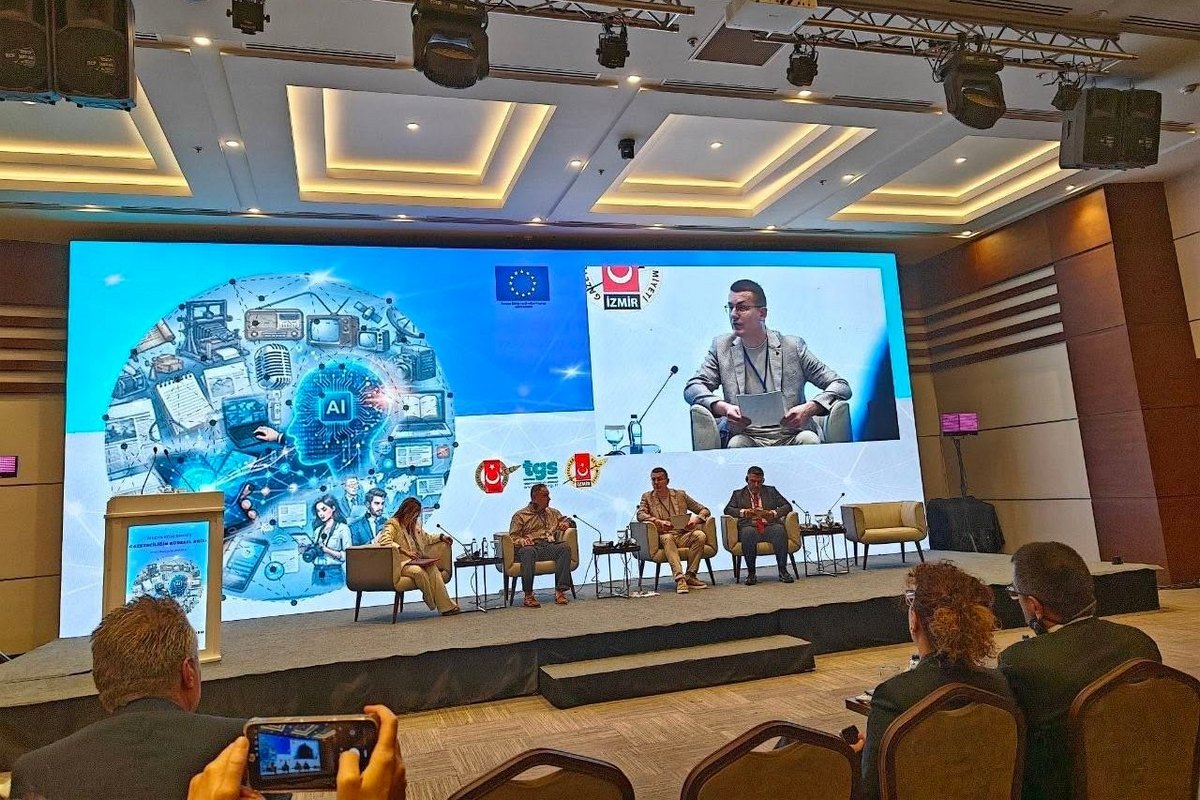
Russia is systematically spreading disinformation, using artificial intelligence for manipulation, imprisoning journalists and turning occupied territories into information deserts.
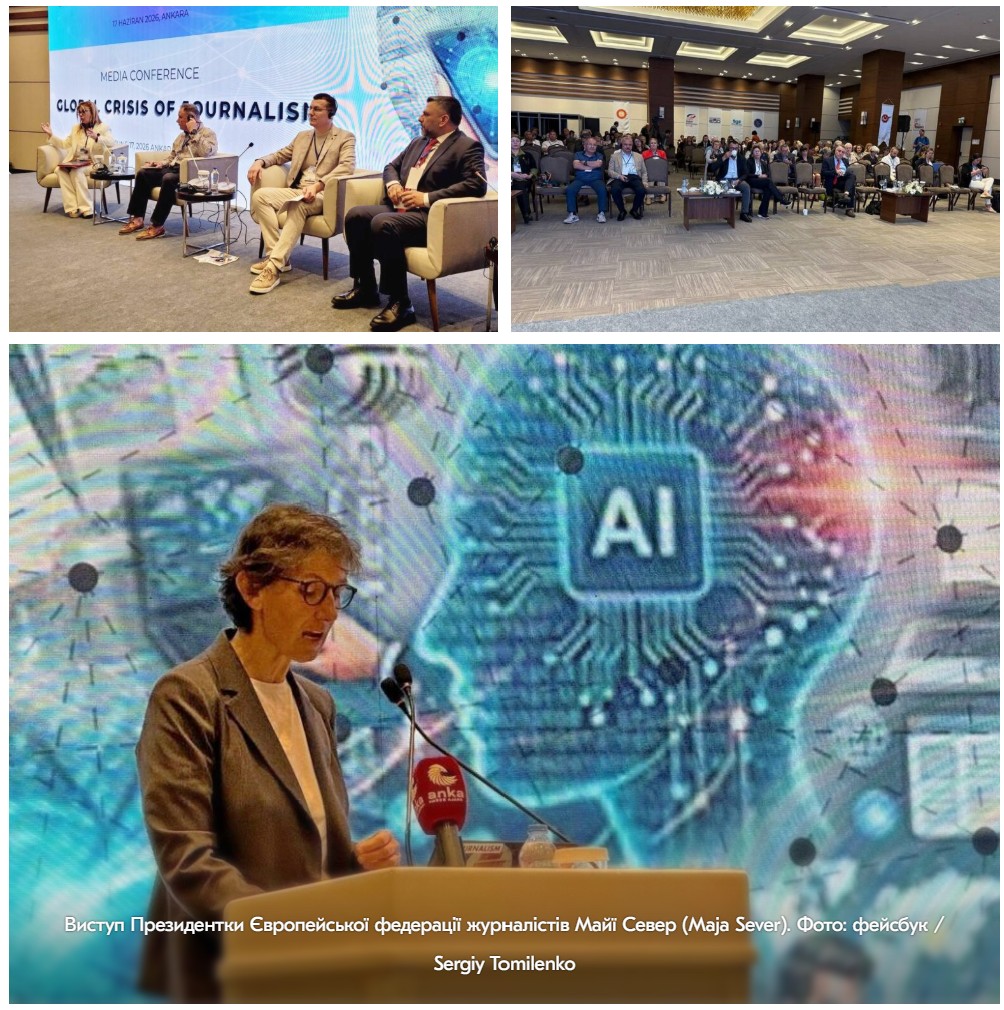
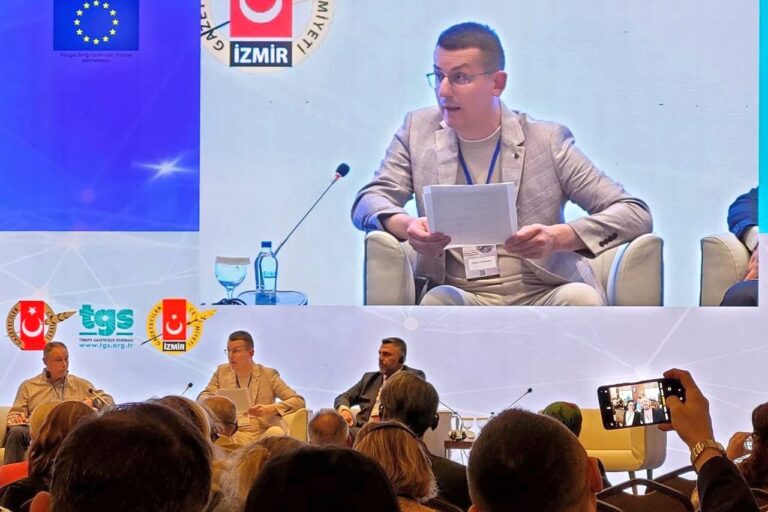
This was said by National Union of Journalists of Ukraine (NUJU) President Sergiy Tomilenko at the Global Crisis of Journalism conference, which is taking place in Ankara as part of the large-scale program of the Annual Meeting of the European Federation of Journalists (EFJ) and events of Turkish journalist organizations.
During the discussion on journalism in wartime, the NUJU President spoke not only about the security challenges for Ukrainian media professionals, but also about how russia is systematically waging a war against journalism.
Russia is trying to destroy trust in facts through large-scale disinformation campaigns and is increasingly using artificial intelligence to do so. At the same time, it persecutes those who document reality: Ukrainian journalists remain in russian prisons, and the occupied Crimea and the newly occupied territories have actually been turned into news deserts or propaganda reserves.
During his speech, Sergiy Tomilenko paid special attention to Crimean journalists and citizen reporters who received long-term prison sentences simply for telling the world the truth about the repressions on the occupied peninsula. He also mentioned Victoria Roshchina, whose death in russian captivity became one of the most painful symbols of this war against journalism.
It is especially symbolic that after the speech, the President of the NUJU met with the Ambassador Extraordinary and Plenipotentiary of Ukraine to Turkey Nariman Celal. A few years ago, his name sounded at international forums in a completely different context. The NUJU, the EFJ, the IFJ, human rights organizations demanded his release from russian captivity. russia imprisoned Nariman on trumped-up charges after his many years of journalistic and human rights work in the occupied Crimea. And today he represents Ukraine as Ambassador to Turkey.
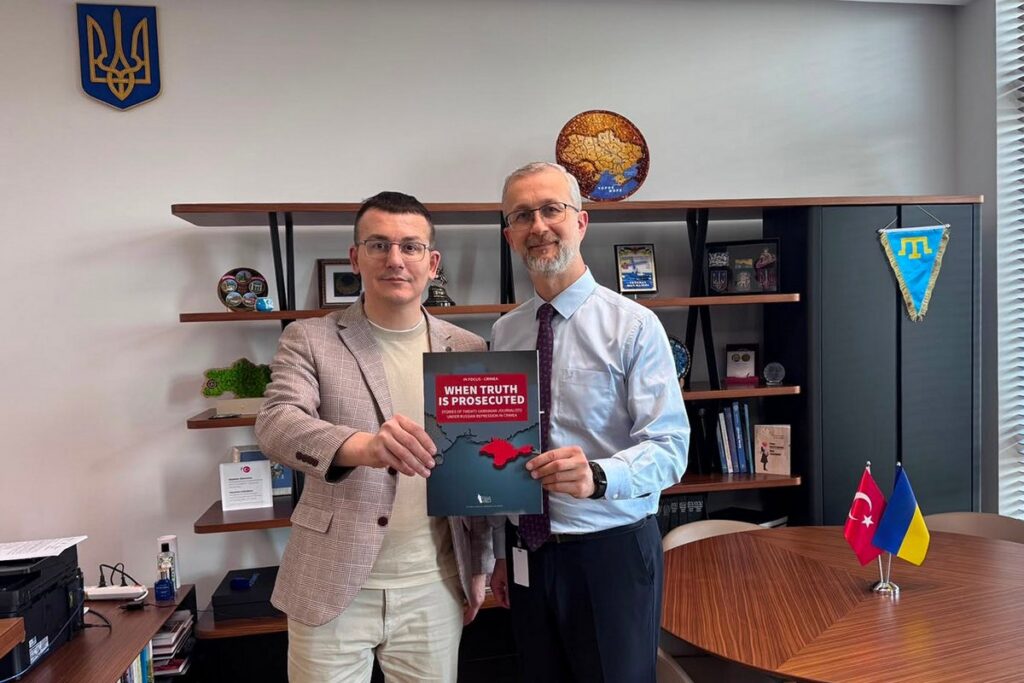
“For me, this is a very clear reminder: international solidarity makes sense,” Sergiy Tomilenko emphasizes. “Support campaigns, resolutions, statements often seem like something formal. But sometimes they help people return home and then continue to serve their country in a new role. Therefore, we have no right to forget about Ukrainian journalists who are still in russian captivity. russia really wants the world to stop talking about them. Our task is to prevent it from doing so.”
* * *
The annual meeting of the EFJ is being held in Ankara on June 17-19 under the slogan Independent Journalism Under Siege. The event is attended by almost 100 heads of journalistic organizations and trade unions from dozens of European countries.
On June 17, an international conference Global Crisis of Journalism was held, where the challenges of war journalism, the impact of artificial intelligence on the media, the digital transformation of newsrooms and the state of freedom of speech in Turkiye were discussed. The panel on journalism in wartime was addressed by NUJU President Sergiy Tomilenko.
On June 18, the official opening of the EFJ Annual Meeting took place, during which Nariman Celal delivered a keynote address. Delegates also considered reports on the Federation’s activities, financial issues and work priorities for the coming year.
On June 19, participants will consider resolutions and urgent statements. Among them are documents in support of Ukrainian journalists, local and frontline media, as well as demands for the release of Ukrainian journalists illegally detained by russia.
NUJU Information Service









Discussion about this post