

 THE NATIONAL UNION OF
JOURNALISTS OF UKRAINE
THE NATIONAL UNION OF
JOURNALISTS OF UKRAINE
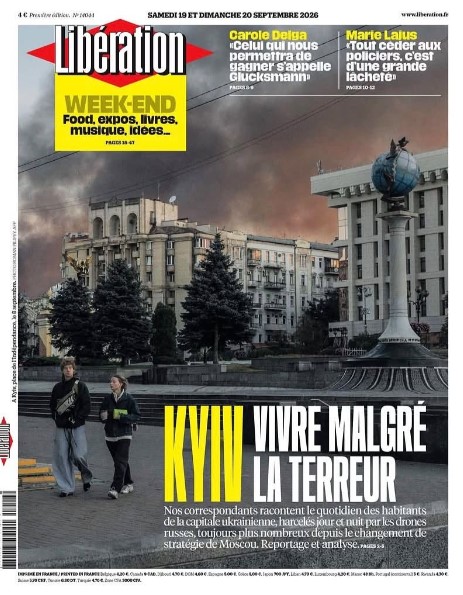
Today, in a city of millions that is the country’s capital, air raid alerts can last longer over a single day than the intervals between them, and they bring explosions, strikes and deaths. “Kyiv, which until recently was perceived as a relatively safe rear area, has today effectively become a frontline city,” says journalist Oleh Borysov. The same assessment was voiced in September by the Ambassador of the European Union to Ukraine, Katarína Mathernová: “Kyiv has become a frontline city.”
How do journalists work when only a matter of seconds may separate the air raid siren from the explosion? How can they stay out of danger when Russian attacks directly affect newsrooms, journalists’ homes, and media and telecommunications infrastructure?
In September 2026, the National Union of Journalists of Ukraine (NUJU) recorded ten verified cases when Russian attacks had a physical impact on civilian journalists, newsrooms and media infrastructure. At the same time, the media continues to work, sometimes in the very midst of an attack.
A strike on a newsroom during a live broadcast
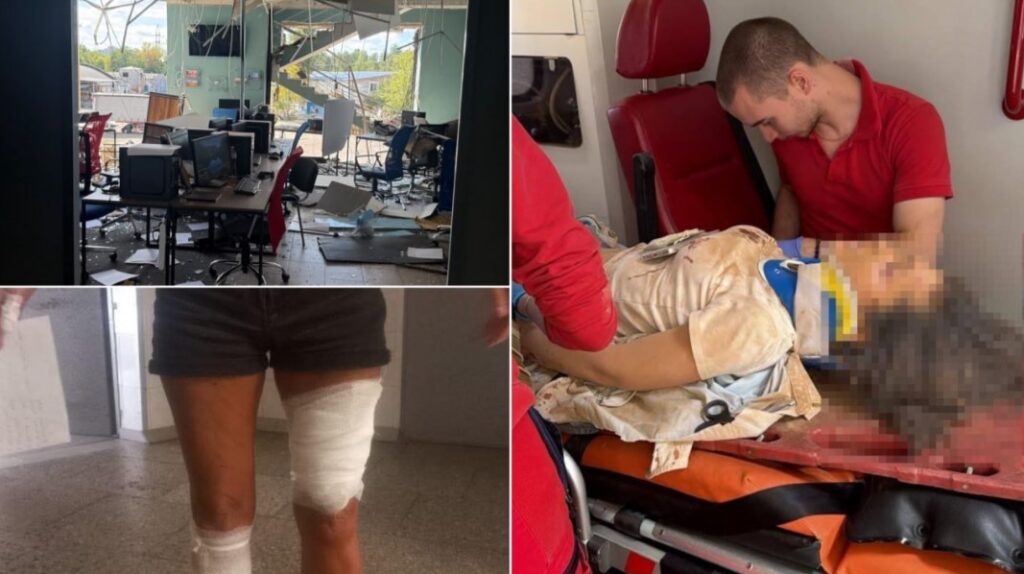
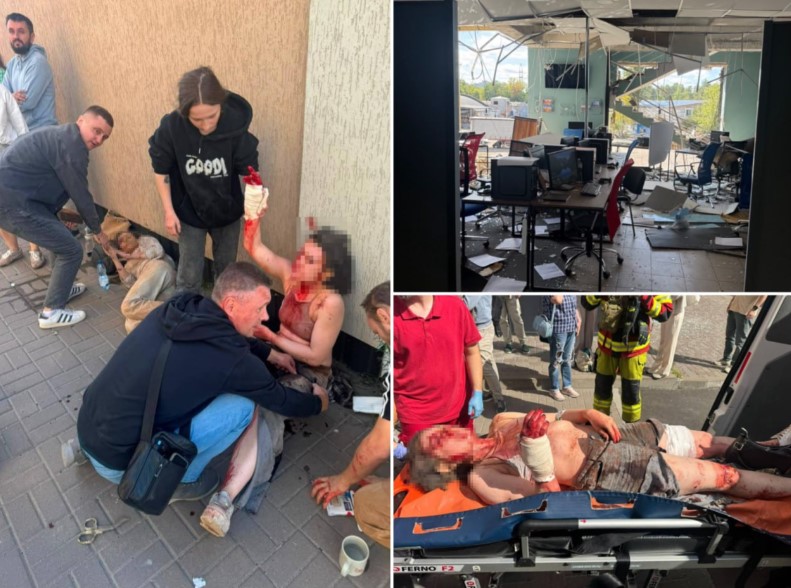
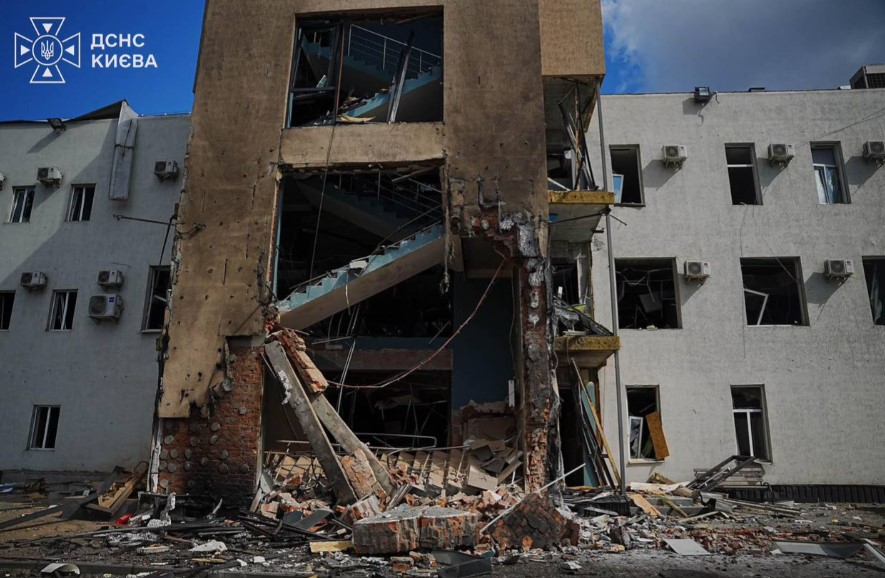
On 8 September, a Russian attack drone (UAV) hit the building of the We Are Ukraine and We Are Ukraine+ media group. A live broadcast was under way in the newsroom at that moment.
It was the second attack on the media group in less than three weeks. After the previous strike, on 20 August, the newsroom had only just begun to restore its damaged studio, technical infrastructure and workstations. This time the drone hit the building directly. Six people were injured, and three of them were hospitalized. The newsroom, make-up rooms, offices, technical systems and equipment were damaged.
The head of the media group, Ihor Petrenko, stressed that the strike landed exactly where journalists were working: “The drone hit the building of our media group, the premises of the We Are Ukraine and We Are Ukraine+ TV channels. Not the courtyard, not somewhere nearby. Precisely the newsroom on the second floor. Exactly where people work, and exactly when our journalists were live on air in the United News telethon.”
Petrenko later described it as “a targeted strike on journalists”.
“This is neither an accident nor ‘collateral damage’. A strike on a newsroom during a live broadcast is a war crime against the media, for which Russia must be held to account.”
The consequences for the newsroom’s staff were serious. The captions editor was in the most severe condition: she suffered lacerations and incised wounds, numerous cuts from glass, hematomas, severe pain in her legs and a significant deterioration of vision in her right eye. A glass fragment of almost 10 millimeters was removed from her back.
The news producer sustained severe injuries and burns to his hands. A security guard had three broken ribs and a broken leg, as well as cuts to his face and limbs. Two more editors, both women, and a make-up artist received medical assistance for cuts and shrapnel injuries.
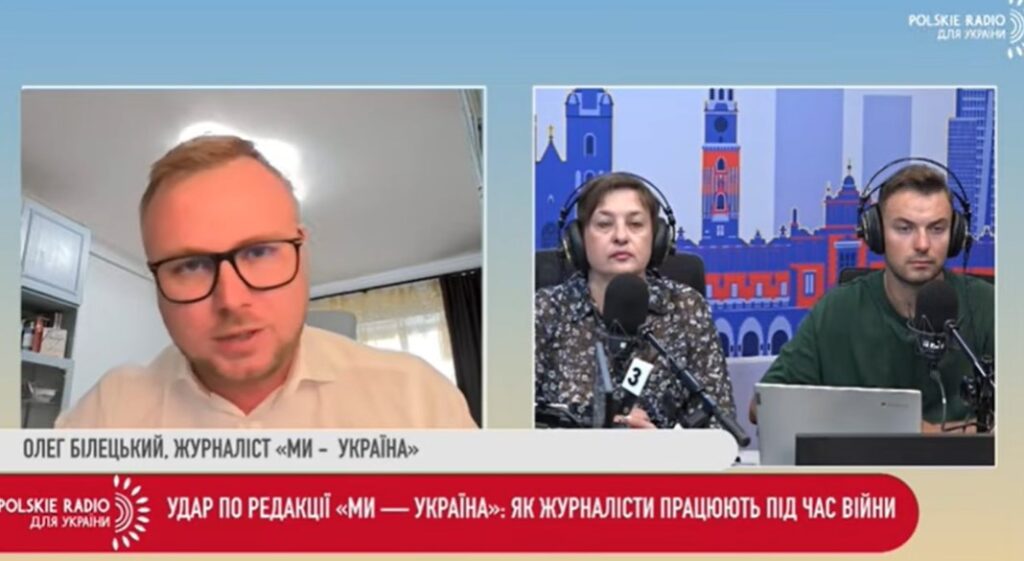
We Are Ukraine presenter Oleh Biletskyi was on the third floor of the building during the attack. After the explosion he remained on air for another 7–10 minutes, continuing the live broadcast he was hosting for radio.
“I was thrown into the air for literally a split second and dropped back to the ground. At first I did not understand anything,” he said.
When Oleh went out into the corridor, he saw the scale of the destruction: “There are effectively no walls. From the third floor you can walk straight out into the street below.”
After the attack, the team switched to remote work. The next broadcasts were to be run from a specially equipped shelter.
For NUJU, this case has become one of the key examples of how direct the threat to journalists in the capital now is.
“The attack was not over. It was simply moving across the city”
For journalists, the danger does not end with the first explosion.
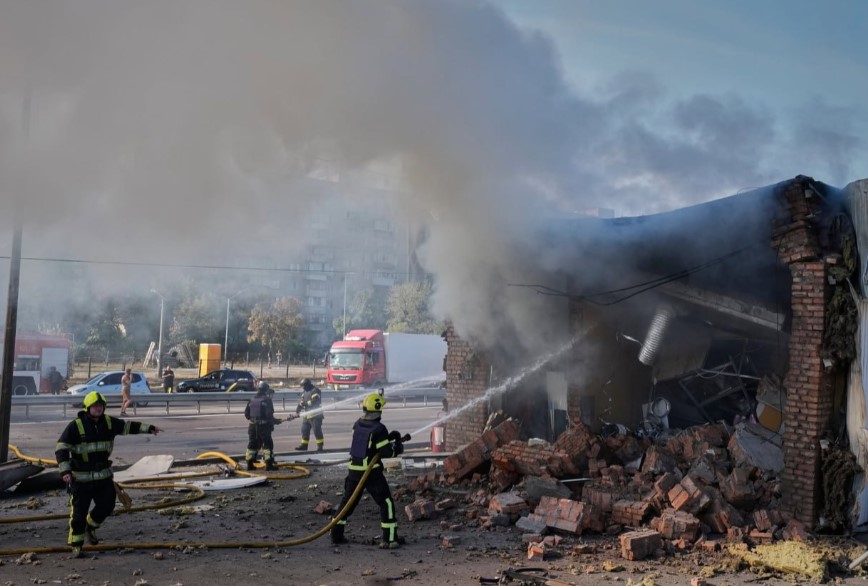
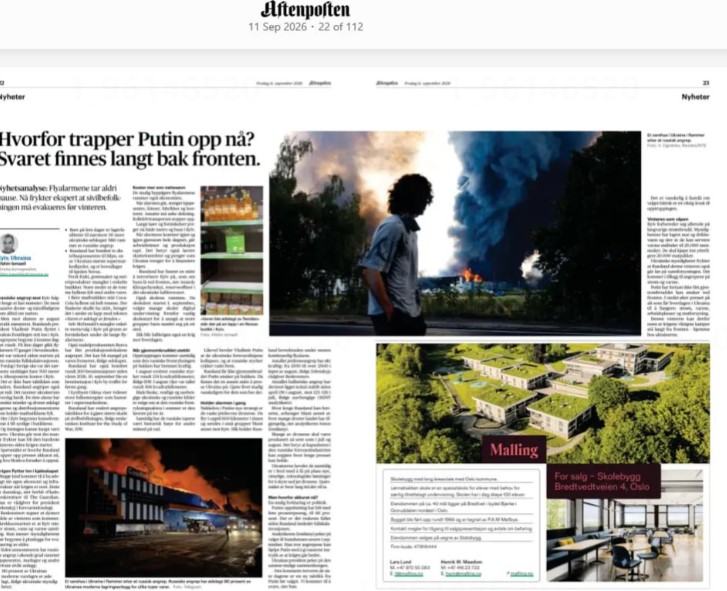
On 11 September, photojournalist Efrem Lukatsky was photographing the aftermath of a Russian attack on a gas station in Kyiv. While he was working at the scene, he received a warning: “There is a drone nearby. Take cover.”
A few minutes later he saw smoke already rising over another gas station. On his way there he noticed a car with shattered windows: a fragment had struck the passenger in the chest, and the wounded man was taken away by ambulance.
“I had not yet finished photographing the aftermath of one strike when I could already see the next column of smoke,” Efrem recalled.
The photojournalist summed it up as follows: “The attack was not over. It was simply moving across the city.”
On 8 September, Radio Svoboda war correspondent Marian Kushnir was returning to the newsroom after filming the aftermath of a strike on the building of the National Academy of Sciences of Ukraine when he heard a drone descending.
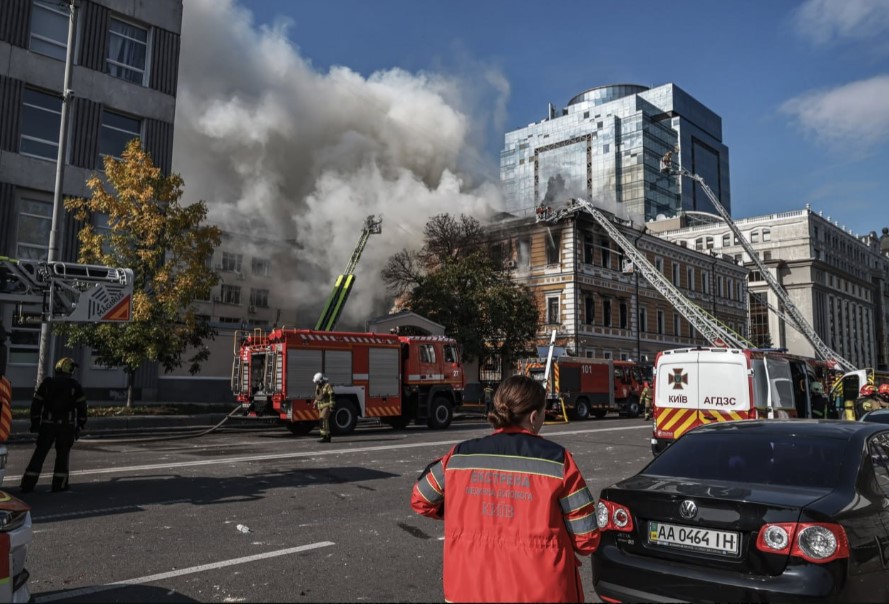
The journalist managed to press himself against a wall, jump into a recess and cover his neck with his hands.
“The strike was practically right in front of my face,” he said.
After the explosion, Kushnir immediately ran to document its aftermath. According to him, there was practically no time to look for shelter: less than two seconds passed between the sound of the drone and the impact.
This is becoming a problem in its own right for journalists: the site of a strike that has only just happened remains dangerous in itself. NUJU stresses that unexploded ordnance, mines and debris may be present there, and that there is a risk of a repeat attack.
If rescue workers are moving quickly to shelter, journalists must also take cover immediately.
Journalists’ apartments damaged, media workers killed
Russian attacks are also affecting media workers’ homes. On 2 September, another drone attack damaged the apartment of Victoria Butenko, senior producer for CNN International in Ukraine. Two jet-powered drones hit a building next to hers, and the blast wave blew out the windows.
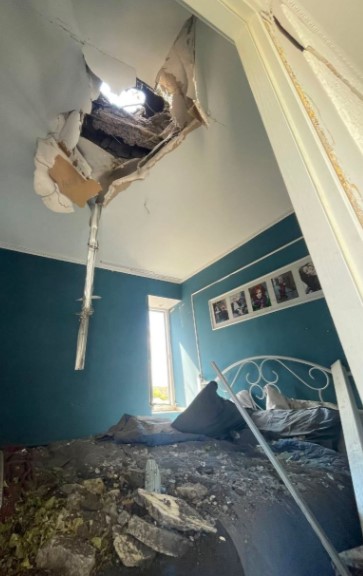
On 8 September, the apartment of Vita Holdman, founder and editor-in-chief of the media outlet Ukrainky, was damaged for the second time: “There was a strike nearby again. The blast wave knocked out all the plywood that had been covering the windows, the protective film flew off, and plaster came down from the walls and ceiling.”
Her apartment had already sustained substantial damage during the previous massive attack, on 20 August. On that occasion, fragments fell directly onto her bed.
“These pieces were meant to kill me. Now I want to put them in a frame, as a reminder that a country of evil exists,” she said.
On 25 September, a Russian drone hit a 16-story residential building in the Pecherskyi district, where Vlad Voloshyn, a presenter on the Priamyi TV channel, lived. His apartment was damaged by the blast wave. He and his family were not hurt.
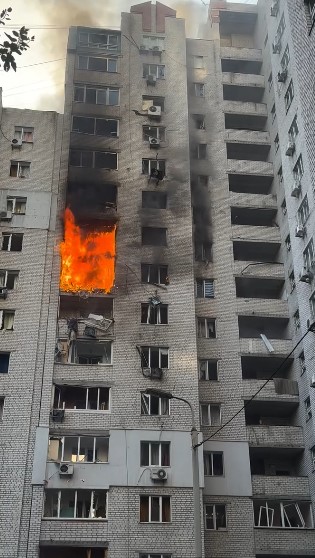
In the same building, however, a 14-year-old boy was killed and at least seven residents were injured. “We are unharmed. Alive,” Vlad Voloshyn wrote.
On the same day, a Russian strike took the life of journalist Maria Yivzhenko. She was killed in a car near the Compass FM business center in Kyiv. Until August 2026, Maria worked as a journalist at NV Business, where she wrote about defense tech and the Ukrainian IT sector; she later moved to the corporate sector. Her husband, serviceman Danylo Yivzhenko, wrote: “Today the most important person in my life was killed. My beloved wife.”
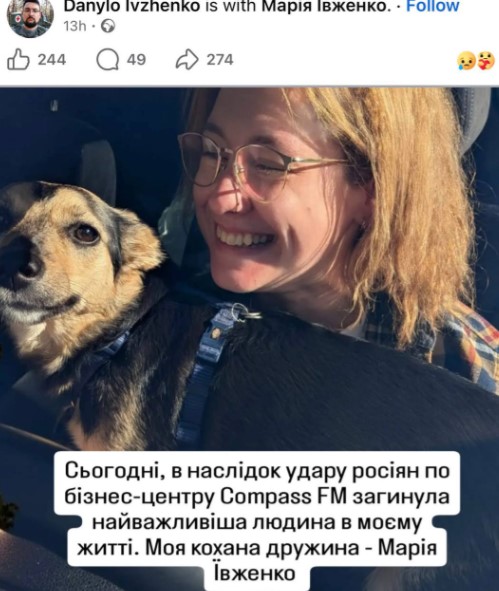
According to NUJU, Maria Yivzhenko became the 11th person on the list of colleagues who have been killed while not performing their professional duties since the start of the full-scale invasion.
A strike on a newsroom is a strike on the public’s right to know
International journalists’ organizations regard attacks on newsrooms not only as a threat to individual employees, but as a threat to the public’s right to receive information.
After the strike of 8 September, the President of the International Federation of Journalists (IFJ), Zuliana Lainez, wrote to NUJU President Sergiy Tomilenko:
“A newsroom is a civilian workplace. Journalists, editors, producers, technical staff and all media workers must be able to work safely.”
She also assured her Ukrainian colleagues: “The international journalistic community stands with you and will continue to support you in defending the right to inform.”
The European and International Federations of Journalists (EFJ/IFJ) described the strike on the Kyiv newsroom as part of a series of attacks on Ukraine’s media infrastructure.
“This is not an isolated incident, but a part of a deliberate pattern of attacks on media infrastructure in Ukraine since the war began. Every time a newsroom is hit, it is not only journalists’ lives that are put at risk, but the public’s right to know,” said EFJ General Secretary Ricardo Gutiérrez.
“Striking a newsroom while journalists are broadcasting live is a serious attack on press freedom and on the public’s right to access information,” stressed IFJ General Secretary Anthony Bellanger.
The Committee to Protect Journalists (CPJ) likewise pointed out that a newsroom is a civilian object, and stressed that the danger to journalists in Ukraine is not confined to frontline areas: it remains real in Kyiv as well.
“We are horrified to see such a serious and shocking attack on media premises in Kyiv, timed while journalists were doing their jobs. A newsroom is a civilian facility, and journalists are civilians under international law: they should never be a target,” said Fiona O’Brien, CPJ Regional Director for Europe and Central Asia.
A new target: the infrastructure that is not seen on screen
In September, Russian attacks demonstrated one more way of affecting Ukrainian media: strikes on data centers and telecommunications infrastructure. In particular, on 23 September and on 25–26 September, attacks on technological hubs caused temporary disruptions in the work of Gazeta.ua, Suspilne, Army TV, Novyny.LIVE, Priamyi, Channel 5, We Are Ukraine, Kyiv 24, STB, 1+1 and other media outlets.
On 23 September, the data center hosting the servers of Gazeta.ua was damaged, and the website temporarily went offline.
“This is not an ordinary technical failure. It is the consequence of a Russian strike on the capital’s infrastructure. Russia can damage servers. But it cannot stop our work,” the newsroom’s team stated.
After a repeat strike on the Cosmonova data center, some of Suspilne’s video players became unavailable, Army TV suspended its television broadcasting, and a number of TV channels experienced disruptions.
Ukrainian Member of Parliament Yevheniia Kravchuk called this a new format of Russian attacks: “We have seen strikes on television and radio broadcasting towers; now there is another instrument: systematic strikes on data centers and telecommunications infrastructure.”
The distinctive feature of such attacks is that a single damaged technological hub can simultaneously disrupt the work of dozens of newsrooms, affecting websites, streams, online broadcasting and other digital services.
Reporters Without Borders (RSF) described the Russian strikes on data centers in Kyiv as war crimes.
“These repeated Russian strikes on Ukraine’s telecommunications infrastructure not only affect the work of the media, but also the Ukrainian population’s right to information. These are war crimes and their gravity is undeniable,” said Pauline Maufrais and Vincent Berthier of RSF.
A strike on the media therefore no longer necessarily means a direct hit on a newsroom building. It is enough to damage the infrastructure on which the newsroom’s work depends.
Kyiv, a rear area that is no longer safe
NUJU monitors Russian attacks on media outlets and media workers in the frontline regions and reports on the situation regularly. Kyiv has now become a no less alarming place in terms of the dangers facing media workers, and the Union will therefore pay no less attention to the capital.
“Attacks on Kyiv are intensifying, attacks on the frontline territories are intensifying, and we are heading into winter,” Sergiy Tomilenko stressed.
Foreign journalists who worked in Kyiv at the beginning of the full-scale invasion compare the current situation with 2022–2023. At the start of the war, Kyiv lived through the threat of a ground offensive from the north, artillery shelling of its suburbs, and missile strikes. In 2026, the capital faces massive combined attacks involving hundreds of drones together with ballistic missiles. Whereas in 2023–2024 the city could be perceived, in the intervals between attacks, as a relatively safe rear hub, in the autumn of 2026, in the assessment of reporters, the line between the rear and the front has almost disappeared.
For journalists, the workspace is no longer limited to the newsroom. It is now the site of a strike, a street where the next drone may appear within seconds, an apartment left without windows for the second time in a month, or a data center on which the work of dozens of media outlets depends.
Yet even in these conditions journalists continue to work.
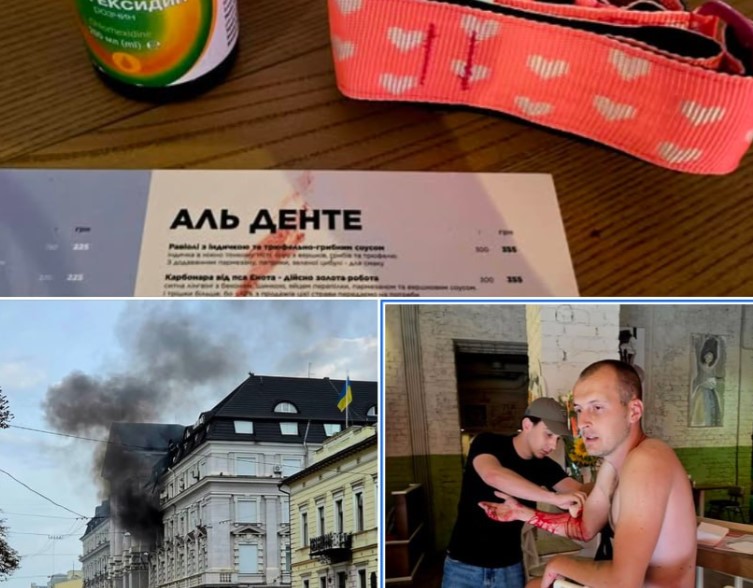
Oleh Biletskyi stayed on air after the strike. Marian Kushnir began filming the aftermath immediately after the explosion. Efrem Lukatsky moved from one impact site to the next. Yuliia Surkova and Khrystyna Berdynskykh helped a wounded passer-by.
“This resilience must not conceal the real cost: continuity of work is often sustained by the newsrooms’ own internal resources,” Sergiy Tomilenko warns.
For NUJU, the safety of journalists has become priority number one until the end of the year. In these conditions, the National Union of Journalists of Ukraine (NUJU) and its network of Journalists’ Solidarity Centers serve as the main humanitarian and security shield for media workers, providing them with body armor, tactical first-aid kits, first-aid training and mental health support.
The Kyiv Journalists’ Solidarity Center in particular, after a relatively quiet summer, moved into a mode of heightened workload as Russian attacks sharply intensified. As before, media workers can come here to work in the co-working space. As before, they can borrow a bulletproof vest, a helmet and a first-aid kit for temporary use, and now not only for assignments in the frontline zone but also for work in the city. As before, they can receive advice on where to turn in one situation or another, and take part in a safety training or a session in another format.
Recently, for example, the Center handed over five tactical first-aid kits to the Main Photo News Desk of the Ukrinform news agency.
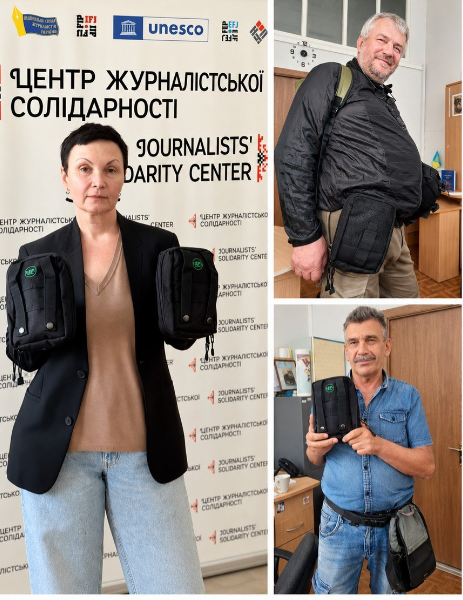
“We are grateful for the support and for not remaining indifferent,” said Maryna Sytnyk, head of the photo news preparation department at Ukrinform.
This assistance was made possible by Anna Shevchenko, a writer from the United Kingdom, who last year donated 25 first-aid kits to NUJU. Ms. Shevchenko raises the funds to purchase them, as well as to support wounded soldiers, to provide equipment for hospitals and libraries, and to rebuild the Faktor-Druk printing house in Kharkiv, which was destroyed by Russian missiles, through presentations and distribution of the English-language edition of her book of stories about the war.
In addition, at the end of September the Kyiv Journalists’ Solidarity Center held a four-hour tactical medicine training for representatives of Ukrainian and foreign media working in Kyiv, among them staff of Polish Television.
“Under the guidance of a qualified trainer, Volodymyr Romanchuk, media workers learned how to respond to various emergencies, in particular those involving injuries. This is now needed not only for trips to dangerous zones, but also for work in Kyiv,” notes Illia Suzdaliev, coordinator of the Kyiv Journalists’ Solidarity Center.
A great deal is indeed being done, but is it enough? In many cases the Journalists’ Solidarity Centers work pre-emptively, assessing possible scenarios in advance. At present, the entire network of Centers is assessing the likelihood of a relocation, on a larger scale than before, of media outlets and media workers who find themselves in dangerous zones. And whereas in previous years many journalists sought to move from the frontline territories to Kyiv, where it was nevertheless safer, the capital has now also found itself in the risk zone.
However, given the intensification of attacks and the need for a possible relocation of newsrooms from high-risk zones, the Ukrainian media sector’s and NUJU’s own resources for supporting media outlets and media workers are becoming insufficient. It is therefore necessary to count on the support of international partners, all the more so because they understand how difficult the current conditions are.
“Every time a newsroom is hit, it is not only journalists’ lives that are put at risk, but the public’s right to know,” Ricardo Gutiérrez noted.
Systematic cooperation with international partners is therefore a critically important condition today for Ukraine’s independent media to continue working safely and fulfilling their mission.
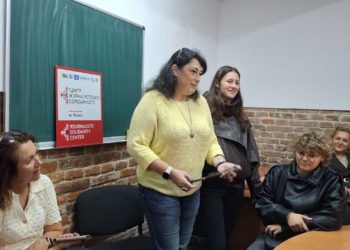
Against this backdrop, NUJU set up the International Advisory Council of the Journalists’ Solidarity Centers on 24 August 2026. The Council brings together leaders of media associations and trade unions from countries including Norway, Germany, Denmark and Italy, along with experts on press freedom and journalists’ safety. Its members serve as volunteers and in a personal capacity. Among other things, the Council assesses the risks facing reporters and independent media in wartime, advises NUJU on how its Journalists’ Solidarity Centers (JSCs) should develop, and takes on international advocacy, matching what Ukrainian newsrooms actually need with expertise from abroad and making sure accurate information reaches audiences around the world. Its next meeting is now being planned.
“Setting up the International Advisory Council is an important step toward closer cooperation with the partners abroad who are helping Ukrainian media get through this war,” said NUJU President Sergiy Tomilenko. “Since the first days of the full-scale invasion, our Journalists’ Solidarity Centers have been the place colleagues turn to when they are in trouble, have lost their jobs or are working on the front line. With international experts and partners on board, we can make our help more effective, more consistent and more tangible for every journalist and every newsroom that needs it.”
Over the summer of 2026, a range of support activities for Ukrainian media workers, including psychological support, took place with backing from Ukrainian Media Fund Nordic (UMFN), an international charitable initiative of publishers and media companies in Norway, Sweden, Finland and Denmark. The fund was set up in solidarity with Ukrainian journalists and to give sustained support to independent print and digital outlets that have kept working through the full-scale war. Its partners include leading northern European media associations, among them the Swedish Media Publishersʼ Association (Tidningsutgivarna, TU). NUJU and UMFN have worked together on many fronts since the first days of the full-scale invasion. One example is NUJUʼs project Strengthening the Energy Independence of Ukrainian Media, supported by the Ukrainian Media Fund, which sent 50 devices across the country, from Cherkasy and the Sumy region to Zaporizhzhia and Kherson.
As we reported earlier, the NUJU Secretariat, meeting online on 10 September, named journalistsʼ safety its top priority for the rest of the year. The priorities discussed at the meeting were safeguarding journalists and newsrooms, the safety of media workers, defending freedom of speech, supporting regional organizations and NUJU’s own organizational resilience.
| Ten cases in one month
During September, NUJU recorded ten verified cases in which Russian attacks had a physical impact on civilian journalists, newsrooms and media infrastructure. Three of them involved damage to newsrooms and media infrastructure, and three involved damage to journalists’ homes; in three cases journalists came under Russian attack, and in one more a media worker’s property was destroyed. Separately, the Union verified a case of a UAV attack on journalist Kseniia Kleshchenko that took place in August, and documented three losses among media workers. Over four years, NUJU’s Journalists’ Solidarity Centers have handled more than nine thousand requests in six cities. At the same time, newsrooms continue to work even after strikes. In August, NUJU recorded damage to five media outlets and media infrastructure facilities in Kyiv, Zaporizhzhia, and the Kharkiv, Donetsk and Kherson regions. None of the five affected media outlets stopped working. This is why attacks on the media have a double effect: they threaten the lives of people who work in journalism, and at the same time they strike at the very mechanism through which society learns what is happening. |
***
The network of Journalists’ Solidarity Centers is an initiative of the National Union of Journalists of Ukraine, implemented in cooperation with the International and European Federations of Journalists and UNESCO, and with the support of the people of Japan. Our main goal is to help media workers who are working in Ukraine during the war. The Centers operate in Kyiv, Kharkiv, Zaporizhzhia, Dnipro, Lviv-Sumy and Ivano-Frankivsk. This project is part of UNESCO’s broader efforts to support the safety of journalists and freedom of expression in Ukraine.
NUJU Information Service












Discussion about this post