

 THE NATIONAL UNION OF
JOURNALISTS OF UKRAINE
THE NATIONAL UNION OF
JOURNALISTS OF UKRAINE
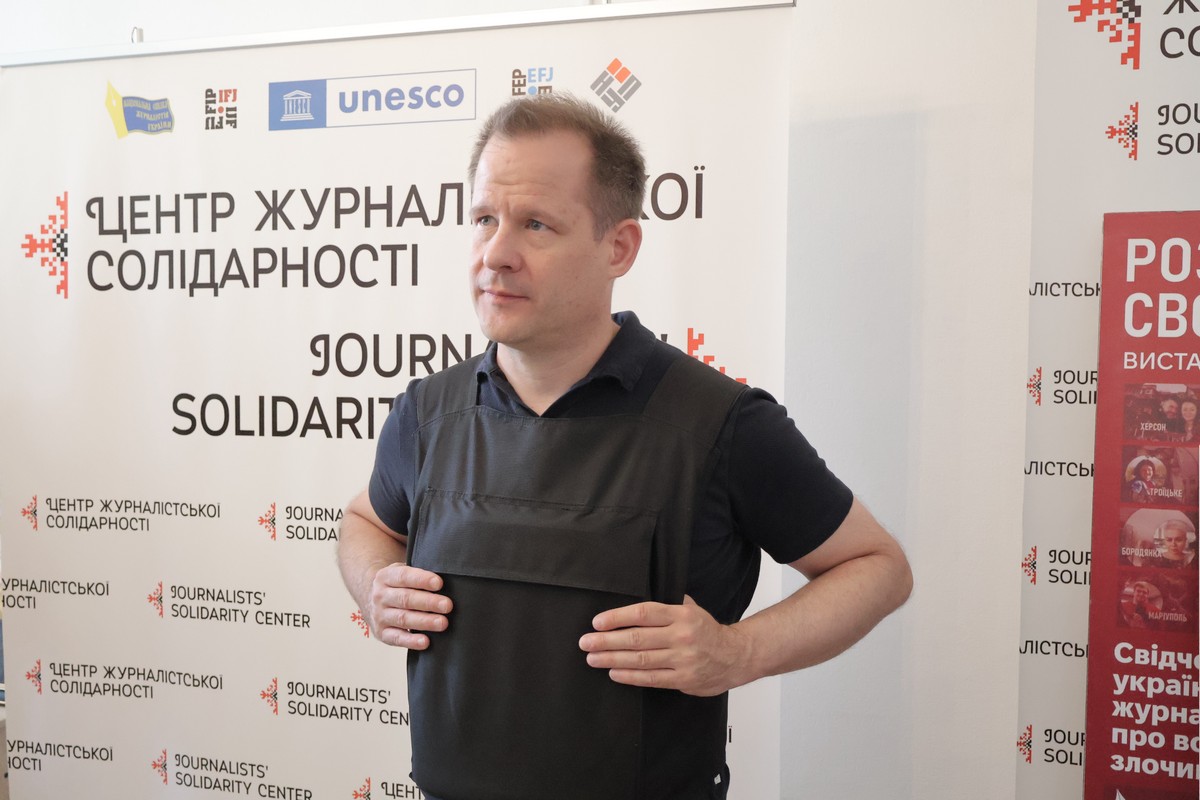
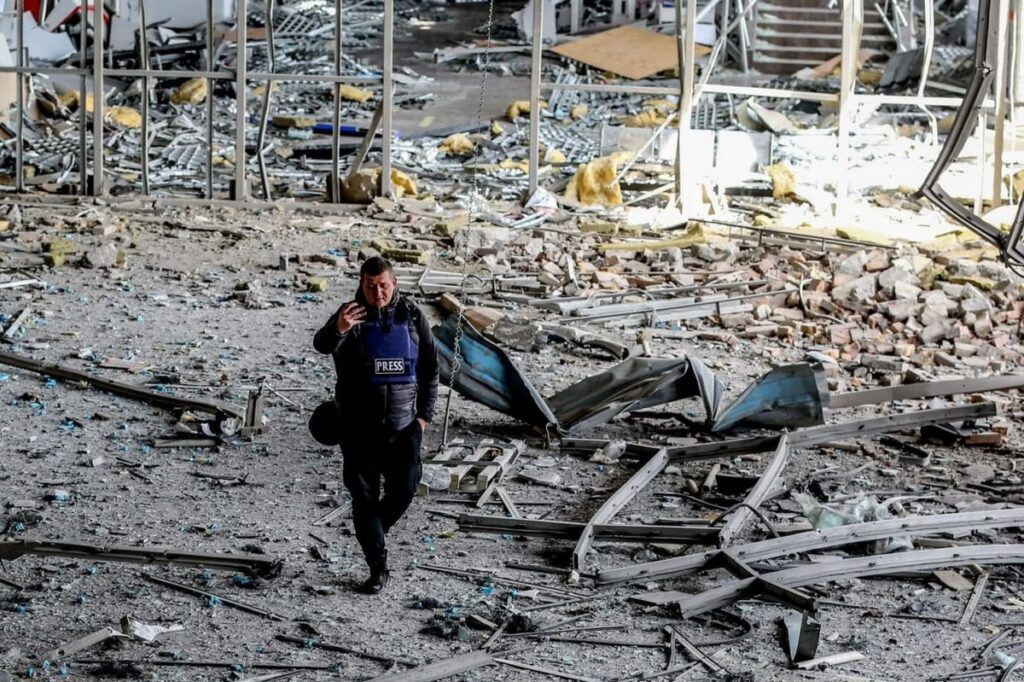
For generations of war correspondents, the word “PRESS” symbolised protection. In Ukraine, it increasingly symbolises exposure. As Russia expands its use of FPV drones, journalists are being forced to rethink almost every established rule of reporting from conflict zones.
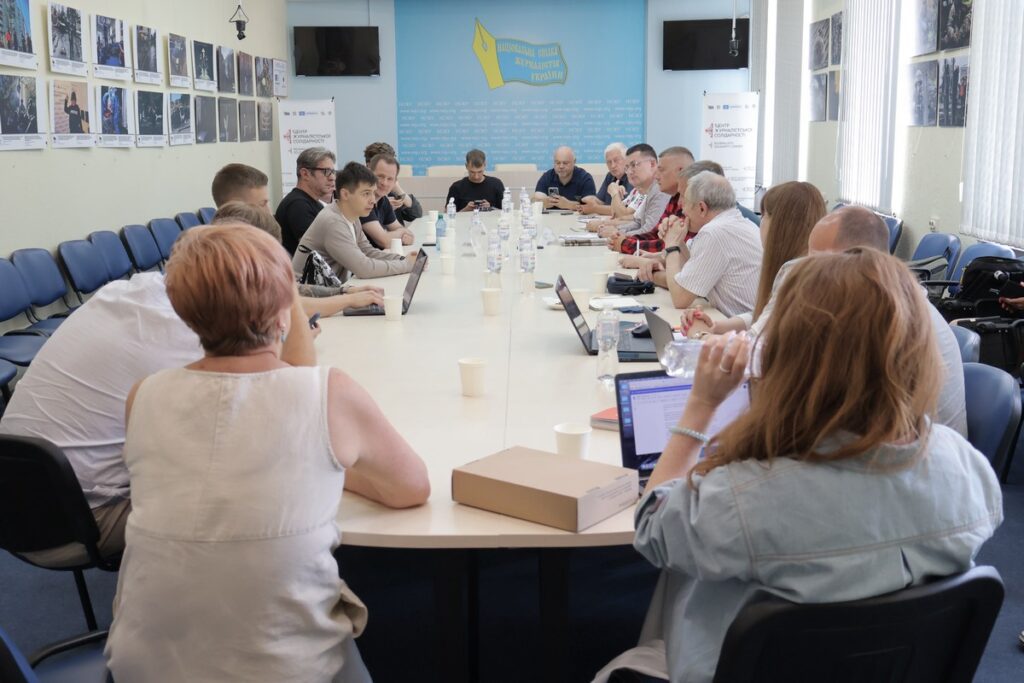
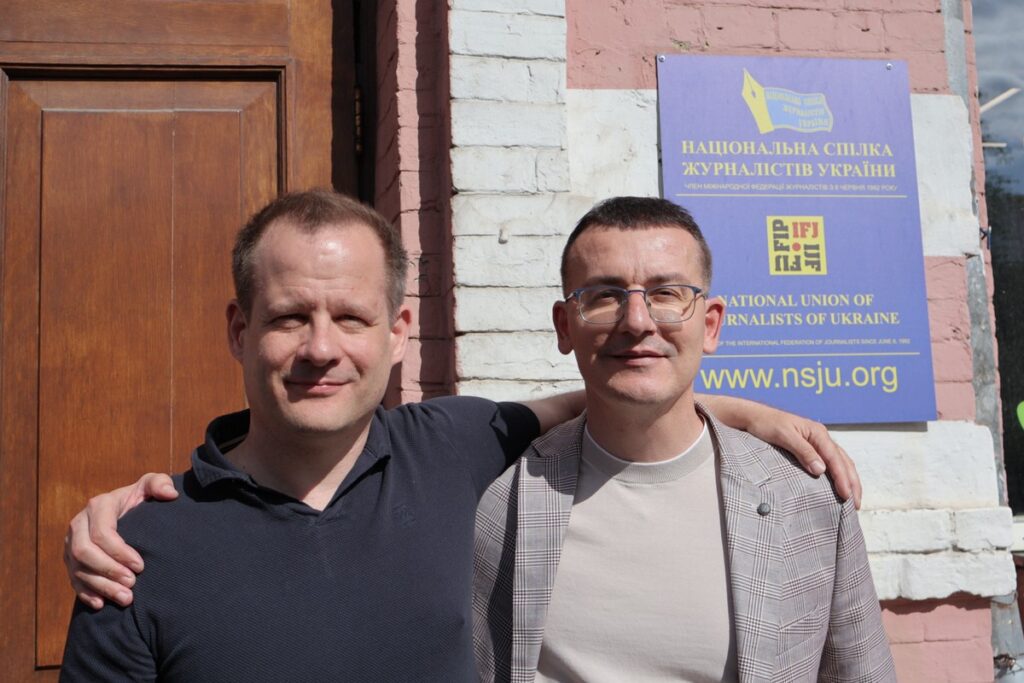
These were among the conclusions shared by Ukrainian war correspondents during the international discussion Media Resilience and Journalists’ Safety in Ukraine, hosted by the National Union of Journalists of Ukraine (NUJU) in Kyiv. The meeting brought together Ukrainian frontline journalists and a delegation of European media leaders led by Mika Beuster, President of the German Federation of Journalists (DJV) — Germanyʼs largest journalistsʼ organisation, representing around 27,000 media professionals and one of the leading members of the European Federation of Journalists (EFJ).
Beuster’s visit marked the first time that a serving president of an EFJ-affiliated national journalists’ union travelled to Ukraine during the full-scale war. It also reflected the deepening partnership between NUJU and DJV, built on years of practical solidarity. In 2024, NUJU President Sergiy Tomilenko addressed the DJV Federal Congress, urging European journalists not to let Ukraine disappear from the headlines. His appeal inspired a solidarity fundraising campaign organised by German journalists, enabling six frontline local newspapers and several war correspondents to continue their work despite constant shelling. During a return visit to Berlin in December 2025, Tomilenko presented Beuster with the NUJU flag as a symbol of gratitude and partnership, together with copies of frontline newspapers whose publication had been sustained through German support.
Joining Mika Beuster in Kyiv were Dr Wolfgang Ressmann, a NUJU member and coordinator of the German-Ukrainian Mediadialog project supported by the German Federal Foreign Office, and Xhabir Deralla, President of CIVIL – Center for Freedom (North Macedonia).
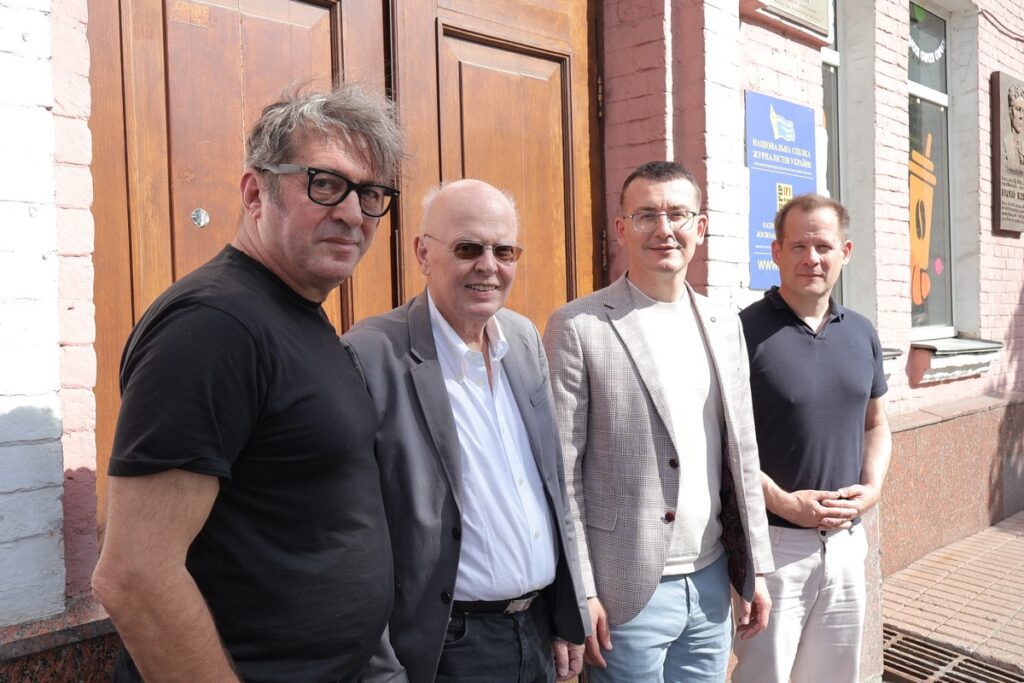
The delegation came to listen directly to those documenting Russia’s war every day. Around one table sat war correspondents, editors, journalists who survived Russian captivity, representatives of frontline media and coordinators of NUJU’s nationwide network of Journalists’ Solidarity Centres.
Their testimonies painted a current picture of a profession: Ukraine is no longer simply adapting to new threats — it is generating knowledge that is reshaping international thinking about journalists’ safety. Drawing on the experience of frontline reporters, NUJU has developed practical recommendations for reporting under drone threat, expanded the distribution of drone detectors through its nationwide network of Solidarity Centres, and is advocating within the International Federation of Journalists (IFJ), the European Federation of Journalists (EFJ) and the OSCE for updated safety protocols that reflect the realities of modern warfare.
The frontline is no longer measured in kilometres
For journalists covering wars, distance from combat has traditionally been one of the key safety factors. Ukrainian correspondents say that this approach no longer reflects the reality of today’s battlefield.

Russian FPV drones have significantly expanded the danger zone. Reporters can now face attacks while travelling on roads, working in towns or documenting the consequences of strikes far from the immediate contact line. Andriy Kovalenko, war correspondent, international media producer and Executive Director of the Academy of Ukrainian Press, stressed that the nature of risk has fundamentally changed.
“The working conditions of Ukrainian journalists have changed dramatically. This war has changed the profession of a war journalist,” he said.
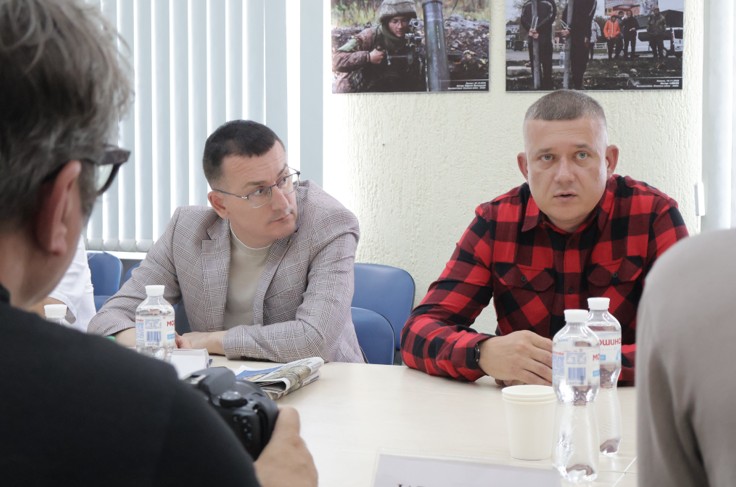
According to Kovalenko, the assumptions that guided frontline reporting in 2022 no longer reflect reality. Reporters once measured danger by their distance from artillery fire and sought protection in shelters. Today, those calculations have become obsolete. Russian FPV drones, loitering munitions and other unmanned systems have expanded the battlefield far beyond the traditional front line. Cities such as Zaporizhzhia, Kharkiv and Sumy, once considered relatively safer locations for reporting, now regularly fall within the range of drone attacks.
Describing a recent assignment with German journalist Florian Hassel across the Donetsk, Kharkiv and Zaporizhzhia regions, Kovalenko said modern warfare increasingly resembles a combination of Mad Max and Star Wars.
“Anti-drone nets, ground robotic systems, drones of every imaginable type—you have to see it to understand it,” Andriy explained. “For journalists, survival now depends on keeping pace with how rapidly this war is changing.”
That means adapting equipment as well as working methods. Heavy body armour designed for earlier conflicts can reduce mobility at the very moment when speed is essential.
“Journalists need lighter body armour that still provides Class IV protection,” Kovalenko said. “You need protection for the neck and sides, but you also need to be able to move quickly when a drone is hunting you.”
When PRESS markings become a dilemma
For generations of war reporters, the word PRESS represented protection. International standards encouraged journalists to make their identity visible in order to distinguish them from combatants. Ukrainian correspondents now warn that modern drone warfare has changed this calculation. From the air, drones can detect vehicles, cameras and unusual movement. A visible press marking may not stop an attack and, in some situations, may make journalists easier to identify.
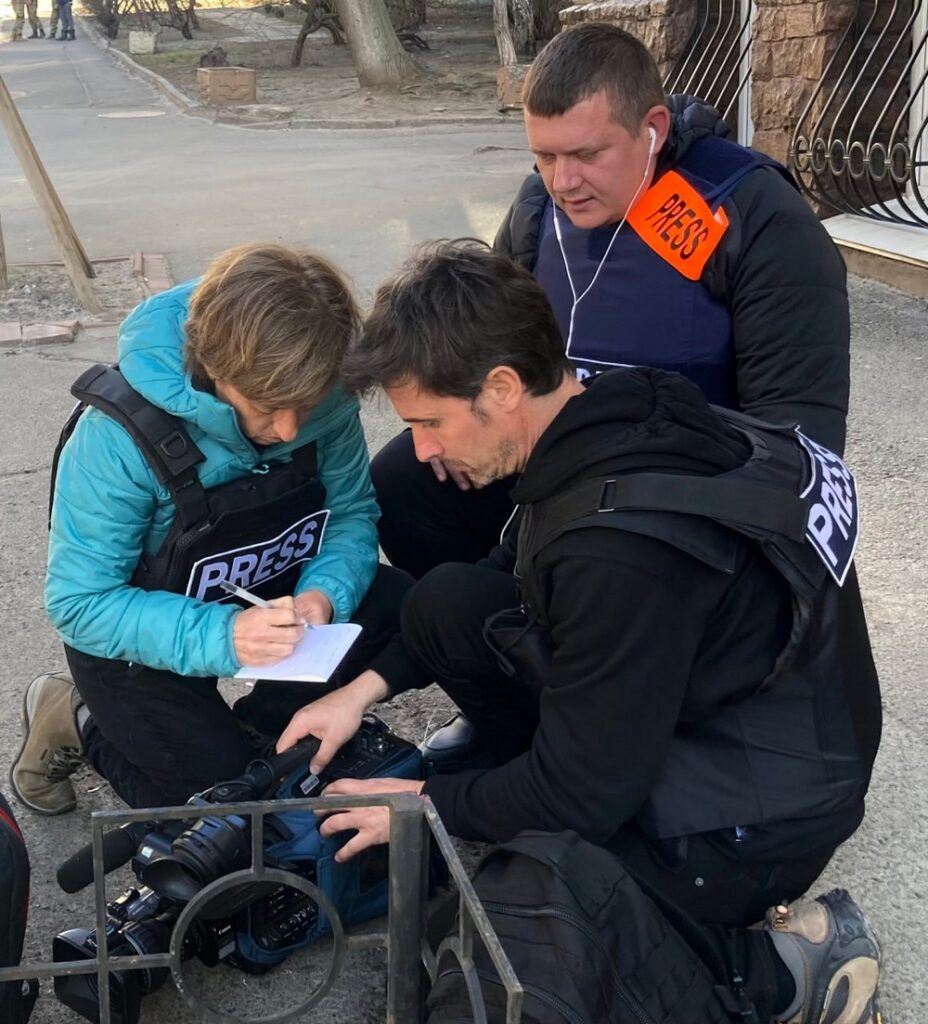
According to Ukrainian frontline reporters, PRESS markings no longer guarantee protection. This does not mean that journalists are abandoning their professional identity. Rather, Ukrainian reporters argue that international safety recommendations must be reconsidered in light of how contemporary warfare is actually conducted.
The experience of Ukraine demonstrates that safety protocols developed for previous conflicts cannot simply be transferred to an environment where small, highly mobile drones can target people and vehicles far beyond traditional battle zones.
Drone detectors provide critical seconds
Another major change in frontline reporting is the role of technology. Ukrainian journalists increasingly describe drone detectors as essential equipment, comparable to helmets and body armour. These devices can warn crews about nearby threats and provide valuable time to change position, find cover or leave a dangerous area.
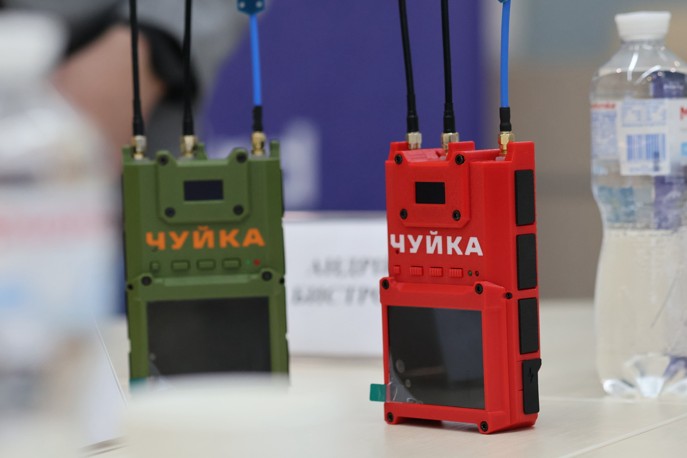
Drone detectors, frontline colleagues argue explained, do not stop attacks. They provide additional seconds that can save lives. At the same time, journalists emphasise that detectors are not a complete solution. Some modern threats, including fibre-optic drones, remain difficult or impossible to identify with existing systems.
For this reason, Ukrainian correspondents stress that safety cannot depend on one piece of equipment alone.
Safety is built from layers, not a single device
War correspondent and video journalist Vitalii Virchenko, who regularly works with international broadcasters including BBC and Deutsche Welle, agreed that drones have become the defining threat for journalists working near the frontline. His experience, he said, has fundamentally changed the way reporting missions are planned.
“Whenever possible, we avoid travelling in military vehicles or heavily armoured SUVs,” Virchenko explained. “Instead, we use ordinary civilian cars. Our safety is, first and foremost, our own responsibility.”
He recalled a recent assignment in the Kharkiv region that demonstrated both the value and the limitations of current safety technology. After filming, two Russian FPV drones appeared above the team’s position. Their drone detector remained silent.
For Virchenko, journalist protection must rely on multiple, complementary layers. Drone detectors provide valuable warning time, but they should be combined with every available protective measure. Technology alone, however, is not enough. Experience and instinct remain equally important tools for survival.
His experience reinforces a broader conclusion shared throughout the discussion: protecting journalists in today’s war is no longer about following a single safety protocol. It requires constant adaptation, professional judgement and a combination of equipment, training and experience that evolves as quickly as the battlefield itself.
The experience of Ukrainian journalists shows that safety in modern warfare is no longer only about protective gear. A journalist working in frontline areas now requires a combination of:
- protective equipment adapted to current threats;
- drone detection systems;
- specialised safety training;
- communication and coordination procedures;
- legal and emergency assistance;
- psychological support after traumatic assignments.

Journalist Yuliia Surkova, who has extensive experience covering the war for international media, highlighted the growing psychological impact of frontline reporting.
Journalists return from assignments carrying not only footage and stories, but also experiences that can affect their mental health long after publication. Psychological recovery, participants argued, must become a recognised part of journalists’ safety alongside physical protection.
NUJU is helping build a new model of journalist safety
The National Union of Journalists of Ukraine has made journalists’ safety one of its central priorities during the full-scale war.
Through its nationwide network of Journalists’ Solidarity Centres, NUJU provides reporters with protective equipment, drone detectors, specialised training, legal assistance and psychological support. The network has become a critical infrastructure for journalists working in frontline and recently attacked regions.
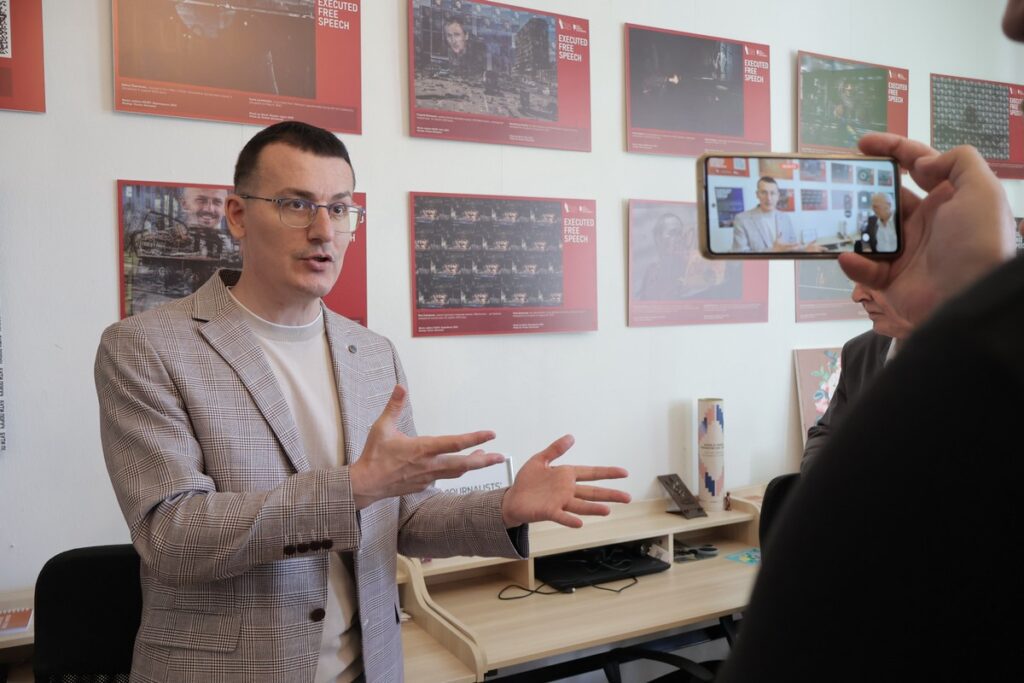
Based on the experience of Ukrainian war correspondents, NUJU has also developed practical recommendations for reporting under drone threat and continues advocating with international partners for updated safety standards.
NUJU President Sergiy Tomilenko said that international solidarity today must have a practical dimension:
“When the president of Germany’s largest journalists’ organisation comes to Kyiv during wartime, his questions matter more than any speech. The most important thing our guests take back from Ukraine is the understanding that international support has a very concrete meaning: drone detectors, body armour, psychological assistance and support for local media working during the war.”
Ukraine’s experience is becoming a global lesson
The transformation of journalism under drone warfare is not only a Ukrainian issue. As drones increasingly influence conflicts around the world, the challenges faced by Ukrainian reporters are becoming relevant for journalists everywhere. The experience gained on Ukrainian frontlines is already shaping discussions about future safety standards for media professionals working in conflict zones.
The message from Ukrainian journalists is straightforward:
Those rules that protected reporters in previous wars are no longer enough. Modern warfare requires modern safety systems — and those systems must be built together with the journalists who face these threats every day.
Valeriia Muskharina
NUJU Information Service












Discussion about this post