 THE NATIONAL UNION OF
JOURNALISTS OF UKRAINE
THE NATIONAL UNION OF
JOURNALISTS OF UKRAINE
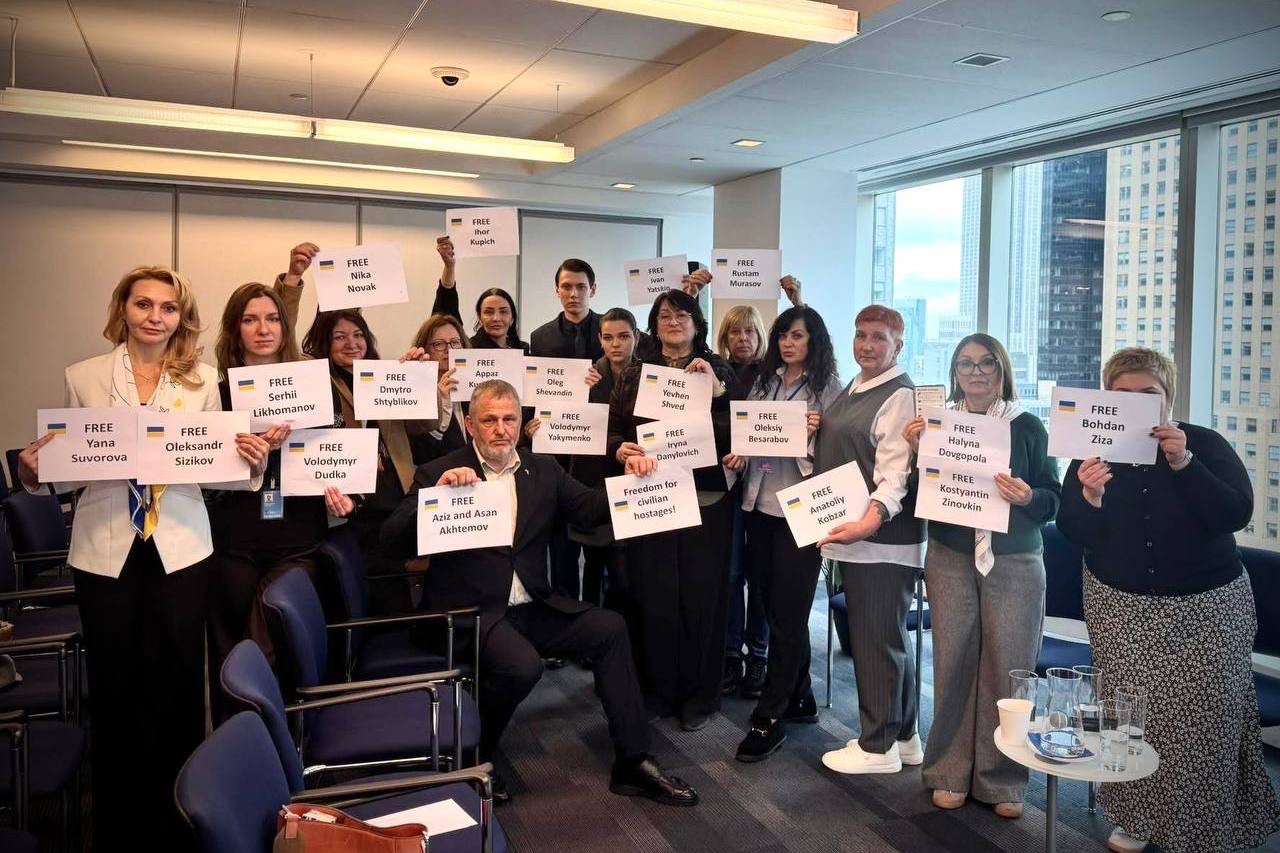
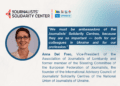
The advocacy event during the 70th session of the UN Commission on the Status of Women was organized by the National Union of Journalists of Ukraine (NUJU) and the NGO NUMO, Sisters!, in partnership with CPJ, PEN America, and the EU Delegation to the UN – New York, March 2026. Photo by NUJU
According to verified monitoring by the National Union of Journalists of Ukraine (NUJU), at least 28 Ukrainian journalists and media workers remain unlawfully detained by the Russian Federation as of 20 July 2026, following arbitrary detention, politically motivated persecution, fabricated criminal charges, or imprisonment in occupied territories. Most are civilians held without due process, and several are kept incommunicado, with no confirmed charges, no accessible court proceedings, and in some cases no official acknowledgement that the detention took place at all.
Under international humanitarian law, including the Fourth Geneva Convention, the taking of civilian hostages is prohibited. Russia is documented as frequently using criminal charges such as “espionage” or “terrorism” to reclassify detained civilians and legitimize their detention. Transfers between facilities in occupied Crimea and Russia proper further complicate tracing and leave families reliant on delayed or fragmented information.
The death of Ukrainian journalist Victoriia Roshchyna in Russian custody in September 2024 continues to underscore fears for the safety of the media workers still held.
NUJU maintains and regularly updates this record as new information becomes available, including cases of release through prisoner exchanges or, in the gravest circumstances, confirmed deaths in captivity.
“When a journalist ends up behind bars, part of the truth ends up behind bars too”
On 18 June 2026, Ukraine’s Ambassador to Türkiye Nariman Dzhelyal — a Crimean Tatar journalist, civic activist and former Kremlin political prisoner — delivered the keynote address at the Annual Meeting of the European Federation of Journalists in Ankara.
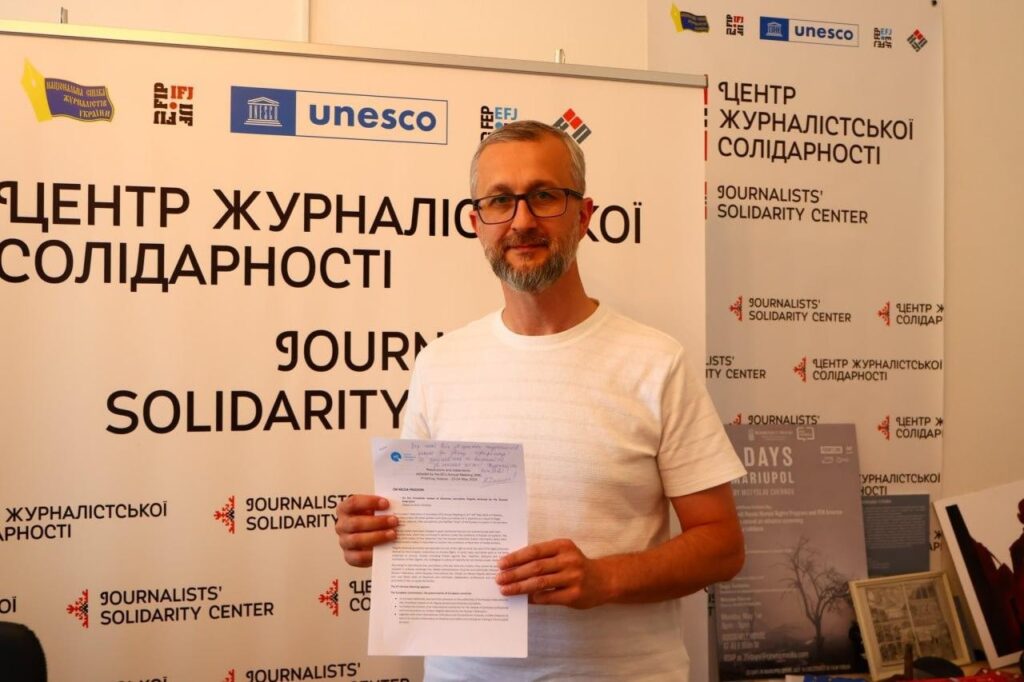
Only a few years earlier, his name appeared on the solidarity lists that the NUJU presented at EFJ and IFJ congresses. In September 2021, Russian occupation authorities in Crimea arrested Dzhelyal and sentenced him to 17 years in prison on fabricated charges. After nearly three years in Russian captivity, he was released as part of a prisoner exchange.
Speaking to journalistsʼ leaders from across Europe, Dzhelyal described the destruction of independent journalism in occupied Crimea and the role of citizen journalists who kept documenting reality after the peninsula was occupied.
“Occupation does not begin only with soldiers. It begins with control over information,” he said.
Once professional journalism in Crimea had become all but impossible, the Ambassador explained, ordinary people took its place, recording searches, arrests, politically motivated trials and human rights violations.
“They took out their phones. They recorded. They collected testimony. They published information,” Dzhelyal said. “These people performed the most important function of journalism — they did not let reality disappear.”
That is why many citizen journalists became targets of repression themselves. Nariman reminded delegates of the Crimean colleagues who remain in Russian prisons, among them Asan Akhtemov, Osman Arifmemetov, Server Mustafayev, Amet Suleymanov and Iryna Danylovych.
“They had different professions and different fates, but one thing united them: they refused to stay silent,” he said. “In occupied Crimea today you do not need to organise a protest. You do not need to openly resist. Sometimes it is enough simply to document, to ask a question or to publish information… When a journalist ends up behind bars, part of the truth ends up behind bars too.”
On 19 June, delegates adopted the motion “On continued solidarity with Ukrainian journalists unlawfully detained by the Russian Federation”, pressing for intensified diplomatic and sanctions pressure and concrete steps towards their release.
Iryna Levchenko: forty years in the profession and three years in captivity
One of the detainees is Iryna Levchenko, 64, a NUJU member and a journalist with four decades of experience in national and regional media. She had retired before the occupation of Melitopol and told the Russian authorities that she was no longer an active journalist, explaining that she had stayed only to care for her elderly parents. Despite this, she and her husband, Oleksandr, were detained on 6 May 2023. Oleksandr was released after one year and four months, but Iryna remained in captivity.
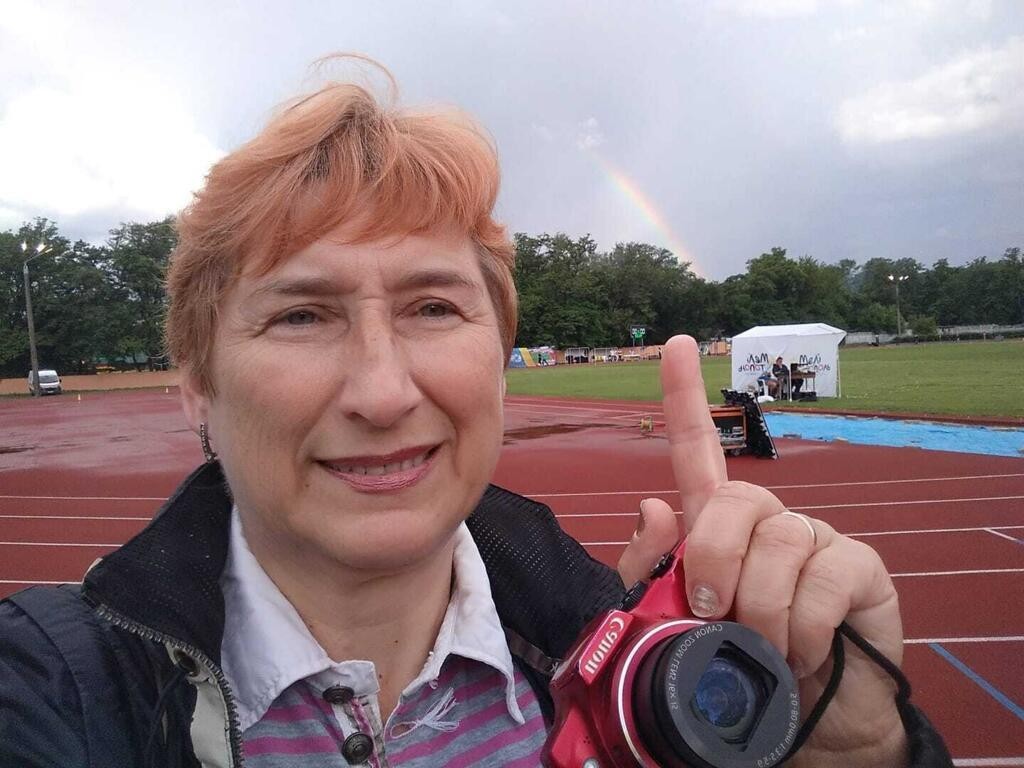
For more than two years, her family did not know whether she was alive. The first confirmation came after 25 months, in a letter she sent to her lawyer through the Russian prison system. It had passed censorship and was therefore short and neutral, but in it she wrote that she was alive and held in a pre-trial detention centre in Donetsk, and asked that her colleagues be told about her situation.
Since then, Iryna has been moved between detention facilities in occupied territory — Donetsk, Mariupol, Melitopol, and occupied Crimea. In June 2026, Levchenko was transferred from occupied Crimea to Krasnodar, Russia. The transfer took place overnight in overcrowded transport vehicles without ventilation, along with other detainees moved from the Simferopol SIZO. Her family reports that she is currently held in a facility affected by power and water outages, with limited basic supplies. According to the NUJU’s latest information, Iryna is due to be transferred to Rostov-on-Don.
There is no verdict and no publicly disclosed charge. Her case is being handled by the FSB. From the lawyer found with the help of her sister and family, NUJU has learned that she may be charged with espionage on behalf of the Ukrainian army: the Russians point to three photographs of occupied Melitopol found on her phone as evidence. The union fears a sentence of up to 16 years.
Anastasiia Hlukhovska: a disappearance Russia does not acknowledge
Anastasiia Hlukhovska, 33, worked as a reporter for RIA Melitopol. Under occupation she stopped working and withdrew from public life in an attempt to keep a low profile and reduce personal risk. It did not help: before dawn on 20 August 2023 she was swept up in an FSB operation against an alleged pro-Ukrainian network and driven away. In official correspondence Russia has maintained that it never detained her at all, which is a defining feature of incommunicado detention.
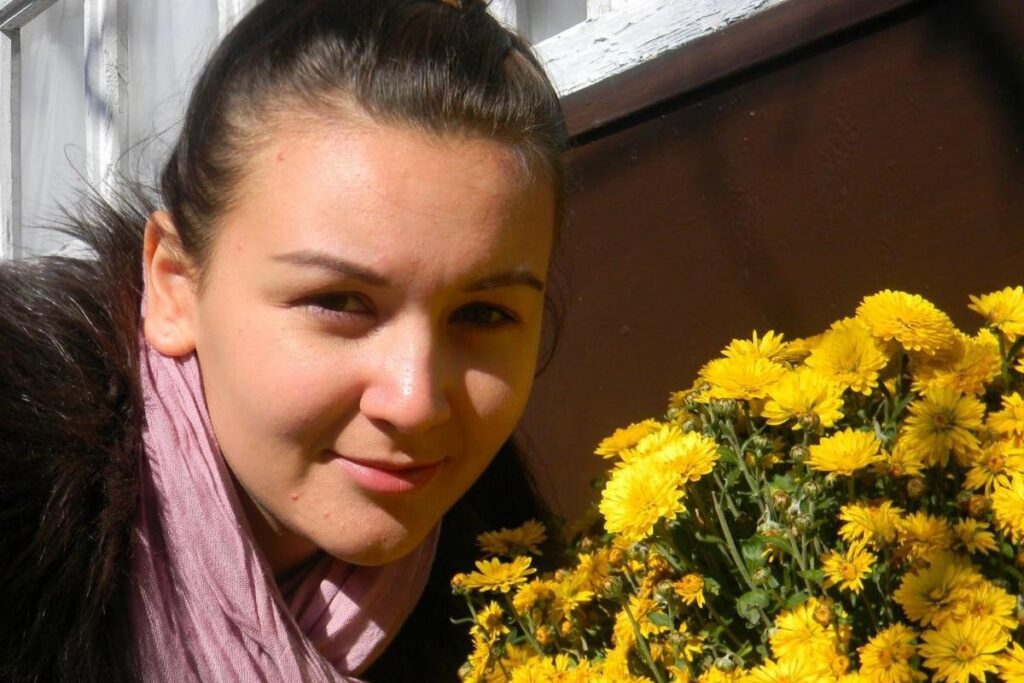
Investigations, notably by Slidstvo.Info, and testimony from released prisoners have pieced together a detention trail: a basement torture site in Melitopol, then Pre-Trial Detention Centre No. 2 in Taganrog, and later Detention Centre No. 3 in Kizel, Perm Krai, more than 2,000 kilometres from home.
In June 2026, new information obtained by the NUJU from a close source and corroborated by testimonies of recently released detainees indicated that Hlukhovska is alive and being held in Kizel. These were the first reports confirming she was alive after several years without any contact. RSF later reached the same conclusion based on testimonies from recently released Ukrainian prisoners. She is reported to have had her head forcibly shaved upon arrival, to have previously gone on hunger strike, and to suffer from health problems, including swelling in her legs. She is also allegedly required to work in a sewing workshop within the facility.
“Russia does not accuse journalists of being journalists”
On 10 July 2026 the influential Czech outlet Seznam Zprávy published an interview with NUJU President Sergiy Tomilenko. Speaking to journalist Anna Dohnalová, he discussed the colleagues held in Russian prisons, Russian drones hunting reporters marked PRESS, and the role of small newspapers in front-line districts.
“Russia does not accuse journalists of being journalists. They are portrayed as extremists, terrorists or spies,” Tomilenko said.
The pressure on those imprisoned also has a legal dimension, he explained: journalists in occupied territories are pushed to accept Russian citizenship, because under Russian law holders of a Russian passport face shorter sentences, while those who remain Ukrainian citizens receive far harsher ones.
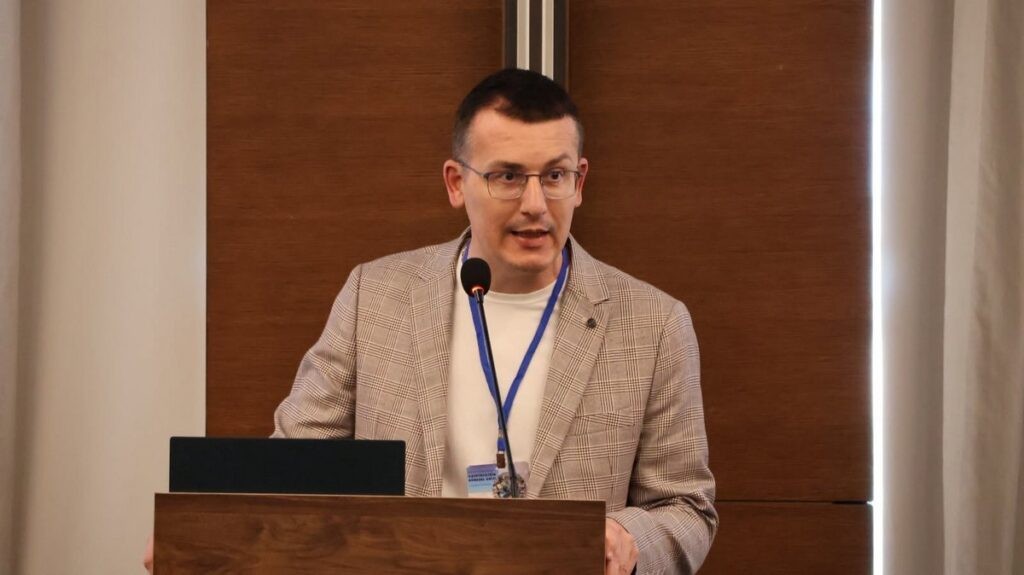
There are currently no clear rules for exchanging civilians, and cases such as Dzhelyalʼs release remain exceptions. That, Tomilenko said, is why every mention of an imprisoned journalist’s case matters.
“Every piece of news or article is a gesture of solidarity for them and proof that the world has not forgotten them,” he said.
A separate strand of the work is support for the families of detained journalists. Three months ago NUJU secured limited funding and began providing financial assistance to the families of some imprisoned colleagues.
What NUJU and its partners are doing
NUJU runs a sustained campaign combining international advocacy, public pressure and direct support for the families of the detained, in coordination with international partners.
— EFJ Annual Meeting (2026, Ankara): delegates adopted a motion “Оn continued solidarity with Ukrainian journalists unlawfully detained by the Russian Federation,” pressing for intensified diplomatic and sanctions pressure and concrete steps toward their release.
— IFJ–EFJ campaign materials: “We Thought We’d Be Safe” — a joint IFJ/EFJ feature telling the story of Ukrainian journalist Iryna Levchenko.
— United Nations: in March 2026 NUJU and its partners convened a side event at the 70th Session of the UN Commission on the Status of Women in New York, spotlighting the targeted persecution of Ukrainian women journalists.
— United States: with CPJ, NUJU brought detained journalistsʼ cases to the U.S. Department of State and Congress, calling for their release to be made a diplomatic priority.
— Civil society advocacy and public campaigns: on 19 June 2026, nationwide actions in Ukraine called for the release of civilian women in Russian captivity, including journalists. The initiative was organised by NGO Numo, Sisters!. At the Kyiv rally, NUJU First Secretary Lina Kushch highlighted the exclusion of civilian women from negotiation processes and urged stronger attention to cases including Iryna Levchenko and Anastasiia Hlukhovska.
— NUJU monitoring reports: “Attacks on the Ukrainian Media Sphere in 2026” (5 May 2026) — analytical report documenting verified cases of attacks on journalists and media infrastructure, including evidence on journalists held in Russian captivity.
— “Free The Voices” documentary: premiered in Brussels on 26 May 2026 with the Brussels Press Club, the International Commission on Missing Persons (ICMP) and partners. The film follows six journalists who survived Russian detention and bears witness to those still held.
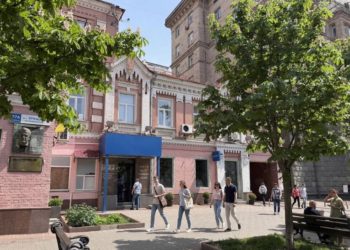
— “Executed Free Speech”: an NUJU video series and photo project documenting imprisoned media workers, exhibited at the Palace of Europe in Strasbourg and the Kyiv Journalistsʼ Solidarity Centre.
NUJUʼs list of journalists held in Russian captivity
According to verified monitoring conducted by NUJU in cooperation with partner human rights organisations, the following 28 Ukrainian journalists and media workers are considered to be unlawfully detained by the Russian Federation as of 20 July 2026:
Oleksii Bessarabov, Volodymyr Dudka, Dmytro Shtyblikov, Ernes Ametov, Marlen Asanov, Timur Ibragimov, Seyran Saliiev, Server Mustafayev, Ruslan Suleymanov, Rustem Sheikhaliev, Remzi Bekirov, Osman Arifmemetov, Amet Suleymanov, Asan Akhtemov, Serhii Tsyhipa, Iryna Danylovych, Yevhen Ilchenko, Vilen Temeryanov, Iryna Levchenko, Heorhii Levchenko, Anastasiia Hlukhovska, Vladyslav Hershon, Yana Suvorova, Oleksandr Malyshev, Maksym Rupchov, Rustem Osmanov, Aziz Azizov, and Hennadii Osmak.
The list is maintained and regularly updated by NUJU as new information becomes available.
Contact
For urgent inquiries regarding detained journalists, please address communications to the NUJU leadership.
NUJU President Sergiy Tomilenko: [email protected]
NUJU First Secretary Lina Kushch: [email protected]








Discussion about this post