 THE NATIONAL UNION OF
JOURNALISTS OF UKRAINE
THE NATIONAL UNION OF
JOURNALISTS OF UKRAINE
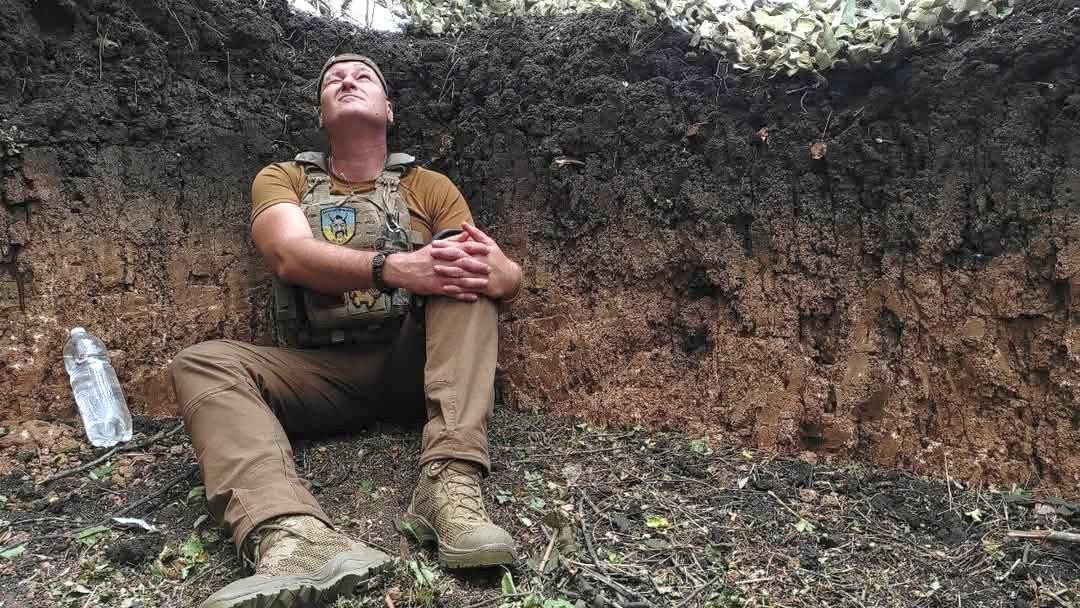
The National Union of Journalists of Ukraine continues its discussion on personal protection for journalists covering the war.
A month ago, the armoured vehicle carrying Stanislav Kukharchuk struck a magnetic mine dropped by a Russian drone near Dobropillia. The crew escaped with concussions. For the Inter TV special correspondent, who has been reporting almost continuously from the Donetsk region, it was not the first time he had survived such an attack. That is why his views on how war correspondents can stay alive deserve careful attention – especially because they challenge many widely accepted assumptions.
A recent article featuring BBC Senior Video Journalist Dmytro Vlasov, who encouraged colleagues to wear lightweight concealed fragmentation-resistant vests, sparked lively debate within the Ukrainian media community.
One of the strongest responses came from Stanislav Kukharchuk. While he agrees with Vlasov on the fundamental principle, he strongly disagrees on the details. And in war, details can mean the difference between life and death.
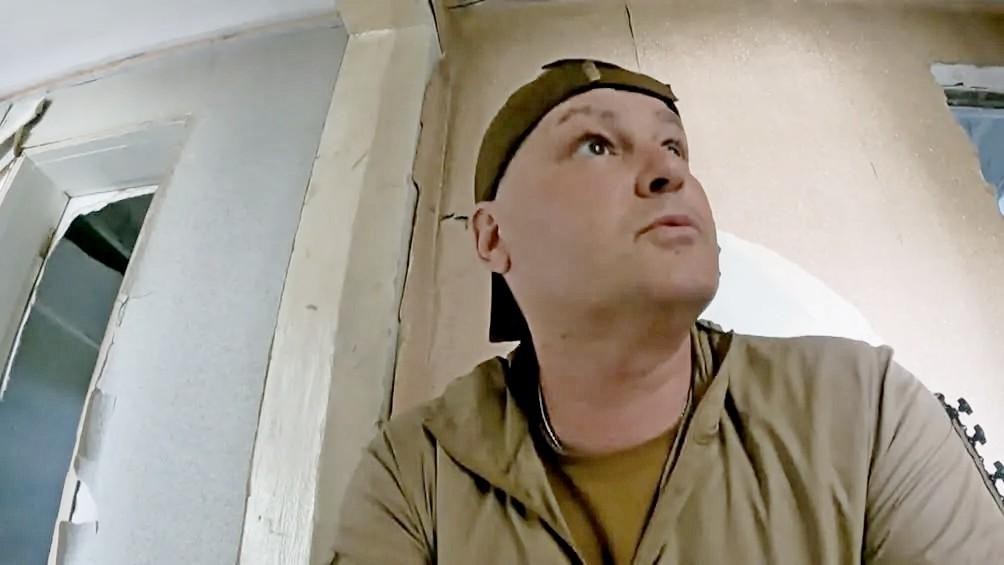
A native of Cherkasy region, Kukharchuk has worked as a journalist since 2008 and joined Inter TV in 2010. He covered the Maidan Revolution—in January 2014 he was beaten by Berkut riot police outside the Cherkasy Regional State Administration building. Since 2014, he has regularly reported from Donbas, and during the first weeks of Russia’s full-scale invasion he worked in Popasna, Sievierodonetsk, Lysychansk, Zolote, and other frontline locations. He has been awarded the Order of Merit, Third Class.
It is from the perspective of someone with extensive experience travelling on foot into frontline combat zones that he reflects on the issue of body armour.
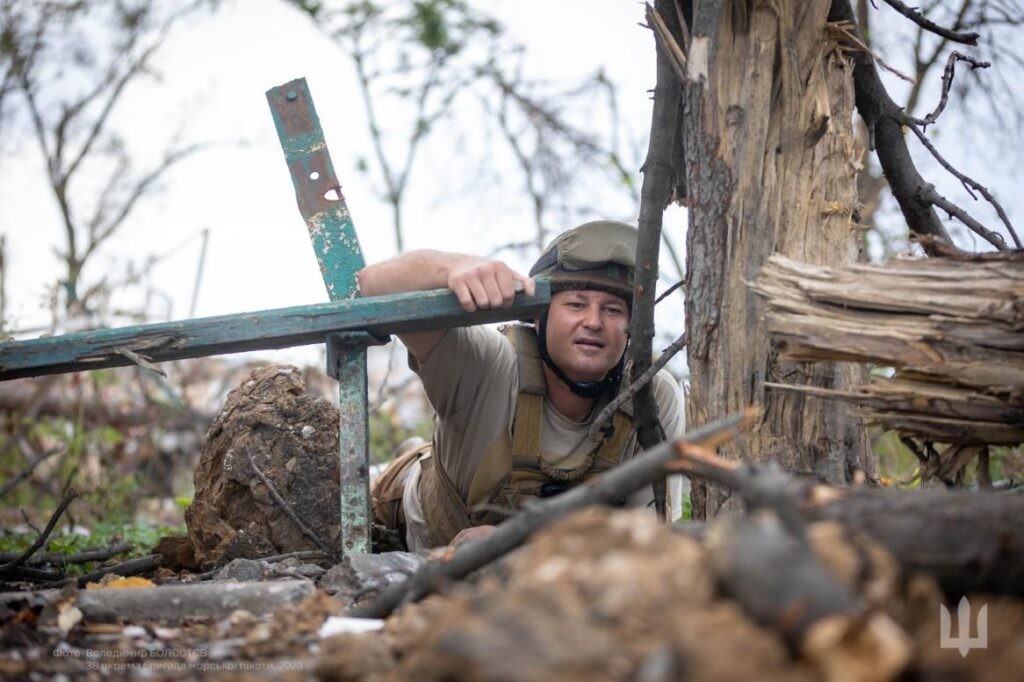
“A blue vest marked PRESS Is not protection – it’s a target”
The first thing Kukharchuk talks about is not the body armour itself, but what is written on it.
– The word PRESS, blue helmets, those large letters… I wear a plate carrier with only a small grey ‘Press’ patch – just enough for our own people to understand who I am. But I would never wear a blue vest with large PRESS markings. It’s simply dangerous.
According to Kukharchuk, Russian forces do not view journalists as neutral observers but as “enemy propagandists”. Within their worldview, he argues, independent media simply do not exist. As a result, the word PRESS does not identify someone protected under international conventions – it identifies a target. And, he adds, Russia has openly ignored those conventions for more than a decade.
His strongest argument, however, concerns not only journalists’ own safety but also the safety of those they report on.
– Imagine a news crew arriving at a battalion command-and-observation post or another command location. A Russian drone spots people wearing blue PRESS vests walking in. Modern drone cameras can clearly read what’s written on a vest. What do you think happens next? You expose everyone you’re visiting. They’ll immediately understand that journalists don’t come to interview an ordinary soldier. They’ll assume something important is there and then they’ll strike it, whether with a glide bomb, a missile, a drone, it doesn’t matter. By doing this, you burn the position.
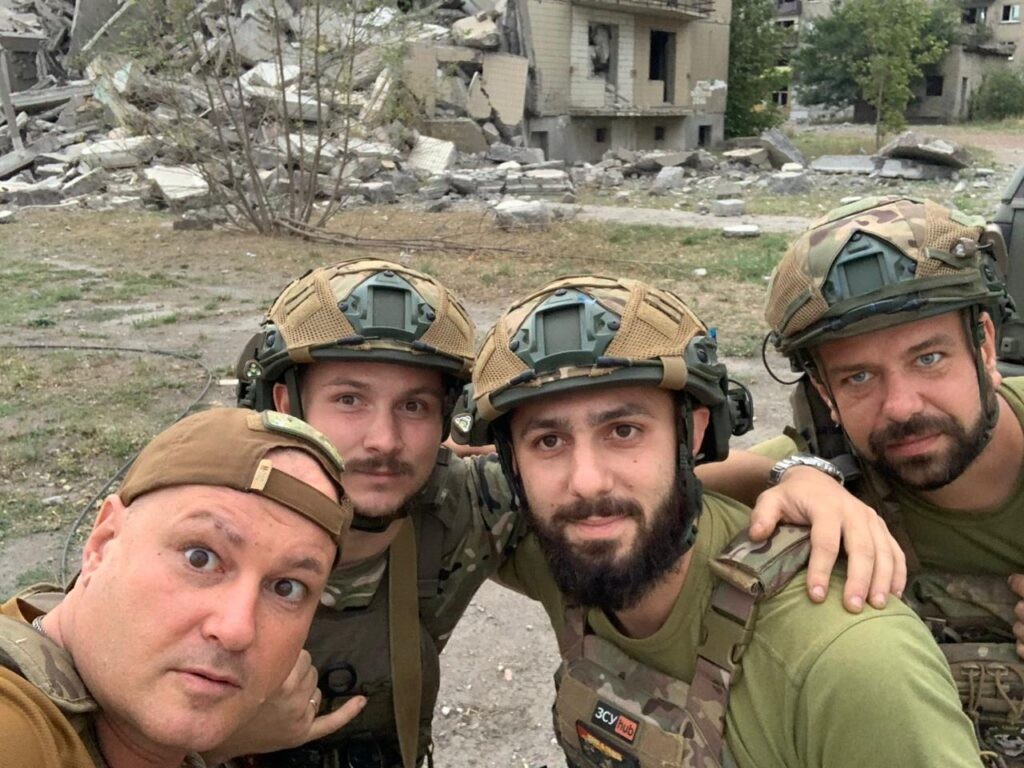
Kukharchuk’s conclusion is straightforward: don’t make yourself conspicuous – blend in instead. Of course, journalists should not wear military camouflage such as Ukrainian pixel camouflage or Multicam, he stresses. However, neutral-coloured civilian tactical clothing – black or coyote brown – that allows a reporter to blend into the surroundings is exactly what he recommends.
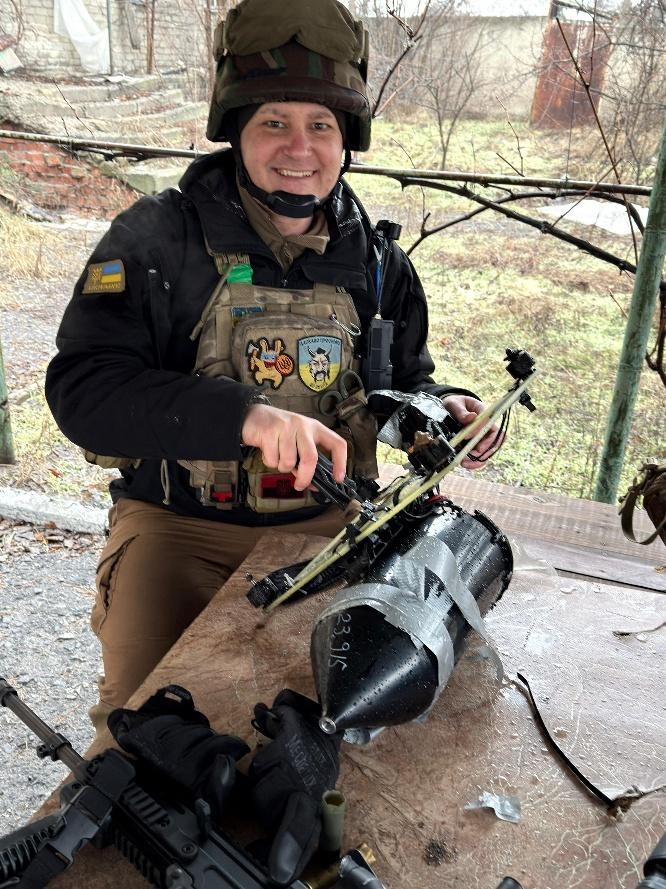
– Personally, I think coyote works best in Donetsk region because it matches the colour of the scorched steppe,” he explains. “Your job is to get in, document what’s happening, and come back alive so people can actually see your report. You won’t achieve that wearing a bright blue vest covered in white PRESS labels.
His second argument is based on the mathematics of modern drone warfare, which has effectively erased the traditional concept of a front line.
– We keep talking about the frontline, but today’s kill zone extends 15 to 20 kilometres or even farther. Seven kilometres is already dangerous territory. Over Kostiantynivka, according to figures I’ve heard, up to 10,000 drones – both Russian and Ukrainian – were recorded flying every single day. Imagine that. Every centimetre is under surveillance. Every movement is watched.
This also changes the physical realities of reporting in high-risk areas – something worth remembering whenever the weight of protective gear is discussed. Often, walking is the safest option because vehicles simply cannot reach certain locations.
– Sometimes we walk 13, 14, even 15 kilometres. The longest was about 20 kilometres round trip.
Why Kukharchuk rejects lightweight fragmentation vests
When the conversation turns to Dmytro Vlasov’s proposal that journalists wear lightweight concealed fragmentation-resistant vests weighing just 2–3 kilograms, Kukharchuk becomes openly sceptical.
– To be honest, it’s like putting a bandage on someone who’s already dead, he says.
– Those small vests might stop a pistol round at best. But if a drone is carrying a proper explosive payload and a fragment is flying at you, it’ll go straight through. The danger is that you’ll believe you’re protected when you’re not. That’s the worst part – the false sense of security. The only benefit might be that your insurance company pays out because you died wearing body armour.
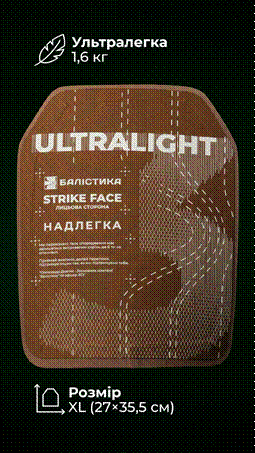
Instead, Kukharchuk advocates plate carriers fitted with ballistic polyethylene plates rather than heavy ceramic armour.
– They’re incredibly light – you can lift the vest with just one finger. And they provide far better protection than fragmentation-only vests. They offer Level III ballistic protection. They reliably stop rifle rounds and come with fragmentation-resistant cummerbunds (the side panels that connect the front and rear sections of the plate carrier – Ed.), as well as neck protection. A huge number of shrapnel injuries affect the neck… The only drawback is the price – these plates are quite expensive.
According to the NUJU Information Service, the positions of Vlasov and Kukharchuk are, in fact, less contradictory than they may initially appear. They are simply addressing different operational scenarios. Kukharchuk, meanwhile, is speaking about a war correspondent who walks into the drone kill zone to document active combat. In that environment, “better than nothing” is not an acceptable standard of protection. The two journalists nevertheless agree on one fundamental point: heavy ceramic plate carriers designed for the rifle combat typical of the Anti-Terrorist Operation (ATO) era no longer correspond to today’s battlefield threats.Whatever protective equipment journalists use, the most important requirement is that they actually wear it.
“Your only safety protocol is yourself”
Questions about formal safety protocols are met with noticeable scepticism from Kukharchuk.
– What protocols? In reality, there’s only one safety protocol. If you want to show the truth about this war and work in combat zones, your only safety protocol is yourself. You have to understand where you’re going, understand the consequences and the risks. And nothing can truly insure you against them. Absolutely nothing.
Kukharchuk recalls the deaths of fellow journalists Alona Hubanova (Hramova) and cameraman Yevhen Karmazin, who were killed in Kramatorsk in the autumn of 2025.
– Alona was a friend of mine… Her death came as a shock to all of us. But where was she hit by a drone? In Kramatorsk – a city that, at the time, was considered relatively safe rear territory. A Russian drone simply chose their vehicle as its target. That’s all it took.
Formal safety protocols, Kukharchuk argues, work only as long as you never leave for an assignment.
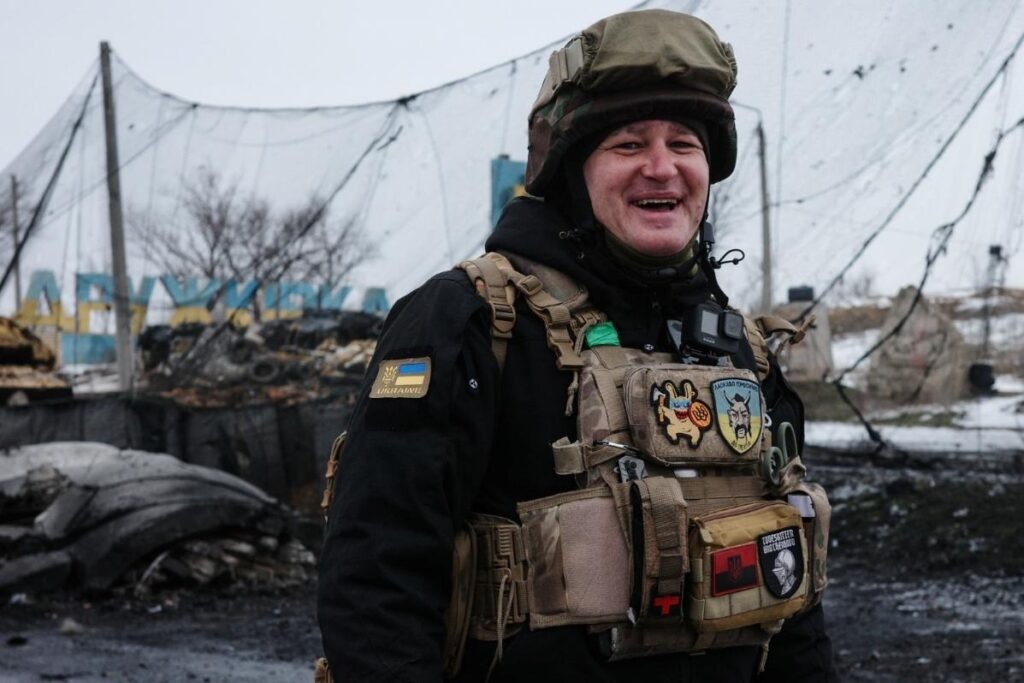
– Foreign journalists usually work with security advisers. An entire team arrives and stays in Kramatorsk. They find a story, the military invites them to cover an artillery unit, and they report the plan to the security adviser. The adviser thinks it over and says, No, it’s too dangerous. Nobody is going anywhere. Fine – they don’t go. They stay where they are, drink coffee… and never do the job they came to do.
Kukharchuk insists that reportage is the core genre of journalism. Interviews alone cannot show what is really happening – they are only words. A stand-up in a news report exists for one reason: to let the audience know that the journalist was actually there and witnessed events firsthand. At the same time, he has no illusions about his own safety.
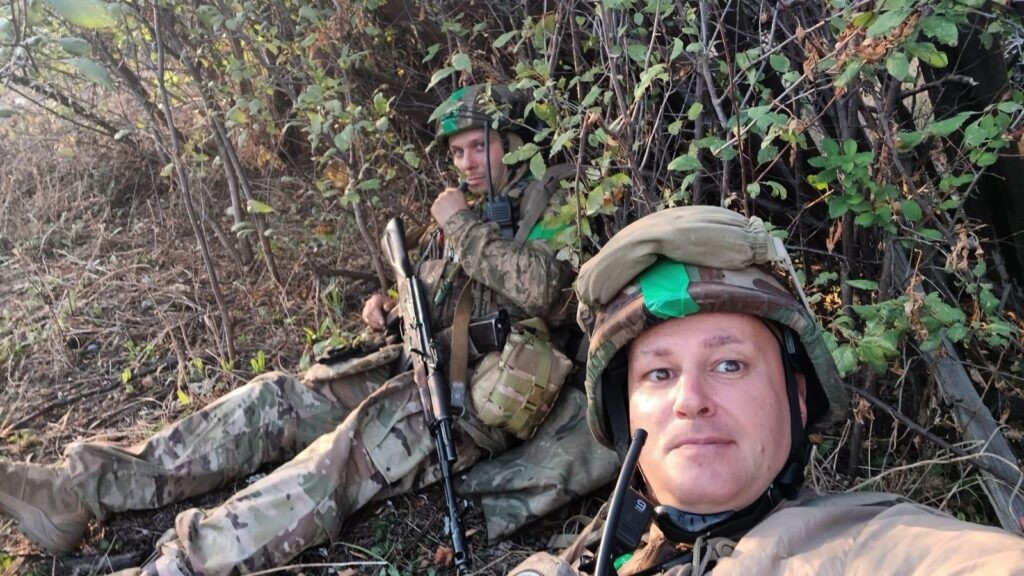
A guided aerial bomb (KAB) could strike the team’s base in Sloviansk. In Kramatorsk, the crew’s accommodation has already come under attack, leaving people injured. Responding to every air-raid alert is simply impossible – otherwise, he says, you would spend your entire life sitting in a basement.
– There is no safe place there – that’s the reality. Your safety protocol is your own skills, your experience, the protective equipment you’ve chosen because it works for you, and your ability to blend in and remain unnoticed. Don’t put yourself on display by saying, I’m a journalist – you have no right to shoot at me. They don’t have the right. But they do it anyway.
Standards written for different wars
Kukharchuk’s personal kit includes a helmet, a plate carrier, a first-aid kit and a second medical kit as well.
– “More than once I’ve had to evacuate wounded people and provide first aid to civilians,” he says, recalling an incident in Myrnohrad. “It was around June last year. People were collecting water. Everyone was a civilian – elderly men and women, women carrying large water bottles. A Russian drone operator spotted the crowd and attacked it. Seven people were wounded. We arrived, and I applied tourniquets to six of them. I did what I knew how to do. To be honest, by the fourth person my hands were already shaking…”
For Kukharchuk, helping the wounded is simply part of the job.
– You can’t say, I’m a journalist, so I don’t touch anyone, I don’t help. You have to understand that this is a war in your own country, and if you have a chance to save someone’s life, you do everything you can.
Another piece of protective equipment he strongly recommends is active hearing protectors.
– They reduce the impact of blast waves. You never know when or where something is going to explode. I haven’t seen a doctor about it, but I’m pretty sure I’ve suffered more than one concussion. I’ve had explosions go off extremely close to me. The symptoms were there – including after the blast near Dobropillia.
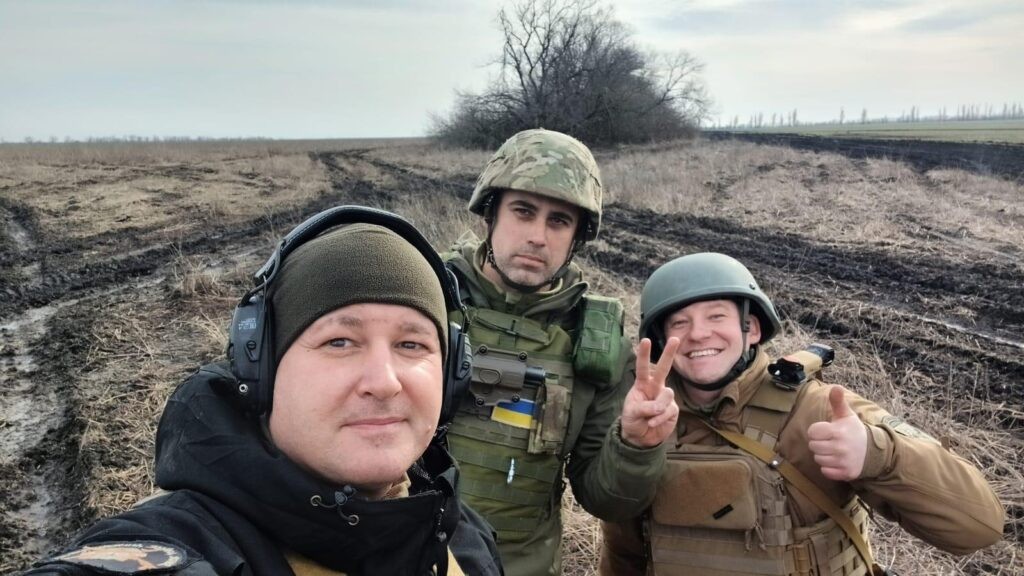
The most fundamental point Kukharchuk makes throughout our conversation is his call to “rewrite the international safety standards for journalists”. He believes those standards were developed by people whose experience bears little resemblance to the realities of Ukraine’s war.
– The people who wrote these standards were covering local conflicts, for example, in Africa. Their own country was not a party to the conflict, the war was not being fought on their territory, and it was not a war between two regular armies.
He recalls the morning of 26 February 2022, when his crew was travelling with a convoy of Ukraine’s 79th Air Assault Brigade as it launched a counteroffensive toward Novoaidar, only to find itself caught in a head-on tank battle.
– A French journalist from TF1 was with us – a well-known war correspondent who had covered countless local conflicts. He stood there completely stunned, turned to me and said, “Stas, in my entire career, this is the first time I’ve ever seen two regular armies fighting each other. I’ve never witnessed anything like this before”.
– Our war has changed. Battles now take place under the constant surveillance of drone cameras. You can go through the entire war without ever seeing the enemy—while they see you the whole time and can strike you whenever they choose. That’s why all the existing standards need to be rewritten and fundamentally rethought. At least, that’s how I see it. We should even seriously consider whether journalists should have the legal right to carry weapons to defend themselves against drones. Otherwise, a journalist becomes nothing more than a defenceless target.
In Kukharchuk’s view, what are currently referred to as journalist safety standards are, in reality, little more than “a collection of vague recommendations”. The discussion launched by the National Union of Journalists of Ukraine is therefore aimed precisely at answering a much more important question: what should those standards look like in the realities of modern warfare?
* * *
Since the beginning of Russia’s full-scale invasion, the National Union of Journalists of Ukraine (NUJU) has made journalists’ safety one of its top priorities. The cornerstone of this effort is the network of Journalist Solidarity Centres, operating in Kyiv, Kharkiv, Dnipro, Zaporizhzhia, Lviv, Ivano-Frankivsk, and Sumy. These centres provide journalists with protective equipment, technical assistance, safety consultations, psychological support, and safe working spaces.
The Union pays particular attention to journalists working in frontline and border regions. NUJU regularly supplies local newsrooms and war correspondents with body armour, helmets, first-aid kits, communication equipment, and portable power stations – essential tools for reporting near active combat zones.
The widespread deployment of Russian drones has created an entirely new set of risks for media workers. In response, NUJU has consistently raised the issue of journalist safety in the context of drone warfare, both within Ukraine and on international platforms. The Union stresses that traditional approaches to protecting journalists no longer reflect today’s realities, as media professionals are increasingly targeted even far from the front line.
To address these challenges, NUJU has begun equipping journalists with drone detectors through its network of Journalist Solidarity Centres while also developing practical guidance for reporting in areas exposed to growing drone threats. With the support of international partners, the Union is preparing and disseminating updated safety protocolstailored to the realities of contemporary warfare.
At the same time, NUJU continues to document cases of journalists being injured, killed, or persecuted, advocates for a strong international response to crimes committed against media professionals, and works to strengthen journalists’ protection through the European Federation of Journalists (EFJ), the International Federation of Journalists (IFJ), UNESCO, and other international organisations. The Union consistently emphasises that attacks on journalists are not only violations of press freedom but also war crimes that must be properly investigated and held legally accountable.
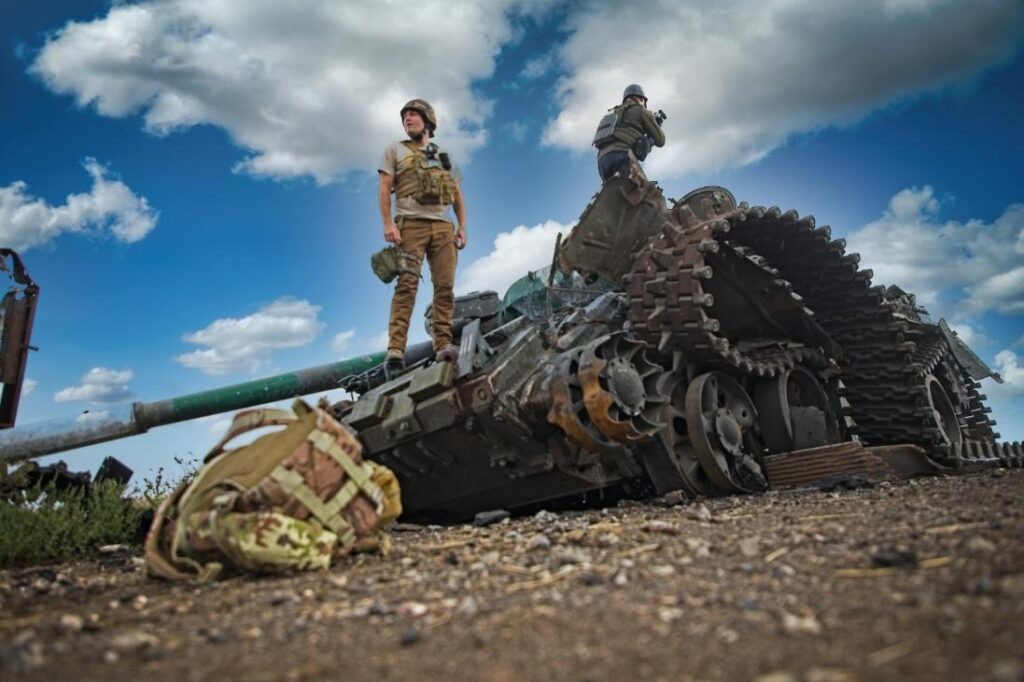
Maksym Stepanov, Information Service of the NUJU
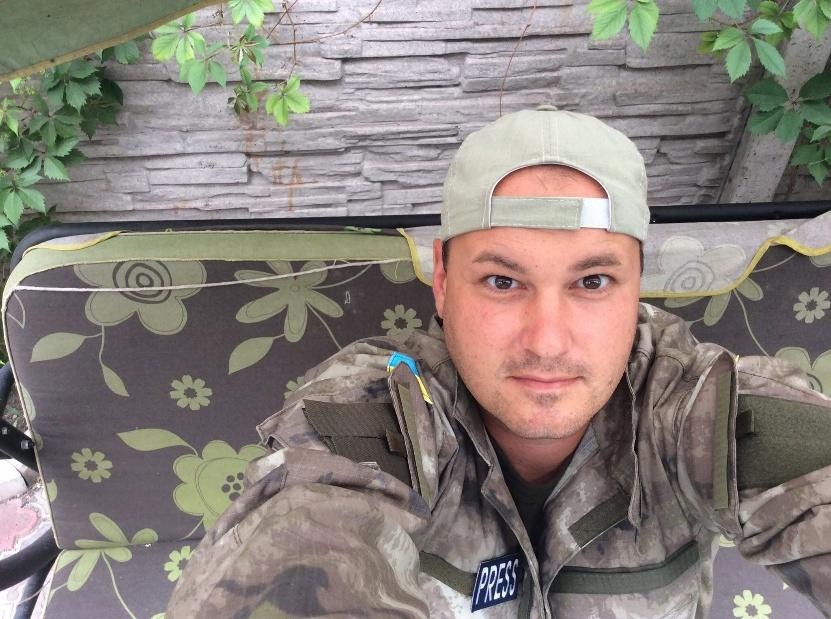
Photo provided by Stanislav Kukharchuk
The Journalists’ Solidarity Centers network is an initiative of the National Union of Journalists of Ukraine, implemented in cooperation with the International Federation of Journalists and the European Federation of Journalists. Our main goal is to support media workers working in Ukraine during the war. The Centers operate in Kyiv, Kharkiv, Zaporizhzhia, Dnipro, Lviv and Ivano-Frankivsk. The project is part of UNESCO’s broader efforts to support journalists’ safety and freedom of expression in Ukraine. The Network’s activities in the summer of 2026 are supported by the Ukrainian Media Fund Nordic.










Discussion about this post