 THE NATIONAL UNION OF
JOURNALISTS OF UKRAINE
THE NATIONAL UNION OF
JOURNALISTS OF UKRAINE
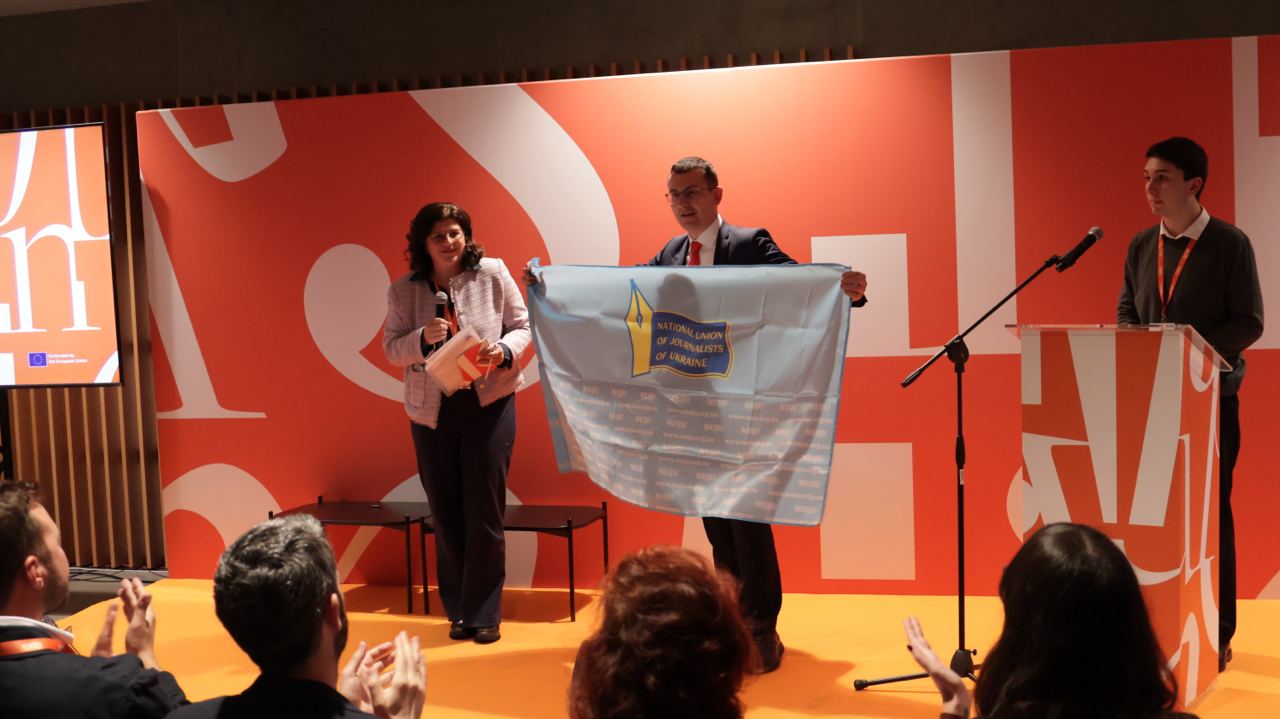
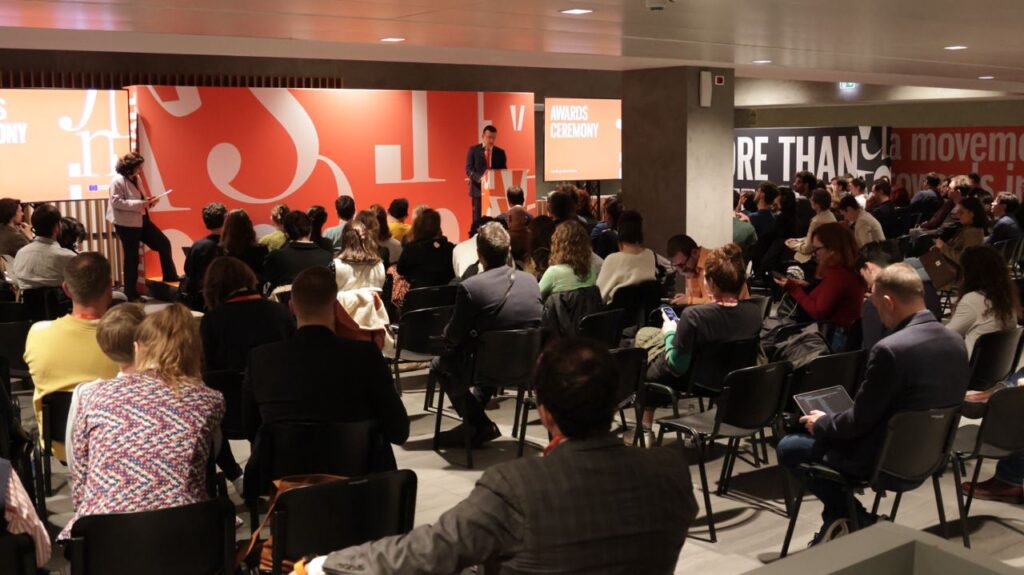
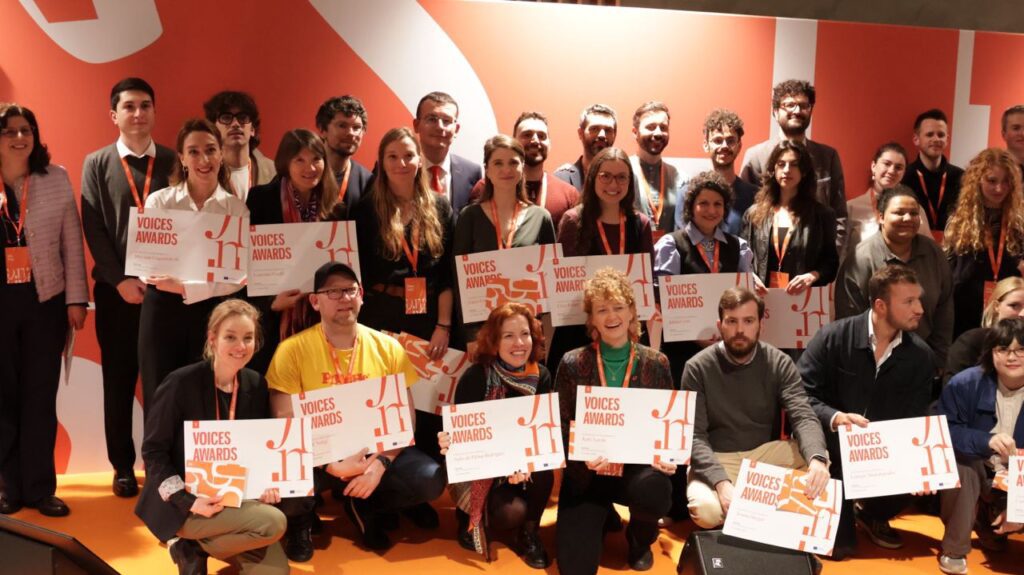
Journalists’ Solidarity Centres are saving lives and helping reporters continue their work on the frontline, providing essential support, safety, and resources during the full-scale war in Ukraine. How does the NUJU network connect journalists across borders and protect press freedom under extreme conditions? Sergiy Tomilenko, President of the National Union of Journalists of Ukraine, shared this story at the Voices Festival in Florence. On March 11, the Network of Solidarity Centres was honored with the Media Freedom Award—the Festival’s highest recognition.
Below, we publish the full text of Sergiy Tomilenko’s speech.
Thank you very much for this recognition. First of all, I want to thank the team of the Journalists’ Solidarity Centres. They are the real heroes of this story. Fifteen people working across Ukraine––often under air raid alarms, blackouts and constant stress. For many journalists during this war, the Solidarity Centres have become something like a hotline. When you need protective equipment, when you need a safe place to work, when you need advice or support—you call the centre. And someone answers. This award truly belongs to them. And it also belongs to our colleagues across Europe and around the world who showed solidarity with Ukrainian journalists.
Because the story of the Solidarity Centres started in a very simple way. In the first days of the full-scale invasion in 2022, in the office of the National Union of Journalists of Ukraine in Kyiv, we had only one bulletproof vest. Just one. Journalists were coming to us shocked. They were asking for protection—for bulletproof vests and helmets. They simply wanted to survive. And we understood something very clearly. We cannot stop the war. But we must do everything we can to protect journalists and help them continue their work.
Step by step, with the support of journalist unions and partners across Europe and around the world, we created the network of Journalists’ Solidarity Centres. Today we have five regional centres across Ukraine—including three frontline centres—and the main coordination centre in Kyiv. They provide protective equipment, safety training, legal and psychological support, and safe workspaces with electricity and internet. Since the start of the full-scale war, more than 9,000 Ukrainian and foreign journalists have received support from the centres.
But the reality of war keeps changing. At the beginning we needed helmets and bulletproof vests. Then we needed generators and Starlink. Today one of the most requested pieces of equipment is drone detectors. Journalists borrow them before travelling to frontline areas. We do not know what challenges tomorrow will bring. But we know one thing. Journalists must not feel alone. And this is why the Solidarity Centres exist.
I want to finish with this newspaper. This is a newspaper from the frontline town of Orikhiv in southern Ukraine. Last year I travelled there with the editor, Svitlana Karpenko. The town is only about five kilometres from Russian army positions. Most people now live in deep basements because of constant shelling. When we came there, we met people living underground. And when the editor brought them their local newspaper, people immediately gathered around it. They started reading. They discussed the stories. For them it was much more than information. For a moment––even though their whole world had shrunk to a basement––they felt hope. They felt that they were not alone.

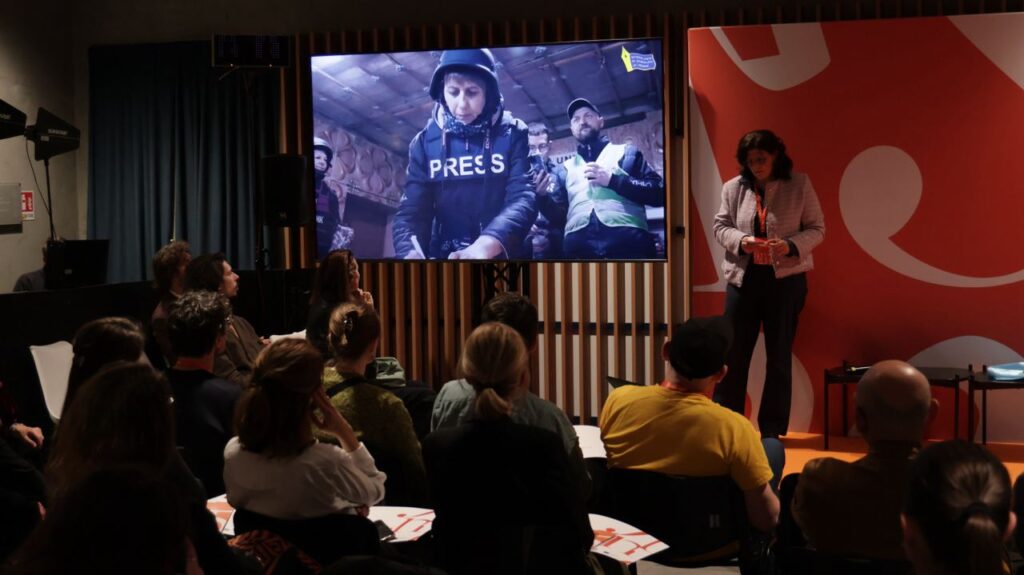
And this is why journalism still matters. Even five kilometres from war. Because journalism is also a form of resilience. It helps communities stay informed. It helps people trust facts. And it helps the world see the truth. The Solidarity Centres started in Ukraine. But today this experience is already helping journalists in other places of conflict—including Gaza. Because solidarity between journalists does not stop at borders. This recognition today means a lot to us. Because it shows that solidarity between journalists still exists—not only in Europe, but around the world. And when journalists stand together—journalism survives. Thank you very much.
The Voices Festival, now in its third year and running until March 12, brought together over 70 speakers and hundreds of participants from across Europe to discuss press freedom, disinformation, journalist safety, and the future of independent media. Voices—the European Festival of Journalism and Media Freedom—is an international platform for discussions on freedom of expression, journalism, and media literacy in Europe. The festival is organized by a consortium of leading media organizations, including the European Federation of Journalists (EFJ), the Centre for Media Pluralism and Media Freedom (EUI), the European Centre for Press and Media Freedom (ECPMF), Deutsche Welle, the European Broadcasting Union, and other partners. The festival is co-funded by the European Union.
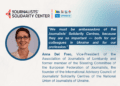
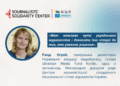
On March 11, during the Voices Festival, Sergiy Tomilenko, President of the National Union of Journalists of Ukraine, and Yousef Habash, representative of the Palestinian Journalists’ Syndicate, held a joint discussion—the first of its kind. The experience of the NUJU’s Solidarity Centres attracted international attention. The headquarters of the International Federation of Journalists and UNESCO recommended the Ukrainian model to colleagues in the Palestinian Journalists’ Syndicate. As a result, a network of Media Solidarity Centres was established in the Gaza Strip, currently operating in Gaza City, Deir al-Balah, and Khan Yunis.
NUJU Information Service









Discussion about this post