 THE NATIONAL UNION OF
JOURNALISTS OF UKRAINE
THE NATIONAL UNION OF
JOURNALISTS OF UKRAINE
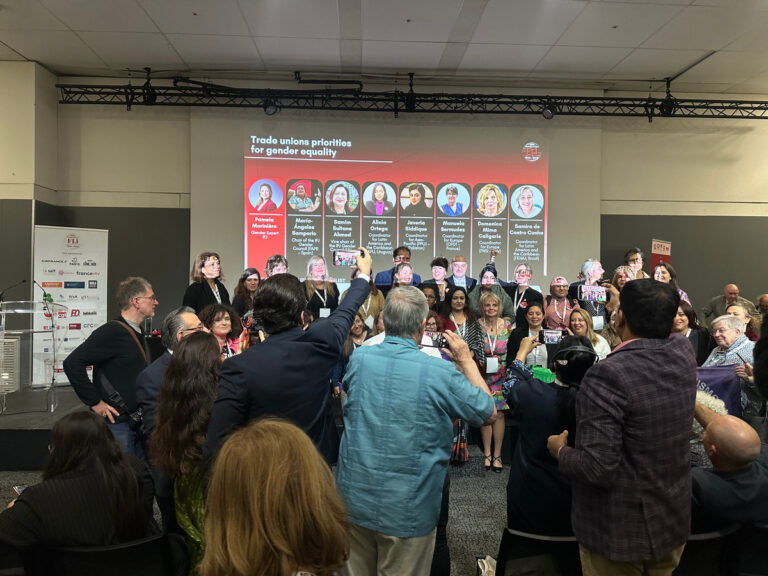
The 32nd World Congress of the International Federation of Journalists in Paris concluded with several landmark decisions: the congress expelled the Russian Union of Journalists from the organisation, fully renewed the federationʼs leadership, amended its constitution, and adopted resolutions on press freedom, journalist safety, working conditions, and the impact of artificial intelligence on the media industry. The NUJU delegation – comprising union leadership and journalists from Mariupol, Kyiv, Sloviansk, and Odesa – participated in the congress for four days and contributed to each of these outcomes.
The Congress: Format and Scale
The International Federation of Journalists is the worldʼs largest organisation of media workers, with over 600,000 members from 146 countries – including NUJU – united in trade unions and associations. Every three years, the federation convenes a congress (its supreme governing body) where delegates make strategic decisions, elect leadership, and update the constitution. This yearʼs congress in Paris marked a centenary: the IFJ turned one hundred. And it was here, in the city of its founding, that the organisation re-elected its president, rewrote part of its constitution, and resolved important matters for the Ukrainian and global media community.
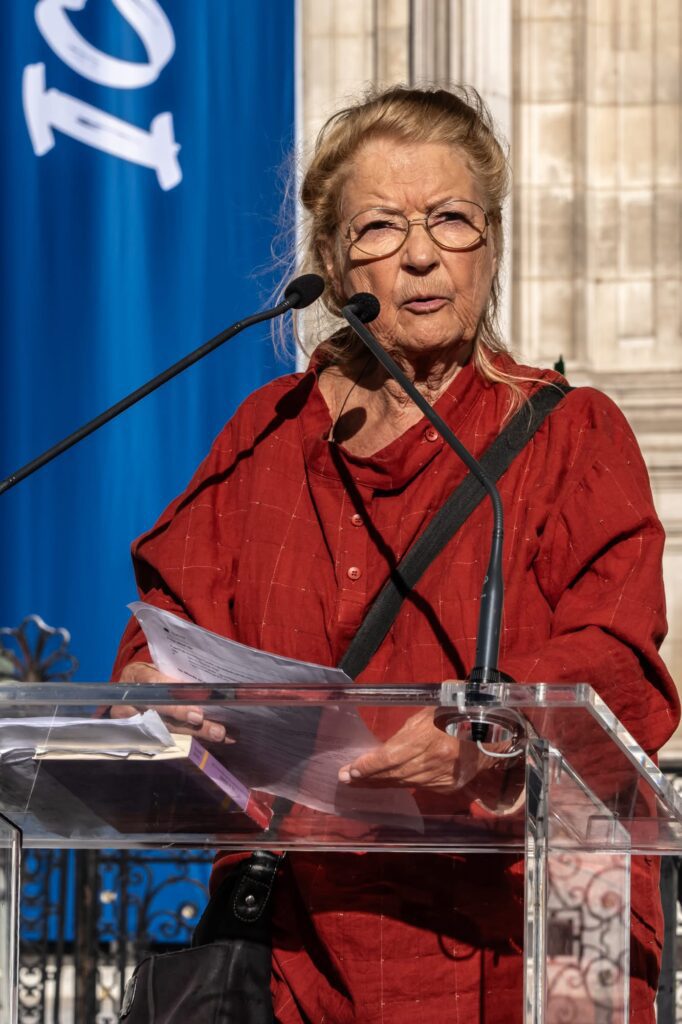
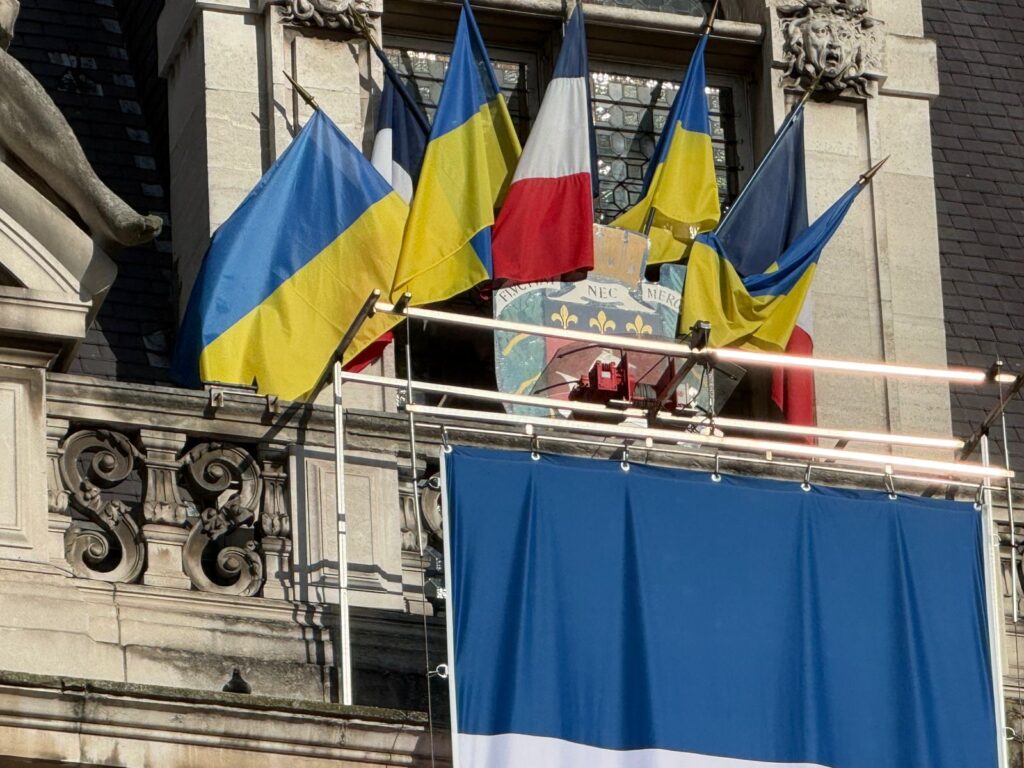
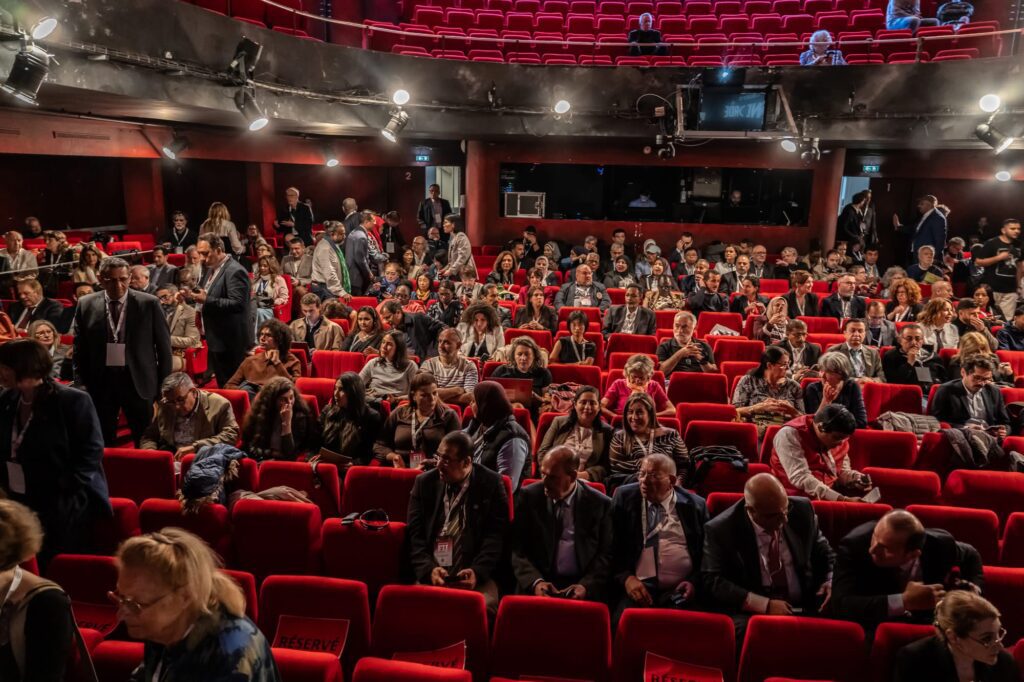
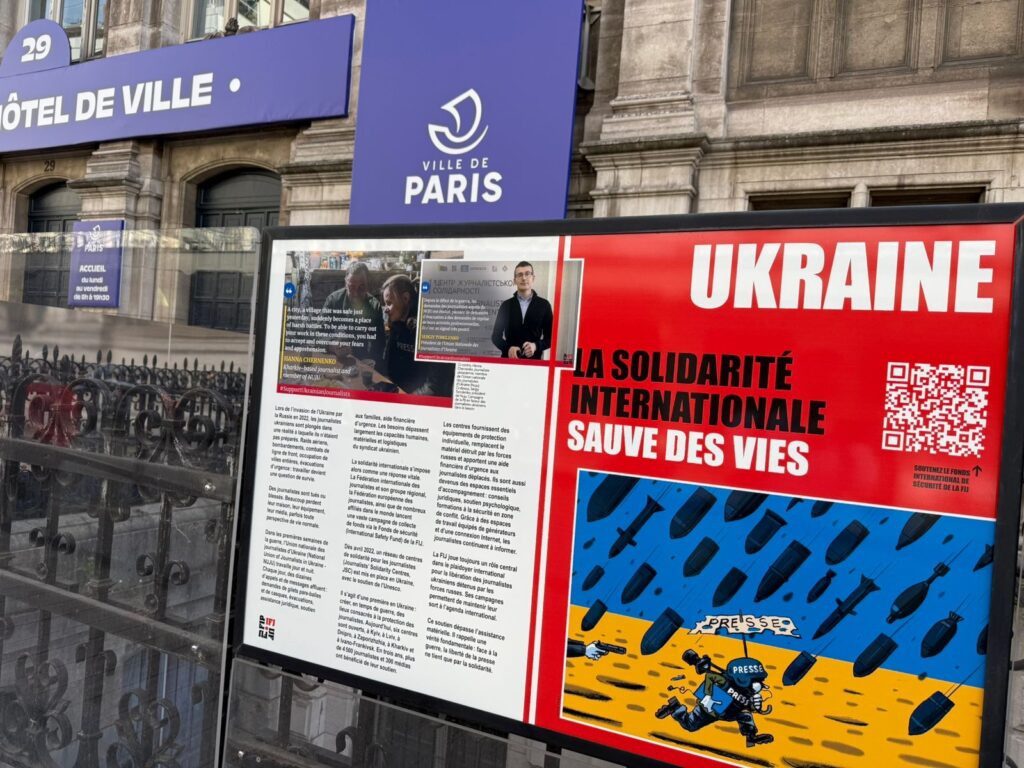
This year, more than 300 delegates travelled to Paris. The plenary hall resembled a kind of parliament: simultaneous interpretation into several languages, hour-long queues at the microphone, a delegate dozing with a child on his shoulder while awaiting voting results. Ukrainian flags were visible on the façade of the Paris City Hall in the city centre, where the official opening ceremony took place. There, the International Federation of Journalists presented an exhibition marking its centenary, including a Ukrainian stand. At the opening of the exhibition, federation President Dominique Pradalié named the journalists whom Russians killed in Ukraine: Antoni Lallican, Alyona Hramova (Hubanova), Yevhen Karmazin, and others. Dominique Pradalié had led the IFJ since 2022 and did not stand for a second term. Among the priorities she consistently championed was support for the network of NUJU Journalists’ Solidarity Centres in Ukraine. The federation helped establish the centres through the Ukraine Safety Fund in 2022; since then, over 9,000 Ukrainian and foreign journalists have received assistance.
Four French trade unions co-organised the congress on the ground: SNJ, SNJ-CGT, CFDT Journalistes, and Force Ouvrière.
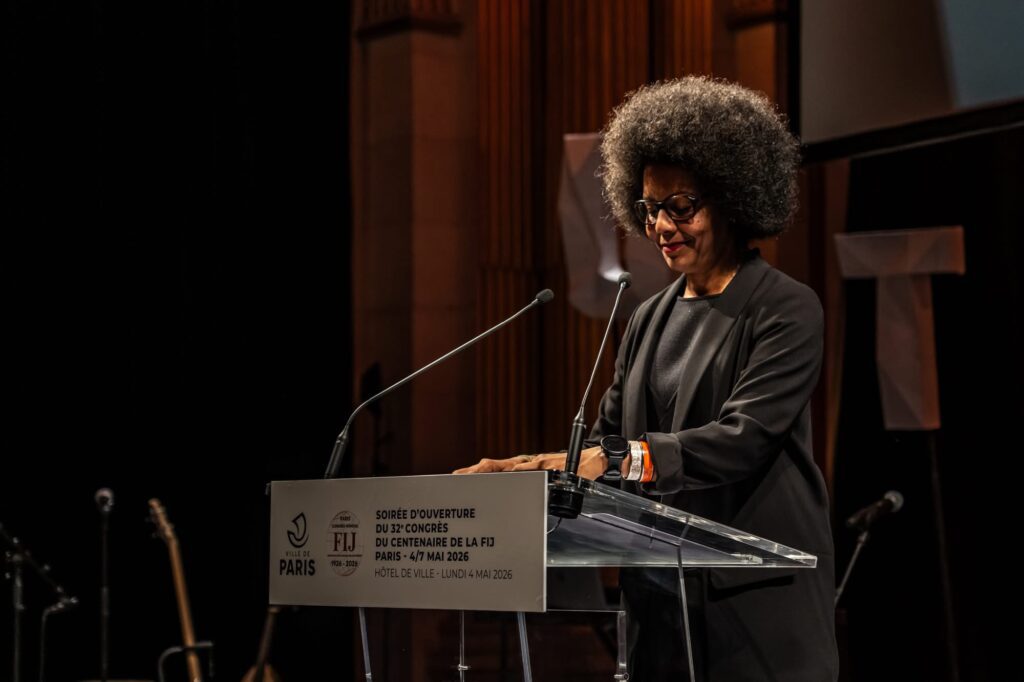
“We are living inside George Orwell’s 1984. ‘Lies are truth’ – that is what they want to impose on us,” declared Deputy Mayor of Paris and former journalist Audrey Pulvar on the evening of the first day in the City Hall chamber. She cited the ten duties set out in the Munich Charter of Journalists of 1971 and added that each of them is under threat today.
The official also made specific mention of Ukraine, Sudan, Iran, Lebanon, and Mexico, and on behalf of the city pledged to support journalists: through funding press freedom organisations, offering shelter to those facing persecution, and promoting media literacy in schools. “Paris will be the heart of the resistance movement in the cultural battle now unfolding,” Pulvar added.
Russia Expelled from the IFJ
One of the congressʼs central decisions was the formal expulsion of the Russian Union of Journalists (RUJ) from the IFJ. NUJU, together with the Independent Media Trade Union of Ukraine, had raised this matter in the first months of the full-scale invasion: the RUJ had opened its own propaganda outposts in occupied Ukrainian territories – in Donetsk, Luhansk, Kherson, and Zaporizhzhia regions. In February 2023, following a démarche by the journalists’ unions of the Scandinavian countries, the IFJ Executive Committee suspended the RUJ’s membership; however, the organisation’s constitution still gave the congress the right to review that decision.
Over three years, the position of NUJU and its international partners had not changed: Russia had not halted its aggression, had not condemned war crimes, and had not withdrawn from its involvement in occupation media structures. According to NUJU, Russians killed at least 149 Ukrainian and foreign media workers in that time, 28 journalists remain in captivity, and occupation forces have destroyed or seized hundreds of media outlets in occupied territories. The appeals commission recommended expulsion, which the congress formally endorsed. Yet uncertainty persisted until the very last moment. Under the IFJ constitution, the decision on expulsion rested with the congress, not the Executive Committee – meaning the Russian side had the right to attend as delegates and appeal to participants to keep the RUJ within the federation. Shortly before the congress it emerged that no Russians were among the delegates, though as recently as six months prior, Russian media had reported that the Russian Union of Journalists President Vladimir Solovyov had received an invitation to attend. The NUJU delegation had prepared for this scenario and assembled its arguments accordingly.
“NUJU is proud to be a member of this great journalism family. Throughout our work in Paris, we endeavoured to place Ukrainian issues on the agenda and are grateful for the solidarity we feel from colleagues around the world. Of great importance to us is the expulsion of Russian propagandists from the IFJ, and the fact that the federation stands in solidarity with Ukrainian media workers and will continue to support us,” commented NUJU President Sergiy Tomilenko.
The New IFJ President
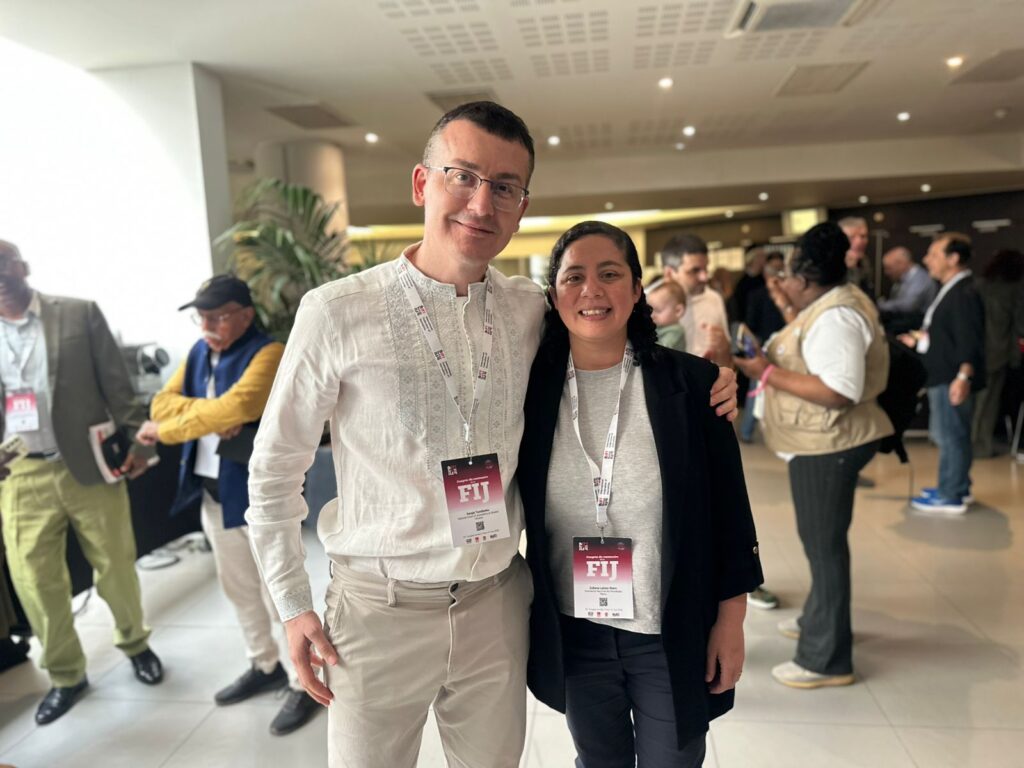
The congress elected Zuliana Lainez Otero, head of The National Association of Journalists of Peru (ANP) and former IFJ Senior Vice-President, as the new IFJ President. She became the first president from Latin America and the Caribbean in the federation’s history and only the third woman to hold the position in its century of existence. Lainez Otero works as an editor at the online outlet Crónica Viva and at ANP Radio, and teaches press law. She has sat on the IFJ Executive Committee for 16 years.
“We are living through a difficult period for journalism worldwide. In recent years we have witnessed an unprecedented number of journalists killed in Palestine, Ukraine, Lebanon, Sudan, and Latin America. The level of impunity for these crimes is equally unprecedented. Our duty as an international organisation is to ensure that international courts examine these crimes,” Lainez Otero said in her address following her election.
The new leadership, she indicated, will continue work on an International Convention on the Safety and Independence of Journalists, strengthen ties with the international trade union movement, and expand the IFJʼs presence in UN bodies, UNESCO, and the International Labour Organisation (ILO).
Safety of Women Journalists: The Position of the IFJ Gender Council
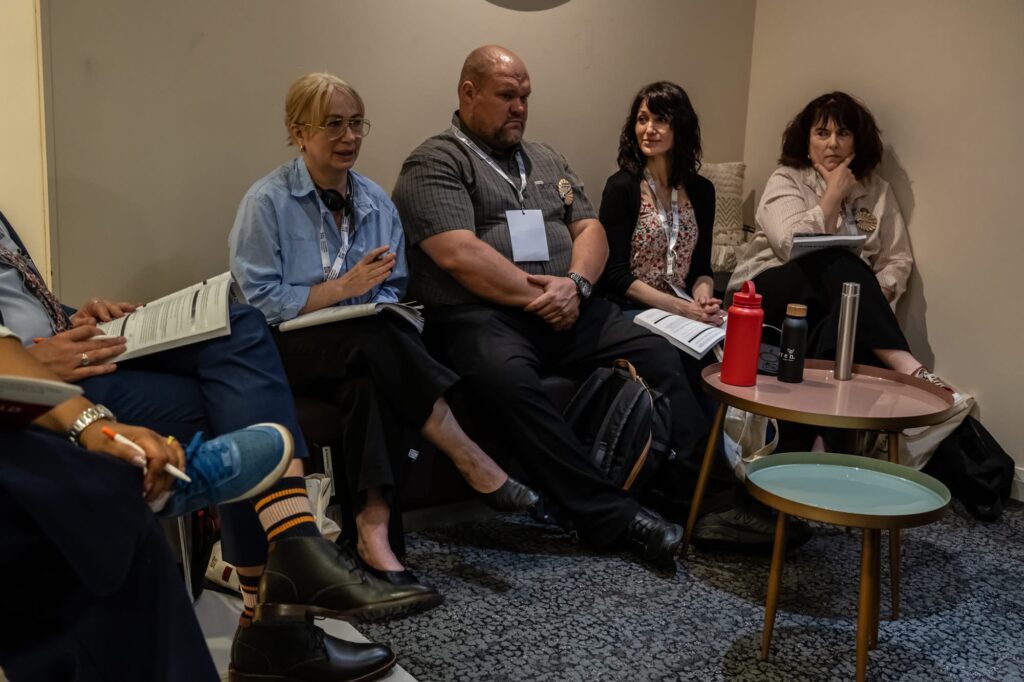
The congress devoted specific attention to the situation of women journalists. Mimma Calligaris, representative of the National Federation of the Italian Press (FNSI) and IFJ Gender Council regional coordinator for Europe, described the current situation: “In the majority of European countries, women journalists face difficult working conditions, a hostile environment, threats, and hate speech on a daily basis – above all on social media. In Italy, the monitoring report ‘The Thermometer of Hate’ confirmed that women remain the primary target – and among them, many are journalists.”
In Calligarisʼs view, the crisis in the information industry has hit women hardest: contract conditions have deteriorated, career advancement has become more difficult, and employers have demoted women more frequently. A recent investigation uncovered instances of sexual violence, harassment, and abuse by editors and colleagues – predominantly affecting women journalists between the ages of 25 and 34. This carries consequences for mental health as well as economic consequences, including lower pensions and poorer prospects.
Calligaris called on the IFJ Gender Council to play a strategic role in consolidating trade unions for collective action, and reaffirmed solidarity with Ukrainian women colleagues. “We also confirm our solidarity and our effort alongside the Ukrainian Union for the four female journalists detained in Russian prisons because of their work,” she added.
Amendments to the IFJ Constitution
NUJU First Secretary Lina Kushch describes the congress as a “reboot” of this organisation. The IFJ Executive Committee for the new three-year term comprises 22 members: delegates elected 16 of them at the congress, with the rest filling representational quotas.
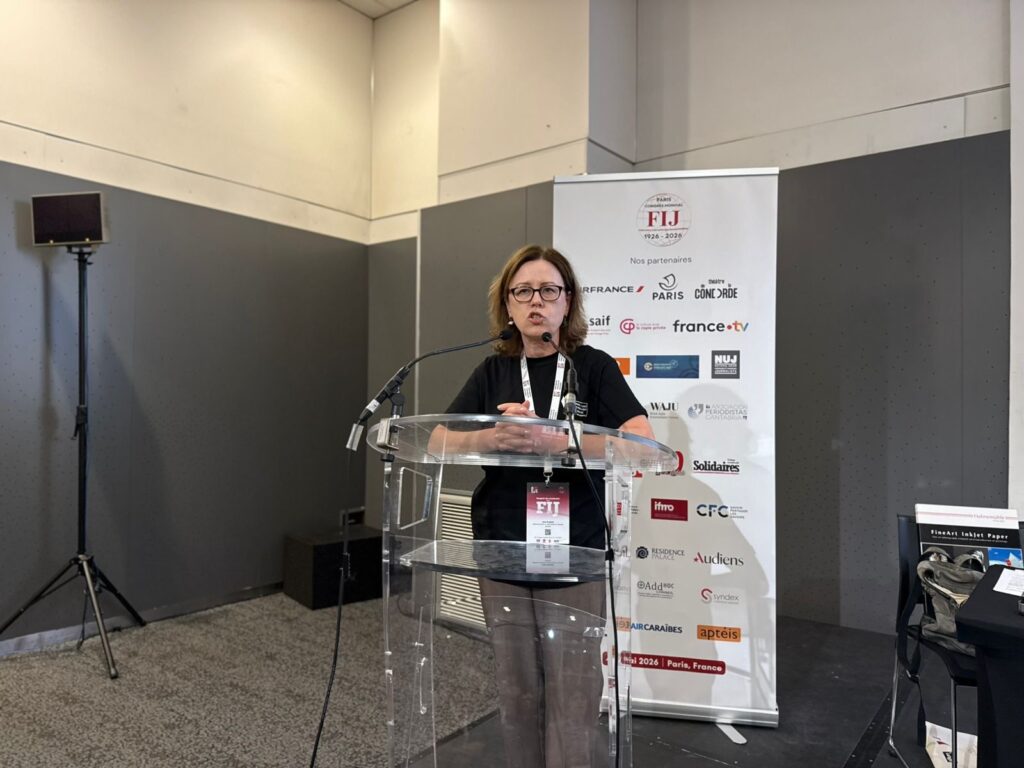
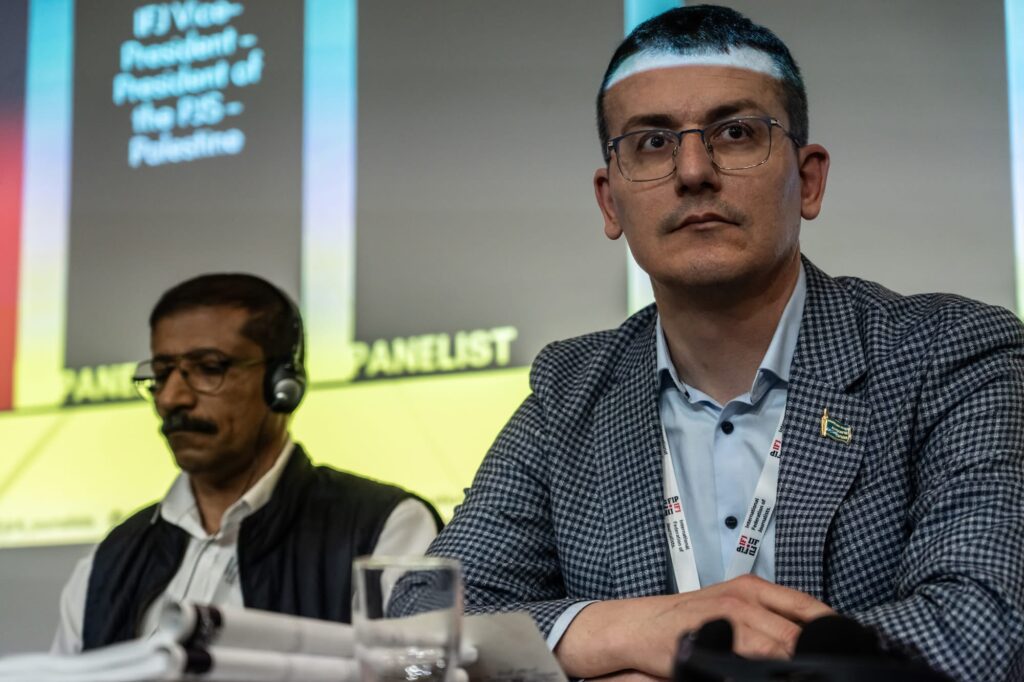
Nasser Abu Bakr, the President of the Palestinian Journalists’ Syndicate (PJS), took the position of Senior Vice-President. Zied Dabbar (Tunisia) and Jennifer Moreau (Canada) became Vice-Presidents, and Raffaele Lorusso (Italy) became Honorary Treasurer. Representatives from Saudi Arabia, Oman, Bahrain, Greece, Great Britain and Ireland, Brazil, Argentina, France, Colombia, the Republic of Korea, Germany, Cameroon, Australia, Indonesia, Angola, the United States, and Spain filled the remaining seats on the committee.
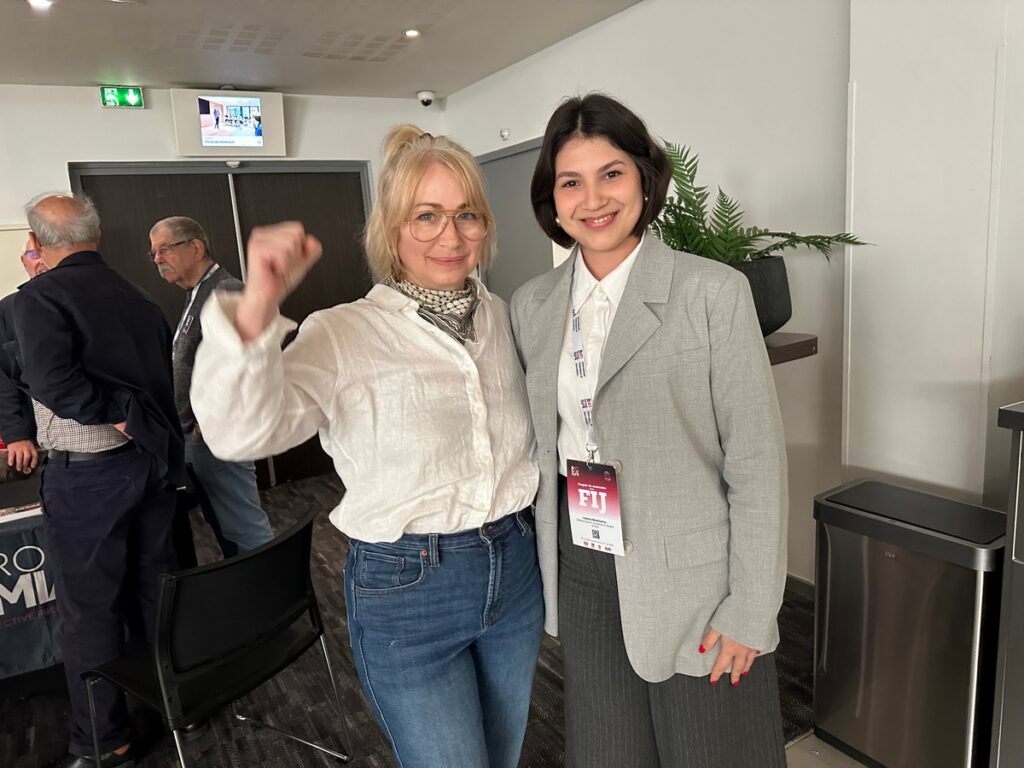
The congress also adopted amendments to the IFJ Constitution.
“They are aimed at greater accountability and transparency – in particular regarding funding and sponsorship, and the independence of governing bodies from any political influence. Taking the floor during the debate, I urged support for the amendments our colleagues from the Swedish Union of Journalists proposed concerning the openness of IFJ funding sources. Personally, a defining moment for me was the congressʼs adoption of amendments providing for equal representation of women and men in the organisationʼs governing bodies,” said Lina Kushch.
Ukrainian Presence: Launch of the NUJU Practical Safety Guide
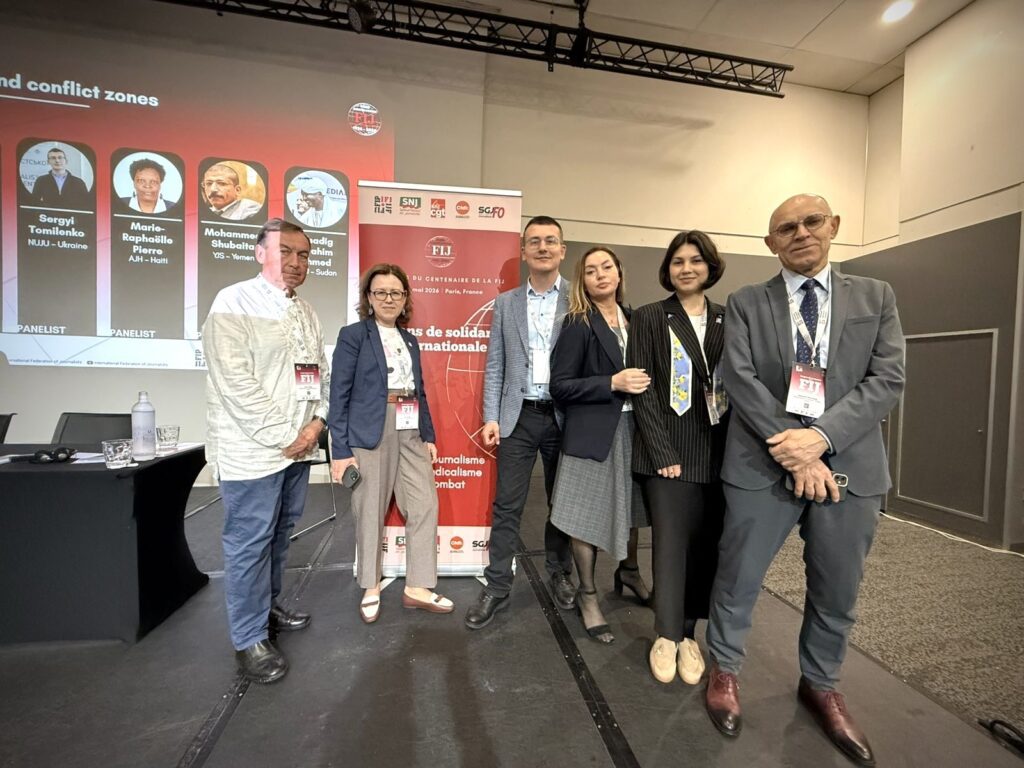
Congress participants were among the first to learn of a new practical safety guide for journalists working under the threat of drone attacks. NUJU President Sergiy Tomilenko presented it at the panel discussion “Being a journalist in violent environments and conflict zones,” joining representatives of journalists’ unions from Palestine, Haiti, Yemen, and Sudan. IFJ Honorary Treasurer Jim Boumelha moderated the discussion.
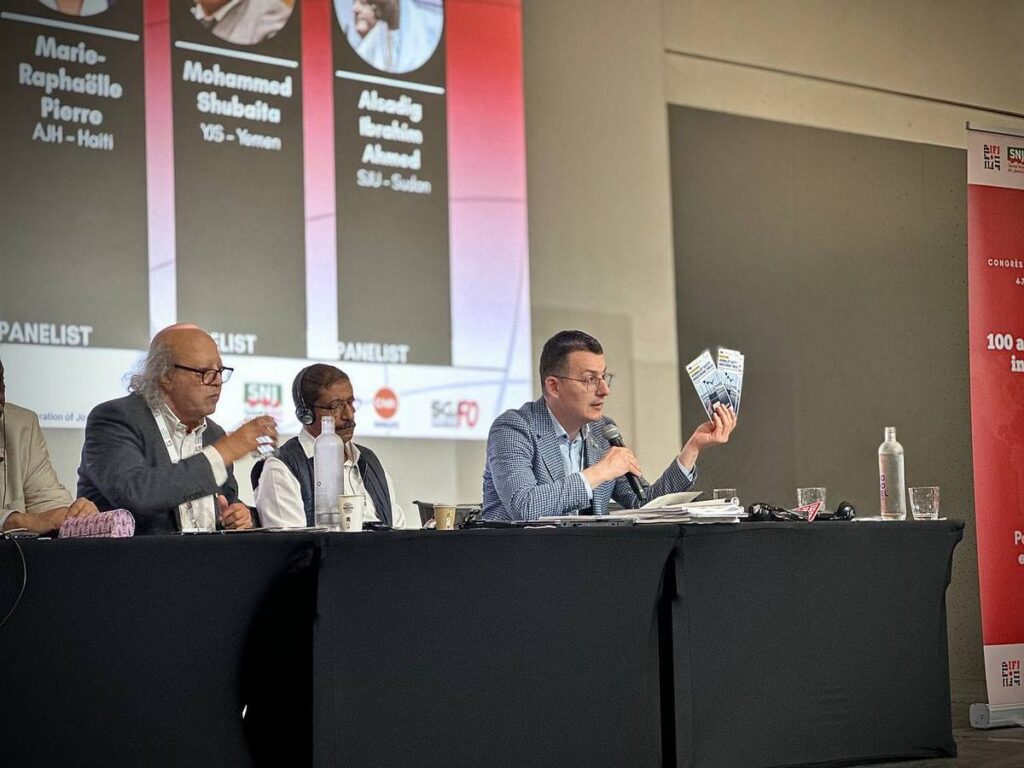
The document draws on the real-world experience of Ukrainian media workers in frontline regions. “When people ask me what the reality of war looks like for journalists, I usually answer in one word: drones,” said Tomilenko. He noted that since 2024, drones have been capable of striking targets 20–25 kilometres from the front line, and that a threat can leave journalists as little as 30 to 60 seconds to react. He recalled how Russians killed FREEDOM channel journalists Alyona Hramova and Yevhen Karmazin in Kramatorsk on 23 October 2025 – 20 kilometres from the line of contact. “We cannot be prepared for everything, but we must adapt quickly and respond to every request from colleagues who need help,” the NUJU President concluded.
The guide generated broad interest among delegates from many countries.
Congress Sidelines: Words of Solidarity with Ukrainian Media Workers Echoed in Conversations with IFJ Leaders
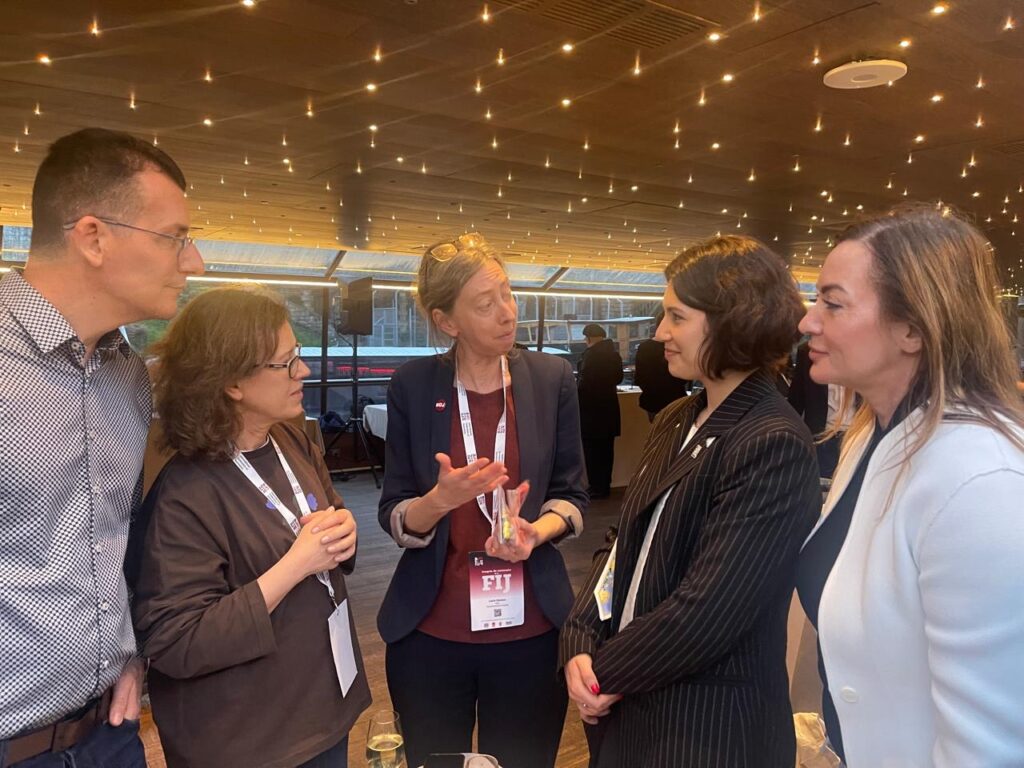
The congress was not confined to the plenary hall and votes: delegates had ample opportunity for informal exchanges outside the official programme. The NUJU press service team spoke with several key participants.
IFJ President Zuliana Lainez Otero assured that the federation “will stand shoulder to shoulder with NUJU and fight in international courts to ensure that crimes against journalists do not go unpunished.” Jennifer Moreau, newly elected IFJ Vice-President and representative of Canada’s largest private-sector trade union Unifor, emphasised: “In times of war, truth is often the first casualty. Supporting journalists is therefore our constant mission.”
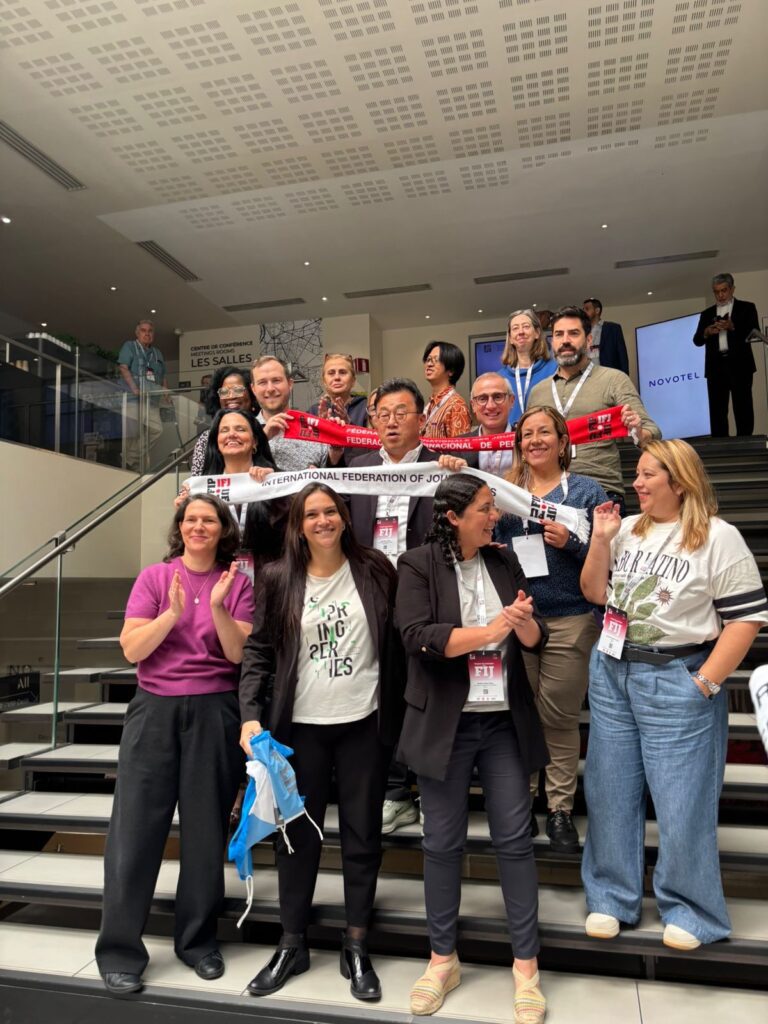
Adam Portelli, the Deputy Chief Executive in Media, Entertainment and Arts Alliance of Australia (MEAA), noted that the entire congress stands behind Ukrainian journalists who are striving to do their work in the most demanding of circumstances.
“The congress voted to expel the Russian union. We proudly supported that as part of efforts to make it safer for Ukrainian journalists to work in Ukraine. This congress genuinely recognises that the press freedom challenges we face, and the violence our colleagues in Ukraine are confronting, are unfortunately not confined to Ukraine. We are seeing mass killings in Palestine and other human rights violations across the world,” he added.
Laura Davison who serves as a General Secretary of the National Union of Journalists (NUJ), a prominent trade union representing over 30,000 journalists and media professionals across the United Kingdom and Ireland, voiced support for NUJUʼs position on countering propaganda in occupied territories and on the need to keep this issue on the international agenda.
Head of the NUJU Donetsk chapter Olena Kalaytan observed that the delegation registered colleaguesʼ attention to Ukraine, despite competition from other topics. “Our presence, and the fact that we are drawing the international community’s attention to the situation in Ukraine, matters. Many questions around artificial intelligence and other issues are now preoccupying the international journalism community, but we keep returning to the truthfulness of information and the propaganda being fuelled by pro-Russian media,” the journalist stressed.
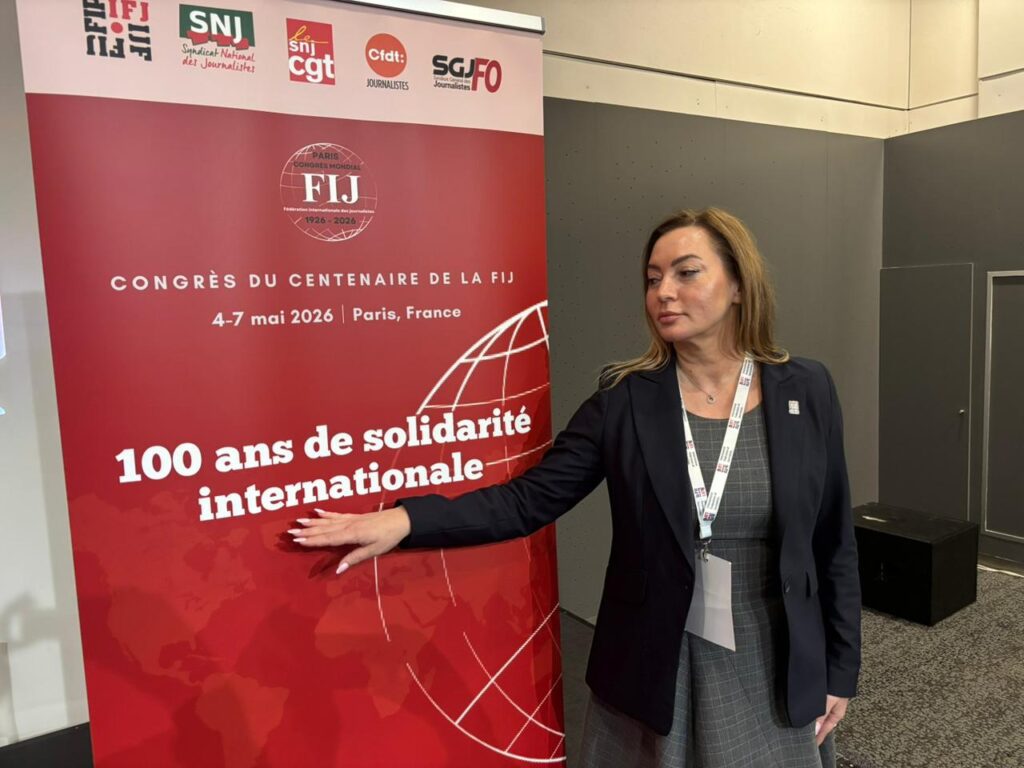
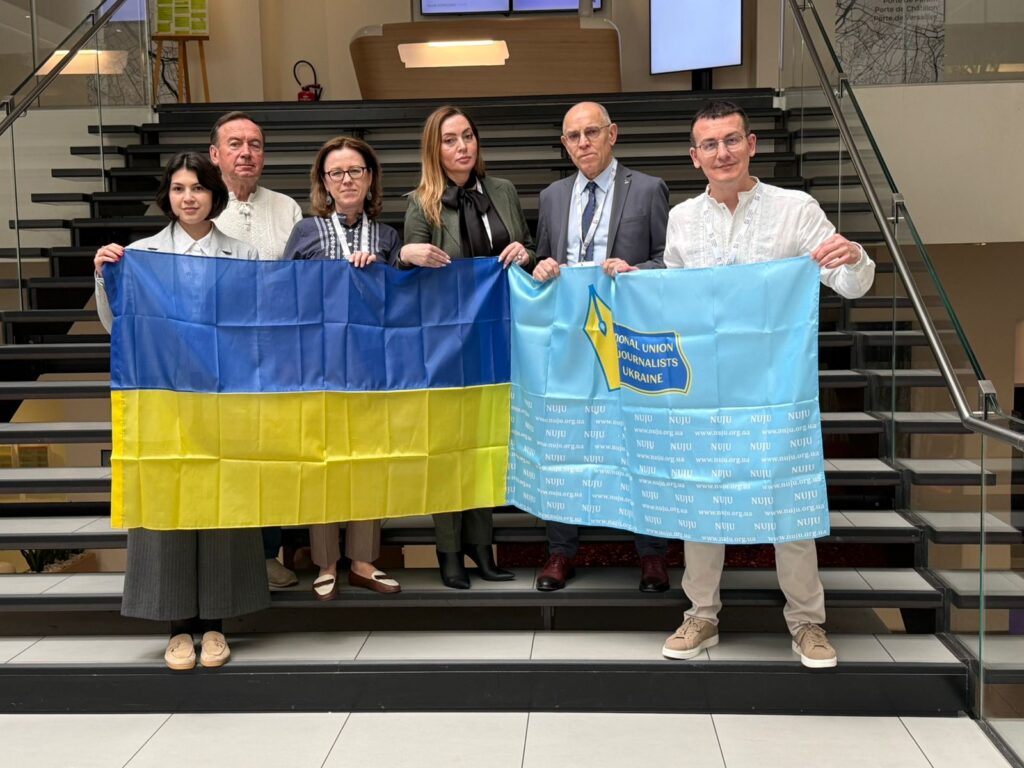
The NUJU delegation to the congress comprised NUJU President Sergiy Tomilenko, NUJU First Secretary Lina Kushch, Head of the Donetsk Regional Organisation Olena Kalaytan (Mariupol), NUJU Board Member and Head of the Communications Department Oleksandr Kharchenko (Kyiv), NUJU Secretary Viktor Vesylyk (Odesa), and press service journalist Valeriia Muskharina — whose participation was possible thanks to the Women’s Opportunities in Ukraine charitable foundation support. Independent Media Trade Union of Ukraine Chairman Serhiy Shturkhetskyy also took part in the congress.
Further details on the congress proceedings and key speakers are available on the International Federation of Journalists website.
Valeriia Muskharina
NUJU Information Service









Discussion about this post