
 THE NATIONAL UNION OF
JOURNALISTS OF UKRAINE
THE NATIONAL UNION OF
JOURNALISTS OF UKRAINE
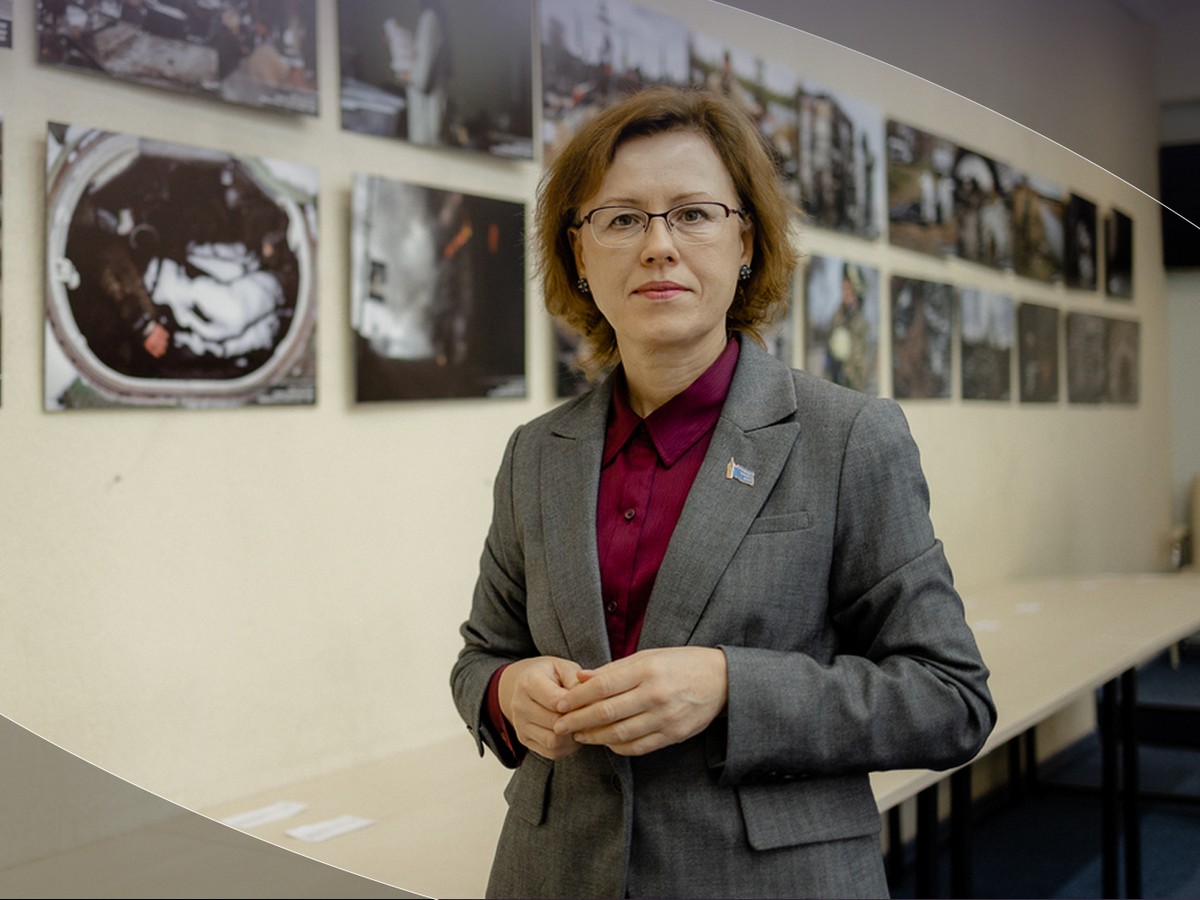
The journalist received calls from an unknown number, and posts appeared on social media that included her name. She told about this in a comment to Women in Media.
In early November, the First Secretary of the National Union of Journalists of Ukraine (NUJU), Lina Kushch, took part in an online seminar called Hate Speech as a Danger Factor: Definition, Identification, Criteria, Consequences, organized by the Commission on Journalist Ethics. The seminar discussed, in particular, the use of emotionally charged language in journalistic materials about the war.
“Answering the participants’ questions that they had asked earlier in the registration form, I focused on whether it was appropriate to use emotionally charged language when it came to the war in Ukraine, in particular regarding russians, war criminals, etc. I referred to the recommendations of the Commission on Journalistic Ethics in 2022. In accordance with these recommendations, I emphasized that the Commission recognized that “ruscists” and “ruscism” are appropriate words that reflect the essence of that regime. At the same time, the opinions of the Commission on whether it is worth writing “russia” and “putin” with a lowercase letter were divided. Most members came to the conclusion that this should be the decision of the newsroom itself, which should be explained to readers or the audience,” Lina Kushch told the Women in Media non-governmental organization.
In addition, during the webinar, the media worker also noted that, according to the recommendations of the Commission, journalists should not use words such as “orcs” or anything in relation to the russian military in a figurative sense.
“I called for the use of generally accepted and understandable vocabulary for international partners. If we are talking about war crimes and someone wants to find more information on this topic, understandable words should be used for this,” Lina Kushch explained.
A few days after that, news began to appear in Telegram channels and online resources mentioning the seminar from the Commission, where Lina Kushch’s name also appeared. For example, Strana.UA wrote about it — a resource that was blocked by presidential decree for spreading anti-Ukrainian propaganda. According to Lina Kushch, the information posted in these publications was distorted. Some posts contained targeted accusations addressed to the media woman.
In addition, publications with similar headlines about “refusing two words” began to appear on russian online resources, such as Lenta.ru, Life.ru, etc. Some comments also mentioned the fact that Lina Kushch lived and worked in Donetsk.
Later, the journalist began to receive calls from unfamiliar numbers — mostly in the evening.
“On the third day, I probably decided to answer the call after all. It was also evening. A male voice asked if it was me, to which he started talking, saying, You said that you shouldn’t call ‘Rusnia’ ‘Rusnia’. And he asked something like this, saying, Who told you to publish this article? I told him that I advise you to call me during working hours. He started raising his voice, shouting into the phone. When I asked him to introduce himself, he said that he was simply “Mykola from Kyiv”. I hung up. After that, the calls stopped,” recalls Lina Kushch.
She calls the publications and attacks not random, but planned — because of their coordination and synchronization.
This case demonstrates such signs of technologically motivated gender violence as doxing — the disclosure of a person’s personal data without their consent, in particular, the dissemination of their phone number, the dissemination of disinformation, and the targeted discrediting of the journalist through the dissemination of manipulative theses. As a reminder, Women in Media records cases of online violence against Ukrainian media workers on an online map. If you have encountered online attacks, you can report them by writing to [email protected] or using the form on the website.









Discussion about this post