 THE NATIONAL UNION OF
JOURNALISTS OF UKRAINE
THE NATIONAL UNION OF
JOURNALISTS OF UKRAINE
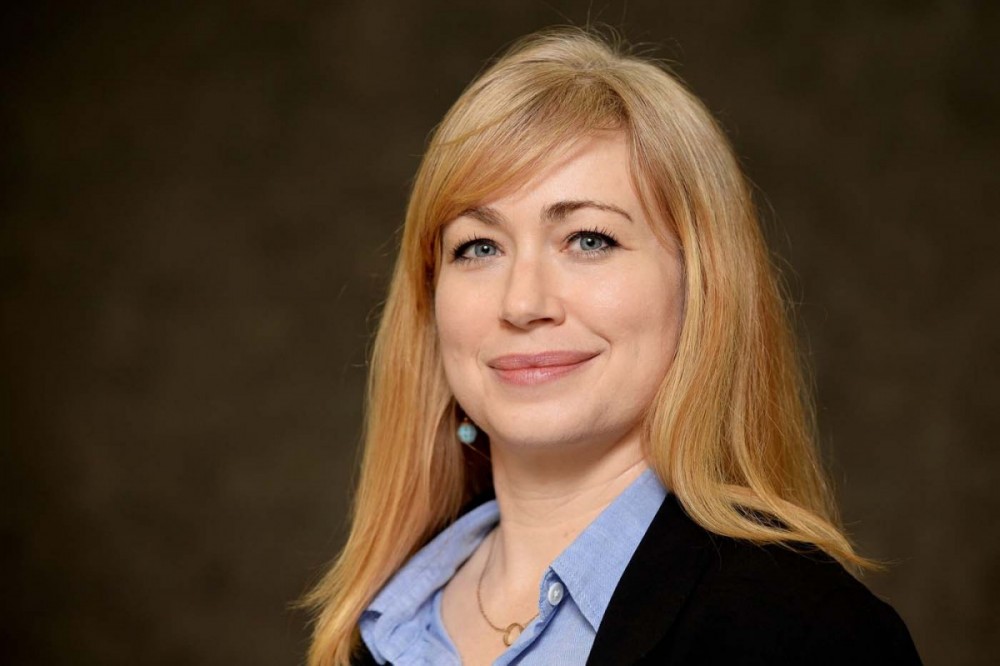
A former newspaper reporter who has spent her career defending media workersʼ rights, Jennifer Moreau of Unifor, which is Canada’s largest private-sector union, was elected Vice-President of the International Federation of Journalists at the organisation’s 32nd World Congress in Paris (May 2026). Speaking to the National Union of Journalists of Ukraineʼs information service on the sidelines of the Centenary Congress, she delivered an important message to Ukrainian colleagues: the international journalism community sees what is happening, and it must do more.
“Deliberately targeting journalists is a war crime”
“We see you and we stand with you, and we are deeply troubled and concerned about the attacks on Ukrainian journalists,” Moreau said. “We see now more than ever that deliberately targeting and killing journalists is an act of war and it is a violation of international law – it is considered a war crime.”
Forces that target journalists, Moreau said, do so to kill not only the person but the truth they carry. The framing of the journalist as a target chosen specifically because they transmit information runs through much of the IFJ’s advocacy work.
The international community, she insisted, must stand with Ukrainian journalists with concrete aid – practical support that helps keep them safe and enables them to continue spreading accurate information from inside a conflict zone.
“We know that during war the first casualty is often the truth,” Moreau said, “and with that means our media workers are in danger. So we need to absolutely support them, and that is our job and our mission, and we will stand by that.”
A mandate built on transparency
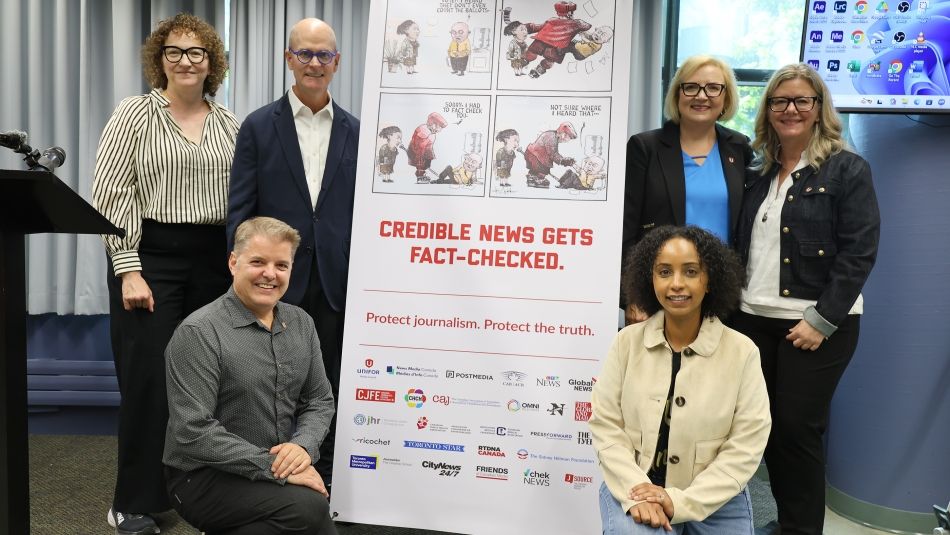
The Paris Congress, held from 4 to 7 May, marked the IFJ’s hundredth anniversary – a milestone shadowed by what the organisation itself described as the deadliest period for journalists in its recorded history. Jennifer Moreau arrived at the Centenary Congress with a record of sustained engagement with the federation’s internal reform agenda, and left it as one of five officers of the IFJ Administrative Committee.
Between 2023 and late 2025, she served as one of three members of the IFJ Dialogue Group (a body established by the Executive Committee to maintain communication with several northern European unions that had left the federation following the Oman Congress in 2022). That process produced a set of concrete proposals focused on transparency, electoral integrity, and the equal participation of affiliates in IFJ governance. Several arrived in Paris as formal motions under Unifor’s name.
The first called on the Secretariat to distribute decision statements to affiliates within three weeks of each Executive Committee meeting, and to complete and circulate full draft minutes within sixty days. The second proposed that the Secretariat send all congress delegates a circular at least two months before elections, including an overview of the process and, where possible, compiled candidate profiles.
Both motions were framed as practical steps toward the openness the federation’s own principles demand. “Accurate and timely information enhances the ability of affiliates to participate more meaningfully and fully in democratic discussions and decisions,” the Unifor text stated.
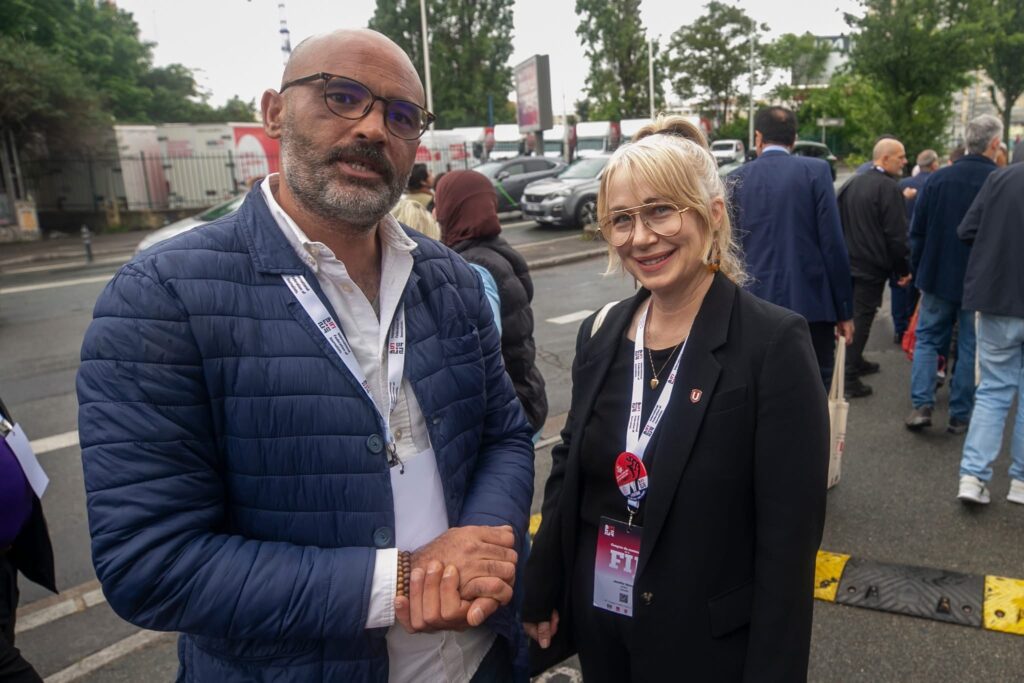
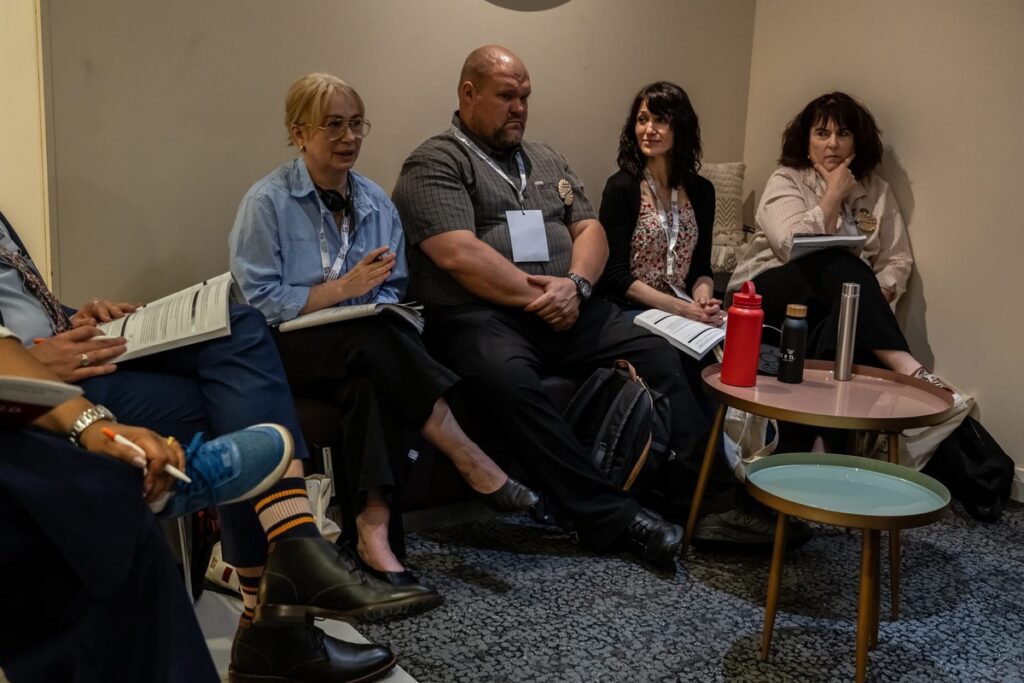
Canadaʼs engagement with global journalism solidarity
Moreau’s election reflects a broader trend of Canadian engagement with the IFJ’s solidarity infrastructure. Unifor previously awarded the Nelson Mandela human rights prize, the union’s highest honour, to Nasser Abu Baker, president of the Palestinian Journalists’ Syndicate, together with a USD 50,000 donation to the PJS. The union also contributed funding to the Khan Younis media solidarity centre in Gaza, one of three such centres established by the IFJ across the territory. The centres follow the model of the Journalists’ Solidarity Centers network built by NUJU in Ukraine, providing journalists with access to electricity, communications equipment, and basic supplies.
In the Canadian domestic context, Unifor has been among the unions pressing consistently for regulatory frameworks that ensure local journalism’s survival. Canada’s Online News Act, passed in 2023, required Google and Meta to compensate publishers for the use of news content – this model was cited by the IFJ as a reference point for other jurisdictions. Unifor has also championed the legal recognition of collective bargaining rights for freelance journalists, a right that does not yet exist in Canadian law.
Moreau also chaired the IFJ Climate Action Team during the 2022–2026 cycle, overseeing journalist training programmes on climate reporting, development of best practices, and cooperation with international trade union confederations on just transition policy. With Jennifer now among the federation’s senior officers, the connections built at the Paris Congress are expected to develop into an ongoing practical partnership, one that, as she put it, goes beyond solidarity and becomes part of the work itself.
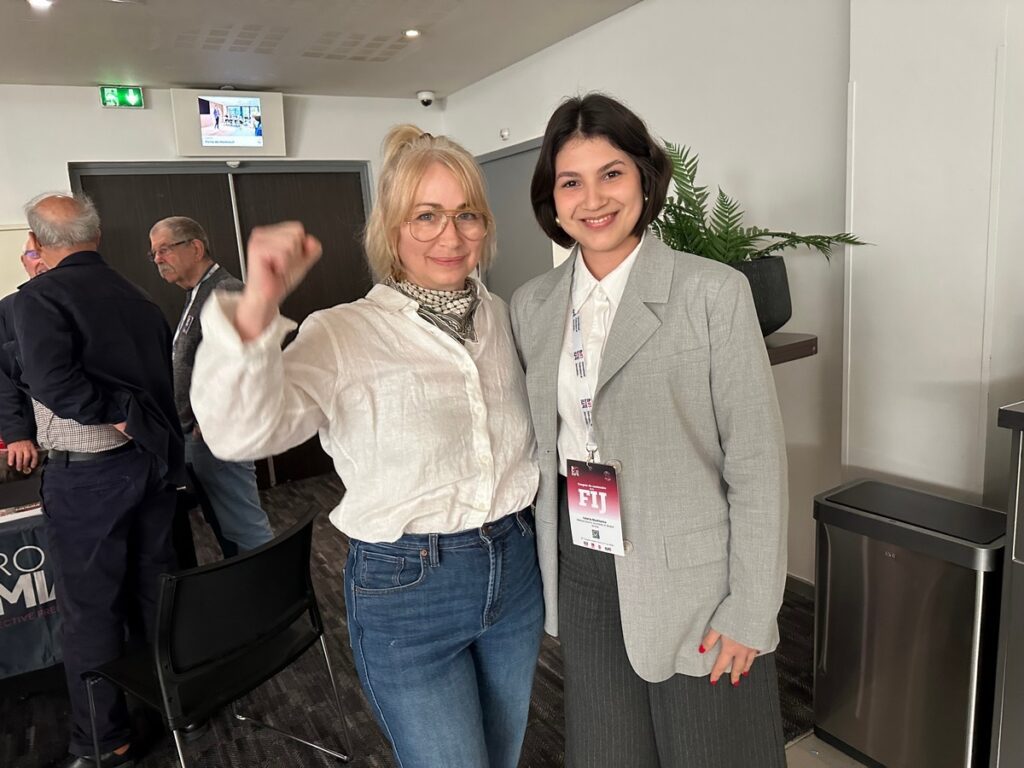
The NUJU delegation in Paris
Representing the NUJU at the 32nd IFJ World Congress were NUJU President Sergiy Tomilenko, First Secretary Lina Kushch, Head of the Donetsk Regional Organisation Olena Kalaytan (Mariupol), NUJU Board member and Communications Director Oleksandr Kharchenko (Kyiv), NUJU Secretary Viktor Vesilyk (Odesa), and journalist Valeriia Muskharina.
NUJU Information Service









Discussion about this post