
 THE NATIONAL UNION OF
JOURNALISTS OF UKRAINE
THE NATIONAL UNION OF
JOURNALISTS OF UKRAINE
Autumn 2025 has been another challenging period for Ukrainian journalists, with increased attacks on energy infrastructure, prolonged blackouts, and growing danger in frontline regions. Despite these challenges, the network of Journalists` Solidarity Centers of the National Union of Journalists of Ukraine continues to operate and provide vital support to media professionals. The activities of the frontline centers this autumn were made possible thanks to the international organization People in Need.
Not just coworking spaces
The network of Journalists` Solidarity Centers of the National Union of Journalists of Ukraine began operating after the start of the full-scale war. When the Russian army crossed the Ukrainian border, journalists were among the first targets of the aggressor. Therefore, in April 2022, with the support of the International and European federations of journalists, as well as UNESCO, a network of centers was created to provide journalists with emergency assistance – financial, organisational, moral and psychological support – as well as educational events and assistance in resolving legal issues. It has since transformed into six strategically located hubs: Kyiv, Kharkiv, Dnipro, Zaporizhzhia, Ivano-Frankivsk and the united Western Ukrainian Centre with offices in Lviv and Chernivtsi.
“These are not just offices with computers,” says Sergiy Tomilenko, NUJU President. “These are places where journalists feel like journalists again. Where they understand that they are not alone.”
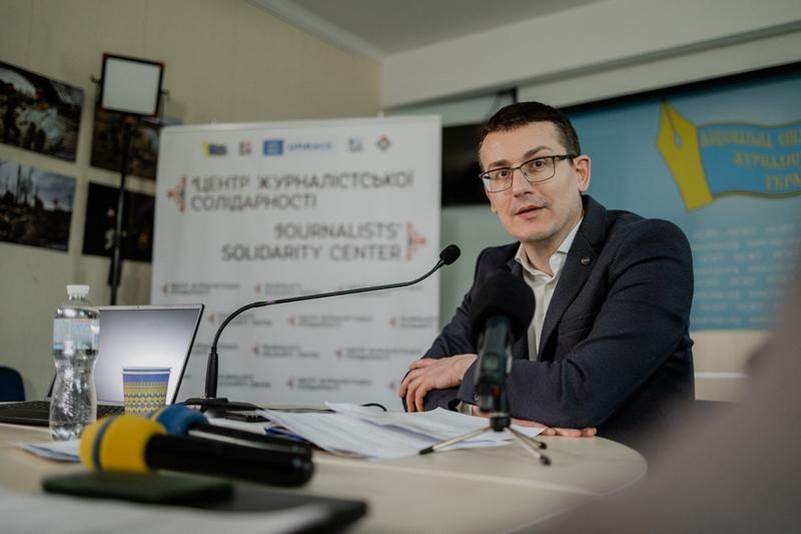
What does the Journalists` Solidarity Center actually mean? In every city, it is a physical office – a co-working space equipped with generators and autonomous internet access. When the power goes out (which happens several times a day in Ukraine), journalists know that the center has electricity, internet, heat and coffee. But infrastructure is just the tip of the iceberg.
A partnership that saves lives
People in Need (PIN) is a Czech international humanitarian organisation that has been working in conflict zones around the world since 1992, from Syria and the Caucasus to the Balkans and Africa. The organisation’s mission is to help people in crisis situations and support freedom of speech. PIN has been present in Ukraine since 2003. Since 2014, it has intensified its humanitarian aid in response to the start of Russian aggression and the emergence of a humanitarian crisis in eastern Ukraine. After the start of the large-scale invasion on 24 February 2022, PIN quickly scaled up its activities and is helping millions of people in different regions of Ukraine.
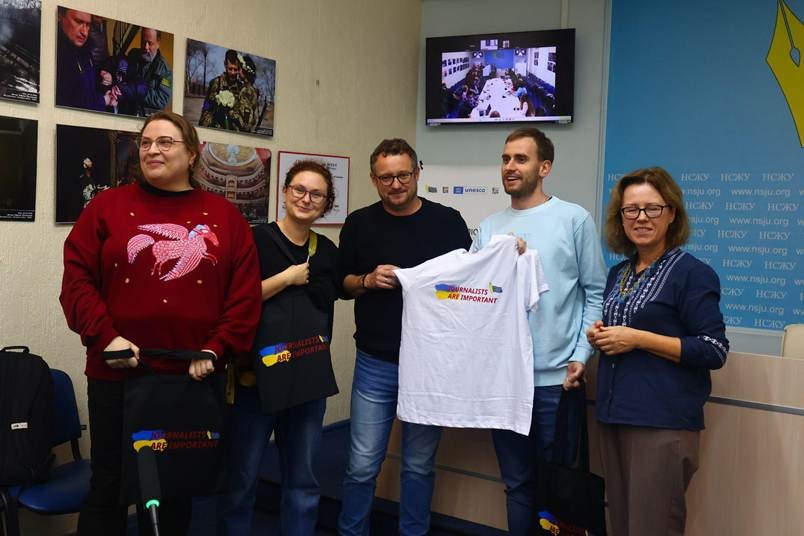
Confirming its intention to strengthen solidarity with Ukraine, in October 2025, the Kyiv JSC was visited by a delegation from this humanitarian organisation – Human Rights Project Coordinator in Ukraine René Kočík, Team Leader and Project Manager Olena Romanova, and Project Manager Liza Severina. During the visit, the guests met with teams from all the Centers and heard first-hand about the realities of journalists’ work in frontline regions. Particular attention was paid to the psychological well-being of media workers and the initiatives aimed at supporting their mental health.
‘We support not only journalists – we support society’s right to know the truth,’ emphasize PIN representatives.
Thanks to PIN’s support, Ukrainian Journalists’ Solidarity Centers have become part of a global network of humanitarian initiatives aimed at protecting freedom of speech in conflict zones. The National Union of Journalists of Ukraine, in partnership with People in Need, is implementing a project to support the network of Journalists’ Solidarity Centers in frontline regions during this difficult and critical autumn period for the country, when Russia has increased its attacks on energy and critical infrastructure, as well as its terror against the civilian population throughout the country.
What do the Journalists` Solidarity Centers provide?
People in Need’s support covers the following services provided by the network of Journalists` Solidarity Centers:
– emergency assistance to journalists and newsrooms affected by shelling or forced relocation,
– free rental of personal protective equipment — bulletproof vests, helmets, IFAK first aid kits,
– safe workspaces in Kharkiv, Dnipro, Zaporizhzhia, and Kyiv, accessible to Ukrainian and foreign media journalists,
– legal support and advice provided through the Journalists` Solidarity Centers hotline
– consulting support and assistance in relocating journalists and editorial offices who have left their homes or offices due to hostilities,
– Supporting the sustainability of local media — training, mentoring and assistance in the technical restoration of editorial offices affected by the war.
Thanks to this cooperation, the Journalists` Solidarity Centers continue to perform a key function in ensuring the safety and support of the media in Ukraine, providing vital services to journalists working in high-risk environments and helping to preserve public access to reliable information.
With continued international support, the network can further expand crisis response teams, develop mobile field units for high-risk areas, strengthen psychological support for media workers, and introduce rapid-reaction mechanisms for editorial offices hit by shelling or forced displacement.

New danger: FPV and “waiting” drones
In recent months, the work of journalists in frontline regions has become significantly more dangerous due to the Russian army’s progress in increasing the range of FPV drones. Settlements located 20–30 km from the front line have been classified as “kill zones”.
Fibre optic drones, known as “waiting drones”, pose a particular threat. Unlike FPV drones, which are controlled by radio signals, fibre optic drones transmit commands via a thin cable. This makes them virtually invisible to electronic warfare equipment.
– Such a drone can wait in ambush for a long time, explains Volodymyr Pavlov, an experienced Kharkiv-based fixer and journalist. Because it uses fibre optics, the drone does not emit radio signals, making it harder to detect, so there is very little time to react and get to a safe place when you encounter it.
On 23 October, in Kramatorsk, military correspondent Alyona Gramova (Gubanova) and cameraman Yevhen Karmazin were killed in a targeted drone attack on their vehicle. Special correspondent for the FREEDOM TV channel Oleksandr Kolychev was seriously injured. The coordinator of the Journalists` Solidarity Center in Dnipro, Natalia Nazarova, immediately contacted the family of the injured journalist, and with the support of People in Need, he was provided with emergency financial assistance.
On 30 October, a similar attack took place in Sumy – Maksym Tkachov, head of Sumy Channel, was hit by a Russian drone at a petrol station. He is currently in hospital, and the National Union of Journalists of Ukraine has provided him with emergency assistance.
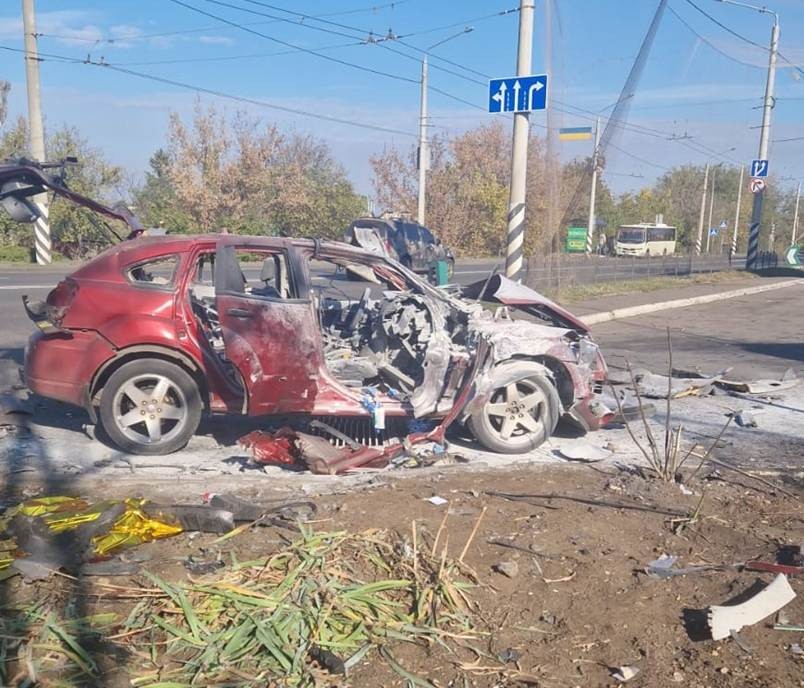
In such conditions, personal protection is particularly necessary – bulletproof vests and IFAK first aid kits, which can be obtained free of charge from the JSC network.

The face of solidarity
Since the beginning of the war, hundreds of journalists have received personal protection kits, emergency financial and other assistance (over 8,000 requests in three years of operation). But behind the numbers are real stories.
– The Journalists` Solidarity Center has everything you need to work – and even more, says Vyacheslav Tverdokhlib, a Mariupol TV journalist who left the occupied city on foot in 2023 and is now a frequent guest at the Zaporizhzhia Centre’s co-working space. ‘It’s a place where you feel like a journalist again.’
Maryna Zhivotkova from Luhansk region left the occupied territory, taking only passport with her – it was too dangerous to take her press card.
“I came to Lviv as if I were coming home,” she recalls. “They met me, provided me with my first accommodation, and helped me with documents and money. I can’t imagine what it would have been like without the Union and the JSC.”
One foreign photojournalist said that during the three-day blackout, the Kharkiv JSC was the only place where he could promptly send his material to his editorial office.
An important area of work for the Сenters is supporting the local press in frontline territories. At a time when cities are left without electricity and communications, printed newspapers often become the only source of objective information.
Our colleagues work in very difficult conditions. Only one or two people work in every fourth editorial office in the frontline territories. The average salary is around €200. Income has fallen by two-thirds. Nevertheless, 32 local newspapers have resumed their work thanks to the support of NUJU.
– People perceive these publications not only as media, but also as a symbol of Ukraine, explains Sergiy Tomilenko. A local newspaper is a symbol of struggle and resilience. It reminds people that they have not been forgotten that Ukraine is with them even in the most difficult times.
Editor Vasyl Myroshnyk drives hundreds of kilometers every week on dangerous roads to deliver his newspaper “Zorya+Visnyk Bohodukhivshchyny”, to readers in the Kharkiv region. Editor Svitlana Karpenko personally delivers the newspaper “Trudova Slava” to residents of Orikhiv (Zaporizhzhia region) under constant shelling. ‘Without the assistance from the NUJU, we would have closed down,’ they say almost in unison.
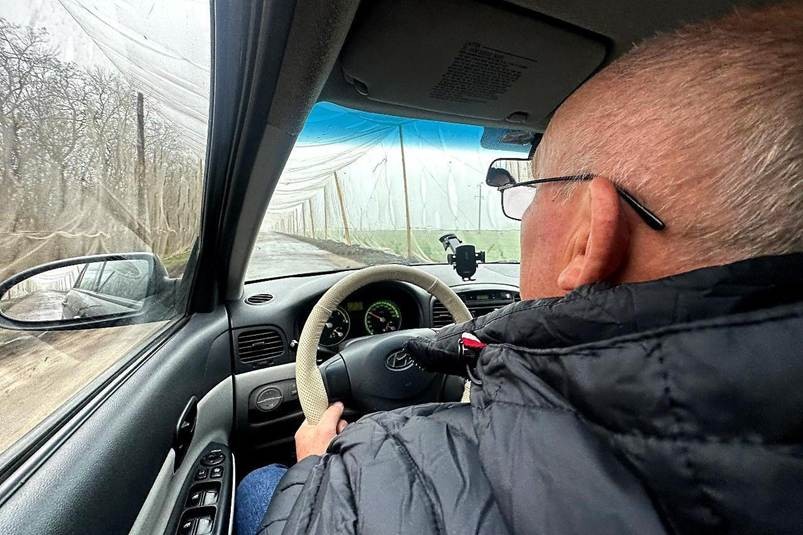
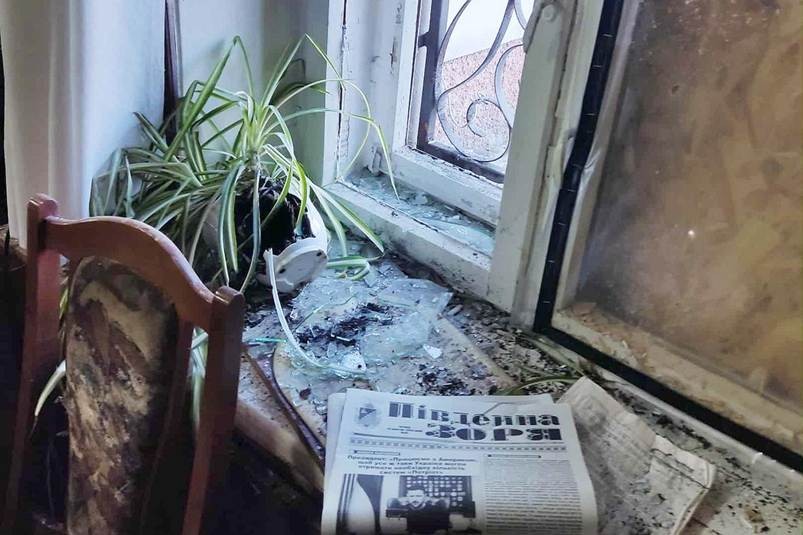
All the windows in the editorial office of the frontline newspaper “Vorskla” (Velykopysarivka, Sumy region) have been broken. The editorial office was relocated after the shelling, but the newspaper continues to be published. The newspaper’s editor, Oleksiy Pasyuga, also delivers the newspaper to readers, who are often live without electricity or communication.
– I believe that many difficulties, including financial ones, can be overcome, in particular with the help of grants. And also, with the support of the National Union of Journalists of Ukraine, which keeps abreast of all events, helping the media, says Oleksiy.
Lifeline during blackouts
In October and November 2025, the Russian army intensified its attacks on energy infrastructure, causing widespread power outages. It is at times like these that Journalists` Solidarity Centers become indispensable – here, journalists have uninterrupted access to the internet, can work on their stories and charge their equipment.
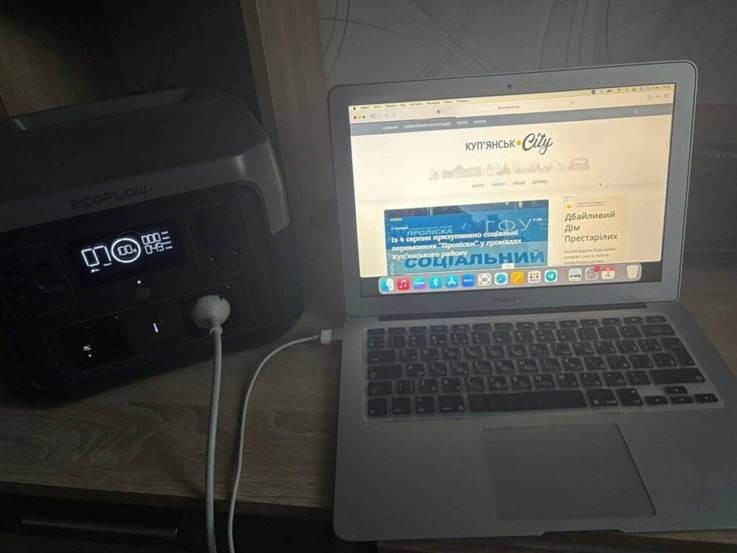
Among the users of the JSCs during this period were the Kyiv team of Reuters, which worked at the Kharkiv center during a trip, the Truth Hounds team, which specializes in documenting international crimes, and researchers from the Marek Karpa Centre for Eastern Studies (Warsaw).
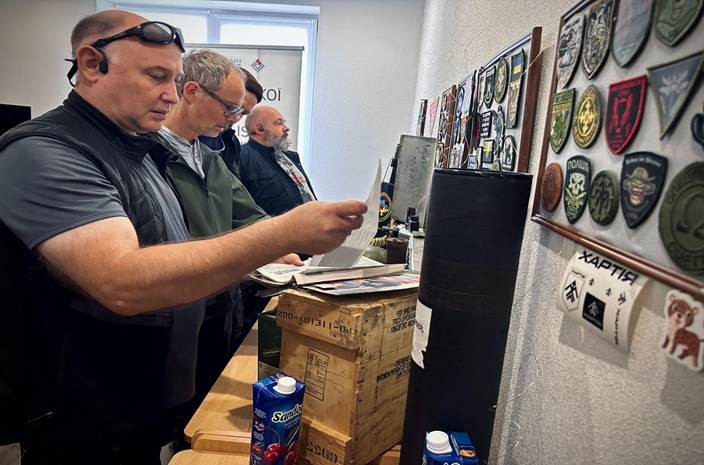
But the centers provide much more than just electricity. Coordinators help with logistics: they give advice on the safest routes and organize meetings for foreign media groups.
– Journalists often come to us not only for the internet or equipment – they need a space where they can relax and gather their thoughts, say the coordinators of the Centers.
Investing in democracy
Other countries are already adopting the experience of Ukrainian Journalists` Solidarity Centers. At the International Federation of Journalists’ congress in Brussels, Nasser Abu Bakr, head of the Palestinian Journalists’ Syndicate, said:
‘When we talked about solidarity centers, we took the Ukrainians as an example. We want to create better services and guarantee the safety of journalists.’
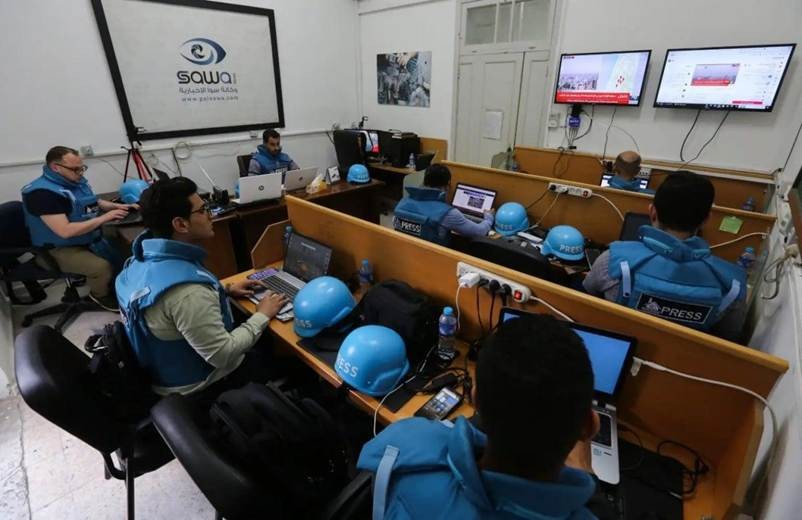
In February 2025, on the third anniversary of the full-scale war, NUJU organized an international online conference that brought together more than 130 participants. Representatives of leading global organisations – the Committee to Protect Journalists, the European Federation of Journalists, and the International Press Institute – discussed critical challenges for Ukrainian media.
The conference resolution states: ‘Supporting independent journalism in Ukraine is an investment in the victory of democracy and truth over aggression and propaganda.’ Recommendations include increasing international pressure on Russia to release imprisoned journalists, providing emergency funding for independent media, and supporting emergency assistance mechanisms, such as solidarity centers.
– Keep Ukraine in your stories, in your materials, in your hearts, Sergiy Tomilenko appealed to his colleagues at the Congress of the Danish Union of Journalists.
The war continues – the centers are working
Despite their successes, the centers face ongoing challenges. Funding remains unstable – following the end of UNESCO support, the work continues largely thanks to partners such as People in Need and the Danish Union of Journalists.
– We cannot help everyone at once, admits Lina Kushch, NUJU First Secretary and network coordinator. But the key task is to ensure that every journalist can ask for help and not be left alone with their problems.
The war continues, and the centers continue to operate. Every day, someone receives a bulletproof vest to take to the front line. Every day, someone comes to the co-working space because there is no electricity at home. Every day, someone refers to the legal hotline asking for help.
Famous Italian journalist Andrea Nicastro, author of a book about Mariupol, visited the Kyiv center and said: ‘I am impressed by the resilience of journalists who work near the front line in wartime conditions. They are true heroes.’
But the journalists themselves do not consider themselves heroes. They are simply doing their job. And solidarity centers help them to do so – professionally, safely, and without being left alone.
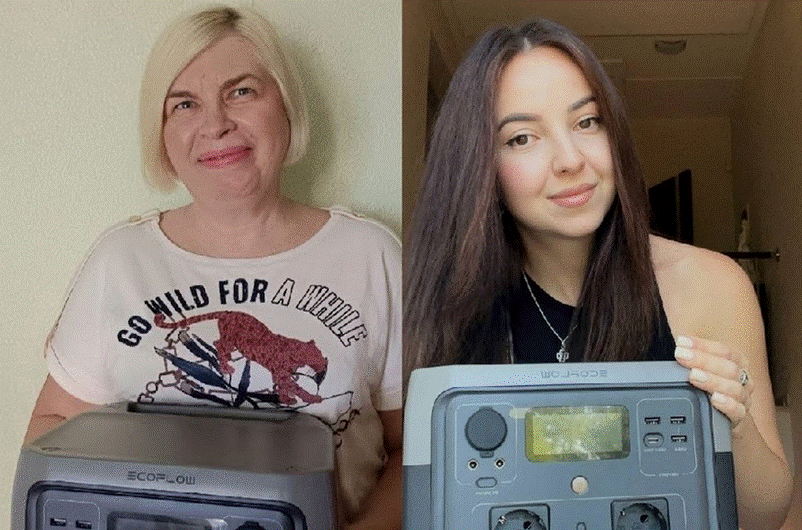
The JSC network is a supportive environment that helps journalists preserve their profession, health and lives.
Despite the strong capacity already built, the needs of journalists in frontline regions remain significant. Many reporters still lack modern personal protective equipment, reliable power sources, or safe transport for work in high-risk areas. Mental health support is becoming increasingly important as media workers face chronic stress, repeated exposure to traumatic events, and burnout. In addition, dozens of journalists and newsrooms require assistance with relocation or partial restoration of their damaged offices. These challenges highlight the need for continued, stable support for the network.
Thanks to cooperation with People in Need, the Journalists` Solidarity Centers continue to perform a key function in ensuring the safety and support of the media in Ukraine, providing vital services to journalists working in high-risk conditions and helping to preserve public access to reliable information.
Reference:
The Network of Journalists` Solidarity Centers is an initiative of the National Union of Journalists of Ukraine, implemented in cooperation with the International and European federations of journalists, UNESCO and with the support of the people of Japan. The centers operate in Kyiv, Kharkiv, Zaporizhzhia, Dnipro, Lviv (with a branch in Chernivtsi) and Ivano-Frankivsk.
People in Need (PIN) is a Czech international humanitarian organisation founded in 1992. It operates in more than 40 countries around the world, providing assistance to people in conflict zones and supporting freedom of speech.
NUJU Information Service
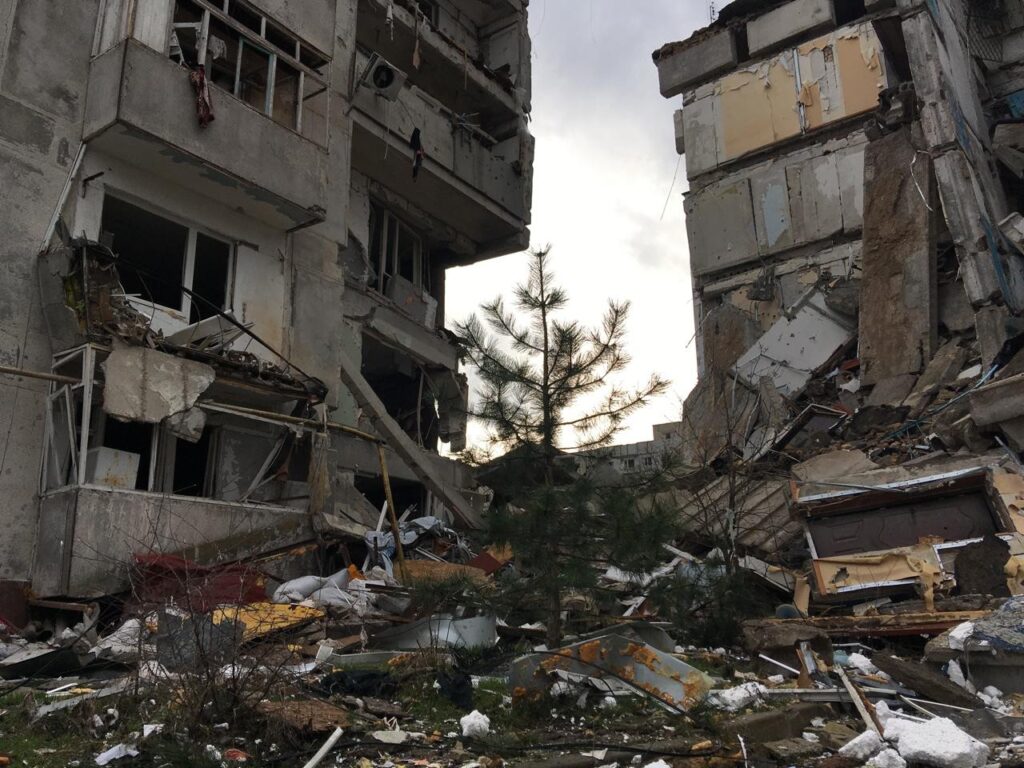

This publication has been produced with financial assistance from People in Need, a Czech humanitarian organization, within the framework of the SOS Ukraine initiative. The content of this publication does not necessarily represent the views of People in Need.










Discussion about this post