 THE NATIONAL UNION OF
JOURNALISTS OF UKRAINE
THE NATIONAL UNION OF
JOURNALISTS OF UKRAINE
When Russia launched its full-scale invasion of Ukraine in February 2022, the National Union of Journalists of Ukraine had one bulletproof vest in Kyiv for hundreds and hundreds of Ukrainian journalists. “We were unprepared for the full-scale invasion,” recalled NUJU president Sergiy Tomilenko.
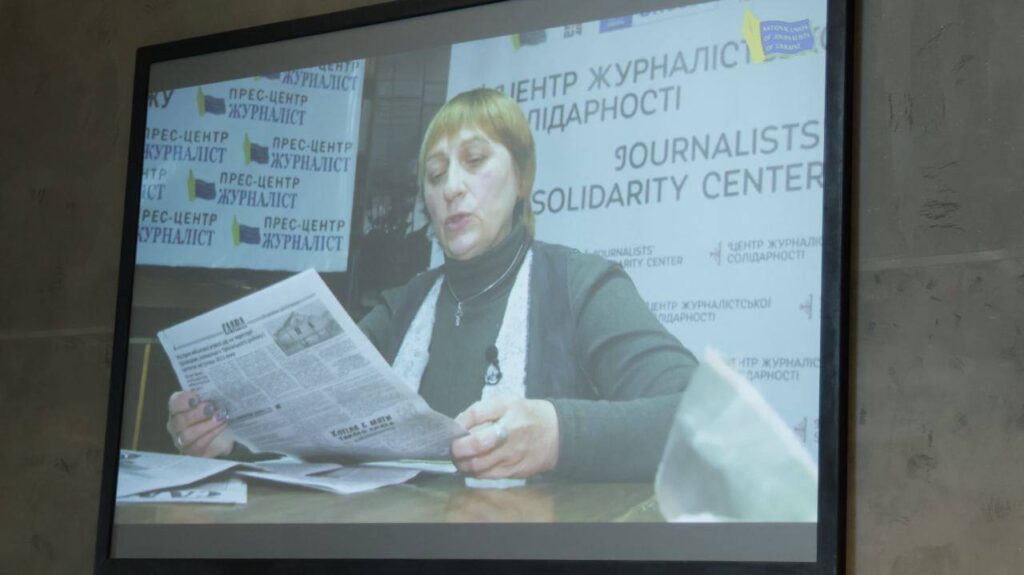
That reality forced an immediate rethink of what it means to support journalists. The answer came through dialogue with international partners. “We asked our more experienced colleagues from the International and European Federation of Journalists for advice on how we should change our work, how we can support our colleagues during war,” Tomilenko said. The result was a network of Journalistsʼ Solidarity Centres — small hubs in conflict-affected regions equipped with safety gear, charging stations, internet access, and drone detectors.
The idea was to open small hubs in regions, equipped with safety equipment, charging stations, and air links. “We don’t know what challenges tomorrow will bring. But we know journalists must not feel alone — this is why the Centres exist,” Tomilenko explained.
From Ukraine to Gaza
Three years later, that model has crossed borders.
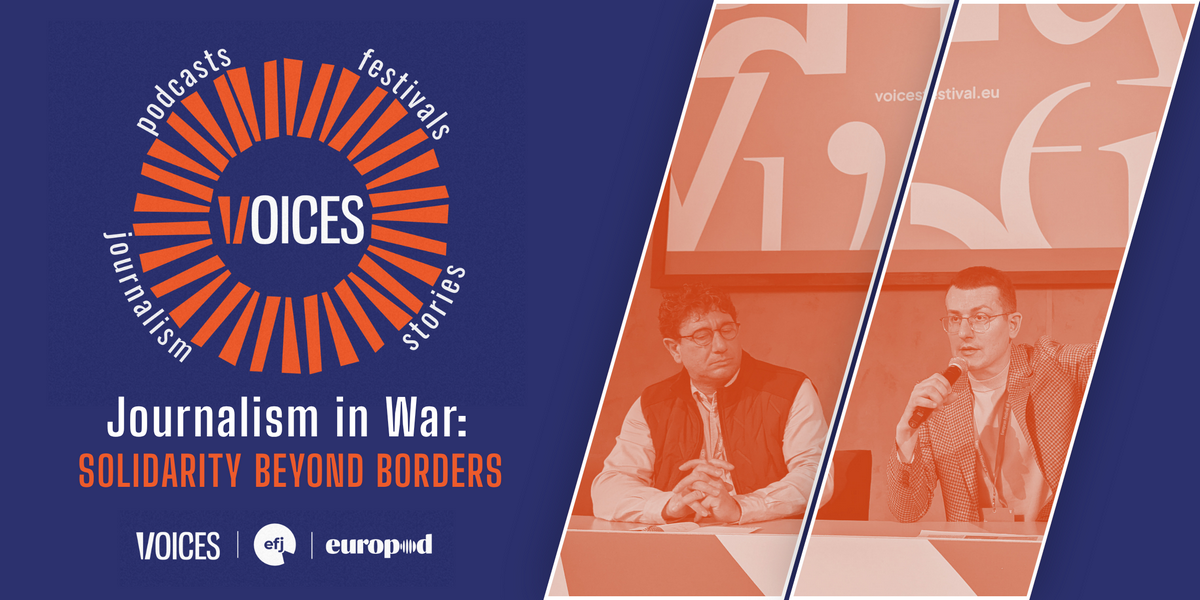
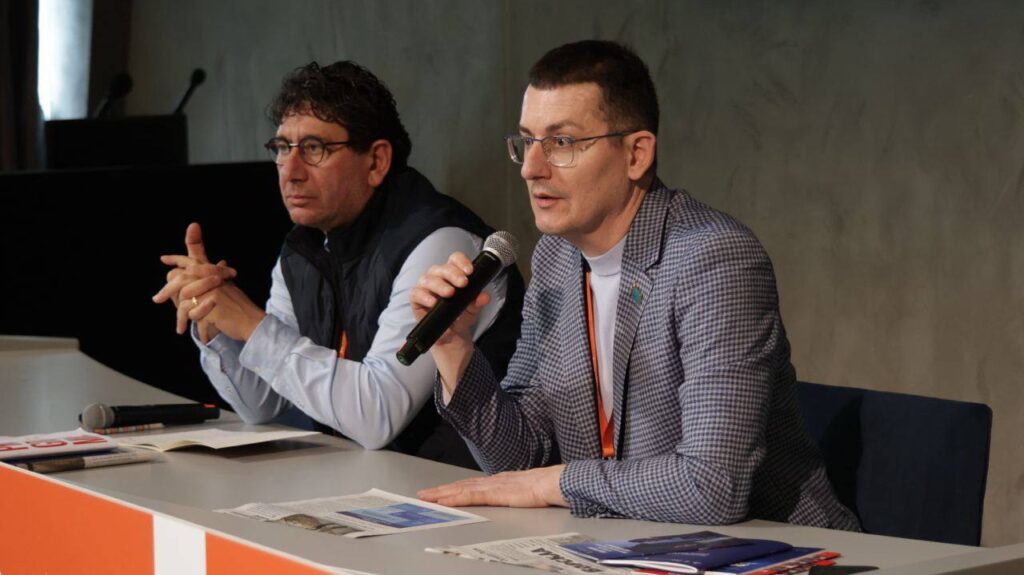
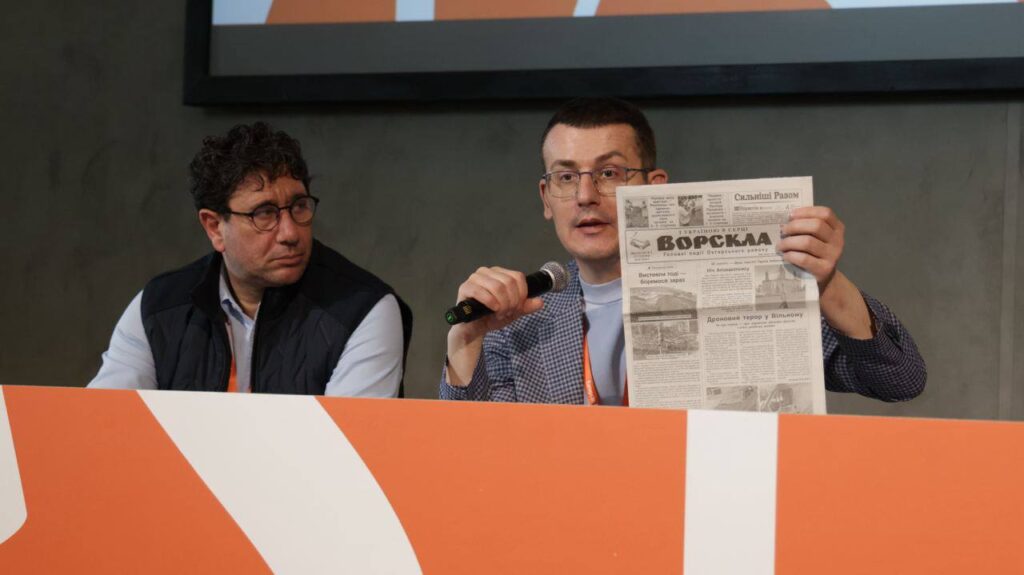
At the third Voices Festival of Journalism and Media Freedom in Florence this March, Sergiy Tomilenko shared a stage with Yousef Habache of the European Branch of the Palestinian Journalists Syndicate. Their conversation, released as the opening episode of the EFJ-Europod podcast “Journalism in War: Solidarity Beyond Borders,” showed how two very different conflicts had produced strikingly similar needs, and a shared response to them.
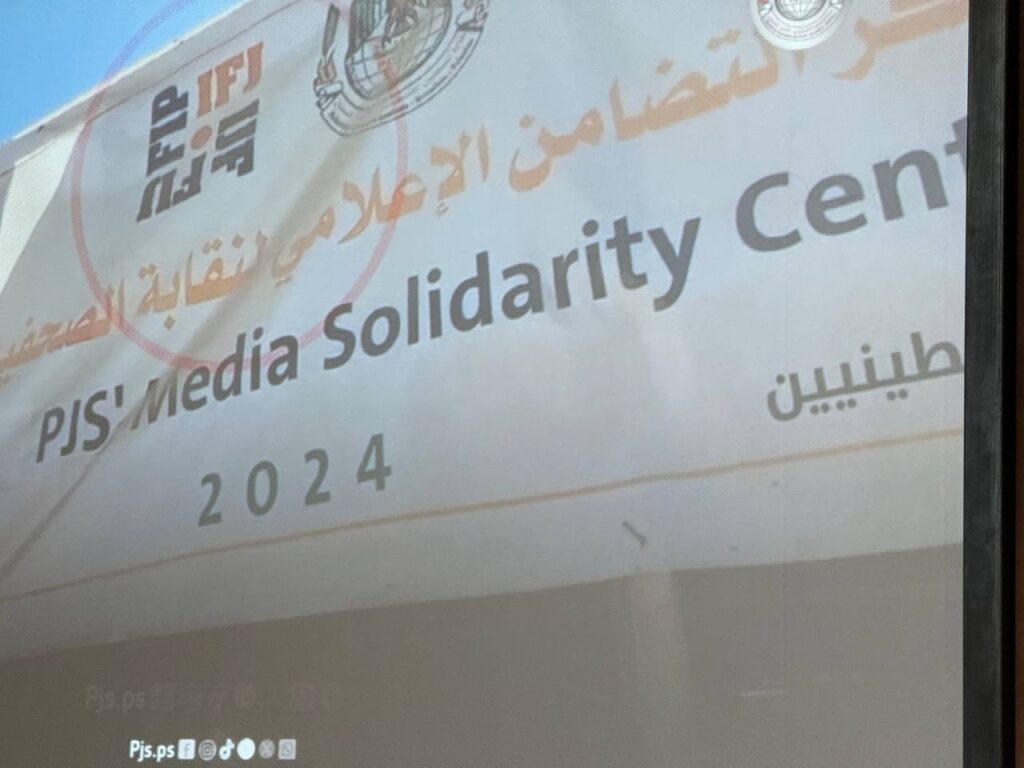
In Gaza, three hubs called Media Solidarity Centers have now been established, modelled on the Ukrainian experience. The scale of destruction makes the Ukrainian starting conditions look manageable by comparison. “We have between 150 to 200 journalists working inside. The structure of these centers reflects local constraints. They function as shared workspaces in a highly constrained environment. Ours, it’s more in tents,” Habache said. “All institutions have been destroyed — even our offices as a syndicate. There is no electricity. They are cutting even the internet connection with the world.”
The Centres give journalists in Gaza a point of return. “In these centres, you could come and charge your battery, do your work, or sit. And each journalist — they go and come back,” Yousef Habache added.
A Shared Language of Support
In Ukraine, drone detectors have become part of the essential infrastructure. “This device can inform you if you are a target for Russian drones,” Sergiy Tomilenko said, adding that journalists are receiving an additional five or ten minutes for surviving. When a crisis hits, the response is immediate and financial: “At every emergency situation, we try to be in touch with journalists, verify cases, and provide a small but fast grant.”
In Gaza, the threats take a different but equally lethal form. “Sometimes we are afraid that those centres are being attacked, directly targeted,” explained Habache. “When the Israelis announce that a journalist is targeted, we ask journalists not to come to the centres.”
More than 260 journalists have been killed over two years of conflict in Gaza. Habache has a name for it: mediacide. And a second term, equally blunt: media siege. “This never happened in the world. It never happened in any war.”
Infrastructure as a Condition for Journalism
The Voices Festival recognised this work with its 2026 Media Freedom Award, presented to NUJU and the teams behind the Solidarity Centres.
“Journalists are brave,” Tomilenko said. “But itʼs not enough, unfortunately. We want to realise our dream — the mission of journalism, to protect people. But itʼs not enough. We should have more infrastructure, more devices, more protection, more resources.”
The exchange between Ukraine and Gaza –– of experience, model as well as hard-won knowledge –– is what the Centres were built for. “We created this network with the idea of building infrastructure, a hotline — something very effective during war,” Sergiy Tomilenko said. “And we share our experience with our colleagues in Palestine and Gaza.”
Courage has never been the missing ingredient. What journalists in conflict zones need is a system behind them. The Solidarity Centres are that system. And, crucially, replicable.
The Journalists’ Solidarity Centres in Ukraine are supported by the European Federation of Journalists (EFJ) and the International Federation of Journalists (IFJ). The podcast “Journalism in War: Solidarity Beyond Borders” is available via Europod.
NUJU Information Service










Discussion about this post