

 THE NATIONAL UNION OF
JOURNALISTS OF UKRAINE
THE NATIONAL UNION OF
JOURNALISTS OF UKRAINE
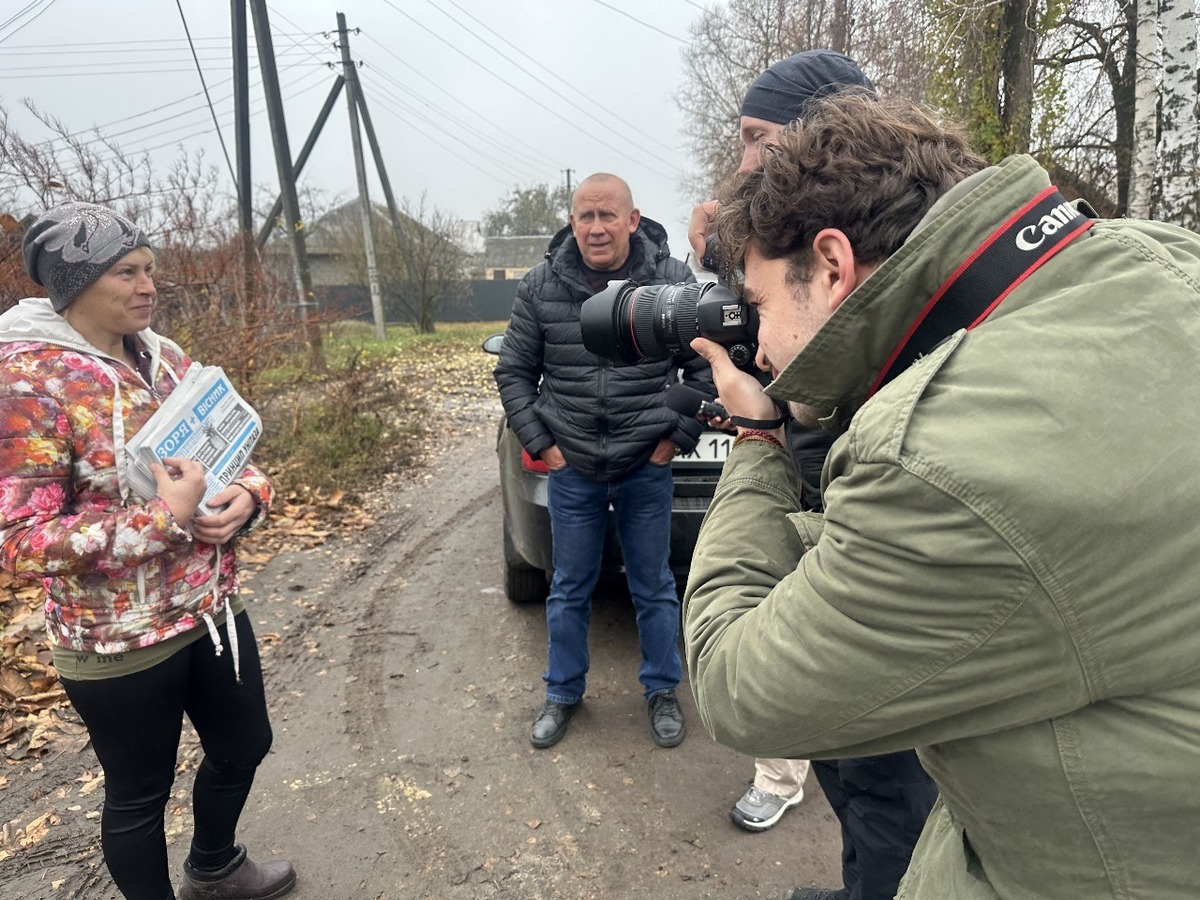
Participants of the Ukrainian–Swedish online forum on frontline media “Journalism as a Lifeline in Times of War” have adopted a joint resolution. The document calls on the international community to recognize local media in frontline regions as part of critical information infrastructure and to strengthen their systematic support.
The forum was held on April 21, 2026, organized by the National Union of Journalists of Ukraine (NUJU) and the Association of Swedish Media Publishers (Tidningsutgivarna, TU). On behalf of the participants, the resolution was signed by NUJU President Sergiy Tomilenko and TU President Johan Taubert.
The central message of the document is that in armed conflict zones, access to reliable information becomes a matter of survival, while local journalism serves as critical information infrastructure. Local journalists are often the only source of information for communities, thanks to audience trust and deep contextual understanding. At the same time, these newsrooms are among the most vulnerable and risk closure without stable support.
Forum participants stressed that short-term funding does not ensure newsroom sustainability – long-term institutional solutions are needed.
The resolution highlights the systematic nature of Russia’s attacks on journalists and media infrastructure. According to Reporters Without Borders (RSF), more than 175 media professionals have been affected since the start of the full-scale invasion. RSF has also filed a complaint with the International Criminal Court regarding the persecution of journalists as a crime against humanity. According to NUJU, at least 28 Ukrainian journalists are currently held in Russian captivity.
The document also draws attention to new challenges linked to the widespread use of drones, including FPV drones. These developments have significantly changed working conditions for journalists and sharply increased security-related costs: protective equipment, drone detectors, and independent power supply systems have become basic newsroom needs. Amid infrastructure strikes, print newspapers often remain the only stable source of information for frontline communities.
Participants of the forum called on the International and European Federations of Journalists, UNESCO, the Council of Europe, the European Commission, and the European Parliament, as well as bilateral partners, to strengthen support for local media in frontline regions and make it a priority on the international agenda.
The resolution outlines key areas of support:
- Financial support – expanding access to flexible funding mechanisms that allow newsrooms to cover operational costs. Participants particularly emphasized the effectiveness of the partnership between TU and NUJU, which is critical for the survival of some frontline media outlets.
- Technical support – providing energy sources, communication tools, protective equipment, and drone detection technologies.
- Safety of journalists – supporting safety programs implemented by Ukrainian professional organizations.
- Institutional network support – ensuring the sustainability of NUJU’s Journalists’ Solidarity Centers.
- Release of journalists – strengthening international efforts to secure the release of Ukrainian journalists from Russian captivity.
In the long term, the resolution calls for recognizing local media as part of Ukraine’s critical infrastructure requiring systematic state and international support. It also emphasizes investment in the restoration and modernization of media infrastructure as part of post-war recovery, as well as the development of long-term partnerships between Ukrainian and international media organizations.
“Support for frontline media is a necessary condition for Ukraine’s resilience and European security. Ensuring resources and safety for journalists must be integrated into international support policies,” the resolution states.
The document is based on principles of freedom of expression and the right to access reliable information, positions of the International and European Federations of Journalists on journalist safety, the practical experience of the Ukrainian Media Fund Nordic initiative uniting partners from Sweden, Norway, Denmark, and Finland, as well as findings from the NUJU study “Information Needs of Residents of Frontline Areas” (2025).
The resolution is presented in full below.
Journalism as a Lifeline in Wartime
Joint Resolution of the Participants of the Ukraine–Sweden Frontline Press Forum
21 April 2026
The participants of the Ukraine–Sweden Frontline Press Forum, organised by the National Union of Journalists of Ukraine (NUJU) in cooperation with the Swedish Media Publishers’ Association (Tidningsutgivarna, TU),
– guided by the principles of freedom of expression, the public’s right to reliable information, and the protection of independent media as a cornerstone of democratic society;
– taking into account the positions of the International Federation of Journalists (IFJ) and the European Federation of Journalists (EFJ) on journalist safety and support for media in armed conflict;
– recognising the practical experience of supporting economically independent regional media in Ukraine through the Ukrainian Media Fund Nordic initiative, which brings together partners from Sweden, Norway, Denmark and Finland;
– drawing on the findings of the study “Information Needs of Residents of Frontline Territories” (NUJU, 2025),
adopt this Resolution.
- The Role of Local Journalism
Independent journalism is a public good and a fundamental condition for democracy. In conflict zones, access to reliable information becomes a vital necessity.
Local journalists are often the only actors able to inform communities, thanks to established trust and deep knowledge of local contexts. At the same time, these media outlets are the most vulnerable to closure without stable support.
Short-term project-based funding does not ensure sustainability. Long-term, institutional support mechanisms are required.
- Systemic Threats to Journalists
The participants note the systematic nature of Russia’s attacks against journalists and media infrastructure.
According to Reporters Without Borders (RSF), more than 175 media professionals have been affected since the start of the full-scale invasion. RSF has also filed a case with theInternational Criminal Court regarding the persecution of journalists as crimes against.
According to NUJU, at least 28 Ukrainian journalists are currently held in Russian captivity.
- New Risks and Rising Costs
The large-scale use of drones, particularly FPV drones, has fundamentally changed the conditions under which journalists operate.
This has led to a significant increase in the cost of safe journalistic work. Protective equipment, drone detectors, and alternative energy sources have become essential tools for media operations.
At the same time, attacks on infrastructure have caused prolonged disruptions to media work. In these conditions, printed newspapers often remain the only reliable source of information for local communities.
- Journalism as Critical Infrastructure
Local media in frontline regions perform the function of critical information infrastructure.
Reliable information saves lives, prevents panic, and counters disinformation. Where local journalism disappears, the information space is quickly filled by propaganda.
- Call to the International Community
We, the participants of the Forum, call upon:
– the International Federation of Journalists and the European Federation of Journalists;
– UNESCO and the Council of Europe;
– the European Commission and the European Parliament;
– as well as bilateral partners
to strengthen support for local media in frontline regions as a priority on the international agenda.
- Priority Areas of Support
- Financial support
Expand access to flexible financial mechanisms that allow media outlets to cover essential operational costs.
The participants particularly underline the importance of existing partnership initiatives, including the cooperation between Tidningsutgivarna (TU) and NUJU, which provides vital support to frontline media outlets and, for some, remains a critical condition for continued operation.
- Technical support
Facilitate access to essential resources, including portable power sources, communication tools, protective equipment, and drone detection technologies. - Journalist safety
Support the development and scaling of safety programmes implemented by Ukrainian professional organisations. - Institutional support for networks
Ensure the sustainability of the Journalists’ Solidarity Centres network operated by NUJU as an effective infrastructure for rapid support to journalists. - Release of journalists
Strengthen international efforts to secure the release of Ukrainian journalists held in Russian captivity. - Long-term Priorities
– Recognise local media as part of Ukraine’s critical infrastructure, requiring sustained national and international support.
– Invest in the restoration and modernisation of media infrastructure as part of Ukraine’s recovery.
– Develop long-term partnerships between Ukrainian and international media organisations to ensure sector resilience.
- Conclusion
Support for local media in frontline regions is essential for Ukraine’s resilience and for the security of Europe as a whole. Ensuring that journalists have access to resources and protection must be integrated into international support policies.
Signatories
This Resolution was supported by participants of the Ukrainian–Swedish Frontline Media Forum (more than 150 representatives of media, experts, and organizations).
Supported by:
- National Union of Journalists of Ukraine (NUJU)
- Ukrainian Media Fund Nordic (UMF) – a joint initiative of Nordic media organizations, together with Bonnier News (Sweden)
UMF brings together:
- Association of Swedish Media Publishers / Tidningsutgivarna (Sweden)
- Norwegian Media Businesses’ Association / Mediebedriftenes Landsforeningen (Norway)
- Danish Media Association / Danske Medier (Denmark)
- Finnish Media Federation / Medialiitto (Finland)
- News Media Finland (Finland)














Discussion about this post