 THE NATIONAL UNION OF
JOURNALISTS OF UKRAINE
THE NATIONAL UNION OF
JOURNALISTS OF UKRAINE
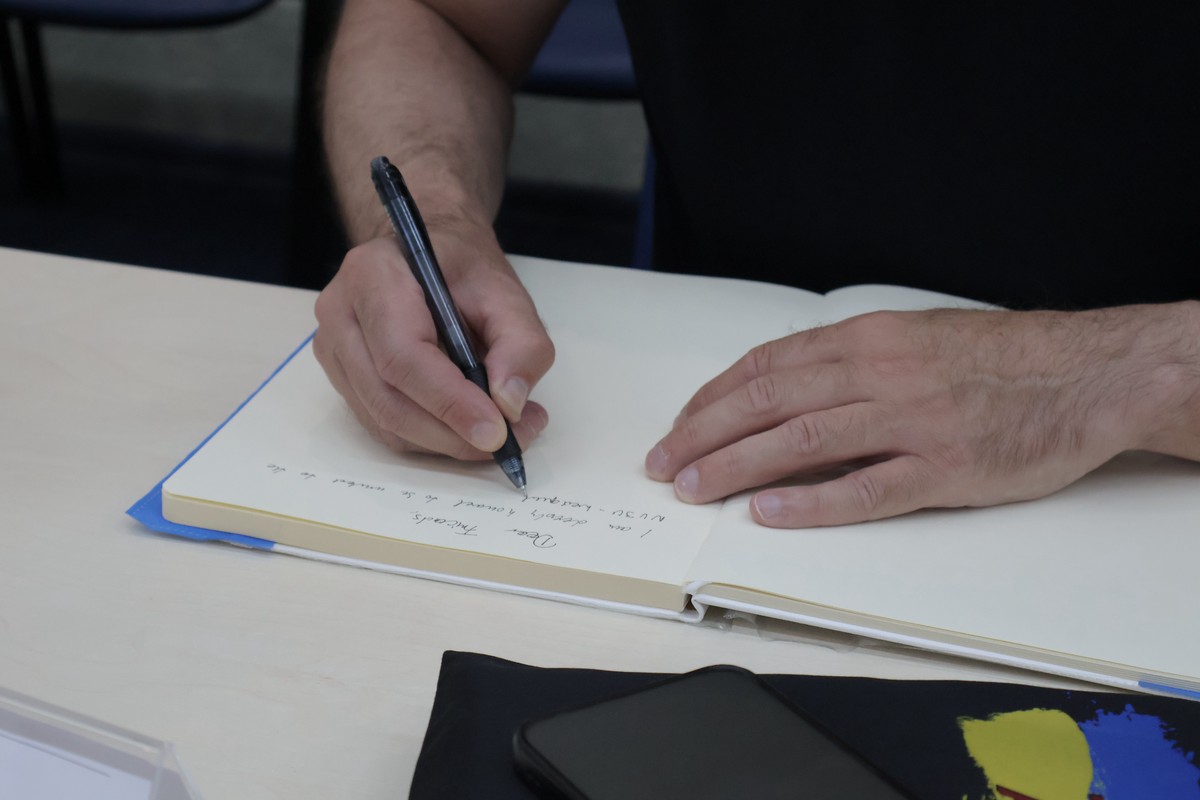
A journalist named consistently in international reporting is harder for Russia to erase. That principle is behind a new advocacy model proposed by the National Union of Journalists of Ukraine (NUJU): pairing each of the at least 28 Ukrainian civilian journalists held in Russian captivity with a dedicated international ambassador — a well-known journalist, editor or newsroom that keeps their case in view.
The proposal was raised during a working meeting at NUJU in Kyiv, held as part of a working visit to Ukraine by three international partners: Mika Beuster, President of the German Federation of Journalists (DJV); Dr Wolfgang Ressmann, media expert and coordinator of the Mediadialog project, supported by the German Federal Foreign Office; and Xhabir Deralla, President of CIVIL – Center for Freedom (North Macedonia). The meeting was headed by NUJU President Sergiy Tomilenko, together with Ukrainian war correspondents, editors and journalists who have survived Russian captivity.
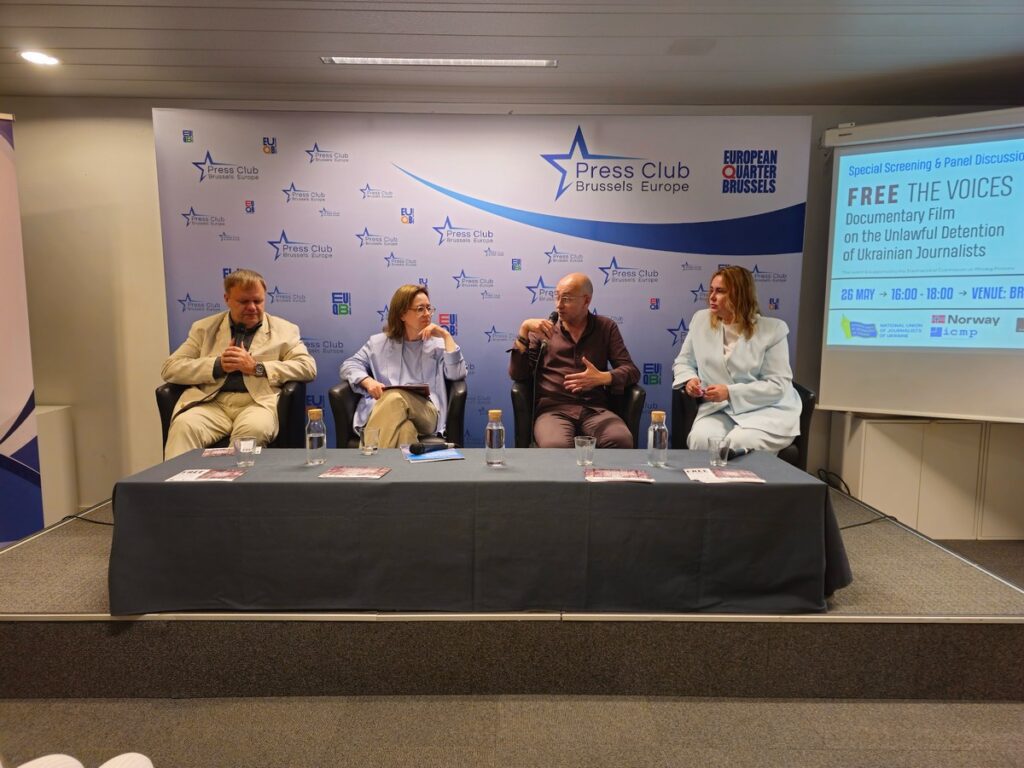
For several years, the case of unlawfully imprisoned Ukrainian journalists has been one of the main strands of NUJU’s international work. The Union raises the issue at international conferences and in meetings with the leaders of European journalists’ organisations, the International and European Federations of Journalists, the Council of Europe, the diplomatic corps and human rights bodies. It documents the circumstances of each imprisonment, works with families, and supports international solidarity campaigns. Its documentary film Free the Voices, which documents Russiaʼs crimes against Ukrainian media workers and freedom of expression, premiered in Kyiv and Brussels and is scheduled for further screenings across Europe.
The European Federation of Journalists and the International Federation of Journalists supported NUJU’s solidarity campaign for unlawfully detained Ukrainian media workers by publishing the story of Iryna Levchenko, a journalist from Melitopol. The campaign’s core message: journalism is not a crime, and all unlawfully detained journalists must be released immediately.
From resolutions to real mechanisms
International support for Ukrainian journalists has continued to grow in recent years. In 2024, the European Federation of Journalists (EFJ), representing nearly 300,000 journalists across Europe, unanimously adopted a resolution backed by 73 journalists’ organisations from 38 countries, calling on media outlets and journalists’ unions to consistently name and advocate for Ukrainian journalists unlawfully imprisoned by Russia.
The following year, the EFJ strengthened this commitment by adopting another resolution, tabled by the National Union of Journalists of Ukraine, which called for intensified international pressure on Russia over the continued detention of at least 28 Ukrainian journalists and media workers.
It was on this basis that the ambassadorʼs proposal emerged at the NUJU meeting.
“Imprisoned journalists must not be left in silence” – the proposal
“It is publicity that gives them a chance of freedom,” Sergiy Tomilenko said. “So my central appeal is this: Europe must not ease its pressure on Russia to free Ukraine’s civilian journalists. At least 28 of our colleagues are now in Russian captivity. They were imprisoned unlawfully, for being journalists.”
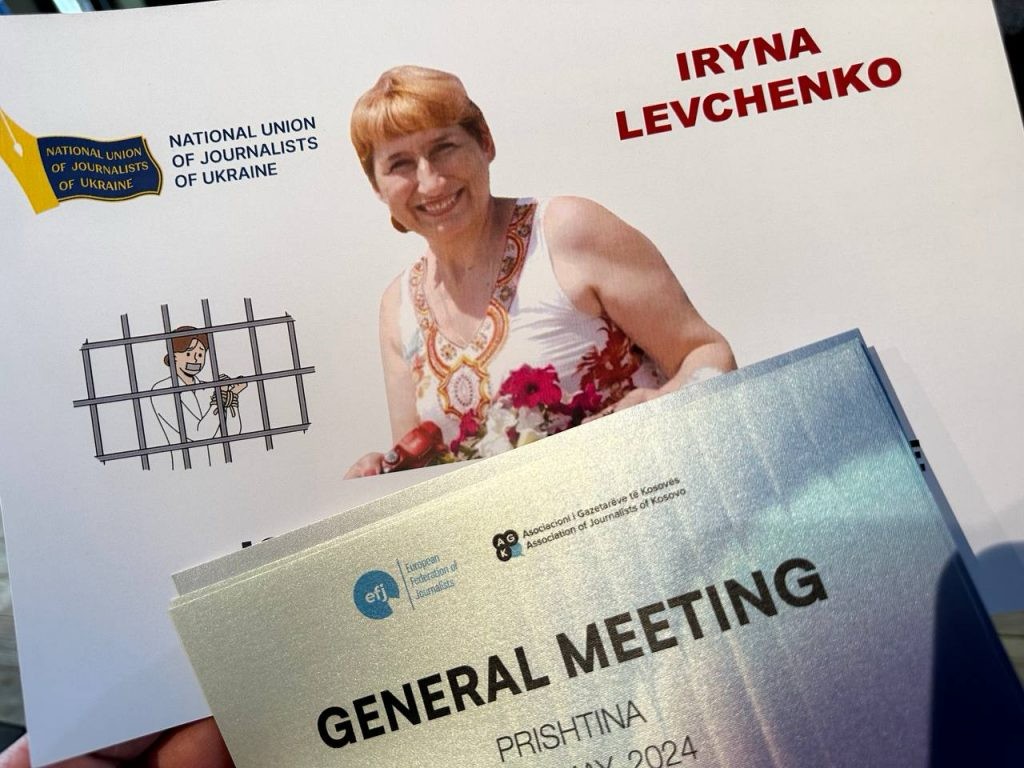
He gave two examples of how outcomes differ. The family of Iryna Levchenko went 25 months without knowing whether she was alive, receiving the first word from a Russian prison only last year. The occupation authorities are now presenting her not as a journalist but as an “extremist” or a “spy”.
Nariman Dzhelyal, a Crimean Tatar journalist, civic leader and former political prisoner, faced many years behind bars after being detained by the Russian occupation authorities in Crimea. He was eventually released through international solidarity and diplomatic pressure and now serves as Ukraineʼs Ambassador to Türkiye. “Silence never helps prisoners,” Tomilenko said. “Attention, solidarity and constant international pressure do.”
Another example is Crimean journalist and civic activist Iryna Danylovych, who remains imprisoned by Russia despite growing international concern over her deteriorating health. Through the Parliamentary Assembly of the Council of Europe (PACE) initiative supporting Crimean political prisoners, Austrian parliamentarian Petra Bayr serves as her political mentor, regularly raising Danylovych’s case in international forums and calling for her immediate release. While this advocacy has not yet secured her freedom, it has ensured that Iryna’s case remains visible internationally and demonstrates how sustained personal engagement can help keep imprisoned journalists from being forgotten.
The model was put forward by Vladyslav Yesypenko, a journalist with Krym.Realii (Crimea.Realities) and a former political prisoner of the Kremlin, who spent four years in Russian captivity. He noted that only three civilian journalists have been freed since the start of the full-scale invasion, while at least 28 remain imprisoned, some in complete isolation, without contact with their families or the outside world.
The impact of sustained personal advocacy can already be seen in Yesypenko’s own case. In February 2025, Katrin Göring-Eckardt, former Vice President of the German Bundestag, became his political mentor. On his birthday, Katrin wrote to him, assuring Vladyslav that he had not been forgotten and pledging to continue raising his case in Europe. Earlier, the editorial board of The Washington Post had called for his immediate release, bringing international attention to his unlawful imprisonment. She later took on the advocacy of imprisoned Crimean journalist Asan Akhtemov, helping ensure that his case also remains visible on the international agenda.
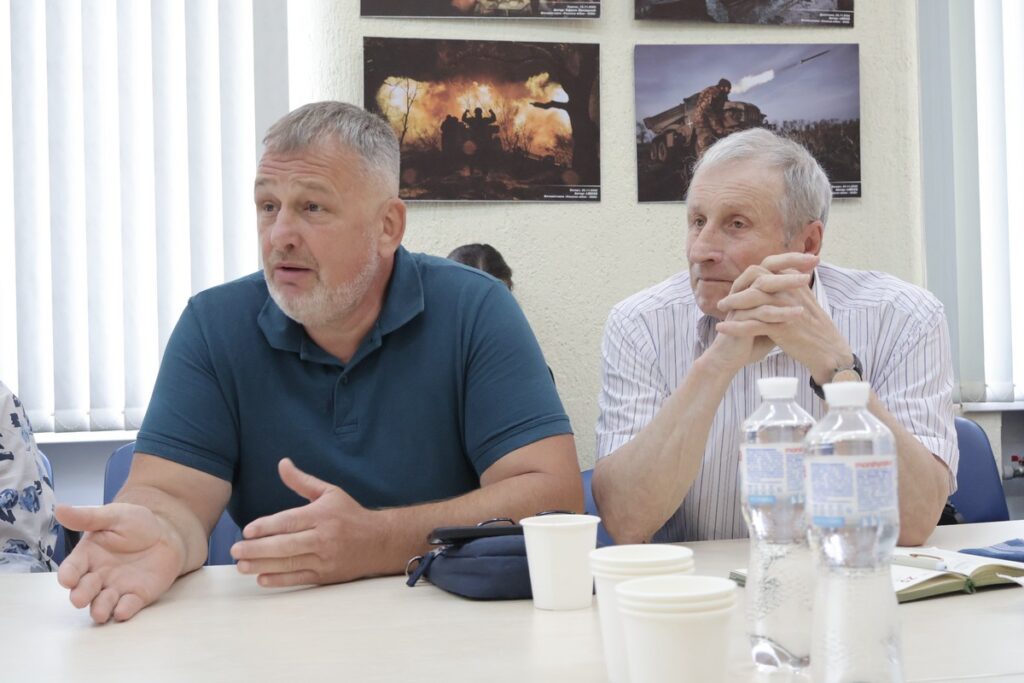
Under Vladyslav Yesypenko’s proposal, each unlawfully imprisoned journalist would be assigned an international information ambassador — a well-known journalist, editor, media manager or newsroom that reports that specific person’s case regularly and over time. “The idea is that well-known German journalists could become information partners for each of the imprisoned journalists, covering the issue on different platforms,” Yesypenko said. “I believe this would be very important.”
The reasoning is that personal advocacy can be more effective than general lists of names. When a specific, recognised individual is attached to each imprisoned journalist, the case stays in public view and international pressure is sustained. In effect, the model would create a network in which every imprisoned Ukrainian journalist has a consistent advocate in the international media.
Widening the circle of responsibility
Mykola Semena, the NUJU secretary responsible for the Unionʼs Crimea work and himself barred from practising journalism in occupied Crimea, argued that international support should become more concrete. He noted that the solidarity campaign has already produced results: through the sustained work of journalistsʼ organisations, the issue of imprisoned Ukrainian journalists is now raised at international professional forums.
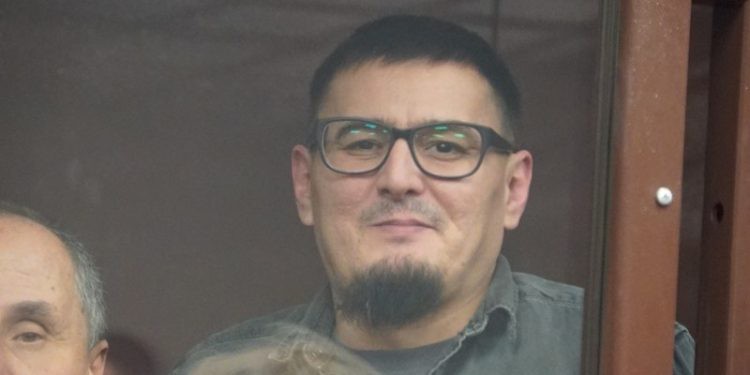
Semena also proposed extending responsibility beyond journalists. “The National Union of Journalists of Ukraine and its international partners are doing a great deal of advocacy work. But there is one avenue that, to my mind, has not yet been used,” he said. “Responsibility should also be felt by the newsrooms that once worked with the journalists now in captivity — that published their work or accredited them. Vilen Temeryanov, sentenced to fourteen years, once worked with the outlet Grani.ru. His international mentor — and I know he has one — should approach that newsroom, so that they too press for his release.”
A pilot case already under way
That mentor is Xhabir Deralla — head of CIVIL, a journalist and human rights defender from North Macedonia — who is already serving as the public advocate, the international ambassador, for the imprisoned Crimean Tatar journalist Vilen Temeryanov.
“I became Vilen Temeryanovʼs public advocate at the request of the Ukrainian Embassy,” Deralla explained. “Since then I have written many letters to the Russian embassy, appealed repeatedly, and published articles about his unlawful imprisonment. I received no reply; the Russian embassy blocked me on its Facebook page. That changes nothing. I will continue to make his case known to as many people as possible.”
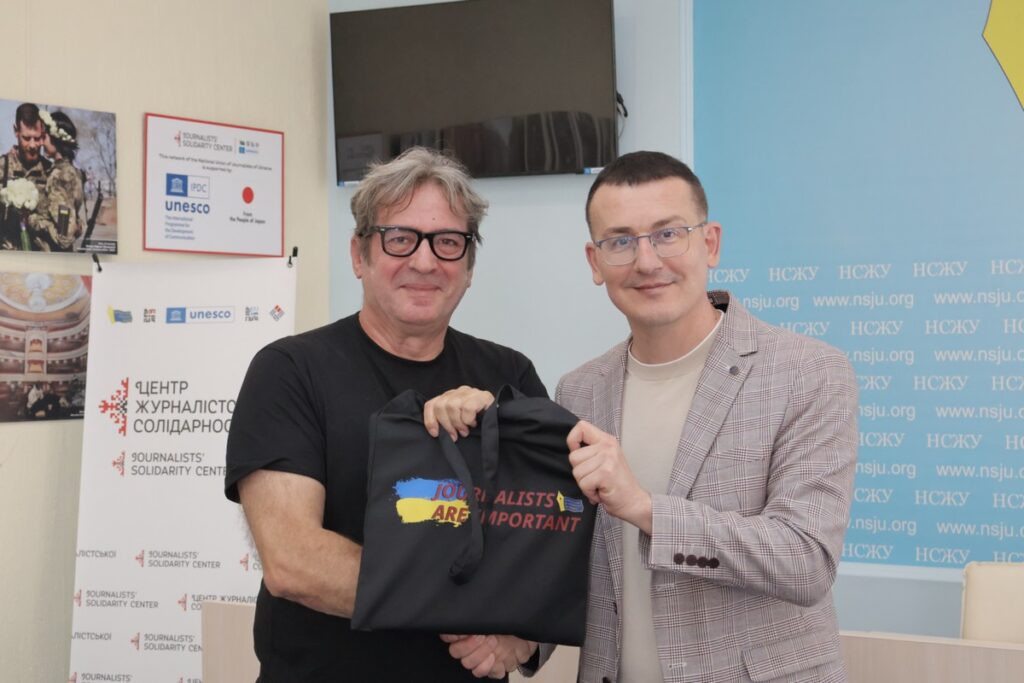
Xhabir Deralla said he was ready to hand President Beuster all the materials he had gathered on the Temeryanov case, to bring more media organisations into the campaign.
His work shows how Vladyslav Yesypenkoʼs proposal can operate in practice: when a specific journalist, human rights defender or newsroom is attached to a specific case, it stays in the international information space and the effort to secure a release becomes systematic and targeted.
How can your attention help free Ukrainian journalists from Russian captivity?
The National Union of Journalists of Ukraine invites the German Federation of Journalists (DJV) and other journalists’ unions, media organisations and prominent European journalists to join the International Ambassador Initiative for Ukrainian journalists imprisoned by Russia.
The idea is that each imprisoned journalist should have a recognised international advocate who regularly raises their case through articles, interviews, public events, professional forums and meetings with decision-makers. Sustained personal advocacy helps ensure that imprisoned journalists are not reduced to statistics and that their names remain on the international agenda.
Russia has taken away their freedom but must not be allowed to take away their names. Every imprisoned Ukrainian journalist deserves an international voice until they are free.











Discussion about this post