 THE NATIONAL UNION OF
JOURNALISTS OF UKRAINE
THE NATIONAL UNION OF
JOURNALISTS OF UKRAINE
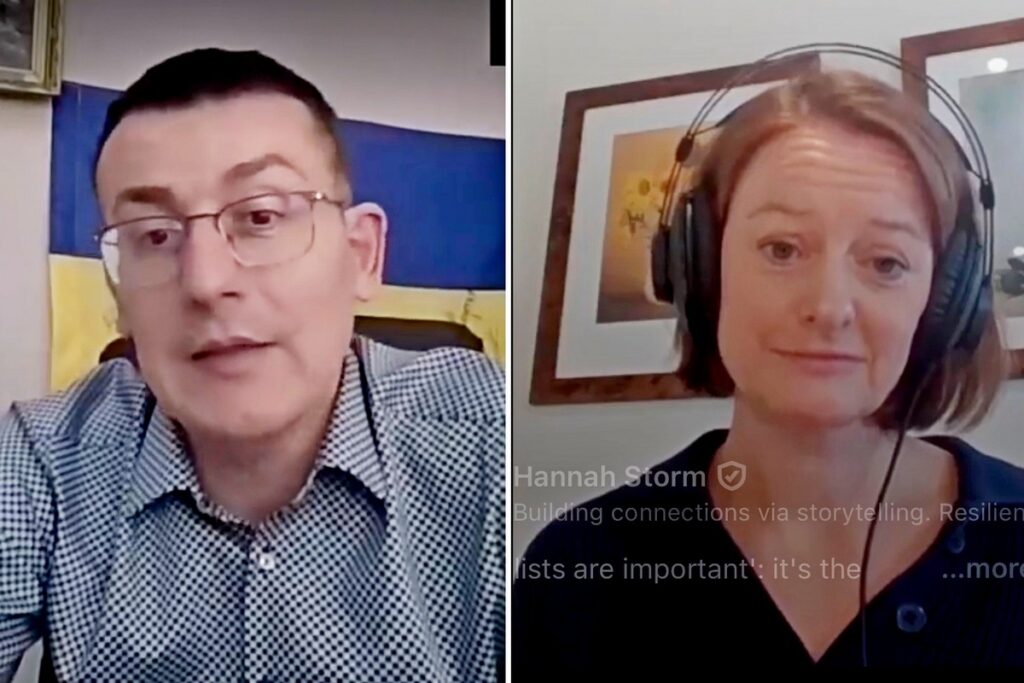
Prominent British expert Hannah Storm has launched a new podcast, Shooting the Messenger: the Case for Press Freedom. The title references the well-known phrase about not blaming those who deliver unwelcome truths. In the context of press freedom, it speaks directly to journalists who become targets for reporting on war, corruption, or human rights violations.
For the opening series, Storm chose four guests. Among them: Sergiy Tomilenko, President of the National Union of Journalists of Ukraine; Jodie Ginsberg, CEO of the Committee to Protect Journalists; Diane Foley, mother of American journalist James Foley killed by the Islamic State; and Rachel Corp, CEO of British broadcaster ITN.
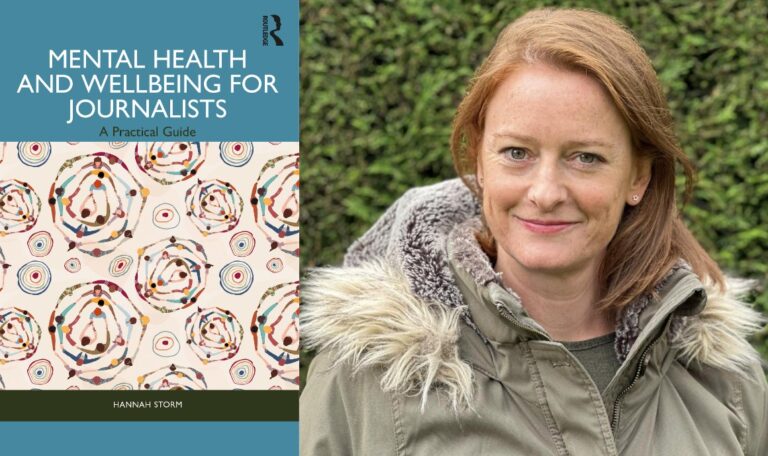
Hannah Storm is an Oxford graduate, former director of the International News Safety Institute, and author of a book on journalist mental health published by Routledge. Over her career, she has trained more than 5,000 media professionals across dozens of countries. Her collaboration with NUJU dates to 2024, when together with the Committee to Protect Journalists the Union organised three exclusive online workshops on psychological resilience. More than 200 journalists from frontline regions of Ukraine joined the webinars to hear Hannah’s guidance and ask their questions.
Introducing Tomilenko to her listeners, Hannah Storm said she is struck by his leadership and empathy: “His work in Ukraine supporting colleagues in the most challenging of situations has been extraordinary.”
We publish their conversation below.
What drew you to journalism?
I studied mathematics. But one day I saw a small announcement in a local newspaper – they were inviting young people to try themselves as reporters. I tried to write something, and I never left the profession. One of my colleagues once said that journalism is a profession that allows you to satisfy your curiosity. That is true. But for me, it is above all a profession with a big mission: to stand against injustice, to support ordinary people. During the war in Ukraine, we see that journalists defend the truth. That is extraordinarily important.
How important is it that journalists continue their work in Ukraine?
It is very exhausting for all of us – for all Ukrainians, for all Ukrainian journalists. We are now living through the fifth year of full-scale war. But this is our job. It is critical infrastructure. People living in war conditions want to know about threats and safety, about how to survive or evacuate. And only through verified media channels can they receive the truth. Yes, social media exists, but there, people try to manipulate. So supporting journalists means supporting the right of ordinary people to survive and to receive reliable information.
NUJU made a film about Vasyl Miroshnyk – publisher of the newspaper Zorya in the Kharkiv region, who delivers it to readers every week despite drones and snipers. The British Daily Mail called his route the most dangerous newspaper delivery in the world. Why does he continue?
Vasil Morishnik is a special person. A real hero. He lives in a frontline region. He doesn’t come on business trips, he lives there. And every week he delivers this newspaper to his readers, despite Russian drones, snipers, and all the rest. When I spoke with him, he told me: “I canʼt abandon my people. I want to give them not just information, but hope, a hug, the feeling that they are not alone.” We as a union try to support him with grants and resources. Recently we bought him a special drone detector so Vasyl can monitor the threat and get an extra five or ten minutes (enough to survive). But he is not the only such hero. There are many.
How have threats to journalists changed since the full-scale invasion began?
Before the invasion, the main problems for Ukrainian journalists were physical attacks and impunity. We even ran major campaigns against this. But after the invasion, the situation changed. There is almost no physical aggression against journalists on Ukrainian-controlled territory. Instead, we are recording war crimes on the Russian side. Right now, 28 Ukrainian journalists remain in Russian captivity. And among the most dangerous threats today are Russian drones.
How serious is the drone threat?
There are no safe places in Ukraine. Not even in the west of the country. These small devices – not missiles, not large weapons – can destroy any building, any target. In the past, the frontline meant five kilometres to Russian positions. Now it is 25 to 30 kilometres, because of drones. Drones have erased the very concept of a safe distance. As for detectors – yes, they are useful equipment. But I think their importance is primarily psychological: when you are equipped with safety gear, you feel better prepared. Though in real life, you cannot prepare for every incident. You live constantly under pressure, maybe the next night you will be attacked and become a victim. That is an enormous challenge for everyone.
Around the mental health and well-being of journalists, it’s taken a huge toll on people, hasn’t it? Tell me a little bit more about what’s being done to support journalists from a mental health perspective
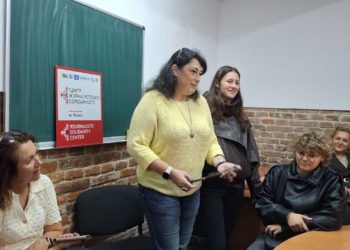
This is a very important topic. In the past it was stigmatised. We as Ukrainians and journalists thought that the main concerns were physical safety or economic sustainability. But now we live in such difficult daily conditions that we feel burnout, exhaustion, and loneliness. So I try to talk with colleagues: we need to organise different activities, help people stay in shape. For example, in Zaporizhzhia, at the Journalists’ Solidarity Center, we created a club of displaced journalists – more than 30 to 35 people from temporarily occupied territories. They gather together for training in digital tools or for art therapy. They make handmade souvenirs and for a few hours stop thinking about occupied homes and the war. We also hold individual sessions and large online webinars. I want to thank you, Hannah, because together we organised three big online events and brought together more than 200 journalists from frontline regions. We talked about burnout, anxiety, and self-help techniques.
How do you keep on going, and how do you feel the conversation has changed in the last few years?
I should demonstrate the role of a leader to my colleagues on every topic. Yes, it was not easy to fully appreciate the importance of mental health, but now I see it is a vital field, and I try to find tools for myself. This past winter in Kyiv was particularly hard. I thought I was prepared with charging stations, some reserves. But when Russians destroyed infrastructure in the centre of Kyiv, our office located just 200 metres from the city council stood for a week without electricity, heating, and water. At minus 15 outside. No preparation turns out to be enough when everything happens at once.
A little later I travelled to London, and for the first three nights I simply enjoyed warmth – I set the hotel room to 23 degrees. For me, international travel and meetings with friends and partners are also part of maintaining mental health. I also draw strength when I learn that around 20 frontline newspapers have not closed and continue their work. That gives me energy.
You talked there about solidarity. Tell me about the journalism solidarity centres that have been set up in Ukraine
After the full-scale invasion began, we received dozens of requests from journalists about survival, evacuation, everything. We turned to the headquarters of the International and European Federations of Journalists for advice. They suggested renting a small hotel in western Ukraine – 20 rooms for journalist families.
We discussed it and decided that was not the best solution. So we came up with the idea of Journalists’ Solidarity Centres – regional hubs equipped with safety equipment and laptops, staffed by two people responsible for responding to any requests from journalists during the war. We now have six such centres: in Kyiv, Lviv, Kharkiv, Zaporizhzhia, Dnipro, and Ivano-Frankivsk. UNESCO headquarters described the initiative as a flagship project and the first phase of a global programme of safe spaces for journalists in conflict zones. We also created an emergency fund: if a journalist finds themselves in a difficult situation, they know they can come to us and receive rapid support. Not large sums but fast help exactly when it is needed most.
You recently wrote that, let me just check, when war destroys infrastructure, journalism depends on something very basic, a working infrastructure of solidarity. And so those centres that you mentioned have inspired other centres elsewhere across the world, right?
Yes. UNESCO and the International Federation of Journalists recommended that our colleagues in Gaza and Palestine organise their own solidarity centres based on our model. There are now three such centres operating, created by the Palestinian Syndicate of Journalists. Three weeks ago I met a representative of that organisation at a joint roundtable during the Voices festival in Florence. They asked for our experience, our advice, our protocols. That is an international impact, and I am glad that journalists in other conflict zones can receive some support thanks to what we have been through.
Recently, the Union and the Network of Journalists’ Solidarity Centres received the Media FreedomAward at the European Festival of Journalism and Media Freedom. What does that award mean to you?
It is important – for me personally, for my team, for all Ukrainian journalists. It is especially meaningful for colleagues working in open frontline cities: they can see that their bravery is noticed and valued not only in Ukraine but abroad. That is powerful moral support. Especially now, when UNESCO headquarters, unfortunately, has no resources to support us because of the freezing of US assistance under the Trump administration. But we receive great moral support from international colleagues. Recently, a bookshop in Brussels sent us a small donation. We decided to spend it on additional mental health training at each of our regional centres and on art therapy equipment in Zaporizhzhia.
What would you say to people who have grown weary of news from Ukraine?
If you are living in peace, perhaps stop and think about people who are living in war. Think about journalists who are living in war. And perhaps decide to support them. Right now we are dreaming about things that once seemed self-evident: water from a tap, warmth at home, a normal daily routine. We did not choose this war. We want to live in peace. So I say to those who are safe right now: appreciate that, and think about how to protect the world from conflicts, and how to support others. We are all tired. But we see that only Putin is not tired.
So what would you say to those who perhaps don’t realise the importance of press freedom and information access in ensuring democracy and peace?
The slogan of the National Union of Journalists of Ukraine is “Journalists are important.” We came up with it during COVID-19, because despite the virus, the quarantine, the crisis, journalists continued their work and kept people informed. Now this slogan embodies the mission of all Ukrainian journalists during the war. Press freedom is part of our profession. And journalism is about responsible informing, about access to verified information. If you want to live in a democracy, support press freedom, protect journalists and media. Because that is the right not to receive lies or fakes – but to receive the truth.
The podcast Shooting the Messenger: the Case for Press Freedom is available on Spotify.
NUJU Information Service








Discussion about this post