 THE NATIONAL UNION OF
JOURNALISTS OF UKRAINE
THE NATIONAL UNION OF
JOURNALISTS OF UKRAINE
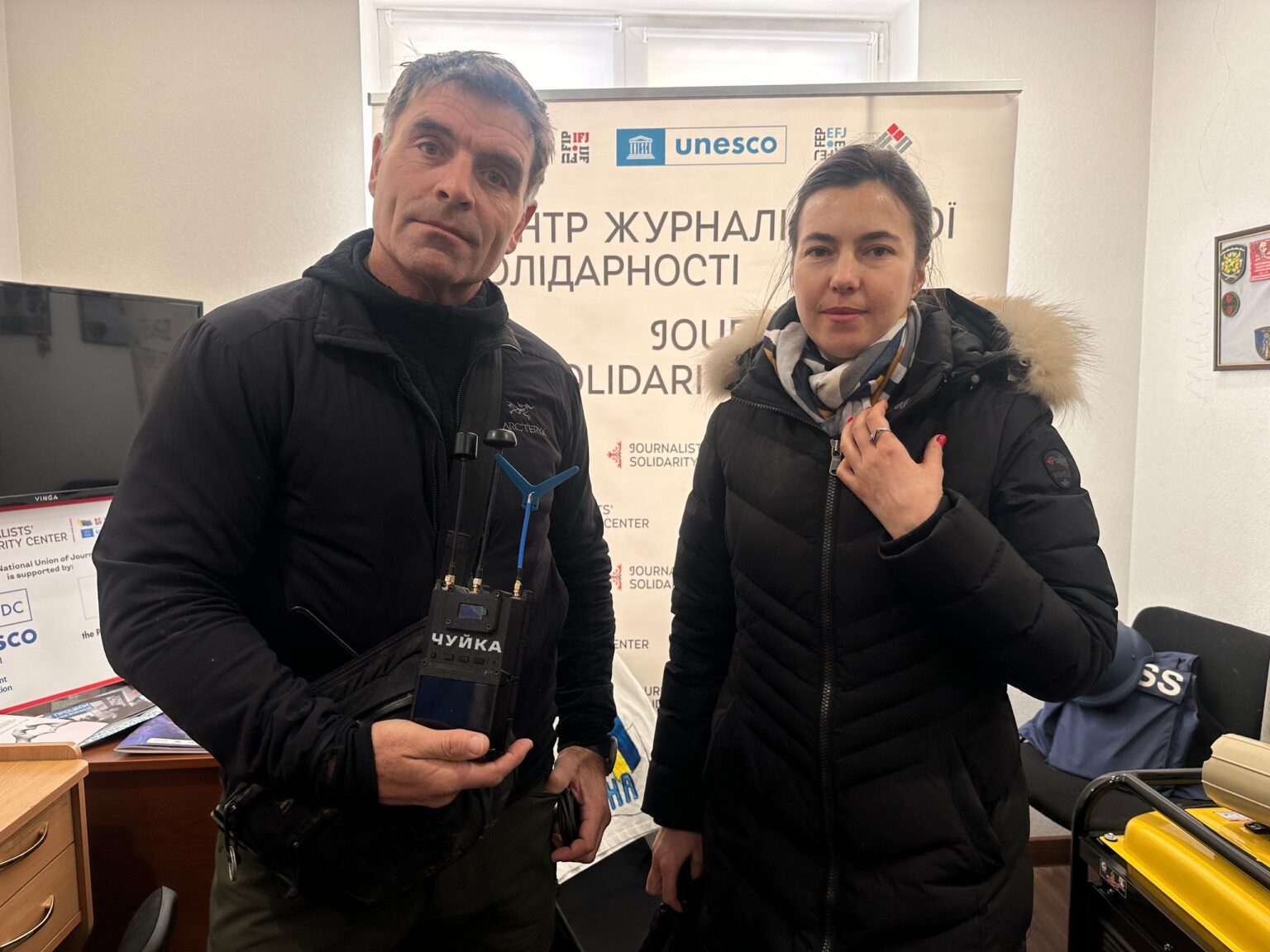
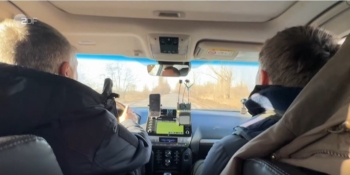
The film crew of the German media ZDF is conducting its next trip to the Donbas not only with the usual means of protection – first-aid kits and bulletproof vests. Before the trip, the media workers analyzed the situation with the intensification of attacks by the russian army on civilian cars on the highways to the Donetsk Region and in the region itself, so they turned to the Kharkiv Journalists’ Solidarity Center (JSC) of the National Union of Journalists of Ukraine (NUJU) with a request for a drone detector.
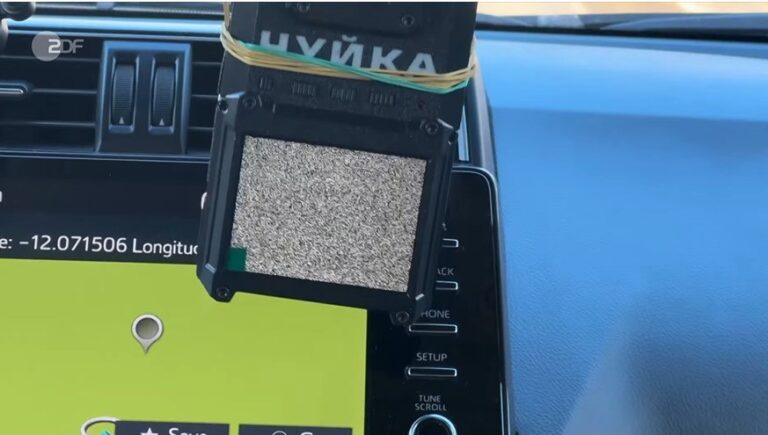
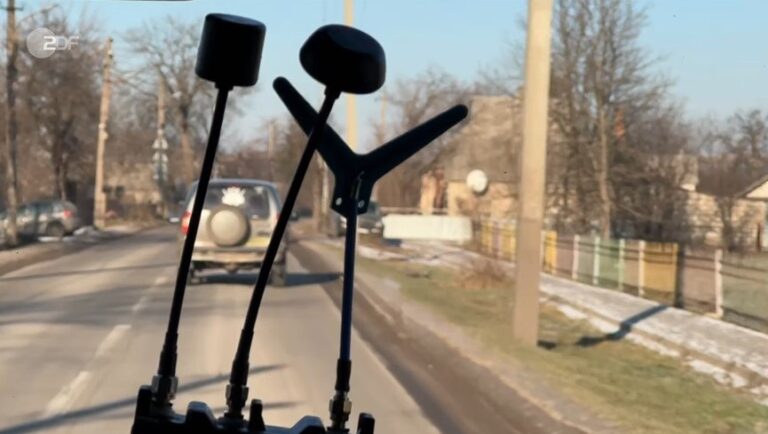
The air is monitored by the drone detector Chuika. These are the first frames of the German media ZDF’s story about Kramatorsk and Sloviyansk. Then the audience will see the Donetsk Region – the life of people there under constant enemy attacks. In the first seconds, the media workers’ journey to the frontline cities.
“As long as we hear the sound signal of this detector and do not see an image of our car from the air on its display, we are safe from the russian kamikaze drones that often fly here, filled with explosives, and target vehicles. How do we get to the city of Kramatorsk without incident?” comments off-screen journalist Henner Hebestreit.
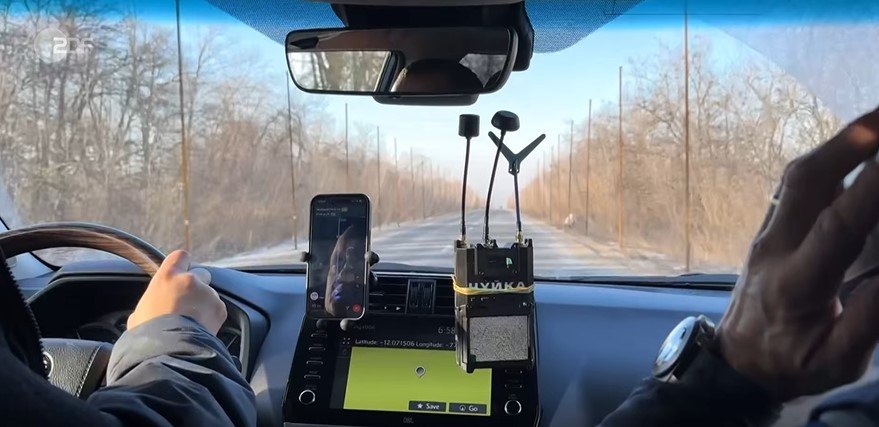
For media professionals, this is the first experience of using the detector, so the broadcast is preceded by mandatory instruction. And it is not only about the operation of the device itself. Turning it on and keeping it under control is half the battle. The main question: what to do when you see a video interception from a drone on the screen?
The basic minimum of actions that the JSC team asks for:
Know a map of the area you are moving through (literally analyze how it looks from the air). This is necessary to understand how much your car is in the drone operator’s field of view and whether it could be the target.
Ride in a car wearing protective equipment. This is necessary in case of impact, as protection from debris.
Discuss the mechanism of action in case of danger in the team and be ready to take action according to the situation.
Have good driving skills to maneuver, not delay, and be ready to jump out of the car at the command of the senior group
We recommend that you work out actions in case of drone danger at safety training sessions. Now this is a new mandatory skill for media workers.
As earlier reported, you can use the Chuika drone detectors free of charge. The network of JSCs provides them upon request in Kharkiv, Zaporizhzhia, Dnipro, and Kyiv. This became possible thanks to an agreement between the detector manufacturer Blue Bird and the NUJU.
The network of Journalists’ Solidarity Centers is an initiative of the NUJU, implemented in collaboration with the International and European Federations of Journalists and UNESCO, and with the support of the People of Japan. Our primary goal is to assist media professionals working in Ukraine during the war. The Centers are active in Kyiv, Kharkiv, Zaporizhzhia, Dnipro, Lviv, and Ivano-Frankivsk. The project is part of UNESCO’s broader efforts to support the Safety of Journalists and Freedom of Expression in Ukraine.
Contact the Kharkiv JSC at 093 813 7544 (coordinator Hanna Chernenko)
Kharkiv JSC










Discussion about this post