

 THE NATIONAL UNION OF
JOURNALISTS OF UKRAINE
THE NATIONAL UNION OF
JOURNALISTS OF UKRAINE
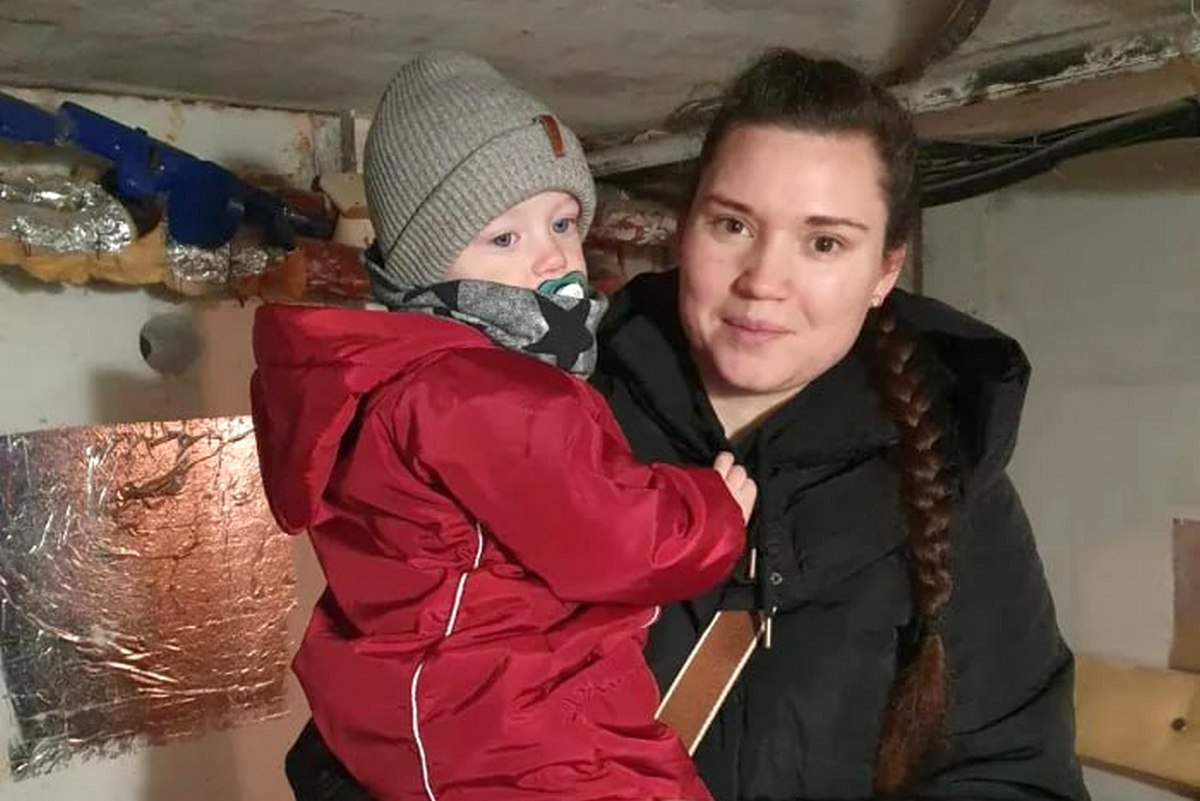
Fifteen local newsrooms from different regions of Ukraine completed the next stage of the project of the National Union of Journalists of Ukraine (NUJU) with the support of the Ukrainian Media Fund Nordic – and showed that even in times of war, the media are capable of not just informing, but actually changing the lives of communities.
As a result of the project, more than 30 journalistic materials of various formats were prepared, which reached an audience of more than 7 million people. More than 320,000 copies of printed publications were published. But the main thing is not in the numbers.
“Many multi-apartment house owners’ unions have decided to open shelters”
The Chernihiv-based Vist became a participant in the project for the first time – and immediately chose the topic that hurts the most.
“Chernihiv has a clear demand for security,” explains editor-in-chief Olha Makukha. “Due to frequent air alarms, the topic of shelters is extremely relevant. We cover it from different angles: the condition of shelters, specific examples of people’s self-organization, so that some multi-apartment house owners’ unions can look at the experience of others. How can you take care of yourself? How can the authorities help?”
The editorial staff has prepared a series of multimedia materials about shelters in multi-apartment house owners’ unions, the private sector, educational institutions, and museums. They showed how residents themselves made repairs in the basement. They talked about the shelter in the art museum, where the “Woman of the Year” ceremony was held.
“There is a tradition in Chernihiv – to award women in December. First, a woman comes on stage, and she is awarded a medal. In a break between the awards, our local artists perform despite the fact that the war, Chernihiv has preserved this thirty-year tradition, which has never been interrupted. Last year, during the ceremony, we had to go down to the shelter. Therefore, this year we decided to hold the concert immediately in the shelter so that the concert would not be interrupted,” says Olha Makukha.

The editorial team combined printed materials with videos, which were accessed via QR codes. The result exceeded expectations: the video on TikTok collected over 80,000 views, on Facebook – over 25,000, and on YouTube – over 8,000.
But the most important thing is the reaction of the community.
“Many multi-apartment house owners’ unions have decided to open shelters. We plan to continue covering the topic of shelters as long as it is relevant,” says Olha Makukha.
The journalist speaks with gratitude about her participation in the project.
“Communication with representatives of the union helped me. I felt a very tolerant and friendly attitude. If I need something, they will tell me, help me,” says Olha Makukha. “The grant funds were transferred very quickly, in full. I am very happy that we were noticed and invited to this project. It was useful for both the residents of Chernihiv and the media workers.”
“A 92-year-old woman sings in a choir”
The Sumy edition of Panorama also joined the project for the first time – and chose a strategy that differs from the popular trend of “writing about youth”.
“First of all, we are very glad that we were included in this project, because today it is extremely difficult for regional media to survive. Then, in fact, we are very grateful to our grantees for giving us the opportunity to work on exactly those topics that are important for each specific region,” says editor-in-chief Olena Kasatkina.
The editorial staff conducted an online survey on the website to understand what interests readers the most.
“For example, we chose the elderly, because a lot of young people left Sumy. And the elderly were left alone. So, it is a bit difficult for them. And despite the fact that there are places to go in the city, where to get help, people know little about it, unfortunately,” explains Olena Kasatkina. “There is no point in creating Internet channels that only report on anxiety. You will not gain an audience by reposting such news. The topic “War and Old Age” was suggested by the subscribers themselves. They are mostly 70+, not even 60+. And we decided that it was important to show them the opportunities where they can go in the city, besides the store and the pharmacy, and for free. Where they will also help to learn Ukrainian and explain how to register with Diia and not run into scammers.”
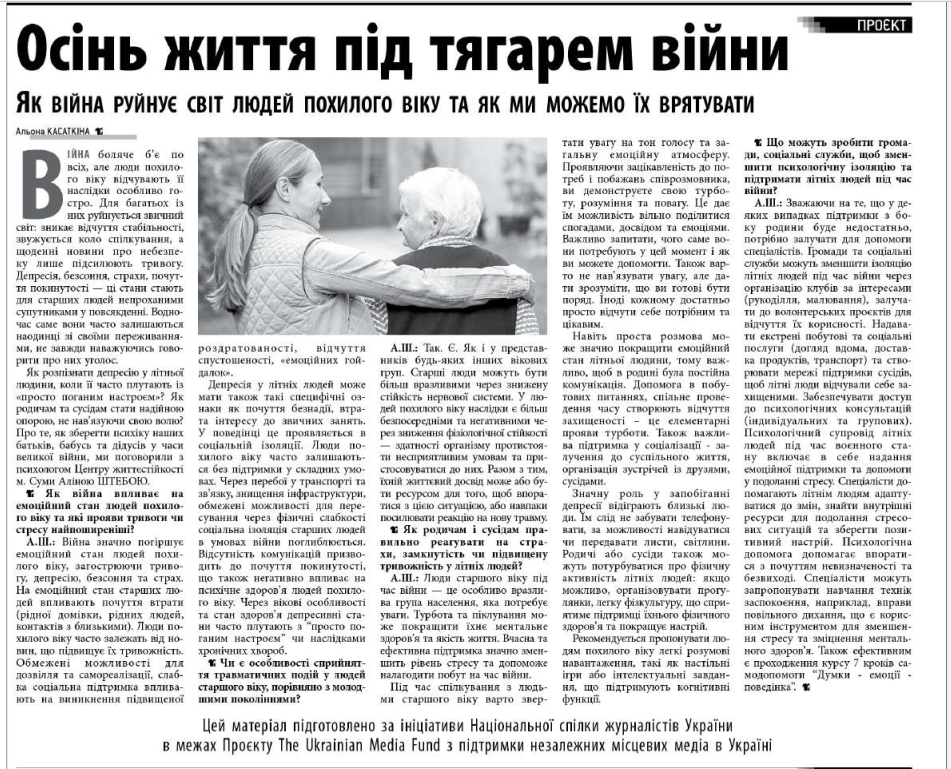
The editorial team prepared an interview with a psychologist about the adaptation of elderly people to the challenges of war and an article about the University of the Third Age. The results amazed the journalists themselves.
“We were very surprised that people actually need such information. For example, a 92-year-old woman sings in the choir. And then she goes out, walks 15 minutes to the bus stop, in any weather, after shelling. She gets on a trolleybus, if there is no trolleybus, goes on transfers, comes, and they sing, knit, and dance there,” shares Kasatkina’s impressions.
The article Autumn of Life Under the Burden of War received 2,172 views, and the publication A Center for Comfort for Seniors in Sumy received 3,356 views. This is a high figure for a regional print media outlet.
“The heroes of the articles asked us very much, if possible, to continue covering their leisure time and the work of these workers so that more people would know about it. We will hope for the continuation of such initiatives, because when they give us such freedom of choice, this is exactly what we need,” says Olena Kasatkina. “The working conditions in the front-line Sumy are quite difficult, where, as a result of shelling, an extremely unfavorable situation with electricity supply developed, so some of the materials had to be written literally at night.”
Challenges that unite everyone
“The difficulties that newsrooms face are not individual, but systemic in nature. It is about the objective conditions of local media in Ukraine during the war,” emphasizes media expert, project mentor Vitalii Holubev.
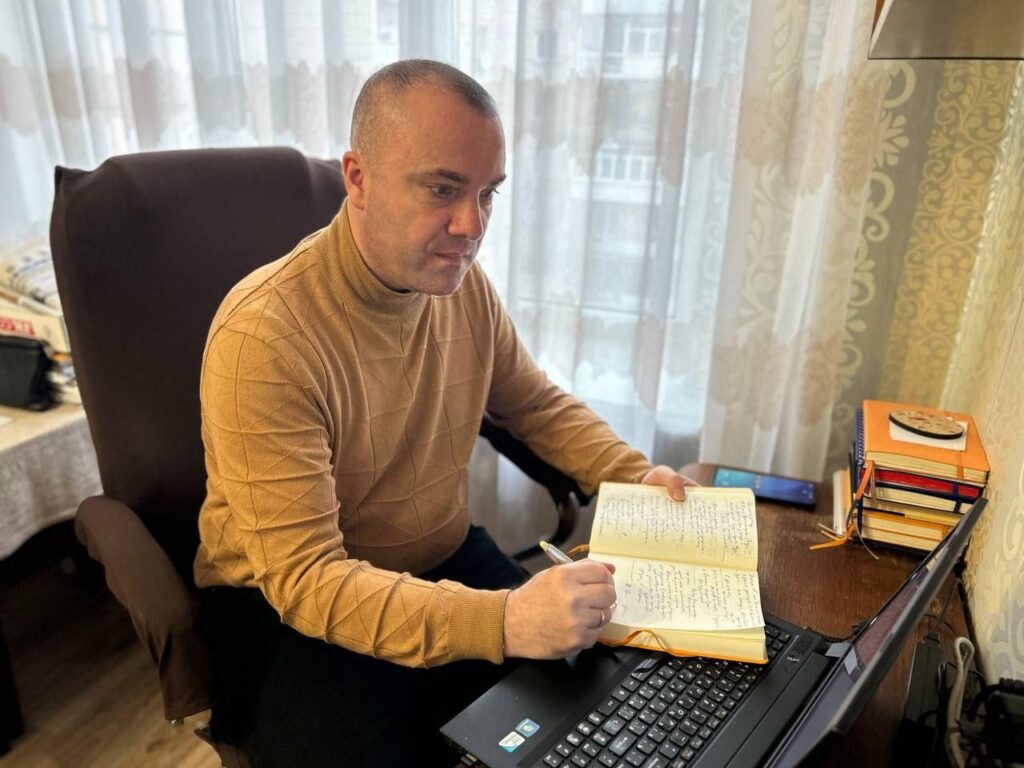
Most often, newsrooms talk about the shortage of human resources.
“In fact, I am leading this project myself. We have two people in the newsroom; the rest are working remotely. This is not a complaint, it is just reality,” says Olena Halina from radio Nostalzhi (Nikopol).
An urgent problem is copyright infringement by anonymous Telegram channels.
“Telegram steals news without links; this is a huge problem. The journalist spent a lot of time, and Telegram steals. I believe that Telegram channels should be registered,” says Andrii Bolkun from Leopolis.news.
Cherkasy’s ProCherk has found a partial solution.
“If they can repost our material on Facebook and thus leave a link to the site, then they simply steal it on Telegram. In order to at least somehow protect our materials from unfair use, we place our logo on the photos,” says editor-in-chief Nazarii Vivcharyk.
Agents of positive change
“Local media are able to perform not only an informative function but also become important agents of positive change in communities. By capturing socially significant problems, creating space for dialogue between the authorities and residents, and introducing innovative approaches, regional media contribute to the formation of more cohesive and sustainable communities,” says Vitalii Holubev.
According to him, the most promising direction of development is to strengthen the impact factor of projects – the transition from demonstrating the results of the first level (content) to the results of the second and third levels (consequences, impact).
“The impact of the material will be greater if, after its release, an electronic petition, a parliamentary request, or a discussion is organized on an offline or online platform. It is in such activities that the role of the local newsroom as an information hub, as an agent of positive change, as a center of attraction for active people in the community will best manifest itself,” the expert emphasizes.
NUJU project coordinator Iryna Khromenko notes that the second stage of the program allowed the newsrooms not only to complete the projects they had started, but also to consolidate the achieved results and integrate new approaches into their daily work. Five new media outlets joined the program and were given the opportunity to develop interaction with the community.
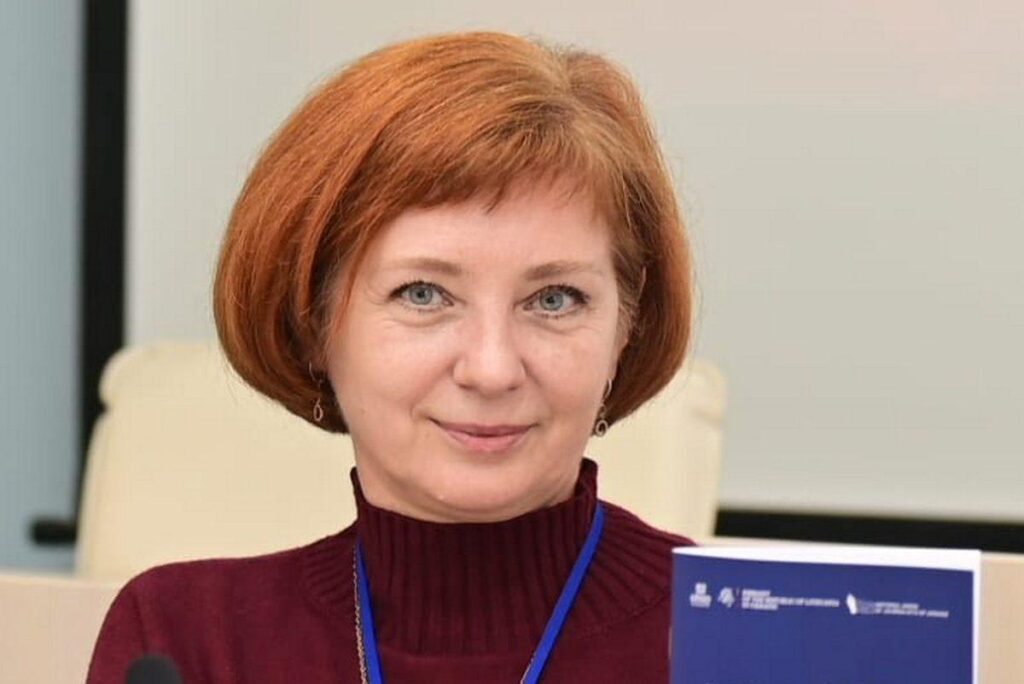
“The project demonstrated the critical importance of systematic and consistent support for independent local media in Ukraine, especially in times of war, when access to reliable information becomes a matter of national security, and the media play the role of a link between the community and the authorities, helping to solve practical issues of the population,” she concludes.
The vast majority of newsrooms indicated that they will continue the projects they have started after the support program ends. The presentation of analytical results based on the project results is scheduled for January 2026.
Maksym Stepanov
NUJU Information Service















Discussion about this post