

 THE NATIONAL UNION OF
JOURNALISTS OF UKRAINE
THE NATIONAL UNION OF
JOURNALISTS OF UKRAINE
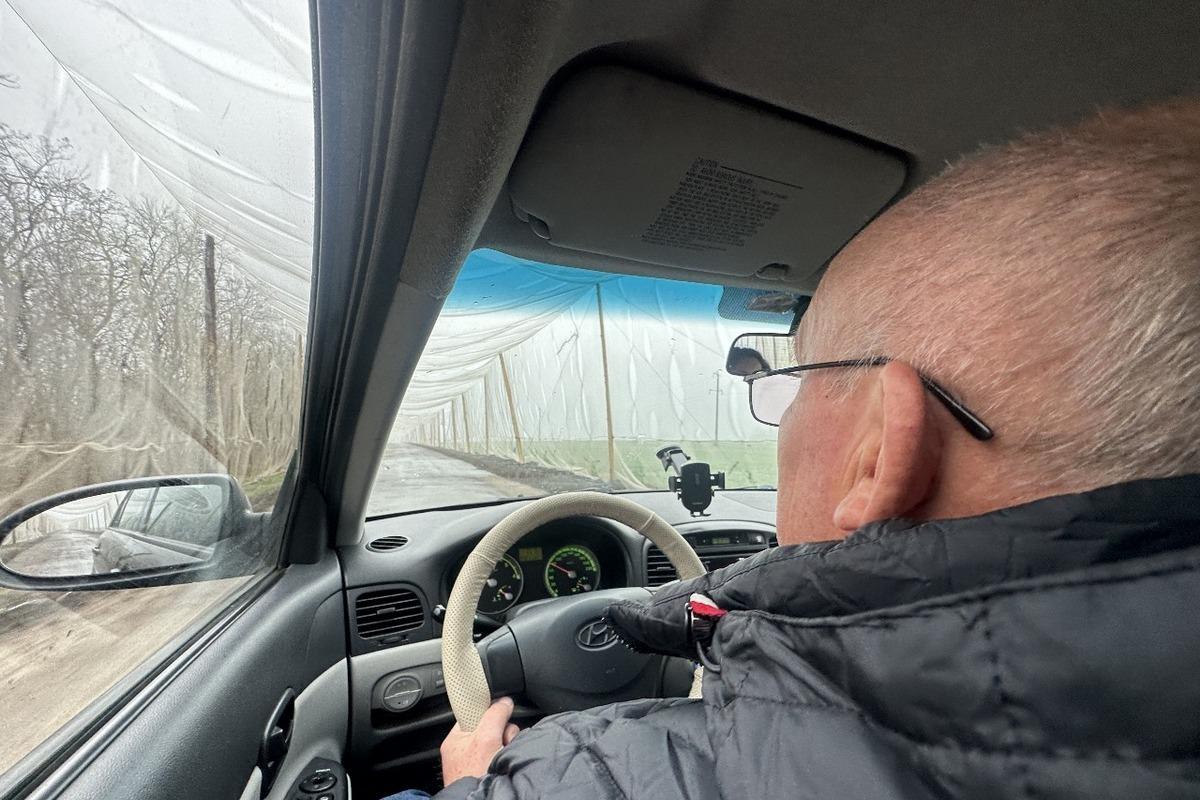
Ukrainian media workers work under the sights of drones that purposefully attack representatives of the press. The National Union of Journalists of Ukraine (NUJU) records a rapid increase in the danger for those who document the truth about the war and insists on the need to change protection protocols and provide journalists with drone detectors.
Drone war against the press
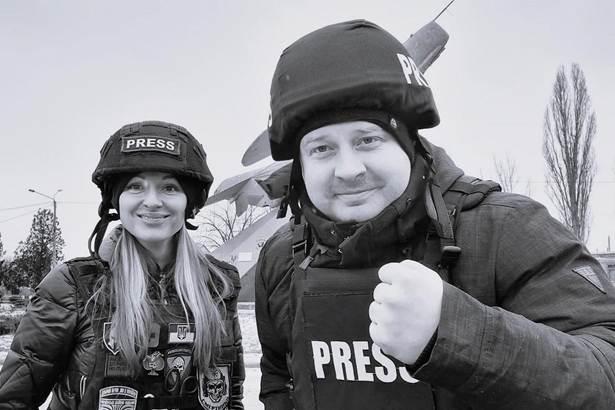
The morning of October 23, 2024. A normal working day for the film crew of the Ukrainian foreign service FREEDOM. War correspondent Aliona Hramova (Hubanova), cameraman Yevhen Karmazin, and special correspondent Oleksandr Kolychev were preparing for filming in Kramatorsk. A city that has become a symbol of resilience, but at the same time has turned into a zone of increased danger due to constant attacks by russian drones.
At 9:37 a.m., the film crew was in a civilian car on the territory of a gas station. They were 20 kilometers from the front line. The vehicle had press identification marks. But this did not stop the russian Lancet strike drone.
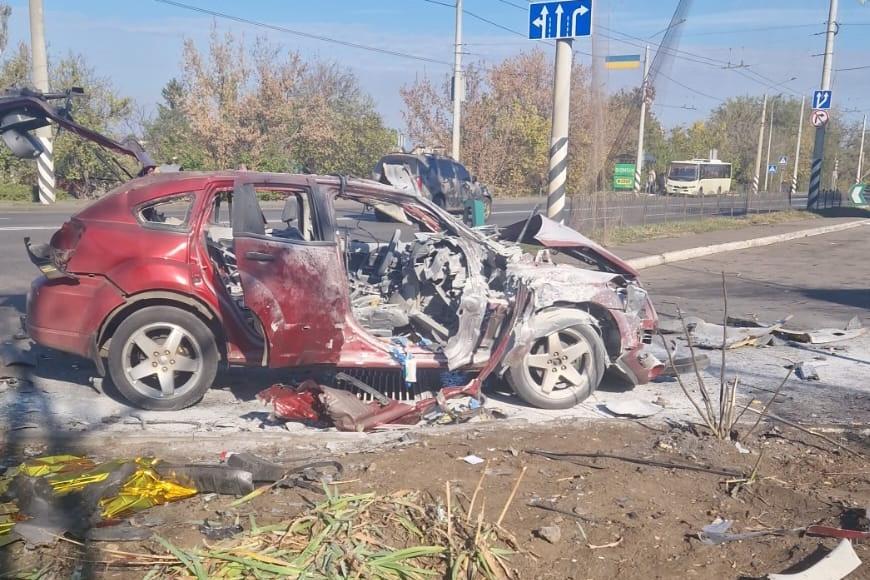
Aliona Hramova and Yevhen Karmazin died instantly. Oleksandr Kolychev received serious injuries – a mine-explosive injury, shrapnel wounds, and an open fracture. This was not a random strike, but a targeted attack on civilians, on those who were fulfilling their professional duty – documenting the truth about the war.
“It was very fast, almost without a sound. At the last split second, I heard some sound, and I caught myself with the feeling that I had flown somewhere. The sound disappeared, and I could not hear, I could not feel the left part of my body, face, ear, hand,” recalls Oleksandr Kolychev.
“The assessment of the danger for journalists has rapidly increased precisely because of russian drones, which are purposefully hunting the press,” emphasizes Sergiy Tomilenko, the President of the NUJU and member of the Steering Committee of the European Federation of Journalists (EFJ). “According to the NUJU, russian drones have become the greatest threat to Ukrainian media workers. If earlier the main danger was artillery, now drones hunt journalists, volunteers, and rescuers with the same zeal as the military. Moreover, russian UAVs go 20-30 kilometers deep from the front line, showing incredible persistence in searching for their victims.”
There are no safe places for journalists along the entire contact line. And this is not an exaggeration – media workers work under constant threat of air attacks.

Stories from life
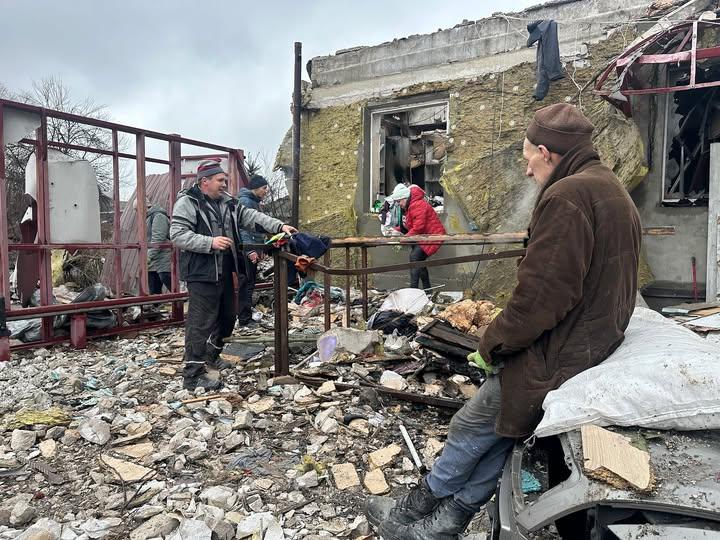
Television cameraman Ihor Zahnoi from Kherson knows about the danger firsthand. On July 11, 2024, he arrived to record the consequences of the russian shelling of the city. Buildings, a car was burning, and firefighters were working. Ihor was filming all this when, suddenly, three meters from him and a utility worker, the occupiers dropped explosives from a drone.
“Because of the hum of the fire engine, the drone was not audible,” recalls Ihor. “And a few minutes later, about three meters from me, the occupiers dropped an explosive device. The debris flew at us.”
Ihor suffered acubarotrauma. There was noise in his head, flashes, and darkness before his eyes. But his first thought was not about the doctors, but about work. He edited the story in 30 minutes and only then turned to the doctors.

Life in frontline Kherson is a daily and hourly risk. Now the russian army is shelling the city with greater intensity than ever. “The racists are literally hunting for residents who go out into the street, go to work, or on other matters,” says Ihor.
When you hear the fire of artillery, you have a maximum of five seconds to hide. And drones can hit unexpectedly – you can’t hear them in advance. That’s why Ihor now carries a drone detector with him, which signals the presence of drones nearby. He always has a helmet and a bulletproof vest in his car.
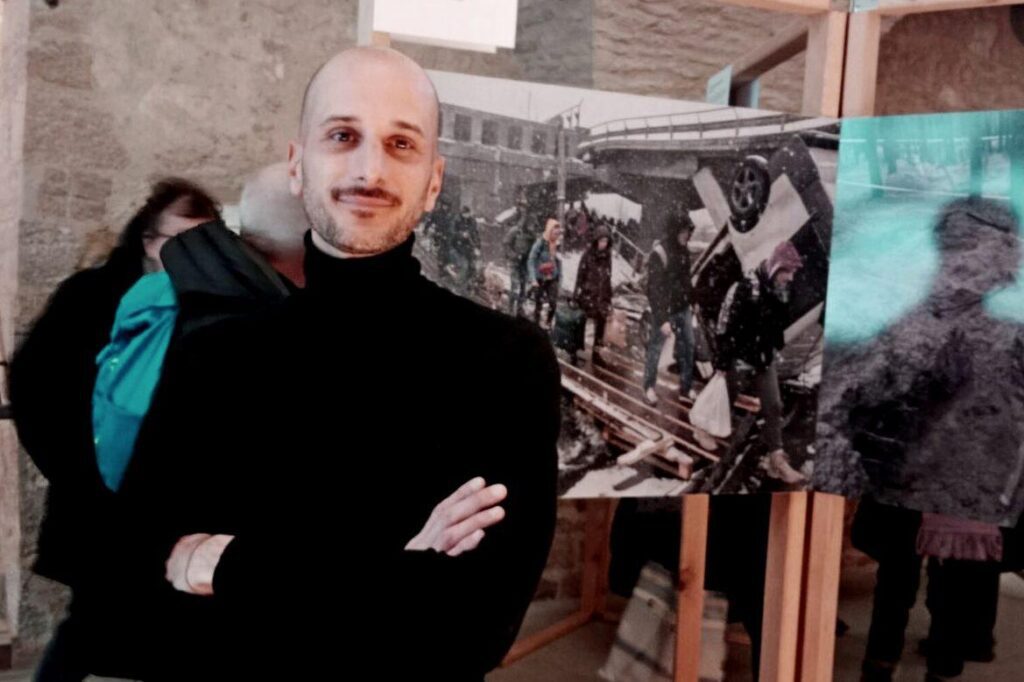
Russian drones do not distinguish between nationalities. On October 3, 2025, French photojournalist Antoni Lallican was killed near Druzhkivka in the Donetsk Region. An FPV drone hit the car in which he was traveling with Ukrainian photojournalist Heorhii Ivanchenko. Heorhii received serious injuries, as a result of which he had to have his leg amputated.
In mid-October 2024, a film crew from the German newspaper Die Welt was hit by a russian Lancet drone while filming in the Dnipropetrovsk region. The journalists were filming with a mobile Ukrainian air defense unit in an open field.
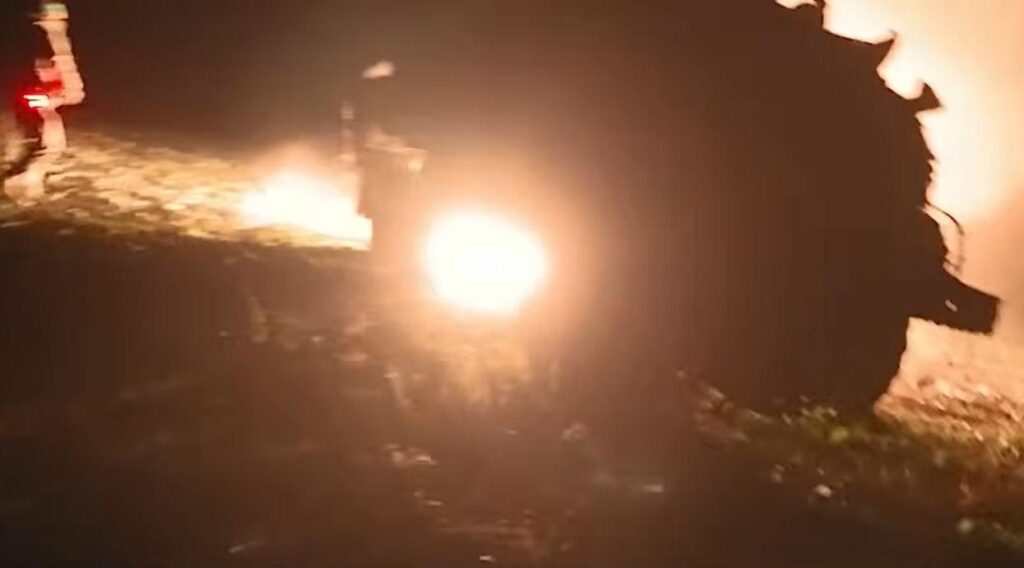
On October 27, 2025, Ukrainian cameraman Ivan Zakharenko worked with German WELT journalists in the Dnipropetrovsk region. At around 9:30 p.m., a russian Lancet-type strike drone hit an army truck next to a film crew. At the time of the strike, the journalists were only a few meters from the equipment. Ivan was injured in the leg by metal fragments and began to bleed heavily. Cameraman Viktor Lysenko received minor injuries. Reporter Ibrahim Naber, together with the cameraman, provided first aid to the wounded man, dragging him to a safe distance.
On November 8, 2025, in Kostiantynivka, Donetsk Region, russian troops attacked an armored vehicle of the Proliska humanitarian mission with an FPV strike drone on a fiber optic cable, in which Austrian journalist Christian Wehrschütz and a Spanish journalist were traveling. The armored vehicle, which was being used to evacuate civilians, was damaged.
On December 15, 2025, TSN special correspondent Yuliya Kyriyenko-Merinova was attacked by russian drones while the film crew was working on the Kupiyansk Axis in the Kharkiv Region.
The publication emphasizes: during the filming, the reporters were clearly marked as journalists. But this does not stop the russian attacks.
Chronicle of terror: when attacks become systematic
According to the NUJU, drone attacks on journalists have become systematic. Here is an incomplete list of documented cases:
August 2022
- the Ukrainian Witness film crew came under fire in Avdiyivka. A serviceman accompanying the group heard the sound of a drone, after which targeted fire began. Journalist Oleksii Prodaivoda pulled a fragment from his bulletproof vest. The publication notes: “We have every reason to believe that those who opened fire understood that they were shooting at journalists, since there were no military personnel in the area of the shelling.”
September 2022
- russians dropped explosives from a drone on the ICTV’s Fakty film crew, which was preparing a story in the village of Senkivka in the Chernihiv Region. The journalist, cameraman, and drivers were not injured, but the enemy was probably aiming specifically at the TV channel’s car.
July 2023
- AFP journalist Dylan Collins was injured near Bakhmut as a result of a drone attack while reporting from Ukrainian artillery positions.
November 2024
- Hromadske journalists Oleksii Nikulin and Ksenia Savoskina came under attack by a russian drone in the Kharkiv Region while filming on the left bank of the Kupiyansk District. The car with the journalists’ backpacks burned to the ground.
January 2025
- freelance journalists Inna Varenytsia and Zoriana Stelmakh were hit by a russian drone in Pokrovsk at a railway crossing. The journalists were wearing blue high-visibility vests and helmets. The drone exploded a few centimeters from the car, but the women were miraculously uninjured.
Each of these cases is not about real people who risked their lives to bring the truth about the war. Some of them paid the ultimate price for it.
Drone detectors: a new necessity for journalists
“A drone detector is now a necessity for newsrooms working in frontline areas and teams traveling to work on the front line,” the NUJU states in one of its studies. “Since the summer of 2025, detectors have become as necessary as protective equipment and a first-aid kit.”
Examples of this are the testimonies of Kharkiv journalists. Working in the Kharkiv Region – on the Kupiyansk, Vovchansk, Lipetsk Axes, in the vicinity of Zolochiv or Slatyne (about 20 km to the border with russia) or traveling beyond the de-occupied Izium – requires constant monitoring of the sky. As an example of the intensity of attacks, the village of Oskil, on December 15, experienced five UAV strikes, and on December 16, 3 attacks.
Volodymyr Pavlov, the coordinator of the Kharkiv Journalists’ Solidarity Center (JSC) of the NUJU, was convinced of the need for a detector for film crews from his own experience. In the fall, while working in the Donetsk Region (Kramatorsk and Sloviyansk), he and his group intercepted signals from FPV and other drones more than 10 times. Thanks to the video interception provided by the detector, they saw the enemy hitting the market.
In the fall, while working in Yarova (after the guided bomb struck a mobile post office), journalists saw a drone being directed at the village thanks to the detector. Using the detector with video interception made it possible to hide in the forest and save a local resident.
On December 16, 2025, Volodymyr Pavlov worked with the military on the Lyman Axis. The fighters used the Chuika detector to monitor the sky. The device got activated four times a day.
In mid-November 2025, Hanna Chernenko, co-coordinator of the Kharkiv JSC, filmed the evacuation of local residents in the Velykyi Burlutsk Community. The White Angel police unit and the Red Cross rapid response units have detectors as a mandatory safety feature.
“It house without a detector means exposing yourself to direct danger,” says Hanna. “Every stop or chosen route is ‘dictated’ by the detector.”
Currently, the construction of anti-drone routes is actively underway in the Kharkiv Region – this is also a marker that the number of attacks is increasing. However, traveling only along such a route is impossible and does not provide a one-hundred percent guarantee of safety. Only certain routes are under such cover; there are cases when a drone flies under the net.

Vasyl Myroshnyk from the Zoria. Visnyk Bohodukhivshchyny newspaper (Zolochiv) told the NUJU about the case when he was driving his own car at the very moment when a strike drone flew under the anti-drone net.
“I’m driving, I clearly see a small drone in the rearview mirror – it’s flying, buzzing,” recalls the journalist. “To be honest, I rushed so much that… There is only one way forward. I literally flew to the bridge that was on the road – and there the drone crashed in front of the bridge.”
The journalist says that he has long stopped thinking that drones on the border are hunting for the military or important, or influential people.
“They kill everyone they meet. These are such ‘jokes’ of the russians,” Vasyl Savych suggests. “What happened to me is not an exception, but the norm for the border villages of the Kharkiv Region.”
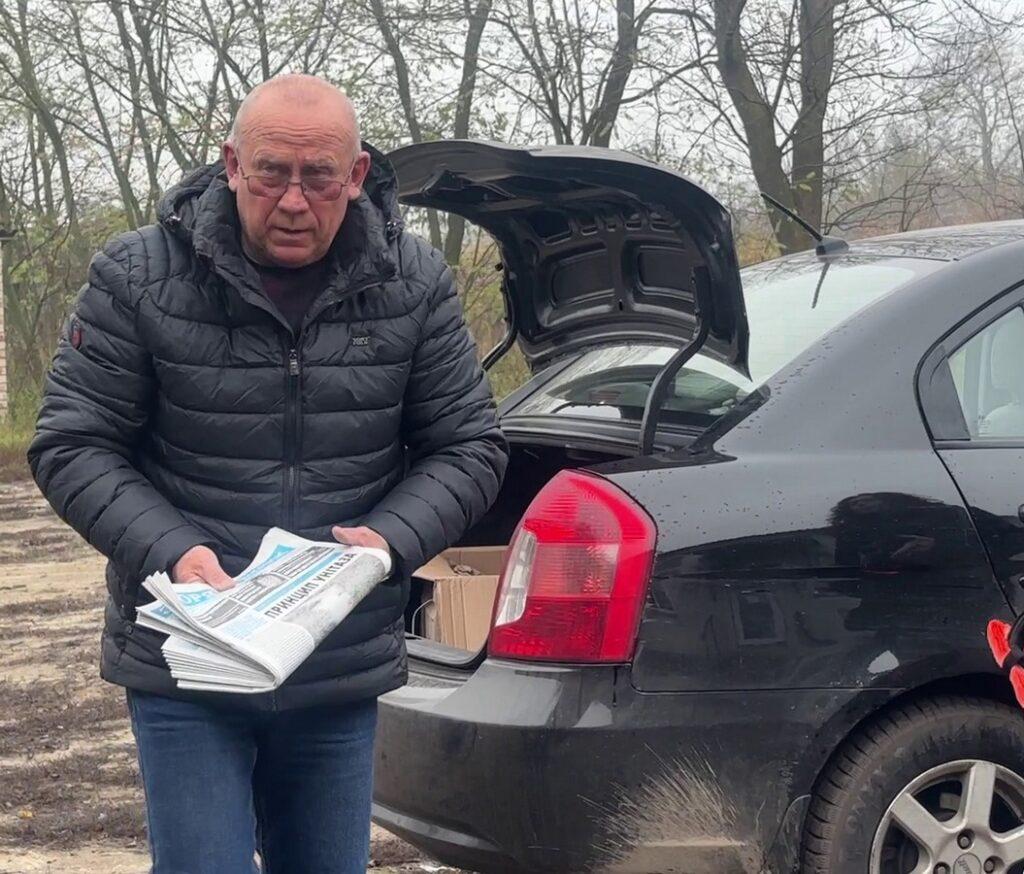
Journalist and now military serviceman Artem Lystopad went on a business trip to the Donetsk Region and Zaporizhzhia Region in November 2025. He shares his experience working in Kostiantynivka:
“We filmed the evacuation with the Proliska team. On the way, we missed a Ukrainian armored vehicle that had been hit. We had been driving along this same road only recently, and there was no damaged car there. It was a fresh strike, and we missed it. Further along the way, we missed two russian drones. There was a situation when an FPV tower literally flew over our heads and crashed somewhere a couple of yards away from us. So, if you count, it was extremely dangerous four times.”
The next morning after filming, the crew commander of the volunteer group of the humanitarian mission, Proliska Yevhen Tkachov, sent Artem a video about the FPV tower hitting the ground. This is the same video that later spread across the networks. The journalist’s trip was the day before this situation.
Drone detector models are rapidly “aging”
It is difficult to purchase a detector for protection for local newsrooms or national media outlets, both financially and organizationally, since the media do not always have the necessary paperwork to register in the queue for purchase.
A separate issue is the rapid ‘aging’ of detectors. What worked in the spring or summer has already become ineffective. Teams going to work in the kill zone (now this is already a distance of 60 km from the front line, where drones can reach using fiber optics; for understanding: Kharkiv is located 20 km from the front), have to look for or pass detectors to each other, and then turn on everything they managed to find on the route.
Volodymyr Pavlov used different detector models at different times for his work: ‘Khoover 2’, ‘Khoover 3’, ‘Dzyha 2’, ‘Vanilnyi Tsukorok’, ‘Tynn SA’. Some of them, as of mid-December 2025, can only be used as auxiliary ones.
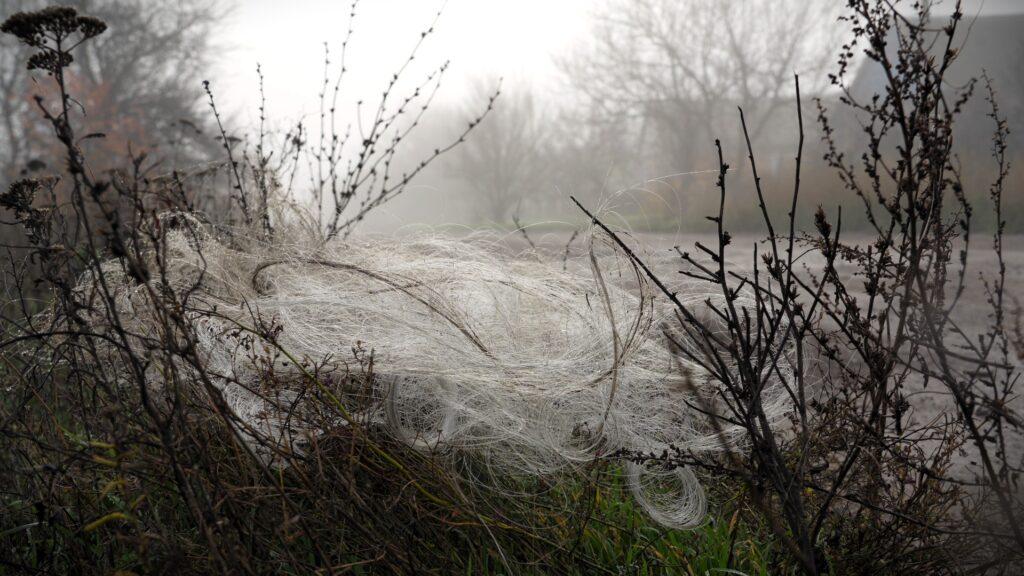
Currently, the best ones (those that are able to detect more enemy drones and UAVs) are those that work in three bands. They intercept the video signal, and you can see which object the drone is flying over.
Video detectors, in particular Chuika, use different algorithms for searching for a video signal, but they are united by ease of use. No specific knowledge is required to use them.
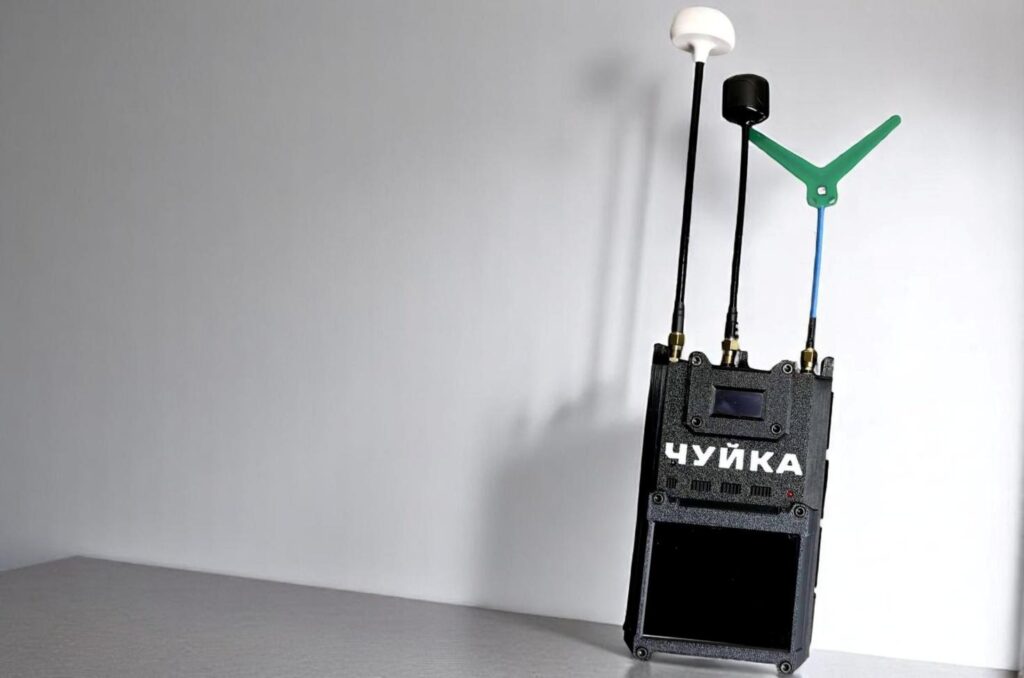
Without a detector, teams have to rely on weather conditions (fog cover), a fast and passable car, driving skills to get out of the way, and luck.
The NUJU calls on all newsrooms working near the front line to review safety protocols and realize the new reality. The time when you could simply ‘arrive in Kramatorsk and go to the front line’ is over. Now journalists need to work with the following in mind:
- minimal time spent in dangerous zones,
- dispersal of equipment,
- constant monitoring of drone activity using detectors,
- alternate evacuation routes,
- enhanced armored protection of transport,
- actions in constant contact with press officers and defense forces,
- mandatory presence of drone detectors in each film crew.
However, even all these precautions do not guarantee safety. Drones can attack anywhere and at any time…
According to verified data from the NUJU, since the beginning of the full-scale invasion, 21 media workers have died while performing their professional duties. In total, the war has claimed the lives of 140 media representatives – including 10 civilian victims and 109 journalists who were mobilized into the ranks of the Armed Forces of Ukraine.
The NUJU appeals to international partners to strengthen the security of Ukrainian media workers.
“We call on international partners to strengthen security programs, provide body armor, communication equipment, drone detectors, and evacuate journalists working in the combat zone,” emphasizes Sergiy Tomilenko. “The world must see the truth – and help those who risk their lives to bring it to light.”
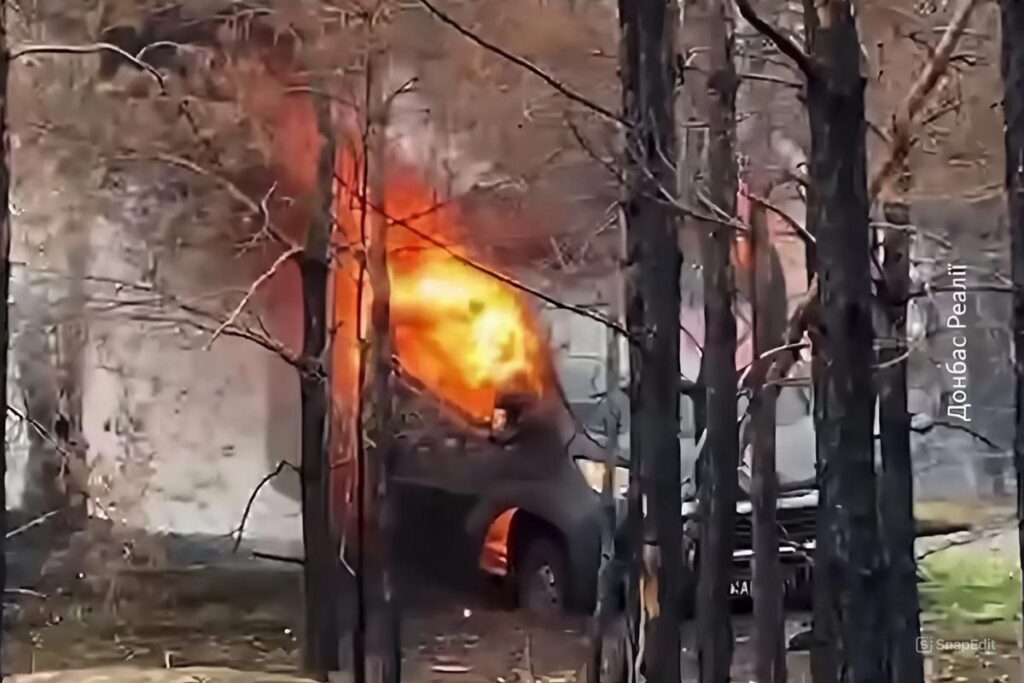
According to Reporters Without Borders (RSF), 2025 was one of the deadliest years for journalists. Ukraine is among the most dangerous countries in the world for representatives of the press. RSF emphasizes: “No one gives their life for journalism – it is taken from them; journalists do not just die – they are killed.” The organization calls on the international community to strengthen the protection of journalists and bring to justice those responsible for crimes against media representatives.
Russian drones hunting journalists are not just a weapon of war. They are a tool in the fight against the truth, against testimony about crimes, against documenting reality. Every attack on a journalist is an attempt to silence the facts, to hide atrocities, to intimidate those who dare to show the world the true face of war.
Maksym Stepanov
Hanna Kharchenko
Arina Kantonistova
Inna Kosianchuk
NUJU Information Service














Discussion about this post