
- 
French
 - 
fr
German
 - 
de
Italian
 - 
it
Spanish
 - 
es
English
 - 
en
UKR
National Union of Journalist of Ukraine

THE NATIONAL UNION OF
JOURNALISTS OF UKRAINE

No Result
View All Result
DONATE
  • Home
  • News
  • Stories
  • Affected Media
  • Our Partners
  • About NUJU
  • Contacts
No Result
View All Result
  • Home
  • News
  • Stories
  • Affected Media
  • Our Partners
  • About NUJU
  • Contacts
DONATE
THE NATIONAL UNION OF JOURNALISTS OF UKRAINE
No Result
View All Result
  • Home
  • News
  • Stories
  • Our Partners
  • DONATE
Home TOP news

New challenges, staff shortages and increased risk: how local front-line media newsrooms work (NUJU’s survey)

NUJU By NUJU
05.08.2025
in TOP news, News
3
0
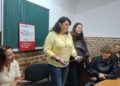
zobrazhennya viber 2025 08 05 11 23 29 538
Share on FacebookShare on TwitterSent by emailScan QR

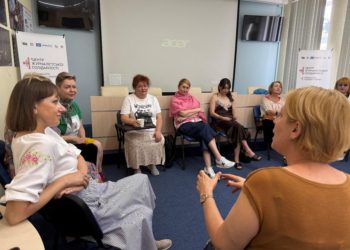
Front-line media journalists are working with new challenges and new topics, so they are looking to improve their skills in terms of content quality and digital tools for their work. These are the results of a survey conducted by the National Union of Journalists of Ukraine (NUJU) among participants of the training course called Strengthening the Resilience of Front-Line Media as a Tool to Combat Disinformation.

Active hostilities nearby and regular shelling and attacks from russia – this is the security situation in which the survey participants work. Therefore, among the topics for which they need to improve their skills, the majority named covering the lives of people in front-line communities (55%). In second place is countering disinformation and manipulation (45%) and creating materials that interest the European audience (45%).

Among the digital skills most in demand are the use of artificial intelligence in work (70%), SMM and content promotion (60%), and adaptation of content for different platforms (40%).

Among other proposals from the project participants is receiving recommendations on the possibilities of media work in temporarily occupied territories. This was particularly noted by the director general of the Silski Novyny newspaper newsroom from the Kherson Region, Liubov Rudia. She said that it is important for the publication to maintain informational communication with residents who are under occupation, interested in the forms and methods of recording crimes in temporarily occupied territories.

Media workers also note the impact of their work on mental health.

Editor-in-chief of the Nashe Slovo media center from Mena, Chernihiv Region, Vitalii Serhiiko:

“I would like to receive information regarding the psychological resilience of journalists. In particular, methods of combating information overload and fatigue, psycho-emotional support for media workers in conditions of high stress and traumatic events, recognizing manipulation techniques and protecting against the influence of disinformation on one’s own thinking,” said Vitalii Serhiiko, the editor-in-chief of the Nashe Slovo media center.

According to the survey, the TOP-3 most relevant topics for the audience are social assistance, housing restoration, and compensation for destroyed housing. The audience also shows a high interest in materials on security and evacuation, the activities of local authorities, and news from the front.

“Media journalists – project participants – work with a high workload, in small teams, where there is a noticeable shortage of personnel, in conditions of a high level of danger due to hostilities and constant stress,” comments on the survey results, First Secretary of the NUJU, Lina Kushch. “Most of the project participants have basic knowledge of covering war-related topics, are guided by the editorial policy or the Code of Ethics of a Ukrainian Journalist, and practice these principles. But they need to strengthen their skills in properly covering sensitive topics, such as the protection of victims’ private data, prisoners of war and missing persons, gender equality, interviews with children, and the lives of children with disabilities.”

Important factors for journalists are also mentoring support, the opportunity to exchange experience with participants from other regions, and the introduction of new formats in the newsroom, as part of the training course.

We remind you that the participants of the project are 20 local media from front-line regions.

The project is funded by the Embassy of the Republic of Lithuania in Ukraine within the framework of the Development Cooperation and Democracy Promotion Programme.

logo 1024x201 1


Previous Post

Tortured journalist Victoria Roshchina posthumously awarded the Order of Freedom

Next Post

Crimean citizen journalist Amet Suleymanov’s health state worsens in russian prison

Related Articles

Oleksandr Mezinov devoted nearly 20 years of his life to working at the reserve. Photo by the Novyi Den newspaper
News

War Against the Steppe: Russian Occupiers Are Destroying a Nature Reserve Unique to All of Europe—and Branding Ukrainian Scientists as “Biological Weapons Developers”

2026/10
A support group session with psychologist Nataliia Ulko in Kyiv. Photo: Larysa Portianko
News

Supporting colleagues without burning out: how NUJU looks after the mental health of Ukraine’s wartime journalists

2026/10
Ivan with his wife Dasha and their daughter Vira. Photo by the Nove Zhyttia newspaper
News

“Robinson” From the Front: A Ukrainian Soldier Survived 15 Days in a Destroyed Village and 15 Months in Russian Captivity

2026/10

Discussion about this post

TOP News

  • 539505998 24572265159098350 3620154662125727163 n

    Professor Okabe: 47 visits to Ukraine and a “Golden Heart” from Zelenskyy

    9 shares
    Share 4 Tweet 2
  • List of journalists killed since start of russia’s full-scale aggression (UPDATE)

    599 shares
    Share 240 Tweet 150
  • “A generator won’t solve everything”: what winter holds for Ukrainian journalists and why international support is critical

    4 shares
    Share 2 Tweet 1
Oleksandr Mezinov devoted nearly 20 years of his life to working at the reserve. Photo by the Novyi Den newspaper

War Against the Steppe: Russian Occupiers Are Destroying a Nature Reserve Unique to All of Europe—and Branding Ukrainian Scientists as “Biological Weapons Developers”

29.10.2026
A support group session with psychologist Nataliia Ulko in Kyiv. Photo: Larysa Portianko

Supporting colleagues without burning out: how NUJU looks after the mental health of Ukraine’s wartime journalists

21.10.2026
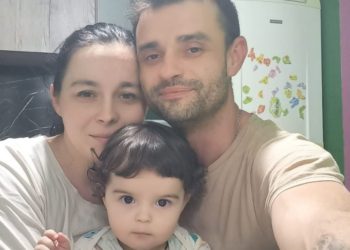
Ivan with his wife Dasha and their daughter Vira. Photo by the Nove Zhyttia newspaper

“Robinson” From the Front: A Ukrainian Soldier Survived 15 Days in a Destroyed Village and 15 Months in Russian Captivity

20.10.2026
Daphne

Malta: EFJ and press freedom groups lament another year passing without full justice for Daphne Caruana Galizia murder

16.10.2026
ataky postrazhdali my ukrayina 1024x574 1

Seconds to reach safety: how media workers operate as Kyiv becomes a frontline city

07.10.2026
photo 2026 10 06 09 00 47 3

Norwegian media delegation visits NUJU’s Journalists’ Solidarity Center in Lviv

06.10.2026

Browse by Topics

Dnipro EFJ foreign journalists foreign journalists Ukraine IFJ Ivano-Frankivsk Journalists' Solidarity Centers journalist safety Kharkiv Kyiv legal assistance Lviv NUJU protective equipment protective equipment for journalists psychosocial support safety briefing safety for journalists in Ukraine Sumy Ukraine UNESCO war Zaporizhzhia

National Union of Journalist of Ukraine

National Union of Journalists of Ukraine (NUJU), according to its Statute, it is a national all-Ukrainian organization a creative union uniting journalists and other media workers.

Contacts

E-mail: [email protected]

© 2023 NUJU - National Union of Journalist of Ukraine

  • Home
  • News
  • Stories
  • Affected Media
  • Our Partners
  • About NUJU
  • Contacts
No Result
View All Result

© 2023 - 2025 NUJU - National Union of Journalist of Ukraine

Welcome Back!

Login to your account below

Forgotten Password?

Retrieve your password

Please enter your username or email address to reset your password.

Log In