
 THE NATIONAL UNION OF
JOURNALISTS OF UKRAINE
THE NATIONAL UNION OF
JOURNALISTS OF UKRAINE
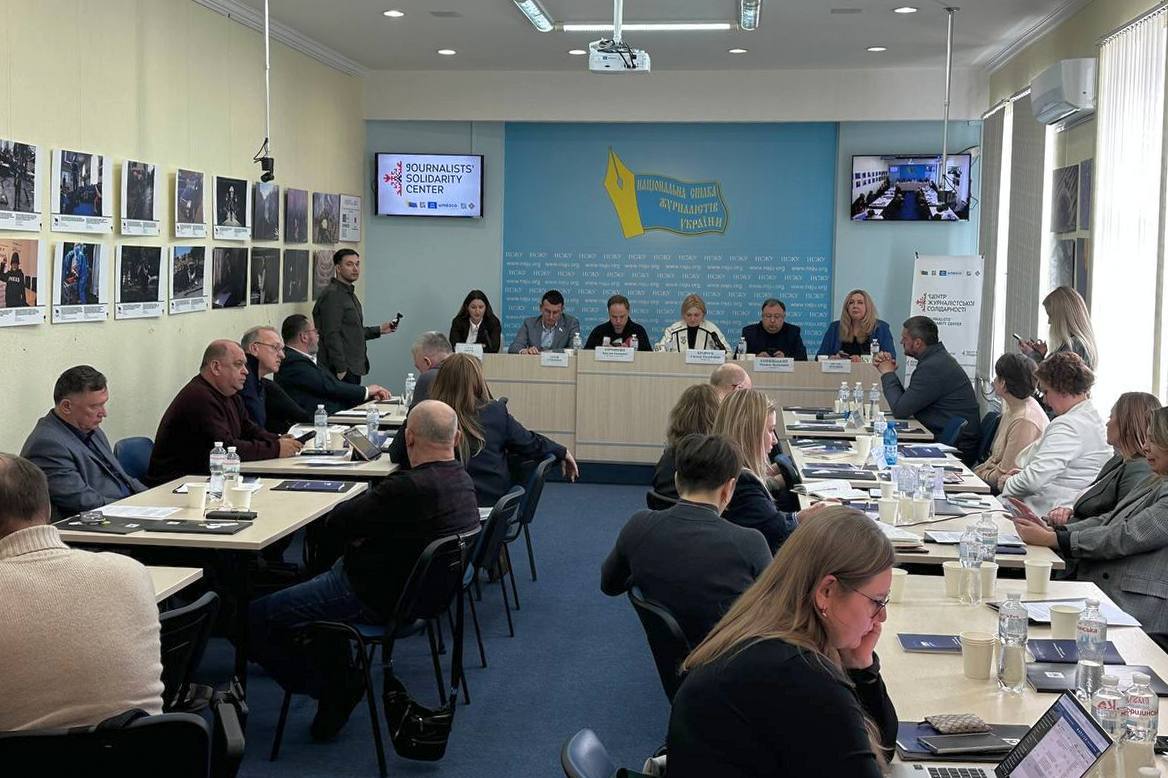
The sixth meeting of the Interim Investigative Commission (IIC) of the Verkhovna Rada on the investigation of crimes committed by the armed formations of the russian federation against journalists and media workers was held on April 8 in the conference hall of the National Union of Journalists of Ukraine (NUJU) on Khreshchatyk Street in Kyiv.
The topic of the meeting was ‘Regional media during the war: destruction, pressure and information resistance’. For the first time, the commission held a series of testimonies of journalists who were directly affected by the actions of the occupiers.
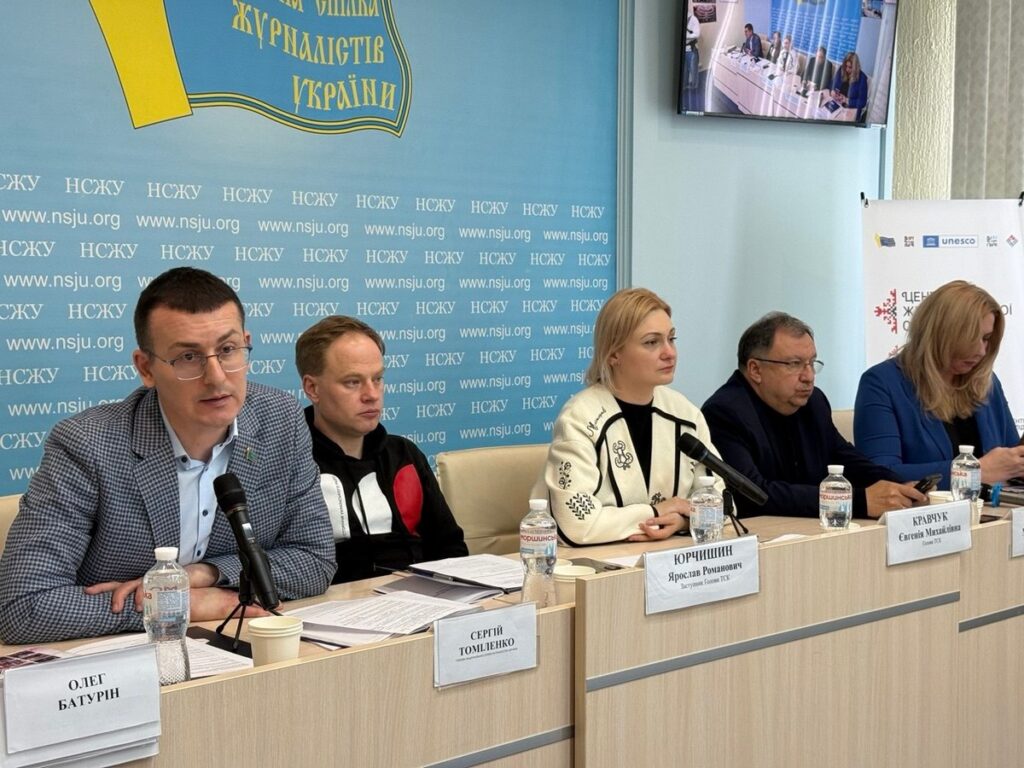
The meeting was held in a hybrid format – offline at the House of Journalists and online via Zoom. The head of the IIC and Verkhovna Rada member, Yevheniya Kravchuk, noted that this is the first in a series of meetings at which the commission will hear testimonies from media workers.
“We can see a very wide range of crimes,” she emphasized, announcing the next field meeting on May 1 in Dnipro, where the commission will continue to collect testimonies, in particular from journalists from the southern regions.
Kravchuk also reported that at the end of May the commission will hold an open meeting dedicated to crimes against journalist Victoria Roshchyna, with the participation of law enforcement officers. By the Day of the Journalist, which coincides with the IIC’s semi-annual report, it is planned to consider the interim report in the session hall of the Verkhovna Rada.
Separately, the IIC chairperson reported that the commission raised with the Cabinet of Ministers the issue of including the topic of media restoration in the program of the Conference on the Restoration of Ukraine.
NUJU President Sergiy Tomilenko, welcoming the participants at the site of the Kyiv Journalists’ Solidarity Center (JSC), recalled that the Union began collecting testimonies under the title Executed Free Speech from the first days of the full-scale invasion. According to him, if at first this name sounded like a metaphor, now it is like a protocol:
“We clearly document that for the russians, independent media, independent professional journalists are a direct threat.”
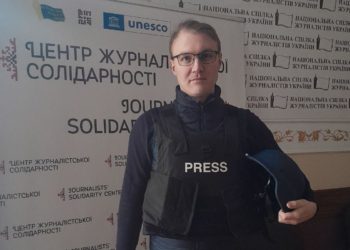
Sergiy Tomilenko gave a telling detail: the NUJU recommends that journalists going to the front not use the inscription “Press” on bulletproof vests and protective equipment, because this is a “factor that irritates and provokes” the occupiers. During a recent meeting in Vienna with the OSCE representative on freedom of the media, the President of the Union discussed this paradox: international conventions require the identification of a journalist, and Ukrainian realities indicate that such identification can cost lives.
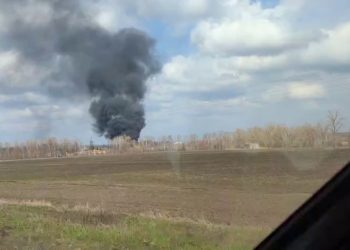
The President of the NUJU announced the current figures: since the beginning of the full-scale invasion, 147 media workers have been killed, at least 21 while performing their professional duties. In 2025, 160 attacks and threats were recorded, 70 of which involved physical destruction of media and journalist property. A total of 28 colleagues still remain in captivity. About 50 percent of regional media outlets have closed since the start of the full-scale invasion – due to the threat of occupation and the economic crisis. One of the latest examples of targeted destruction was a guided air bomb that completely destroyed a separate editorial building of a newspaper in Mezhova, Dnipropetrovsk Region.
“Regional media and independent media are an element of critical infrastructure. Ukrainian journalists need recognition of the critical contribution they make to the stability of Ukraine,” concluded the President of the NUJU.
Oksana Romaniuk, the Director of the Institute of Mass Information (IMI), proposed a systematic approach to classifying russian crimes against the media: crimes against journalists as civilians (illegal imprisonment, shelling, murder, hostage-taking); crimes against newsrooms and media infrastructure (shelling, in particular, of TV towers, robberies); information occupation (at least 37 cases of brand theft, substitution of Ukrainian content with propaganda, forced restarting of media); destruction of the media environment as a result of aggression.
“If we classify these crimes correctly, correctly correlate them with the articles of the criminal code and international law, we will be able to investigate and prove them correctly,” the IMI director emphasized, adding that the relevant cases should be submitted for consideration by the future tribunal.
According to IMI, at least 428 newsrooms have been affected since the beginning of the invasion, russia has attacked Ukrainian newsrooms at least 72 times – some twice and three times, which indicates the targeted nature of the strikes. At least 24 attacks on TV towers in 12 regions of Ukraine were also recorded. After the introductory reports, the commission heard testimonies from journalists who are direct victims of the crimes of the russian federation. The following testified before the commission: journalist from Kherson region Oleh Baturin – about kidnapping and illegal detention in the temporarily occupied territory, journalist from Cherkasy Olena Shchepak – about intimidation of journalists, Anzhela Maksymenko (Slobodian) – about work and imprisonment in occupied Kherson, Kostiantyn Hryhorenko – about the work of the newsroom of Obrii Iziumshchyny newspaper during the occupation and its restoration after the liberation of the city.
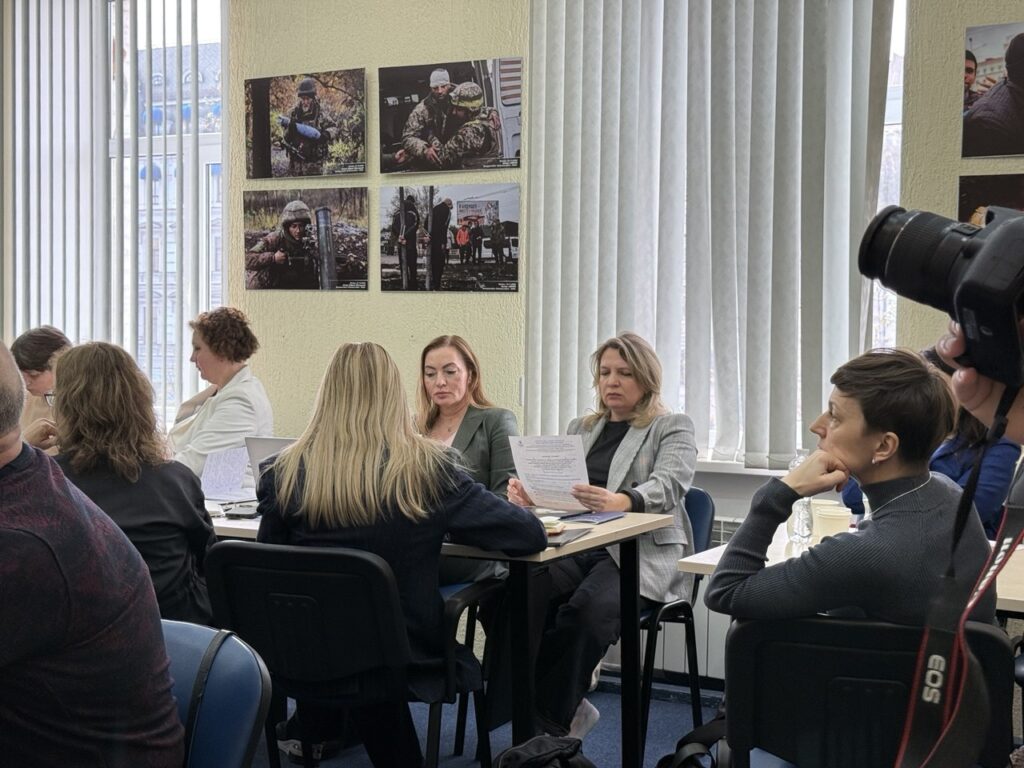
A separate block of the meeting was devoted to the destruction and seizure of media. Anna Murlykina gave her testimonies – about the complete destruction of the Mariupol newsroom 0629, Olena Kalaitan – about the seizure of the newsroom of Pryazovskyi Robitnyk and the use of the brand by the occupiers, Lidiya Tarash – about coercion to cooperate and the creation of fake media in Volnovakha, Liubov Rakovytsia – about cyberattacks and interference in the work of the media.
Valentyna Troyan from IMI, Vasyl Myroshnyk from the front-line newspaper Zoria, Oleksii Pasiuha from the border Sumy-based Vorskla and Volodymyr Sadivnychyi from Sumy State University reported about the destruction of the educational infrastructure of journalism.
The meeting also unanimously decided to include in the commission Verkhovna Rada member, Olesia Otradnova, a professional lawyer who previously headed the training center of the prosecutor’s office.
NUJU Information Service








Discussion about this post