
 THE NATIONAL UNION OF
JOURNALISTS OF UKRAINE
THE NATIONAL UNION OF
JOURNALISTS OF UKRAINE
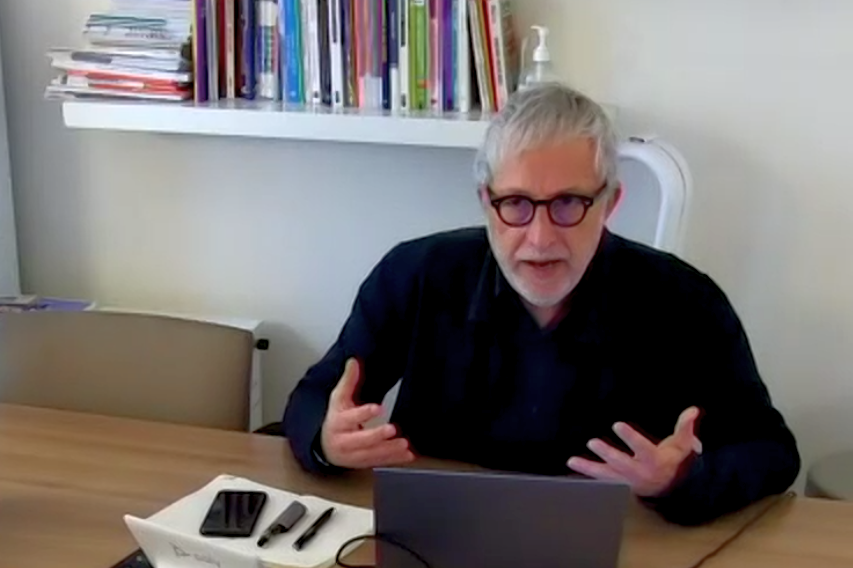
Ukrainian journalism is in a uniquely difficult situation of the full-scale war, and at the same time, it is demonstrating unprecedented progress in bringing to justice crimes against journalists.
This was stated by Antoine Bernard, Global Director for Advocacy, Litigation and Assistance at Reporters Without Borders (RSF), during a meeting of the Interim Investigation Commission (IIC) of the Verkhovna Rada to investigate russian crimes against journalists.
“On February 24, 2022, there were zero such investigations. Today, at least 125 criminal proceedings have been opened for crimes against journalists, a significant part of which are being conducted in international cooperation,” he shares.
According to Bernard, russia’s war against Ukraine has gone through several stages of escalating pressure on the media: from targeted attacks on editorial offices and the killing of journalists to illegal detentions, forced disappearances, and deportations of media representatives from occupied territories to russia. Today, the massive use of drones adds a special danger to journalists, which significantly changes the working conditions of reporters in the combat zone.
These threats, the RSF representative emphasized, are superimposed on the crisis of media sustainability and the Kremlin’s large-scale system of military propaganda, which makes the Ukrainian situation exceptional in the global context.
Antoine Bernard noted that in response to these challenges, they have chosen two key areas of work: ensuring criminal liability for crimes against journalists and countering military propaganda.
“We at Reporters Without Borders have created a number of projects and tools to help expose the global apparatus of Kremlin military propaganda, better understand it, and confront it. Especially when it attacks media sites so that information cannot reach its audience,” notes Antoine Bernard.
Among such solutions are mirror sites and technological mechanisms for access to independent sources of information in temporarily occupied territories
The RSF representative noted that one of the key tasks is an attempt to criminalize war propaganda by involving independent judges and forming appropriate case law. According to him, the current judicial response to propaganda remains insufficiently effective due to the complexity of criminalizing speech and the risk of restricting freedom of speech.
At the same time, an important starting point for such solutions can be the recognition of the right to access reliable information:
“The right to information is a basic human right.”
It is already enshrined in the new European Media Freedom Act, and Reporters Without Borders considers it an important tool for Ukraine – especially for residents of occupied territories and people deprived of access to independent media.
The RSF representative emphasized that Ukraine’s experience is becoming unique not only in view of the scale of the challenges associated with war propaganda, but also in the context of finding legal and institutional responses to them.
In February, the leaders of Reporters Without Borders, including the organization’s Director General Thibaut Bruttin, are planning to arrive in Kyiv. During a meeting with members of the parliamentary commission, the parties intend to discuss further opportunities for cooperation in the field of protecting freedom of speech, access to information, and bringing to justice information crimes in wartime.
As a reminder, commenting on the difficult working conditions of Ukrainian journalists, the RSF representative emphasized the importance of constant dialogue with colleagues from the National Union of Journalists of Ukraine (NUJU) and the Institute of Mass Information.
Yuliya Turovets
NUJU Information Service











Discussion about this post