
 THE NATIONAL UNION OF
JOURNALISTS OF UKRAINE
THE NATIONAL UNION OF
JOURNALISTS OF UKRAINE
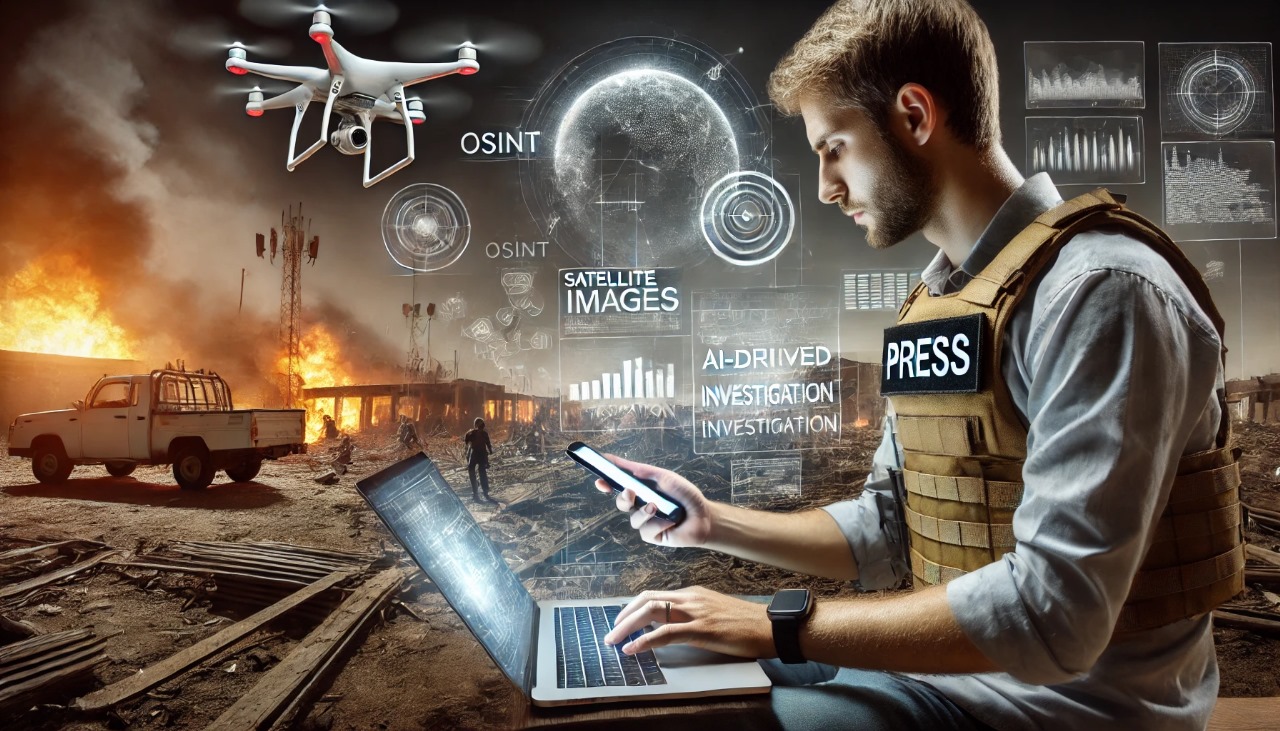
In the era of hybrid wars, information manipulation, and instant news dissemination, the work of journalists in conflict zones has become not only dangerous but also much more difficult. The media space is full of fake videos, propaganda materials, and distorted facts. How can a journalist not only survive in this information chaos, but also guarantee the audience truthful and verified materials?
Modern technologies, such as OSINT (open source intelligence), artificial intelligence (AI), and analytical tools, help media professionals verify facts, analyze video, work with satellite imagery, and protect their communications. Let’s take a look at the digital solutions that are now becoming an integral part of journalism in war zones.
Fact checking and OSINT: how to avoid manipulation and disinformation
What is it? A fact-checking search engine that collects information from independent fact-checking organizations.
Why is it important?
- A journalist can check whether experts have refuted the information they received.
- It helps to quickly find confirmation or refutation of high-profile news.
- It helps to identify systemic manipulations and sources of fake news.
Bellingcat’s Digital Investigation Tools
What is it? A set of tools for OSINT investigations that allows you to analyze images, videos, and metadata.
Why is it important?
- Allows journalists to check the authenticity of videos and photos.
- Detects manipulations and fake content.
- Helps to find the geolocation of events by analyzing shadows, landscape and building locations.
What is it? A video analysis plugin that helps to recognize deepfakes and manipulations.
Why is it important?
- It helps journalists verify videos from unknown sources.
- Analyzes footage frame by frame to identify fakes.
- Automatically searches for similar videos on the Internet for comparison.
Artificial intelligence in media: fighting fakes and content analytics
What is it? An API that uses AI to analyze the toxicity of comments on social media and media.
Why is it important?
- Journalists can use it to identify propaganda and manipulative comments.
- It helps to moderate comments in the media and reduce disinformation campaigns.
AI-powered fact-checking by Full Fact
What is it? An AI tool for automated fact-checking in the news.
Why is it important?
- Analyzes large amounts of text in real time.
- It helps journalists find false statements in political and media mater
Cybersecurity and anonymity: how journalists can protect their data
What is it? Encrypted email for secure information exchange.
Why is it important?
- Journalists can securely communicate with informants and sources.
- Even in case of hacking, no one will be able to read the message.
Signal
What is it? A secure messenger for journalists that uses end-to-end encryption.
Why is it important?
- Secure voice and video calls.
- Journalists can communicate without the risk of information leakage.
Tor Browser
What is it? An anonymous browser for accessing blocked resources in censored countries.
Why is it important?
- It allows journalists to work in countries with severe restrictions on freedom of speech.
- Ensures confidentiality of Internet browsing.
Visualization and analysis of combat operations
Satellite Mapping (Sentinel Hub)
What is it? A satellite imagery platform for analyzing the situation in combat zones.
Why is it important?
- Journalists can get up-to-date satellite images to check the destruction or movement of troops.
- It allows to confirm or refute the statements of the parties to the conflict.
What is it? A platform for creating interactive infographics.
Why is it important?
- Visualizes complex data in an easy-to-understand format.
- Allows journalists to create analytical graphs based on real data.
What is it? A tool for creating interactive event maps.
Why is it important?
- Allows you to tell stories related to specific geolocations.
- It helps to visualize combat operations and refugee routes.
Conclusion
A modern journalist working in military conflict zones has a wide range of digital tools at his or her disposal. OSINT, artificial intelligence, satellite data, and secure communication platforms allow them not only to maintain the accuracy of their materials, but also to protect themselves and their sources. In the era of digital warfare, these technologies are becoming key to reporting the truth.














Discussion about this post