
 THE NATIONAL UNION OF
JOURNALISTS OF UKRAINE
THE NATIONAL UNION OF
JOURNALISTS OF UKRAINE

Since the russian invasion of Ukraine nearly four years ago, journalists have been reporting from a cutting-edge, technologically advanced war where drones have significantly increased the risks, writes Canada’s The Globe and Mail.
In December, 27 Ukrainian journalists, who often work near the volatile front lines in the country’s east, took part in an innovative training program on reporting under drone attacks.
A new joint initiative by The Globe and Mail Foundation and Ukraine’s 2402 Foundation (Everyday Humanity) offers journalists an intensive three-day course on risk assessment, safety, and first aid in an ever-changing battlefield.
What’s new is drone training, which teaches journalists and media support workers to analyze and respond to risks.
“War has changed a lot, and the way we cover war and stay safe has changed with it,” said Globe senior international correspondent Mark MacKinnon, who has covered Ukraine for more than two decades.
“We didn’t talk about drones at all back in 2022, and now it’s a constant topic of conversation. For anyone approaching the front lines, it’s about understanding the distances drones can cover and how to respond if we see one,” Mr. MacKinnon said.
As part of the workshops, Ukrainian journalists studied the Kherson case with lessons on how drones operate when they hunt cars. They learned about the different types of drones, the sounds they make, and the weapons they carry.
“We were in a simulation where drones were literally chasing us, and we tried to hide and provide first aid to our colleagues while the drones were still overhead,” said Mr. MacKinnon. “I’m sure it would save lives.”
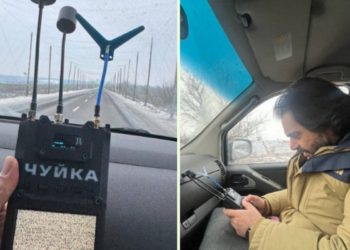
The journalists were given the opportunity to use drone detectors, a technology that detects and tracks remotely operated aircraft. They took part in Hostile Environment and First Aid Training (HEFAT) and a session on journalistic ethics, including maintaining independence when covering their own country’s military operations.
“Ukrainians are the world’s experts in war reporting that has come into their country and into their lives,” said Mr. MacKinnon. “We were simply facilitating Ukrainians teaching Ukrainians.”
With more courses planned for this month and April, the project will help Ukrainian journalists work more closely with news organizations abroad.
“We want to protect reporters who risk their lives every day to keep citizens informed regionally and globally,” said Laura Lavie, the executive director of The Globe and Mail Foundation, a Canadian charity focused on improving media literacy and supporting journalist training.
The foundation’s contribution comes as Ukrainian NGOs face a deepening financial crisis following the abrupt end of USAID support last year.
A Ukrainian initiative, the 2402 Foundation (Everyday Humanity), helped launch the courses. “2402” refers to February 24, the first day of the russian invasion in 2022. The Ukrainian program works to equip, train, and protect journalists and other civilians working on the front lines during a full-scale war.
“They quickly realized that virtually every journalist in Ukraine is now a war correspondent. If you were covering sports or theater before the war, now you were a war correspondent,” Mr. MacKinnon said. “A lot of Ukrainian journalists weren’t ready for this, and that’s why 2402 took the lead in this.”
Kateryna Serhatskova, the foundation’s co-founder and executive director, said Ukraine was at the center of the world’s most technologically complex conflict.
“Locals are facing extreme threats, from very fast and dangerous drones to missiles and guided bombs,” Ms Serhatskova said. “Our mission is to ensure that journalists working to bring the truth about the war to the world can work safely and are aware of the risks they are taking.”












Discussion about this post